Residential Concrete Projects for Driveways, Patios, Steps and More

Concrete is one of the most useful materials for residential construction and exterior home improvements. It can create a durable driveway, connect different areas of a property with walkways, form an outdoor patio, provide safe entry steps, or serve as the floor of a garage or workshop.
Good results, however, depend on more than pouring concrete into the right shape. Site conditions, drainage, base preparation, slab thickness, reinforcement, joint placement, finishing, and curing can all affect how a residential concrete surface performs over time.
Whether homeowners are replacing deteriorated concrete or planning an entirely new project, it helps to understand these factors before work begins.
Where Residential Concrete Is Commonly Used
Residential concrete projects can serve both practical and visual purposes around a home. Some surfaces carry vehicles every day, while others support foot traffic, outdoor furniture, storage, or recreational activities.
Common applications include:
- Driveways and parking areas
- Sidewalks and garden walkways
- Patios and outdoor seating areas
- Front steps and landings
- Garage floors
- Shed and workshop slabs
- Utility pads
- Paths between outdoor structures
The right design depends on how the finished area will be used, the soil and drainage conditions, the surrounding structures, and the local climate.
Concrete Driveways
Driveways are among the hardest-working concrete surfaces around a home. They must regularly support vehicle loads while remaining exposed to rain, sunlight, snow, deicing materials, temperature changes, and everyday wear.
Older concrete driveways may eventually develop cracks, settlement, scaling, crumbling edges, or uneven sections. Small isolated defects do not always mean that an entire driveway needs replacement. The condition of the slab, underlying base, drainage, and extent of the damage should all be considered.
When deterioration is widespread or sections have moved significantly, replacement may provide a more practical long-term solution than repeated surface repairs.
A new driveway also creates an opportunity to reconsider its layout. Width, vehicle turning space, garage access, pedestrian routes, landscaping, and water runoff can all be reviewed before the concrete is placed.
Homeowners should also think beyond appearance. An attractive driveway that directs rainwater toward a garage or foundation can create problems elsewhere on the property. This is why it helps to balance style and function in home upgrades rather than choosing a driveway design based on appearance alone.
Should Cracked Concrete Be Repaired or Replaced?
Not every crack requires complete replacement. Narrow, stable cracks or limited surface damage may sometimes be repaired, depending on the cause and condition of the surrounding concrete.
Replacement becomes more likely when large portions of a slab have settled, shifted, deteriorated, or developed recurring structural problems.
The cause matters as much as the visible damage. A repair made without correcting poor drainage, unstable soil, erosion, or inadequate base material may only address the symptom.
Homeowners comparing repair and replacement should consider the age of the concrete, amount of affected area, difference in slab elevation, drainage conditions, and intended future use.
Concrete should also be considered as part of the property’s wider exterior condition. A residential exterior inspection and refresh can help identify related issues such as drainage problems, damaged walkways, or surrounding exterior repairs that may need attention before new work begins.
Concrete Sidewalks and Walkways
Concrete sidewalks provide defined routes between important areas of a residential property. A walkway might connect a driveway to the front entrance, lead into a backyard, provide access to a detached garage, or connect a patio with a garden or outdoor structure.
Older sidewalks may settle or shift over time. Raised edges and uneven sections can make walking less comfortable and may create tripping hazards.
Replacing a deteriorated walkway provides an opportunity to improve more than the surface itself. Homeowners can reconsider its width, direction, curves, connection points, and relationship with nearby landscaping.
A path that follows the natural way people move around the property will generally be more useful than one designed only for appearance.
For homeowners considering Indianapolis residential concrete, sidewalk and walkway work may also be coordinated with driveway, patio, or entrance improvements so adjoining concrete areas have a more consistent appearance.
Concrete Patios and Outdoor Living Areas
A concrete patio can turn part of a backyard into a usable outdoor living area. It can provide a stable base for dining furniture, grills, seating, planters, fire features, and other outdoor amenities.
Concrete works well for patios because the shape and dimensions can be adapted to the available space. A compact patio may provide room for a small table and chairs, while a larger slab can support separate dining, cooking, and seating zones.
Homeowners also have choices in surface appearance. A simple finished slab can provide a clean look, while decorative techniques may add texture, pattern, or visual contrast.
Function should come before decoration, though. Patio dimensions should account for furniture and walking space, while the finished surface must direct water away from the house.
Poor drainage can turn an otherwise attractive patio into a recurring maintenance problem.
Plan Drainage Before Concrete Is Poured
Drainage deserves attention before any driveway, patio, sidewalk, or other large exterior slab is installed.
Concrete does not absorb rainwater in the same way as an open lawn or planting bed. Once a hard surface is added, runoff needs somewhere appropriate to go.
The grade around the project should therefore be evaluated before installation. Contractors may need to consider the slope of the slab, nearby downspouts, low areas, the location of the foundation, garage entrances, neighboring surfaces, and existing drainage systems.
Water should not be unintentionally directed toward the home or trapped in areas where it can repeatedly collect. Homeowners who already notice pooling or slow-draining areas should address yard drainage problems before installing a large new concrete surface.
This is particularly important when several exterior improvements are being completed together. Drainage planning should happen before new landscaping or other finished features make grading changes harder to complete.
Concrete Steps and Entry Areas
Front steps, side entrances, and exterior landings experience repeated foot traffic throughout the year. They are also exposed to rain, ice, temperature changes, and other weather conditions.
Older concrete steps may crack, settle, separate from adjoining surfaces, or deteriorate along corners and edges. Damage may affect both appearance and how comfortably the entrance can be used.
Replacement projects require careful measurements. Step height and tread depth should remain consistent, while the landing needs enough usable space for the entrance it serves.
Local building requirements may apply to stair dimensions, handrails, landings, and other entrance features. Requirements can vary by jurisdiction, so homeowners should confirm applicable rules before construction begins.
Coordinating new steps with nearby walkways and landings can also give the front of the property a more unified appearance.
Concrete Around Garages, Sheds, and Workshops

Concrete is commonly used around detached garages, sheds, workshops, and other residential structures.
The project may involve a structural slab, parking pad, access path, equipment area, or another hard surface designed for regular use.
Garage floors face their own demands. Vehicles, storage racks, workbenches, tools, fluids, and repeated foot traffic can place different types of stress on the surface.
The intended use should therefore be discussed before the slab is installed. A lightly used shed floor and a garage supporting vehicles and workshop equipment do not necessarily have the same requirements.
Homeowners who want a more finished garage surface can also consider coatings after the concrete has reached the appropriate condition. Systems such as an epoxy garage floor depend heavily on the condition of the concrete, moisture levels, and surface preparation before application.
Why Site Preparation Matters
Much of a concrete project’s long-term performance is determined before the concrete truck arrives.
The existing ground must first be evaluated and prepared for the intended slab. Depending on the site, work may include excavation, removal of unstable material, grading, installation of suitable base material, and compaction.
A poorly prepared base can contribute to movement and uneven settlement later.
Preparation also gives the installer an opportunity to identify drainage problems, soft areas, unsuitable fill, roots, utility conflicts, or other site conditions that could affect the project.
The visible concrete surface may receive most of the attention, but what is underneath it deserves equal consideration.
Reinforcement, Joints, and Slab Design
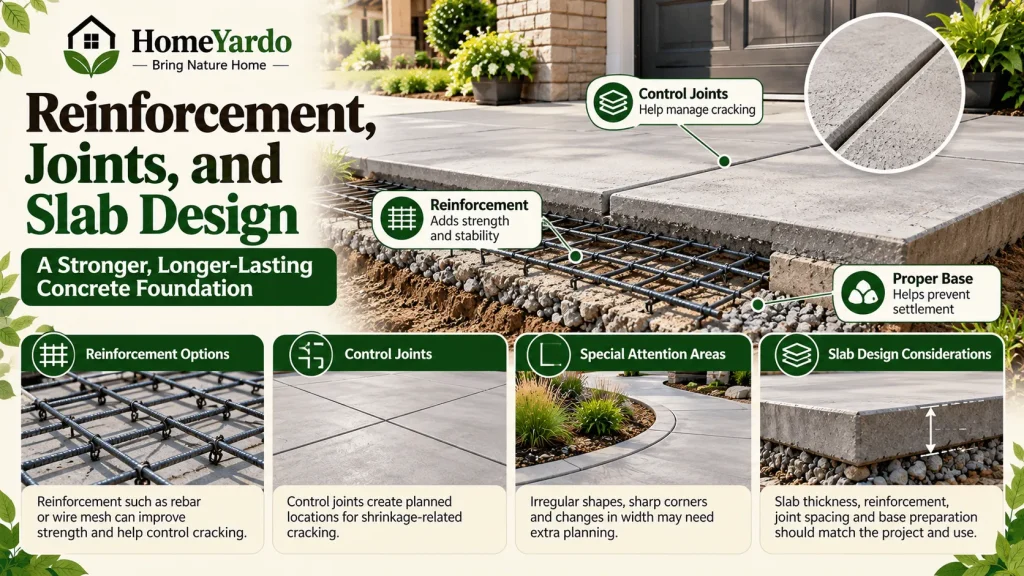
Concrete is strong under compression, but residential slabs can still move or crack as they cure and respond to loads and changing environmental conditions.
Depending on the project, reinforcement may be incorporated into the slab design. The appropriate method depends on the application and project specifications rather than a single rule for every residential surface.
Joint placement matters as well.
Control joints create planned locations where shrinkage-related cracking can occur more predictably. Their spacing and layout should suit the slab dimensions, shape, thickness, and installation plan.
Irregular slab shapes, sharp inside corners, and changes in width may require particular attention because stress can concentrate in these areas.
Concrete Curing Is Part of the Installation
Finishing the surface does not mean the concrete has finished developing.
Concrete needs time and suitable conditions to cure. Moisture loss, temperature, weather exposure, and how soon the surface is placed into service can affect the early curing period.
Homeowners should follow the contractor’s instructions before allowing vehicles, heavy equipment, furniture, or other significant loads onto new concrete.
Rushing this stage can undermine the care taken during preparation and placement.
Residential Concrete and Indiana Weather
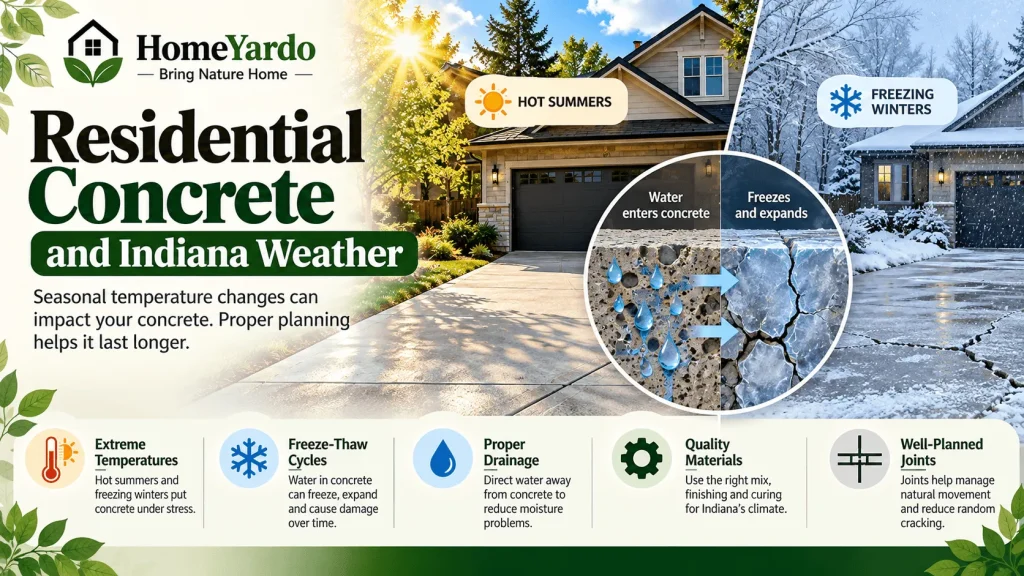
Exterior concrete in Indiana experiences significant seasonal weather changes. Hot summer conditions can be followed by freezing winter temperatures, exposing exterior surfaces to repeated freeze-thaw cycles.
Water can become especially important during cold weather. Moisture entering susceptible concrete and repeatedly freezing and thawing can contribute to surface deterioration over time.
Material selection, drainage, installation practices, finishing, and curing therefore deserve careful consideration for exterior projects in this climate.
Homeowners should also understand that concrete is not guaranteed to remain completely crack-free for its entire service life. Concrete naturally changes as it cures and as temperatures and site conditions change.
Well-planned joints are used to help manage that movement rather than pretending movement will never occur.
Decorative Concrete vs Standard Concrete
Residential concrete does not have to look identical across every property.
Standard broom-finished concrete remains a practical choice for many driveways, walkways, and utility areas. Decorative options can be considered where appearance carries more weight, such as patios, entrances, or highly visible walkways.
Possible finishes vary by contractor and project but may include different textures, colors, patterns, borders, or exposed aggregate effects.
Appearance should still suit the intended use. A finish selected for a sheltered patio may not necessarily be the right choice for a sloped walkway or frequently used driveway.
Slip resistance, maintenance, weather exposure, and expected traffic should be considered alongside appearance.
What Homeowners Should Discuss Before Hiring a Concrete Contractor
A useful contractor conversation should cover more than price and square footage.
Ask how the site will be prepared, where runoff will travel, what concrete design is appropriate for the intended use, where joints will be positioned, how the surface will be finished, and what curing instructions need to be followed.
Also clarify who is responsible for permits, demolition, hauling away old material, protecting nearby landscaping, restoring disturbed areas, and handling unexpected site conditions.
A written scope makes it easier to compare proposals based on what is actually included rather than comparing only the final price.
Improving a Property With Residential Concrete
Residential concrete can solve practical problems while improving how a property looks and functions.
A driveway can create dependable vehicle access. Walkways can make movement around the home easier. A patio can add usable outdoor living space, while steps and landings can improve an entrance. Concrete slabs can also support garages, sheds, workshops, and other everyday uses.
The strongest projects begin with a clear understanding of how the area will be used. Site preparation, drainage, slab design, joint placement, curing, weather exposure, and surrounding structures should all be considered before installation begins.
When those details are addressed early, concrete can provide a durable and useful surface that fits naturally into the rest of the property.
FAQ’s
There is no single lifespan that applies to every concrete surface. Installation quality, site preparation, drainage, climate, traffic, maintenance, and exposure to damaging conditions can all affect how long a driveway, patio, walkway, or garage floor remains serviceable.
Yes. Concrete is widely used for residential driveways because it can provide a strong, stable surface for regular vehicle traffic. Proper base preparation, slab design, drainage, joints, finishing, and curing all affect performance.
The required thickness depends on the project and the loads the slab needs to support. A pedestrian walkway, patio, garage floor, and vehicle driveway may have different design requirements. Project-specific recommendations and local requirements should be followed instead of relying on one thickness for every application.
Concrete can crack as it shrinks during curing or moves in response to temperature, loads, soil conditions, or settlement. Proper preparation and control-joint placement help manage cracking, but no responsible installer can promise that exterior concrete will never develop a crack.
Sometimes. Localized cracks or surface defects may be repairable when the surrounding slab remains stable. Extensive settlement, widespread deterioration, major elevation differences, or unresolved base problems may make replacement more appropriate.
Yes. A patio should be planned so rainwater moves to an appropriate drainage area rather than collecting on the slab or flowing toward the home’s foundation. Existing yard grading and downspout discharge should also be considered.
Epoxy systems are commonly installed over concrete garage floors, but the slab needs suitable surface preparation and moisture conditions. Existing coatings, contamination, cracks, and concrete condition should be assessed before installation.
Installation conditions matter more than choosing one universal month. Very hot, freezing, wet, or otherwise unsuitable conditions can affect placement and curing. A local concrete contractor can determine whether expected temperatures and site conditions are appropriate for the planned work.