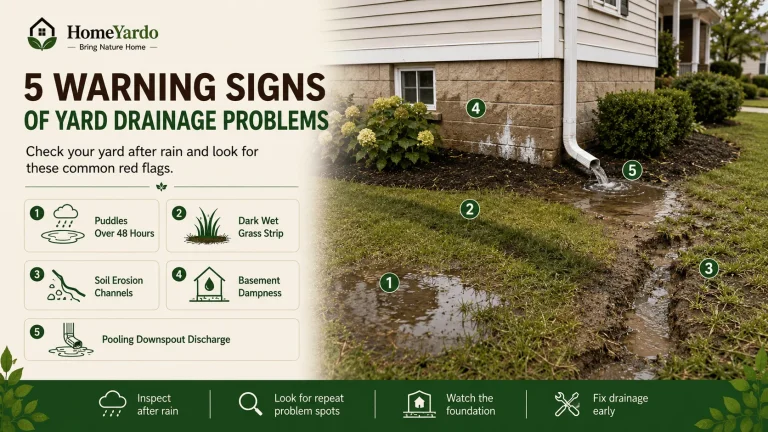
What Makes Backyard Structure Demolition Different from Front Lot Demolition?
Tacoma is a growing city in Washington known for its residential neighborhoods, historic properties, and mix of urban and suburban spaces. Many homes have detached garages, sheds, workshops, and other structures located behind the main house. Because these properties can have different layouts and access points, removing a backyard structure may require more planning than a structure located in the front lot.
Backyard structure demolition is different from front lot demolition because backyard spaces are often harder to access, more confined, and surrounded by landscaping, fencing, outdoor utilities, and other property features. A front lot generally provides easier equipment access and more direct routes for hauling debris away. In contrast, removing a structure from a backyard may require careful planning for equipment placement, safe dismantling, and debris removal while protecting the surrounding property.
For homeowners planning to remove a backyard structure in Tacoma, Franky’s provides demolition services in Tacoma and can account for the property’s layout, access, and surrounding conditions during the demolition process. Whether the project involves a small shed, detached garage, workshop, or another backyard structure, understanding these site conditions can help ensure the work is planned appropriately from the start.
Limited Access Changes the Demolition Process
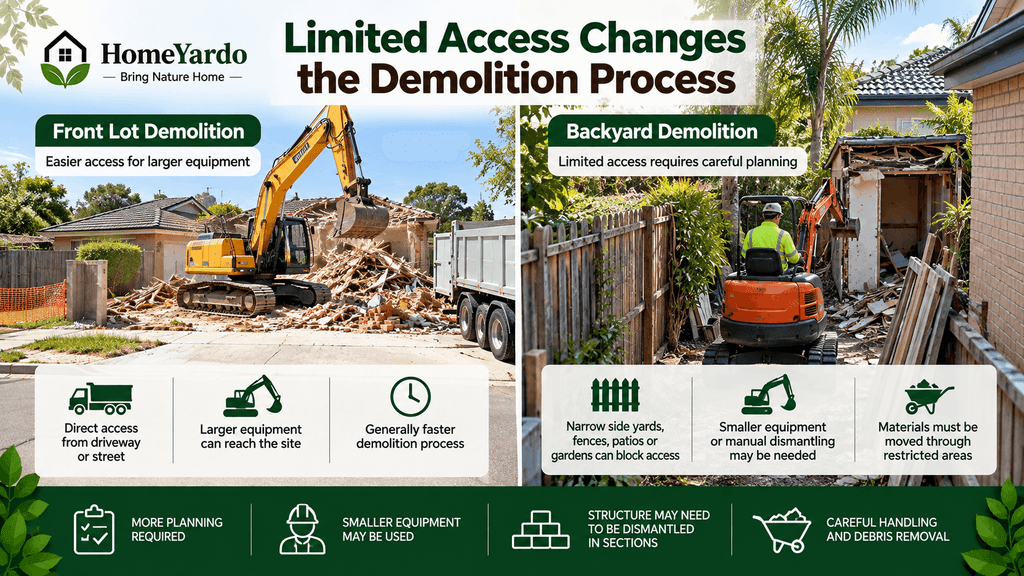
One of the biggest differences between backyard and front lot demolition is access. A front structure may be accessible directly from a driveway or street, allowing larger equipment to reach the work area more easily.
Backyard structures may be located behind fences, narrow side yards, patios, gardens, or other obstacles. Heavy equipment may not be able to reach the structure, depending on the property’s layout.
When access is limited, crews may need to use smaller equipment or dismantle the structure in sections. This requires more controlled handling of materials and careful planning for moving debris through restricted areas.
Protecting Landscaping and Outdoor Features
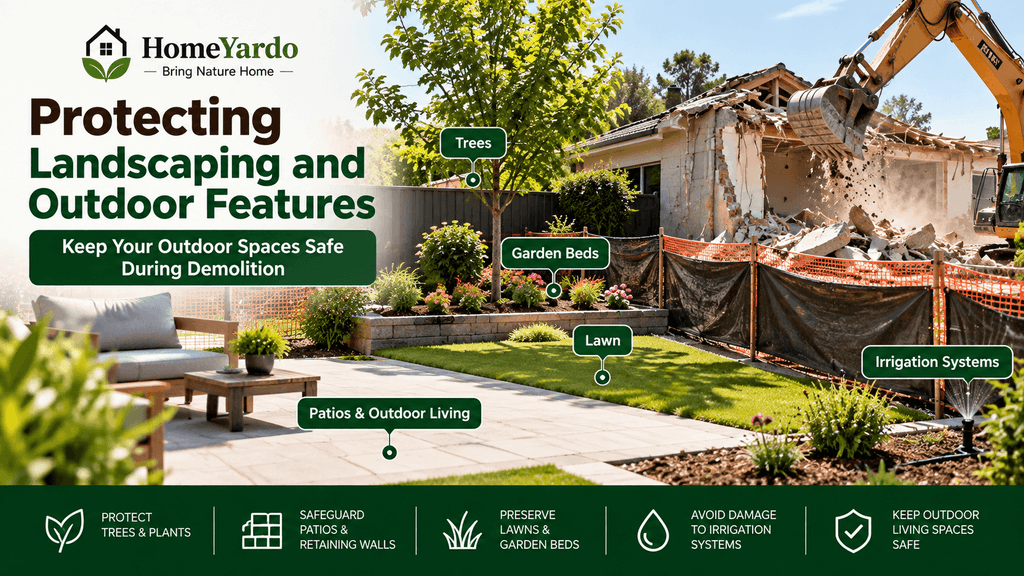
Backyard areas often contain landscaping that homeowners want to preserve. Trees, flower beds, lawns, irrigation systems, patios, retaining walls, and outdoor living spaces may be located close to the structure being removed.
Demolition involves vibration, falling materials, dust, and heavy debris, all of which can affect nearby features if the work is not properly controlled. A careful demolition plan identifies these vulnerable areas before work begins.
Crews can then determine where equipment, workers, debris, and dismantled materials can safely move without unnecessarily disturbing the surrounding property.
Utility Locations Require Extra Attention
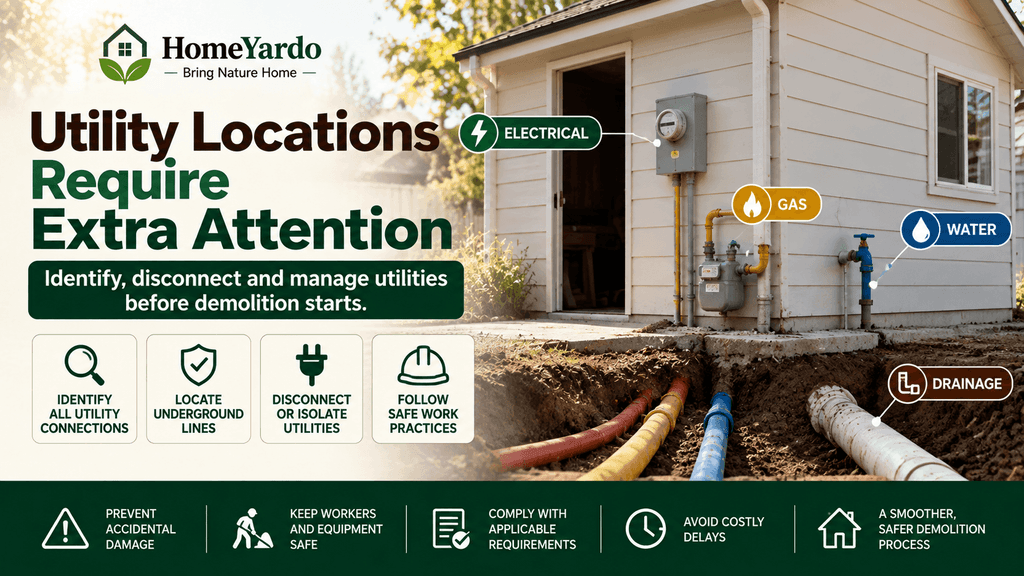
Backyard structures may have connections to electrical, water, gas, drainage, or other utility systems. These connections must be identified and appropriately addressed before demolition starts.
Underground utility lines can create hazards when workers or equipment operate near foundations and other buried structures. Identifying the location of these utilities before work begins can help prevent accidental damage and provide a safer working environment.
Utilities should be disconnected or handled according to applicable requirements before the structure is taken apart.
Debris Removal Can Be More Complicated
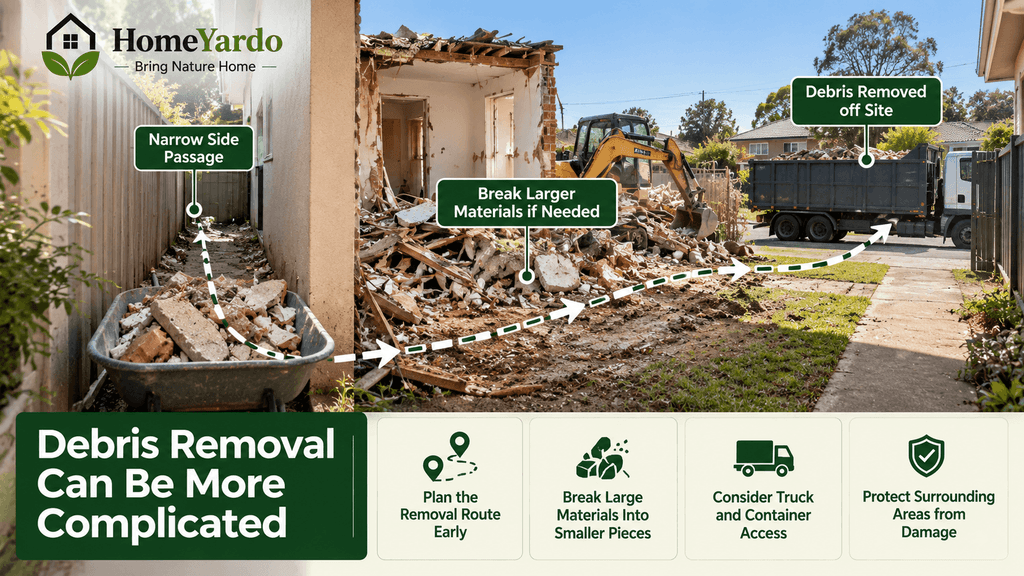
Once a structure is demolished, the debris still needs to leave the property. A front lot often provides a straightforward route for trucks, containers, or equipment.
Backyard demolition can be more challenging because debris may need to travel through a narrow side passage or another restricted route before reaching the street. Larger materials may need to be broken down into smaller pieces before they can be moved.
Planning the debris-removal route before demolition begins can help reduce unnecessary handling and prevent damage to surrounding areas.
Front Lot Demolition Has Different Concerns
Front lot demolition generally offers better equipment access, but it can create greater exposure to public areas. Sidewalks, driveways, parked vehicles, neighboring properties, pedestrians, and road traffic may be closer to the demolition zone.
This means site protection and controlled access remain important even when equipment can reach the structure easily. Dust, debris, and noise may also affect people outside the immediate work area.
Why Site-Specific Planning Matters
Neither backyard nor front lot demolition should be treated as a one-size-fits-all process. The structure’s size, construction materials, location, access points, utilities, surrounding property features, and debris-removal requirements all influence the practical approach.
A site assessment before demolition helps identify these conditions. With proper planning, the structure can be dismantled while reducing unnecessary risks to workers, nearby property, landscaping, utilities, and the surrounding area.
Key Takeaways
- Backyard demolition often involves tighter access than front lot demolition.
- Fences, landscaping, patios, and other features may need protection.
- Utility connections should be identified before demolition begins.
- Debris removal can require additional planning in confined backyard spaces.
- Front lot demolition may have greater exposure to pedestrians, vehicles, and public areas.
- Site-specific planning is important for controlled structure demolition.
FAQ’s
It can be. Backyard structure demolition commonly involves narrower access, nearby landscaping, fences, patios, and longer debris-removal routes. Front lot demolition often allows easier equipment access but may require more control around streets, sidewalks, vehicles, and pedestrians.
Some smaller structures can be dismantled using smaller equipment or manual methods when full-size machinery cannot reach the site. The appropriate method depends on the structure’s materials, size, foundation, condition, and available working space.
Permit requirements depend on the scope and type of work. Tacoma has a specific permit classification for demolition of an entire building or structure. Homeowners should check current City of Tacoma requirements for their individual project before starting work.
Access, electrical service, water or gas connections, underground utilities, the foundation, nearby structures, landscaping, overhead obstacles, debris removal, and the condition in which the site should be left afterward should all be reviewed.
The slab may remain or be removed depending on the project. If it is removed, the work may involve breaking concrete, hauling additional debris, checking for buried utilities, and preparing or grading the exposed ground for its next use.
Materials may be dismantled into smaller sections and transported along a planned route to a trailer, truck, dumpster, or staging area. Restricted access usually makes debris planning more important because materials may need to pass through narrow gates or side yards.
It can if equipment, falling material, dust, or debris moves into unprotected areas. Identifying trees, lawns, irrigation, garden beds, patios, and retaining walls before work begins allows the demolition plan to account for features that need to remain.
The main difference is usually site access and what surrounds the structure. Backyard demolition tends to involve confined access and private-property features, while front lot demolition may provide easier machinery access but greater interaction with driveways, sidewalks, vehicles, and public areas.
Reference Box
- City of Tacoma Planning and Development Services — Demolition of a Structure: Tacoma provides a dedicated permitting pathway and supporting resources for structure demolition.
- Tacoma Permits — Types of Permits: Identifies DEMOR as the permit type used for demolition of an entire building or structure.
- Tacoma Permits — What Requires a Permit: Provides current guidance on residential work exemptions and site-development thresholds.