
How To Maintain A Beautiful Home Exterior Throughout The Year

A beautiful home exterior takes more than an occasional cleanup. Your lawn, landscaping, walkways, and outdoor features need regular attention to stay attractive throughout the year.
For homeowners in Keller, Texas, seasonal weather makes exterior maintenance particularly important. Hot summers can stress lawns and garden plants, while occasional winter freezes may damage sensitive landscaping and irrigation equipment.
The good news is that maintaining an attractive property doesn’t have to involve major landscaping projects every season. A practical maintenance schedule can help you prevent common problems, protect your investment, and keep your outdoor spaces looking their best.
Here’s how to maintain your home’s exterior throughout the year.
A Simple Year-Round Exterior Maintenance Schedule
Every season brings different maintenance requirements. Planning ahead helps you complete important tasks before changing weather conditions create additional problems.
Use this seasonal checklist to organize your exterior maintenance routine.
| Season | Essential Maintenance Tasks |
|---|---|
| Spring | Remove winter debris, inspect irrigation, refresh garden beds, and prepare lawns for active growth. |
| Summer | Monitor watering, adjust mowing heights, maintain mulch, and inspect plants for heat stress. |
| Fall | Remove fallen leaves, maintain shrubs, inspect drainage, and prepare sensitive plants for colder weather. |
| Winter | Protect exposed irrigation equipment, monitor freeze warnings, inspect walkways, and remove damaged branches safely. |
These tasks provide a starting point. Your actual schedule should reflect your lawn type, landscape design, local weather, and the condition of your property.
Set the Tone With a Spring Cleanup
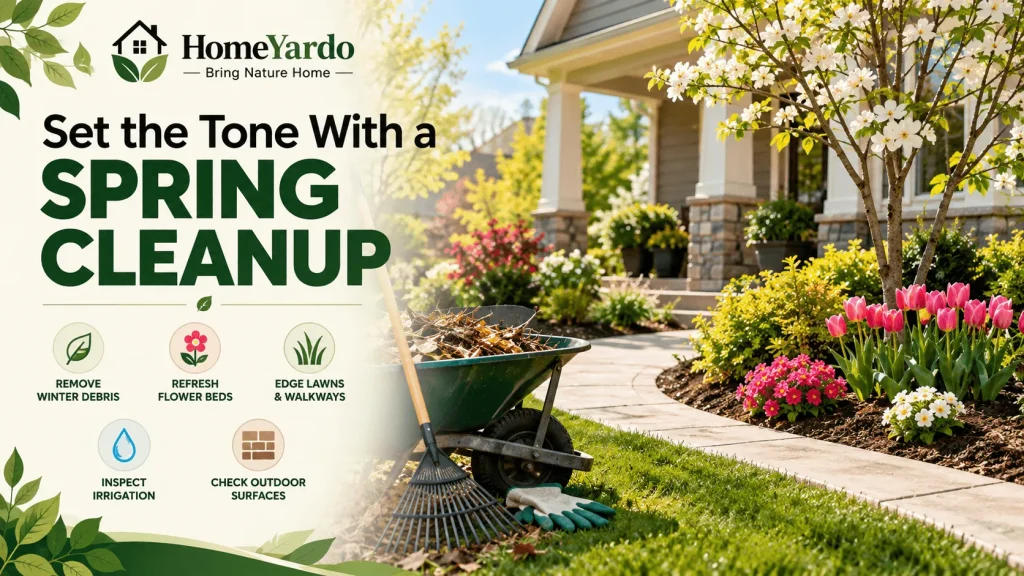
Spring is an opportunity to refresh your landscaping after winter and prepare your yard for warmer weather.
Cold temperatures, fallen branches, accumulated leaves, and seasonal moisture can leave lawns and garden beds looking untidy.
Addressing these problems early gives plants room to grow and helps prevent minor maintenance issues from becoming bigger projects.
What to Include in a Spring Yard Cleanup
Start with a complete inspection of your outdoor spaces.
- Remove winter debris: Clear fallen leaves, dead grass, branches, and other debris from lawns and garden beds.
- Refresh flower beds: Remove dead annuals, check perennial plants for new growth, and replace damaged or missing mulch.
- Edge lawns and walkways: Restore clean boundaries around driveways, sidewalks, and planting beds.
- Inspect irrigation systems: Check sprinkler heads, irrigation lines, valves, and watering zones for visible damage or leaks.
- Check outdoor surfaces: Look for loose pavers, damaged edging, and debris that could interfere with drainage.
Avoid excessive pruning or fertilizing before identifying the needs of individual plants and grass varieties.
If your landscaping requires considerable attention every spring, consider incorporating some low-maintenance backyard landscaping ideas to reduce recurring work.
A thoughtful spring cleanup establishes a manageable maintenance routine for the warmer months.
Keep Your Lawn Healthy Through Summer Heat

Summer temperatures in Keller can place considerable stress on lawns, ornamental plants, and garden beds.
Water evaporates more quickly during hot weather, and grass growing in compacted soil or shallow-rooted conditions may struggle.
Maintaining a healthy lawn requires adjusting your routine rather than simply watering more frequently.
Summer Lawn Care Priorities in North Texas
Focus on practices that encourage healthy growth while conserving water.
- Water according to conditions: Established lawns generally benefit from thorough watering when needed. Adjust irrigation based on rainfall, soil conditions, grass type, and local watering restrictions.
- Water during the early morning: Morning irrigation generally reduces evaporation and allows grass blades to dry during the day.
- Adjust mowing height: Avoid cutting grass excessively short. Maintain the recommended height for your particular turfgrass.
- Inspect struggling areas: Brown or thinning grass may indicate drought stress, uneven irrigation, pest damage, disease, or other problems.
- Maintain garden mulch: Replenish mulch when necessary to help reduce soil moisture loss and moderate soil temperatures.
Bermudagrass and St. Augustinegrass are common warm-season lawn grasses in North Texas, but they have different maintenance requirements.
Identify your grass variety before making major changes to mowing, fertilizing, or irrigation.
During extended heat, prioritize plant health over maintaining a perfectly green appearance.
Prepare Landscaping for Fall Weather Changes
Fall provides an opportunity to address summer damage and prepare your landscaping for cooler weather.
As temperatures change, lawn growth begins to slow, certain plants enter dormancy, and fallen leaves create additional maintenance work.
Taking care of these seasonal tasks can make winter maintenance considerably easier.
Fall Landscaping Tasks Worth Prioritizing
Concentrate on cleaning, inspecting, and preparing existing landscaping.
- Remove fallen leaves: Clear heavy leaf accumulations from lawns, pathways, and drainage areas.
- Inspect thin lawn areas: Identify damaged sections and determine whether they require repair during the appropriate growing season.
- Maintain garden beds: Remove weeds, clear dead annuals, and replenish mulch where necessary.
- Inspect shrubs: Remove damaged growth when appropriate, but schedule substantial pruning according to each plant’s flowering and growth characteristics.
- Examine drainage: Clear debris from drainage channels and check areas where runoff accumulates.
Avoid assuming that every lawn needs fall overseeding.
Many Keller properties have warm-season grasses that establish more successfully during warmer growing conditions. Introducing cool-season grass for winter color is optional and can complicate spring lawn recovery.
If significant lawn damage occurred during summer, identify the underlying problem before attempting repairs.
Protect Your Exterior During Winter Months
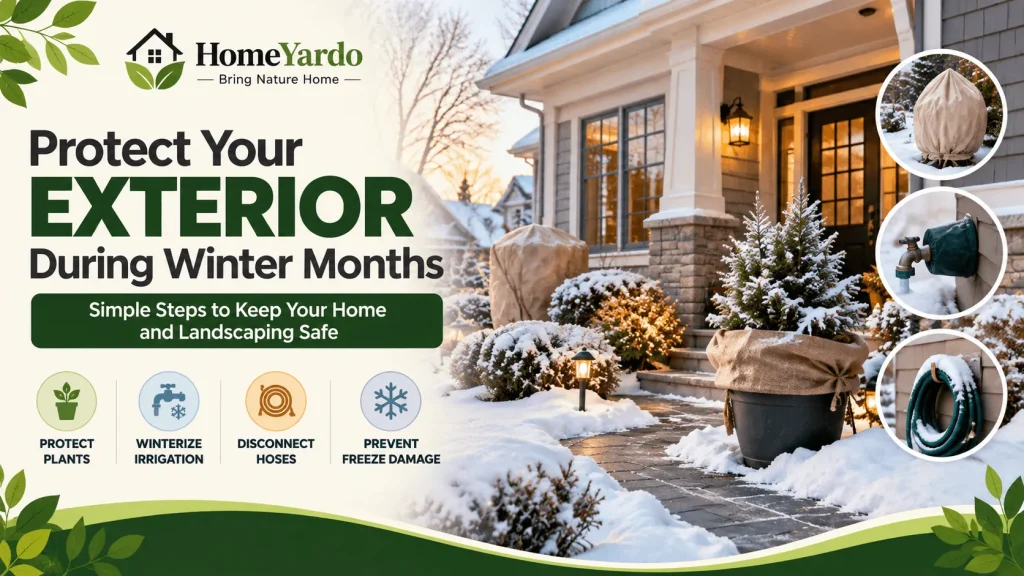
Although Keller experiences relatively mild winters compared with northern states, occasional freezing temperatures can still damage landscaping and outdoor equipment.
Exposed pipes, irrigation components, container plants, and cold-sensitive shrubs deserve particular attention.
Preparing before a freeze warning can reduce the risk of avoidable damage.
Winter Protection Steps for Keller Yards
Review your landscaping and outdoor equipment before temperatures fall.
- Protect sensitive plants: Move suitable container plants indoors or into protected locations. Cover vulnerable outdoor plants when freezing temperatures are expected.
- Prepare irrigation equipment: Protect exposed irrigation components and follow the appropriate winterization procedure for your system.
- Disconnect outdoor hoses: Remove hoses and take suitable precautions to protect outdoor faucets.
- Keep walkways clear: Remove leaves and debris that could create slippery conditions during wet or freezing weather.
- Protect dormant lawns: Limit unnecessary foot traffic when grass is frozen or covered with frost.
For additional guidance, consult HomeYardo’s article on winterizing outdoor faucets and sprinkler systems.
Avoid operating irrigation systems immediately before freezing weather when doing so could create hazardous ice on roads, sidewalks, or driveways.
Winter is also a suitable time to inspect your landscape design and identify improvements for the following growing season.
Maintain Walkways, Beds, and Hardscaping All Year

Landscaping maintenance involves more than caring for grass and plants.
Walkways, patios, garden borders, retaining walls, and other hardscape features contribute to your property’s appearance and everyday functionality.
These features experience regular exposure to changing temperatures, rain, soil movement, and foot traffic.
Routine inspections help homeowners identify potential problems before extensive repairs become necessary.
Year-Round Hardscape Maintenance Checklist
Include the following tasks in your maintenance routine.
- Maintain garden borders: Re-edge planting beds when necessary to preserve their shape and prevent grass from spreading.
- Inspect walkways: Look for cracks, uneven pavers, loose stones, or changes in surface levels.
- Control weeds: Remove unwanted plants growing between pavers, patios, and other paved surfaces.
- Refresh mulch: Replenish organic mulch as it decomposes, keeping it away from tree trunks and plant stems.
- Clean outdoor surfaces: Sweep walkways and patios regularly, and use cleaning methods appropriate for their materials.
- Inspect retaining walls: Watch for leaning, cracking, bulging, or unexpected soil movement.
Defined garden beds and clean pathways can improve the overall appearance of a property without requiring a complete landscape redesign.
HomeYardo’s guide to garden aesthetic appeal explains how planting arrangements, pathways, and landscape features work together.
When maintaining hardscaping, prioritize drainage and safety before making decorative improvements.
Keep Trees and Shrubs Trimmed for Safety and Appearance

Trees and shrubs provide shade, privacy, and visual structure throughout your landscape.
However, neglected plants can obstruct walkways, crowd neighboring vegetation, or develop branches that interfere with buildings and outdoor features.
Regular inspections and appropriate pruning help maintain their appearance and structural health.
When and How to Trim Trees and Shrubs
Pruning should reflect each plant’s growth pattern, flowering period, and condition.
Follow these general maintenance practices:
- Remove dead, broken, or visibly damaged branches when it is safe to do so.
- Trim shrubs according to their species and seasonal growth characteristics.
- Avoid excessive pruning during periods of significant heat or drought stress.
- Maintain appropriate clearance around walkways, entrances, and outdoor living spaces.
- Arrange professional assessment when large branches threaten buildings or other structures.
Not every shrub should be pruned in late winter.
Some flowering shrubs develop their flower buds during the previous growing season. Pruning them at the wrong time can remove the following season’s flowers.
Avoid attempting to remove large branches near power lines or structures. These situations require appropriately qualified professionals.
A consistent inspection routine helps preserve the natural shape of your landscaping while reducing avoidable safety risks.
Watch for Drainage and Irrigation Issues Year-Round
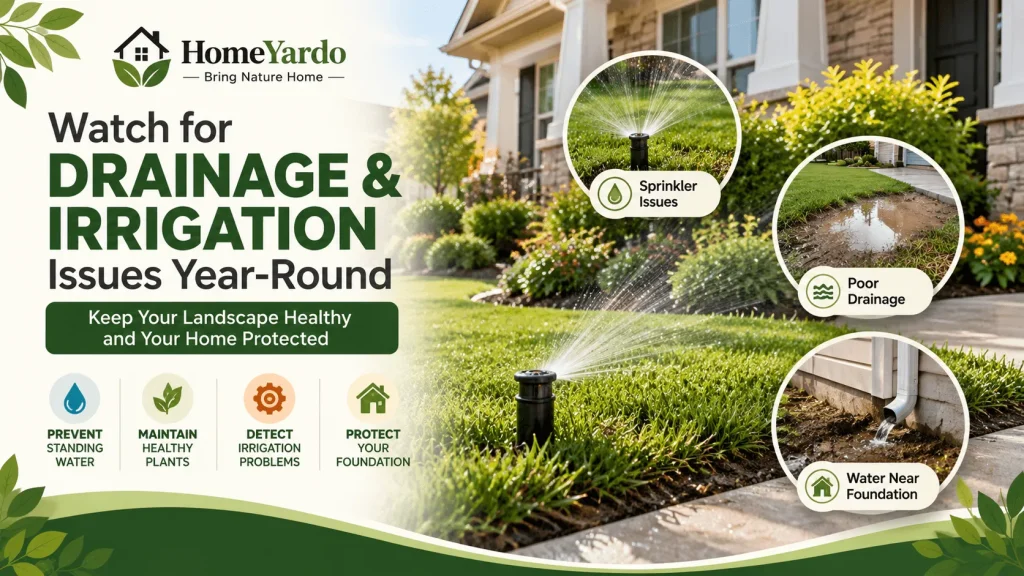
Poor drainage and malfunctioning irrigation systems can affect your entire landscape.
Excess water may damage plant roots, contribute to soil erosion, or accumulate near structures. Insufficient irrigation can leave certain lawn areas stressed while others remain healthy.
Some problems develop gradually, making regular observation particularly useful.
Signs of Drainage or Irrigation Problems to Watch For
Inspect your yard after significant rainfall and periodically while your irrigation system operates.
Common warning signs include:
- Standing water that remains long after rainfall.
- Sprinkler heads that spray unevenly or fail to operate correctly.
- Water collecting near foundations, patios, or walkways.
- Soil erosion around downspouts or sloped landscape areas.
- Lawn sections that remain unusually wet or consistently dry.
- Unexpected increases in outdoor water consumption.
Look for patterns rather than treating every brown patch or puddle as the same problem.
An irrigation leak requires a different solution from poor soil drainage or incorrect landscape grading.
If water repeatedly accumulates around your property, read HomeYardo’s guide on yard drainage to understand common causes and potential solutions.
Persistent drainage problems near foundations, significant soil erosion, or suspected underground irrigation failures may require professional assessment.
How to Maintain Curb Appeal Between Seasonal Cleanups
Major seasonal projects are helpful, but smaller maintenance tasks keep your exterior attractive between them.
You don’t need to devote every weekend to landscaping. Concentrate on the areas that have the greatest visual impact.
The front lawn, entrance, garden borders, and main walkway are good places to start.
Consider adopting these simple habits:
- Remove visible weeds before they spread.
- Keep entrances, pathways, and driveways free from debris.
- Maintain clean boundaries between lawns and planting beds.
- Remove dead flowers and damaged plant material when appropriate.
- Inspect irrigation equipment while watering.
- Keep outdoor containers, decorative features, and seating areas tidy.
A short weekly inspection can reveal issues that are easy to overlook during everyday activities.
Choose plants suited to your climate and group those with similar watering requirements. These decisions can reduce unnecessary maintenance without sacrificing the appearance of your landscaping.
The objective is a consistently attractive property that remains manageable throughout the year.
Know When to Bring in Professional Help
Many exterior maintenance tasks are manageable for homeowners.
Regular mowing, weeding, mulching, and general cleanup can often be handled without specialized equipment.
Other landscaping projects require technical knowledge, professional equipment, or additional safety precautions.
Recognizing when to request assistance can help prevent property damage and unnecessary expenses.
Tasks Worth Handing Off to a Professional
Consider professional assistance for the following projects:
- Irrigation system diagnosis and repair: Persistent leaks, damaged underground lines, and complex sprinkler problems.
- Large tree maintenance: Major pruning, hazardous branch removal, and tree removal near buildings or utilities.
- Drainage correction: Significant grading problems, recurring flooding, and extensive soil erosion.
- Landscape renovation: Large planting projects, major garden redesigns, and improvements involving multiple outdoor features.
- Ongoing maintenance: Scheduled lawn care, pruning, seasonal cleanups, and routine landscape inspections.
Homeowners with demanding schedules may also benefit from regular professional maintenance rather than waiting until landscaping problems become difficult to manage.
If keeping up with seasonal maintenance becomes challenging, hiring a landscaping company in Keller, TX can help establish a routine suited to your property.
Ask potential providers about their maintenance schedules, irrigation experience, seasonal services, and familiarity with North Texas landscaping conditions.
A suitable maintenance plan should reflect your property’s actual requirements rather than automatically including services you don’t need.
A Yard That Looks Good Every Season, Not Just One
Keeping your home’s exterior attractive is an ongoing process.
Spring cleanup prepares your landscaping for new growth. Summer maintenance helps protect lawns and plants from heat stress. Fall provides an opportunity to address seasonal problems, while winter preparation reduces the risk of cold-weather damage.
The most practical approach is to develop a manageable routine and address smaller issues before they become major projects.
If you prefer professional assistance, Green Earth Services offers landscaping services for homeowners in Keller.
Contact the company to discuss your property’s maintenance requirements and ask about a year-round landscaping plan.
A little attention throughout the year can help maintain an attractive exterior without relying on major seasonal cleanups.
FAQ’s
Create a seasonal maintenance schedule that includes lawn care, garden cleanup, pruning, irrigation inspections, and hardscape maintenance. Adjust individual tasks according to local weather and the needs of your landscaping.
Basic lawn care and inspections may require weekly attention during the growing season. Pruning, mulching, irrigation adjustments, and larger cleanup projects can be scheduled according to seasonal requirements.
Landscaping requires attention throughout the year. Spring and fall are particularly useful for inspections and preparation, while summer maintenance focuses on managing heat and irrigation. Winter tasks include protecting sensitive plants and exposed equipment.
Identify your grass type, mow at an appropriate height, monitor drought stress, and water according to weather and soil conditions. Check irrigation coverage and follow applicable local watering restrictions.