Low-Maintenance Home Exterior: A Houston Guide
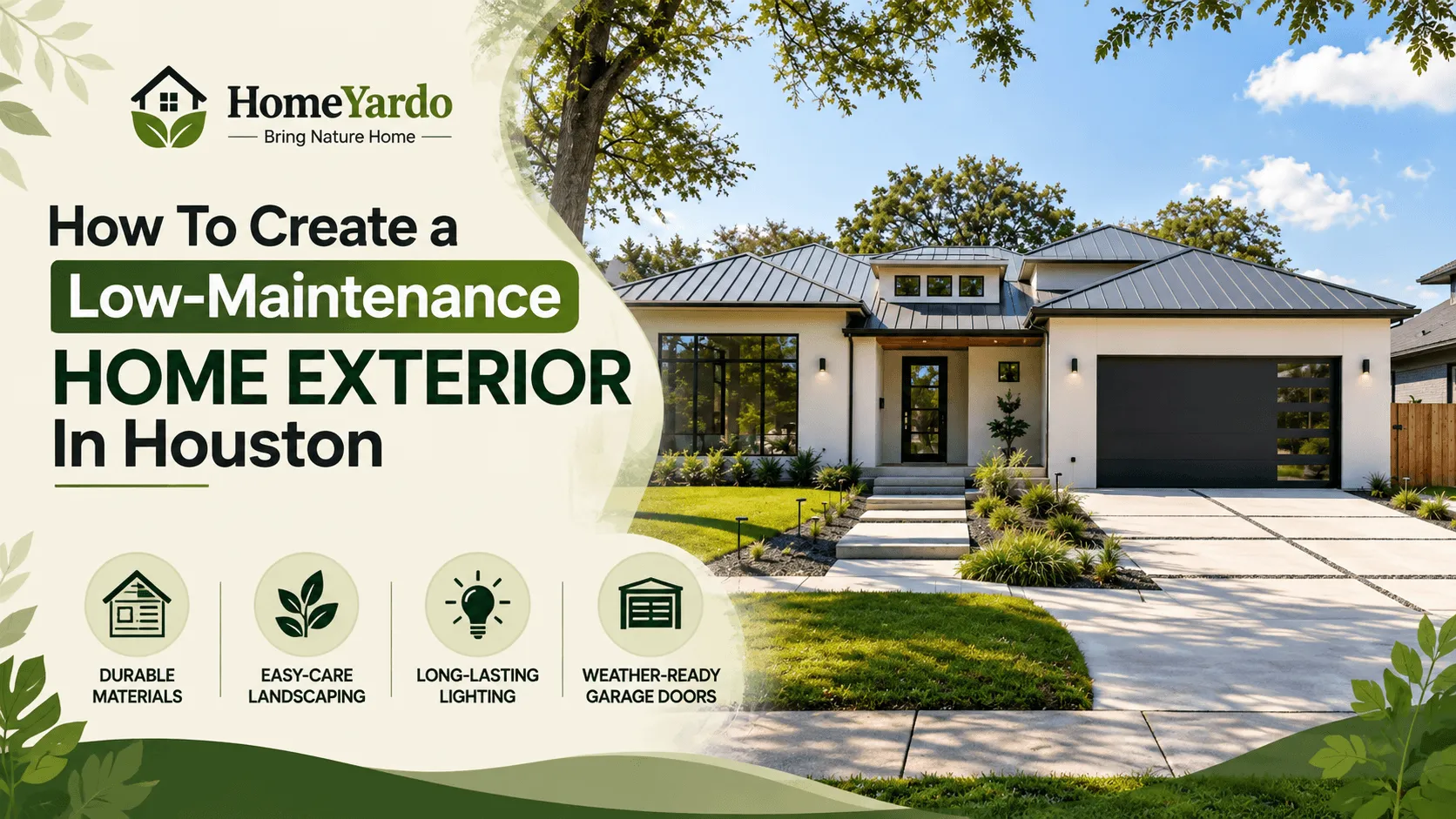
A beautiful home exterior should not require constant cleaning, repainting, and repairs. However, maintaining an attractive property can be challenging in Houston, where high humidity, intense sunlight, heavy rainfall, and occasional severe storms affect exterior materials throughout the year.
Creating a low-maintenance home exterior starts with choosing materials and features that can handle these conditions.
Moisture-resistant siding, weather-resistant paint, carefully planned landscaping, durable garage doors, and efficient outdoor lighting can reduce the amount of work needed to maintain your property.
The goal is not to eliminate maintenance completely. It is to make practical improvements that protect your investment, reduce recurring maintenance tasks, and keep your home looking attractive.
Here is how Houston homeowners can achieve that balance.
Choose Siding and Trim That Resist Humidity Damage
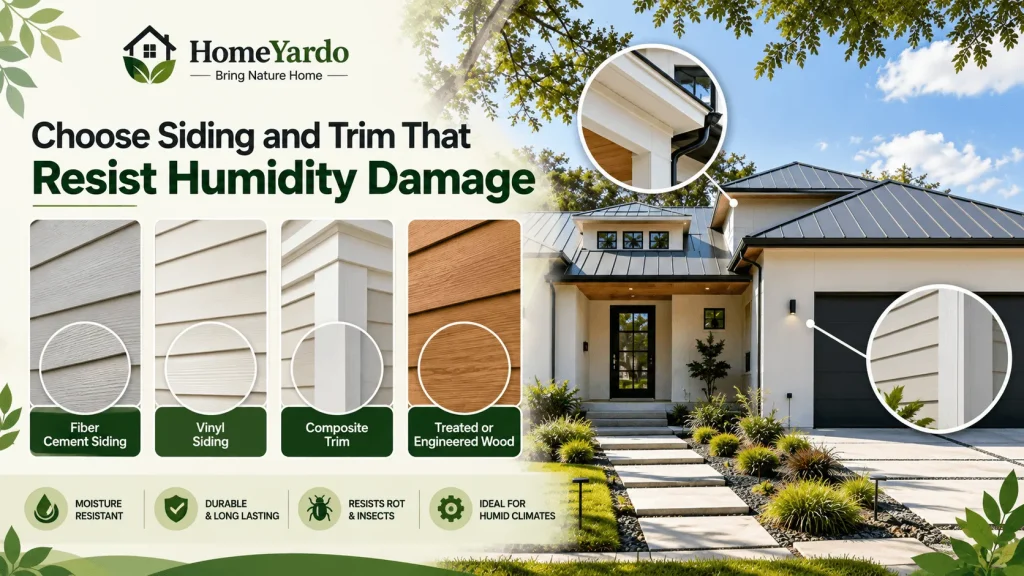
Houston’s humid conditions expose exterior siding and trim to moisture for extended periods. When materials retain excessive moisture or are installed incorrectly, they may deteriorate, develop mold, or require frequent repairs.
Selecting suitable materials during construction or renovation can reduce these problems.
However, even moisture-resistant siding needs proper installation, flashing, drainage, and occasional cleaning.
Low-Maintenance Siding Options for Humid Climates
Several siding materials can provide durability without requiring extensive ongoing maintenance.
Fiber cement siding
Fiber cement is resistant to rot and insect damage. It is particularly useful in humid climates when installed according to the manufacturer’s moisture-management requirements.
Vinyl siding
Vinyl does not require routine painting and generally needs only periodic cleaning. However, high temperatures can affect its performance, so proper installation and suitable product specifications matter.
Composite trim
Quality exterior composite trim can provide better moisture resistance than untreated wood. Product performance varies, making manufacturer specifications an important consideration.
Treated or engineered wood
Homeowners who prefer a natural appearance can consider appropriately treated or engineered wood products designed for exterior exposure.
Whatever material you choose, ensure that joints, flashing, and drainage details prevent water from becoming trapped behind the exterior finish.
Pick Paint That Holds Its Color Longer
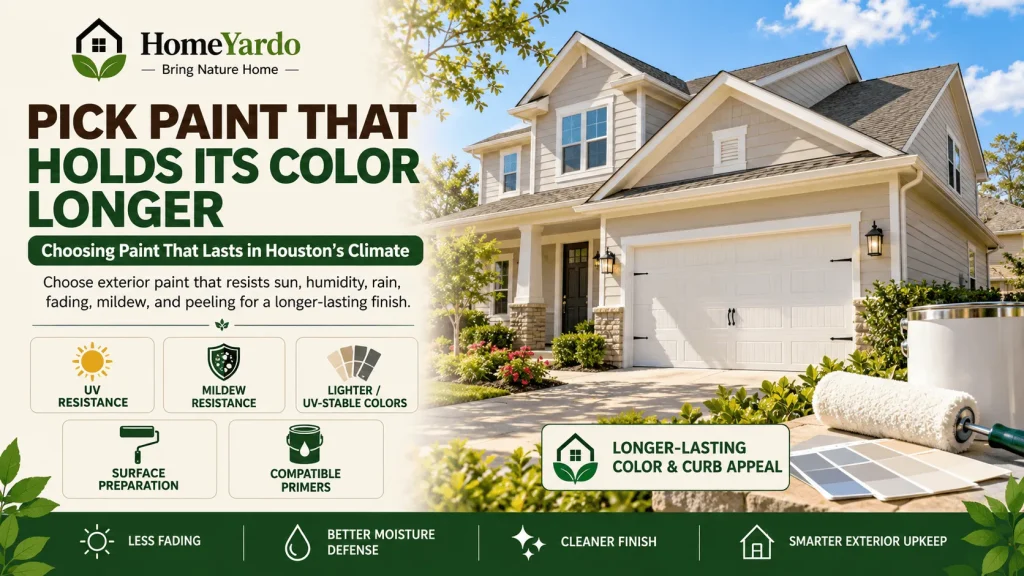
Houston’s intense sunlight, humidity, and rainfall can shorten the lifespan of poorly selected exterior paint.
Fading, peeling, blistering, and mildew growth are common problems when coatings are unsuitable for the surface or applied over existing moisture damage.
Choosing the appropriate paint system can help preserve the appearance of your home.
Choosing Paint That Lasts in Houston’s Climate
Consider the following factors when selecting exterior paint:
- UV resistance: Choose exterior coatings designed to withstand prolonged sunlight.
- Mildew resistance: Consider mildew-resistant products for shaded areas exposed to persistent moisture.
- Color selection: Lighter or UV-stable colors can help limit visible fading and excessive surface heating.
- Surface preparation: Clean the surface, repair damaged areas, and allow materials to dry before painting.
- Compatible primers: Use the primer recommended for your siding material and chosen coating.
Pay particular attention to trim, fascia, window frames, and garage doors because these features influence the overall appearance of your home’s exterior.
Avoid painting over existing moisture problems. Identify and resolve the underlying cause before applying a new finish.
Use Low-Maintenance, Climate-Suited Landscaping
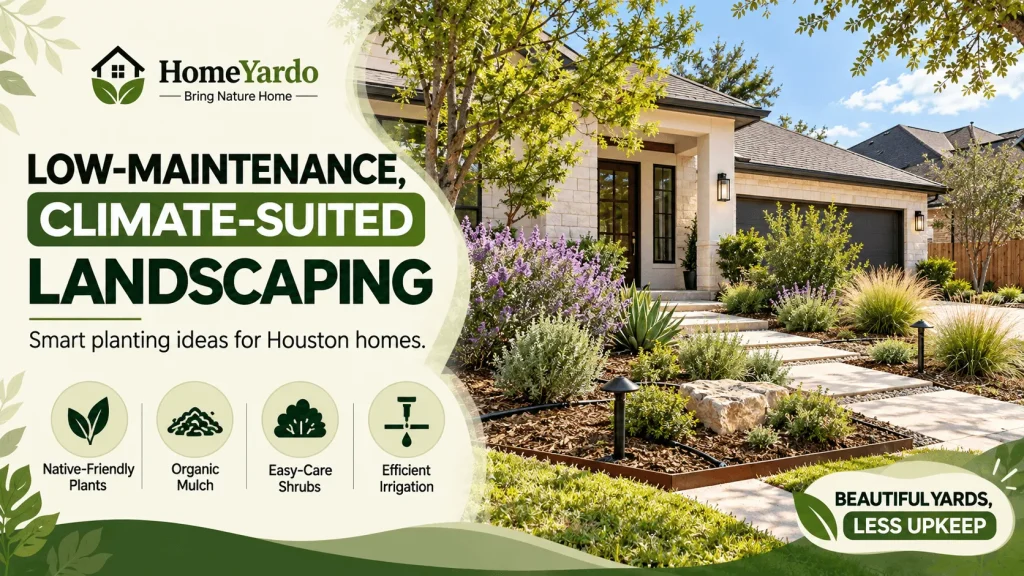
An attractive landscape should complement your home without requiring constant watering, mowing, pruning, or plant replacement.
Houston’s combination of summer heat, humidity, heavy rainfall, and variable soil drainage means that plant selection is particularly important.
Choosing plants suited to the conditions around your property makes ongoing maintenance easier.
Landscaping Choices That Reduce Ongoing Work
Start by examining your yard’s sunlight, soil, drainage, and available planting space.
Consider these approaches:
- Choose plants adapted to southeast Texas and your property’s growing conditions.
- Group plants with similar watering requirements.
- Use appropriate organic mulch to retain soil moisture and reduce weed growth.
- Replace unnecessary lawn areas with suitable groundcovers or planting beds.
- Select shrubs that naturally fit their available space without constant pruning.
- Consider efficient irrigation for areas that require supplemental watering.
Texas sage and certain native ornamental grasses may suit appropriate sunny, well-drained locations. Plants that tolerate prolonged wet conditions may be more suitable for other areas.
Check mature plant sizes and drainage requirements before purchasing.
For additional planning ideas, explore HomeYardo’s low-maintenance backyard landscaping guide.
A smaller, carefully planned landscape can create a more attractive appearance than an elaborate garden that becomes difficult to maintain.
Add Hardscaping to Reduce Ongoing Yard Work
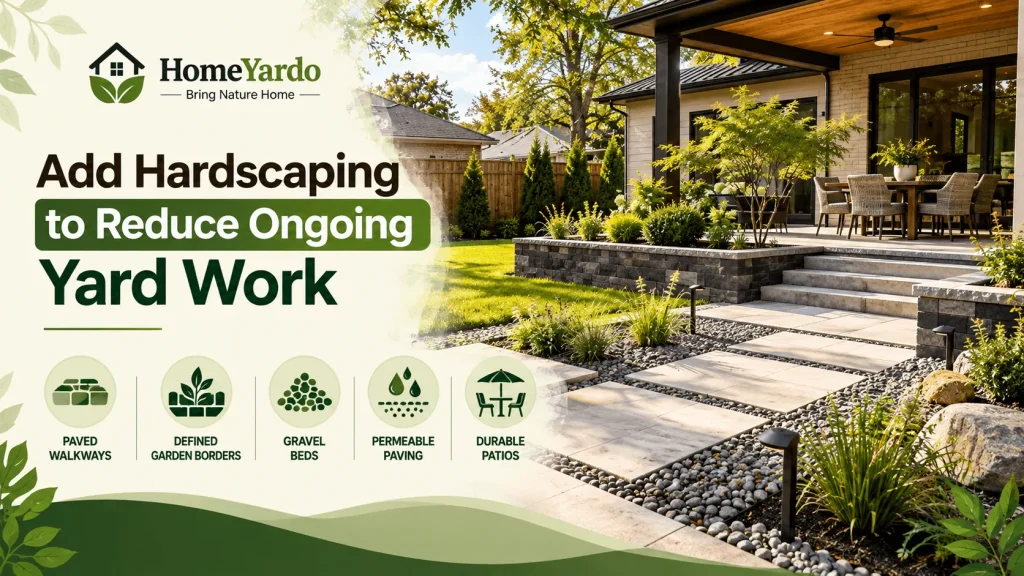
Hardscaping provides structure while reducing the amount of lawn and planting that requires regular attention.
Walkways, patios, gravel beds, and defined garden borders can create a cleaner, more organized exterior.
However, Houston’s frequent heavy rainfall makes drainage an important consideration.
Hardscaping Ideas That Cut Down on Maintenance
Consider incorporating the following features:
- Paved walkways: Replace frequently worn lawn areas with durable paths.
- Defined garden borders: Install edging to separate planting beds from surrounding grass.
- Gravel beds: Use suitable gravel and edging where drainage conditions allow.
- Permeable paving: Consider appropriately designed systems that allow water to pass through the surface.
- Durable patios: Select weather-resistant materials that are easy to clean.
Avoid covering large portions of your yard with impermeable surfaces without assessing runoff.
Paved areas should also have suitable foundations and drainage slopes.
If your property experiences standing water after heavy rainfall, learn how to improve your yard’s drainage before installing permanent hardscaping.
Addressing drainage problems during the planning stage can prevent repeated repairs.
Choose a Garage Door Material Built for Humidity
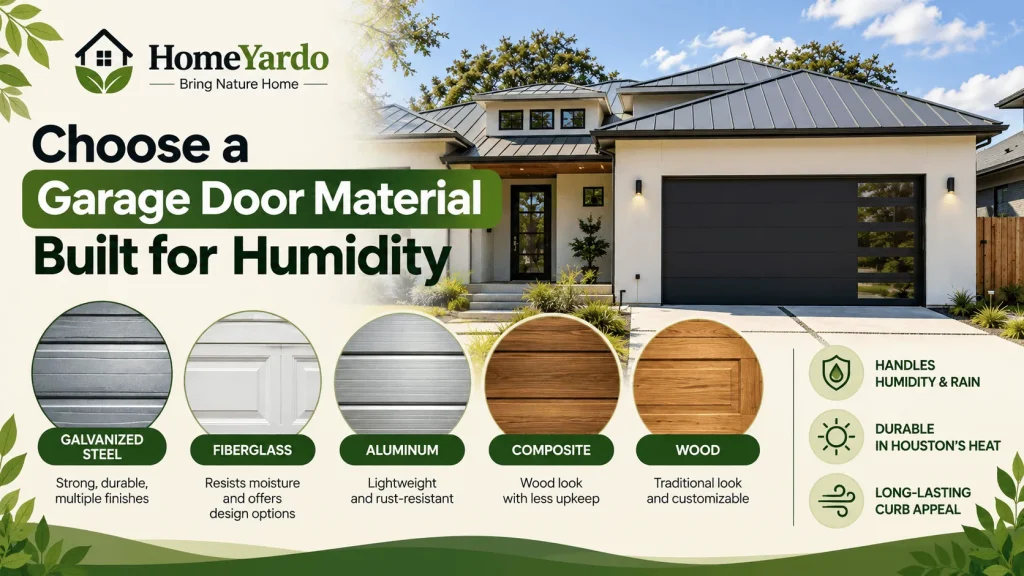
Your garage door occupies a substantial portion of your home’s exterior. Its material, color, and condition can significantly influence curb appeal.
In Houston, garage doors must also withstand heat, humidity, wind-driven rain, and regular exposure to outdoor conditions.
Choosing a suitable material can reduce recurring maintenance while helping the garage complement the rest of your home.
Garage Door Materials That Handle Houston’s Climate Well
Different garage door materials offer different maintenance requirements.
| Material | Benefits | Maintenance Considerations |
|---|---|---|
| Galvanized steel | Strong, durable, and available in several finishes | Scratches and exposed metal may require attention to prevent corrosion |
| Fiberglass | Resists moisture-related rot and offers several design options | Check product suitability for prolonged sun exposure and potential impact damage |
| Aluminum | Lightweight and naturally resistant to red rust | May dent and can develop other forms of surface corrosion |
| Composite | Can replicate the appearance of wood with reduced upkeep | Durability and maintenance requirements depend on product construction |
| Wood | Traditional appearance and customizable designs | Generally requires more frequent finishing and moisture protection |
Insulated garage doors may also help moderate garage temperature, depending on the construction and use of the space. Insulation alone does not prevent moisture intrusion.
Look for corrosion-resistant hardware, durable factory finishes, and weather seals compatible with the door.
Properties exposed to severe storms should also consider applicable wind-load requirements.
If your existing door repeatedly develops rust, warped panels, or deteriorating finishes, professional garage door installation may offer a more practical long-term solution than recurring repairs.
Add Lighting That Doesn’t Require Constant Upkeep
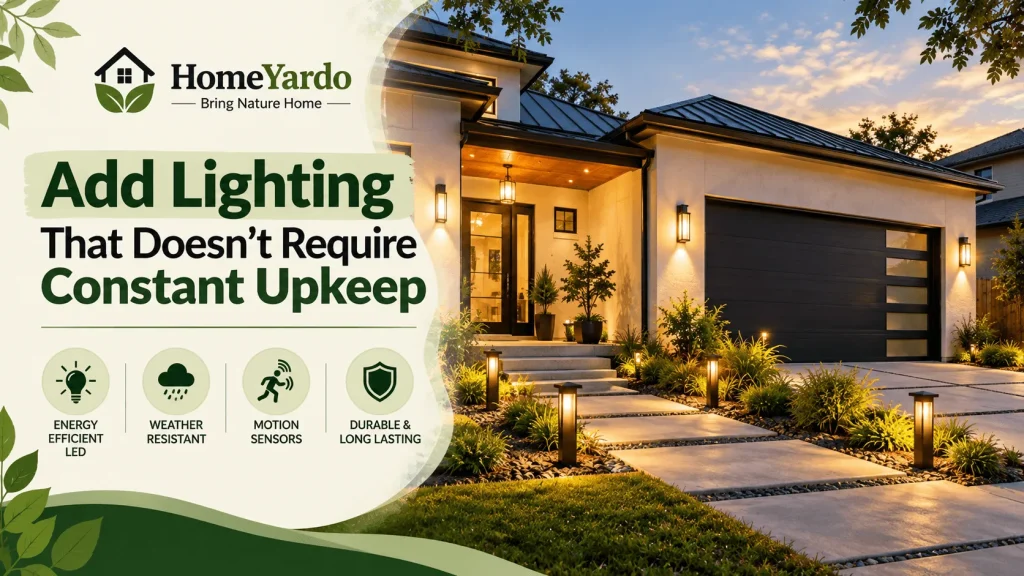
Outdoor lighting improves visibility while making your home’s entrance, garage, and surrounding landscape more attractive.
However, Houston’s outdoor conditions can damage lighting fixtures that are not designed for moisture and temperature exposure.
Choosing appropriate equipment can reduce maintenance and replacement costs.
Choosing Durable Outdoor Lighting Fixtures
Focus on features that combine durability, appearance, and energy efficiency.
- Select fixtures with appropriate outdoor wet-location or damp-location ratings for their installation positions.
- Choose corrosion-resistant materials and protective finishes.
- Consider LED lighting to reduce bulb replacement and electricity consumption.
- Use motion sensors where lighting is needed intermittently.
- Position fixtures so they remain accessible for cleaning and maintenance.
LED lighting is particularly useful around garage entrances, walkways, and exterior doors.
Warm-white lighting can create a welcoming appearance, while carefully positioned fixtures help illuminate pathways without producing unnecessary glare.
Have electrical fixtures installed according to applicable safety requirements.
Reduce Moisture-Related Wear Around the Home
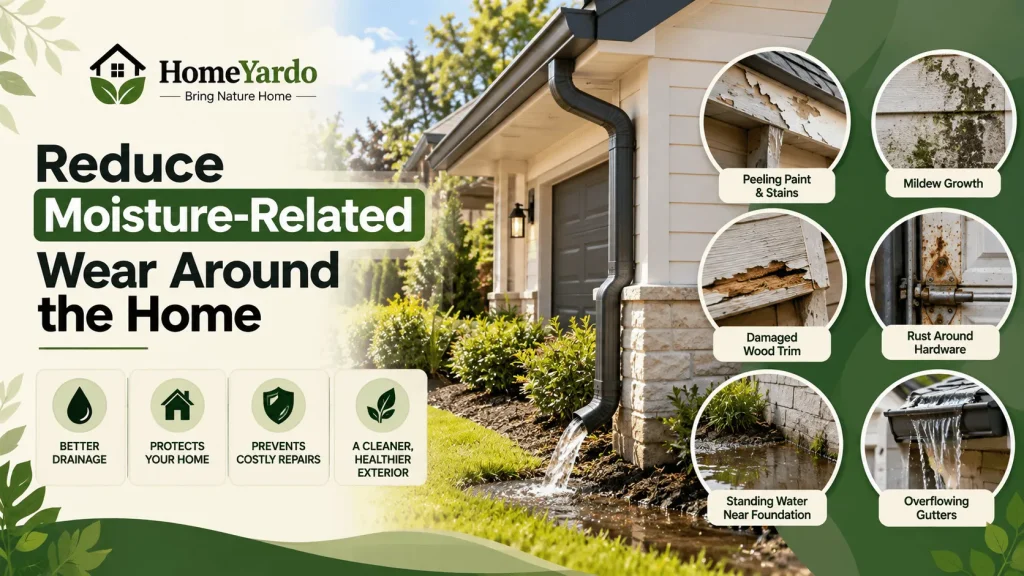
Choosing durable materials is only one part of maintaining an attractive exterior.
Water management is equally important.
Prolonged moisture exposure can damage trim, affect exterior finishes, encourage biological growth, and accelerate corrosion.
Small drainage problems may also become more expensive when ignored.
Common Moisture Issues to Watch For in Houston Homes
During routine exterior inspections, look for:
- Soft, swollen, or discolored wooden trim.
- Peeling paint or staining beneath rooflines.
- Mildew growth on shaded exterior surfaces.
- Rust developing around exposed hardware.
- Water entering around garage doors or exterior entrances.
- Overflowing gutters or downspouts discharging toward the foundation.
- Standing water close to exterior walls.
Inspect gutters and downspouts regularly, especially after major storms.
Keep vegetation from pressing against siding and avoid allowing mulch or soil to cover surfaces that require clearance.
If water repeatedly collects near your foundation, investigate the drainage problem rather than simply covering the affected area.
Persistent water intrusion or substantial deterioration may require professional assessment.
Simplify Garage Door Upkeep With the Right Features
A durable garage door becomes easier to maintain when its components are appropriate for local conditions.
Before replacing or upgrading your garage door, consider features that address weather exposure, reliability, and everyday operation.
Garage Door Features That Reduce Maintenance Needs
Effective weather seals
Suitable bottom and perimeter seals help reduce the entry of rainwater, dust, and insects.
Damaged seals should be replaced with products compatible with the existing door.
HomeYardo’s garage door weather stripping guide explains the different sealing options and their applications.
Suitable rollers and hinges
Quality components can support smoother operation. Maintenance requirements vary between nylon, steel, sealed-bearing, and other roller designs.
Follow the manufacturer’s lubrication recommendations.
Corrosion-resistant hardware
Hardware designed for humid environments may provide improved corrosion resistance.
However, springs, cables, brackets, and related components still require regular inspection.
Smart garage door openers
Some modern openers offer remote monitoring and status notifications.
These features can improve convenience, although they cannot identify every mechanical problem or replace routine safety checks.
Choose components based on compatibility, manufacturer recommendations, and local installation requirements.
Keep Maintenance Minimal With the Right Routine
Even a carefully designed exterior requires periodic attention.
Fortunately, a simple maintenance routine can prevent many minor problems from developing unnoticed.
The objective is to inspect the most exposed features regularly without creating unnecessary work.
A Simple Low-Maintenance Exterior Routine
Use the following schedule as a general starting point.
| Frequency | Maintenance Task |
|---|---|
| Monthly | Visually inspect the garage door and test its safety systems according to the manufacturer’s instructions |
| Every few months | Check exposed hardware, outdoor lighting, exterior finishes, and visible moisture damage |
| Seasonally | Inspect siding, trim, landscaping, drainage, and garage door weather seals |
| After major storms | Look for damaged siding, blocked drainage, loose fixtures, and water intrusion |
| Annually | Review exterior condition and arrange professional servicing where required |
Safe Garage Door Maintenance
Garage doors require special attention because several components operate under substantial tension.
Homeowners can generally perform basic cleaning, visual inspections, and manufacturer-approved routine maintenance.
However, garage door springs, cables, and certain brackets can be dangerous.
Never attempt to adjust or replace high-tension components without appropriate professional training.
If a garage door becomes unusually noisy, moves unevenly, or repeatedly fails to open and close correctly, stop operating it until the problem has been assessed.
For more detailed inspection guidance, use HomeYardo’s garage door maintenance checklist.
If you notice persistent problems, contact a garage door company in Houston, TX for professional assistance.
Addressing mechanical problems promptly may help prevent additional damage and reduce the inconvenience of unexpected repairs.
An Exterior That Stays Attractive With Less Effort
Creating a low-maintenance home exterior requires thoughtful planning rather than eliminating every maintenance task.
Durable siding, appropriate exterior paint, climate-suited landscaping, well-designed hardscaping, and efficient lighting all contribute to a home that remains attractive throughout the year.
In Houston, protecting these improvements against moisture, heat, and heavy rainfall should remain a priority.
Garage doors deserve particular attention because they influence both exterior appearance and everyday convenience.
If your garage door repeatedly develops rust, operates poorly, or no longer suits your property’s appearance, a professional assessment can help determine whether repair or replacement is appropriate.
Garage Door Service Masters provides services for Houston homeowners. Contact the company to discuss your requirements and request an estimate.
Explore its garage door repair in Houston, TX service if your existing door requires professional attention.
Choosing suitable improvements today, followed by manageable routine maintenance, can help keep your home attractive for years.
FAQ’s
A low-maintenance exterior combines durable siding, weather-resistant finishes, appropriate landscaping, and effective drainage. Fiber cement or quality vinyl siding, suitable composite trim, and properly installed exterior features can help reduce ongoing maintenance requirements.
Start by identifying the features that require the most frequent attention. Consider replacing deteriorating materials, improving drainage, reducing unnecessary lawn areas, and selecting exterior products designed for your climate. Establish a manageable inspection and cleaning schedule.
Fiber cement siding, properly installed vinyl siding, suitable composite trim, and corrosion-resistant metal components are common options. The correct choice depends on the installation location, product specifications, exposure, and maintenance requirements.
Vinyl and fiber cement are popular low-maintenance siding options. Vinyl generally requires periodic cleaning rather than painting, while fiber cement provides resistance to rot and insects but may require repainting depending on its finish.