Creating a Low-Maintenance Landscape for a Florida Country Property
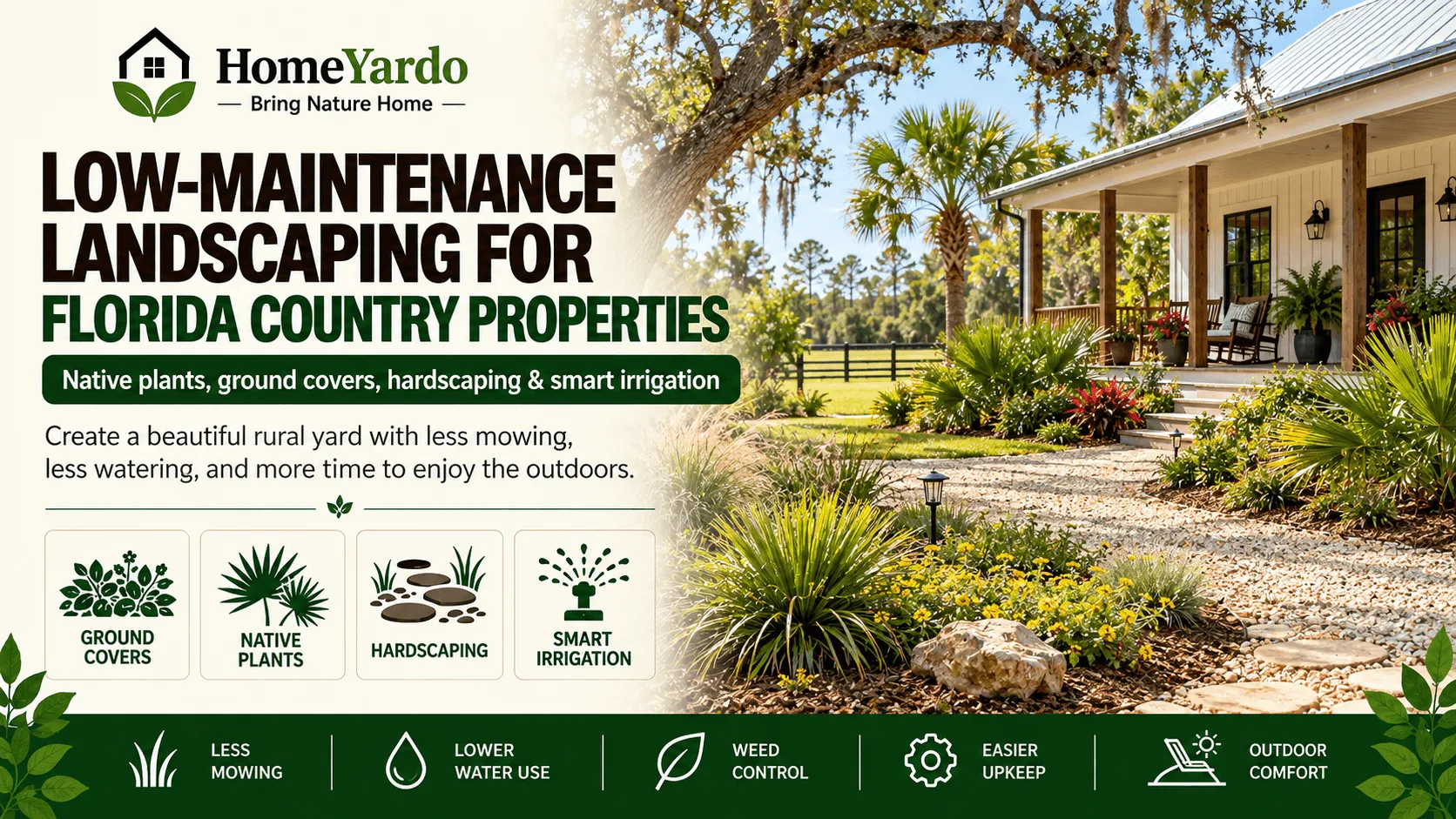
For many, owning a country property in the Sunshine State is a dream come true. Large open areas, warm, sunny days, and lots of space to enjoy the outdoors are your rewards. But maintaining a large yard or acreage in Florida can quickly become a full time job. Traditional landscaping means constant mowing, watering and weeding faced with intense summer heat, sudden torrential downpours, high humidity and aggressive weed growth.
Instead of spending hours riding a lawnmower, would you prefer to spend your weekends lounging on the porch? The secret is a low-maintenance landscape. Good choices up front — native plants, smart layout design, hardscaping — can lead to a beautiful outdoor space that essentially takes care of itself.
1. Replace Big Lawns with Ground Covers
Traditional turf grass is one of the largest time and resource sinks on any country property. St. Augustine and Bermuda grass need to be watered consistently, fertilized often and mowed weekly during the peak of the growing season. Swap vast expanses of grass for native ground covers and you save yourself some immediate work and shrink your water bill.
- Sunshine Mimosa
Known also as a sensitive plant, this fast-spreading ground cover forms a thick green carpet punctuated by soft pink, puff-ball flowers. It stays low to the ground, thrives in poor soil, and requires little or no mowing. - Perennial Peanut
A rugged plant popular in Florida rural properties, it blooms with bright yellow flowers during the warm months. It fixes its own nitrogen in the soil, tolerates drought and naturally suppresses the growth of weeds. - Bahia or Perennial Ryegrass Grass
For larger pastures or open areas that are still used by kids or pets, think about switching to Bahia grass. It thrives in drought conditions and requires none of the high maintenance care that delicate turf grasses need.
2. Use Native Florida Plants
The easiest way to reduce maintenance is to work with mother nature, rather than against her. Over thousands of years, native plants in Florida have adapted to the state’s distinct temperature, soil conditions, and pest challenges. Once established they require very little intervention and rely on natural rainfall.
- Coontie Palm
A hardy cycad-like plant with deep green feathery fronds. It copes with heat, sandy soil and drought. - Saw Palmetto
Excellent for delineating property boundaries or establishing privacy screens. They are reliable producers that need no extra watering or chemical fertilizers. - Firebush
A great way to add a pop of red and orange to your garden beds. “Firebush” likes full sun, tolerates heat and will attract butterflies and hummingbirds to your yard. - Florida Flame Vine and Coral Honeysuckle
Great for growing along property fences or trellises. Despite their lovely hues, they won’t develop into invasive nightmare vines that require frequent pruning.
By grouping plants that need similar amounts of light and water together, you can establish smart irrigation zones. In order to avoid wasting water on places that don’t require it.
3. Create Functional Areas with Hardscaping
One of the easiest ways to lower lawn maintenance on large rural lots is to replace grass with permanent hardscape elements. Hardscaping provides neat, functional outdoor living spaces that need no watering or mowing.
- Gravel and Crushed Shell Driveways
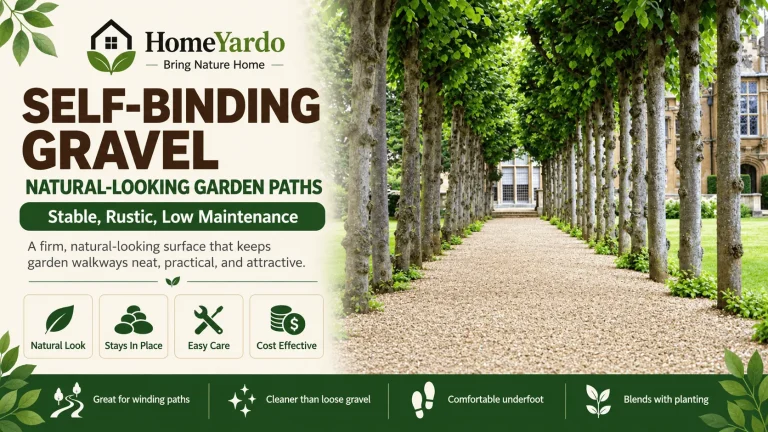
Why maintain acres of lawn or concrete when you can have crushed granite, gravel or shell driveways and pathways? They give your rural house a traditional, laid-back appearance and naturally drain water during strong summer storms. Before adding gravel, shell, pavers, or other hardscape materials, check how water already moves across the property. If rain regularly leaves standing water, address the underlying issue before installation; this guide on how to fix yard drainage explains common drainage problems and possible solutions. - Mulched Garden Beds
Apply a thick layer of three to four inches of pine straw or shredded hardwood mulch around trees and planting sites. Additionally, mulch retains moisture, controls soil temperature, and keeps weeds from overtaking your beds. - Paver Patios and Fire Pit Areas
A simple stone paver patio or designated gravel fire pit area makes for a great place for evening gatherings while permanently reducing the total square footage of grass you have to manage.
4. Install Efficient Smart Irrigation
Even low-maintenance landscapes need a little help during dry spells, especially when young plants are developing strong root systems. A good watering system means no more dragging hoses all over your property.
- Drip irrigation
With little evaporation loss, water is supplied to plant roots via drip lines. They prevent fungal leaf issues on plants brought on by overhead sprinklers. - Rain Sensors
To avoid wasting water during Florida’s regular summer downpours, be sure your automatic sprinkler system has a functional rain shut-off sensor. - Rain Sensors
To avoid wasting water during Florida’s regular summer downpours, be sure your automatic sprinkler system has a functional rain shut-off sensor.
Picking the Right Rural Property for Your Goals
Selecting a plot of land that fits your lifestyle is the first step in creating a low-maintenance landscape plan. Whether you’re searching for peaceful farmhouse settings, wooded property, or rolling pastures, Florida’s rural real estate is immensely varied. It is much easier to find acreage with good soil, mature trees and natural drainage when working with seasoned land specialists.
To obtain a sense of the kinds of parcels available in your target location, take some time to go over the current Florida land for sale listings before making a purchase. Early on, you’ll want to review property features such as existing tree canopy, elevation and soil types so you can plan a beautiful landscape with minimal effort later on.
Work Harder Not Smarter
The key to creating a low maintenance country landscape is selecting the right elements for the local environment. You can have a sprawling, scenic property without doing heavy yard work every weekend. Reduce turf grass, use native species, and add hardscaping.
FAQ’s
A practical Florida low-maintenance landscape usually combines climate-suited plants, limited functional lawn, ground covers, mulched beds, efficient irrigation, well-planned drainage, and useful hardscaping. The right combination depends on the property’s soil, sunlight, moisture, and intended use.
Depending on the site, options can include sunshine mimosa, perennial peanut, other suitable ground covers, mulched planting beds, gravel, paths, patios, and naturalized areas. Choose replacements according to sunlight, drainage, foot traffic, and local conditions.
Bahia grass can be useful for sunny areas where turf is still needed. It is relatively drought tolerant and has lower nitrogen requirements than some higher-input Florida turfgrasses, although it still requires mowing and periodic care.
Coontie, saw palmetto, firebush, coral honeysuckle, sunshine mimosa, and other Florida natives may work well when matched to the site’s conditions. Native status alone does not guarantee low maintenance, so mature size, soil, drainage, sunlight, and moisture requirements should also be considered.
Start by identifying turf that serves no recreational, access, erosion-control, or aesthetic purpose. Some of these areas can be converted to ground covers, mulched beds, naturalized vegetation, paths, patios, or other lower-care surfaces.
Yes, particularly while becoming established. Once established, appropriately selected native and Florida-adapted plants may need less supplemental irrigation, but requirements vary by species, site, rainfall, and season.
Gravel can work for paths, driveways, and selected landscape areas, but drainage, erosion, heat, accessibility, weeds, and movement of loose material should be considered. It is low maintenance in suitable locations, not maintenance-free.
Divide the land into management zones. Maintain the area around the home more intensively, use simpler low-care landscaping farther out, and preserve appropriate natural areas where possible. This prevents the entire property from requiring the same mowing, watering, and pruning schedule.