Garage Door Maintenance Checklist for Safe, Efficient Operation

A garage door may look simple from the outside, but several moving parts work together every time it opens or closes. Springs counterbalance the weight, cables help control movement, rollers travel through the tracks, sensors monitor the closing path, and the opener keeps the system moving at the push of a button.
When one part becomes worn, dirty, loose, or poorly aligned, the door may become noisy, move unevenly, place extra strain on the opener, or stop working altogether.
A practical garage door maintenance checklist can help homeowners catch small problems before they develop into more expensive repairs. Most routine checks only require a few minutes, but knowing which tasks are safe for homeowners and which should be left to trained technicians is just as important.
Quick Garage Door Maintenance Checklist
Use this checklist during routine inspections:
| Area | What to Check | Suggested Frequency |
|---|---|---|
| Springs | Rust, gaps, unusual noise or visible damage | Monthly visual check |
| Cables | Fraying, loose strands or uneven tension | Monthly visual check |
| Rollers and hinges | Noise, wear and smooth movement | Every few months |
| Tracks | Dirt, debris and obvious damage | Every few months |
| Safety sensors | Alignment, cleanliness and reversal response | Monthly |
| Door balance | Smooth manual movement and stable position | Periodically |
| Weather seals | Cracks, gaps and daylight around the door | Seasonally |
| Hardware | Loose bolts, brackets and fasteners | Seasonally |
| Opener | Unusual noises, hesitation or repeated reversing | Monthly |
Routine inspection does not mean homeowners should adjust every component themselves. Springs, cables and related high-tension hardware can store considerable mechanical force and should be treated differently from basic cleaning or lubrication.
Check the Springs and Cables for Visible Wear
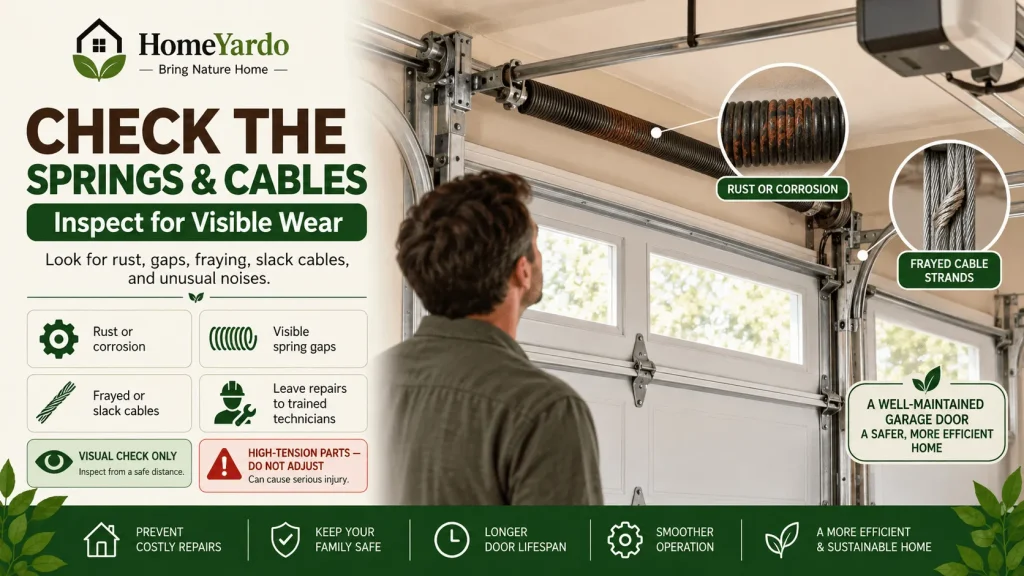
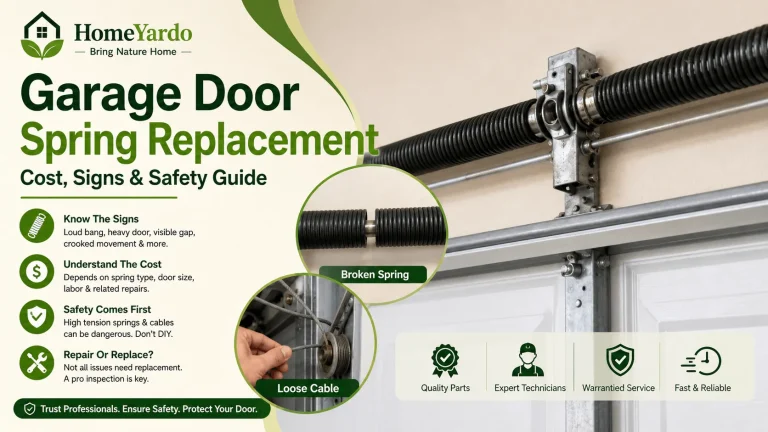
Garage door springs do much of the work involved in lifting and lowering the door. The opener assists with movement, but it should not have to compensate for a poorly balanced or damaged spring system.
Stand at a safe distance and visually inspect the springs.
Look for:
- Rust or heavy corrosion
- Visible gaps in a torsion spring
- Stretched or distorted extension springs
- Unusual movement when the door operates
- New popping, snapping or grinding noises
Cables also deserve attention. Look for frayed strands, corrosion, slack cables or cables that appear uneven from one side of the door to the other.
Do not pull, tighten or attempt to reposition damaged cables.
Many homeowners rely on overhead door specialists when springs, cables or other loaded components show signs of deterioration. That is the safer approach because these parts operate under high tension.
DASMA advises homeowners to inspect cables visually and leave replacement of worn cables and high-tension spring components to trained technicians.
Check the Hardware Without Adjusting the Spring System
Normal vibration can gradually loosen some accessible nuts, bolts and brackets.
Visually inspect hinges, track supports and other standard fasteners for obvious looseness. Hardware that is clearly associated with springs, bottom brackets, cable attachment points or other tensioned components should not be adjusted casually.
If the door begins shaking, rattling or moving differently after hardware becomes loose, stop operating it until the cause is identified.
Lubricate Moving Parts Correctly
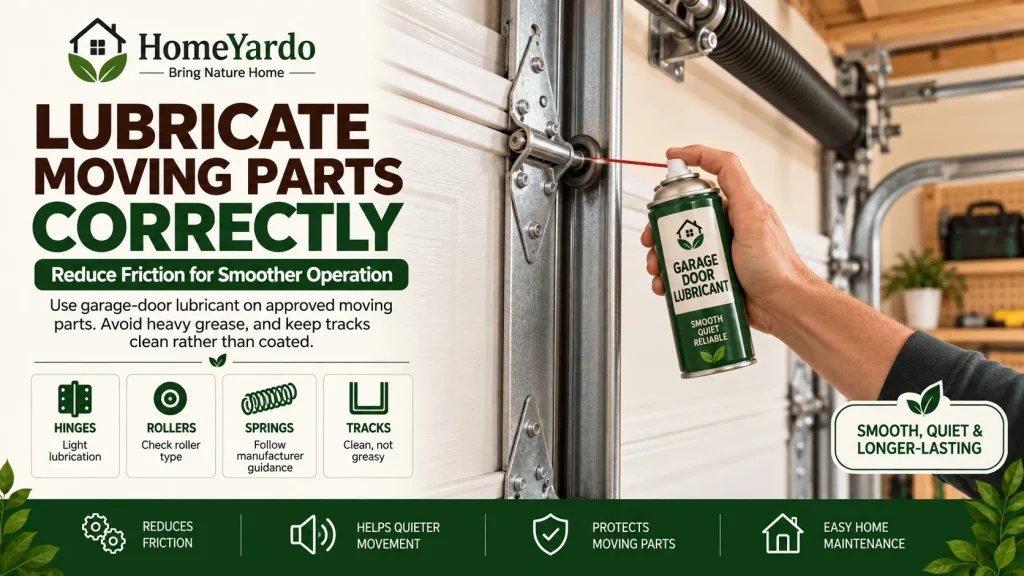
Friction makes a garage door work harder and often produces squeaking, scraping or chattering sounds.
Hinges, rollers and other manufacturer-approved lubrication points may benefit from periodic lubrication. Use a product recommended for garage doors or the lubricant specified in the door manufacturer’s manual.
Avoid applying thick grease everywhere. Heavy greases can collect dirt and grit, which may create more resistance rather than less.
Pay attention to:
Hinges
Apply a small amount of suitable lubricant to moving hinge points when recommended by the manufacturer.
Rollers
Lubrication requirements depend on roller construction. Some rollers contain sealed bearings or materials that should not be coated indiscriminately.
Springs
Some manufacturers recommend light lubrication of torsion springs, but homeowners should follow the instructions for their specific system rather than assuming every spring should be treated the same way.
Tracks
Tracks usually need to be clean rather than heavily lubricated. Grease inside the track can trap dirt and interfere with roller movement.
Keep the Tracks Clean and Unobstructed
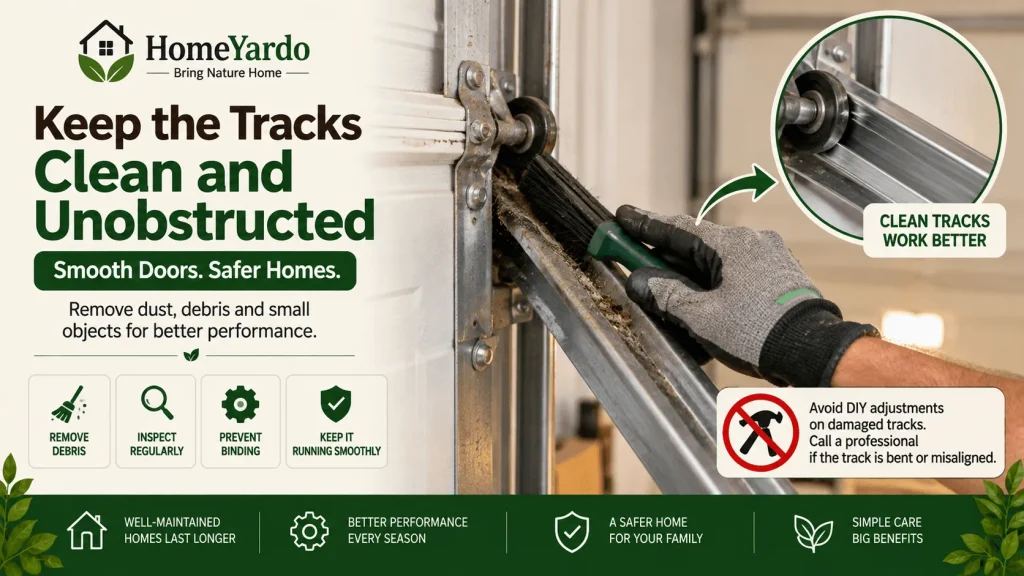
Leaves, dust, grit and small objects can collect around garage door tracks.
Clear loose debris with a soft brush or cloth. Inspect the tracks for obvious bends, loose mounting points or damage.
Do not repeatedly operate a door that is binding against a damaged track.
The original approach of striking bent tracks with a mallet is better removed from a general homeowner maintenance guide. Track alignment affects how the rollers and door panels travel, and an incorrect adjustment can create a larger problem.
If a track is visibly bent, pulling away from the wall or preventing smooth movement, professional assessment is safer.
Test the Garage Door Safety Sensors
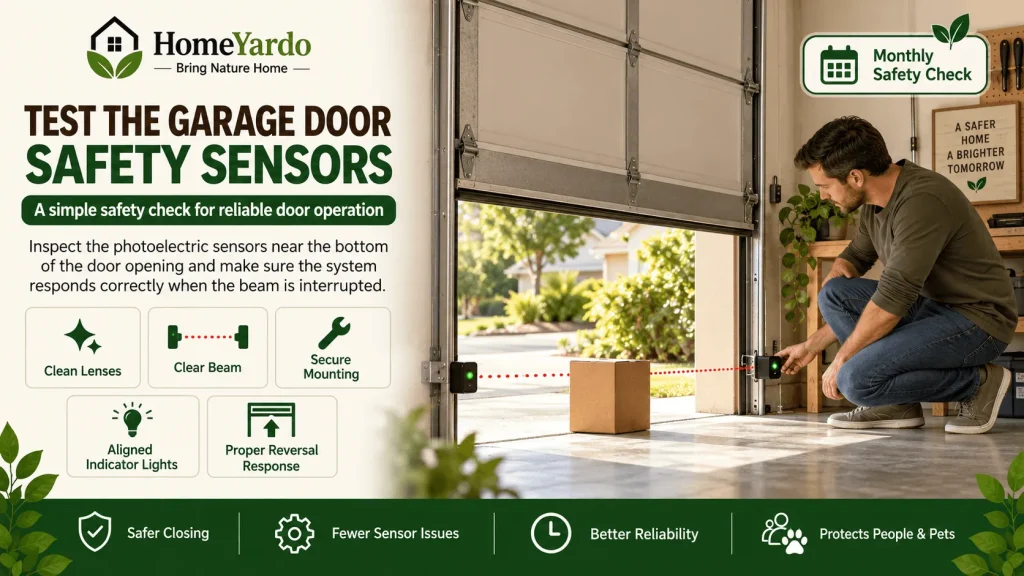
Automatic garage door openers use safety systems designed to reduce the risk of the door closing on a person, pet or object.
Photoelectric sensors are generally positioned near the bottom of the door opening.
Check that:
- Both sensor lenses are clean
- Nothing blocks the beam
- Sensors remain securely mounted
- Indicator lights show proper alignment where applicable
- The door responds correctly when the sensor beam is interrupted
Dust, cobwebs or accidental movement can sometimes cause sensor problems.
Follow the opener manufacturer’s testing procedure for your model. DASMA recommends regular inspection and testing of garage door opener safety systems rather than waiting until a fault becomes obvious.
Test the Automatic Reversal System
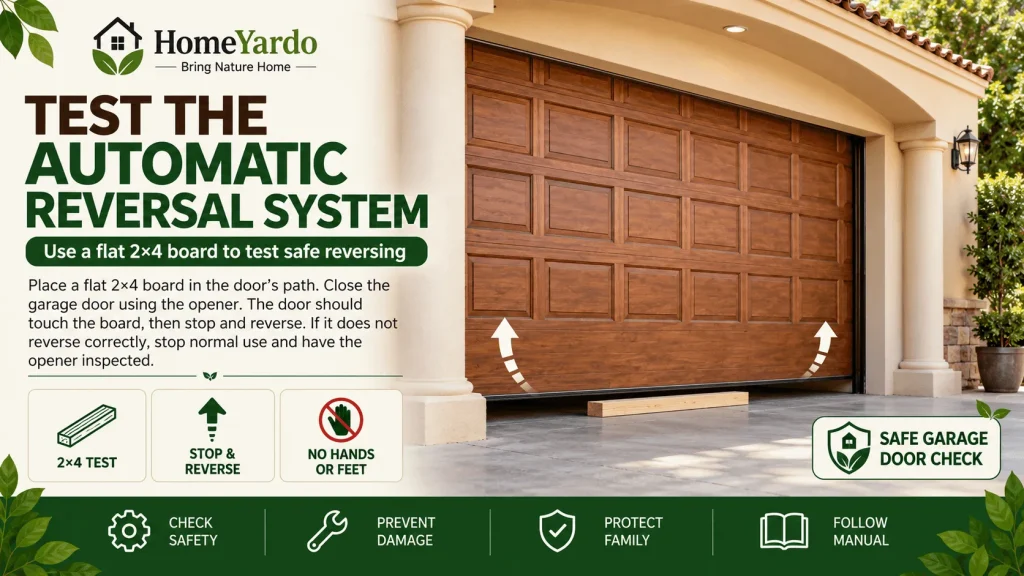
Sensor testing and contact-reversal testing are related but separate checks.
Many opener manufacturers provide a procedure for testing whether the door reverses after meeting an obstruction.
Use the exact test described in your opener’s manual. DASMA guidance commonly uses a flat 2×4 board placed in the door’s path as part of a reversal test. If the door does not stop and reverse as specified, the opener should be inspected or serviced before normal operation continues.
Never use a person, pet, hand or foot to test the reversal system.
Check the Garage Door Balance
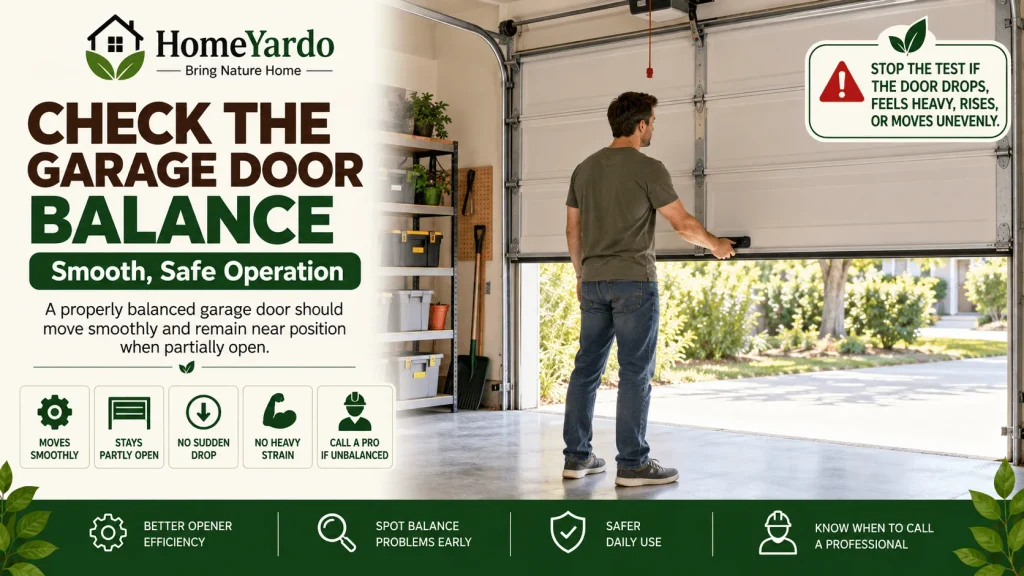
A properly balanced door should not depend on the opener motor to carry excessive door weight.
Before performing a balance test, read the manufacturer’s instructions. The door should normally be closed before disconnecting it from the opener.
Once safely disconnected, operate the door manually using the provided handle or suitable gripping points.
The movement should feel controlled rather than excessively heavy, jerky or uneven.
When partially opened, a properly balanced door should generally remain near its position rather than immediately dropping or shooting upward.
If the door:
- Drops rapidly
- Feels unusually heavy
- Rises unexpectedly
- Moves unevenly
- Cannot remain partially open
stop the test and arrange professional service.
An unbalanced garage door can place unnecessary load on the opener and may indicate a spring or counterbalance problem. The U.S. Consumer Product Safety Commission also advises professional service when a garage door binds, sticks or is seriously out of balance.
Inspect the Weather Seals Around the Door
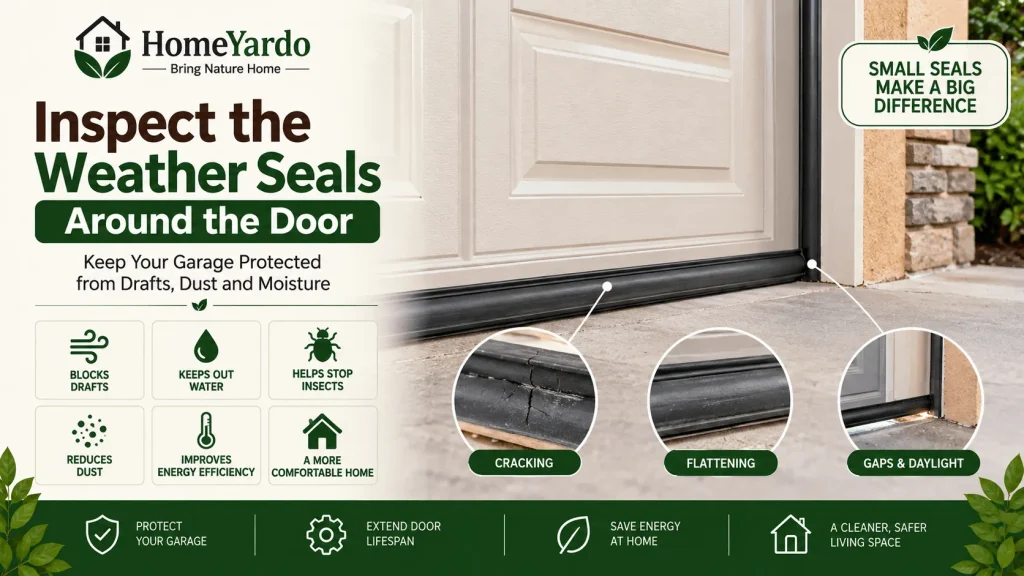
Mechanical efficiency is only one part of garage door performance.
Worn weather stripping can allow daylight, drafts, dust, insects and rainwater to enter around the bottom, sides or top of the door.
Inspect the seals for:
- Cracking
- Flattening
- Missing sections
- Brittleness
- Gaps at the corners
- Daylight around a closed door
- Water entry after rain
Homeowners dealing with damaged seals can also review the HomeYardo guide to garage door weather stripping, which explains bottom seals, perimeter seals, threshold seals and common installation problems.
A good seal should make consistent contact without creating so much resistance that the door struggles to move.
Listen to the Door During Operation
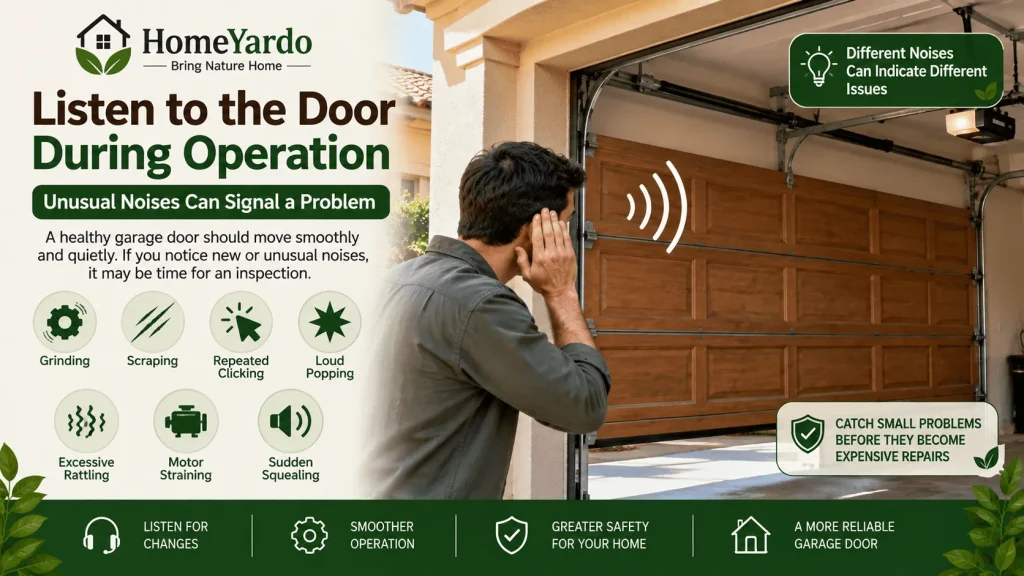
Sound can provide an early warning that something has changed.
Operate the door from a safe position and listen for new noises.
A healthy system should normally move with consistent sound and speed. Investigate changes such as:
- Grinding
- Scraping
- Repeated clicking
- Loud popping
- Excessive rattling
- Motor straining
- Sudden squealing
Noise alone does not identify the faulty component, but a change from the door’s normal behavior is worth investigating.
Do not repeatedly cycle the door just to reproduce a concerning sound.
Watch the Door’s Movement
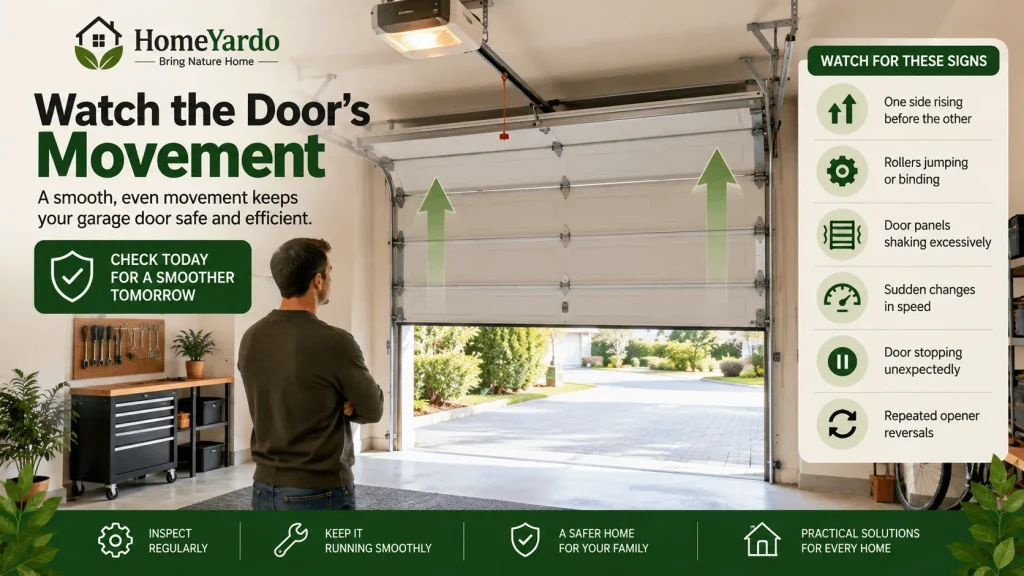
Observe the garage door from inside while it completes a full cycle.
The door should move evenly on both sides without obvious shaking, hesitation or twisting.
Watch for:
- One side rising before the other
- Rollers jumping or binding
- Door panels shaking excessively
- Sudden changes in speed
- Door stopping unexpectedly
- Repeated opener reversals
Uneven travel can result from several different conditions, including track, roller, cable, spring or alignment problems. Avoid diagnosing a complex mechanical fault from one symptom alone.
Check the Garage Door Opener
The opener should move a properly functioning door without excessive strain.
Pay attention if the opener begins:
- Running noticeably louder
- Hesitating before movement
- Stopping during travel
- Reversing repeatedly
- Moving the door much more slowly
- Making grinding or humming noises
Sometimes the opener is blamed when the underlying problem is actually the door itself.
If the door feels difficult to operate manually, repair the mechanical issue rather than expecting a stronger opener to compensate for it.
Keep the Area Around the Garage Door Clear
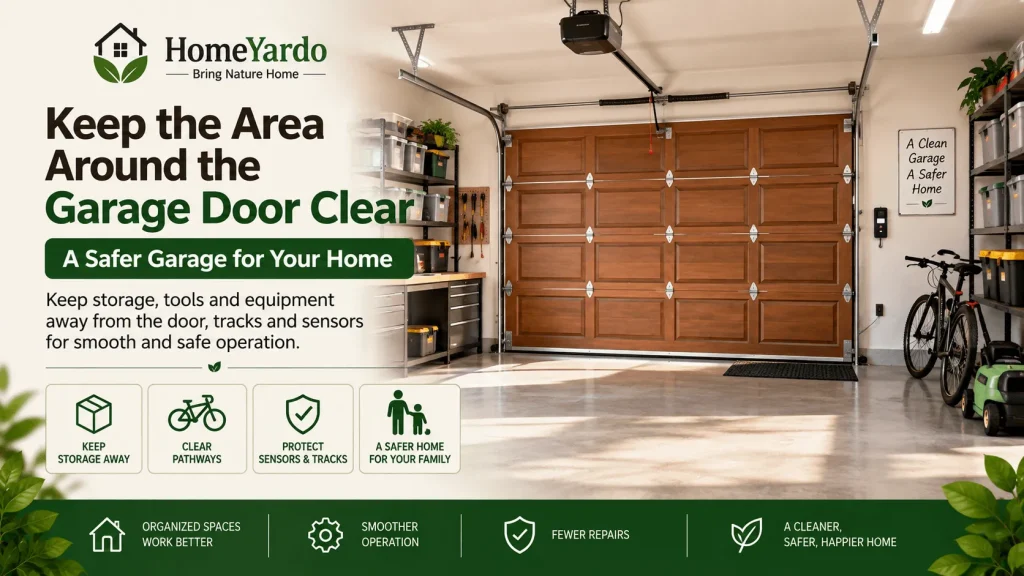
Garage maintenance also includes the surrounding space.
Storage boxes, bicycles, tools and yard equipment should not interfere with door tracks, sensors, handles or emergency-release components.
If the garage doubles as a work area, HomeYardo’s guide on setting up a functional garage workshop at home can help organize tools and storage without compromising access to major garage systems.
Keep children away from wall controls, remotes and moving doors.
Follow a Seasonal Garage Door Maintenance Routine
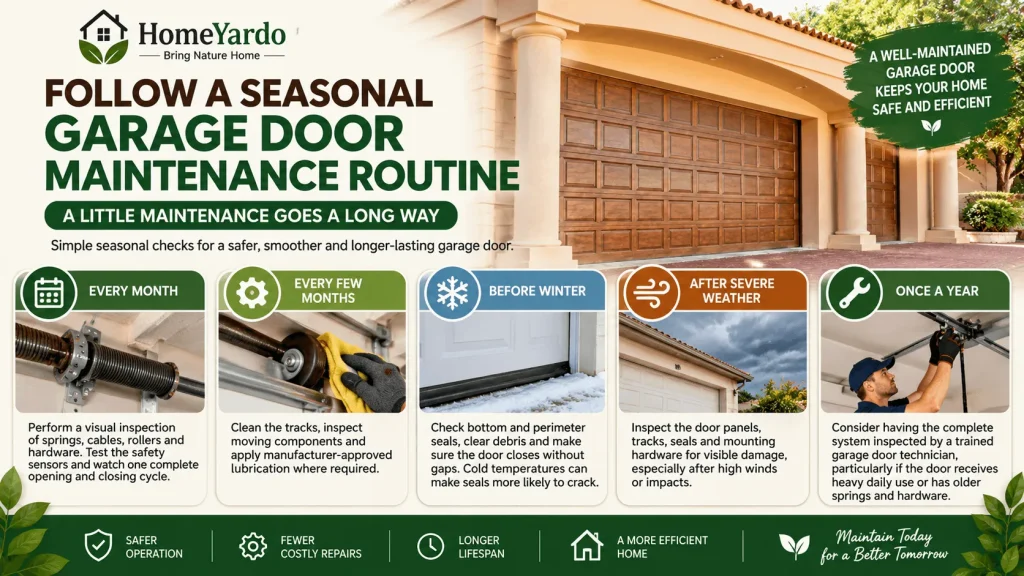
A simple seasonal schedule makes maintenance easier to remember.
Every Month
Perform a visual inspection of springs, cables, rollers and hardware. Test the safety sensors and watch one complete opening and closing cycle.
Every Few Months
Clean the tracks, inspect moving components and apply manufacturer-approved lubrication where required.
Before Winter
Check bottom and perimeter seals, clear debris and make sure the door closes without gaps. Cold temperatures can make already brittle seals more likely to crack.
After Severe Weather
Inspect the door panels, tracks, seals and mounting hardware for visible damage, especially after high winds or impacts.
Once a Year
Consider having the complete system inspected by a trained garage door technician, particularly if the door receives heavy daily use or has older springs and hardware.
DASMA recommends monthly homeowner safety checks and notes that an annual technician visit can help identify worn components before they fail.
Maintenance Tasks Homeowners Should Not Attempt
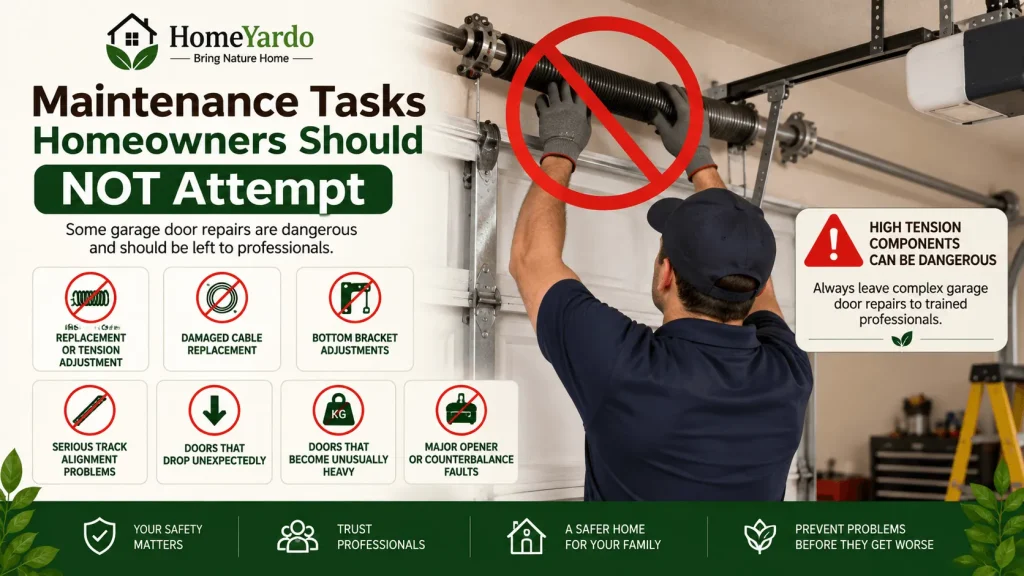
Routine garage door maintenance has clear limits.
Cleaning sensors, removing loose debris and performing manufacturer-approved inspections are very different from adjusting components that store or control mechanical energy.
Professional service is generally the safer choice for:
- Spring replacement or tension adjustment
- Frayed or damaged cable replacement
- Bottom bracket adjustments connected to spring tension
- Serious track alignment problems
- Doors that drop unexpectedly
- Doors that become unusually heavy
- Major opener or counterbalance faults
Never loosen a component simply because it appears to be causing tension. Springs and connected hardware can release energy suddenly.
Signs Your Garage Door Needs Professional Service
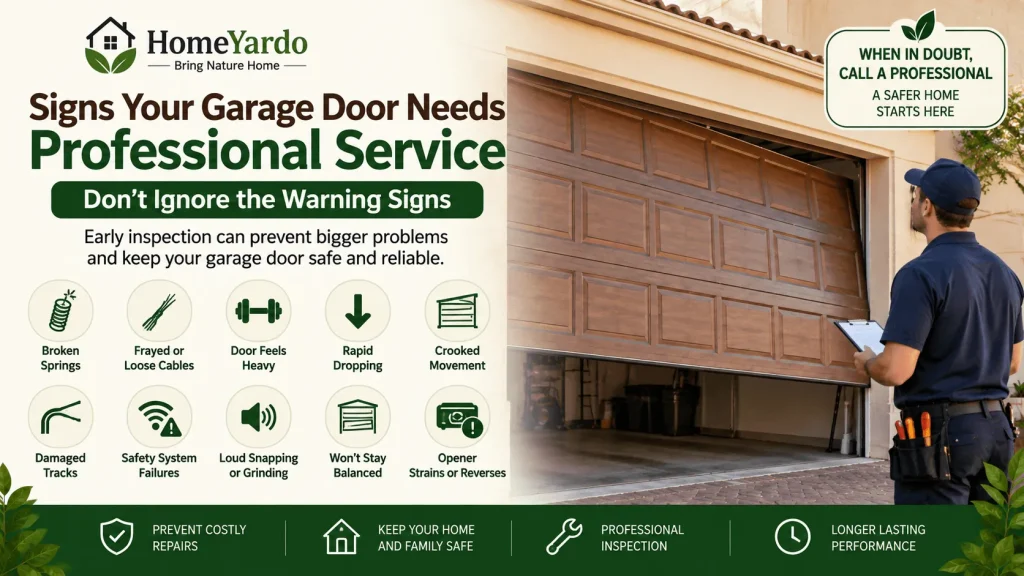
Contact a qualified technician when maintenance reveals a problem rather than continuing to operate the door.
Warning signs include:
- A visibly broken spring
- Frayed or loose cables
- A door that suddenly feels heavy
- Rapid dropping
- Crooked movement
- Damaged tracks
- Repeated safety-system failures
- Loud snapping or grinding sounds
- A door that will not remain balanced
- An opener that continually strains or reverses
Stopping early may prevent one damaged component from placing additional stress on other parts of the system.
Maintain Garage Door Efficiency Year-Round
Garage door efficiency depends on more than the opener motor.
Smooth rollers, properly functioning springs, intact cables, clean tracks, working safety sensors, good balance and effective weather seals all contribute to reliable operation.
A few minutes of regular inspection can make changes easier to notice before they interrupt everyday use. Homeowners can handle basic cleaning, inspection and manufacturer-approved lubrication, while spring, cable and major alignment work should remain with trained professionals.
Treat the garage door as a complete system rather than a collection of individual parts. When the components move smoothly together, the opener works under less unnecessary strain and the door remains easier to use throughout the year.
FAQ’s
Basic visual and safety checks can be performed monthly. Cleaning, lubrication and hardware inspection may be needed every few months depending on usage, climate and the manufacturer’s recommendations.
A useful checklist should cover springs, cables, rollers, hinges, tracks, safety sensors, reversal systems, door balance, weather seals, hardware and opener performance.
Usually, tracks should be kept clean rather than coated with heavy lubricant. Lubrication is more commonly applied to manufacturer-approved moving points such as hinges or certain rollers.
Possible signs include a door that feels unusually heavy, drops when partially opened, rises on its own, moves unevenly or causes the opener to strain. A technician should inspect significant balance problems.
Spring adjustment is not recommended as routine homeowner maintenance. Garage door springs operate under high tension, and incorrect handling can cause serious injury or property damage.
Possible causes include blocked or misaligned safety sensors, an obstruction, opener settings, resistance in the door’s movement or another mechanical problem. Check the manufacturer’s troubleshooting instructions before changing adjustments.
Testing them monthly is a practical routine. The door should respond according to the opener manufacturer’s safety-test instructions.
Noise can come from dry moving parts, worn rollers, loose hardware, track problems, spring issues or opener components. A sudden change in sound deserves more attention than the normal operating noise of the system.
Yes. Worn seals can allow drafts, dust, moisture and outdoor air through gaps around the door. Good weather stripping helps create a more complete barrier when the garage door is closed.
Arrange professional service when springs or cables are damaged, the door drops unexpectedly, movement becomes uneven, tracks are significantly damaged, safety systems repeatedly fail or the door becomes unusually heavy.