Heat Pump Installation In Central PA: What Homeowners Should Know
A heat pump can replace separate heating and cooling equipment with one system, but choosing one for a Central Pennsylvania home takes more than comparing brands and efficiency ratings.
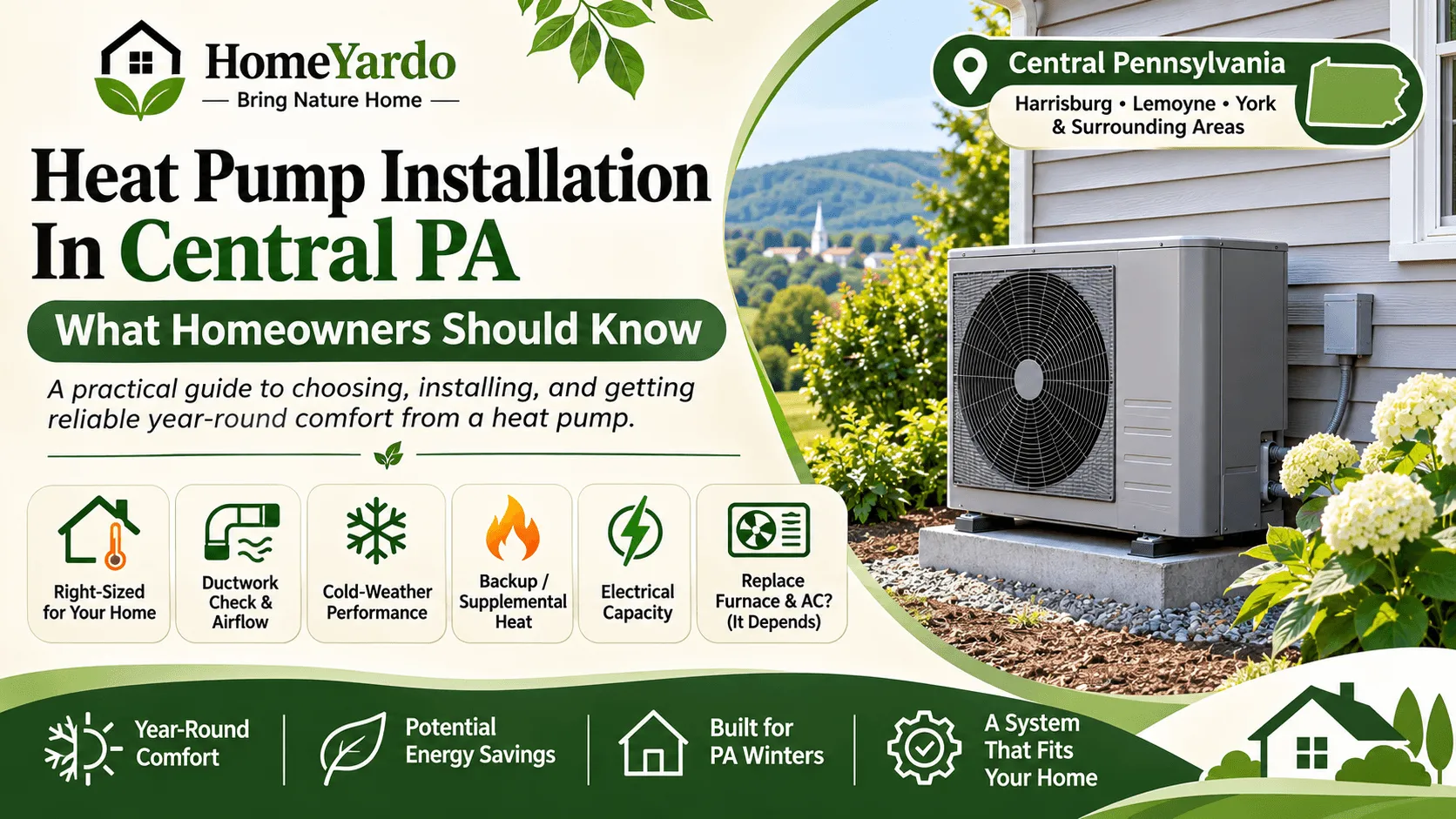
Before installation, homeowners should look at four things: the home’s actual heating and cooling load, the condition of the ductwork, the heat pump’s performance in cold weather, and the plan for supplemental heat if it is needed.
Those details matter more than simply choosing the biggest or highest-rated unit.
Around Harrisburg, Lemoyne, York, and surrounding Central PA communities, the right setup will also depend on the house itself. An older home with air leakage, aging ducts, or oil heat presents a different conversion project from a newer, well-insulated house with modern ductwork.
If you’re ready to price out the switch, heat pump installation in Lemoyne, PA can provide a real estimate based on the property. Before comparing quotes, though, it helps to understand what the installer should be evaluating.
Quick Answer: What Should You Decide Before Installing a Heat Pump?
Before installing a heat pump in Central PA, determine:
- How much heating and cooling your home actually needs
- Whether the existing ductwork can support the required airflow
- How much heating capacity the proposed unit retains in cold weather
- Whether supplemental or backup heat is needed
- Whether your electrical system can support the new equipment
- Whether replacing the existing furnace and AC together makes financial sense
A contractor should evaluate the house before recommending equipment size. Square footage alone isn’t enough.
How A Heat Pump Works Differently From A Furnace
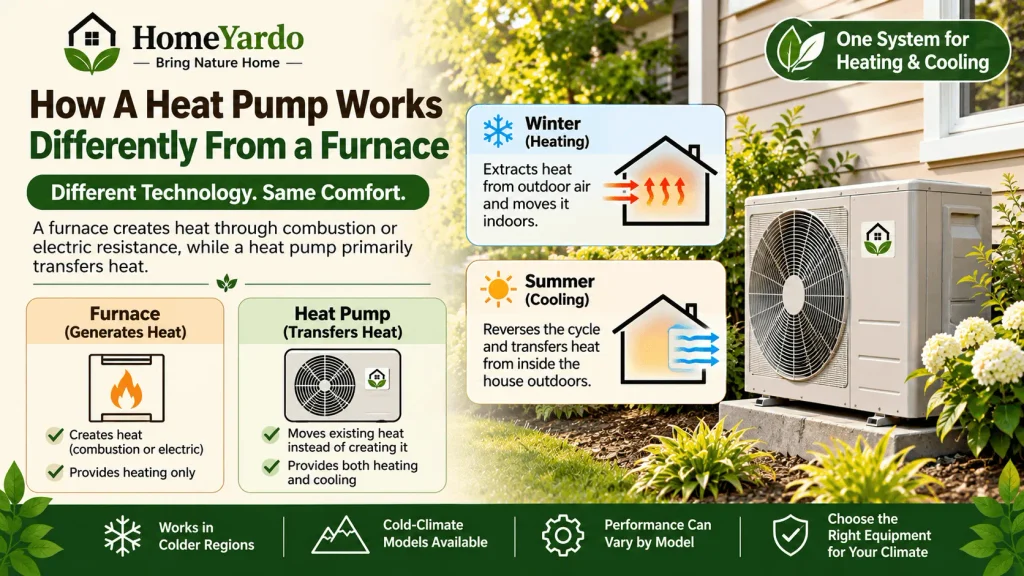
A furnace creates heat through combustion or electric resistance. An air-source heat pump primarily transfers heat.
During winter, it extracts heat from outdoor air and moves that energy indoors. During summer, the refrigeration cycle reverses and transfers heat from inside the house outdoors.
That allows the same system to provide heating and cooling.
The U.S. Department of Energy explains that modern air-source heat pumps can work in colder regions and that cold-climate models are designed specifically for lower outdoor temperatures.
That doesn’t mean every heat pump performs the same way when temperatures fall. Equipment selection still matters.
Will a Heat Pump Work During A Central PA Winter?
Yes, a properly selected modern heat pump can operate during cold Pennsylvania weather. The more useful question is whether a particular model can supply enough heat for your house at the local winter design conditions.
Heat-pump capacity changes as outdoor temperatures change.
A unit advertised with a particular nominal capacity does not necessarily deliver that full heating output during the coldest weather. That’s why homeowners should ask to see manufacturer performance data at lower outdoor temperatures.
Look Beyond the Nominal Tonnage
Two systems with similar nominal sizes can have different low-temperature heating performance.
Ask the installer:
- What is this model’s heating capacity at low outdoor temperatures?
- What outdoor temperature was used for the home’s heating-load calculation?
- At what temperature might supplemental heat be required?
- Is the system designed to carry the full heating load or only part of it?
Cold-climate equipment should be selected using its actual performance data rather than the number printed most prominently on the sales literature.
Start With a Proper Heating And Cooling Load Calculation
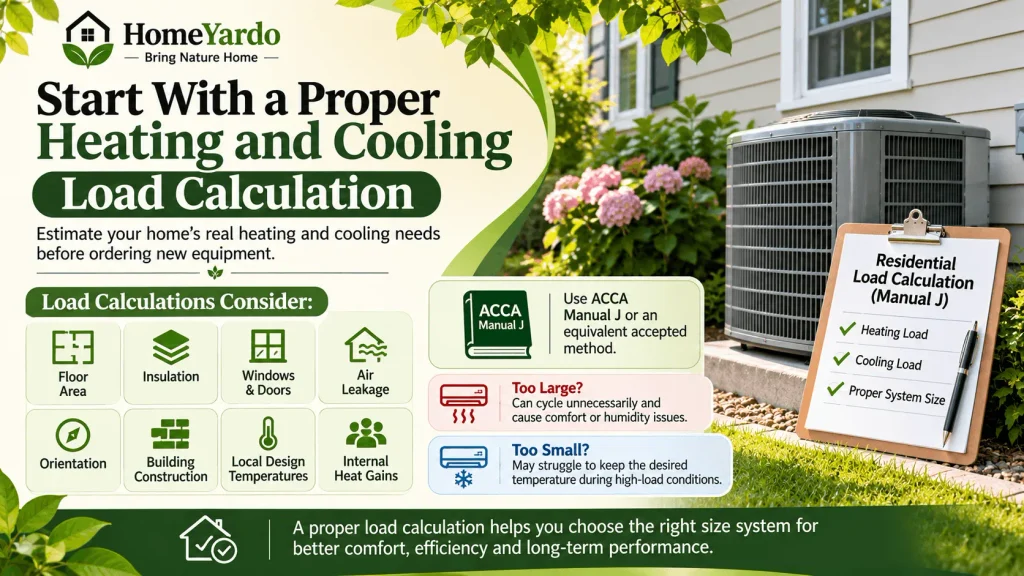
One of the most important steps happens before equipment is ordered.
A residential load calculation estimates how much heating and cooling the house needs based on factors such as:
- Floor area
- Insulation
- Windows and doors
- Air leakage
- Orientation
- Building construction
- Local design temperatures
- Internal heat gains
Contractors commonly use ACCA Manual J or an equivalent accepted method.
Sizing from square footage alone can miss major differences between two houses of similar size.
An oversized system can cycle unnecessarily and create comfort or humidity problems. An undersized system may struggle to maintain the desired indoor temperature during high-load conditions.
If your existing equipment has already been struggling, review the home’s HVAC warning signs before assuming that simply installing a larger replacement will solve the problem.
Check the Ductwork Before Choosing Equipment
A high-performing heat pump cannot compensate for a badly designed distribution system.
Existing ducts should be assessed for:
- Leakage
- Insulation
- Supply and return sizing
- Restricted sections
- Poor connections
- Damaged flex duct
- Inadequate return-air paths
- Airflow requirements of the proposed equipment
This matters because heat pumps may need different airflow characteristics from the equipment they replace.
Ask the contractor whether the existing ducts can handle the required airflow and whether any sealing, resizing, insulation, or return-air improvements should happen before installation.
If ductwork is not practical or the house needs independent temperature control in several areas, a ductless or multi-zone system may also be worth discussing. HomeYardo’s guide to a 4 zone mini split system explains how zoning can work in homes with rooms that have different heating and cooling demands.
Should You Replace Both The Furnace and AC?
Sometimes. Not always.
If both systems are approaching replacement age, moving to one heat pump system may simplify the decision. If the furnace is relatively new and performing well, removing it immediately may not offer the best value.
Consider:
- Age and condition of the furnace
- Age and condition of the AC
- Recent repair history
- Current fuel type
- Electricity and fuel costs
- Home insulation and air sealing
- Heat-pump installation cost
- Expected equipment performance
- Available incentives
- Whether dual-fuel operation makes sense
If the cooling system is already giving you trouble, our guide on when to replace your air conditioner can help separate a repair problem from a broader replacement decision.
What About Dual-Fuel Heating?
A heat pump does not always have to mean removing a furnace.
A dual-fuel or hybrid system pairs a heat pump with a compatible furnace. The heat pump handles heating under selected conditions, while the furnace can take over according to the system’s controls and balance-point strategy.
That can be worth discussing in homes where the owner wants to retain fuel-based backup heat.
Check Electrical Capacity Before Installation
Switching from oil, propane, or gas heating to electric heat-pump equipment can change the home’s electrical demand.
The contractor may need to review:
- Electrical service capacity
- Main panel capacity
- Available breaker space
- Required circuits
- Outdoor disconnects
- Indoor air-handler requirements
- Supplemental electric heat, if specified
Not every installation requires an electrical service upgrade. The point is to check before equipment is ordered rather than discover a limitation on installation day.
What Happens During Heat Pump Installation?
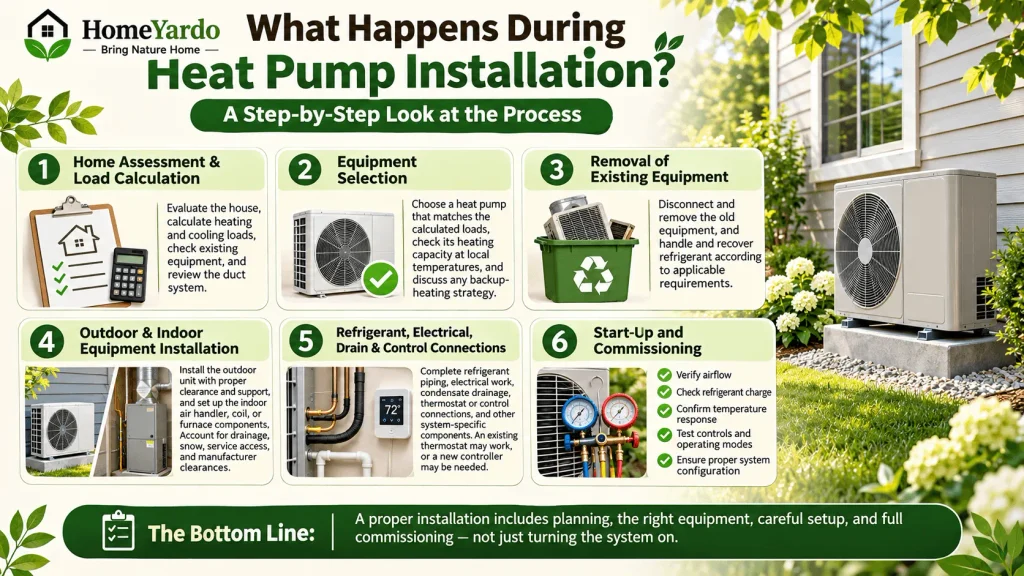
The exact process varies with the house and system, but a well-planned installation usually follows several stages.
1. Home Assessment and Load Calculation
The contractor evaluates the house, calculates heating and cooling loads, checks existing equipment, and reviews the duct system.
This should happen before final equipment selection.
2. Equipment Selection
The proposed heat pump should be matched to the calculated loads and evaluated for its heating capacity at relevant outdoor temperatures.
The contractor should also explain any supplemental or backup-heating strategy.
3. Removal of Existing Equipment
Equipment being replaced is disconnected and removed. Refrigerant from existing systems must be handled according to applicable requirements.
4. Outdoor and Indoor Equipment Installation
The outdoor unit is mounted with appropriate clearance and support. The indoor air handler, coil, or compatible furnace components are installed according to the selected configuration.
Outdoor-unit placement should also account for drainage, snow, service access, and manufacturer clearance requirements.
5. Refrigerant, Electrical, Drain and Control Connections
The installer completes the refrigerant piping, electrical work, condensate drainage, thermostat or control connections, and other system-specific components.
An existing thermostat may sometimes be compatible, while other systems require a different controller.
6. Start-Up and Commissioning
Installation should not end when the equipment turns on.
The contractor should verify appropriate items such as airflow, refrigerant charge, temperature response, controls, operating modes, and system configuration according to the equipment manufacturer’s commissioning procedure.
Ask what measurements were taken and whether you can receive the commissioning or start-up record.
What Should You Expect After Switching?
A heat pump may feel different from a conventional furnace.
Instead of delivering short bursts of very hot air, many modern systems operate for longer periods while supplying heat more steadily. Longer runtime by itself therefore does not mean the system is wasting energy or failing.
Avoid judging performance from runtime alone.
Compare indoor comfort, energy consumption, outdoor temperatures, thermostat settings, and utility costs over a meaningful period.
Your Energy Bills May Change in a Different Way
Switching fuels changes the math.
A homeowner moving away from propane or heating oil may see electricity use rise while fuel purchases fall. Looking only at the electric bill would therefore give an incomplete picture.
Compare the combined cost of heating and cooling before and after the conversion, preferably across similar weather periods.
How Often Does a Heat Pump Need Maintenance?
Because a heat pump can operate during both heating and cooling seasons, it deserves regular attention throughout the year.
The appropriate service interval depends on the equipment, manufacturer instructions, operating conditions, and usage.
Homeowners can handle basic tasks such as keeping outdoor equipment unobstructed and checking filters according to system requirements. Refrigerant, electrical, and internal mechanical work should be left to appropriately qualified technicians.
The Environmental Protection Agency regulates refrigerant handling and technician certification for covered work.
HomeYardo’s guide to seasonal HVAC tune-ups explains how heating and cooling checks can be planned around the seasons.
Questions to Ask a Heat Pump Installer
A good estimate should tell you more than the equipment brand and total price.
Ask:
- Did you perform a Manual J or equivalent load calculation?
- What heating and cooling loads did you calculate?
- What is the proposed model’s heating capacity at low outdoor temperatures?
- Can my existing ducts provide the required airflow?
- Does any ductwork need sealing, insulation, or resizing?
- Will I need supplemental or backup heat?
- Would a dual-fuel configuration make sense for this house?
- Does my electrical panel have enough capacity?
- What efficiency ratings does the proposed equipment have?
- What commissioning measurements will be recorded after installation?
- What equipment and labor warranties apply?
- What maintenance schedule does the manufacturer recommend?
Clear answers make competing quotes much easier to compare.
Heat Pump Installation Checklist for Central PA Homeowners
Before signing a contract, confirm that you know:
- Your calculated heating and cooling loads
- The condition of your ductwork
- The proposed equipment’s low-temperature capacity
- The backup or supplemental heating strategy
- Whether electrical upgrades are required
- What existing equipment will remain or be removed
- The full installed price
- Warranty coverage
- Who handles permits and required inspections
- What commissioning will be completed
- What ongoing maintenance is recommended
If those points are still unclear, the quote probably needs more detail.
Final Takeaway
Heat pump installation is not simply a matter of choosing a brand or tonnage. The system has to match the house.
For a Central Pennsylvania homeowner, the strongest proposal is one based on the home’s calculated heating and cooling loads, existing ductwork, low-temperature equipment performance, electrical capacity, and a clear plan for supplemental heat when required.
Compare those details before comparing equipment labels.
A correctly selected system on suitable ductwork is far more valuable than an expensive model chosen from square footage and installed without checking how the house actually performs.
Frequently Asked Questions
Yes. Modern air-source heat pumps, including models designed for cold climates, can provide heating during Pennsylvania winters. The proposed system still needs enough capacity at the home’s winter design conditions, so low-temperature performance should be checked before installation.
It is worth comparing cold-climate-rated equipment when winter performance is an important part of the installation. Ask the contractor to show the model’s heating capacity at low outdoor temperatures rather than relying only on its nominal size.
Not necessarily. Some homes use a heat pump as the primary heating and cooling system, sometimes with electric supplemental heat. Others use a dual-fuel arrangement that pairs a heat pump with a furnace. The appropriate configuration depends on the home, equipment, climate, fuel costs, and system design.
Possibly. Existing ducts can often be reused when they are properly sized, sealed, insulated where necessary, and capable of supplying the airflow required by the new equipment. They should be inspected rather than automatically assumed to be suitable.