
Common Bed Bug Myths That Can Delay Effective Home Treatment
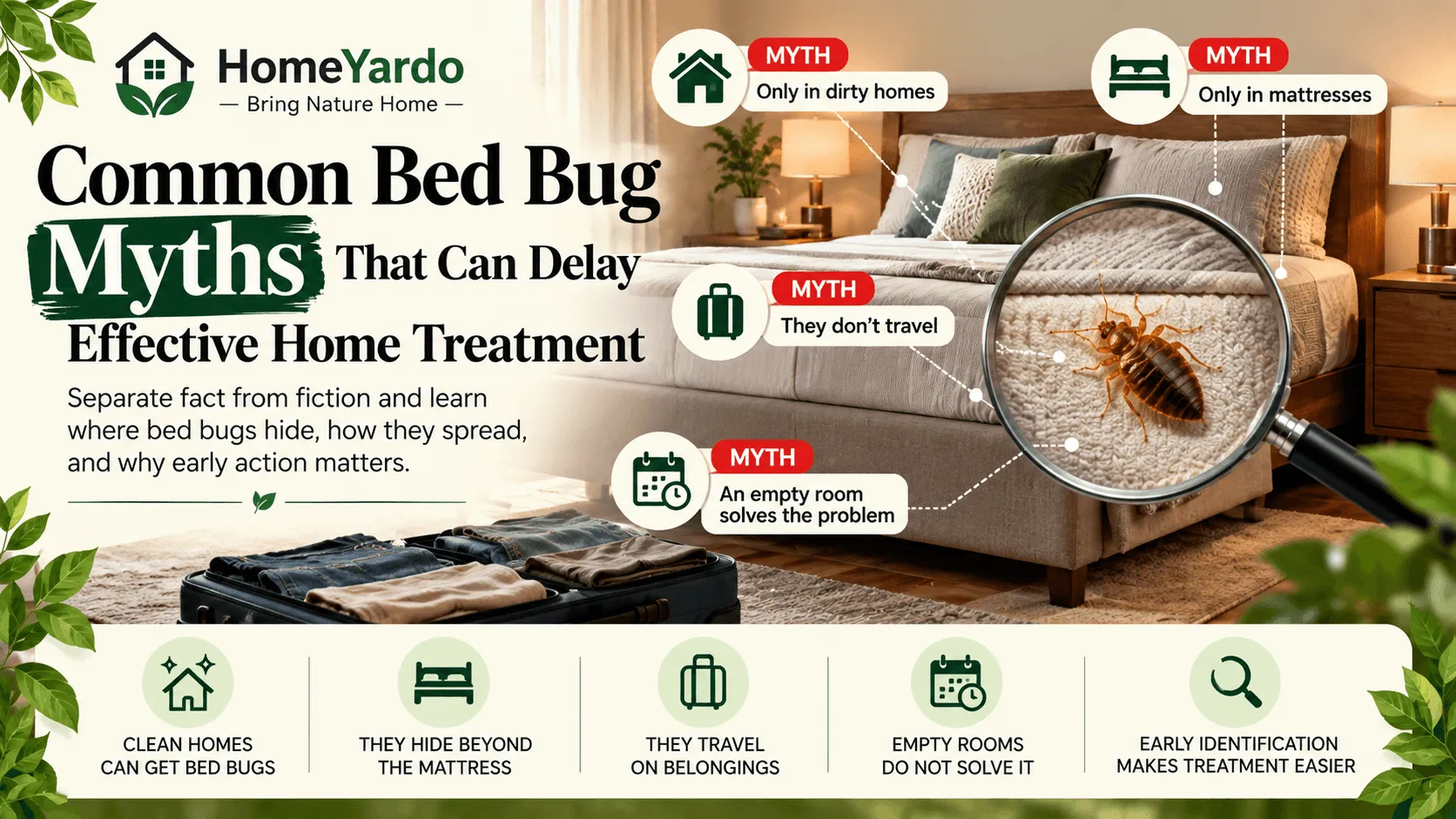
Few pests spread rumors the way bed bugs do. Embarrassment, fear, and half-remembered stories lead people to believe things that are not true, and those beliefs can slow down the one step that matters most, early action. A family that thinks bed bugs only live in dirty homes may not look for them. A traveler who believes they stay in the mattress may miss the baseboards. The sections below take on common misconceptions, explain where the insects actually hide, describe how they travel, and show why catching an infestation early makes it easier to handle.
Regular seasonal pest checks can also help homeowners notice unusual insect activity, possible entry points, and other pest warning signs before a small issue becomes harder to manage.
The Myth That Bed Bugs Mean a Dirty Home

Bed bugs are drawn to people, not to mess. They feed on blood, so what they need is a sleeping host nearby. A spotless apartment and a cluttered one are equally appealing from the insect’s perspective. Hotels, dorms, hospitals, and upscale homes all see infestations.
The belief that cleanliness protects a home creates two problems. First, it makes people reluctant to report or look for signs, since they feel shame. Second, it leads them to rely on cleaning alone, which does not eliminate bed bugs. Clutter does make inspection and treatment harder, because it offers more hiding places, but it does not cause infestations. Anyone interested in busting myths bed bug edition-style claims, will find that this one is among the most persistent and among the most harmful, because it delays the conversation that needs to happen.
When people separate fact from fiction using resources like busting myths bed bug edition, they learn that the search area matters. An inspection limited to the bed will miss populations in surrounding furniture and walls, and the infestation will rebound.
The Myth That They Live Only in Mattresses
The name suggests a bed, and beds are the center of activity, but bed bugs spread outward. They hide in mattress seams, box springs, and bed frames, then move into headboards, nightstands, baseboards, electrical outlets, picture frames, and the folds of curtains. Upholstered chairs and sofas can host them, especially where people sit or nap.
They prefer tight cracks and crevices, and they stay close to the host. A flashlight and a stiff card help reveal them, along with signs such as rust-colored spots, shed skins, tiny eggs, and a sweet, musty odor in heavy infestations. A thorough search should cover more than the mattress. When people separate fact from fiction using resources like busting myths bed bug edition, they learn that the search area matters. An inspection limited to the bed will miss populations in surrounding furniture and walls, and the infestation will rebound.
The Myth That An Empty Room Solves The Problem
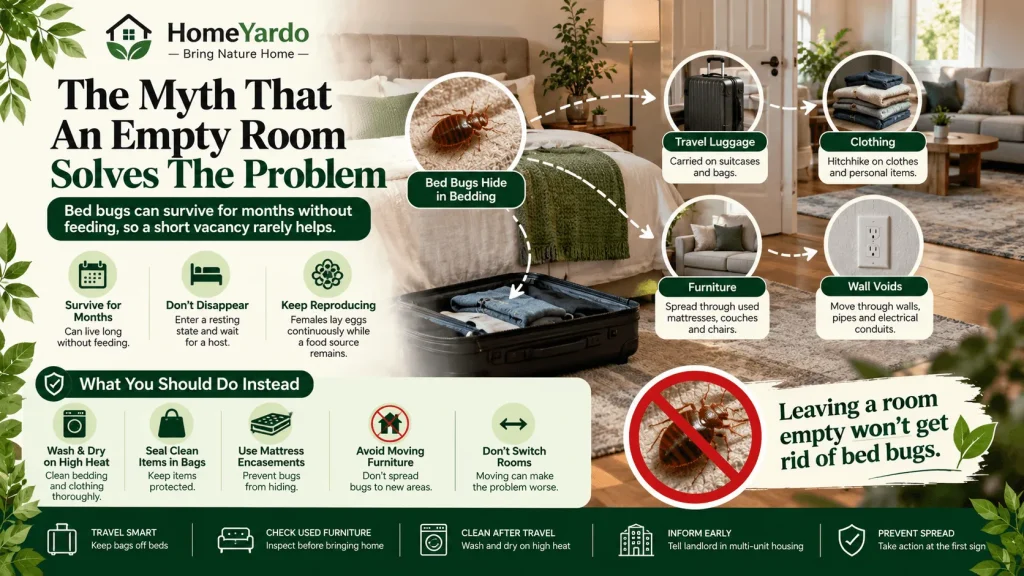
Some people hope that leaving a bedroom unused for a few weeks will starve the bugs. Bed bugs can survive for months without feeding, depending on temperature and age, so a short vacancy rarely helps. They enter a resting state and wait until a host returns.
Moving to another room can make things worse. People carry insects on bedding, clothing, and bags, and the new location becomes infested too. The same risk applies to sleeping on the couch, which spreads bed bugs into living areas. If you suspect bed bugs, avoid shuffling between rooms, and do not move furniture around the home. Wash and dry bedding on high heat, seal clean items in bags, and use mattress encasements. Waiting to see whether they leave only adds to the population, because females lay eggs continuously while a food source remains.
How Bed Bugs Move Between Rooms and Belongings
Bed bugs do not jump or fly. They crawl and travel on belongings. Suitcases, backpacks, clothing, used furniture, and laundry bags all serve as transportation. In apartments, they may move through wall voids, along pipes, and through electrical conduits to neighboring units.
Common ways infestations spread include:
- Luggage and clothing after travel or visits
- Secondhand mattresses, couches, and chairs
- Shared laundry facilities and bags
- Wall and ceiling voids in multi-unit buildings
- Visitors’ coats and bags placed on beds or furniture
Practical habits help. Inspect hotel beds and luggage racks, keep bags off the bed, and examine used furniture carefully before bringing it home. After travel, wash clothing on high heat and dry it thoroughly.
When relocating, careful inspection and packing should also be part of your wider plan for moving into a new home, especially when furniture, bedding, luggage, or stored belongings may have been exposed to pests. In multi-unit housing, tell the landlord or property manager at the first sign, since neighboring units may need inspection as well. Speaking up early prevents broader spread.
Why Early Identification Matters

Small infestations are far easier to resolve than large ones. A few insects hiding in a bed frame can be addressed with focused steps, while a widespread population in multiple rooms takes more time, effort, and cost. Early detection also limits the emotional strain of long-term sleep disruption.
Identification comes first. Many other insects resemble bed bugs, including carpet beetle larvae and bat bugs, and the right plan depends on the right insect. Save a specimen in a sealed container or take clear photographs and show them to a licensed professional. Avoid treating with random sprays, which can scatter bugs and spread the problem. Acting quickly, avoiding blame, and relying on accurate information gives you the best chance of resolving an infestation before it grows.
Final Analysis
Bed bug myths do damage because they delay action. Cleanliness does not prevent infestations, mattresses are only the beginning of the hiding places, and empty rooms do not starve the insects. Understanding how they travel and where they hide makes inspection more thorough and treatment more effective. When a suspicion arises, confirm it early, avoid panic, and ask for professional help if needed. Accurate knowledge saves time, money, and sleep.
FAQs
No. Bed bugs are not attracted to dirt or poor housekeeping. They seek hosts they can feed on. Clutter can give them more hiding places and make inspection harder, but it does not cause an infestation.
Yes. Bed bugs can occur in clean homes, hotels, apartments, dormitories, and other places where people sleep or spend extended periods. They are commonly introduced through luggage, furniture, clothing, and other belongings.
No. They commonly hide near beds but can also be found in bed frames, headboards, nearby furniture, cracks, crevices, and upholstered seating.
No. Bed bugs are wingless and do not fly or jump. They crawl and are commonly transported from place to place on luggage, clothing, bedding, furniture, and other belongings.