How To Maintain Thibodaux Yards To Reduce Pest Pressure
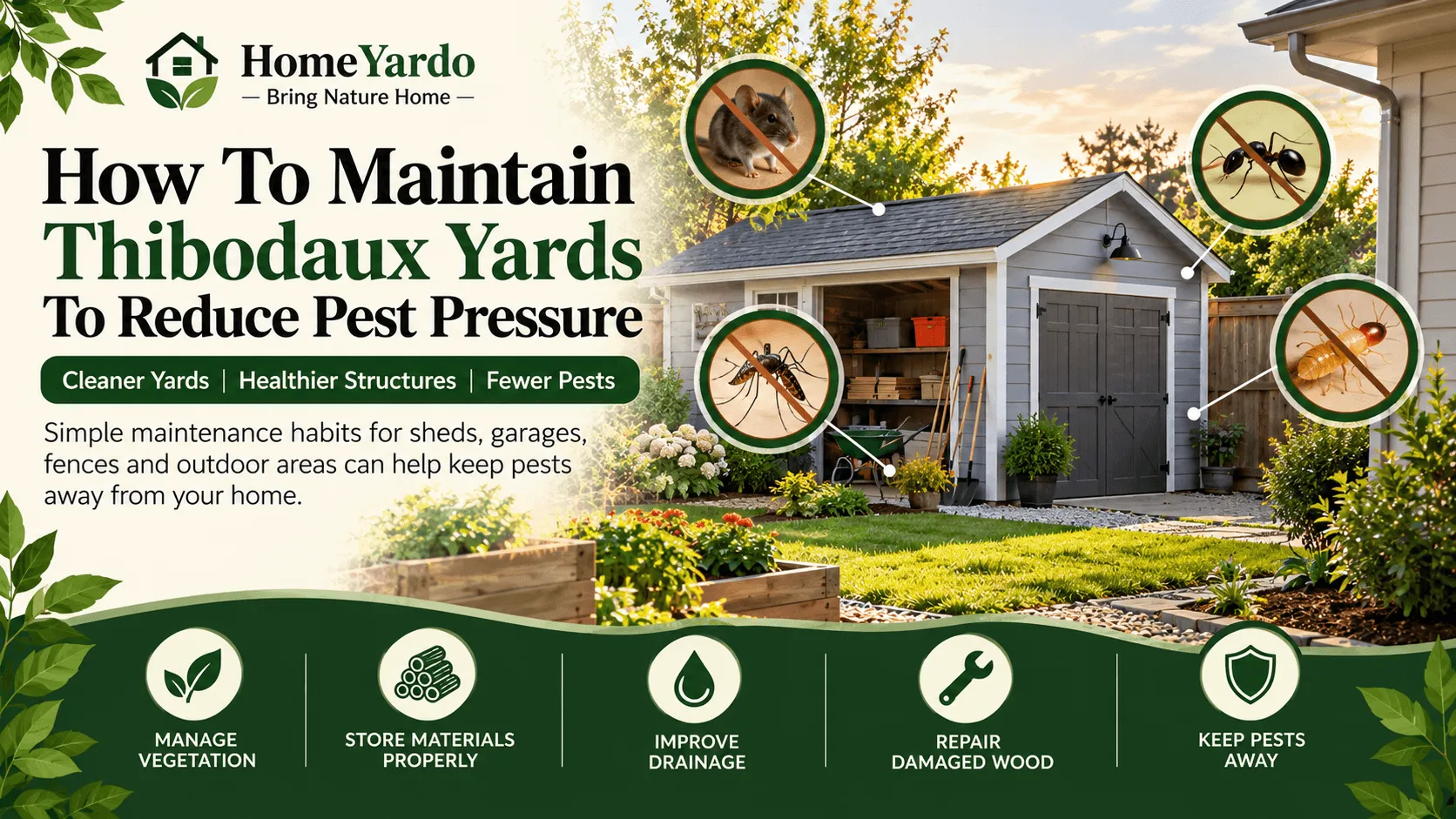
Sheds, detached garages, fences, play structures, and utility areas often sit at the edges of a yard, out of sight and out of mind. They hold tools, toys, lumber, and equipment, and they rarely get the attention that the main house does. For pests, they offer something valuable: shelter, shade, and quiet, close to the places where people live.
Pest activity in these structures matters beyond the structures themselves. They can serve as stepping stones, giving ants, rodents, wasps, termites, and other pests a base from which to approach the home. The sections below explain how secondary structures attract pests, which yard conditions make the problem worse, and what maintenance habits reduce pressure on the whole property.
Why Secondary Structures Attract Pests
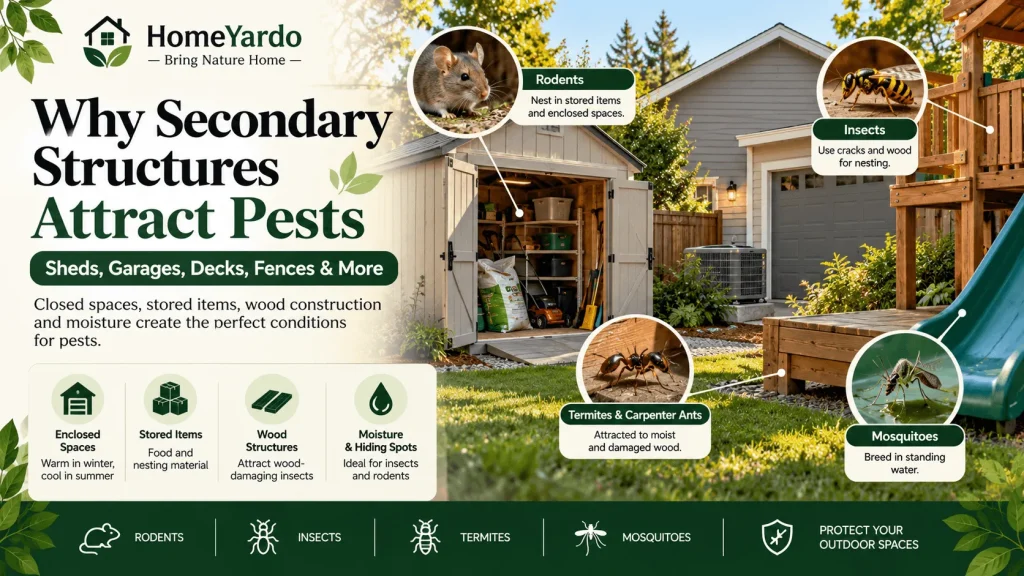
Outdoor structures share a few features that pests find appealing. They provide enclosed, dry spaces that stay warm in cold weather and cool in hot weather. They are often left closed for long stretches, so animals and insects can nest without being disturbed. Wood construction and stored materials add food and shelter.
Sheds and detached garages often contain cardboard boxes, bags of soil or seed, pet food, and old furniture. These items offer nesting material and, in some cases, food. Rodents chew into bags, and insects feed on stored products. Gaps beneath doors, around vents, and at the base of walls give easy access.
Fences, decks, and play structures are frequently made of wood that sits close to or on the ground. Moisture in the soil leads to rot, and soft wood attracts termites, carpenter ants, and other wood-damaging insects. Playsets can hold water in hollow parts and in slides, which supports mosquitoes, and they offer hiding spots for spiders and wasps.
Utility areas, including meters, air conditioning units, and storage for hoses, tools, and equipment, generate warmth, moisture, and small hiding places. Pipes, cables, and condensation lines create openings and damp patches that pests exploit.
Because these structures are used only occasionally, problems tend to be discovered late. A shed opened once a season may hold a mouse nest or a wasp colony that has been growing for months.
How These Structures Bring Pests Closer to the Home
Pests move along connected paths. A rodent that nests in a shed may follow a fence line to the house. Ants that establish a colony beneath a slab or woodpile will spread outward in search of food and may eventually trail into kitchens. Wasps that start nests in a detached garage can expand to the eaves of the main house.
Structures that touch or nearly touch the home are especially likely to serve as bridges. A fence attached to a house wall, a deck connected to siding, or a lean-to shed against an exterior wall gives pests a direct route. Wood-to-wood contact allows termites and carpenter ants to move from outbuildings into the main structure.
Stepping-stones can also be less obvious. A line of firewood, a trail of stacked pavers, or a row of dense shrubs from a shed to the house gives crawling and climbing pests a sheltered route. Overhanging branches extend this path overhead.
Homeowners who see the same pests return to a shed or fence each season can ask LaJaunie’s Pest Control to inspect the area. Understanding these connections helps prioritize work. Preventing pests from establishing themselves in outbuildings reduces the chance that they will reach the main structure, and interrupting the paths between buildings makes the journey harder.
Yard Maintenance That Reduces Pressure
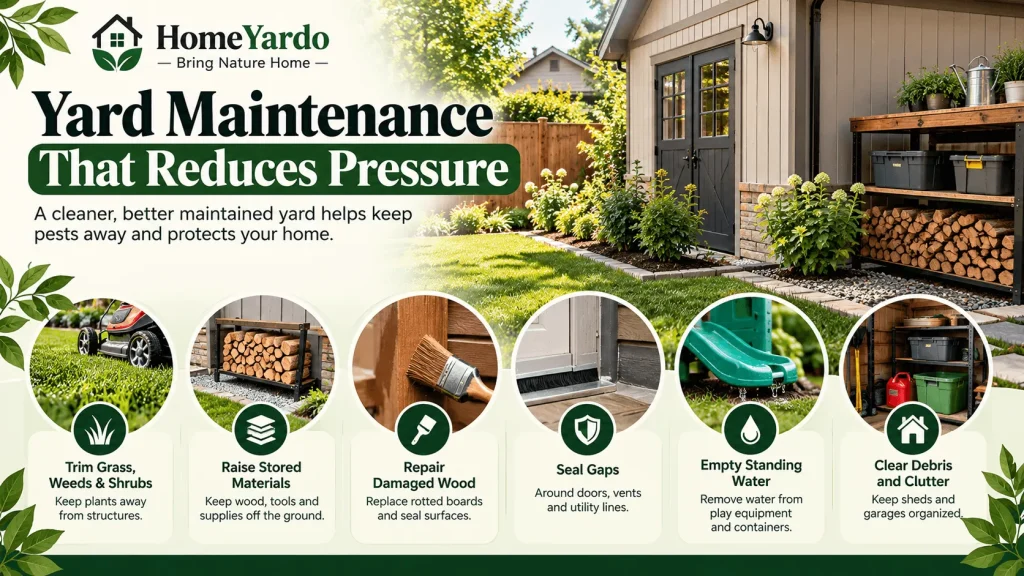
Consistent maintenance does most of the work. Clear vegetation around sheds, garages, fences, and play structures so that there is a visible gap between plants and walls. Overgrown grass, weeds, and shrubs hold moisture and provide cover, and they allow pests to approach unseen.
Move stored materials off the ground. Firewood, lumber, pavers, and equipment should sit on racks or pallets, with space between them and the walls. Homeowners who want to simplify ongoing yard care can also use these low-maintenance backyard landscaping ideas to improve access, manage vegetation, and make overlooked corners easier to inspect. Keep stacks small and rotate them so that nothing sits untouched for years. Store bags of seed, soil, and pet food in sealed containers made of metal or heavy plastic.
Repair damaged wood quickly. Replace rotted boards, seal gaps, and paint or stain exposed surfaces. Check the base of posts, door frames, and steps, where moisture collects. Soft, damp, or crumbling wood should be inspected for termites and replaced if necessary.
A seasonal checklist helps:
- Trim grass, weeds, and shrubs back from outbuildings and fences
- Raise stored materials off the ground and away from walls
- Replace rotted or damaged wood and repaint or seal surfaces
- Seal gaps under doors, around vents, and where lines enter structures
- Empty water from play equipment and containers
- Clear debris and clutter from inside sheds and garages
Improving Drainage Around Secondary Structures
Water is the underlying driver of many pest problems. Standing water near a shed or garage can undermine foundations, rot wood, and attract mosquitoes, termites, and other pests. Walk the yard after heavy rain and note where water collects.
Grading should slope away from structures. If soil has settled and created low spots against a wall, add fill and regrade so that water drains away. Extend downspouts and gutters so that roof runoff does not pool at the base. Clean gutters on outbuildings, which are often forgotten.
For areas with persistent dampness, consider solutions such as gravel beds, French drains, or raised bases. Elevating sheds on blocks or piers improves airflow and keeps wood away from wet soil. Ventilation helps dry interior spaces, so make sure vents are screened and clear.
Check irrigation, hoses, and spigots for leaks. A slow drip at the corner of a shed can keep the soil saturated for months. Repair leaks, adjust sprinklers so they do not spray structures, and avoid watering against walls. If water repeatedly pools near sheds, garages, fences, or play areas, this guide on how to fix yard drainage explains how to identify low spots, runoff patterns, and common drainage problems before choosing a solution.
Where recurring dampness around an outbuilding remains unexplained, LaJaunie’s Pest Control can help trace moisture and pest activity back to their source. Photographs taken after heavy rain make that conversation easier, since they show exactly where water settles.
When Pests Keep Returning
Good habits reduce activity, but some situations need more. If pests repeatedly appear around the same outbuilding, such as ants returning each season, rodents nesting in a garage, or wasps rebuilding each year, a hidden cause may be at work. It might be a nest in a wall void, an entry point that has not been found, or moisture inside a structure that cannot be seen.
Inspection by a professional helps locate the source. A professional can examine outbuildings, fences, and yard conditions, identify the species involved, and recommend treatment and exclusion that fit the property. A professional can also advise on timing and on how to protect pets, children, and gardens during treatment.
Keep records to help the process. Note where and when pests appear, what has been tried, and what changes were made. Photographs are valuable, especially of damage, nests, and trails.
After treatment, continue maintenance. Without upkeep, the conditions that drew pests in the first place will draw them again. A yard that is regularly cleared, drained, and repaired remains much harder for pests to use.
End Note
Sheds, detached garages, fences, outdoor storage, play structures, and utility areas can shelter pests and act as stepping-stones toward the main house. Their quiet corners, stored materials, and exposure to moisture make them natural gathering places.
Clearing vegetation, lifting stored materials off the ground, repairing damaged wood, and improving drainage reduce pressure across the whole property. When activity keeps recurring in these areas, professional evaluation can identify what is sustaining it and help the yard stay comfortable and pest-resistant.
A yard works best as a connected system. Keeping outbuildings dry, clear, and in good repair protects the house indirectly, because pests that find nothing to use in the far corner are less likely to move closer.
FAQs
Keep vegetation and clutter away from the shed, store food and seed in sealed containers, repair damaged wood, check doors and vents for openings, and prevent water from collecting around the structure. Inspect areas behind stored items periodically because quiet, undisturbed spaces can conceal pest activity.
Standing water can create a mosquito breeding habitat and can also signal a drainage or moisture problem around the structure. Check low spots, containers, gutters, hoses, irrigation lines, tarps, toys, and other places where rainwater remains after a storm.
Avoid stacking firewood directly against exterior walls. Keeping it organized, separated from structures, and off persistently damp ground makes the area easier to inspect and reduces sheltered spaces immediately beside buildings.
Damp or deteriorating wood deserves attention, but visible rot is not required for termite activity. In Louisiana, moisture control, inspection access, and avoiding unnecessary soil-to-wood contact are important parts of termite prevention.