
Dock De-Icer Cost vs. Ice Damage: What Will You Pay?
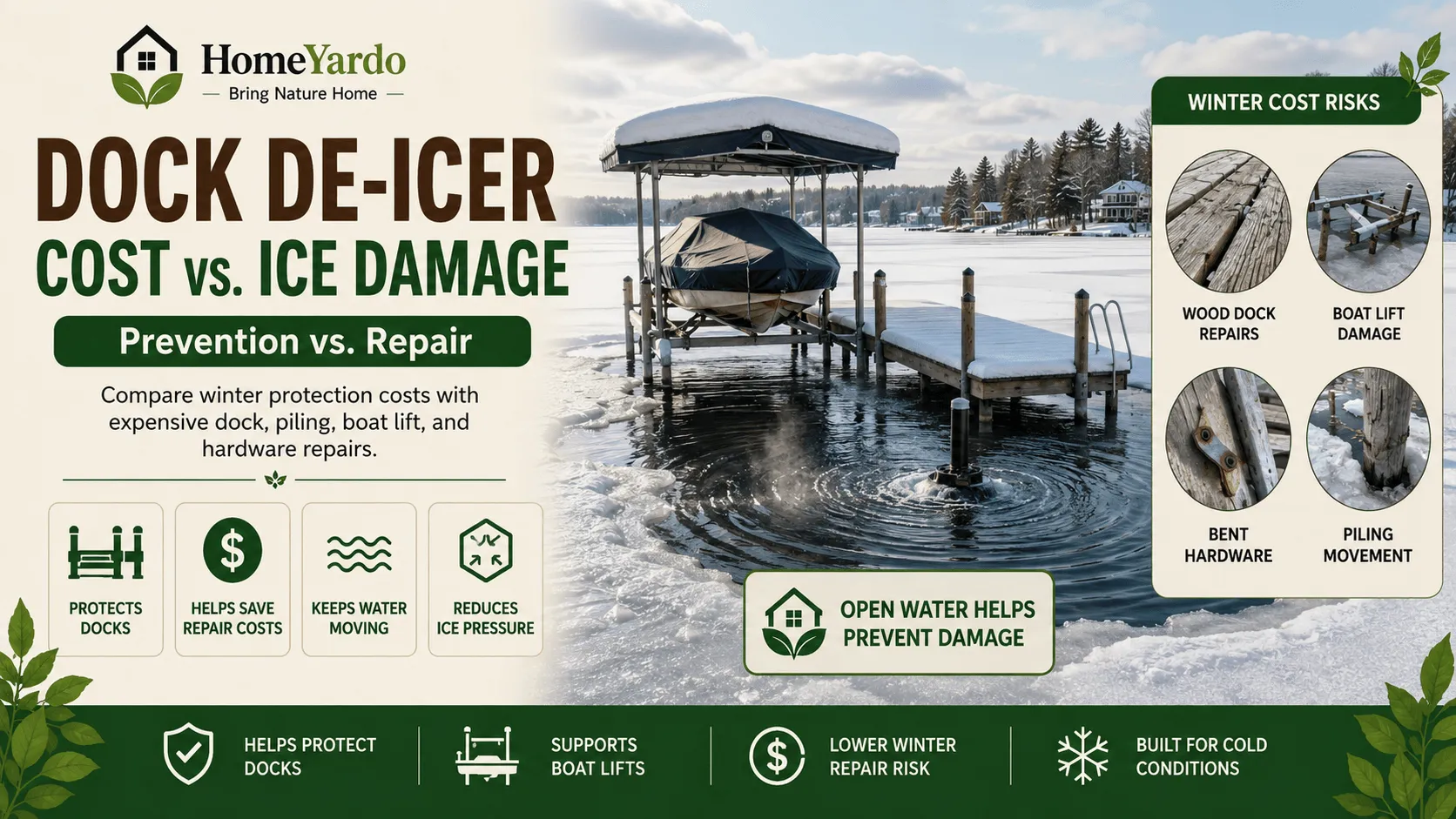
Ice is not just a winter nuisance—it is actively working against your dock and boat lift all season long. Many Ontario property owners don’t realize how fast repair bills pile up once freeze-thaw does its thing.
Here’s a look at what ice damage really costs, how de-icers help, and how to choose the right one.
How Ice Actually Damages Docks
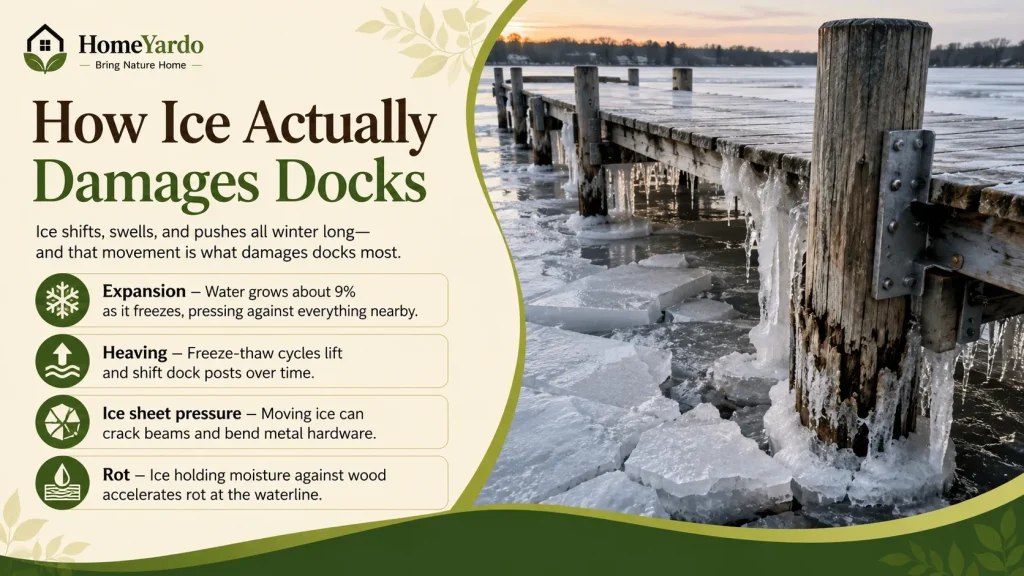
Ice shifts, swells, and pushes all winter long—and that movement is what damages docks most.
- Expansion – Water grows about 9% as it freezes, pressing against everything nearby.
- Heaving – Freeze-thaw cycles lift and shift dock posts over time.
- Ice sheet pressure – Moving ice can crack beams and bend metal hardware.
- Rot – Ice holding moisture against wood accelerates rot at the waterline.
What Ice Damage Actually Costs
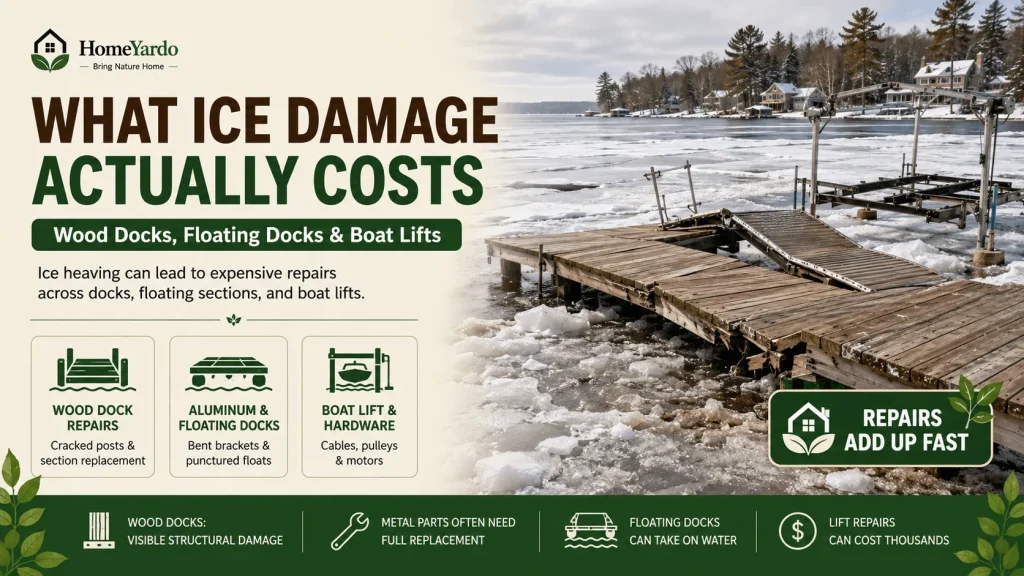
Repair costs vary by dock type, but the pattern is consistent across Ontario properties.
Wood Dock Repairs
Wood docks take the most visible damage from ice heaving and waterline rot.
Cracked or shifted posts often mean replacing entire sections rather than single boards. Labour costs climb fast once a crew needs to pull and reset pilings in frozen ground or lakebed.
Aluminum and Floating Dock Repairs
Metal docks bend instead of breaking outright, which sounds better but isn’t always cheaper to fix.
Bent brackets and connectors usually need full replacement, not repair, since metal fatigue makes patched joints unreliable. Floating docks can also take on water if ice punctures flotation drums.
Boat Lift and Hardware Damage
Boat lifts sitting in ice-affected water face some of the highest repair bills on any property.
Cables, pulleys, and motors seize or snap under ice pressure, and replacement parts for older lift models aren’t always easy to source. A full lift replacement can run into thousands of dollars.
Why Open Water Prevents Most of This
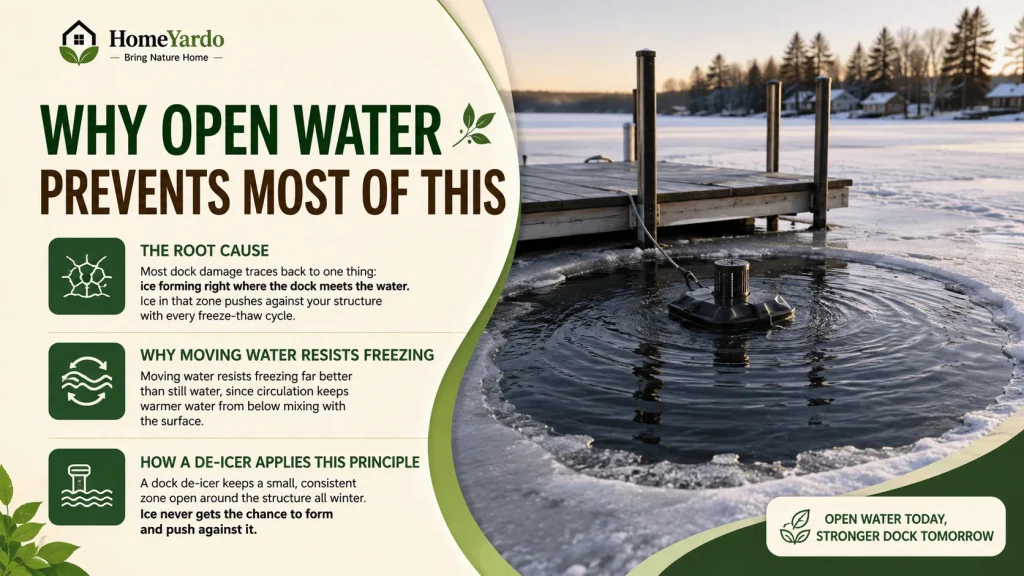
The core problem is ice forming and pressing directly against dock structures, and the fix is keeping water moving in that zone.
The Root Cause
Most dock damage traces back to one thing: ice forming right where the dock meets the water. Once ice takes hold in that zone, every freeze-thaw cycle pushes against the structure.
The core problem is ice forming and pressing directly against dock structures, and the fix is keeping water moving in that zone.
Why Moving Water Resists Freezing
Water behaves differently once it’s circulating instead of sitting still. This difference is what makes open-water systems effective against ice.
Moving water resists freezing far better than still water, since circulation keeps warmer water from below mixing with the surface.
How a De-Icer Applies This Principle
A dock de-icer takes this natural behaviour and puts it to work in one targeted spot. It keeps a small, consistent zone open around the structure all winter.
That’s the entire principle behind a dock de-icer: it keeps a pocket of open water around the structure so ice never gets the chance to form and push against it.
How a Dock De-Icer Works
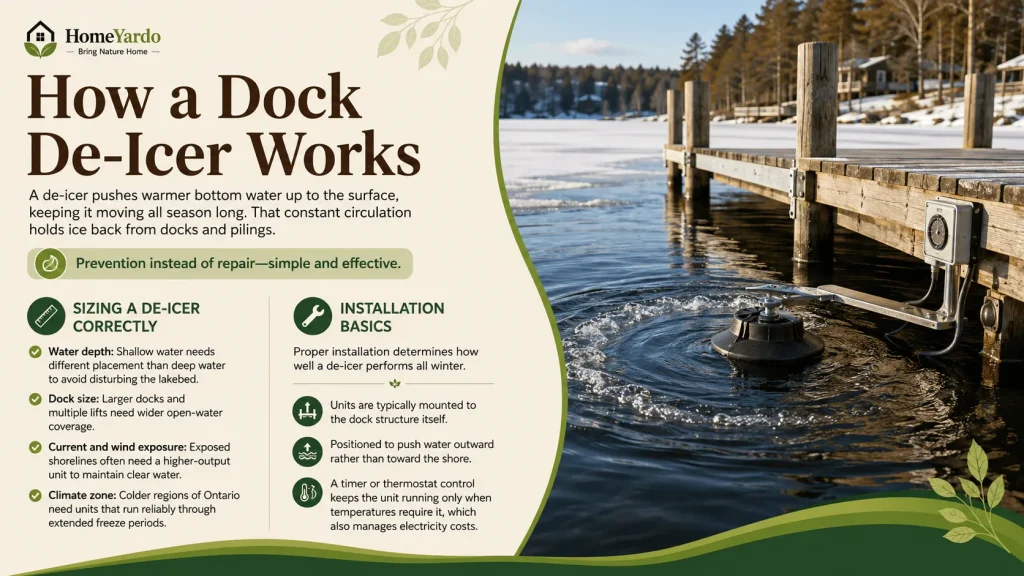
A de-icer pushes warmer bottom water up to the surface, keeping it moving all season long. That constant circulation holds ice back from docks and pilings. Prevention instead of repair—simple and effective.
Sizing a De-Icer Correctly
Getting the right unit size matters more than most property owners expect.
- Water depth: Shallow water needs different placement than deep water to avoid disturbing the lakebed.
- Dock size: Larger docks and multiple lifts need wider open-water coverage.
- Current and wind exposure: Exposed shorelines often need a higher-output unit to maintain clear water.
- Climate zone: Colder regions of Ontario need units that run reliably through extended freeze periods.
Installation Basics
Proper installation determines how well a de-icer performs all winter.
Units are typically mounted to the dock structure itself, positioned to push water outward rather than toward the shore. A timer or thermostat control keeps the unit running only when temperatures require it, which also manages electricity costs.
Cost Comparison: Prevention vs. Repair
Running the numbers side by side makes the case clear for most property owners.
The Cost of Prevention
A dock de-icer is a straightforward, predictable expense compared to what ice damage can cost over time. Most of the cost comes upfront with the equipment itself, and the ongoing expense is just seasonal electricity use.
A quality dock de-icer represents a one-time equipment cost plus modest seasonal electricity use. Property owners who install a de-icer before the first hard freeze typically avoid the repair cycle altogether, rather than budgeting for it as an annual expense.
The Cost of Repair
Ice damage rarely shows up as a single repair bill, which is what makes it expensive over the long run. Left unaddressed, the same damage tends to repeat winter after winter.
Ice-related dock repairs often repeat every few winters if the underlying cause is never addressed, and costs climb each time posts, brackets, or lift hardware need replacing.
Choosing the Right Dock De-Icer in Canada
Not every de-icer sold online is built for Canadian winters, and that distinction matters.
Units need to handle sustained sub-zero temperatures, ice load around the propeller housing, and long runtimes without failure. An ice eater dock de-icer in Canada option is built specifically for these conditions, which makes a measurable difference over a full winter season compared to units designed for milder climates.
Protecting Docks Through the Winter Season
Ice damage is predictable, which means it’s also preventable with the right equipment in place before freeze-up.
Pond Perfections has worked with Ontario homeowners and property managers for over 30 years, helping them protect docks, shorelines, and water systems through every season. Their team can help match a de-icer to a specific property’s depth, exposure, and dock setup, so the equipment does its job all winter without surprises.
FAQ’s
A dock de-icer circulates water to reduce ice development on dock structures that are targeted. It can reduce the risk of direct ice pressure but cannot avoid all kinds of winter damage. Performance is affected by proper sizing, installation, maintenance and site conditions.
The operational cost depends on the wattage of the unit, the daily runtime, the number of operating days, and the local price of energy. To determine seasonal cost, multiply the unit’s kilowatt usage by the hours it operates and the power rate.
Yep. Ice accumulating around fixed pilings can stress pilings as ice moves or water levels change. The actual hazard will depend upon the piling design, the water conditions, exposure and local winter weather.
A well-placed device can assist decrease ice buildup around boat-lift structures that stay in the water. The necessary set up is based on the lift dimensions, water depth, dock design and the recommendations of the de-icer manufacturer.
Size will be determined by the area to be protected, water depth, dock arrangement, exposure of shoreline, current, and local winter conditions. Don’t just pick a unit based on horsepower or advertized coverage.
Generally, installation and testing should be completed before any serious freeze-up. This allows you to check the mounting, the electrical supply, the direction of circulation and the operation before ice can build up.
Not always. time of operation is dependent on weather, site conditions, individual equipment and manufacturer directions. Compatible thermostatic or timer controls can help in limiting needless operation.
They need to be installed and operated with care, since they can create open water and perilously thin ice. Electrical requirements, warning measures, public access, manufacturer instructions and local restrictions will also be relevant.