How to Plan a Solar Project in Chicago
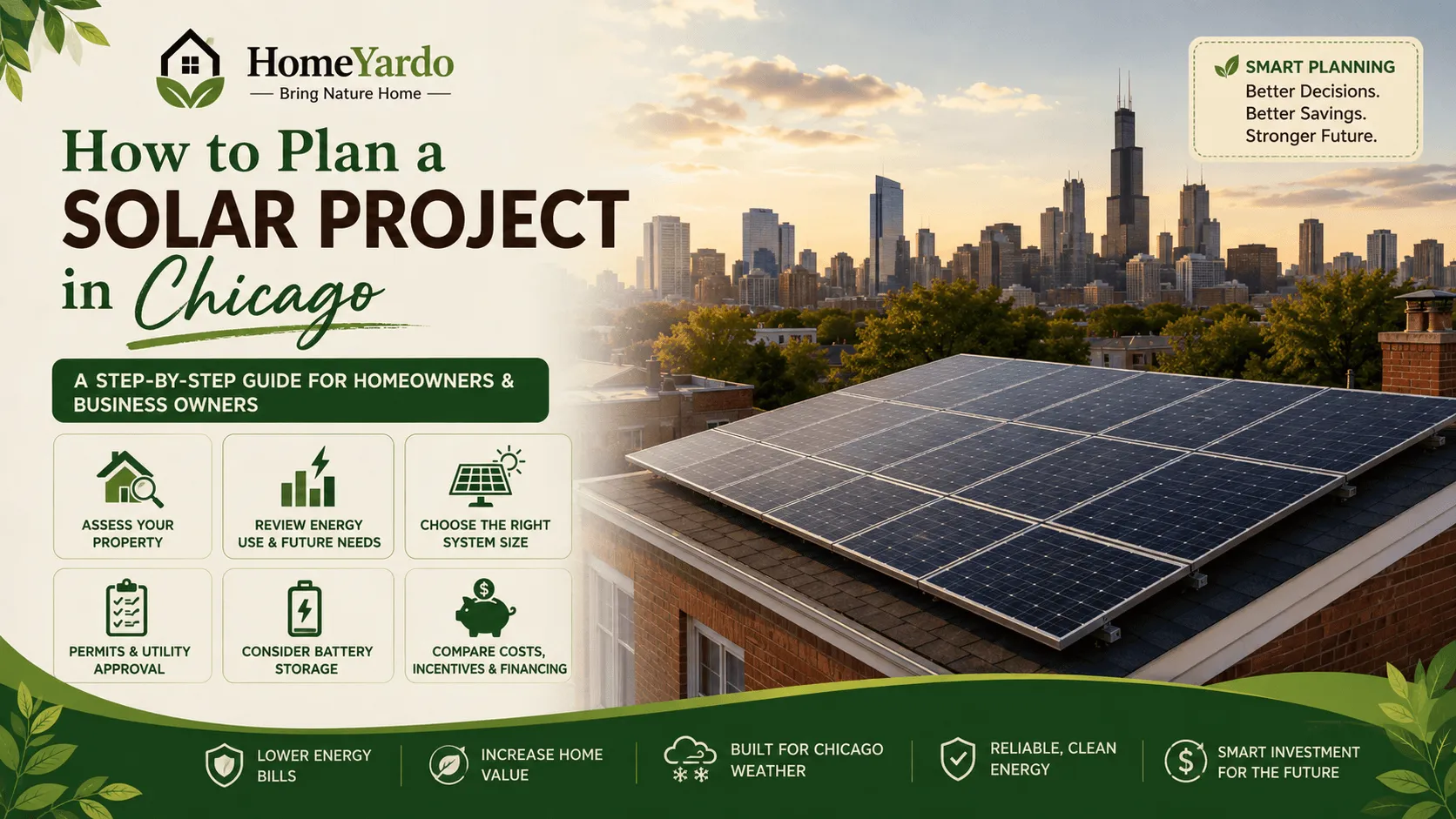
Planning a solar project in Chicago starts well before choosing panels or comparing installation prices. The condition of the roof, electricity consumption, shade, electrical service, local weather, permitting requirements, utility interconnection, financing, and future energy needs can all affect the final system.
Chicago also presents conditions that deserve local attention. Snow, ice, wind, seasonal temperature changes, older housing stock, flat and low-slope roofs, and surrounding buildings can influence system design and installation.
A well-planned project starts by answering three questions: Is the property suitable for solar? How much electricity should the system be designed to produce? And what will the complete project cost after required upgrades, financing, and available incentives are considered?
Key Takeaways
- A successful solar project begins with the building, its electricity use, roof condition, shade, and future plans.
- Chicago weather requires careful attention to snow, wind, drainage, roof age, and equipment placement.
- Permits, inspections, and utility interconnection can take longer than the on-site installation.
- Battery storage can provide backup power, but its value depends on the circuits you need to protect and your outage priorities.
- Comparing proposals on equal terms helps reveal missing costs, unrealistic savings assumptions, and weaker warranties.
- Incentives and program requirements can change, so confirm eligibility before signing a contract.
Why Solar Planning Matters in Chicago
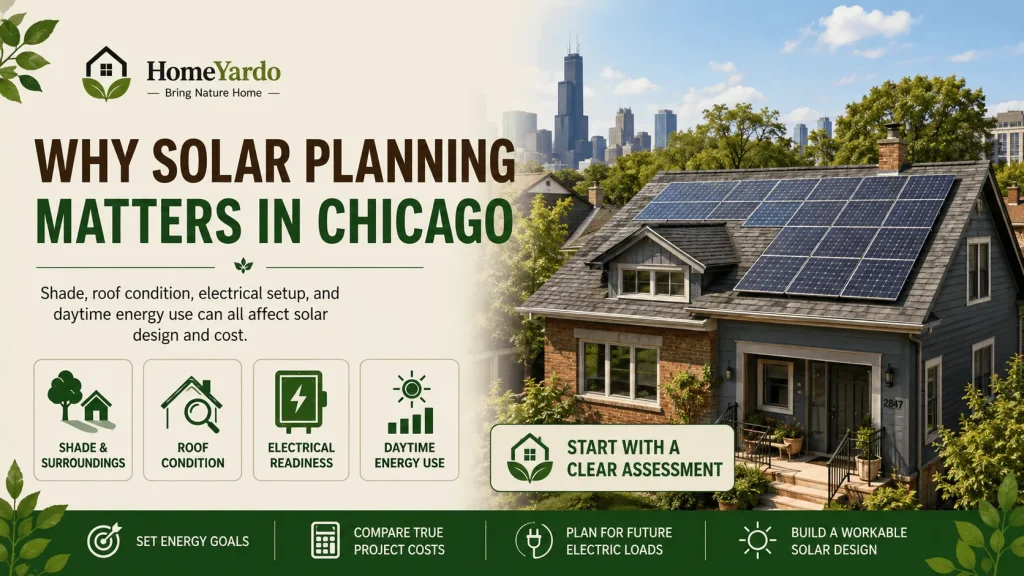
Solar can be a practical investment for Chicago homeowners, landlords, and business owners, but roof space alone does not determine whether a project makes sense. Shade from trees and neighboring buildings, older electrical equipment, roof condition, and the property’s daytime energy use can all change the final design and cost. Starting with a clear assessment makes the process more predictable.
A professional planning conversation can help property owners connect their energy goals with a workable system design. Before reviewing a proposal, decide whether the primary goal is lowering utility purchases, supporting future electric loads, improving outage resilience, or making use of available roof space.
Check the Property Before Requesting Quotes
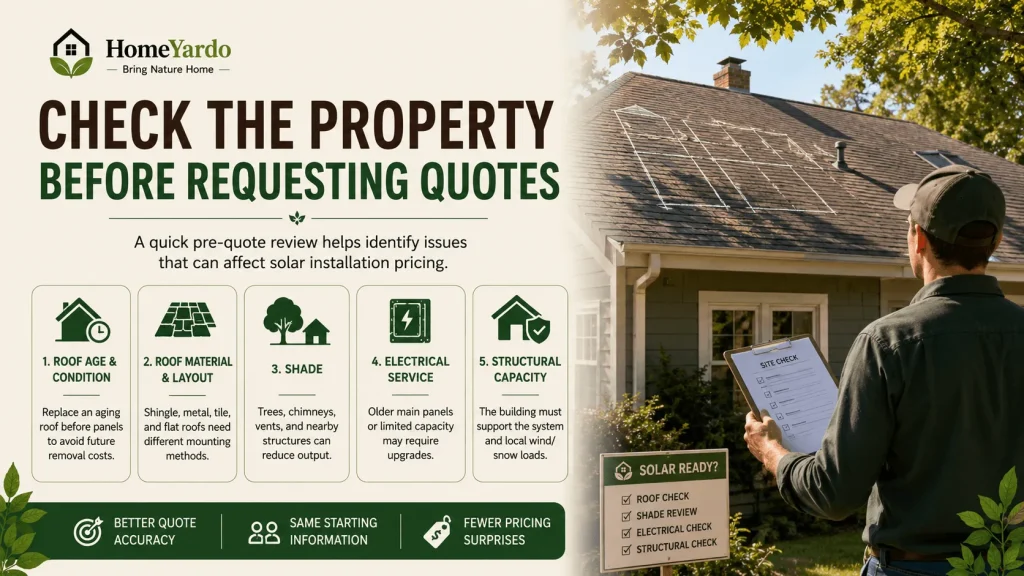
Perform a basic property review before contacting installers. This is not a substitute for an engineering evaluation, but it gives every bidder the same starting information and helps identify issues that could affect pricing.
- Roof age and condition: Replacing an aging roof before installing panels can prevent future removal and reinstallation costs.
- Roof material and layout: Shingle, metal, tile, and flat roofs need different mounting approaches.
- Shade: Trees, chimneys, vents, rooftop units, and nearby structures can reduce output at different times of day.
- Electrical service: Older main panels or limited service capacity may require upgrades.
- Structural capacity: The building must support the array and meet applicable wind and snow-load requirements.
Review Energy Use and Future Changes
Collect at least 12 months of electricity bills, including usage in kilowatt-hours and any demand charges for commercial properties. A full year shows how air conditioning and heating systems, electric heat, refrigeration, business hours, or other seasonal factors influence consumption. One unusually low or high bill is not enough to size a system reliably.
Also list expected changes during the next several years. An electric vehicle, heat pump, induction range, home addition, rental-unit conversion, new appliances, or business expansion can substantially increase electricity needs. Including those plans now may prevent a system from being undersized soon after installation.
Choose a System Size That Fits the Goal
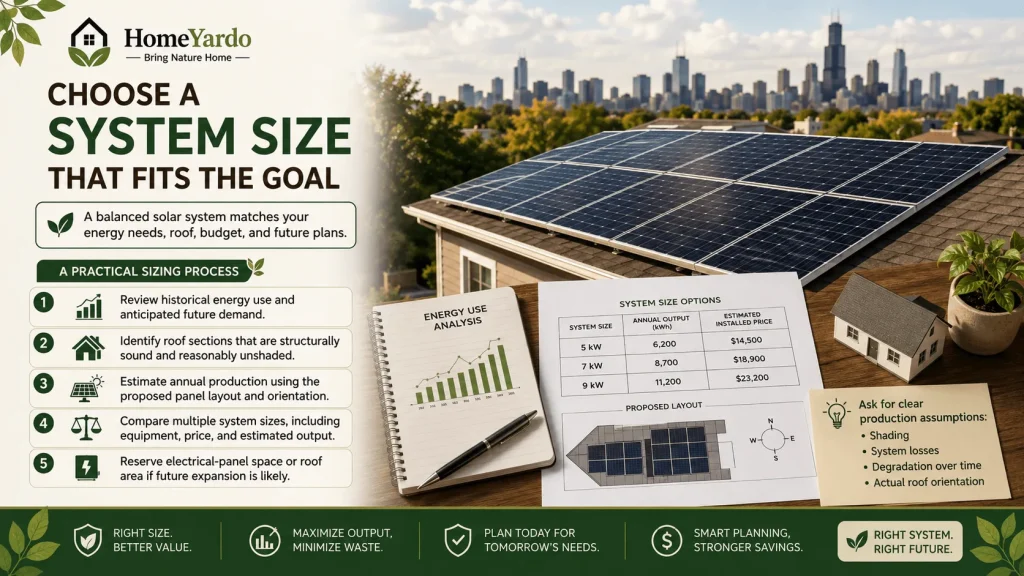
The best solar system is not automatically the largest system that fits on the roof. A balanced design should account for annual usage, usable roof area, shading, budget, utility rules, and whether a battery will be added now or later.
A practical sizing process
- Review historical energy use and anticipated future demand.
- Identify roof sections that are structurally sound and reasonably unshaded.
- Estimate annual production using the proposed panel layout and orientation.
- Compare multiple system sizes, including their equipment, installed price, and estimated output.
- Reserve electrical-panel space or roof area if future expansion is likely.
Ask installers to explain their production assumptions. A proposal should state whether it accounts for shading, system losses, degradation over time, and the roof’s actual orientation.
Account for Chicago Weather
Chicago’s cold winters, high winds, snow, ice, and rapid temperature swings should influence equipment selection and mounting details. Proper design considers local loading requirements, secure attachment methods, roof condition and drainage, and clear access for future service.
Snow can temporarily reduce production, although it often melts or slides from tilted panels. Avoid scraping panels with abrasive tools, which can damage glass or frames. Instead, monitor output, keep drainage routes clear, and trim trees that may create growing shade or drop debris onto the array.
Prepare for Permits and Utility Approval
Installing equipment may take only a few days, while the full project can take weeks or longer because of engineering, permitting, inspection, and interconnection steps. In Chicago, contractors can use the city’s permit application portal to manage applicable permit activity, but property owners should still confirm who is responsible for every approval.
Get written confirmation of who handles engineering documents, building permits, electrical permits, homeowner association approval when applicable, inspections, interconnection paperwork, and final permission to operate. Do not assume the system can be energized for normal grid-connected use until the required utility approval is complete.
Decide Whether Battery Storage Fits
Solar panels alone generally shut down during a grid outage for safety reasons. A battery system can provide backup power for selected circuits, store daytime production for evening use, and offer greater control over how solar energy is used on site.
Battery storage deserves closer review when outages are disruptive, medical equipment must remain powered, refrigeration or business operations are critical, or evening usage is high. Ask exactly which circuits will receive backup power, how long they may operate under different loads, and whether large appliances such as central air conditioning, electric heat, or EV charging are included.
Compare Costs, Incentives, and Financing
A solar budget should separate the price of panels, inverters, mounting equipment, electrical work, batteries, permits, roof repairs, monitoring, and any service upgrades. This makes it easier to see whether a lower quote excludes important work.
Illinois incentive rules and capacity availability can change by program year. The consumer information from Illinois Shines explains how solar customers participate through Approved Vendors, making it useful to verify program details before relying on an incentive amount in a financial decision. Review tax-credit eligibility with a qualified tax professional rather than treating a sales estimate as tax advice.
Compare Solar Proposals Fairly
Request at least three proposals using the same utility history, roof details, production goal, and battery preference. Then compare estimated annual output, panel and inverter models, workmanship coverage, equipment warranties, exclusions, project schedule, monitoring, and total installed price.
Be especially careful with financing presentations focused only on a monthly payment. Review the interest rate, loan term, dealer fees, payment changes, ownership arrangement, transfer rules if the property is sold, and assumptions about future utility rates. Savings estimates are projections, not guarantees.
Plan for Maintenance and Roof Work
Solar systems usually need limited routine maintenance, but they still require attention. Check the monitoring app for unexpected production drops, inspect visible equipment after severe weather, and keep vegetation from creating new shade. Retain permits, warranties, equipment manuals, and final drawings in a safe place.
If roof replacement may be needed within the next few years, address it before installation when possible. Contracts should explain who will remove and reinstall panels later, whether labor is covered by any warranty, and how electrical recommissioning will be handled.
Questions to Ask Before Signing
- Has the roof and electrical service been evaluated for this project?
- What annual production is expected, and which assumptions support that estimate?
- Which permits, inspections, and utility approvals are included in the price?
- What costs could arise if an electrical upgrade or roof repair is needed?
- Who owns the equipment and receives available incentives?
- What is the battery’s power during an outage, and for how long?
- What are the equipment, workmanship, roof, and monitoring warranty terms?
- What happens if the property is sold or the roof needs replacement?
Final Planning Checklist
A reliable Chicago solar project begins with practical building and energy questions, not a sales pitch. Review the roof, gather utility data, account for future loads, understand the approval process, and compare complete proposals on the same terms. A thoughtful plan can reduce delays, uncover hidden costs early, and create a system that remains valuable as the property’s energy needs change.
FAQ’s
Solar can be suitable for Chicago properties when the site has adequate solar exposure, a compatible roof or mounting location, appropriate electrical infrastructure, and project economics that work for the owner. Cold weather itself does not prevent photovoltaic panels from generating electricity. Site-specific shade and system design are usually more useful considerations than temperature alone.
Start by gathering 12 months of electricity bills and reviewing the roof’s age, condition, shade, orientation, and available area. Then identify future electricity needs and request comparable proposals from qualified solar providers.
Solar projects can require applicable building and electrical permitting and inspection. Requirements depend on the property and scope of work. Ask the contractor to identify the permits required for the specific installation and state in writing who is responsible for obtaining them.
Physical installation may take considerably less time than the entire project. Design, engineering, permitting, inspection, equipment availability, utility interconnection, corrections, and weather can all affect the schedule. Ask installers for milestone-based timelines rather than only an installation date.
There is no standard number. Panel count depends on electricity consumption, future energy needs, individual panel output, usable roof space, orientation, shading, and the desired annual production. System capacity and estimated annual kWh production are more useful comparison measures than panel count alone.
Consider replacing or repairing the roof first if it is approaching the end of its service life or already requires significant work. Otherwise, a future roof replacement could require the solar array to be removed and reinstalled.
Yes. Photovoltaic panels can generate electricity during winter whenever sufficient sunlight reaches them. Shorter days, cloud cover, shading, snow coverage, and sun angle can affect seasonal output, so annual production estimates should account for seasonal conditions.
A standard grid-connected solar system generally shuts down during a utility outage unless it includes equipment designed to safely provide backup operation. Battery storage can support selected circuits when the system is designed for that purpose.
It depends on the owner’s priorities. A battery may be useful when outage backup, critical equipment, refrigeration, selected heating controls, sump pumps, or other essential circuits need continued power. Compare battery cost with the amount of usable backup and the loads it can actually support.
Compare system size, expected annual production, panel and inverter models, battery specifications, total installed price, financing terms, permit responsibilities, electrical upgrades, warranties, monitoring, installation responsibilities, exclusions, and estimated project schedule.
Illinois has solar programs including Illinois Shines, but program requirements, capacity, REC values, and eligibility conditions can change. Verify current information through official program resources and ask the provider to document which incentives have been included in its financial calculations.
Compare several written proposals, verify contractor and program credentials where applicable, read financing terms carefully, check warranties and exclusions, question aggressive savings claims, and make sure verbal promises are included in the written contract. Never rely only on the quoted monthly payment or projected utility savings.