
Commercial HVAC Maintenance Checklist: 10 Checks Before Peak Cooling Season
A commercial HVAC maintenance checklist helps facility managers identify airflow restrictions, drainage problems, control faults, refrigeration concerns, and developing equipment issues before cooling demand reaches its seasonal peak.
For most facilities, the best approach combines routine observations by trained staff with scheduled inspections and testing by qualified HVAC professionals. Refrigerant circuits, energized electrical components, safety controls, and major mechanical repairs should be left to appropriately trained technicians.
Key Takeaways
- Complete pre-season HVAC inspections before sustained hot weather begins.
- Check airflow, filters, coils, fans, drains, controls, electrical components, and refrigeration equipment.
- Compare current equipment condition with previous service records rather than treating each inspection as an isolated event.
- Prioritize equipment according to operational risk, not simply age.
- Give refrigeration and process-cooling equipment separate attention where temperature loss could affect products or operations.
- Document readings, defects, repairs, and follow-up recommendations for each asset.
- Escalate refrigerant, electrical, control, and major mechanical problems to qualified professionals.
Peak cooling season is one of the worst times to discover that a rooftop unit is short-cycling, a walk-in cooler cannot maintain temperature, or a condensate drain is backing up.
Businesses on California’s Central Coast that need help preparing their equipment can turn to commercial HVAC contractor Viking Mechanical Refrigeration. The family-owned company provides commercial HVAC, refrigeration, and process cooling support from Santa Barbara to Paso Robles, including specialized work for wineries and produce facilities where dependable temperature control can directly affect operations.
A written pre-season checklist gives facility managers a repeatable process for finding developing problems while there is still time to plan repairs, obtain parts, and schedule service with less disruption. It also creates a useful baseline for monitoring equipment between professional maintenance visits.
Why Commercial HVAC Maintenance Should Happen Before Peak Cooling Season
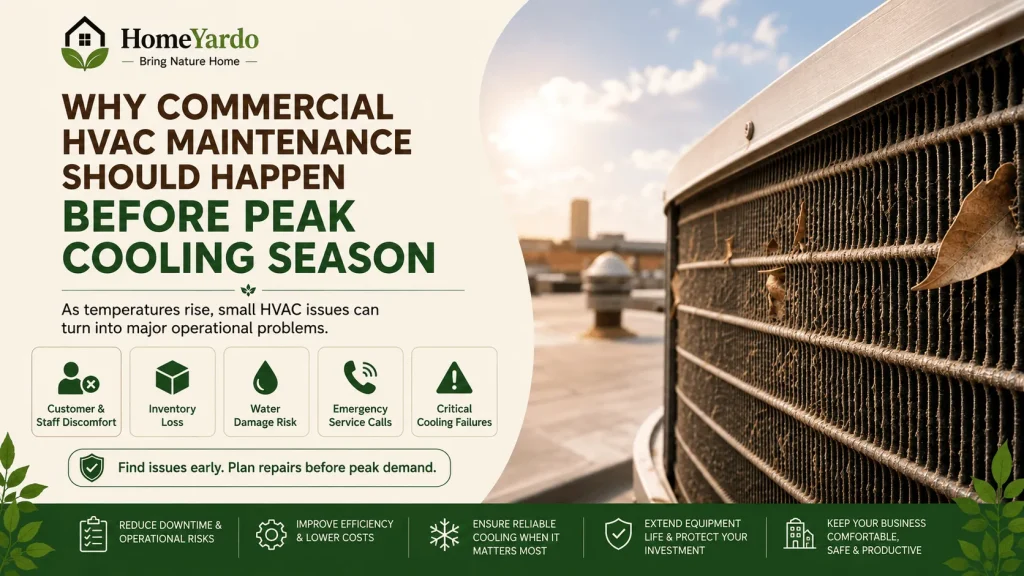
Cooling systems operate for longer periods and under greater load as outdoor temperatures rise. Restricted airflow, dirty heat-transfer surfaces, worn electrical components, drainage problems, and inaccurate controls may therefore become much more noticeable during hot weather.
For a commercial property, the consequences can extend beyond indoor comfort. Depending on the facility, an HVAC or refrigeration failure may contribute to:
- Uncomfortable conditions for employees or customers
- Temperature-sensitive inventory loss
- Interrupted food service
- Water damage from condensate overflow
- Production delays
- Increased equipment runtime
- Emergency service calls
- Loss of temperature control in critical spaces
Pre-season maintenance does not guarantee that equipment will never fail. Its practical purpose is to identify observable deterioration, maintenance needs, and abnormal operating conditions before the equipment enters its highest-demand period.
For related seasonal planning, HomeYardo’s guide to the best time for seasonal HVAC tune-ups explains why servicing equipment before peak demand can make maintenance and repair scheduling easier.
Commercial HVAC Maintenance Checklist at a Glance
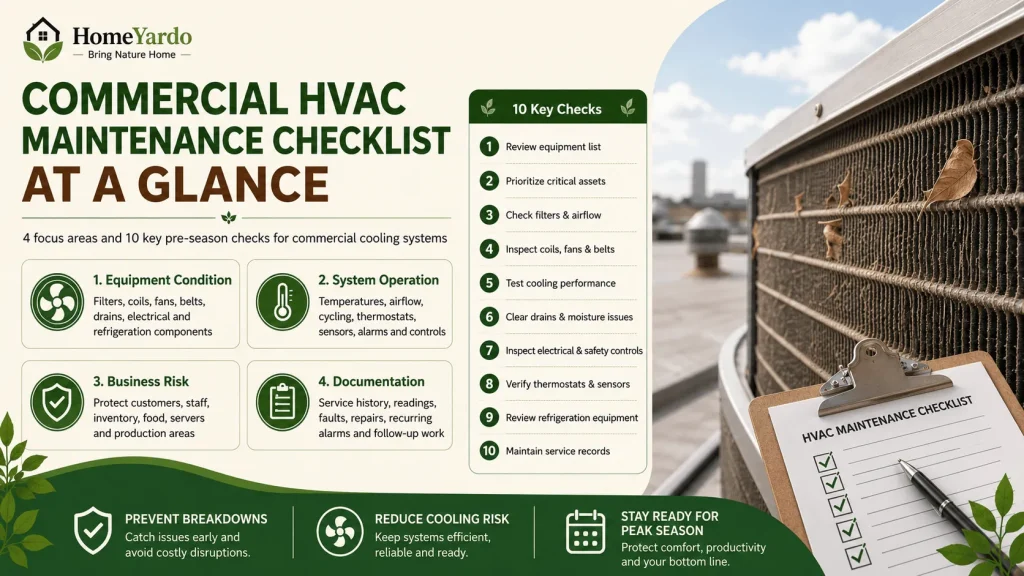
Before working through individual components, divide the inspection into four areas:
- Equipment condition: filters, coils, fans, belts, drains, electrical components, refrigeration components, and visible mechanical condition.
- System operation: temperatures, airflow, cycling, thermostat response, sensors, alarms, and control sequences.
- Business risk: which systems protect customers, employees, inventory, food, servers, production, or other temperature-sensitive operations.
- Documentation: previous faults, repair history, operating readings, recurring alarms, parts replaced, and recommended follow-up work.
- This prevents maintenance from becoming a simple visual inspection with no connection to equipment history or operational priorities.
1. Review the Complete HVAC and Refrigeration Equipment List
Begin with an accurate inventory of equipment serving the property.
Depending on the facility, this may include:
- Rooftop HVAC units
- Split and packaged systems
- Air handlers
- Exhaust and ventilation equipment
- Walk-in coolers and freezers
- Reach-in refrigeration
- Display cases
- Building automation controls
- Pumps
- Process-cooling equipment
- Temperature monitoring systems
For each asset, record its location, manufacturer and model, approximate age, refrigerant type where applicable, previous service date, known defects, and recurring service history.
Equipment should also be ranked according to operational importance.
A unit serving an ordinary office area does not necessarily carry the same business risk as equipment protecting food inventory, a server room, winery production, cold storage, or another temperature-sensitive process.
What Should Be Prioritized First?
Give earlier attention to equipment that:
- Has a history of repeated service calls
- Operates for long daily periods
- Has unresolved recommendations from previous inspections
- Protects temperature-sensitive products
- Serves a business-critical area
- Shows declining cooling performance
- Produces recurring alarms
- Is approaching the later part of its expected service life
This risk-based approach makes the maintenance schedule more useful than simply servicing every unit in arbitrary order.
2. Check Air Filters and Airflow
Restricted airflow can reduce cooling performance and make fans and other system components operate under unfavorable conditions.
Inspect each accessible filter for:
- Dirt loading
- Correct size
- Proper fit
- Installation direction
- Gaps around the filter rack
- Physical damage
- Replacement date
A filter should not automatically be replaced with a higher-efficiency model without checking whether the equipment can accommodate the resulting pressure drop.
Staff can usually perform basic filter observations where safe and permitted. Persistent weak airflow, unusual pressure conditions, icing, or major differences between zones should receive professional diagnosis.
If poor airflow has already started affecting cooling performance, HomeYardo’s guide on how to prevent AC breakdowns covers several warning signs that can indicate a developing air-conditioning problem.
3. Inspect Coils, Fans, Belts, and Outdoor Clearance
Condenser and evaporator sections depend on adequate airflow and clean heat-transfer surfaces.
Check accessible areas for:
- Dust and debris
- Grease accumulation
- Leaves and vegetation
- Bent or damaged fins
- Blocked airflow paths
- Loose panels
- Damaged fan guards
- Belt wear
- Unusual fan movement
- New vibration or mechanical noise
Outdoor units should have the clearance required by the equipment manufacturer. Pallets, boxes, landscaping, stored materials, and other obstructions should not interfere with condenser airflow.
Why Coil Condition Matters
Dirt and airflow restrictions can interfere with heat transfer. The system may then run longer or struggle to maintain its intended operating conditions.
Coil cleaning methods should match the equipment and manufacturer requirements. Aggressive chemicals, excessive water pressure, or improper cleaning can damage fins, coatings, electrical components, or surrounding materials.
4. Test Refrigerant and Cooling Performance
Refrigerant should not be treated as a consumable that routinely needs topping off. If a system has lost refrigerant, the underlying cause should be investigated.
A qualified technician may evaluate operating conditions using measurements such as:
- Refrigerant pressures
- Suction and liquid-line temperatures
- Superheat
- Subcooling
- Supply and return-air temperatures
- Compressor operation
- Manufacturer-specified operating data
Potential warning signs include ice formation, weak cooling, extended runtime, oil residue near refrigerant components, abnormal compressor noise, or a noticeable loss of capacity.
These symptoms do not prove that refrigerant is low. Airflow restrictions, control faults, electrical problems, and mechanical defects can produce overlapping symptoms.
Refrigerant diagnosis, leak repair, evacuation, charging, and sealed-system work should be performed by appropriately qualified personnel.
5. Clear Condensate Drains and Check Moisture Control
Cooling equipment removes moisture from indoor air, and that water must drain correctly.
Inspect accessible:
- Drain pans
- Traps
- Drain lines
- Condensate pumps
- Float switches
- Overflow protection
- Areas beneath air handlers
Look for standing water, algae or debris buildup, staining, corrosion, repeated dampness, or evidence that a drain has previously overflowed.
A partially restricted drain may appear minor during moderate weather but become a larger problem when the system operates for longer periods.
Finding a slow-draining line during scheduled spring maintenance, for example, may prevent water damage or an equipment shutdown during a busy summer weekend.
6. Inspect Electrical Components and Safety Controls
Commercial cooling equipment places repeated operating demands on electrical components throughout the season.
Depending on the system and scope of service, a qualified technician may inspect:
- Contactors
- Capacitors
- Terminals
- Disconnects
- Breakers
- Wiring
- Relays
- Motors
- Control boards
- Safety switches
- Shutdown controls
Warning signs such as discoloration, overheating, burnt odors, buzzing, difficult starting, or repeated breaker trips require further investigation.
Electrical panels and energized HVAC components should not be opened or tested by unqualified staff.
Safety devices also need functional verification where required. A control that looks undamaged has not necessarily been proven to operate correctly.
7. Verify Thermostats, Sensors, Schedules, and Building Controls
Not every temperature complaint begins with a mechanical failure.
Before assuming that the cooling equipment itself is defective, check:
- Thermostat operation
- Temperature sensors
- Occupied and unoccupied schedules
- Cooling setpoints
- Time settings
- Building automation alarms
- Overrides
- Control sequences
- Recent trend data, where available
An inaccurate sensor or incorrect schedule can cause excessive runtime, poor comfort, or misleading equipment symptoms.
When complaints repeatedly occur in the same area, compare the control-system reading with a reliable independent temperature measurement. Also consider whether the issue corresponds with occupancy, solar gain, equipment use, or a particular time of day.
8. Review Commercial Refrigeration and Process-Cooling Equipment
Facilities with refrigeration need a separate maintenance review rather than treating refrigeration as another comfort-cooling system.
Depending on the equipment, inspect accessible:
- Door gaskets
- Hinges and closers
- Strip curtains
- Evaporator fans
- Condenser areas
- Defrost operation
- Drain components
- Temperature records
- Alarm histories
- Frost patterns
A damaged gasket can allow warm, moisture-laden air to enter continuously. This may contribute to condensation, frost formation, longer runtime, and difficulty maintaining the required cabinet or room temperature.
Keep a Simple Refrigeration Log
For critical refrigeration equipment, staff can record:
- Displayed temperature
- Independent temperature checks where required
- Frost or ice observations
- Door and gasket condition
- Alarm events
- Unusual noises
- Water or drainage problems
- Date and time of abnormal conditions
A consistent record gives technicians more useful information than a general report that the equipment “sometimes gets warm.”
9. Match Maintenance Frequency to Equipment and Business Risk
There is no single inspection interval that fits every commercial facility.
A small office, restaurant, retail store, winery, produce facility, server room, and cold-storage operation can have very different equipment loads and consequences of downtime.
Maintenance frequency should account for factors such as:
- Operating hours
- Equipment age
- Manufacturer recommendations
- Local environmental conditions
- Dust or grease exposure
- Occupancy
- Equipment condition
- Previous breakdown history
- Temperature sensitivity
- Consequences of downtime
High-use or business-critical equipment may justify more frequent observation and professional service than lightly used comfort-cooling equipment.
A practical commercial HVAC maintenance checklist can also help facility teams distinguish routine observations from tasks that require professional service.
10. Maintain Clear HVAC Service Records
Each major HVAC or refrigeration asset should have an identifiable maintenance history.
After service, record:
- Inspection date
- Technician or service company
- Operating readings
- Observed defects
- Photographs where useful
- Repairs completed
- Components replaced
- Refrigerant-related findings
- Control adjustments
- Recommendations
- Deferred repairs
- Next inspection or service date
The value of documentation increases over time.
One service call may show a failed component. Several years of records may reveal repeated motor problems, recurring drain restrictions, refrigerant-related repairs, increasing runtime, or another pattern that warrants broader investigation.
What Can Facility Staff Check vs. What Requires an HVAC Professional?
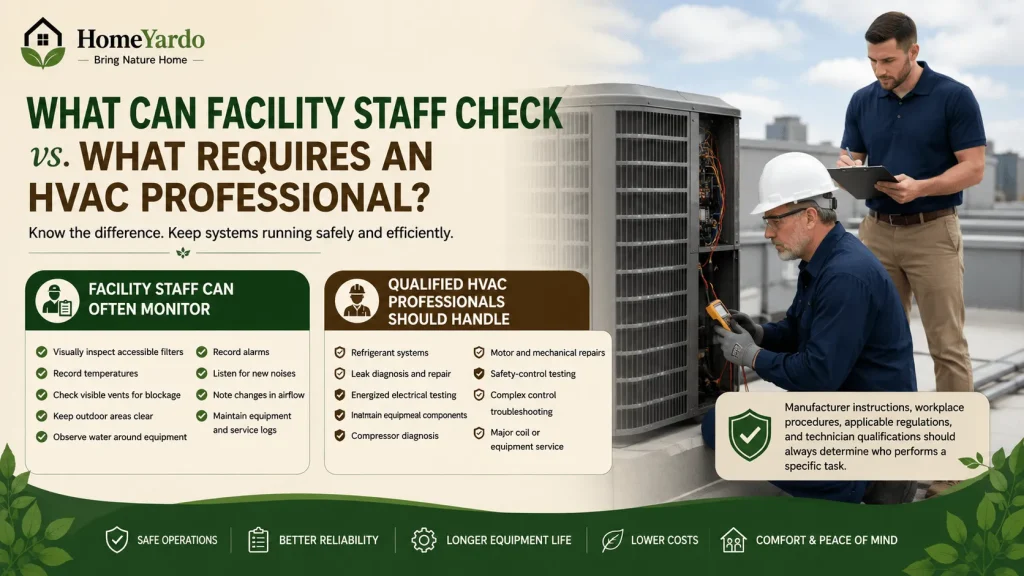
A useful maintenance program clearly separates safe observations from technical service.
Facility Staff Can Often Monitor
Where safe and permitted, staff may be able to:
- Visually inspect accessible filters
- Record temperatures
- Check visible vents for blockage
- Keep outdoor areas clear
- Observe water around equipment
- Record alarms
- Listen for new noises
- Note changes in airflow
- Maintain equipment and service logs
Qualified HVAC Professionals Should Handle
Professional service is appropriate for tasks involving:
- Refrigerant systems
- Leak diagnosis and repair
- Energized electrical testing
- Internal electrical components
- Compressor diagnosis
- Motor and mechanical repairs
- Safety-control testing
- Complex control troubleshooting
- Major coil or equipment service
Manufacturer instructions, workplace procedures, applicable regulations, and technician qualifications should always determine who performs a specific task.
Warning Signs That Should Not Wait for Scheduled Maintenance
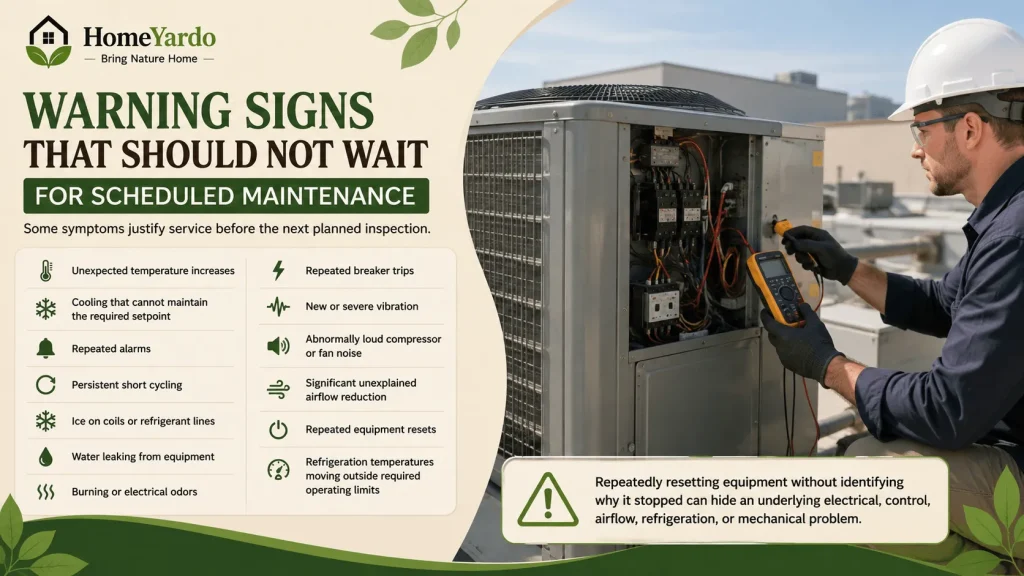
Some symptoms justify service before the next planned inspection.
Request professional diagnosis when you notice:
- Unexpected temperature increases
- Cooling that cannot maintain the required setpoint
- Repeated alarms
- Persistent short cycling
- Ice on coils or refrigerant lines
- Water leaking from equipment
- Burning or electrical odors
- Repeated breaker trips
- New or severe vibration
- Abnormally loud compressor or fan noise
- Significant unexplained airflow reduction
- Repeated equipment resets
- Refrigeration temperatures moving outside required operating limits
Repeatedly resetting equipment without identifying why it stopped can hide an underlying electrical, control, airflow, refrigeration, or mechanical problem.
How to Prioritize Problems Found During an HVAC Inspection
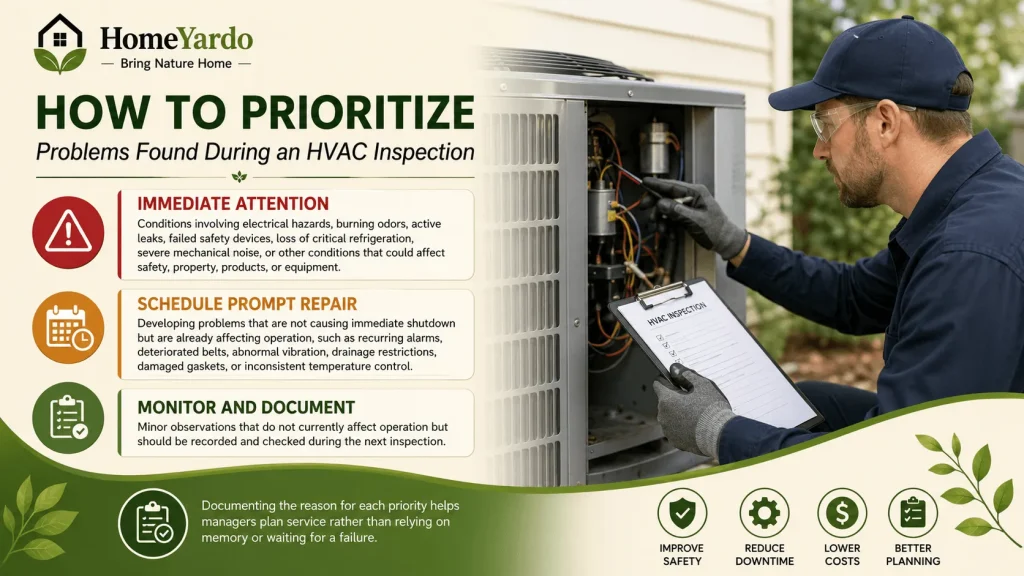
Not every maintenance finding carries the same urgency.
A simple prioritization system can help:
Immediate Attention
Conditions involving electrical hazards, burning odors, active leaks, failed safety devices, loss of critical refrigeration, severe mechanical noise, or other conditions that could affect safety, property, products, or equipment.
Schedule Prompt Repair
Developing problems that are not causing immediate shutdown but are already affecting operation, such as recurring alarms, deteriorated belts, abnormal vibration, drainage restrictions, damaged gaskets, or inconsistent temperature control.
Monitor and Document
Minor observations that do not currently affect operation but should be recorded and checked during the next inspection.
Documenting the reason for each priority helps managers plan service rather than relying on memory or waiting for a failure.
What Should Be Verified After Commercial HVAC Service?

Maintenance should not end when the access panels are closed.
Where appropriate, confirm that:
- Equipment starts and stops normally
- Cooling responds to controls
- Supply conditions are consistent with expected operation
- Drains are functioning
- Unusual noise or vibration has been addressed
- Alarms and controls are operating as intended
- Work areas and equipment panels are secured
- Service findings have been documented
- Unresolved recommendations have a follow-up plan
This creates a clear endpoint for the maintenance visit and reduces the chance that an identified issue disappears into an invoice or service note without action.
Simple Pre-Season Commercial HVAC Action Plan
- Inventory all HVAC, refrigeration, ventilation, and process-cooling assets.
- Identify business-critical equipment.
- Review previous service records, alarms, and recurring faults.
- Inspect accessible filters, airflow paths, coils, fans, belts, and equipment clearances.
- Check drains, moisture conditions, thermostats, sensors, and alarms.
- Review refrigeration temperatures, doors, gaskets, frost, and operating records.
- Schedule qualified electrical, refrigerant, safety-control, and mechanical testing.
- Prioritize identified problems according to safety and operational risk.
- Complete necessary repairs before sustained peak cooling demand.
- Save inspection results and establish the next service date for each unit.
Conclusion
A commercial HVAC maintenance checklist is most useful when it becomes part of an ongoing equipment-management process rather than a once-a-year inspection.
Before peak cooling season, facility managers should review equipment history, inspect accessible airflow and drainage components, verify controls and refrigeration conditions, identify warning signs, and arrange qualified technical testing where needed.
The strongest maintenance programs also account for business risk. Equipment protecting food, inventory, production, servers, or other temperature-sensitive operations may deserve earlier attention and closer monitoring than standard comfort-cooling equipment.
Document what was checked, what was found, what was repaired, and what still requires attention. That record gives facility teams and HVAC professionals a clearer picture of equipment condition and makes the next maintenance decision easier.
FAQ’s
The appropriate schedule depends on equipment type, runtime, age, manufacturer recommendations, building use, environmental conditions, and the consequences of downtime. Routine staff observations combined with scheduled professional maintenance provide a practical starting framework. Critical or heavily used equipment may require more frequent attention.
Cooling-system maintenance is generally best scheduled before sustained hot weather and peak cooling demand. This gives facility managers more time to identify problems, obtain parts, arrange repairs, and confirm equipment operation before seasonal workloads increase.
A commercial HVAC maintenance checklist commonly covers equipment records, filters, airflow, coils, fans, belts, condensate drainage, controls, sensors, electrical components, refrigerant performance, safety devices, refrigeration equipment, operating records, and follow-up repairs. The exact checklist should match the equipment and facility.
Employees can often perform limited observations such as checking accessible filters, recording temperatures, keeping equipment areas clear, noting alarms, and reporting unusual sounds or leaks. Refrigerant work, energized electrical testing, internal repairs, and technical diagnostics should be handled by qualified professionals.
Maintenance cannot eliminate every possible failure. It can, however, help identify conditions such as restricted airflow, deteriorating components, drainage problems, control faults, and abnormal operating behavior before some of them develop into larger service problems.
Proper airflow, clean heat-transfer surfaces, appropriate control settings, and correctly operating equipment can help a system operate closer to its intended conditions. Actual energy consumption depends on equipment efficiency, building load, weather, operating schedules, occupancy, maintenance condition, and other factors.
Common findings can include dirty filters, obstructed coils, blocked condensate drains, worn belts, damaged electrical components, inaccurate sensors, control problems, airflow restrictions, abnormal vibration, refrigeration issues, and incomplete maintenance records.
Maintenance may include checking filters, coils, fans, belts, drainage, electrical components, controls, refrigerant performance, equipment panels, and surrounding clearance. The manufacturer’s service instructions should determine the required procedures, and technical work should be completed by qualified personnel.
There is no universal replacement interval for every commercial system. Filter type, equipment requirements, operating hours, occupancy, airborne contaminants, pressure conditions, and manufacturer recommendations all affect replacement frequency. Filters should be inspected regularly and replaced according to condition and system requirements.
Keep the equipment identity, service dates, operating readings, reported symptoms, inspection findings, repairs, replaced parts, photographs where useful, recommendations, recurring faults, and next scheduled service date. Separate records for each major asset make long-term patterns easier to identify.