How To Improve Indoor Air Quality At Home
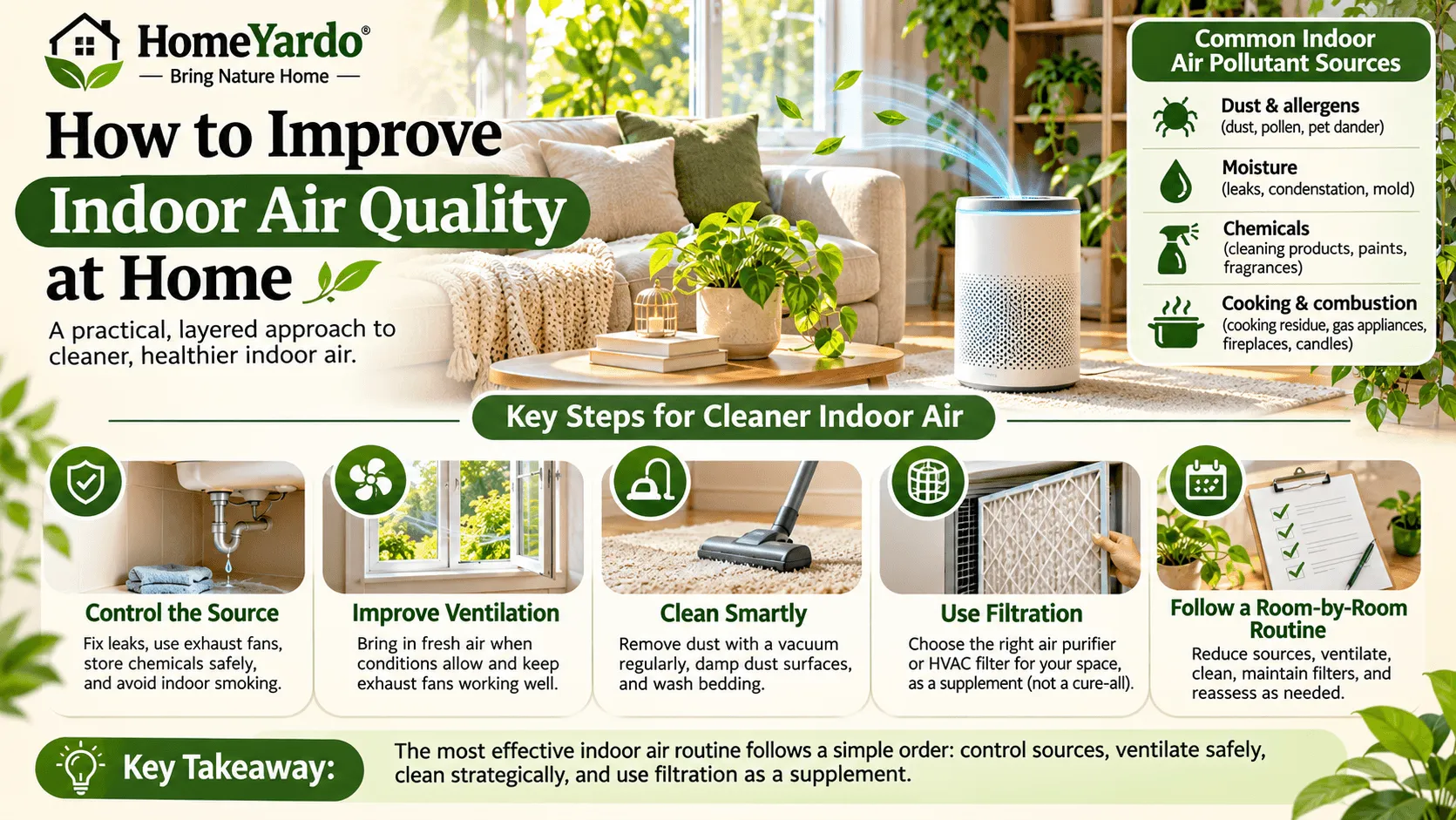
Most of us spend the bulk of our time indoors, where dust, moisture, cleaning products, cooking residue, allergens, and outdoor pollutants quietly build up over time. Settled dust on carpets, floors, and upholstery doesn’t just disappear on its own—it needs to be physically removed with a vacuum on a regular basis. Meanwhile, many households turn to an air purifier to help manage airborne particles, though these devices work best as a supplement to proper source control and ventilation rather than a replacement for them.
Improving indoor air quality isn’t about finding one magic product—it takes a combination of strategies working in tandem, grounded in recognized guidance and habits that actually fit real households. These same principles also connect with broader home wellness trends that focus on ventilation, humidity management, indoor comfort, and healthier living spaces.
Understand The Main Sources Of Indoor Air Pollution
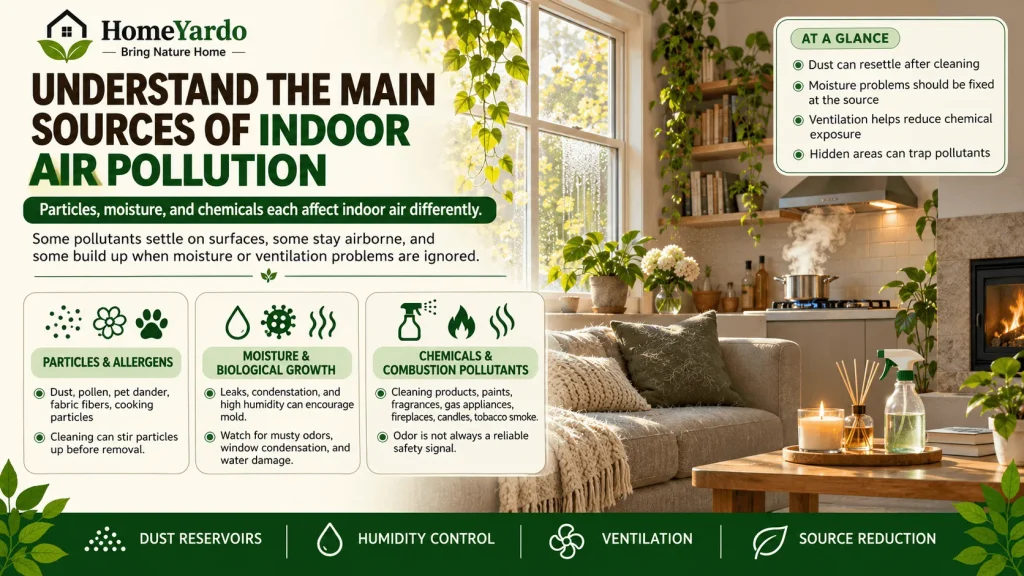
Particles and allergens like dust, pollen, pet dander, fabric fibers, and cooking particles behave differently depending on whether they settle onto surfaces or linger in the air. Interestingly, the act of cleaning can temporarily stir up settled particles before they resettle elsewhere or get captured and removed. If dust seems to return soon after cleaning, checking for hidden cleaning problems can help identify overlooked dust reservoirs such as upholstery, vents, storage areas, and spaces around appliances.
Moisture and biological contaminants typically trace back to leaks, condensation, or elevated humidity, all of which can encourage mold growth. Tackling moisture at its source is far more effective than trying to clean up contamination after it’s already taken hold. Warning signs worth watching for include musty odors, visible mold, recurring window condensation, or materials showing signs of water damage. Moisture that reaches drywall, flooring, insulation, or concealed building materials deserves particular attention because affected areas may remain damp even after the visible surface appears dry.
Chemicals and combustion pollutants can originate from cleaning products, paints, fragrances, gas appliances, fireplaces, candles, and tobacco smoke. Odor alone isn’t a reliable safety indicator, either—some pollutants are harmful even when they’re virtually undetectable by smell. Following product instructions and making sure there’s adequate ventilation goes a long way toward reducing exposure. Guidance from the U.S. Environmental Protection Agency, along with established ventilation standards, can help households tell these pollutant categories apart and respond accordingly.
Start With Source Control
Cutting off pollution at its origin tends to be the most reliable strategy available. Practical steps include fixing leaks promptly, running kitchen and bathroom exhaust fans that vent outdoors, keeping combustion appliances properly maintained, storing chemicals securely, avoiding indoor smoking, and setting up doormats or a shoe-removal area to cut down on tracked-in dirt.
Key Takeaway: The most effective air-quality improvement is often preventing pollutants from entering or accumulating indoors in the first place.
Improve Ventilation Safely
Ventilation works by diluting indoor pollutants through an exchange of indoor and outdoor air. Opening windows and doors can help, provided outdoor air quality, weather, and security allow for it, and functioning exhaust fans in kitchens and bathrooms serve a similar purpose. That said, ventilation needs shift depending on home design, climate, and how many people live there—and opening windows isn’t always wise during wildfire smoke, high pollen counts, or extreme temperatures. Residential ventilation guidance from organizations like ASHRAE can help households gauge appropriate airflow levels, though meeting the minimum standard doesn’t guarantee flawless air quality. It’s also worth distinguishing between outdoor-air ventilation, which brings in genuinely fresh air, and simply recirculating what’s already indoors. Keeping mechanical ventilation systems well maintained supports consistent performance, but ventilation alone doesn’t eliminate the need for source control or routine cleaning.
Use Cleaning Practices That Reduce Dust Without Spreading It
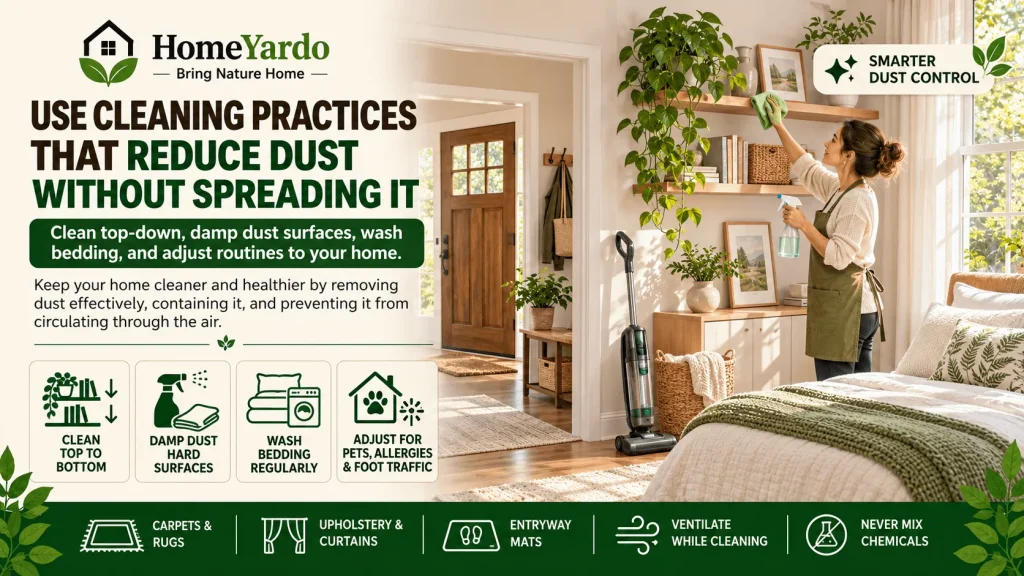
Cleaning from higher surfaces down allows dislodged dust to be captured rather than simply redistributed elsewhere. Damp dusting hard surfaces—rather than dry methods that just push particles around—paired with regular bedding washes both make a real difference. Carpets, rugs, upholstered furniture, curtains, mattresses, and entryways tend to accumulate dust quickly, so how often you clean them should reflect your household’s particular circumstances—pets, allergies, foot traffic—rather than some universal fixed schedule.
Take a household that’s recently renovated a room or brought home a new pet, for instance: they might notice extra dust and respond by adding entryway mats, cleaning upholstery more frequently, and adjusting their floor-care routine accordingly. Ventilating during and after cleaning, following label directions carefully, and never mixing cleaning chemicals unless explicitly permitted all help reduce exposure risks—particularly for anyone sensitive to dust or chemical residue.
Understand the Role and Limits of Filtration
Filtration can supplement source control and ventilation, especially where airborne particles are concerned, but a portable air-cleaning device typically only treats a defined area rather than an entire home. When weighing such equipment, it’s worth considering room size and airflow capacity, filter type and replacement needs, noise level, operating cost, and whether the unit produces any unwanted by-products. Central HVAC filters need to be compatible with the system itself, since a denser filter can increase airflow resistance beyond what the equipment was built to handle. Filtration is a supplement, not a cure-all—it won’t correct mold growth, eliminate moisture sources, or stand in for ventilation, and no device “removes all allergens” or makes indoor air completely clean.
Create a Practical Room-by-Room Routine
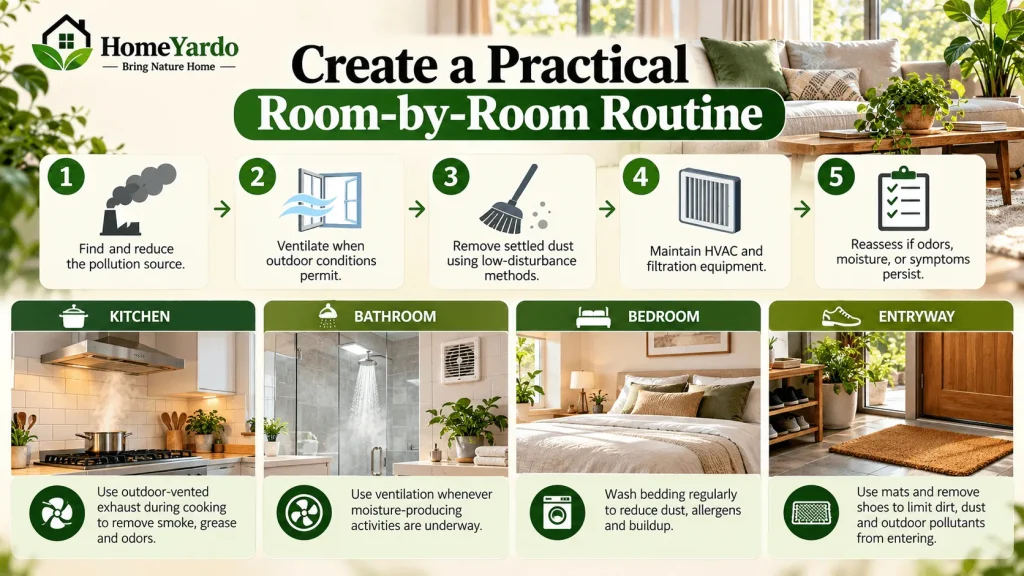
A simple sequence can guide action across the home:
- Find and reduce the pollution source.
- Ventilate when outdoor conditions permit.
- Remove settled dust using low-disturbance methods.
- Maintain HVAC and filtration equipment.
- Reassess if odors, moisture, or symptoms persist.
Kitchens benefit from outdoor-vented exhaust during cooking; bathrooms need ventilation whenever moisture-producing activities are underway; bedrooms benefit from regular bedding washes; and entryways benefit from mats paired with shoe-removal habits.
When Professional Help May Be Appropriate
Recurring mold, significant water damage, persistent combustion odors, suspected carbon monoxide, or ventilation problems generally call for a professional assessment. Breathing difficulty or worsening respiratory symptoms deserve prompt medical attention—this article isn’t medical advice. Investigations should focus on pinpointing sources rather than leaning solely on generalized testing, since no single home device can diagnose a persistent indoor-air problem on its own.
Final Perspective: Build a Sustainable Indoor-Air Routine
The most dependable approach follows a hierarchy: control sources first, ventilate safely, clean strategically, and treat filtration as a supplement rather than a solution. Small, consistent habits—fixing moisture issues, cleaning dust reservoirs, maintaining filters, running exhaust ventilation—tend to outperform one-time fixes in the long run. Consider inspecting one room today for pollutant sources, moisture, ventilation gaps, and dust buildup, then tackle the most pressing issue first, adapting these suggestions to fit your home’s specific conditions and equipment instructions.
FAQs About Improving Indoor Air Quality at Home
Start with source control. Reduce smoke, excessive moisture, dust, strong chemical emissions, and improperly vented combustion sources. Then combine suitable ventilation, regular cleaning, humidity management, and filtration.
They can reduce certain airborne pollutants, especially particles, when the unit is correctly sized and operated. They cannot remove every pollutant and should not replace ventilation, moisture control, cleaning, or correction of pollution sources.
It can when outdoor air is cleaner than indoor air and weather conditions are appropriate. Opening windows may be less suitable during wildfire smoke, high pollution, severe pollen, excessive outdoor humidity, or extreme temperatures.
EPA guidance recommends keeping relative humidity below 60% and ideally around 30% to 50% when possible. Humidity that stays too high can encourage condensation, mold growth, and other moisture-related problems.