
Why Do Millions Of Britons Still Hold Too Much Of Their Wealth In Cash?
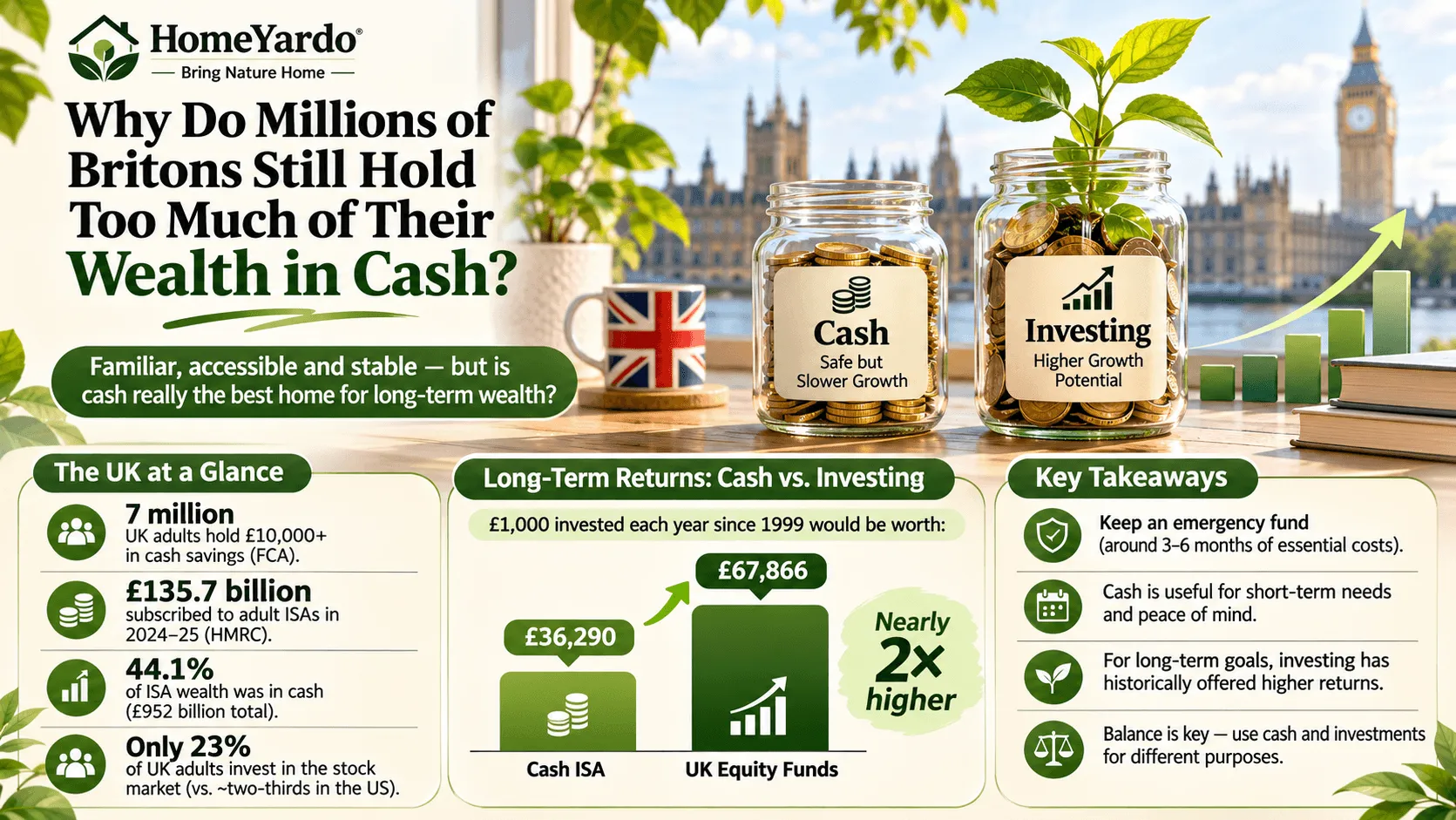
Around 7 million UK adults hold £10,000 or more in cash savings while missing out on the returns investing could bring, according to the FCA. That number alone should raise eyebrows. Cash ISAs now hold hundreds of billions of pounds between them, and plenty of those balances run well into five and six figures, money that will barely grow.
These aren’t low-income households. Most have saved well over many years, sometimes decades, building up balances that plenty of people would envy. They just never made the jump into investing. And every year that money stays parked in accounts that barely keep pace with inflation, the distance between what they have and what they could have widens, with the cost of inaction compounding all the while.
Why Cash Felt Like The Smart Move
The attraction of cash is easy to understand.
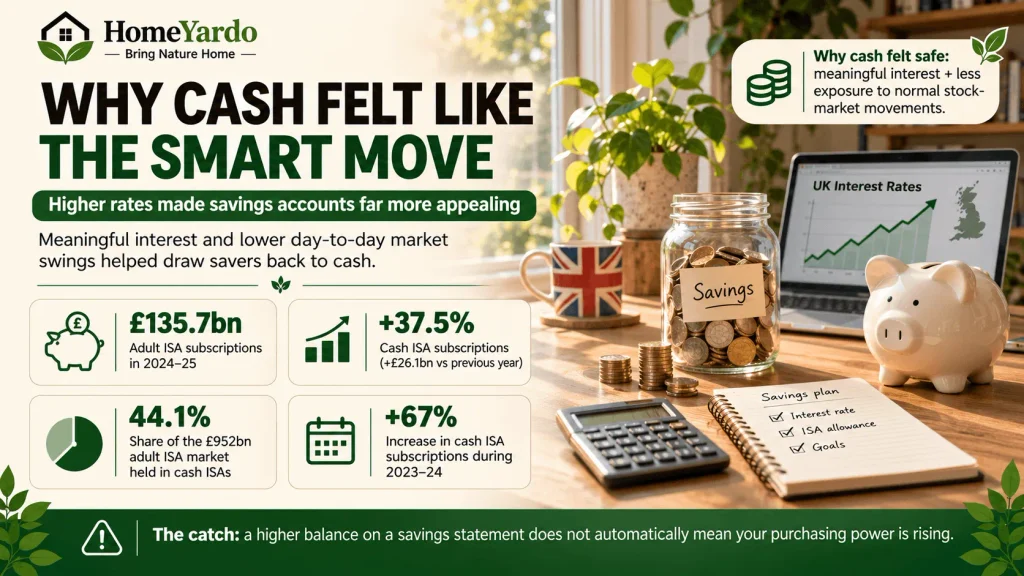
When UK interest rates rose sharply after years of very low returns, savings accounts became much more appealing. Higher rates allowed savers to earn meaningful interest without exposing their capital to normal stock-market movements.
HMRC data shows just how strongly households responded. Around £135.7 billion was subscribed to adult ISAs during the 2024–25 tax year. Cash ISA subscriptions increased by 37.5%, or £26.1 billion, compared with the previous year. Cash ISAs represented 44.1% of the total £952 billion market value of adult ISA holdings at the end of that tax year.
That followed an even larger 67% increase in cash ISA subscriptions during 2023–24.
In other words, the renewed enthusiasm for cash did not come from nowhere. Savers were responding to materially better interest rates.
The difficulty is that the number shown on a savings statement does not tell you whether your purchasing power is actually increasing.
What Long-Run Returns Actually Show
Consider what the long-term numbers actually say. If someone had put £1,000 a year into a cash ISA since 1999, they’d have roughly £36,290 today. That same £1,000 a year going into UK equity funds would have grown to about £67,866, nearly double, and that figure accounts for every crash and downturn along the way.
Britain is a clear outlier when it comes to investing culture, too. Only about 23% of UK adults invest directly in the stock market, compared to nearly two-thirds of Americans. Outside of pensions, Brits hold around 8% of their wealth in equities and funds, while Americans hold closer to 33%. In the US, people talk about investing the way we talk about property. Workplace 401(k) plans and casual dinner-table chat about index funds are completely normal there, and that kind of cultural familiarity with markets simply doesn’t exist here to the same extent.
Some of this is structural. Auto-enrolment means most UK workers are technically invested through their workplace pension, but a huge number of them don’t even know it. Survey after survey finds only around a third of people know their pension is invested in the stock market at all. So the exposure exists on paper, but the awareness and the habits that go with it are missing entirely.
How Much Cash Should Someone Keep?

There is no correct cash balance that applies to everyone.
MoneyHelper uses three to six months of essential outgoings as a general emergency-fund guideline. A household spending £2,000 each month on essential bills, for example, might consider roughly £6,000 to £12,000 as a starting range.
But that is only a rule of thumb.
A larger cash reserve may make sense for someone who:
- has irregular income;
- expects a major purchase;
- is approaching retirement;
- owns a business;
- has dependants;
- expects significant property expenses;
- has limited access to credit; or
- simply needs a larger buffer to manage realistic short-term risks.
Homeowners may also want to keep a separate reserve for unexpected home repair costs, rather than treating every pound of accessible savings as available for investment.
The more useful question is not “How much cash is too much?” but “What job does each part of this cash balance need to do?”
Money needed soon has a clear reason to remain accessible. Money with no expected use for many years deserves a different review.
From Saver To Investor
Government policy is catching up. From April 2027, the cash ISA allowance for under-65s will drop from £20,000 to £12,000, while the stocks and shares ISA limit stays at £20,000. That’s a deliberate push towards investing.
Policy nudges only go so far, though. For anyone with large sums sitting idle in savings accounts, the actual change will have to come down to them personally. A cash buffer matters, obviously, but everything above it could be doing far more. People with bigger balances often turn to investment management services to help with that transition, building a portfolio around their own goals and appetite for risk instead of moving everything across in one go.
No magic number exists for how much cash someone should keep on hand. Three to six months of expenses is a common guideline, but it’ll depend on individual circumstances and what helps someone sleep at night. Holding £50,000 or £100,000 in a savings account “just in case” is almost certainly more than anyone needs as an emergency buffer, and the opportunity cost compounds with every passing year.
The Real Price Of Playing It Safe

Cash carries risk too, even if most people never see it on a statement. No red number ever appears next to a savings balance, which is exactly what makes the erosion so easy to ignore. An investment portfolio that drops 10% in a bad month looks alarming, while a cash pot quietly losing 2% a year to inflation looks perfectly fine. Over twenty years, the second one will usually do far more damage.
That’s the trap worth naming. The feeling of safety and the fact of safety aren’t the same thing, and the savers with the most to lose are the ones who’ve confused the two for decades. Anyone holding six figures in cash isn’t really avoiding risk. They’ve just swapped a visible risk for an invisible one, and the invisible one never shows up until the damage is already done.
Risk warning: You could lose money when investing. The value of your holdings, along with the income they produce, may fall as well as rise, and your final return could be below what you put in. Previous gains are no indication of gains to come.
Final Takeaway
Millions of Britons hold substantial sums in cash because cash is familiar, accessible and relatively stable.
For emergency funds and short-term goals, those qualities are valuable.
For money that will not be needed for many years, inflation and historically lower returns mean holding everything in cash can carry its own cost. Investment may offer more growth potential, but it also introduces the possibility of losing money.
Rather than choosing between being a “saver” and an “investor,” households can think in separate financial pots: money needed now, money needed later and money intended for long-term goals.
That approach keeps the security of cash where it is useful without assuming that every pound should remain there indefinitely.
FAQs
Not automatically. Cash is useful for emergencies, short-term spending and situations where losing capital would create a problem. Holding large amounts for many years without a defined purpose may expose the money to inflation and lower long-term growth.
MoneyHelper suggests three to six months of essential expenses as a general emergency-fund guideline. Your own requirement can be higher or lower depending on income stability, dependants, debts, upcoming expenses and other circumstances.
A cash ISA does not normally fluctuate with investment markets, so it offers much greater certainty over the nominal amount saved. A stocks and shares ISA can rise or fall and you may receive less than you invested.
Yes. Your account balance can increase while its purchasing power decreases. This happens when inflation is higher than the interest rate your savings earn.