
Budget Friendly Ways To Keep A Family Home Running Smoothly

Running a family home takes more than keeping the floors clean and the bills paid. There are meals to prepare, clothes to wash, groceries to buy, and schedules to manage. When you add work, school, and family activities, everyday responsibilities can quickly become overwhelming.
Keeping everything organized can also become expensive. Household supplies, repairs, groceries, and convenience services all take money from your family budget.
However, maintaining a comfortable home does not have to mean spending more than you can afford.
Small changes to your routine can help reduce unnecessary expenses, save time, and make household responsibilities easier to manage. The goal is to create practical systems that work for your family rather than following complicated routines that are difficult to maintain.
Here are simple ways to keep your household running smoothly while making thoughtful choices about where your money goes.
Choose Cleaning Solutions That Fit Your Budget

Cleaning is one of the biggest ongoing responsibilities in a family home. Between dishes, laundry, bathrooms, and floors, there is always something that needs attention.
Instead of spending entire weekends catching up on chores, create a cleaning routine that spreads tasks throughout the week. Families struggling to decide which jobs deserve attention first can use a strategic cleaning routine to prioritize the areas that affect everyday hygiene, comfort, and function.
For families with particularly demanding schedules, occasional professional cleaning may also be worth considering. Reading a budget-friendly Homeaglow review can offer a personal perspective on how cleaning assistance may help families reclaim time for other activities. Before booking, compare current service prices, included tasks, and any membership or cancellation terms to make sure the arrangement fits your household budget.
You do not need to hire someone for every cleaning task. Sometimes, occasional help with bathrooms, floors, or other demanding chores can make a meaningful difference.
The best cleaning arrangement is one that keeps your home comfortable without creating unnecessary financial pressure.
Create a Simple Household Budget

A household runs more smoothly when you understand where your money goes.
Start by identifying essential expenses such as housing, utilities, groceries, transportation, and insurance. Include savings goals and expenses that may not occur every month, such as school supplies, home repairs, or vehicle maintenance.
Next, review spending that changes from month to month.
This may include entertainment, takeout meals, subscriptions, and other optional purchases.
Look for expenses that no longer provide much value.
You may discover that your family is paying for services you rarely use or making purchases that could be avoided with better planning.
You do not need an elaborate budgeting system to manage your finances.
A notebook, spreadsheet, or simple budgeting app can help you track expenses and make informed decisions.
Review your budget regularly so you can adjust when your family’s needs change.
Plan Meals Around What You Already Have
Food is an essential household expense, but poor planning can lead to unnecessary spending and wasted ingredients.
Before creating your grocery list, check your pantry, refrigerator, and freezer.
Look for ingredients that can be used in meals your family already enjoys.
For example, leftover vegetables might be suitable for soup, pasta, or a simple rice dish. Extra cooked chicken could be used in sandwiches or another meal, provided it has been stored safely.
Build your meal plan around available ingredients before purchasing more.
You can also choose recipes that share common ingredients.
This helps reduce the number of different items you need to buy.
Keep your meal plan flexible so you can adjust it when schedules change.
A practical plan should make cooking easier without requiring you to prepare complicated meals every day.
Keep Grocery Shopping Organized

Unplanned grocery trips can lead to unnecessary purchases and wasted time.
Create a running shopping list that everyone in the household can access.
Whenever you notice that a basic item is running low, add it to the list.
Before shopping, check what you already have to avoid buying duplicates.
Organize your list by category, such as produce, pantry items, dairy, and household supplies.
This can make shopping more efficient and reduce the temptation to browse unnecessarily.
You should also compare prices based on the amount of product you receive rather than relying only on the package price.
However, buying in bulk is not always the most economical option.
Choose larger packages only when your family can use the contents before they expire or lose quality.
Smart grocery shopping is about buying what you need, not simply purchasing more because something is on sale.
Share Household Responsibilities
A family home is easier to manage when everyone contributes.
If one person handles most of the cooking, cleaning, laundry, and organizing, the workload can quickly become exhausting.
Discuss household responsibilities with your family and divide tasks according to everyone’s age, abilities, and schedule.
Children can help put away toys, organize their belongings, or complete other suitable chores.
Older family members may be able to assist with dishes, laundry, meal preparation, or general cleaning.
Make responsibilities clear so everyone knows what they are expected to do.
You might use a simple weekly schedule to keep track of tasks.
Avoid creating a complicated system that requires constant reminders or additional purchases.
Sharing responsibilities reduces the burden on one person and helps everyone develop useful everyday habits.
Maintain Appliances Before Problems Develop

Household appliances make everyday responsibilities easier, but repairs and replacements can become expensive.
Regular maintenance can help keep appliances working properly.
Follow manufacturer instructions for cleaning and servicing equipment such as refrigerators, washing machines, dryers, and dishwashers.
For example, keeping refrigerator door seals clean and checking for visible damage can help you identify potential problems.
Cleaning suitable filters and removing lint from dryer components according to the manufacturer’s instructions can also support safe operation.
Avoid attempting repairs that require specialized electrical or mechanical knowledge.
If an appliance develops a serious problem, contact a qualified professional.
Preventive maintenance may require a little time, but it can help you identify issues before they become more disruptive.
Reduce Household Energy Waste
Utility bills are a regular expense, and small habits can help reduce unnecessary energy use.
Encourage family members to turn off lights when leaving rooms and avoid leaving unused electronics running.
Make use of natural daylight when practical.
Check whether heating and cooling equipment is being used efficiently and follow the manufacturer’s maintenance recommendations.
You can also consider using fans or adjusting indoor temperature settings when appropriate for your climate and comfort.
When replacing appliances, compare energy use along with the purchase price.
However, avoid replacing working equipment solely because a newer model promises savings.
Consider the total cost before making a decision.
Simple changes to everyday habits can help your family manage energy use without sacrificing comfort.
Keep Household Supplies Under Control
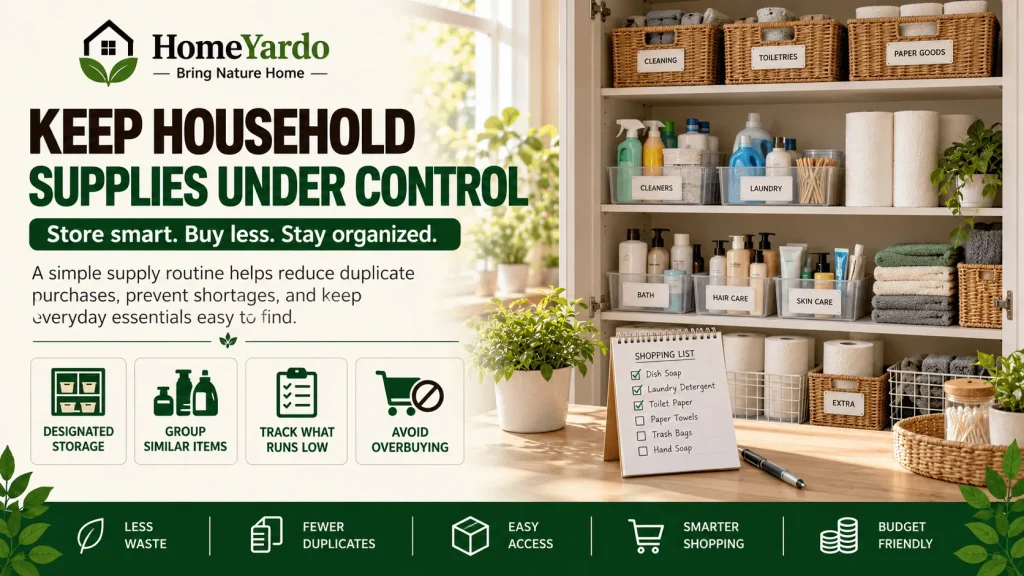
Cleaning products, toiletries, paper goods, and other household essentials can take up a noticeable part of your budget.
Without a clear system, it is easy to purchase duplicates or run out of important items unexpectedly.
Choose a designated storage area for frequently used supplies.
Keep similar products together so you can see what is available. If belongings are becoming difficult to manage throughout the house, these home storage solutions explain how to organize items around accessibility, available space, protection, and how often they are used.
When something begins to run low, add it to your shopping list.
Avoid purchasing excessive amounts simply because an item is discounted.
Consider whether your household has enough storage space and whether the product will be used within a reasonable period.
You may also find that a smaller selection of practical cleaning products meets your needs.
Always follow product labels and avoid mixing cleaning chemicals.
A simple supply routine helps reduce unnecessary shopping and keeps essential items easy to find.
Organize Your Home Without Buying More Storage Products
Clutter can make a home feel difficult to manage, but organizing does not require expensive containers or furniture.
Start by sorting through belongings you already own.
Identify items your family regularly uses and give them convenient storage locations.
Remove things that are broken, no longer needed, or suitable for donation.
You can reuse existing baskets, drawers, shelves, and containers to organize everyday items. The same approach works especially well in the kitchen, where practical kitchen storage solutions can make better use of cabinets, walls, drawers, shelves, and spaces you already have.
Focus on practical arrangements rather than creating a perfectly decorated storage system.
For example, keeping shoes near the entrance and school supplies in a designated area can make busy mornings easier.
Choose storage solutions that everyone in the household can maintain.
A simple system that works consistently is more valuable than an elaborate arrangement that quickly becomes difficult to manage.
Build a Manageable Laundry Routine
Laundry can become overwhelming when clothing, towels, and bedding accumulate throughout the week.
Instead of waiting until everything needs washing, create a routine that fits your family’s schedule.
You might wash certain items on quieter evenings and handle larger loads when you have more time.
Encourage family members to place dirty clothing in the correct baskets.
Older children and adults can also help fold and put away clean laundry.
Follow clothing care labels to reduce unnecessary wear and damage.
Avoid using more detergent than recommended, since extra detergent does not necessarily improve cleaning.
You can also reduce unnecessary washing by checking whether items genuinely need laundering before placing them in the basket.
A consistent laundry routine can help prevent large piles from taking over your weekend.
Prepare for Busy Mornings The Night Before
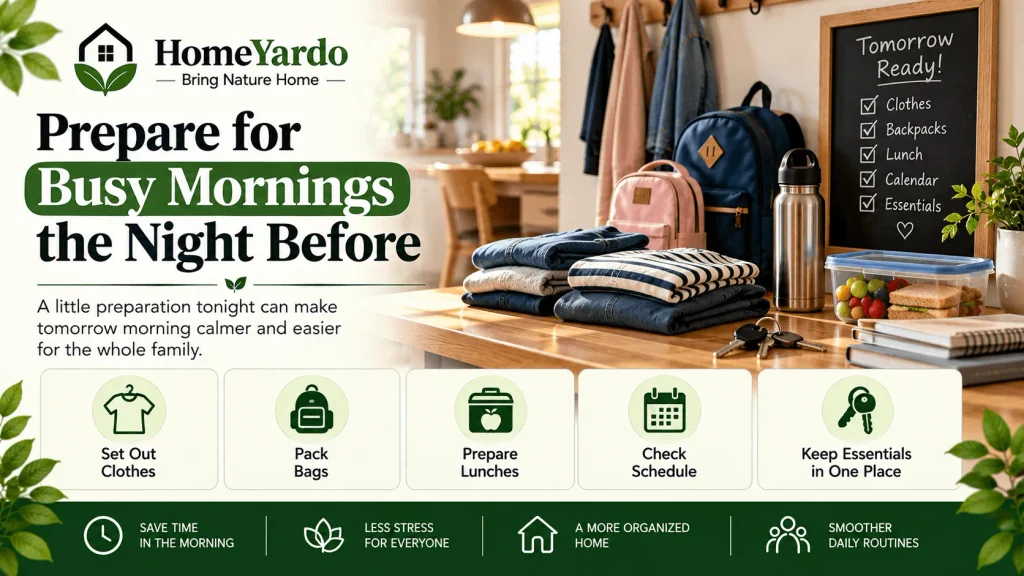
Mornings can become stressful when everyone is trying to get ready for work, school, and other activities.
A little preparation the night before can make the following day easier.
Encourage family members to choose their clothing, pack bags, and gather necessary supplies.
Check the family calendar for appointments or special activities.
You can also prepare suitable breakfast ingredients or organize items needed for lunch.
Keep frequently used belongings in consistent locations.
This reduces time spent searching for missing keys, shoes, or school materials.
You do not need to spend your entire evening preparing for the next day.
Focus on the tasks that regularly cause delays.
A simple evening routine can make mornings calmer without adding any significant expense.
Plan for Home Repairs Before They Become Emergencies
Unexpected home repairs can put pressure on a family budget.
While not every problem can be prevented, regular inspections and maintenance can help you identify concerns earlier.
Pay attention to leaking faucets, damaged flooring, unusual appliance sounds, and signs of moisture.
Address small problems promptly when it is safe and appropriate to do so.
For work involving electricity, structural concerns, or specialized plumbing, hire qualified professionals.
Set aside money for necessary home maintenance whenever your budget allows.
This fund should be separate from money reserved for everyday spending.
Even gradual saving can help you prepare for future expenses.
Planning for maintenance reduces the need to make rushed financial decisions when something breaks.
Simplify Your Family Calendar

A busy household often involves several overlapping schedules.
School events, work commitments, appointments, and family activities can become difficult to coordinate.
Use a shared calendar to keep important information in one place.
Include upcoming appointments, payment dates, school activities, and other commitments.
Encourage family members to communicate schedule changes as early as possible.
Review the calendar together so everyone understands what is happening during the week.
You should also consider whether your family has taken on too many optional activities.
A crowded schedule can increase transportation costs, meal expenses, and stress.
Leaving room for rest and unplanned time can help your household feel more manageable.
Choose Affordable Family Entertainment
Keeping your family entertained does not require expensive outings every weekend.
Simple activities can provide meaningful opportunities to spend time together.
Consider visiting local parks, borrowing books from the library, playing board games, or preparing a meal as a family.
You can also create traditions that do not require much spending.
For example, a family movie night or a regular outdoor activity can become something everyone looks forward to.
If you choose paid entertainment, plan for it in your household budget.
Avoid feeling pressured to spend money simply because other families are participating in expensive activities.
The goal is to enjoy time together while making choices that support your financial priorities.
Review Subscriptions and Recurring Expenses

Subscriptions can be convenient, but they can also become easy to forget.
Streaming services, apps, delivery memberships, and other recurring payments may continue even when your family rarely uses them.
Review these charges regularly.
Consider whether each service still provides enough value to justify the cost.
If you no longer need something, follow the provider’s cancellation process and confirm when billing will stop.
You can also compare similar services to see whether you are paying for overlapping features.
However, avoid replacing one unnecessary subscription with another simply because it offers an introductory discount.
Keeping recurring expenses under control creates more room in your budget for essential needs and meaningful family activities.
Know When Paying for Convenience Makes Sense
Being careful with money does not mean refusing every convenience.
Sometimes, spending a little more can make household responsibilities easier to manage.
For example, grocery pickup may save time during a demanding week, while occasional cleaning assistance may help when chores become overwhelming.
However, convenience should always be evaluated against the full cost.
Consider whether the service solves a genuine problem and whether you will use it often enough to justify the expense.
Check for additional fees, recurring charges, and cancellation requirements.
If paying for convenience would interfere with essential bills or savings goals, look for a more affordable alternative.
The best choice is one that supports your family’s routine without creating unnecessary financial stress.
Make Small Changes Instead of Overhauling Everything

Trying to improve every household routine at once can become overwhelming.
You may start with ambitious plans for cleaning, budgeting, meal preparation, and organization, only to discover that the changes are difficult to maintain.
A simpler approach is to focus on one problem at a time.
If grocery spending is your biggest concern, begin with meal planning and a consistent shopping list.
If clutter creates daily frustration, organize the areas your family uses most.
If weekends disappear into chores, review how responsibilities are divided throughout the week.
Once a new habit becomes comfortable, consider another improvement.
Small changes are often easier to maintain because they fit naturally into everyday life.
The goal is steady progress rather than creating a perfect household routine.
Keep Your Household Systems Flexible
Family needs change over time.
Children grow older, work schedules shift, and household expenses may increase or decrease.
A routine that works well today may need adjusting later.
Review your household systems occasionally and consider whether they still support your family’s needs.
Perhaps your cleaning schedule needs to change because everyone has become busier.
You might need to adjust your grocery budget or divide chores differently.
Be willing to make practical changes rather than following a routine simply because it worked in the past.
Flexibility helps you maintain a comfortable home without spending more money or energy than necessary.
A Well Managed Home Starts With Simple Habits
Keeping a family home running smoothly does not require expensive products, complicated organization systems, or professional assistance for every task.
Often, the most useful improvements come from planning ahead, sharing responsibilities, and making thoughtful spending decisions.
A realistic budget, simple meal plan, organized shopping list, and manageable cleaning schedule can make everyday life easier.
Regular maintenance and careful tracking of household expenses can also help prevent unnecessary costs.
When your budget allows, occasional outside assistance may provide additional support during particularly demanding periods.
The important part is choosing solutions that genuinely work for your family.
By focusing on practical habits and making adjustments as your needs change, you can maintain a comfortable, organized home while protecting your finances and enjoying more time together.
FAQs
Start with a few repeatable systems: track essential expenses, plan meals before grocery shopping, divide household chores, maintain appliances and home systems, organize frequently used belongings, and prepare for occasional repairs. Focus first on areas that regularly waste the most time or money.
Review recurring expenses, food waste, unnecessary energy and water use, impulse purchases, and services your household rarely uses. Small recurring savings can matter more than occasional large cuts because they continue month after month.
Use simple shared systems. Keep a family calendar, maintain one grocery list, assign age-appropriate household responsibilities, give commonly used belongings consistent locations, and prepare items needed for the next morning the night before.
Check the refrigerator, freezer, and pantry before shopping, plan meals around ingredients already available, create a shopping list, compare unit prices, and buy larger quantities only when the food can be used before it spoils or loses quality.