How to Organize the Things That Matter: Home Storage the Proper Way
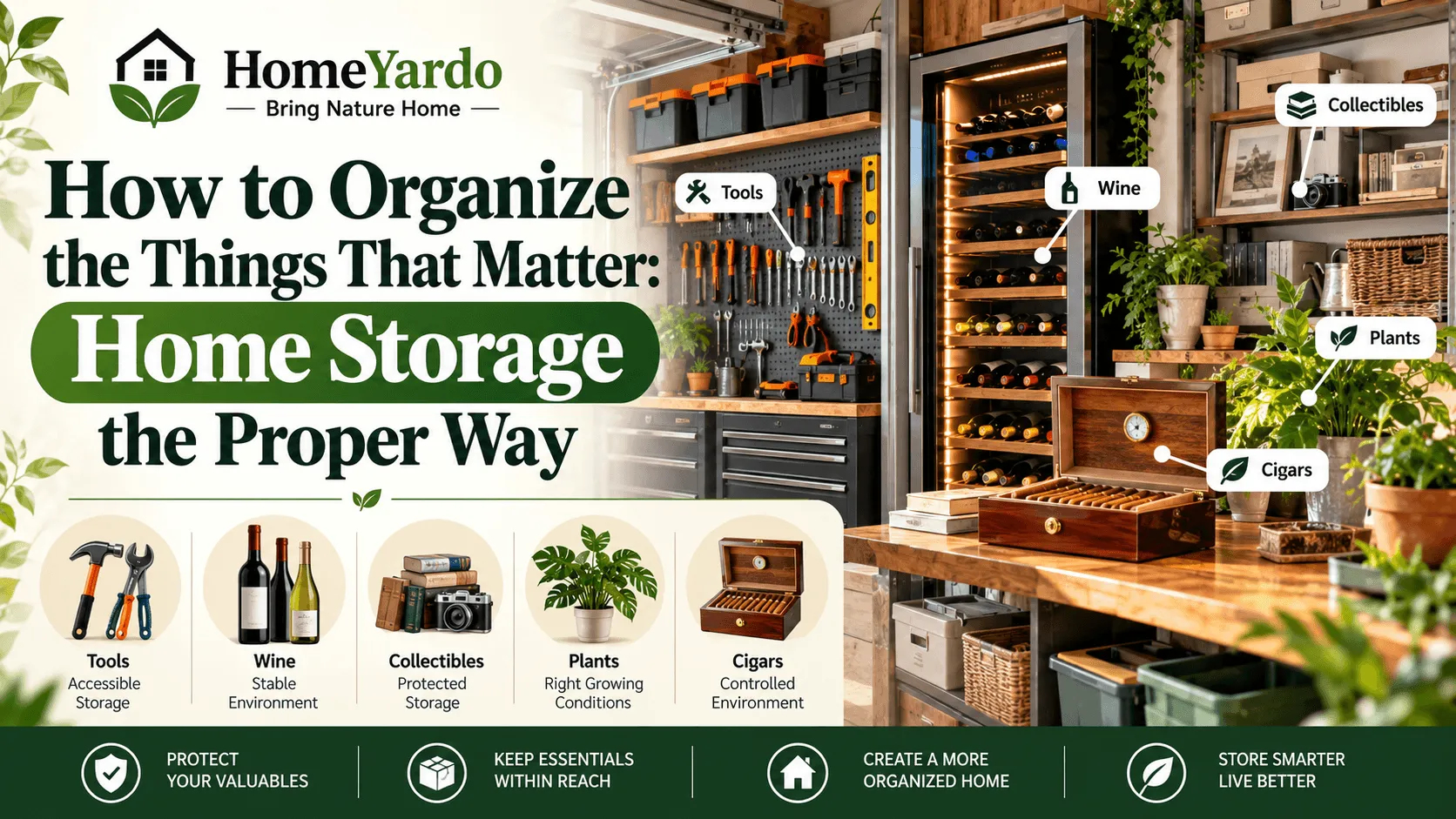
Good home organization means more than just hiding the mess. The best home storage solutions protect your valuables from the conditions most likely to damage them while keeping commonly used items within easy reach.
This matters because different possessions need different treatment. Metal tools may have a moisture problem. Wine benefits from a stable environment. Paper collectibles are vulnerable to light and humidity. Plants require the right growing conditions, not simply a place on an empty shelf.
Cigars are another obvious example. Specialized storage offered by Trusted Humidors is designed to help preserve the controlled environment cigars require.
The useful question, then, is not simply, “Where does this fit?” Instead, ask: “What does this item need, and where can I provide those conditions?”
What Makes a Good Home Storage System?
A good home storage system considers four things:
- The material: What is it made from, and what can damage it?
- The environment: Is it sensitive to moisture, heat, light, dust, or temperature changes?
- Frequency of use: Is this something you need daily, monthly, or only during certain seasons?
- Its value and replaceability: Would its loss be a small inconvenience or a significant financial or personal loss?
Once you have answered those questions, you will have a much easier time deciding between a drawer, cabinet, wall rack, protective container, wine refrigerator, humidor, or another storage option.
Assess What Your Belongings Actually Need
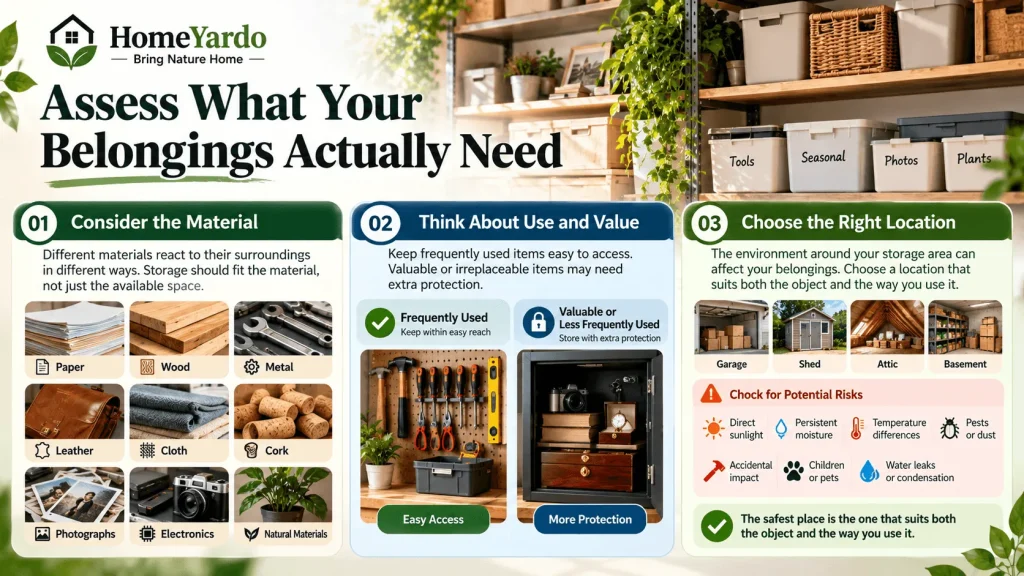
Assess the items themselves before buying organizers or clearing shelf space.
Consider the Material
Paper, wood, metal, leather, cloth, cork, photographs, electronics, and natural materials do not react to their surroundings in the same way.
Repeated exposure to moisture can cause metal to rust. Damp environments, light, and unsuitable storage materials can damage paper and photographs. Wood and leather may respond poorly to large changes in humidity.
Storage should therefore fit the material rather than whatever vacant space happens to be available.
Think About Use and Value
Items used frequently should usually be the easiest to access.
A screwdriver used every weekend should not be buried beneath seasonal decorations. At the same time, valuable goods that are handled infrequently may deserve a more protected, though slightly less convenient, location.
Personal value matters too. Family photographs, heirlooms, valuable collections, and irreplaceable items may need more thoughtful protection than everyday household goods.
Choose the Right Location
There is little benefit in having spare shelves if the environment around them is unsuitable for what you plan to store there.
Garages, sheds, basements, attics, sunny rooms, and outdoor storage areas can experience greater fluctuations in heat, humidity, light, or moisture than conditioned areas inside the home.
Before moving an item into storage, ask whether that location exposes it to:
- Direct sunlight
- Persistent moisture
- Large temperature differences
- Pests or dust
- Accidental impact
- Children or pets
- Water leaks or condensation
The safest place is the one that suits both the object and the way you use it.
Match the Storage Method to the Item
Classifying possessions by their main storage concern is a simple way to plan home storage organization.
| Item | Main Concern | Storage Approach |
|---|---|---|
| Hand tools | Moisture, access, safety | Wall systems, drawers, cabinets |
| Wine | Heat, light, temperature variations | Cool, dark place; wine cabinet or refrigerator |
| Paper collectibles | Light, moisture, handling | Archival-safe sleeves, boxes, enclosed storage |
| Figurines and display items | Dust, impact, handling | Display case or protective cover |
| Plant supplies | Mess, moisture, frequent access | Washable bins, shelving, utility storage |
| Cigars | Humidity and environmental stability | Purpose-built humidor |
| Seasonal items | Space and occasional use | High shelves, labeled containers, dedicated areas |
The goal is not to buy specialist equipment for everything. It is to identify which possessions genuinely need extra protection.
Create Practical Storage for Tools and Everyday Equipment
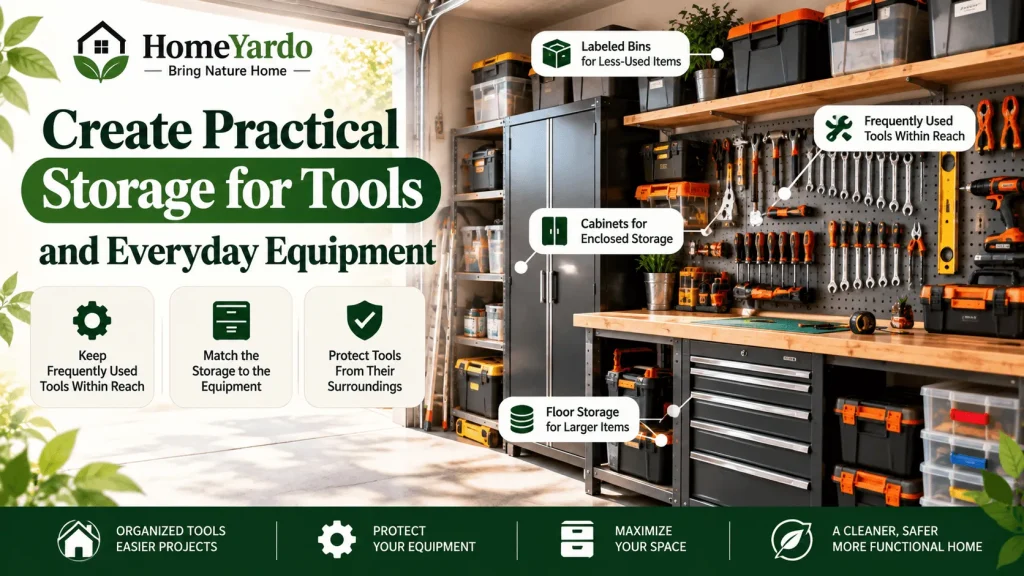
Tool storage should make routine work easier while protecting equipment from unnecessary damage.
Keep Frequently Used Tools Within Reach
Sort tools by function, size, or frequency of use.
Frequently used items can be kept on hooks, pegboards, wall systems, or shallow drawers within easy reach. Tools used only occasionally can go inside cabinets, labeled bins, or less prominent shelving.
If your garage is doing most of the storage work, these garage storage ideas can also help you use walls, overhead areas, cabinets, and other overlooked spaces more effectively.
A sensible layout reduces searching and makes it easier to return tools to the right place after a job is finished.
Match the Storage to the Equipment
Different storage systems suit different tools.
Wall-mounted organizers work well for hand tools you use regularly. Drawers can separate smaller parts. Cabinets provide enclosed storage for equipment that does not need to remain visible.
Large or cumbersome equipment may require floor racks or dedicated areas rather than being crammed onto overloaded shelves.
Protect Tools From Their Surroundings
Tools stored in garages and sheds may experience greater variations in humidity and temperature than equipment kept inside the home.
Do not leave metal equipment where water can collect or condensation is common. Store sharp tools securely and away from children.
Heavy tools should also be kept where they can be retrieved without risky overhead lifting.
Give Wine a Stable Place to Rest
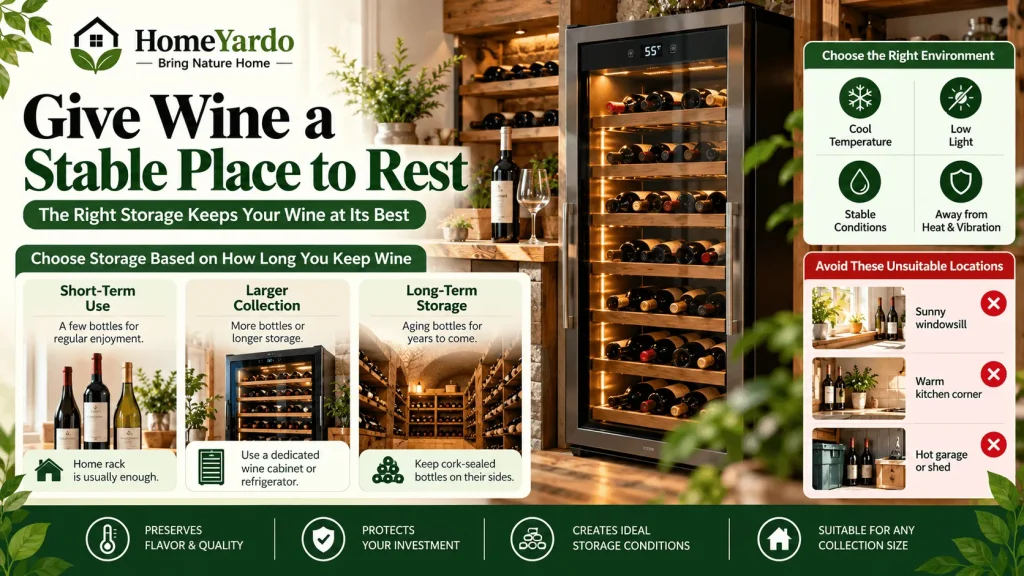
A beautiful wine rack may look good, but appearance should not be the only consideration when choosing wine storage.
Bottles intended for longer storage generally do better in a reasonably cool, dark, stable environment than on a sunny shelf or in a room exposed to repeated temperature changes.
Match the Setup to How Long You Keep Wine
A few bottles intended for near-term use may need only an appropriate place inside the home.
A larger collection or bottles being held for longer periods may benefit from a dedicated wine cabinet, refrigerator, or cellar-style environment that provides more consistent conditions.
Cork-sealed bottles kept for extended periods are also commonly stored on their sides so the wine remains in contact with the cork.
The right approach depends on the bottle, closure, intended storage period, and value of the collection.
Avoid Choosing a Location Only Because It Is Empty
Available space is not automatically appropriate storage space.
A sunny windowsill, warm kitchen corner, or garage that becomes very hot during summer may be convenient but unsuitable for bottles intended for longer-term keeping.
Choose the environment first. Then decide on the rack, cabinet, or refrigerator.
Protect Collections From Their Biggest Sources of Damage
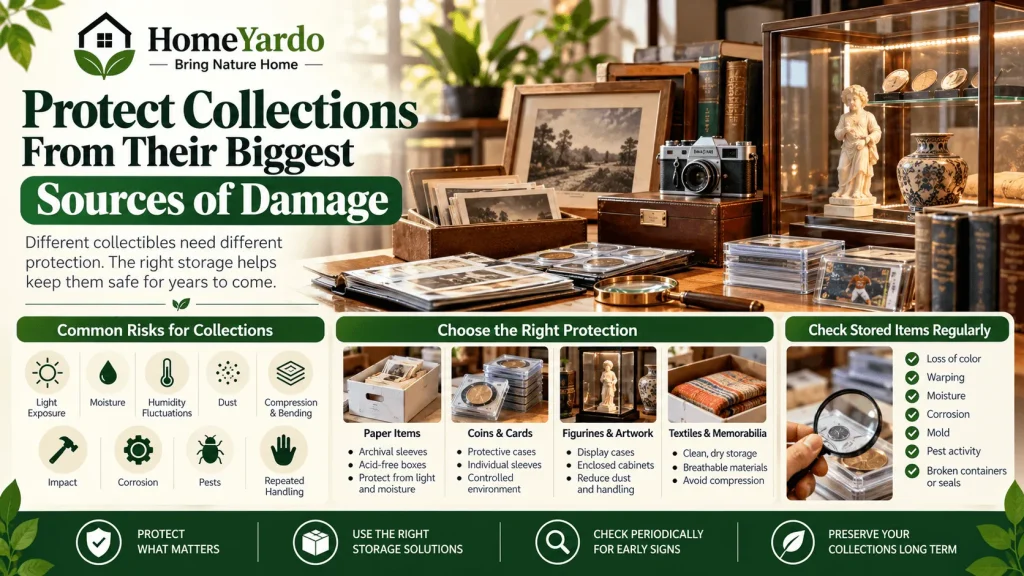
Collectibles can include photographs, trading cards, paper memorabilia, coins, textiles, sculptures, artwork, and many other materials.
There is no single storage solution that works equally well for all of them.
Identify the Main Risks
Ask what is most likely to damage the particular collection.
Typical risks include:
- Direct or prolonged light exposure
- Excess moisture
- Large humidity fluctuations
- Dust
- Compression or bending
- Impact
- Corrosion
- Pests
- Repeated handling
A paper collection has different requirements from ceramic figurines or metal coins.
Choose Protection That Fits the Collection
For paper goods, archival-quality sleeves, cartons, folders, or backing materials intended for preservation may be useful.
Three-dimensional objects may perform better in individual cases or enclosed display cabinets.
If displaying the collection is part of the enjoyment, there is no need to hide everything away. Enclosed display cases can reduce dust and unnecessary handling while still allowing the collection to be seen.
Photographs deserve particular care because storage environment, light, handling, and enclosure materials can all affect their condition. The Library of Congress guidance on caring for and storing photographs provides useful preservation recommendations for valuable photographic material.
For rare, exceptionally valuable, or historically significant pieces, seek conservation advice appropriate to the individual material rather than relying only on general household storage recommendations.
Check Stored Items Regularly
Storage should not mean forgetting that an item exists.
For long-term collections, check periodically for signs of:
- Loss of color
- Warping
- Moisture
- Corrosion
- Mold
- Pest activity
- Broken containers or seals
Catching a problem early can prevent a minor storage issue from becoming permanent damage.
Organize Plants and Their Supplies Around the Growing Environment
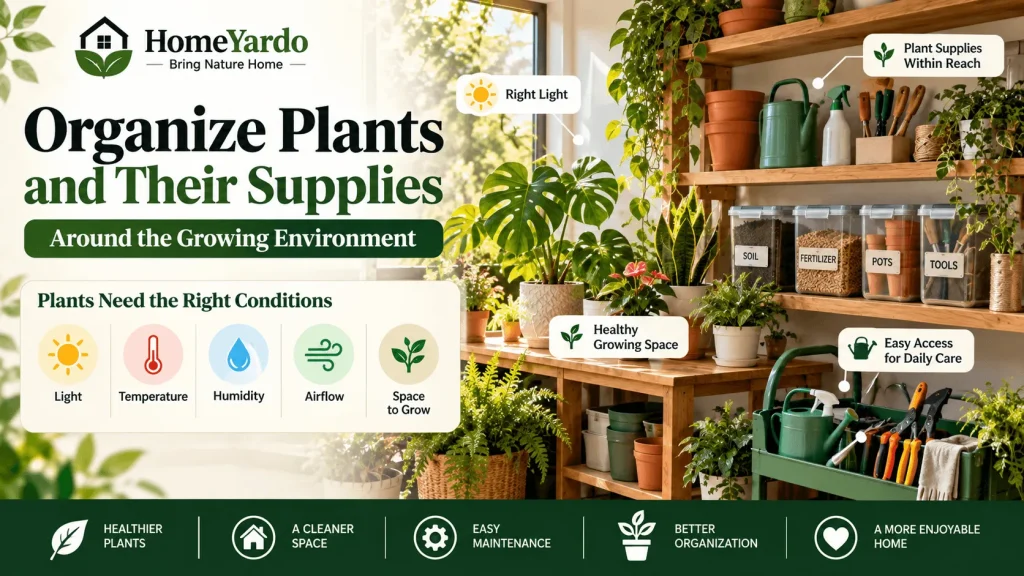
Plants are slightly different from ordinary stored belongings.
Instead of finding an empty area and then placing a plant there, begin with what the plant needs to grow well.
Position Plants According to Their Needs
Think about:
- Light
- Temperature
- Humidity
- Airflow
- Space available as the plant matures
Two plants may look great together yet require completely different conditions.
Their growing requirements should take priority over the visual arrangement.
Organize Supplies Around Your Care Routine
Once the plants are in suitable locations, organize supplies around the way you care for them.
Frequently used items such as watering cans, small pruning tools, ties, and supports can remain within easy reach.
Spare pots, potting mixes, fertilizers, trays, and messier supplies are usually easier to manage when kept in washable or contained storage areas.
The result is a system that works for both the plants and the people caring for them.
Use Controlled Storage for Climate-Sensitive Accessories
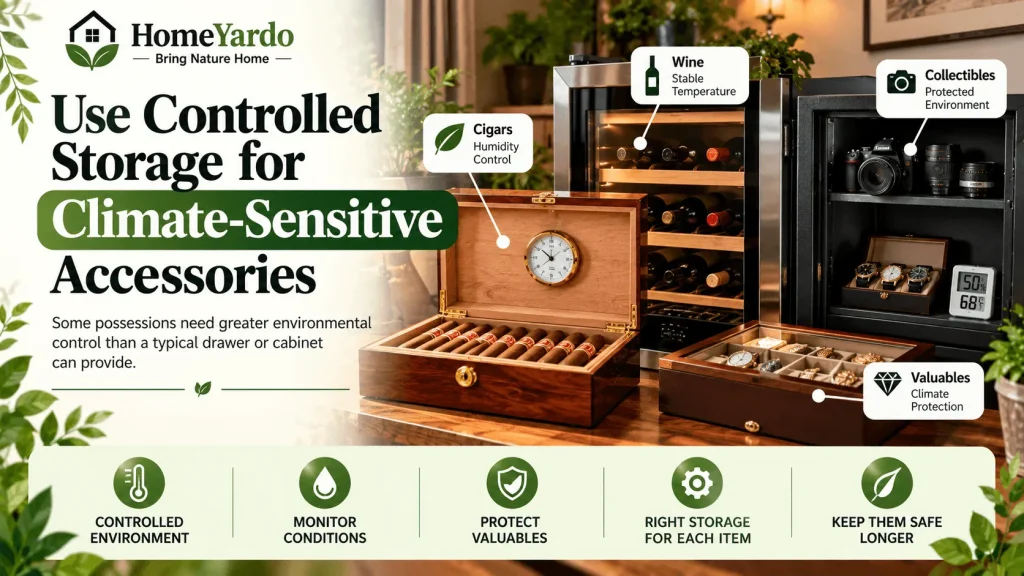
Some possessions need greater environmental control than a typical drawer or cabinet can provide.
Use Purpose-Built Storage When Needed
Cigars are a good example.
Humidors are not simply decorative boxes. They are designed to provide a more controlled storage environment. Options range from compact desktop units to electric cabinets and larger storage systems.
The same principle applies to many other valuables: specialist storage may be more suitable than conventional household furniture when an item’s condition depends heavily on humidity or temperature.
Monitor the Storage Environment
A closed cabinet does not necessarily provide a stable environment.
Depending on the item, monitoring devices such as a hygrometer or temperature display can help you understand what is actually happening inside the storage space.
The storage system should also be checked over time. Seals may deteriorate, environmental conditions may change, and equipment can fail.
Match the Protection to the Item
Not every possession needs specialized storage.
Consider:
- Environmental sensitivity
- Monetary value
- Personal importance
- Replaceability
- Expected storage period
Ordinary drawers, shelves, and cabinets are often perfectly adequate for everyday goods.
Items that depend on particular environmental conditions deserve more attention.
Where Ordinary Household Storage May Not Be Enough
A standard cabinet or plastic tote works well for many everyday belongings, but sometimes a more controlled or spacious solution makes sense.
Consider upgrading the storage method when an item is:
- Highly sensitive to humidity or temperature
- Difficult or impossible to replace
- Financially valuable
- Historically or emotionally important
- Intended to remain stored for many years
- Already showing signs of environmental deterioration
For homeowners who have outgrown indoor cabinets, closets, or garage shelving, larger options such as shipping containers for home storage can provide substantial extra capacity for suitable belongings.
That type of storage still needs careful consideration. Condensation, ventilation, security, temperature changes, drainage, and the sensitivity of the items inside all matter.
Upgrading storage does not always mean buying expensive equipment. Sometimes the answer is simply moving an object from an unsuitable garage or attic into a more stable indoor location.
The important part is recognizing the risk before damage occurs.
Build a Storage System You Can Actually Maintain
Good organization depends less on buying more containers and more on putting a system in place that still works after the initial cleanup is finished.
Keep the things you use most often close at hand. Label containers when their contents are not obvious. Avoid packing cabinets so tightly that you have to remove ten things just to reach one.
The same principle works throughout the home. These kitchen storage solutions show how cabinets, drawers, walls, narrow gaps, and other existing spaces can be organized around the way people actually use them.
Put similar items together and give them consistent locations.
Create a simple inspection routine for long-term storage. A few checks throughout the year can reveal dampness, pests, failing packaging, corrosion, damaged seals, or other developing problems.
Most importantly, let the item guide the storage method.
Tools should be easy and safe to reach. Wine benefits from environmental stability. Collections need protection suited to their materials. Plants require appropriate growing conditions. Cigars and other climate-sensitive possessions may need controlled conditions.
A sensible storage strategy does more than make a home look tidy. It protects the things you care about and makes them easier to locate, use, display, and enjoy.
FAQ’s
Start by grouping belongings according to how often they are used and what conditions they require. Items used frequently should be within easy reach, while seasonal or rarely used belongings can be stored farther away.
Moisture-sensitive, fragile, or valuable possessions may need more protected environments.
Items sensitive to extreme temperature swings, persistent humidity, condensation, or pests may not be suitable for an uncontrolled garage.
Suitability depends on the local climate, garage construction, and sensitivity of the particular item.
Storage should match the material.
Paper goods may benefit from archival-safe materials and protection from light and moisture, while fragile three-dimensional objects may be better suited to enclosed cabinets or individual cases.
Particularly valuable or historically important objects may require specialist conservation advice.
Start by identifying the source of the moisture.
Improve the storage location where possible, avoid contact with damp surfaces, provide suitable airflow, and use storage designed around the needs of the particular item.
Climate-sensitive possessions may require humidity monitoring or a controlled storage environment.
No.
The need depends on the item’s material, environmental sensitivity, value, intended storage period, and surrounding conditions.
Many ordinary possessions are safe in normal household storage, while more sensitive items may require greater environmental control.
Keep frequently used tools on wall systems, pegboards, or in shallow drawers.
Store less-used equipment in labeled cabinets or containers. Protect metal tools from persistent moisture, and keep sharp or hazardous equipment securely stored.
Not automatically.
Airtight storage can be useful for some belongings, but it can also trap moisture if an item or the surrounding air is already damp.
Choose the enclosure according to the material and environmental requirements of what you are storing.
There is no single schedule that works for everything, but valuable belongings kept in long-term storage should be inspected periodically.
Look for moisture, pests, corrosion, discoloration, damaged packaging, failing seals, mold, or other changes before they become serious.