
Why Do Blackout Shades Still Have Light Gaps 6 Ways to Fix Them
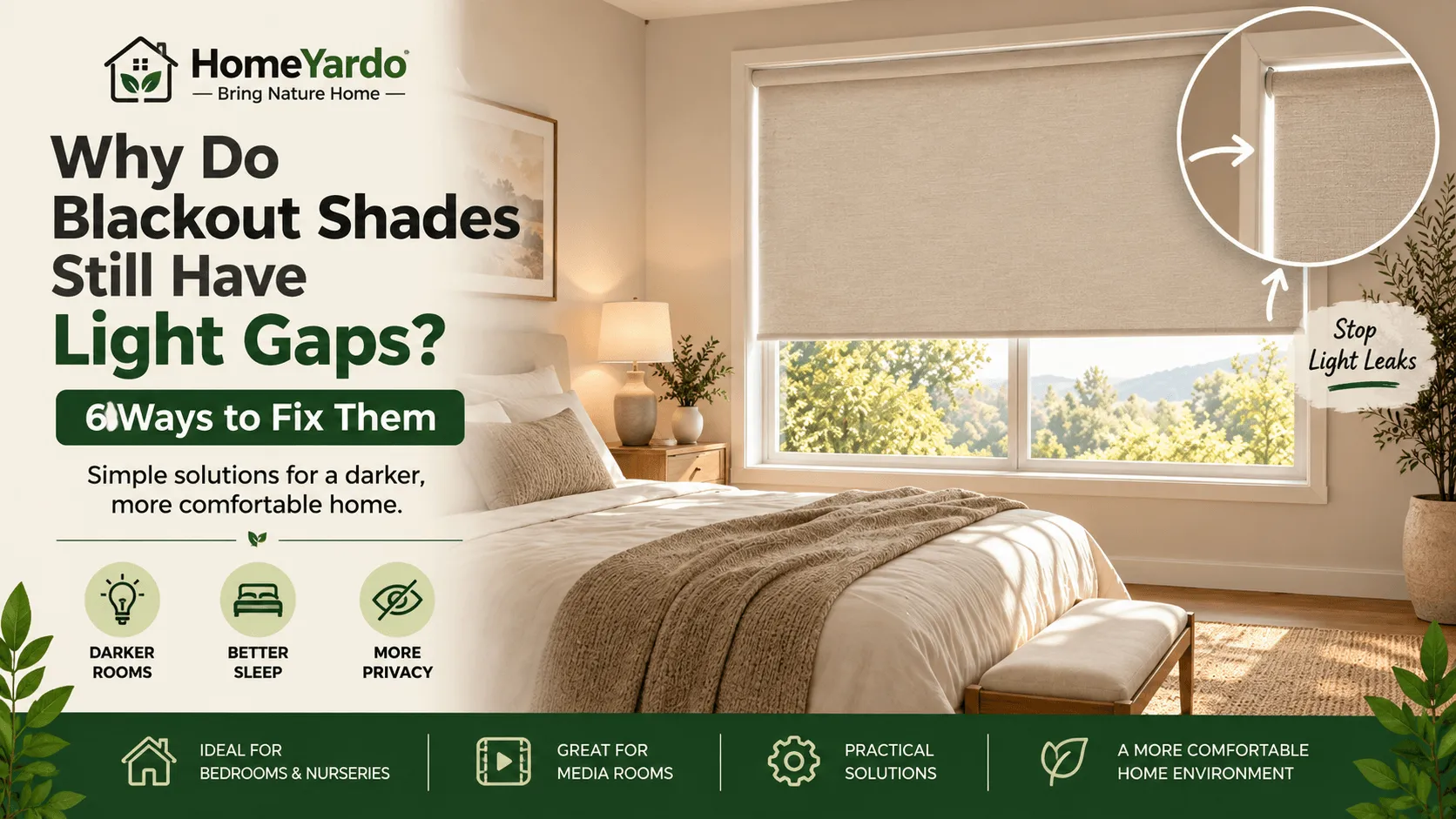
Blackout fabric can stop light from passing through the material and still leave a bright outline around the window. That is why new shades may look completely opaque in the center while sunlight slips in along the sides, top, or sill. In most cases, the problem comes from fit, mounting, or uncovered edges rather than the fabric itself.
For bedrooms, nurseries, and media rooms, blackout roller shades provide stronger room darkening and privacy. In living rooms or home offices where lighting needs change throughout the day, motorized shades make frequent adjustments easier. Even well-made shades, however, need a little clearance to operate, and that small space can become noticeable when the room needs to stay very dark.
Before changing anything, lower the shade completely and look at where the light enters. Equal gaps on both sides often come from normal operating clearance. One unusually bright side may point to an alignment issue, while light above or below the shade usually means there is not enough coverage around the opening. If the window itself is poorly aligned or has installation-related gaps, checking the condition of the opening may also be worthwhile before replacing the shade.
Fix 1: Recenter the Shade and Brackets
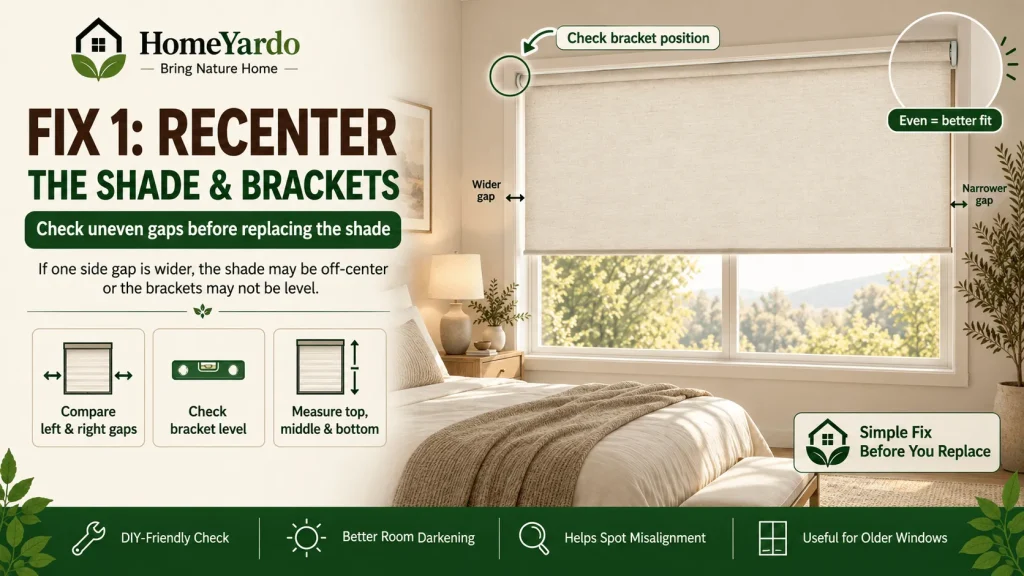
Start with the simplest possibility: the shade may not be sitting evenly in the window.
Lower it fully and compare the space on the left and right sides. If one gap is noticeably wider, check whether the brackets are level and whether the roller is centered. An uneven installation can shift the fabric toward one side and make light leakage look much worse than it should.
It also helps to measure the window at the top, middle, and bottom. Older window frames are not always perfectly square, so a shade that fits well near the top may have more space around it farther down.
This fix is especially useful after a DIY installation or when a previously even shade suddenly begins tracking toward one side.
Fix 2: Use an Outside Mount for More Coverage
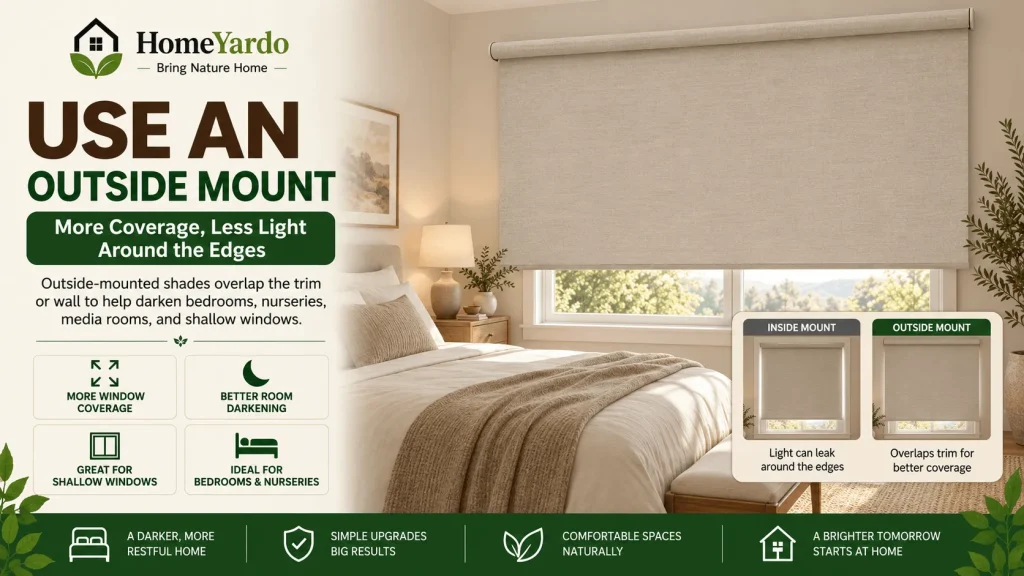
Inside-mounted shades look clean because they sit within the window opening, but that design naturally leaves some space around the fabric. The shade needs enough clearance to move without scraping against the frame.
If room darkness matters more than the recessed look, an outside mount can provide better coverage. The shade is installed beyond the window opening so the fabric overlaps the trim or wall instead of stopping inside the frame.
That extra overlap is helpful in bedrooms, nurseries, home theaters, and street-facing rooms where even a narrow strip of daylight can be distracting. It can also work better for shallow windows that do not provide enough depth for a well-fitted inside mount.
Fix 3: Add Light Blockers or Side Channels
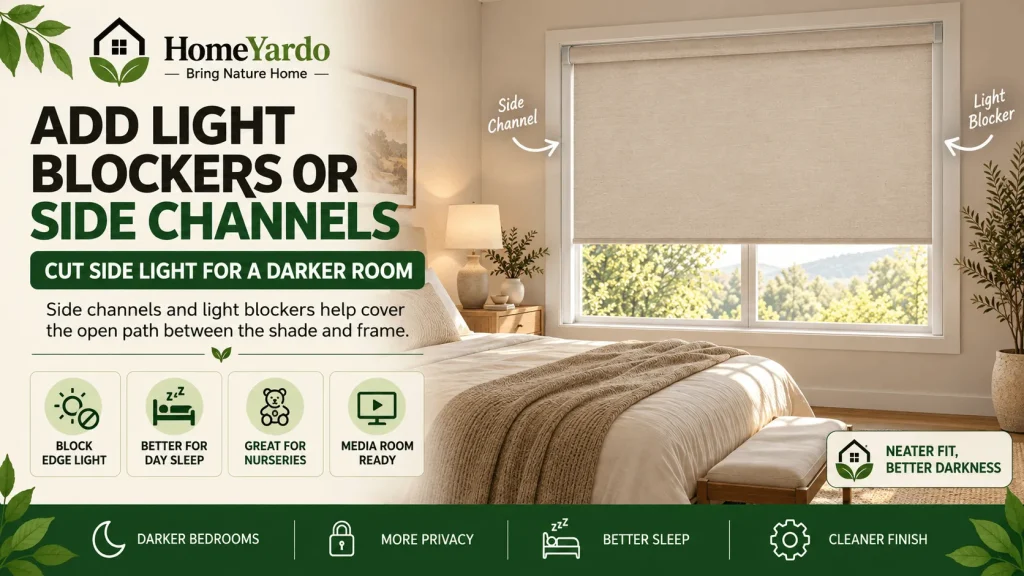
When sunlight is mainly entering along the vertical edges, adding a physical barrier can make a noticeable difference.
Light blockers are narrow strips placed beside the shade to cover the open path between the fabric and window frame. Side channels go a step further by creating tracks that overlap the fabric edges as the shade moves.
These additions are particularly useful for night-shift workers who sleep during daylight hours, parents trying to create a darker nursery, and homeowners building a dedicated media room.
The main consideration is appearance. Side channels are more visible than a simple open-edge roller shade, so they should be installed evenly and matched to the surrounding trim when possible.
Fix 4: Cover Light at the Top and Bottom
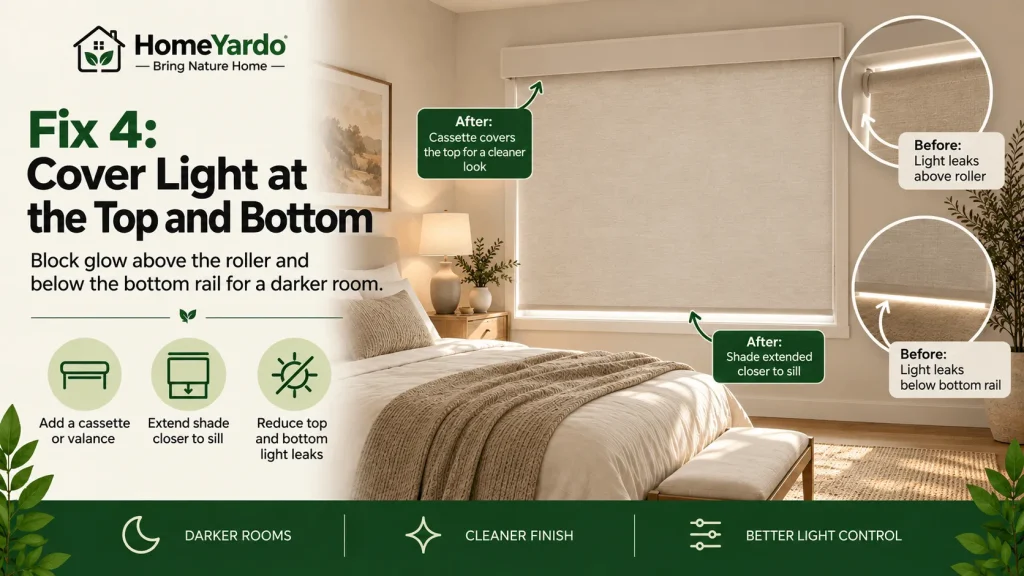
Side gaps are not the only source of unwanted light. A room may still feel bright because sunlight is entering above the roller tube or below the bottom rail.
A cassette, fascia, or valance can help cover the upper part of the shade and reduce the glow around the roller. It can also give the installation a more finished appearance.
At the bottom, make sure the shade extends far enough to cover the glass and reach the sill area. A shade that stops too high can leave a bright horizontal strip, especially on windows exposed to direct morning or afternoon sun.
Avoid forcing the bottom rail tightly against the sill. The shade should still move freely without catching.
Fix 5: Layer Shades With Curtains or Drapes
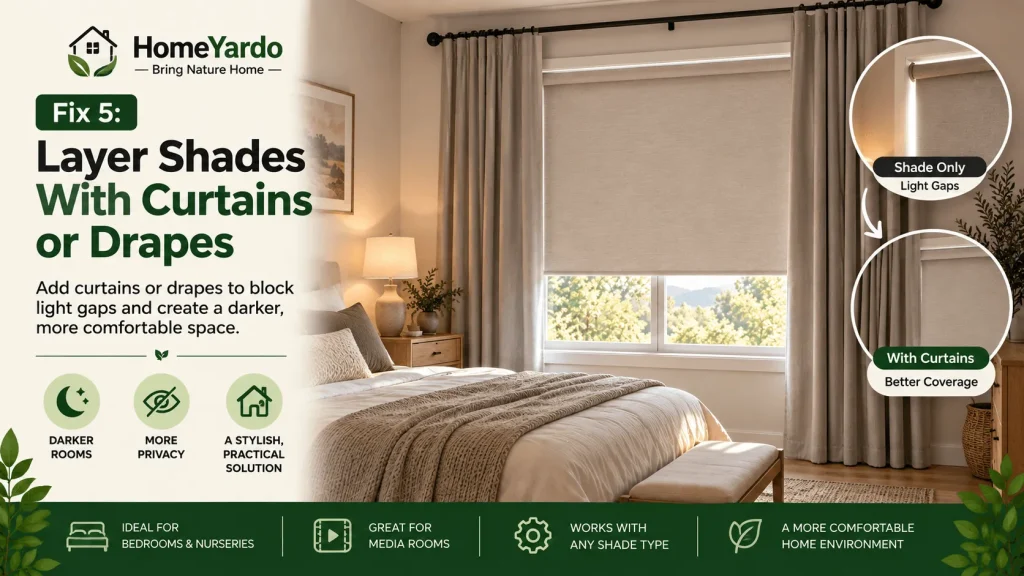
Some windows are difficult to darken completely with one treatment. Deep trim, uneven frames, wide openings, or rental restrictions may make it impractical to eliminate every gap around the shade itself.
In those situations, layering can be more effective.
Curtains or drapery panels mounted slightly wider than the window can cover light escaping around the sides. The shade handles everyday privacy and light control, while the outer layer blocks the remaining glow when deeper darkness is needed.
This setup works especially well in bedrooms because the curtains do not need to stay closed all day. During normal hours, the shade can operate on its own. At bedtime or before daytime sleep, both layers can be closed together. Better control of unwanted bedroom light can also be part of a broader sleep-friendly bedroom setup.
Fix 6: Match the Blackout Setup to the Room
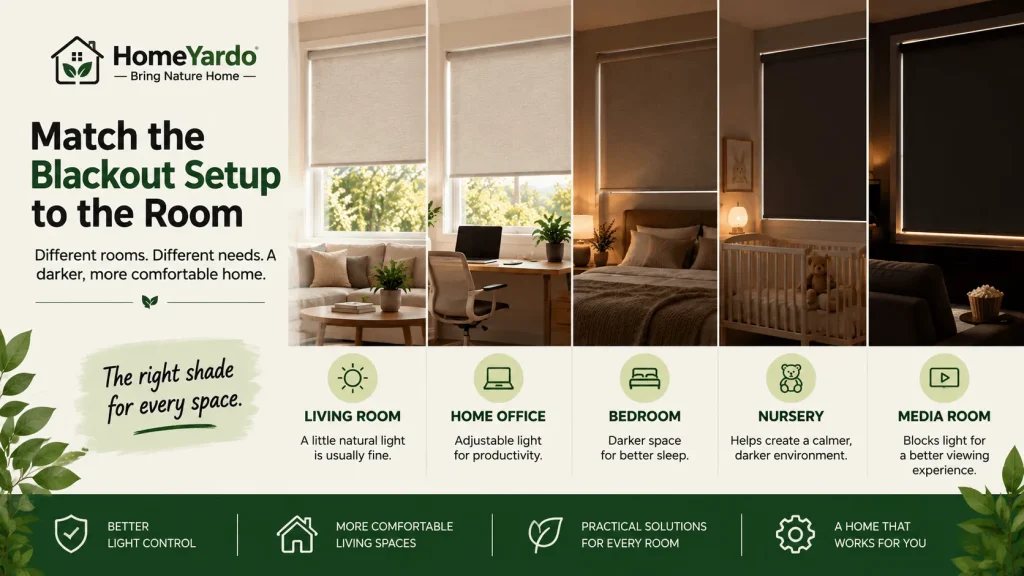
Not every room needs the same level of darkness. A small amount of edge light may be perfectly acceptable in a living room, kitchen, or home office where natural daylight is still useful.
The same gap can be frustrating in a nursery, home theater, guest room, or bedroom used by someone working overnight shifts.
Before ordering or modifying shades, decide how dark the space actually needs to become. Then choose the mount type, fabric overlap, side blockers, top coverage, and additional layers based on that goal.
This is often more effective than simply choosing a heavier blackout fabric. If light is entering around the perimeter instead of passing through the material, improving the fit and coverage will usually make the bigger difference.
Do You Need New Blackout Shades or Just a Better Installation?
Not every light gap means the shade needs replacing.
Adjustment may be enough when:
- One side gap is larger than the other
- The roller appears off-center
- Brackets are not level
- A valance or side blocker could cover the exposed area
- Curtains could provide the remaining perimeter coverage
Replacement may make more sense when:
- The fabric is substantially narrower than the window
- The shade cannot cover the required area even when correctly positioned
- Existing hardware prevents suitable mounting
- The shade is damaged or no longer operates correctly
- You need a more enclosed room-darkening system than the current product can provide
Measure before ordering anything new. The opening, trim, mounting surface, available depth, and obstacles such as handles should all be considered.
When Should You Call a Professional Installer?
Simple checks such as identifying the light source or checking whether a shade is centered can usually be handled without major work.
Professional installation may be worth considering when brackets need to be repositioned, the window is unusually large, several shades must line up evenly, side channels are being fitted, or the opening is noticeably uneven.
Use extra care when drilling around window openings because concealed wiring, pipes, masonry, and structural components can affect where fasteners should go.
For high or difficult-to-reach windows, avoiding unsafe ladder work is more important than eliminating a small light gap.
Final Takeaway
Blackout shades can use fully opaque fabric and still allow daylight into the room because most troublesome light gaps occur around the shade rather than through it.
Start by finding the source.
Uneven side gaps may need bracket adjustment. Consistent edge gaps may require more overlap. Side channels or light blockers can reduce vertical leakage, while a cassette or valance can address light near the roller. Curtains can provide another layer when a single treatment cannot cover the full window perimeter.
The best solution depends on how dark the room actually needs to be and how the shade interacts with the window opening.
FAQ’s
Blackout shades often have side gaps because the fabric needs clearance from the window frame so it can move without rubbing. This is particularly noticeable with inside-mounted roller shades. Uneven brackets or an out-of-square window can make one side gap larger than the other.
Some edge clearance is common with inside-mounted shades because the fabric and operating components must fit within the window opening. If the room needs stronger darkness, an outside mount, side blockers, channels, or curtains may provide more coverage.
Check the shade’s alignment first. If the gaps are caused by normal operating clearance, light blockers, side channels, an outside-mounted shade, or curtains that overlap the window can reduce side light.
An outside mount can reduce perimeter light because the shade can overlap the window opening instead of fitting completely inside it. Results depend on the amount of overlap, window shape, shade design, and installation.
Light above a blackout shade usually comes from the exposed area around the roller tube or mounting hardware. A compatible cassette, fascia, or valance can cover more of this area.
Yes. Curtains or drapes that extend beyond the window can cover light escaping around the sides and sometimes the top of a shade. Layering is often useful when changing the existing shade installation is difficult.
A larger gap on one side can indicate that the shade is not centered, the brackets are not aligned, or the window opening is uneven. Lower the shade completely, compare both sides, and measure the opening at several heights before replacing anything.
They can produce strong room darkening, but the fabric alone does not determine the result. Maximum darkness depends on the entire installation, including side coverage, top and bottom gaps, mounting style, window shape, and whether additional blockers or curtains are used.