How To Make An Oversized Sofa Work In A Smaller Room
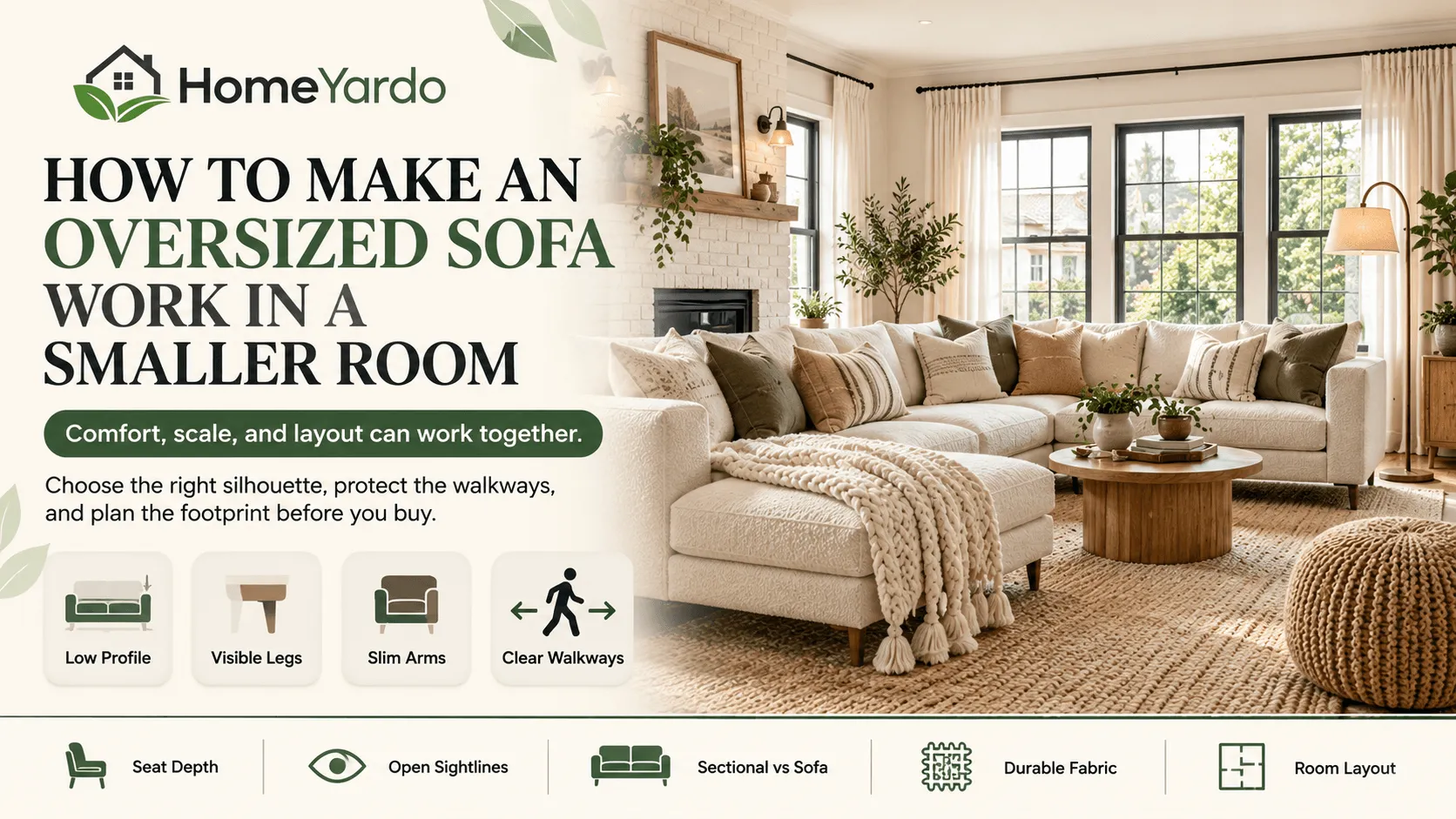
Big sofa energy usually arrives with a big sofa problem: the piece swallows the room and leaves you navigating around it instead of living in it, and oversized comfy couches can give you the sprawl you want and the proportions you need, if you choose the silhouette with the footprint in mind.
I have helped plenty of homeowners chase the deep, sink-in comfort of a large couch, then watched the room shrink around it. The lesson stuck with me. Size and comfort are not the enemy of a well-planned space. The enemy is buying the biggest thing on the floor without measuring what the room can actually absorb. That mistake costs both money and square footage. It shows up the day the delivery team squeezes the box through the door and into the wrong room entirely by mistake. If the sofa is only one part of a larger furnishing plan, it also helps to choose furniture for your home according to room dimensions, daily routines, durability, and how each piece works with the rest of the layout.
What Makes a Big Sofa Look Smaller?
A large sofa tends to look less bulky when it has a low back, slim arms, visible legs, a simple silhouette, and enough surrounding floor space to preserve clear sightlines. Lighter upholstery can also reduce visual weight, although proportion and placement matter more than color alone.
A sofa can therefore be physically large without appearing equally large.
Comfort Starts With Seat Depth

The magic of an oversized couch is the seat depth that lets you truly relax. It is the room to stretch, curl, or lie down that a standard sofa simply lacks after a long day. I tell clients to sit before they shop, because depth is a feeling and not a number on a tag in the store. A deeper seat invites the whole family to land in one place on a rainy afternoon. That is exactly the point of buying a larger piece for the room. The trick is pairing that depth with a back that still supports you through a film. When comparing depth with overall width, our guide to choosing the right sofa size explains how actual dimensions, arm width, layout, and entry access all affect whether a sofa works in a living room. Lounge time then does not turn into backache time the next morning. Get the depth right and the couch becomes the room’s favorite spot where everyone gathers without being told to.
Low Profiles Keep The Room Open
Bulk comes from height as much as from width in a small or medium room. A low backed, slim armed oversized couch reads as generous without crowding the eye toward the ceiling. I favor pieces that sit closer to the floor so they leave wall and window space visible above them. The room feels larger because the furniture does not wall it off from the light that comes in. You get the sprawl and the openness at once, which is the move when the goal is comfort without the cave feeling. It works in apartments as well as houses of every size, because the open sightline does more for perceived space than any decluttering trick you could try. Perceived space is what makes a room feel like a home rather than a storage unit for furniture you bought on a whim and now cannot return to the store for a refund before the deadline passes and the piece becomes permanent.
Sectionals Versus The Single Giant
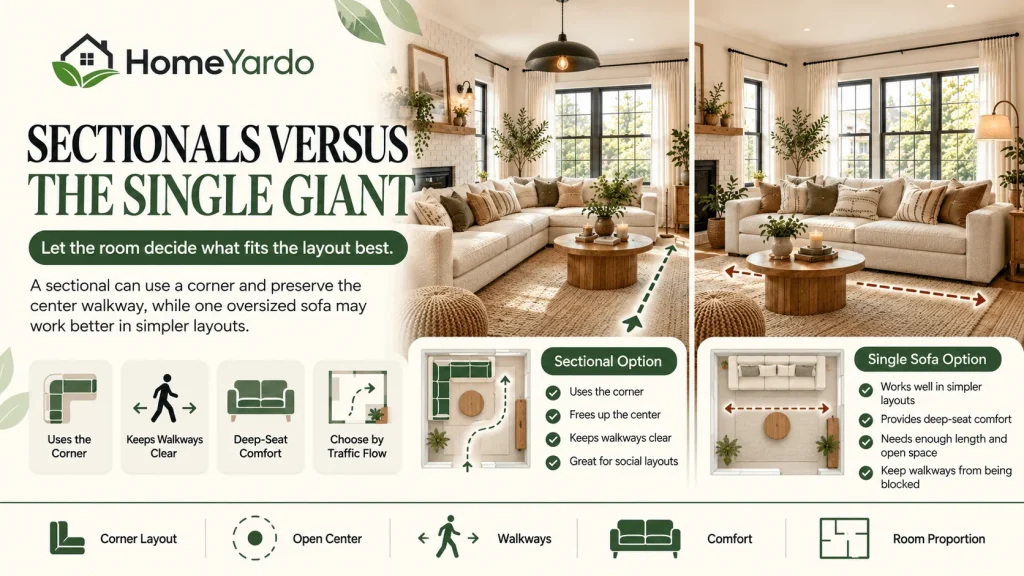
Sometimes the answer is not one huge sofa but a sectional that wraps a corner you were wasting with empty floor. I weigh the two based on traffic flow through the room during a normal day. A sectional can free a walkway that a monolith would block with its length and bulk. The L shape uses the edge of the room and leaves the center clear for the kids or the dog. When the layout supports it, a sectional delivers oversized comfort with better proportion than a single block. When it does not, a single deep couch does the job without fighting the plan. The room decides, not the showroom trend that looked good in a photo.
Fabric That Handles The Use
A large couch sees more bodies and more hours than anything else in the room you own. I choose upholstery that forgives the small disasters of daily life with children and pets. I use performance fabrics for families and tighter weaves for design-led spaces that value the look. The piece should look as good after a year of movie nights as it did on the first day you brought it home. Removable covers are a handy advantage here, because washing beats replacing when life happens on the cushion. Comfort is only real if the sofa can take the life you give it without showing every moment of it. The right fabric makes that possible through the seasons.
Plan The Footprint First
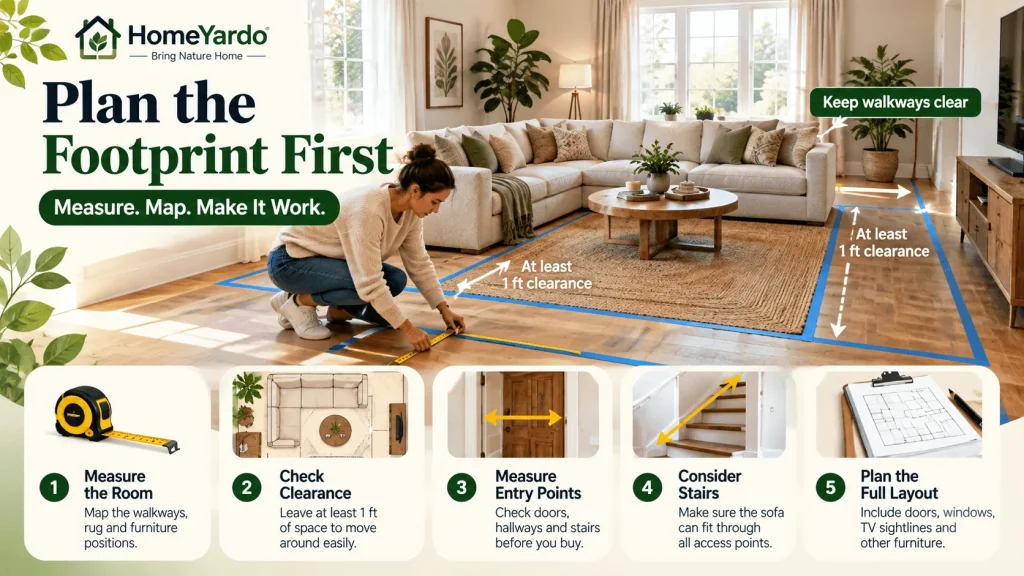
Before you fall for a couch, map the room with tape and a clear head. I sketch the walkways, the rug, and the TV sightline so nothing blocks the path. Then I check the sofa fits with at least a foot of clearance to move around it with ease. An oversized piece that blocks the path feels smaller in spirit than a right-sized one that flows with the room. Measure the door and the stairs too, because a sofa that will not fit through the entry is a sofa you cannot use no matter how much you paid. The footprint plan turns a risky buy into a confident one you can stand behind. If you are changing more than the sofa, it is useful to plan a room makeover with the full floor plan, walking routes, doors, windows, and furniture positions marked before you start buying pieces. It spares you the unforgettable sight of a couch stuck in a hallway with the delivery team shaking their heads at the measurements.
Style Choices That Lift The Room
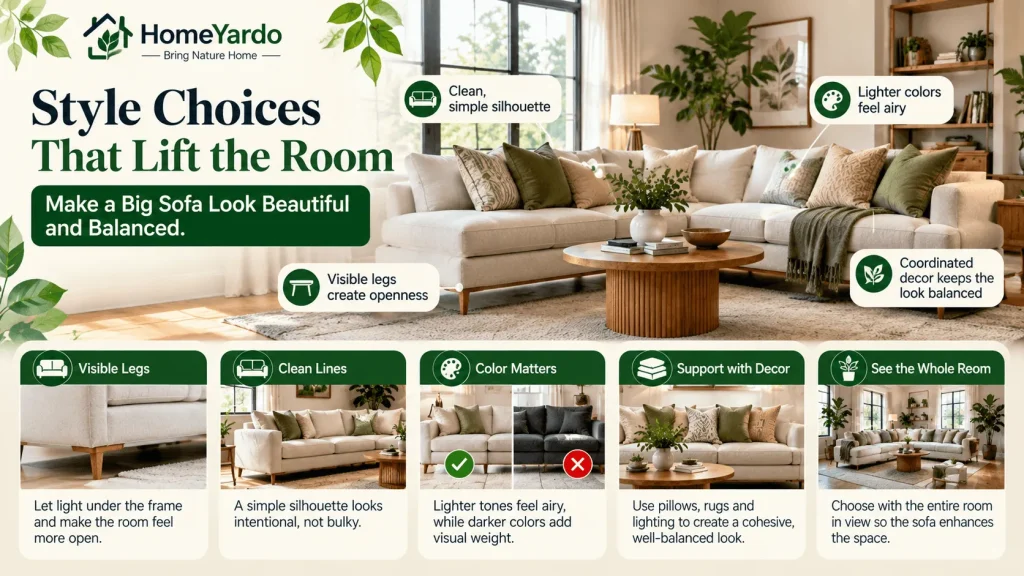
An oversized couch can anchor a room or sink it under its own weight if you choose poorly. The difference is often the legs and the line of the piece you select. I like pieces with visible legs that let light under the frame and lift the whole room visually. That keeps the floor feeling open rather than closed off by a heavy base. A clean, simple silhouette reads as intentional rather than bulky in the space. Color matters too, because a lighter tone makes a big piece feel airy while a dark one grounds it with weight. Choose with the whole room in view and the couch becomes the feature, not the freight you regret buying. The rest of the decor can stay calm because the sofa is already doing the heavy lifting for the eye.
Why Size Done Right Wins
The fear with a big couch is that it dominates the room and crushes the layout you wanted. The reality with a well-chosen one is that it delivers the comfort everyone wants after a hard week. It also delivers the proportions the room needs to breathe with the family. You get the stretch, the gather, and the nap, without surrendering the space to the furniture entirely. That is the payoff of shopping by footprint instead of by appetite in the store. The right oversized couch earns its square footage and then some through daily use. The room feels fuller in the best way, like a well used living room should when the lights go down for the night. The whole family lands in the same place at once on a Sunday that lasts longer than anyone planned for it to last, and nobody complains about where they have to sit because there is room for all of them together.
Pick for the room first and the sprawl second, and a big couch becomes the best decision in it, not the biggest problem. The floor plan wins, and so does everyone who sits down on the thing at the end of a long week that asked too much of them all at once at work.
FAQs
Yes, if its proportions fit the available floor space and leave comfortable walking routes. Low backs, slim arms, visible legs, and simple silhouettes can also make a physically large sofa appear less bulky.
Sofas with lower backs, narrower arms, visible legs, clean lines, and less visual bulk generally preserve more open sightlines. The surrounding layout matters just as much as the sofa itself.
Either can work. A sectional may use an otherwise empty corner efficiently, while a single sofa can provide more flexible circulation in rooms with several doors or narrow walking routes.
There is no single ideal depth. The right depth depends on the user’s height, preferred sitting position, back cushions, and whether the sofa is mainly intended for upright sitting or lounging.