Window Installation Services in Churchville PA: Homeowner Guide
Replacing windows can change how a home feels long before you notice the difference from the curb. A room that used to feel drafty may become more comfortable. Street noise may be less noticeable. Windows may open more easily, and properly selected glass can help control unwanted heat transfer.
For homeowners considering window installation services in Churchville PA, however, choosing a good-looking window is only part of the job. Frame material, glass performance, installation method, condition of the existing opening, sealing, warranties, and local requirements can all affect the finished project.
The goal isn’t simply to buy new windows. It’s to choose a window and installation method suited to the house.
Understanding Window Installation Services in Churchville PA
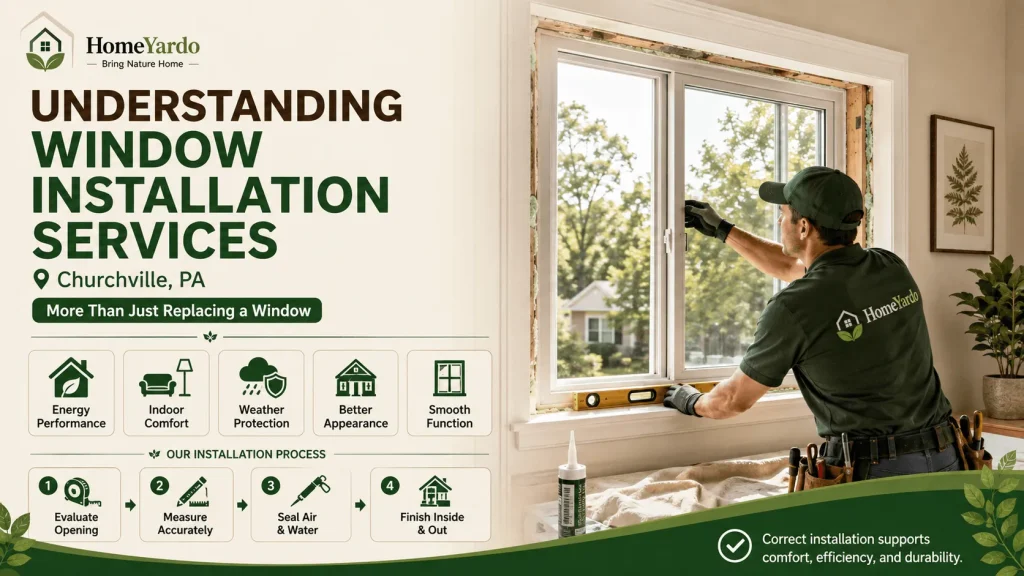
Professional window installation involves more than removing an old unit and putting another one in its place. The installer should evaluate the opening, take accurate measurements, determine the appropriate replacement method, install and secure the new unit, manage air and water sealing, and complete the interior and exterior finishing required by the project.
Done correctly, this work can support several homeowner goals:
- Energy performance: Old or poorly sealed windows can allow unwanted heat transfer and air leakage. Depending on the windows being replaced and other household conditions, energy-efficient replacements may help reduce household energy bills by 7-15% annually.
- Indoor comfort: Better-performing glazing and tighter installation can help reduce cold drafts and uncomfortable temperature differences near windows.
- Weather protection: Flashing, sealing, and correct installation help manage water around the opening.
- Appearance: Window style, frame profile, grille pattern, and exterior finish can change both interior views and curb appeal.
- Function: New units can solve problems such as sticking sashes, broken hardware, damaged frames, or windows that are difficult to operate.
Energy savings should be treated as a potential benefit rather than a guaranteed percentage. Actual results depend on the condition of the existing windows, the replacement product, the building envelope, local weather, heating and cooling equipment, and household energy use.
When Should You Consider New Windows?
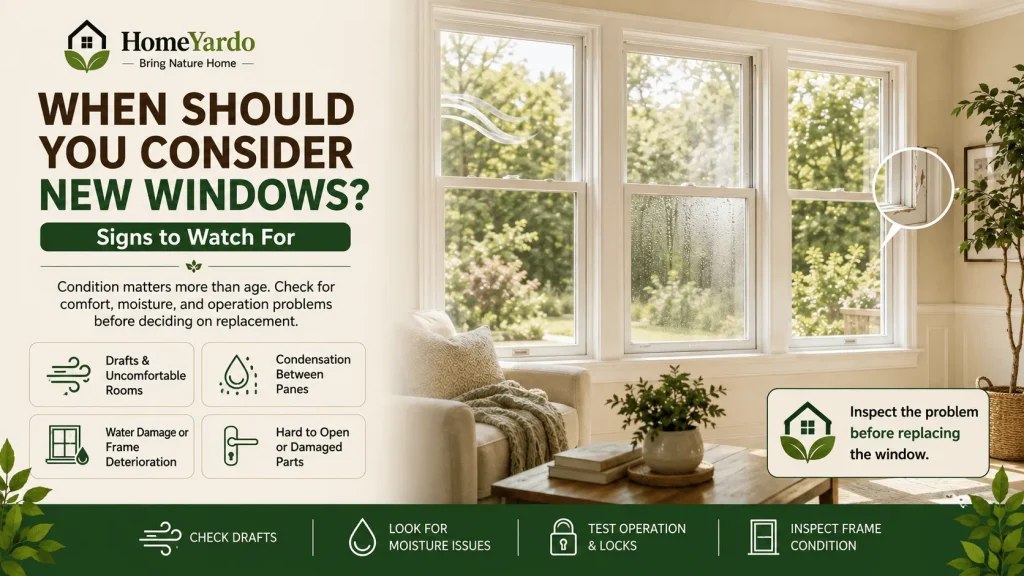
Age alone doesn’t determine whether a window needs replacement.
A twenty-year-old unit that remains structurally sound, dry, easy to operate, and reasonably airtight may be less urgent than a newer window with installation or moisture problems.
Drafts and Uncomfortable Rooms
Persistent drafts around a closed window deserve investigation. Sometimes worn weatherstripping or an adjustment can solve the problem. In other cases, leakage around the frame or poor-performing older glass makes replacement more reasonable.
Look at the problem before buying the cure.
Condensation, Water Intrusion, or Frame Deterioration
Condensation on the room-side surface isn’t automatically proof that a window has failed; indoor humidity and outdoor temperature also affect condensation.
Moisture trapped between panes of an insulated glass unit, however, can indicate a failed seal. Soft wood, staining, peeling finishes, or recurring water around the opening can point to problems that need closer inspection.
A replacement window should never be used to hide unresolved rot or water damage.
Difficult Operation or Damaged Components
Windows should open, close, lock, and remain in position as designed. Broken balances, deteriorated hardware, warped components, or damaged frames can make everyday operation frustrating and, in some cases, create safety concerns.
An installer should determine whether repair or replacement makes more sense before recommending a full project.
Choosing the Right Windows Churchville PA
The best windows Churchville PA homeowners can choose aren’t necessarily the most expensive ones. They are the windows whose construction, performance ratings, style, maintenance requirements, and installation method suit the property.
Choose a Window Style That Fits the Opening
Common residential choices include:
| Window Style | Useful For | Consider Before Choosing |
|---|---|---|
| Double-hung | Traditional homes and easy ventilation | Check sash operation and cleaning features |
| Casement | Strong ventilation and relatively tight closure | Requires clearance for outward operation |
| Sliding | Wide openings | Track maintenance matters |
| Picture | Views and daylight | Does not provide ventilation |
| Bay or bow | Added visual space and architectural character | Installation can be more involved |
The architecture of the house matters too. A window that looks perfectly natural on one property can look strangely oversized or overly modern on another.
Compare Frame Materials
Vinyl is widely used because it requires relatively little maintenance and is available at many price points.
Wood offers a traditional appearance and works well where interior character matters, although it generally needs more maintenance.
Fiberglass provides good dimensional stability and durability but may carry a higher initial price.
Aluminum offers slim profiles and strength, although thermal performance varies by design.
Don’t compare frame material in isolation. Compare the complete window assembly.
Understand U-Factor, SHGC, and ENERGY STAR Ratings
The NFRC label gives homeowners a standardized way to compare window performance.
U-factor indicates heat transfer through the window assembly. Lower numbers indicate better resistance to heat flow.
Solar Heat Gain Coefficient (SHGC) describes how much solar heat passes through the product. The appropriate level depends partly on climate, orientation, shading, and the home’s cooling and heating needs.
Visible transmittance, air leakage, glazing configuration, low-e coatings, and gas fills may also influence the decision.
Rather than accepting a salesperson’s description of a window as simply “energy efficient,” ask to see its actual ratings.
Why Proper Window Installation Matters
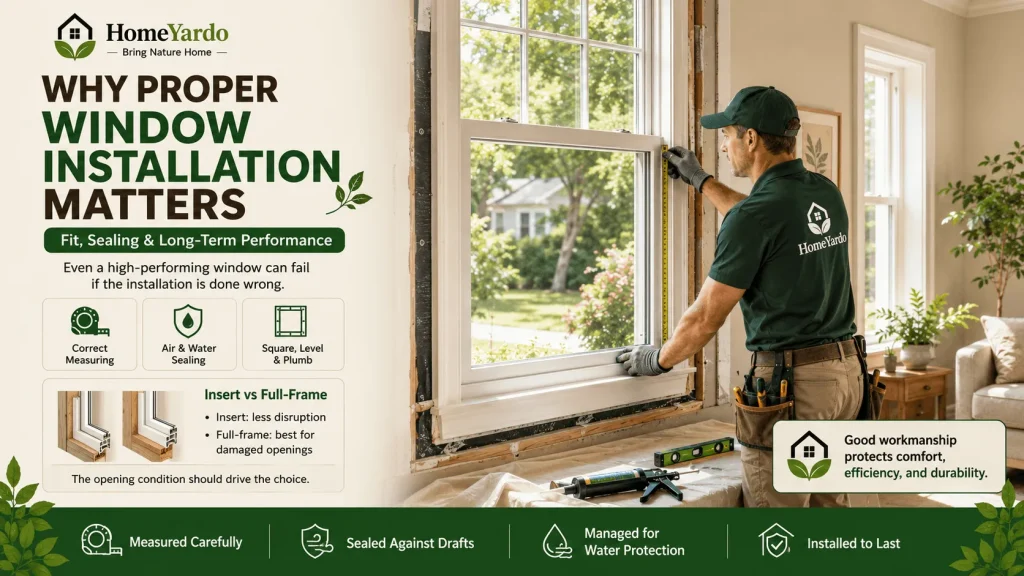
A high-performing window can still perform poorly when the surrounding installation is wrong.
The opening has to be measured correctly. The unit needs to sit square, level, and plumb where applicable. Gaps around the frame need appropriate treatment, and exterior water management has to work with the home’s existing wall assembly.
This is where workmanship earns its money.
Air and Water Sealing
The connection between the window and the building matters almost as much as the window itself. Gaps can allow drafts, while poorly managed exterior water can contribute to damage around the opening.
Ask prospective installers how they handle perimeter insulation, flashing, sealants, exterior trim, and existing water damage rather than simply asking how quickly they can finish the job.
Insert Replacement vs. Full-Frame Installation
An insert replacement places a new window within an existing frame that remains in suitable condition. It can reduce disruption but may slightly reduce visible glass area.
A full-frame replacement removes the old frame and exposes more of the original opening. It makes sense when frames are damaged, the installation needs major correction, or the homeowner wants to change important components of the existing assembly.
Neither method is automatically better.
The condition of the opening should drive the choice.
Doors Churchville PA: Complementing Window Installations
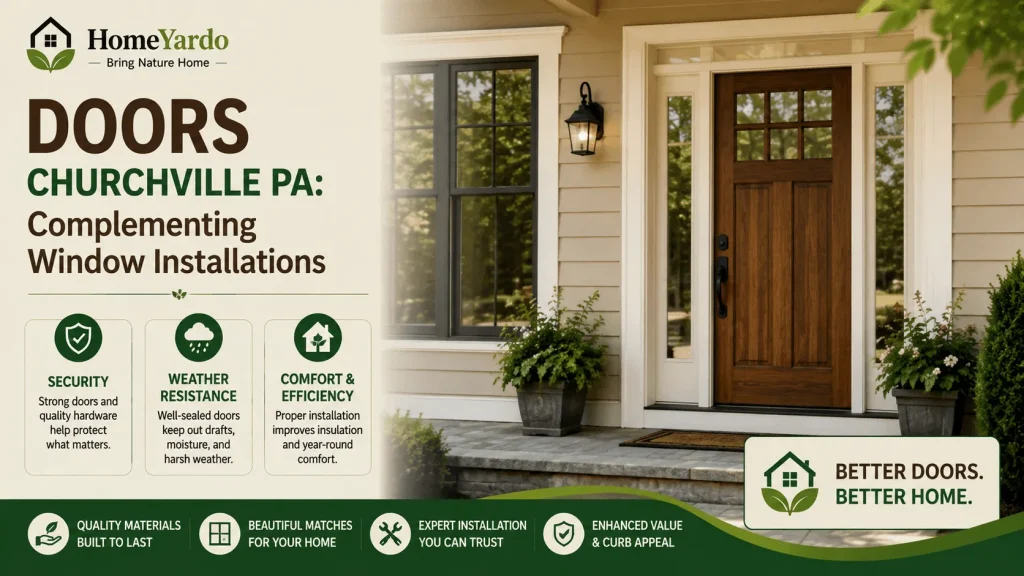
Windows aren’t the only exterior openings affecting comfort, appearance, and weather resistance. Homeowners replacing several windows may also want to inspect aging exterior doors while planning the project.
Entry-Door Materials
Wood provides a traditional appearance but usually needs ongoing finish maintenance.
Fiberglass can imitate painted or stained wood while requiring less upkeep.
Steel doors can provide strength and good value, although dents, finish damage, and corrosion protection should be considered.
The frame, threshold, weatherstripping, glazing, and installation quality also matter. Buying a premium door slab doesn’t fix a poorly fitted frame.
Security, Weather Resistance, and Efficiency
Check door construction, locking hardware, frame condition, weatherstripping, threshold contact, and glazing.
If daylight is visible around a closed exterior door or the area feels noticeably drafty, determine whether adjustment, weatherstripping, frame repair, or replacement is appropriate.
Coordinating Windows and Doors
Matching doesn’t require making every exterior component identical.
Instead, coordinate frame colors, grille patterns, hardware finishes, trim proportions, and architectural style. A restrained combination usually ages better than trying to make every opening a visual focal point.
Do Window and Door Replacements Require Permits in Churchville PA?
Permit requirements should be checked before work begins because the answer can depend on the project scope and the property.
Northampton Township provides building and code information as well as documentation specifically addressing replacement windows and doors. Projects that alter openings, affect required bedroom egress, or involve other structural changes can raise requirements that a straightforward like-for-like replacement may not.
Homeowners should confirm the current requirements with the applicable township department rather than assuming that every replacement project is exempt.
This becomes particularly important when bedroom windows are involved because required emergency escape and rescue openings can affect allowable dimensions.
The Role of a Home Improvement Company in Churchville PA
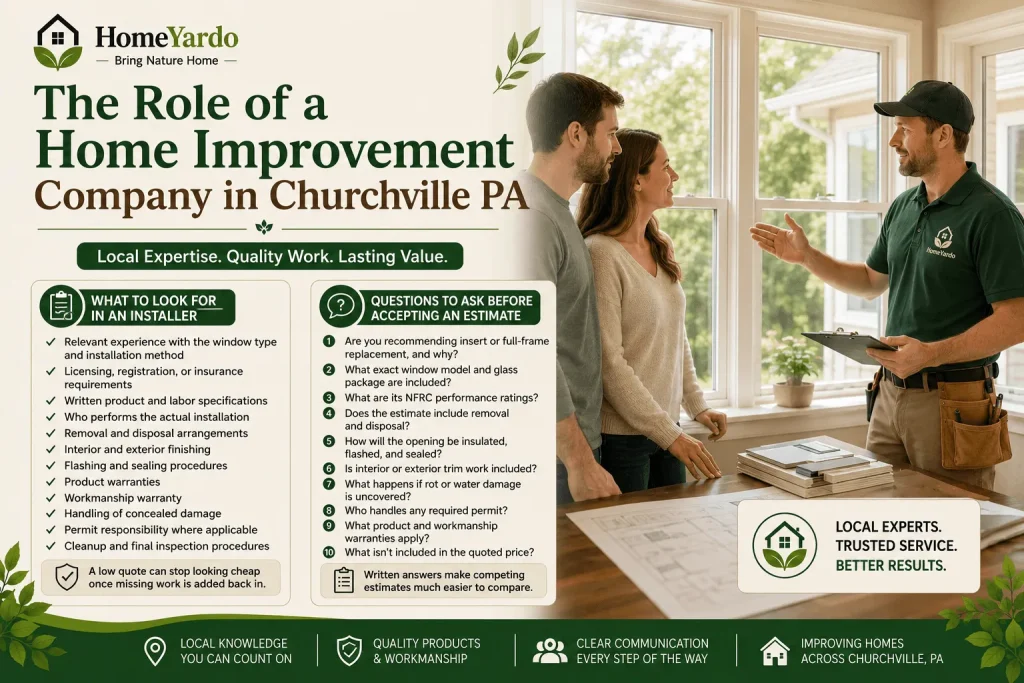
A contractor should help translate product specifications into a workable installation for the actual house.
Local experience can be useful because housing age, construction methods, weather exposure, permitting procedures, and common exterior materials differ from one market to another.
For homeowners in the Churchville area, Tom Adams Windows & Carpets provides window and related home-improvement services locally.
Regardless of which company you consider, compare contractors on the same project scope rather than comparing headline prices.
What to Look for in an Installer
Before choosing a contractor, check:
- Relevant experience with the window type and installation method
- Licensing, registration, or insurance requirements applicable to the work
- Written product and labor specifications
- Who performs the actual installation
- Removal and disposal arrangements
- Interior and exterior finishing
- Flashing and sealing procedures
- Product warranties
- Workmanship warranty
- Handling of concealed damage
- Permit responsibility where applicable
- Cleanup and final inspection procedures
A low quote can stop looking cheap once missing work is added back in.
Questions to Ask Before Accepting an Estimate
Ask each installer the same questions:
- Are you recommending insert or full-frame replacement, and why?
- What exact window model and glass package are included?
- What are its NFRC performance ratings?
- Does the estimate include removal and disposal?
- How will the opening be insulated, flashed, and sealed?
- Is interior or exterior trim work included?
- What happens if rot or water damage is uncovered?
- Who handles any required permit?
- What product and workmanship warranties apply?
- What isn’t included in the quoted price?
Written answers make competing estimates much easier to compare.
Steps to Prepare for Window and Door Installation
A little preparation can prevent installation day from turning into a furniture-moving exercise. As with planning a home improvement project more broadly, it helps to settle the scope, budget, contractor responsibilities, permit requirements, and possible unexpected repairs before work begins.
- Confirm the scope. Review each opening, product, color, glass option, hardware selection, and installation method.
- Verify measurements and order details. Correct mistakes before custom products arrive.
- Confirm permits where applicable. Determine who is responsible for applications and inspections.
- Clear working areas. Move furniture, curtains, blinds, decorations, and fragile items away from the openings.
- Create exterior access. Move patio furniture, planters, hoses, or other obstacles where installers need to work.
- Protect children and pets. Installation temporarily creates open wall areas, tools, debris, and frequent movement through the property.
- Discuss concealed damage. Know how additional repairs will be approved and priced before demolition begins.
- Inspect completed work. Operate each window and door and check locks, screens, trim, sealant, glass, and finishes before final sign-off.
Keep product labels, warranty documents, invoices, permits, and model information after the project is complete. They can be useful for future repairs, warranty claims, and matching additional windows later.
Enhancing Home Comfort and Value
Well-selected windows and doors can improve several aspects of a home at once.
Windows are only one part of home energy efficiency, however; roofing, insulation, air sealing, ventilation, HVAC performance, and other parts of the building envelope also affect how easily a house maintains comfortable indoor conditions.
New windows can sharpen a home’s exterior appearance as well.
Yet homeowners shouldn’t assume every replacement automatically produces a large increase in resale value or dramatic energy savings. Project value depends on what is being replaced, product quality, installation quality, house condition, local market expectations, and how long the homeowner expects to remain in the property.
The strongest project solves an existing problem rather than replacing windows simply because newer products are available.
FAQ’s
Compare written estimates that identify the exact window, glass package, installation method, finishing work, warranties, disposal, and procedures for concealed damage. Check contractor credentials and ask who will actually perform the installation. Comparing the same scope across contractors gives you a much more useful picture than comparing total price alone.
There isn’t one window type that suits every Churchville home. Frame material, U-factor, SHGC, window orientation, architecture, maintenance expectations, ventilation needs, and budget should all influence the choice. Look for independently rated performance rather than relying solely on broad terms such as “premium” or “energy efficient.”
Requirements can depend on the property and scope of work. Northampton Township publishes building-permit resources addressing replacement windows and doors. Changes to openings or bedroom egress requirements can be particularly important. Confirm current requirements with the township or your contractor before installation begins.
A straightforward replacement may be completed relatively quickly, while a whole-house project, full-frame installation, custom units, difficult access, trim work, or hidden deterioration can extend the schedule. Ask the contractor for a project-specific timeline after the openings and installation conditions have been inspected.
Not necessarily. Replacing both can make sense when exterior doors are also drafty, deteriorated, difficult to operate, or visually dated. Coordinating the projects can also make exterior finishes more consistent. A sound door shouldn’t be replaced solely because windows are being upgraded.
They can be, particularly when replacing inefficient, damaged, or drafty windows. The benefit depends on existing window performance, climate, glass specifications, installation quality, energy prices, and household use. Comfort, reduced drafts, easier operation, maintenance, and appearance should be considered alongside potential energy savings.