How Chemical-Free Decking Options Improve Air Quality Around Your Backyard
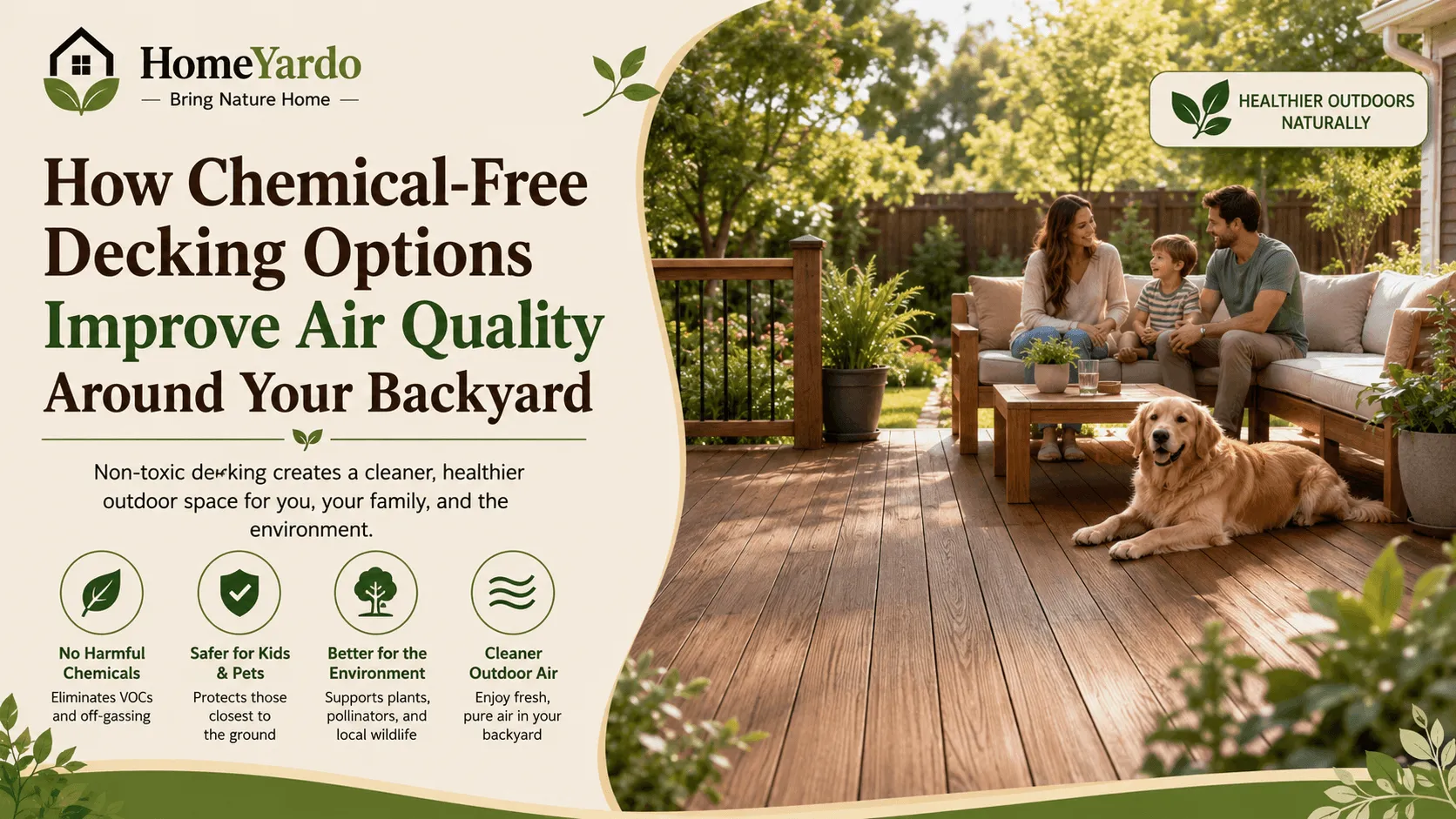
In designing the outdoor living area, the homeowner concentrates on aesthetics, such as the grain finish of the wood, the type of railings used, or whether the design matches the patio furniture. However, one major factor is often left out: that of air quality. Air pollution may be associated with traffic or off-gassing inside, but traditional building materials bring airborne toxins right into your backyard. Working with a skilled local deck contractor to select chemical-free decking options is one of the most effective ways to protect your outdoor air quality and create a healthier environment for your family.
Here is how chemical-free materials make a noticeable difference in the air you breathe right outside your back door.
Eliminating Volatile Organic Compounds (VOCs)
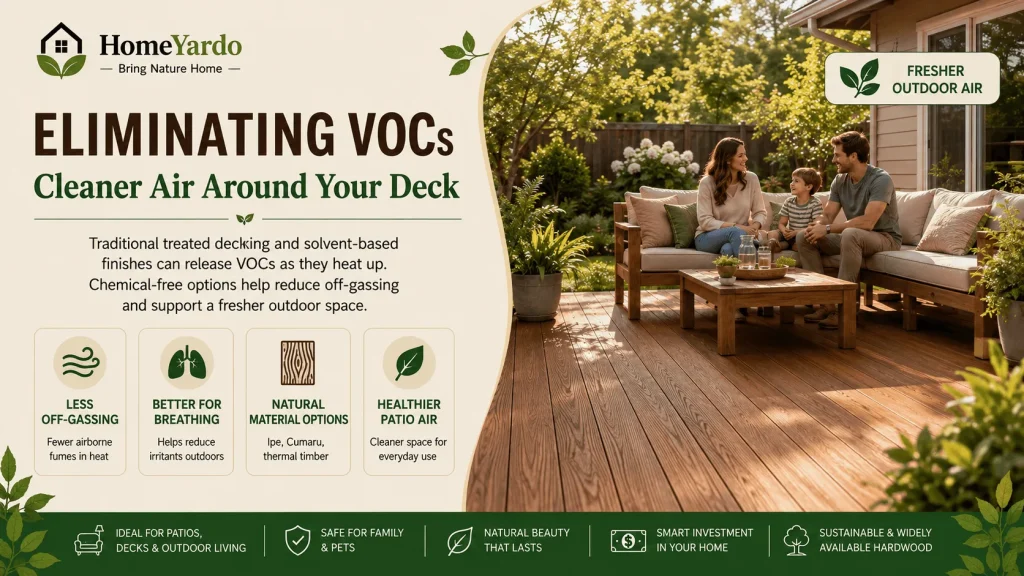
Many traditional decking materials, composite boards, and wood sealants rely on synthetic glues, chemical preservatives, and solvent-based finishes. As these materials age under the heat of the sun, they release Volatile Organic Compounds (VOCs) into the surrounding air through a process known as off-gassing.
On warm summer days, sunlight accelerates this chemical release. Exposure to elevated amounts of VOCs results in instant adverse effects, such as headaches and respiratory issues. Chemical-free decking options include naturally rot-resistant hardwoods like Ipe and Cumaru, thermally treated timber, or mineral-based boards that have no harmful chemicals and no artificial resins added. Eliminating the sources of any potential off-gassing will ensure that there will be no harmful substances in the air of your patio.
Preventing Toxic Dust During Installation and Maintenance
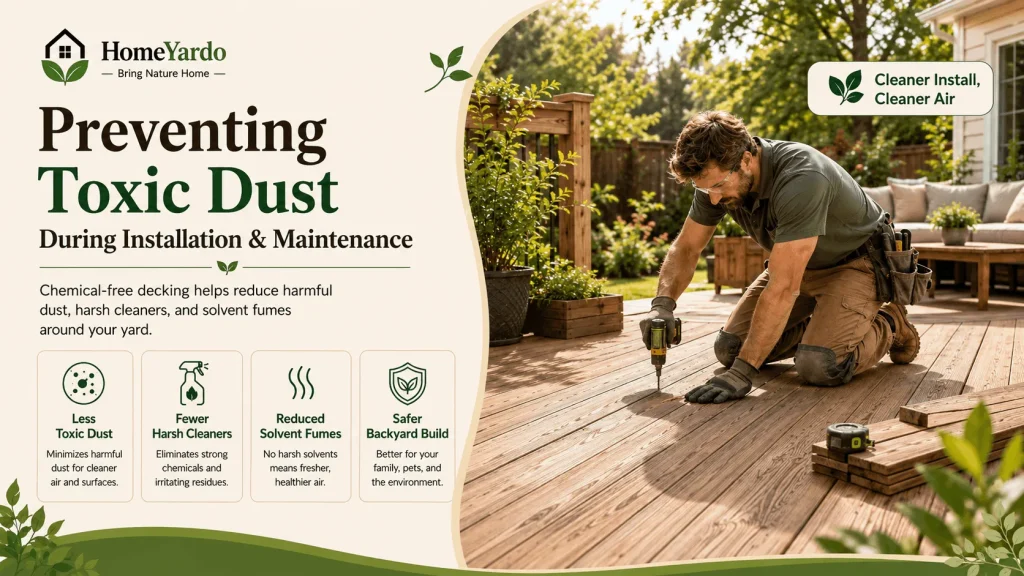
Not only does the health factor in decking materials affect the individual while using their deck, but also when it is installed and even while it is being maintained. Pressure-treated wood uses chemicals such as copper azole or alkaline copper quaternary (ACQ) that protect the lumber from rot. Once this material is cut or sanded, there are particles of the material that have chemicals that travel around your yard.
Also, with traditional wood decks, maintaining the deck consists of stripping the finish off the deck and using harsh chemical cleaners and applying solvents to the wood every few years. With naturally durable materials, the amount of chemical dust and fumes is lessened. If you are planning a new build, consulting a reputable deck contractor near me can help you source eco-friendly materials that keep installation dust non-toxic.
Protecting Pets and Children at Ground Level

Air quality outdoors is not constant within your garden. Chemical pollution and particulate dust may be heavier close to the ground, where the children are playing, and the dogs are resting. The young children and the dogs are particularly susceptible to poor air quality outdoors as they breathe much faster than the rest of their bodies, as well as spending more time on the deck floor.
Chemical-free decking ensures that the zone closest to the floorboards stays pristine. Whether your toddler is crawling across the deck or your dog is napping in the shade, non-toxic materials ensure they aren’t inhaling harmful chemical residues or off-gassed solvents.
Supporting a Healthier Backyard Ecosystem
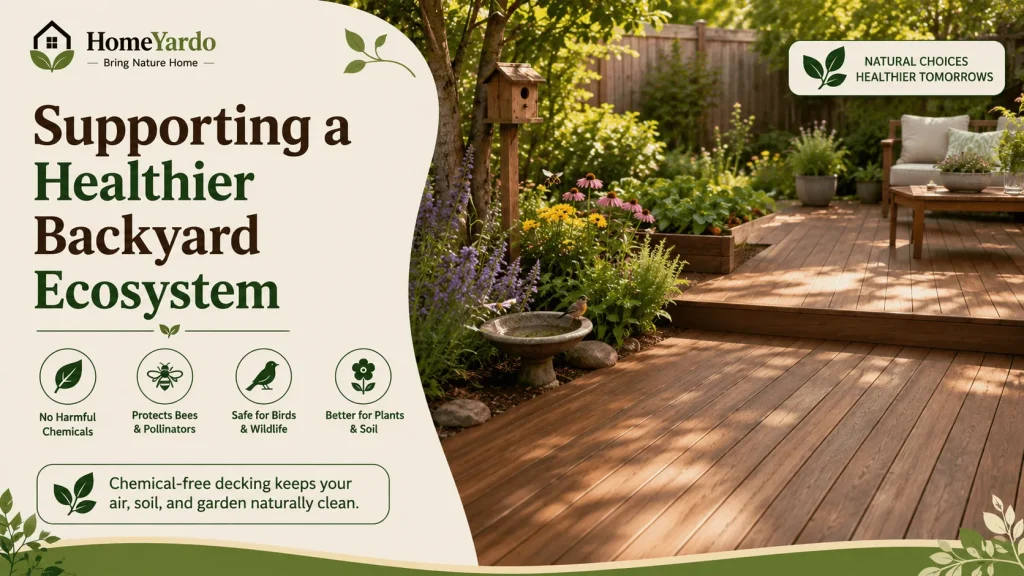
Your deck is no isolated space but is a part of your yard’s natural ecosystem. The off-gassing and runoff from the use of treated lumber may impact your vegetable or flower beds, bee-friendly flowers, and the wildlife that depends on your yard for food and water.
Non-chemical building materials, especially thermally modified wood or natural wood, will age beautifully without leaching any man-made chemicals into the earth or atmosphere. This will ensure that the air stays pure for the birds, bees, and plants.
Conclusion
Building your personal outdoor space should serve to improve your life and should never expose you to any health hazard. By using only non-toxic, chemical-free building materials, you not only protect yourself from off-gassing but also keep your outdoor air healthy and pure. Partnering with an experienced local deck contractor who understands green building practices ensures your new outdoor space is as healthy and safe as it is beautiful.
FAQ’s
“Chemical-free decking” is an informal term generally used for decking designed to minimize added preservatives, solvent-heavy coatings, or other treatments. Because the term has no single universal meaning, check the manufacturer’s material specifications rather than relying on the label alone.
Some deck coatings, sealers, adhesives, cleaners, and material components can contain or emit VOCs. The amount depends on the individual product, formulation, application method, temperature, and time since installation.
Naturally durable woods and some thermally modified products may require fewer added preservatives, but specifications vary. The finish and maintenance system should also be considered before comparing products.
Composite decking cannot be treated as one uniform category. Formulations vary by manufacturer and can contain different polymers, fillers, binders, pigments, and additives. Check the specific product documentation.
Pressure-treated wood is widely used outdoors and is manufactured for resistance to decay and insects. Homeowners and installers should follow product-specific instructions for cutting, handling, disposal, and maintenance.
Using lower-VOC finishes and reducing unnecessary solvent-based products can reduce one potential source of outdoor emissions around a deck. It cannot guarantee overall outdoor air quality because many other pollution sources contribute.
Thermally modified wood primarily uses controlled heat to alter wood properties rather than relying solely on conventional preservative treatment. The complete product should still be checked for coatings, finishes, adhesives, or other additives.
Ask about board composition, preservatives, coatings, VOC information, installation dust, maintenance products, disposal requirements, warranties, and manufacturer documentation.