Why Boxelder Bugs Gather on Warm Exterior Surfaces Before Moving Indoors

A sunny exterior wall can become surprisingly busy on a cool autumn afternoon. Dozens or even hundreds of black insects with red-orange markings may gather across siding, foundations, window frames, and door trim. A few weeks later, some homeowners begin finding the same insects near indoor windows.
Those insects are often boxelder bugs. Their appearance indoors usually starts with seasonal activity outside the house.
Boxelder bugs use sun-warmed exterior surfaces as gathering areas as temperatures fall. From there, adults look for protected cracks and gaps where they can spend the winter. Understanding this sequence helps homeowners focus on exclusion before the insects settle inside wall voids, attics, and other sheltered spaces.
Quick Answer: Why Do Boxelder Bugs Gather on Houses?
Boxelder bugs commonly gather on sunny exterior walls during fall because these surfaces become warmer than the surrounding air. The added warmth helps the insects remain active as outdoor temperatures decline.
South- and west-facing walls can be especially attractive because they receive substantial afternoon sunlight. While gathered on a building, the bugs may locate cracks around siding, windows, doors, vents, utility penetrations, soffits, and other openings that lead to protected overwintering spaces.
This is why a large outdoor gathering can sometimes be followed by boxelder bugs appearing indoors later in fall or winter.
What Are Boxelder Bugs?
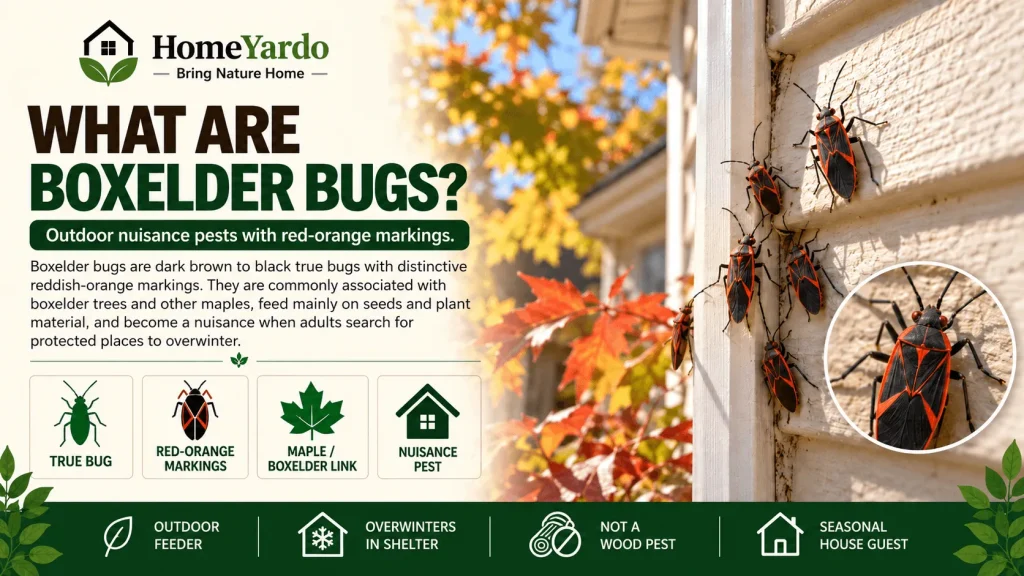
Boxelder bugs are true bugs that are typically dark brown to black with distinctive reddish-orange markings. Adults are roughly half an inch long.
They are strongly associated with boxelder trees and other maples. During the growing season, they remain outdoors and feed primarily on seeds and other plant material.
They are generally considered nuisance pests around homes rather than structural pests. They do not consume wood like termites, infest stored food like pantry pests, or reproduce continuously inside a house.
Problems usually begin when adults search for protected places to survive colder weather.
Why Boxelder Bugs Gather on Warm Exterior Surfaces
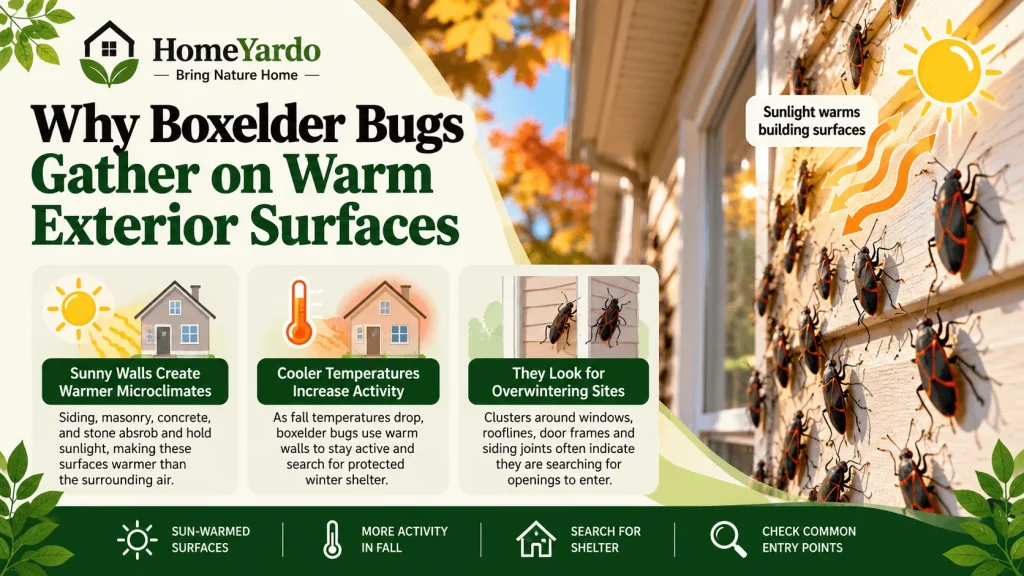
Temperature is one of the main reasons boxelder bugs become so noticeable on houses during fall.
Like other insects, boxelder bugs are ectothermic. Their body temperature and activity are strongly influenced by environmental temperatures. A wall heated by direct sunlight can therefore provide a useful warm spot when the surrounding air has become cool.
Sunny Walls Create Warmer Microclimates
Building surfaces do not always match the surrounding air temperature.
Siding, masonry, concrete, stone, and other exterior materials can absorb solar radiation during the day. A sun-exposed surface may remain warmer for a period even as the air begins cooling.
This helps explain why one wall can have a large gathering while another side of the same house has very little activity.
South- and west-facing surfaces often deserve the closest attention because they commonly receive stronger afternoon sun.
Fall Temperatures Trigger the Search for Winter Shelter
The bugs are not gathering because they want to live permanently on the siding.
As temperatures decline, adult boxelder bugs begin seeking protected overwintering locations. Exterior walls provide both temporary warmth and access to potential shelter.
A cluster around a window, roofline, door frame, or siding joint can therefore indicate that insects are searching the building for openings.
How Seasonal Temperature Changes Affect Boxelder Bugs
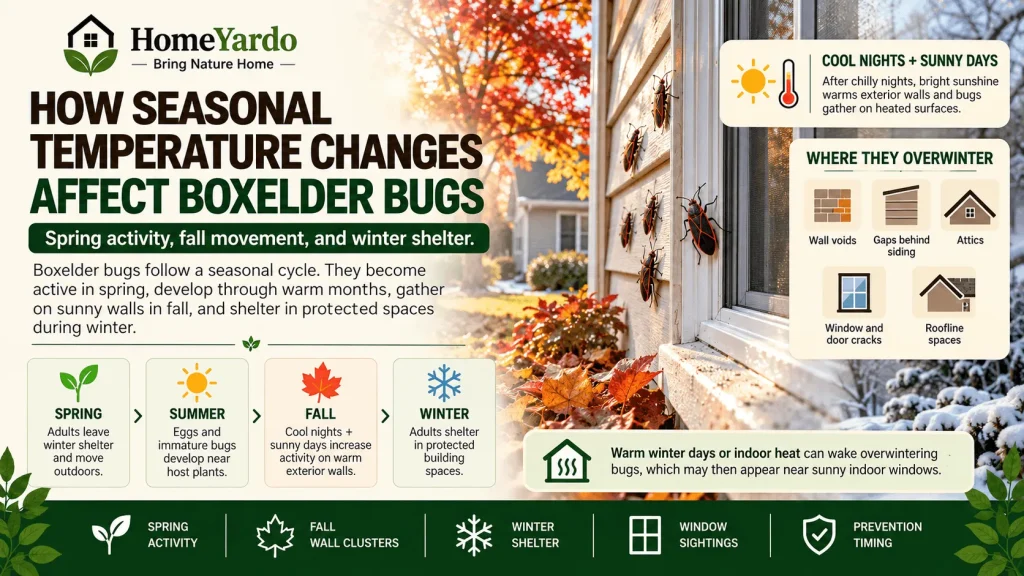
Boxelder bug activity follows a seasonal cycle.
During spring, adults that survived winter become active again and move back outdoors. Eggs are laid on or near suitable host plants, and immature bugs develop through the warmer months.
This seasonal shift also makes fall a useful time for seasonal pest checks, especially around exterior gaps that insects may use as temperatures drop.
This is when their relationship with buildings becomes much more noticeable.
Cool Nights and Sunny Days Can Increase Activity
A common pattern occurs when chilly nights are followed by bright, sunny days.
The insects may become less active as temperatures fall and then gather on heated exterior surfaces when sunshine returns. Homeowners can consequently see a sudden increase in bugs even though there seemed to be few around the house the day before.
The pattern can repeat during suitable autumn weather.
What Happens During Winter?
Boxelder bugs that reach protected areas become largely inactive during cold weather.
Potential overwintering locations include:
- wall voids
- gaps behind siding
- attics
- cracks around windows and doors
- spaces around rooflines
- other dry, protected building cavities
Indoor heating or an unusually warm winter day can sometimes activate overwintering insects.
A bug may then move from its hiding place into the occupied part of the house. This is why boxelder bugs can unexpectedly appear at a sunny window in the middle of winter.
It does not necessarily mean a new infestation has entered from outdoors that day.
Why Outdoor Boxelder Bug Clusters Can Lead to Indoor Sightings
A house provides countless small transitions between exterior materials.
Window frames meet siding. Utility lines pass through walls. Vents penetrate exterior surfaces. Fascia, soffits, siding, trim, and foundations all contain joints.
When hundreds of insects spend time exploring these surfaces, even relatively small defects can provide access to sheltered spaces.
Common areas worth inspecting include:
- gaps around window frames
- door-frame joints
- damaged window or door screens
- siding gaps
- utility penetrations
- exterior vents
- fascia and soffit gaps
- roofline transitions
- openings around pipes or cables
HomeYardo’s broader seasonal pest checks can also help identify exterior openings before cold-weather pests begin looking for shelter.
Once boxelder bugs enter protected building spaces, some may eventually find their way into living areas.
People researching boxelder bugs in house problems should therefore look beyond the insects visible indoors. The more useful question is often where the bugs gathered outside and which openings allowed them into the structure.
Do Boxelder Bugs Damage a House?
Boxelder bugs can be irritating in large numbers, but their presence should not be confused with the behavior of structural pests.
They do not eat framing lumber or other structural wood. They also do not establish the kind of indoor reproductive infestation associated with some household pests.
The main concerns are nuisance activity and staining. Crushing the insects can leave marks on curtains, walls, upholstery, or other surfaces.
For that reason, physical removal is usually preferable to smashing bugs found indoors.
How Boxelder Bugs Get Inside
Entry often occurs through existing gaps rather than through damage caused by the insects themselves.
They may exploit small openings around:
- siding
- doors
- windows
- vents
- utility lines
- soffits
- fascia
- foundations
- roof transitions
This distinction matters. Finding boxelder bugs indoors does not necessarily mean the insects damaged the building to get inside. More often, their presence reveals gaps that were already there, which is another reason to inspect your home exterior regularly for openings around siding, windows, doors, foundations, and wall penetrations.
Those same gaps may also allow drafts, moisture, or other pests to enter, making exterior inspection useful beyond boxelder bug control alone.
Exterior Maintenance That Can Reduce Boxelder Bug Entry
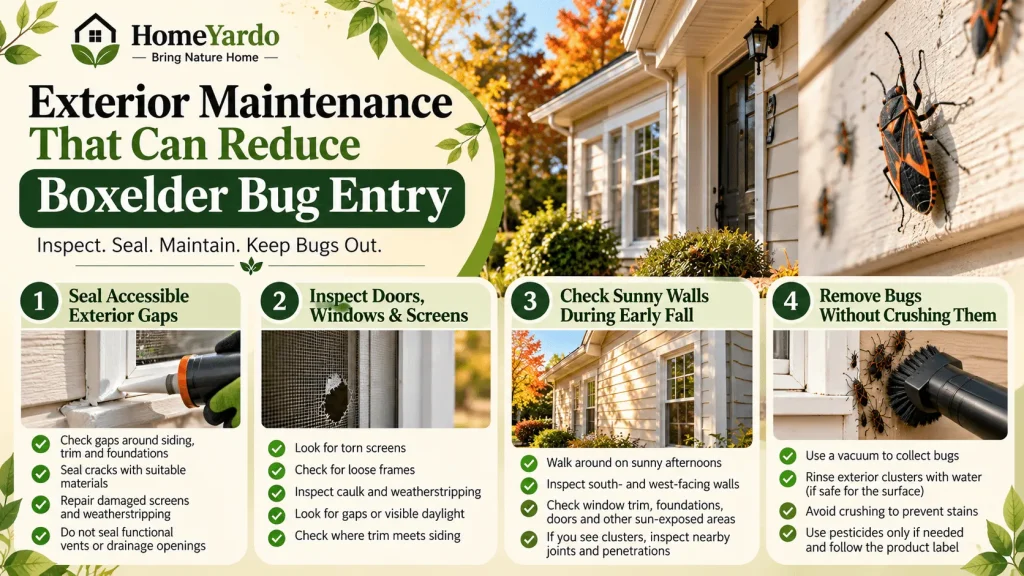
Prevention works best before large fall gatherings have had time to move into protected building spaces.
Start with a careful exterior inspection.
Seal Accessible Exterior Gaps
Inspect the areas where different building materials meet.
Pay particular attention to windows, doors, siding edges, utility penetrations, vents, soffits, fascia, and foundation transitions.
Suitable cracks can be sealed with materials appropriate for the location and building surface. Damaged screens and deteriorated weatherstripping should also be repaired or replaced.
Do not seal functional drainage or ventilation openings simply because they look like gaps. When the purpose of an opening is uncertain, have it inspected before closing it.
Inspect Doors, Windows, and Screens
Do not overlook the garage. Worn garage door weather stripping can leave gaps along the bottom, sides, and top of the door where insects and other pests can enter.
Check for:
- torn screens
- loose screen frames
- deteriorated caulk
- worn weatherstripping
- visible daylight around closed doors
- gaps where trim meets siding
Homeowners already carrying out fall maintenance can include these areas in the same inspection rather than treating pest exclusion as a separate project.
Check Sunny Walls During Early Fall
Monitoring can help you act before the insects disappear into hidden spaces.
Walk around the property periodically during early fall, especially on sunny afternoons. Check south- and west-facing walls, window trim, foundations, doors, and other areas receiving direct sunlight.
If clusters consistently form in one location, inspect nearby joints and penetrations closely.
The gathering itself can provide a useful clue about where exclusion work is needed.
Remove Bugs Without Crushing Them
Visible bugs can often be removed mechanically.
A vacuum can collect individual insects indoors, while exterior clusters may sometimes be dislodged with water where doing so will not damage the building surface.
Avoid crushing bugs against finished surfaces because their bodies can leave stains.
If pesticides are considered, use only products labeled for the intended pest and application site and follow the product label exactly.
Does Removing Boxelder Trees Solve the Problem?
Not necessarily.
Boxelder trees, particularly seed-producing female trees, can support local populations. Other maples may also serve as hosts.
Removing a nearby host tree may reduce activity in some situations, but it does not guarantee that boxelder bugs will disappear. Adults can travel from trees on surrounding properties.
Removing a healthy mature tree solely because a few boxelder bugs appear each year may therefore be an excessive response.
For most homeowners, improving exterior exclusion is a more direct way to address insects entering the house.
A Practical Fall Boxelder Bug Prevention Checklist
A short inspection before cool weather arrives can make the problem easier to manage. If you are already preparing the property for winter, add these checks to your broader fall garage maintenance checklist so door seals, utility openings, windows, and other potential pest entry points are not overlooked.
Check:
- sunny south- and west-facing walls for clusters
- caulk around windows and exterior trim
- weatherstripping around doors
- window and door screens
- utility penetrations
- exterior vents
- siding joints
- soffits and fascia
- foundation transitions
- roofline openings that can be inspected safely
HomeYardo’s seasonal pest inspection guidance can be used alongside this species-specific check to catch other potential entry points around the property.
The goal is not to eliminate every insect outdoors. It is to make the building harder to enter before overwintering behavior peaks.
When Should You Call a Pest Professional?
Seeing a few boxelder bugs does not automatically require professional treatment.
Vacuuming occasional indoor bugs and correcting accessible exterior gaps may be enough.
Professional inspection becomes more reasonable when:
- hundreds or thousands of bugs repeatedly cover the building
- large numbers appear indoors every winter
- insects seem to be emerging from inaccessible wall or roof areas
- entry points cannot be identified
- exclusion requires unsafe ladder or roof work
- the homeowner cannot confidently identify the insect
- previous exclusion work has not reduced the problem
A qualified pest professional can help identify where insects are gathering, locate likely entry routes, and determine whether targeted treatment or additional exclusion work is appropriate.
If treatment is proposed, ask which product will be used, where it will be applied, and what precautions are required for people, pets, plants, and nearby surfaces.
Final Takeaway
Boxelder bugs often gather on houses during fall because sun-warmed exterior surfaces allow them to remain active while they search for protected winter shelter.
The outdoor gathering is therefore more than a temporary visual nuisance. It can show homeowners where bugs are concentrating and where potential entry points deserve inspection.
Focus on exclusion before cold weather settles in. Check window and door seals, screens, siding joints, vents, utility penetrations, soffits, fascia, and other exterior transitions. If a large problem returns every year despite those measures, professional inspection may help identify entry routes that are difficult to see.
FAQ’s
Boxelder bugs often gather on sun-warmed exterior surfaces during fall as outdoor temperatures decline. Sunny walls provide warmth while adults search for protected places where they can spend the winter.
Boxelder bugs depend on environmental heat for their activity. A wall exposed to direct sunlight can become warmer than the surrounding air, making it an attractive basking location during cool autumn weather.
They usually enter while searching for protected overwintering sites. Small gaps around siding, windows, doors, vents, utility penetrations, soffits, and other exterior joints can provide access.
Boxelder bugs generally do not establish reproducing household infestations. Adults that enter buildings are primarily seeking protected places to overwinter.
Boxelder bugs are primarily nuisance pests. Their main household problems are their numbers and the possibility of staining surfaces when crushed.
They are not structural pests and do not eat wood like termites. They normally take advantage of existing openings rather than creating holes in a building.
Bugs that entered wall voids or other sheltered areas during fall can become active when indoor heat or unusually warm weather raises the temperature. They may then wander into living spaces, often toward windows and other bright areas.
Sun-exposed walls are usually the most attractive. South- and west-facing walls often receive substantial afternoon warmth, although building orientation, shade, exterior materials, and local conditions can change the pattern.
Inspect and repair exterior gaps before fall activity peaks. Pay particular attention to window and door frames, screens, siding joints, vents, utility penetrations, weatherstripping, soffits, fascia, and other building transitions.
Usually not as a first response. Removing a host tree may reduce local numbers in some cases, but bugs can travel from nearby properties. Exterior sealing and exclusion generally address indoor entry more directly.