Fall Garage Maintenance Checklist Before Winter Arrives
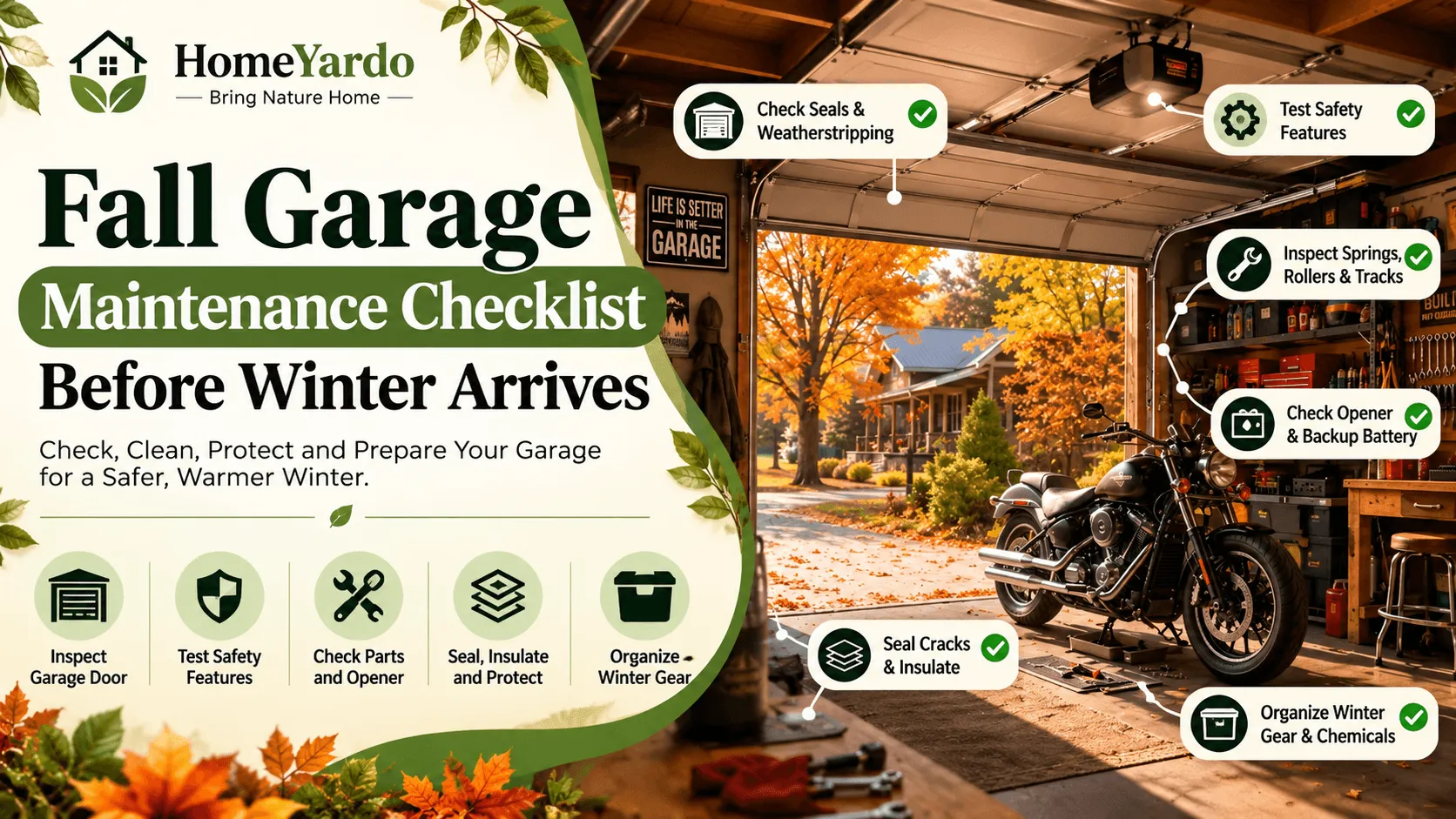
What things should you check in the garage before winter? Start with your garage door. Look at the seals. Test the safety features. Listen and look for old springs, rollers, and cables. Check the opener and the backup battery. Fill any cracks in the floor. Put in extra insulation if needed. Put chemicals and winter gear in the right spot. Most people can do all this in one afternoon. A pro garage tune-up is about $150.
Cold weather is tough on garages. The metal parts can shrink. Grease will get thick. Rubber seals can become hard and crack. A garage door that works well in October may not open on the first cold morning in December.
This checklist shows you what things to look at, what signs to keep an eye out for, and tells you which jobs you should ask a pro to do.
Why Fall Is The Best Time For Garage Upkeep
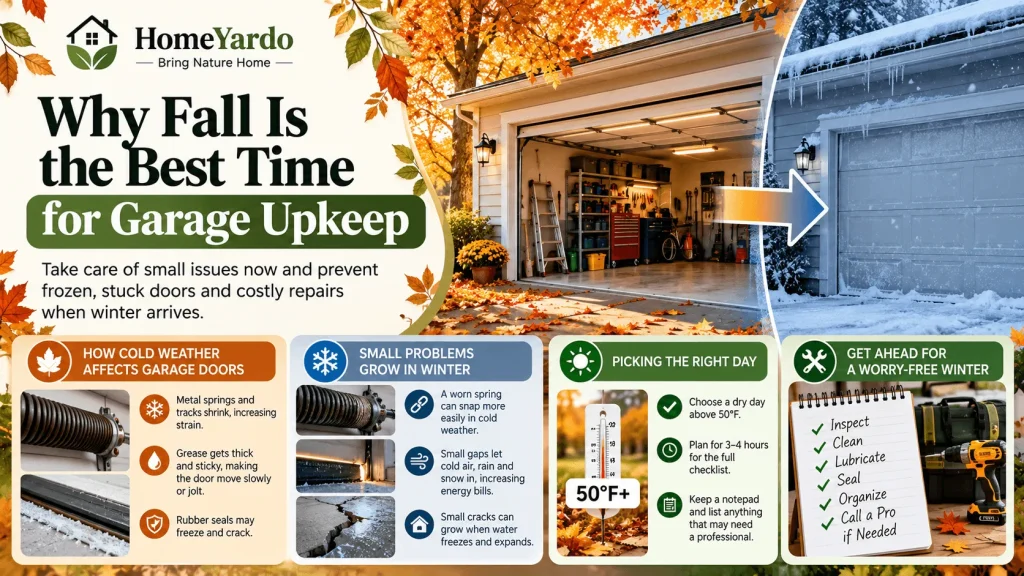
Fall gives you nice weather to work in before it gets cold. If you take care of small issues now, you stop them from turning into frozen, stuck doors when winter comes. It’s better to fix things early, so the busy mornings won’t be a problem later.
How Cold Weather Affects Garage Doors
- When it gets cold, metal springs and tracks shrink. This puts more strain on the door each time you use it.
- Old grease gets thick and sticky when it is cold. The door moves slowly or jolts as a result.
- Rubber seals may freeze to the ground. They can tear when you open the door.
Small Problems Grow in Winter
- A spring that is a bit worn out can snap more easily when the day is cold.
- Tiny gaps in the seals let cold air, rain, and snow get in. This can make your energy bills go up.
- Small cracks in the floor can get bigger when water goes in and freezes. The cold air and ice push the crack open even more.
Picking the Right Day
- Pick a dry day that is above 50°F. A lot of sealants and caulks need some heat to work right.
- Plan to have three to four hours for the whole checklist.
- Keep a notepad with you. Write down anything that might need a pro.
Checking Seals And Weatherstripping
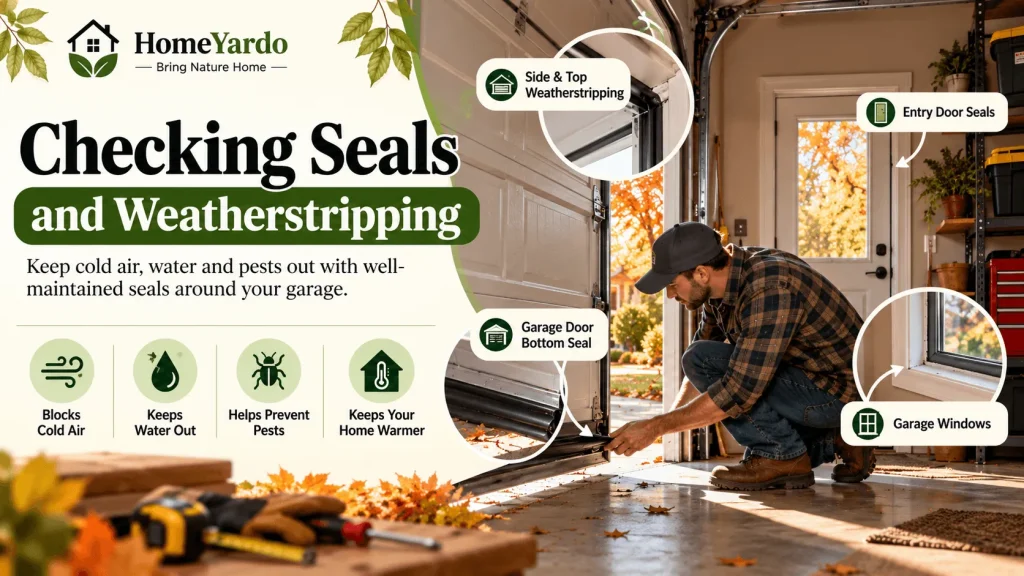
Seals are the first thing that keeps your garage safe from cold air, water, and pests. They wear out without anyone seeing or hearing it. Most people do not notice this until they feel a draft or see water appear.
The Garage Door Bottom Seal
- Close the door. Look for daylight at the bottom edge.
- Check if the rubber has cracks. See if there are flat areas or any missing pieces.
- The average cost is about $150. A professional will replace a bottom seal for this price.
Side and Top Weatherstripping
- Run your hand over the door frame when it is windy. Feel if there are any drafts.
- Check for strips on the sides and top. See if the strips feel stiff, dry, or if they are peeling.
- Change the weatherstripping if it does not touch the door tightly anymore.
Gaps Around Entry Doors and Windows
- Check the door that is between the garage and the house. Make sure it has a good seal.
- Look at garage windows. See if there are any cracks in the glazing or if the caulk is loose.
- If you keep the garage sealed, the rooms above and next to it will be warmer.
Testing Your Garage Door’s Safety Features
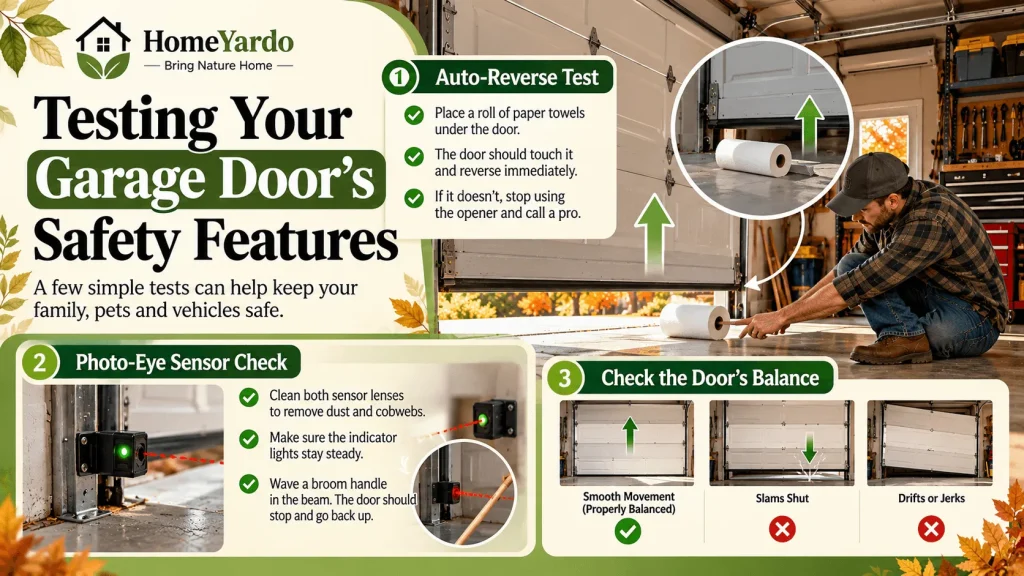
A garage door is often the heaviest thing that moves in a home. A few quick safety tests each fall can help keep kids, pets, and cars safe. These tests make sure the door stops when it should.
The Auto-Reverse Test
- Put a roll of paper towels on the floor below the door and then press close.
- The door will touch the roll and should go back up right away.
- If the door does not go back up, stop using the opener. Call a technician for help.
Photo-Eye Sensor Check
- Wipe dust and cobwebs off both sensor lenses near the floor.
- Make sure the indicator lights on both sensors do not blink and stay steady.
- When the door goes down, wave a broom handle in the beam. This will help you see if the door stops and goes up again.
Watching the Door’s Balance
- A balanced garage door moves with ease. The movement is smooth from the top to the bottom.
- If your garage door slams shut, drifts to one side, or jerks, it could mean there is a problem with the springs or cables.
- A Garage Door Maintenance check every year includes expert balance fixes. Do not try to do these by yourself because it is not safe.
Looking and Listening for Worn Parts
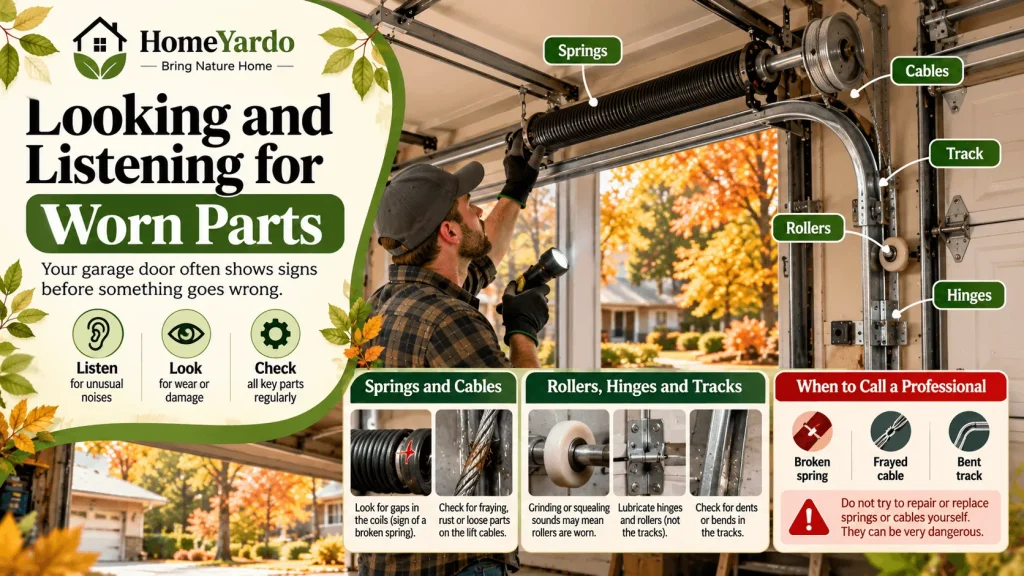
Your garage door can show signs before something goes wrong. Run the garage door up and down a few times. Pay close attention to the sounds it makes each time. Also, look at every part and check how it looks. For a more detailed year-round inspection routine, use our garage door maintenance checklist to check springs, cables, rollers, tracks, safety sensors, weather seals, balance, and opener performance.
Springs and Cables
- Look for any space in the coils of the spring above the door. This could mean the spring is broken.
- Check the lift cables on each side. See if there is any fraying, rust, or loose parts.
- Never try to work on or change the springs or cables on your own, since they can be very dangerous.
Rollers, Hinges, and Tracks
- A grinding or squealing sound can mean the rollers are dry or worn out.
- Use a garage door lubricant on the hinges and rollers, but do not put it on the tracks.
- Check if there are dents or bends in the tracks. These can cause the garage door to catch or shake.
When to Call a Professional
- Call a pro when you have a broken spring, a frayed cable, or a bent track on the garage door.
- A sudden freeze can break old springs, and this can even happen in warmer states.
- Once a cold snap hits Central Texas, many people look for Leading Garage Door Repair after their garage door spring breaks during the night.
Getting the Opener Ready for Winter Storms
Winter storms can come and take out your power when you need to use your car. A bit of planning can help you not get stuck behind a door that will not open.
Opener Battery Backup
- Check if your opener has a backup battery. Many new models come with one.
- You can test it. Unplug the opener and try to run the door one time.
- A replacement backup battery costs about $50.
Remotes and Keypads
- Change the batteries in your remotes and the outdoor keypad before the cold weather starts.
- Cold weather will make weak batteries run out faster.
- Make sure everyone who drives in the house has a remote that works.
Knowing the Manual Release
- Find the red emergency cord that hangs down from the opener rail.
- Make sure that every adult in the home knows what it does.
- If the door will not stay in place when you let go of it, have a technician check it before winter comes.
Protecting The Floor, Walls, And Insulation
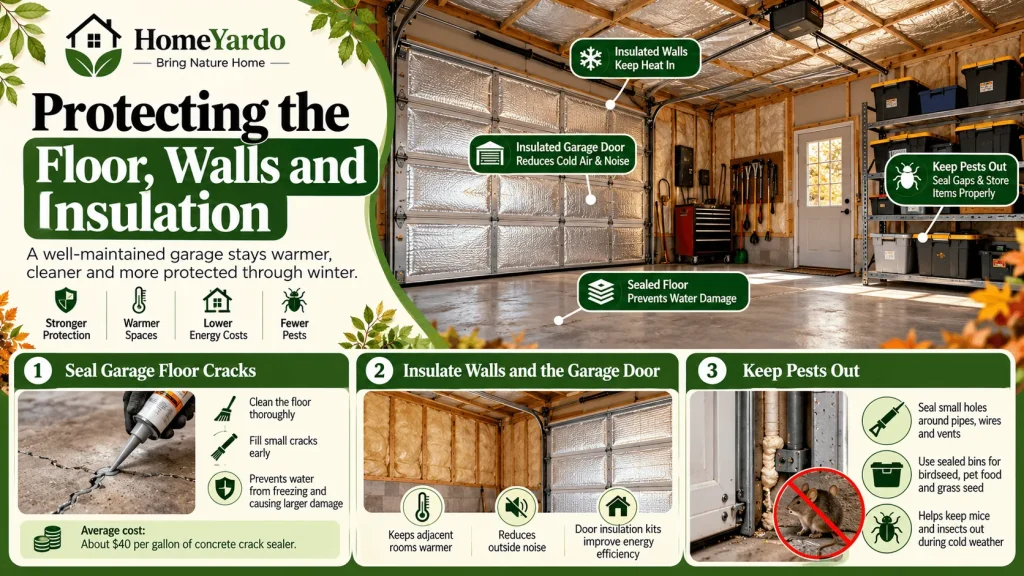
The rest of the garage also needs to be looked after. The floors, walls, and insulation all get worn out when snow, salt, and cold air come in with your car.
Sealing Garage Floor Cracks
- Fill any small cracks first. This stops water from getting in and freezing.
- Sweep and clean the floor well. This helps the sealers stick right.
- Average cost: A gallon of concrete crack sealer usually costs about $40.
If the concrete needs more than a small crack repair, our guide to epoxy resin flooring explains how slab condition, moisture, surface preparation, and coating choice affect a finished garage floor.
Insulating Walls and the Garage Door
- Insulated walls help keep the rooms next to and over the garage warmer.
- Door insulation kits can help a basic steel door keep in heat better.
- If your door is old, thin, and has no insulation, then a new Garage Door Installation with an insulated model can stop cold air and reduce noise.
Keeping Pests Out
- Mice and insects look for a warm place to stay when the nights get cold.
- Seal any small holes you see around pipes, wires, and vents.
- Put birdseed, pet food, and grass seed in metal or plastic bins that close tightly.
Organizing and Storing Gear for Winter
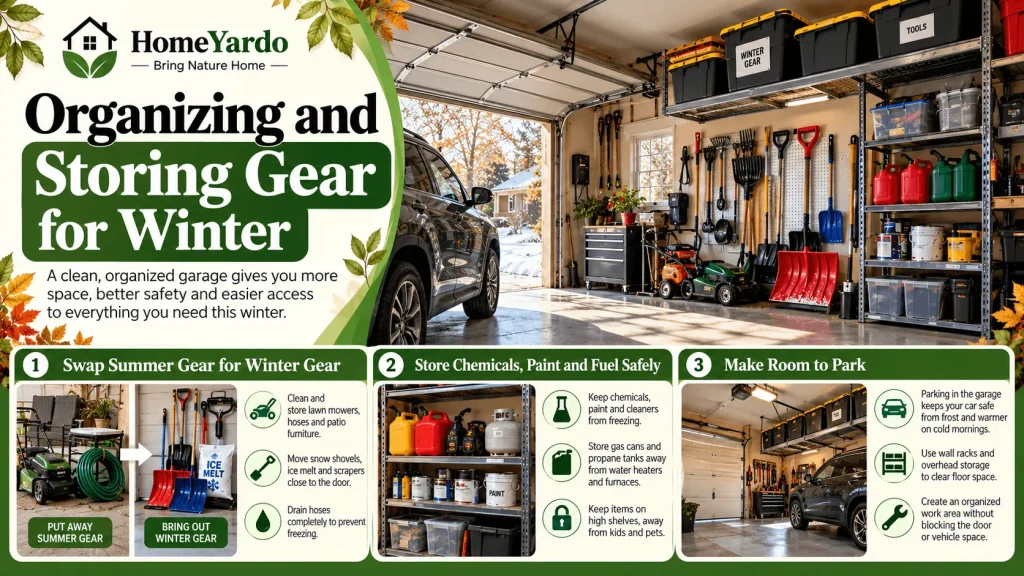
A messy garage is not good to use, and it is not as safe during the winter. If you take an hour to clean up and put things in order, you will have more space for your car. This also makes it easy for you to get the things you need.
Swapping Summer Gear for Winter Gear
- Clean and put away lawn mowers, hoses, and patio furniture.
- Move snow shovels, ice melt, and scrapers close to the door.
- Drain hoses all the way so water does not freeze and break them.
Storing Chemicals, Paint, and Fuel Safely
- Latex paint and lots of cleaners can freeze and go bad if you leave them in an unheated garage.
- Keep gas cans and propane tanks away from water heaters and furnaces.
- You should keep chemicals on high shelves, away from kids and pets.
Making Room to Park
- Parking in the garage keeps your car safe from frost. It stays warmer on cold mornings too.
- You can use wall racks and overhead storage to clear up space on the floor.
- The average cost is about $200 for a ceiling-mounted storage rack. If your garage also serves as a work area, this guide to building a functional garage workshop can help you organize tools, storage, lighting, and work zones without blocking the door or vehicle space.
Start Winter With a Garage You Can Count On
Spending a few hours to get ready for fall can help you avoid a stuck door, a cold home, and big repair bills you did not see coming. Check all the seals. Test the safety parts. Listen for old or worn-out parts that might break. Make sure your storage is neat and ready before the first freeze.
Your Quick Fall Garage Checklist
- Check the bottom seal and weatherstripping. See if there are any gaps or cracks in them.
- Do the auto-reverse and photo-eye tests.
- Look and listen for springs, cables, and rollers that might be worn out.
- Test if the opener’s backup battery works. Change the remote batteries if they are low.
- Seal any cracks on the floor and keep chemicals in a safe place.
Get a Professional Eye Before the Cold Hits
- There are some checks that are very important, like checking spring tension and door balance. These things need a person who knows what to do and the right tools.
- If you are in Central Texas and want your garage door ready for winter, Infinity Garage Door can look over your whole system. They will fix anything your checklist finds.
FAQ’s
Check garage door weatherstripping, springs and cables visually, rollers, hinges, tracks, opener safety systems, backup power, entry doors, windows, concrete, insulation, pest gaps, and storage. Also move freeze-sensitive materials and winter equipment to suitable locations.
Complete the inspection before sustained freezing weather arrives. Choose dry conditions that meet the temperature and moisture requirements of any caulk, sealant, concrete repair product, or coating you plan to use.
Inspect the seals, watch and listen to a complete opening and closing cycle, test the opener’s safety systems according to its manual, check backup power if equipped, replace weak remote batteries, and arrange professional service for damaged springs, cables, tracks, or balance problems.
Follow the garage-door manufacturer’s lubrication instructions. Hinges and certain rollers may require an approved lubricant, while tracks generally need to stay clean rather than be coated with heavy grease.