Landscaping Around Your Garage: Plants That Boost Curb Appeal
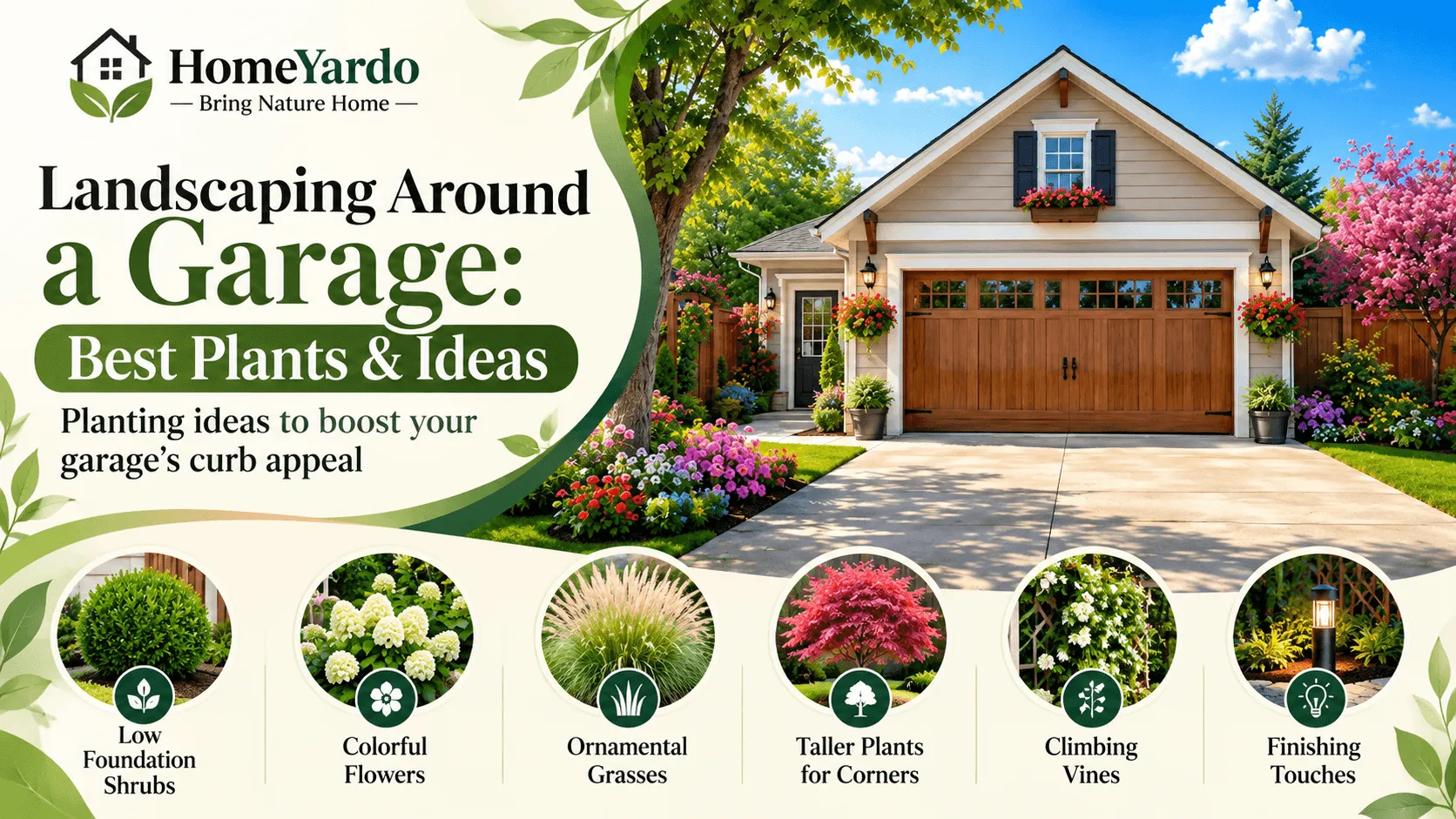
So, which plants should you put around a garage? The best way is to use layers. Place small shrubs on the ground close to the walls. Put taller plants or trees at each corner. It is good to use bright flowers or potted plants near the door. You can also add vines that climb up a trellis. These help make bare walls look better.
Make sure plants stay a few feet from the door and the driveway. Pick plants that will do well in the sunlight and weather where you live.
On many homes, the garage door is a big part of what people see from the street. If there are no plants near it, even the best-looking garage can feel flat and plain. The right kind of landscaping can make the whole house feel warm and complete. These practical ways to improve your home’s curb appeal can also help you coordinate the garage, entrance, walkway, landscaping, and exterior lighting.
This guide helps you know how to plan your space. It tells you which plants to put in each spot. You also get tips on the last steps that can pull the whole look together.
Start With A Simple Garage Landscaping Plan
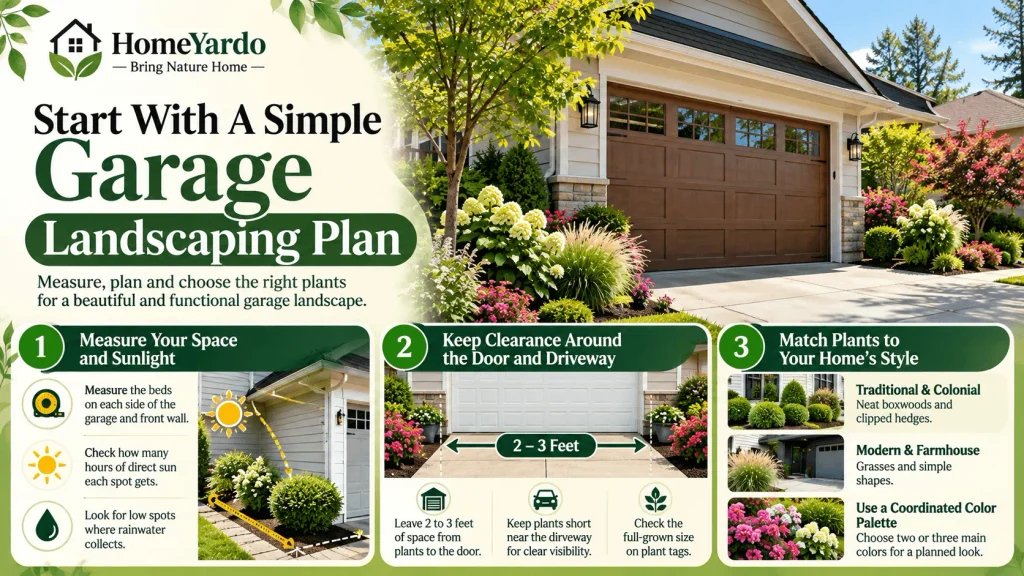
Having a plan ahead of time can help you save money. It also makes sure you do not put the wrong plant in the wrong place. Take some time, maybe a whole afternoon, to look at the area before you buy any plants. This way, you know what will go where and you can avoid mistakes.
Measuring Your Space and Sunlight
- Measure the beds on each side of the garage and on the front wall.
- Watch to see how many hours of direct sun each spot gets during the day.
- Note any low spots where rainwater collects, because some plants do not like to have wet roots.
Keeping Clearance Around the Door and Driveway
- Leave at least 2 to 3 feet of space between fully grown plants and the garage door. Branches that get in the way of the door can scrape the panels or set off the safety sensors. This is a common reason why people call for Residential Garage Door Repair in other busy areas.
- Keep plants short near the driveway so drivers can see kids, pets, and cars or trucks.
- Always check the full-grown size listed on plant tags, not just the size it is in its pot now.
Matching Plants to Your Home’s Style
- Neat boxwoods and clipped hedges work well for the look of traditional and colonial homes.
- Grasses and simple shapes go with the feel of modern and farmhouse styles.
- Choose two or three main colors. This makes the design feel planned, not just put together in any way.
Repeating compatible colors, plant forms, and materials can improve your overall garden aesthetic appeal and help the garage planting feel connected to the rest of the property.
Low Foundation Shrubs That Frame the Garage
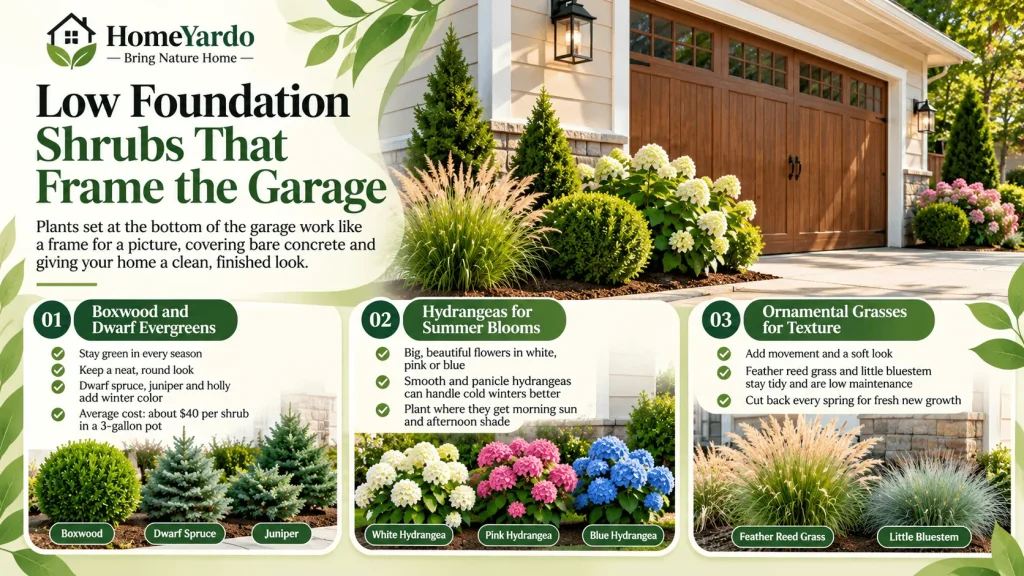
Plants set at the bottom of the garage work like a frame for a picture. They cover up the concrete that shows at the base and give your eyes a clear line to look at.
Boxwood and Dwarf Evergreens
- Boxwood is green during every season and keeps a neat, round look.
- Dwarf spruce, juniper, and holly bring color in winter when most plants lose theirs.
- The average cost is about $40 for each shrub in a 3-gallon pot.
Hydrangeas for Summer Blooms
- Hydrangeas have big flowers that look nice. These flowers can be white, pink, or blue.
- Smooth hydrangea and panicle hydrangea can take cold winters better than bigleaf hydrangea.
- Plant them on the side of the garage where they get morning sun and afternoon shade.
Ornamental Grasses for Texture
- Grasses bring some movement and a soft feel when placed next to the hard walls of the garage.
- Feather reed grass and little bluestem keep a tidy look and do not need a lot of water to grow well.
- Cut these grasses down every spring. This way, you let new and fresh growth come in for the year.
Adding Height At The Garage Corners
Taller plants placed at the corners help to soften the sharp edges of the building. They also make the wide garage door look more balanced. These plants draw your eye up. They help take attention away from the large flat surface.
Small Ornamental Trees
- Japanese maples, dogwoods, and weeping redbuds stay small and give seasonal color.
- Plant them at least 10 feet from the house so there is room for the canopy to spread.
- The average cost is about $150 for a young tree used for its look.
Columnar Evergreens
- Narrow arborvitae and juniper grow tall, so they add height to your yard but do not use up a lot of ground space.
- You can put them in pairs, with one on each corner. This will give your space a neat and balanced feel.
- These plants also help block wind. They make your side yard feel more private.
Keeping Roots Away From Concrete
- Do not plant trees that have tough surface roots, such as silver maple or willow, close to the driveway.
- Find out how far the roots will grow before you plant.
- Talk to a local nursery to see which trees are safe to have near concrete slabs and home foundations.
Flowers and Containers for Seasonal Color
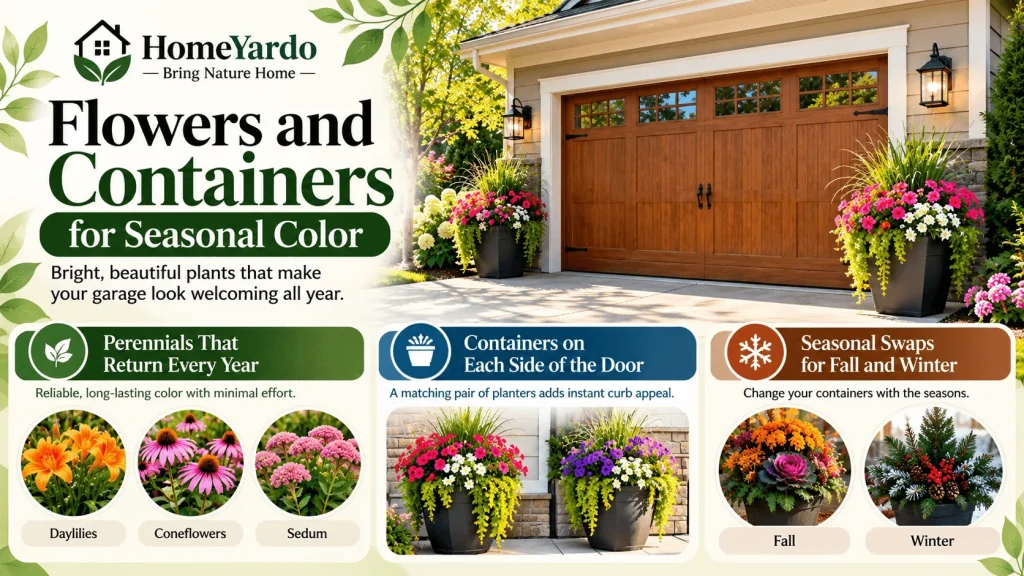
Flowers help make the space by the garage feel alive and full of color. If you mix perennials with containers, you can easily give the area a new look each season. You do not have to dig up and replant all the beds every year.
Perennials That Return Every Year
- Daylilies, coneflowers, and sedum do well in heat, sun, and dry spells.
- Hostas and coral bells can make the shady side of the garage look bright.
- Plant in groups of three or five to make it look full and feel more natural.
Containers on Each Side of the Door
- A matching pair of big planters can help the garage feel like another entry.
- Pick pots that stop frost if you live in a place where it gets cold in winter.
- Typical cost: around $60 for a big outdoor planter.
Seasonal Swaps for Fall and Winter
- Fill containers with mums, ornamental kale, and asters in the fall.
- Switch to evergreen branches, berries, and small conifers for the winter.
- When the ground gets warm again, refresh containers with bulbs and spring annuals.
Climbing Vines and Trellises for Blank Walls
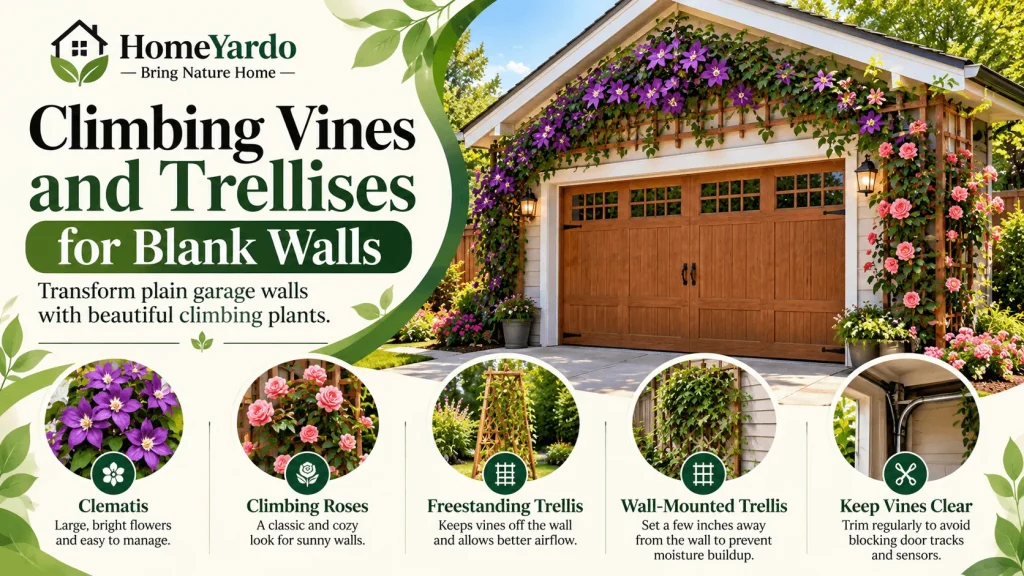
A plain side wall or the space that is over the garage door can look empty. You can put climbing plants on a trellis to make it look better. A trellis will give the space some height and charm. You do not need much ground for this idea.
Best Vines for Garage Walls
- Clematis gives you large, bright flowers. It is easy to keep under control.
- Climbing roses bring a classic and cozy feel by a sunny wall.
- Do not use English ivy or wisteria. They can hurt siding and spread quickly.
Freestanding vs. Wall-Mounted Trellises
- Freestanding trellises help to keep the vines off the wall. They also let air move around.
- Wall-mounted trellises need to be set a few inches away from the wall. This keeps moisture from building up.
- Most good metal trellises cost about $80.
Keeping Vines Clear of the Door
- Cut back the vines so they do not touch the door tracks, hinges, or safety sensors.
- When leaves and stems get stuck in moving parts, the door might not open properly or could go back.
- Do your trimming in spring and fall, and also have a yearly Garage Door Maintenance checkup. A pro will look to see if anything is rubbing the door or getting in the way.
Choosing Plants That Fit Your Climate
A plant that grows well in one state might not do as well in another place. When you look up your USDA hardiness zone before you shop, you help make sure your garage landscaping will last year after year.
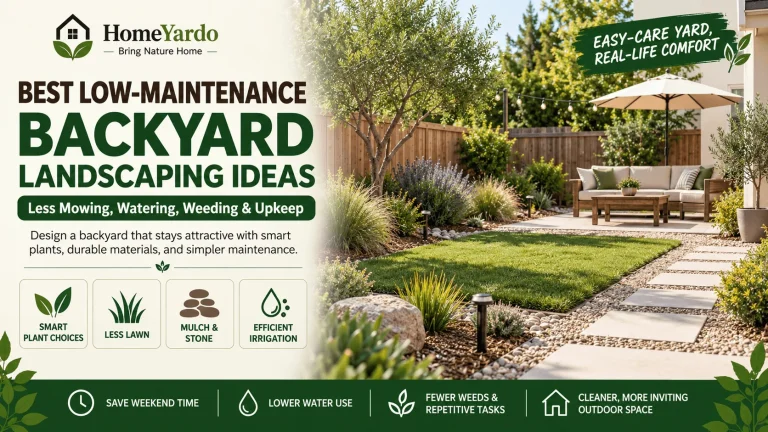
If reducing watering, pruning, and repeated upkeep is a priority, these low-maintenance backyard landscaping ideas can help you choose plants and materials that require less ongoing work.
Cold-Hardy Plants for Northern Winters
- Pick shrubs and perennials that can live in places at least one zone colder than where you are.
- Spirea, ninebark, and panicle hydrangeas do well in very cold weather.
- In late fall, put a thick layer of mulch to keep roots safe.
Heat- and Drought-Tolerant Plants for Warm Regions
- Lantana, salvia, and yucca do well in hot sun and dry soil.
- Put together plants that need about the same amount of water. This saves you time and water.
- Use drip irrigation. It is better than sprinklers that get the garage walls wet.
Plants That Handle Road Salt and Snow Piles
- Plants next to the driveway get covered with salty snow every winter.
- Daylilies, juniper, and rugosa roses handle salt better than other plants.
- Cold, fluctuating weather can hurt both plants and garage door seals. That is why a Garage door company in North Canton, OH often finds the seals at the bottom worn out in early spring.
Mulch, Edging, and Lighting That Finish the Look
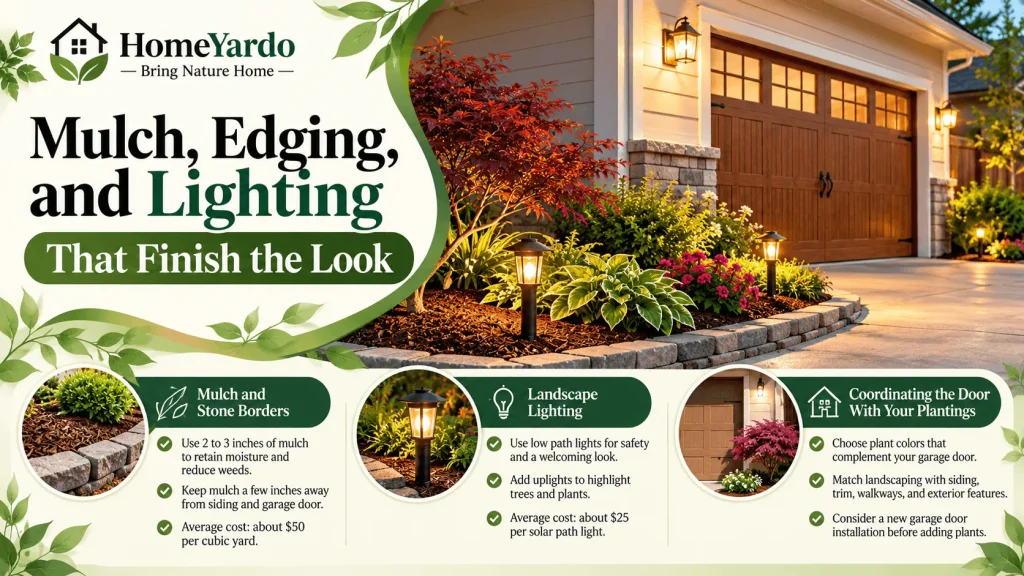
The small things near your plants help your garage bed look nice. You need clean edges, fresh mulch, and soft lighting to have it all come together.
Mulch and Stone Borders
- Spread mulch so it is about 2 to 3 inches thick. This helps hold in water and keep weeds out.
- Keep the mulch a few inches away from the siding and the garage door frame. This will help stop rot and keep bugs out.
- Average cost: about $50 for each cubic yard of bulk mulch.
Landscape Lighting
- Low path lights placed along the driveway can help people see better at night. They make the area safer for you and anyone who comes by.
- Uplights put near the base of small trees can make these trees stand out. They help you show off your plants and make your yard look different at night.
- The average cost for one solar path light is about $25.
Coordinating the Door With Your Plantings
- Pick plant colors that look good with the garage door. For example, burgundy leaves stand out if you have a white door. Landscaping should also work with your siding, trim, garage door, walkways, and other exterior home features so the front of the property feels visually connected.
- A door that is old or has dents can make even nice landscaping feel dull.
- If you want a new Garage Door Installation, get it done before you put any new plants by the driveway. This lets workers have enough space to do their job.
Turning Your Garage Into a Curb Appeal Highlight
A garage does not have to be the most boring part of your home. You can use layered shrubs, some taller plants, and seasonal color to make it look better. Clean finishing details help, too. The garage can then be one of the most attractive parts on your street.
Your Quick Garage Landscaping Checklist
- Measure your beds and see how much sun each side gets.
- Leave 2 to 3 feet of open space at the door and make sure to keep driveway plants low.
- Layer low shrubs, have taller plants at corners, and add seasonal color.
- Pick plants that are right for your climate zone.
A Garage Door That Matches Your New Landscape
- Fresh plants look best when the door next to them is clean, quiet, and works well.
- If your door is dented, faded, or looks worn from the cold, Above & Beyond Door Systems can help you decide whether it needs a small fix or a new one that goes with your curb appeal.
FAQ’s
Bathroom remodeling costs vary by location, project scope, labor, fixtures, materials, plumbing changes, and the condition of the existing room. Keeping the existing layout generally requires less plumbing work than relocating major fixtures.
There is no single most expensive component in every project. Labor, tile work, custom cabinetry, plumbing relocation, premium fixtures, structural repairs, and hidden water damage can each become major cost drivers depending on the project.
Start with the problems the remodel needs to solve. Then determine the project scope, budget, layout, plumbing and electrical requirements before selecting decorative finishes.
Often, yes. Keeping the toilet, shower, bathtub, and vanity near their current plumbing locations can reduce the amount of plumbing modification required. A poor layout may still justify the extra expense of moving fixtures.