
Rodent Control in Cincinnati: Keeping Mice and Rats Out of Older Homes

Older Cincinnati homes have plenty of character, but age can also leave behind openings that mice and rats can exploit. Aging masonry, settling foundations, old utility penetrations, worn door seals, basement gaps, and changes around the roofline can all create possible routes indoors.
That matters in neighborhoods with older housing stock, including Over-the-Rhine, Hyde Park, and Mount Lookout. A house does not have to be dirty or poorly maintained to develop a rodent problem. Sometimes all it takes is a small exterior opening and a protected place inside.
For recurring activity, noises inside walls, or signs that continue after traps have been used, professional rodent control specialist may be appropriate. D-Bug Pest Control provides Cincinnati-focused rodent services that include property inspection, trapping, bait-box monitoring, exclusion work, and prevention guidance.
Its licensed technicians also serve nearby communities, including Anderson Township, Milford, Batavia, Loveland, and Amelia. This makes the company an option for homeowners dealing with a recurring problem rather than a single rodent that wandered indoors.
Why Older Cincinnati Homes Are Vulnerable to Rodents

Rodents are generally looking for three things: shelter, accessible food or water, and a route inside.
Older properties may provide more potential entry points simply because building materials change over time. Mortar can deteriorate. Foundations can settle. Seals become brittle. Utility work may leave openings around pipes, cables, or conduits.
The answer is not to assume every old Cincinnati house has a rodent problem. It is to know which areas deserve closer inspection.
Common Entry Points in Older Homes
Start by checking places where one building material meets another or where something passes through the exterior of the house.
Common areas include:
- Gaps around plumbing and utility lines
- Foundation joints and cracks
- Basement windows and window wells
- Worn exterior door sweeps
- Garage-door edges and corners
- Damaged vent covers or screens
- Loose soffits
- Gaps around roof returns
- Openings around cables and conduits
Do not judge an opening only by whether it looks large enough for a rodent at first glance. Small gaps deserve attention, especially when droppings, gnawing, nesting material, or repeated activity is found nearby.
How Cincinnati Weather and Dense Neighborhoods Affect Rodent Activity
Local surroundings can affect where rodents travel.
Alleys, shared walls, mature landscaping, outdoor trash storage, neighboring structures, construction, and renovation work can all change available shelter and travel routes.
Weather can change those patterns too. Heavy rainfall may make dry indoor spaces more attractive, while colder conditions can encourage rodents to seek protected areas such as wall voids, crawl spaces, garages, basements, and attics.
This is one reason prevention should focus on the entire building envelope rather than a single room where evidence happens to appear.
Signs of Mice or Rats in Your Home
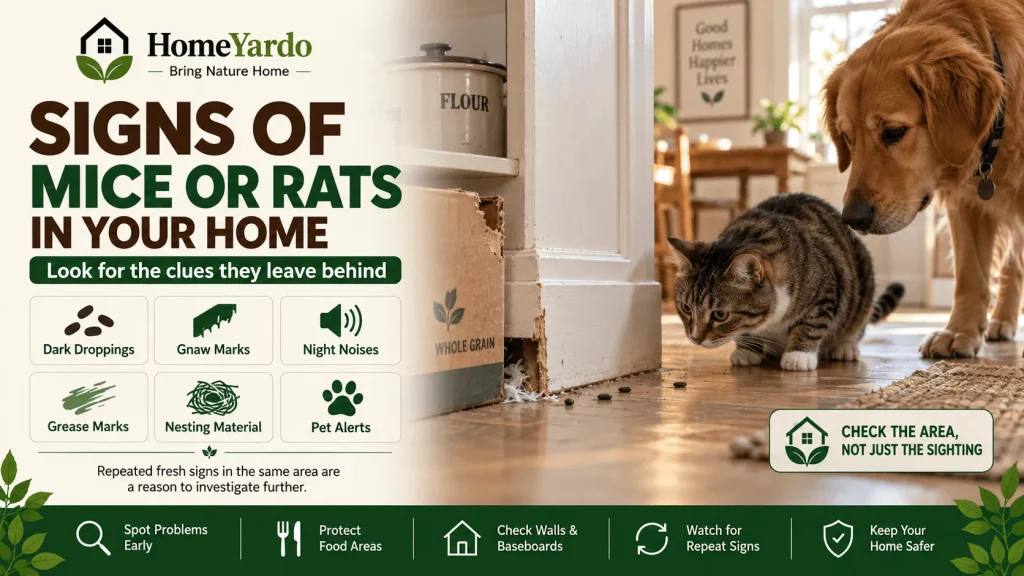
You may never see the animal itself.
Rodents are often noticed through the evidence they leave behind. Look for:
- Dark droppings near cabinets, baseboards, stored food, or appliances
- Fresh gnaw marks on food packaging, cardboard, wood, insulation, or other materials
- Scratching, running, or rustling sounds in walls or ceilings, particularly at night
- Dark rub or grease marks along frequently used routes
- Shredded paper, fabric, cardboard, or insulation gathered into nesting material
- Persistent musky or ammonia-like odors in enclosed spaces
- Pets repeatedly sniffing, staring at, or pawing at the same wall, cabinet, or appliance area
One isolated clue cannot tell you how extensive the activity is.
Several fresh signs appearing repeatedly in the same part of the home are a stronger reason to investigate the surrounding rooms and exterior.
Where to Check for Rodent Entry Points
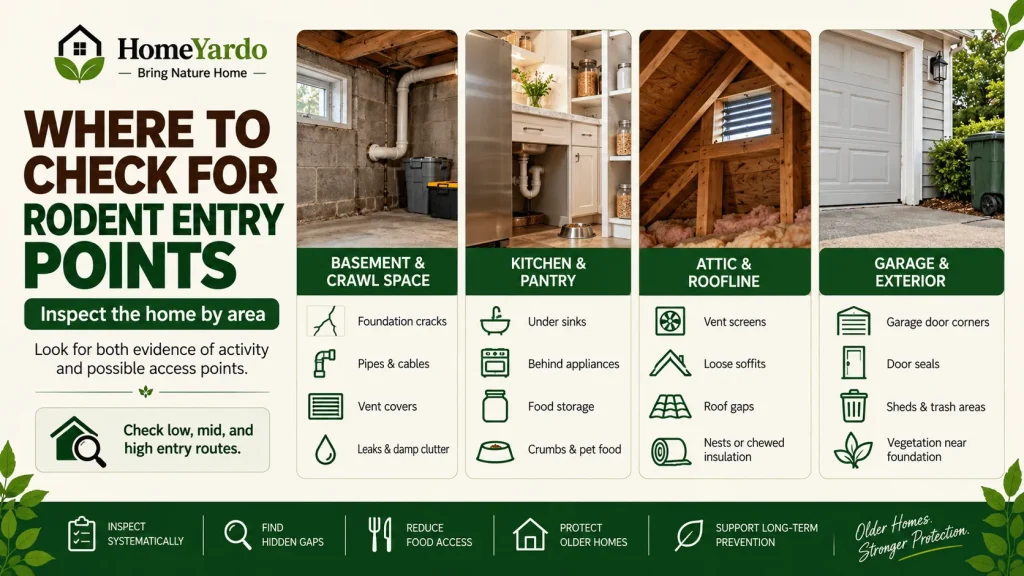
A systematic inspection is more useful than placing traps wherever a mouse happened to be seen.
Work through the house by area and look for both evidence of activity and possible access points.
Basement and Crawl Space
Start low.
Inspect foundation joints, visible cracks, basement windows, vent covers, utility penetrations, floor-level openings, and spaces around pipes and cables.
Pay attention to moisture as well. Plumbing leaks, damp materials, cardboard storage, and clutter can make secluded areas more suitable for nesting.
If the basement regularly takes on water, the moisture problem deserves separate attention. A properly functioning sump pump can form part of a broader basement-water management plan.
Kitchen and Pantry
Food storage areas deserve close attention because even small amounts of accessible food can support rodent activity.
Inspect beneath sinks and behind refrigerators, ranges, dishwashers, and other large appliances.
Store grains, cereals, snacks, birdseed, and pet food in durable containers with secure lids rather than relying on thin bags or cardboard packaging.
Clean crumbs and spills promptly, and avoid leaving pet food accessible overnight.
Attic and Roofline
Some entry routes are above eye level.
From a safe position on the ground, look for damaged vent screens, loose soffits, gaps around roof transitions, and tree branches touching or hanging over the roof.
Inside an accessible attic, possible evidence can include droppings, disturbed insulation, nesting material, or chewed materials.
Do not climb onto a roof or enter an unsafe attic simply to complete an inspection. Areas that cannot be inspected safely are better assessed by an appropriate professional.
Garage and Exterior
Garages can provide a transition point between outdoors and the living space.
Inspect the bottom and corners of the garage door, side doors, exterior storage areas, sheds, trash areas, woodpiles, and dense vegetation near the foundation.
If daylight is visible around a closed garage door, inspect the seal. Proper garage door weather stripping can reduce openings used by rodents and other small pests while also limiting drafts and moisture.
How to Prevent Rodents in an Older Cincinnati Home

Rodent prevention works best as a combination of exclusion, food management, moisture control, sanitation, and continued inspection.
Seal Gaps With Rodent-Resistant Materials
Finding a gap is only half the job. The repair must also suit the opening and surrounding building material.
Foam alone is not appropriate for every exterior repair because exposed material may be vulnerable to chewing, movement, or weather.
Larger openings, deteriorated masonry, vents, roofline defects, or structural gaps may require a more durable repair or professional assessment.
Before closing an opening, also consider whether rodents may already be using the space. Sealing an active route without addressing animals inside can create a different problem.
Repair Doors, Windows, and Garage Seals
Exterior doors should close without obvious gaps around their edges or corners.
Replace worn door sweeps, damaged weatherstripping, and torn screens. Check basement windows and garage doors as part of the same inspection.
These repairs can help with more than pest prevention. They may also reduce unwanted air and moisture movement around the building envelope.
Remove Accessible Food Sources
Rodent prevention does not require an immaculate kitchen, but readily available food makes a property easier for rodents to use.
Keep dry food and pet food securely stored. Clean spilled ingredients, crumbs, grease, and food debris from counters, floors, cabinets, and spaces beneath appliances.
Outdoor birdseed and animal feed should also be stored in containers that are difficult for rodents to access.
Control Basement and Foundation Moisture
Repair plumbing leaks and investigate persistent dampness rather than simply drying the visible water.
Outside, check whether water is regularly collecting beside the foundation. Poor yard drainage can contribute to wet basement or crawl-space conditions and should be addressed as part of broader property maintenance.
Where a basement remains humid despite correcting water sources, appropriate humidity control may help keep the space drier.
Reduce Outdoor Hiding Places
Dense vegetation, brush, clutter, and poorly managed storage can provide protected areas close to the house.
Trim heavy growth where appropriate, remove unnecessary clutter, and avoid stacking loose materials directly against exterior walls.
Firewood should be stored off the ground and positioned so the area around it can be inspected.
Reinspect the Home After Weather or Construction
Exclusion is not necessarily permanent.
Major storms, excavation, landscaping, utility work, renovation, or foundation repairs can expose new openings or change existing ones.
A quick exterior inspection after significant work can catch a developing problem before rodents establish a regular route indoors.
Safe Cleanup After Finding Rodent Droppings or Nests
Finding droppings often creates an understandable urge to grab a broom or vacuum cleaner. Avoid cleaning dry rodent waste that way.
When practical, ventilate the affected space before cleanup. Wear rubber or plastic gloves and wet contaminated material thoroughly with an appropriate household disinfectant. Allow the disinfectant to remain on the material according to its product directions before wiping it up.
The CDC’s rodent cleanup guidance also advises disinfecting contaminated material before removal and describes precautions for disposing of dead rodents and nesting material.
Large accumulations of waste, contaminated insulation, difficult-to-access areas, or suspected contamination involving heating and cooling systems deserve more caution. Professional cleanup may be more appropriate in those situations.
Wash gloved hands before removing the gloves, then wash bare hands after the gloves are removed.
When DIY Traps Are Not Enough
A trap addresses the rodent that encounters it. It does not repair the opening that allowed the animal inside.
If signs disappear and then return, there may be an unresolved entry route or another condition supporting activity.
Recurring droppings, repeated nighttime noises, activity in several rooms, inaccessible wall or ceiling spaces, persistent odors, or continued evidence after trapping are reasons to look beyond individual traps.
The response may need to combine:
- Inspection
- Exclusion
- Trapping or other appropriate control methods
- Food-source management
- Moisture correction
- Sanitation
- Follow-up monitoring
Any traps or bait products used around a home should be positioned and handled according to their label directions and kept inaccessible to children and pets.
What Professional Rodent Control Should Include
Professional rodent work should begin with understanding the property rather than simply putting down more traps.
A useful inspection should try to determine where activity is occurring, how rodents may be entering, what conditions are supporting them, and whether the evidence points to an isolated event or recurring activity.
Depending on the property and findings, a rodent-control plan may include trapping, secured bait-box monitoring, exclusion repairs, sanitation recommendations, and follow-up inspections.
For Cincinnati homeowners comparing providers, ask what the inspection covers, whether entry-point repairs are included or quoted separately, what follow-up is provided, and what homeowners need to change around the property.
That distinction matters. Removing rodents without addressing their access route can leave the house vulnerable to another round of activity.
Rodent Prevention for Cincinnati Renters and Property Managers
Rodent activity in a multi-unit property may extend beyond one apartment.
Shared walls, utility chases, basements, common trash areas, neighboring units, and structural openings can allow activity to cross individual unit boundaries.
Renters should document visible evidence such as droppings, damaged screens, openings, water leaks, and gnaw marks. Report the problem in writing to the landlord or property manager and retain copies of the communication.
Property managers should avoid treating each complaint as automatically isolated. When evidence suggests movement through shared building areas, inspection may need to cover more than the reporting unit.
For rat concerns inside or around a building, Cincinnati residents can also use the city’s rat problem or infestation request process to report an issue and request an inspection when applicable.
A 30-Minute Rodent Prevention Checklist
You do not need to dismantle the house to perform a useful first check.
Set aside about half an hour and:
- Walk around the foundation and note visible cracks, gaps, or damaged seals.
- Inspect exterior doors and the bottom corners of the garage door.
- Look beneath sinks and behind accessible large appliances.
- Check for fresh droppings, gnaw marks, odors, or nesting material.
- Put exposed pantry items, birdseed, and pet food into secure containers.
- Check the basement or crawl space for leaks and persistent dampness.
- Move clutter or stored material away from exterior walls where practical.
- Write down repairs rather than trying to remember them later.
- Prioritize openings located close to fresh evidence of rodent activity.
- Recheck repaired areas over the following weeks.
A short inspection repeated periodically is usually more useful than waiting until obvious activity returns.
Keeping an Older Cincinnati Home Rodent-Resistant
Rodent prevention is rarely about one trap or one repair. It is about making the property harder to enter and less useful once a rodent reaches it.
For Cincinnati homeowners, that means paying particular attention to aging foundations, utility penetrations, basement moisture, exterior seals, garages, rooflines, food storage, and sheltered areas around the property.
Inspect first. Correct accessible food and moisture problems. Repair durable entry points. Then continue monitoring the areas where evidence was originally found.
That approach gives older homes something they did not necessarily have when they were built: a prevention plan designed around how the property is being used today.
FAQ’s
Mice can use very small openings, so do not rely on visual size alone when inspecting a home. Pay particular attention to gaps around pipes, vents, door corners, utility penetrations, foundation joints, and places where different building materials meet.
Not necessarily. One sighting does not reveal how many rodents are present. Repeated droppings, gnaw marks, sounds, odors, nesting material, or additional sightings provide stronger evidence that activity is continuing.
Trapping can remove animals already indoors without correcting the entry point. Recurring activity often means the property needs to be inspected for gaps, accessible food, moisture, nesting areas, or other conditions that continue to support rodents.
Age alone does not determine whether a house will have rodents. Older properties can, however, develop gaps through masonry deterioration, settling, aging seals, utility penetrations, and previous alterations. Regular inspection can help identify these openings.
Start with the basement or crawl space, kitchen, attic, garage, exterior doors, utility penetrations, foundation joints, and roofline. Look for entry points and evidence of activity together rather than inspecting them separately.
A properly fitted garage-door seal can reduce gaps around the bottom and perimeter of the door. It should be treated as one part of exclusion because rodents may also enter through walls, utility openings, foundations, vents, or adjoining structures.
Do not automatically close every suspected opening without considering whether rodents are already inside. Active entry routes may need to be managed as part of a trapping and exclusion plan so animals are not inadvertently confined within inaccessible areas.
Professional help is worth considering when activity keeps returning, evidence appears in several areas, rodents seem to be moving inside walls or ceilings, the entry route cannot be located, or safe cleanup and exclusion are beyond what you can reasonably handle.
Ask how the property will be inspected, how entry points are identified, which control methods may be used, whether exclusion work is included, how children and pets are considered, what follow-up monitoring is provided, and which homeowner repairs or sanitation changes are recommended.