Loft Vs Apartment Living: Pros, Cons, And Key Differences
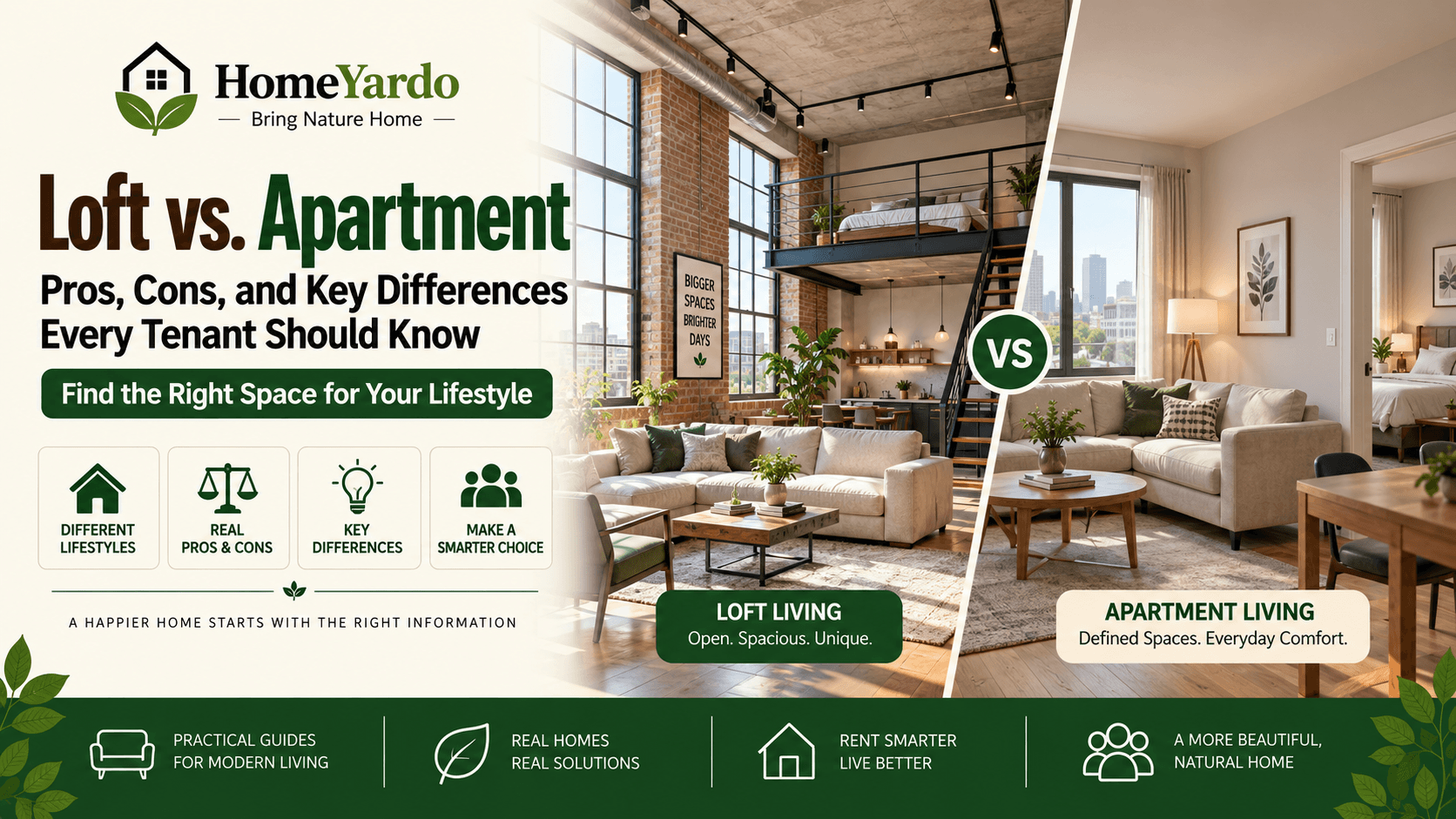
There are so many things you need to know about renting a home, and a major one is the difference between a loft and an apartment. The truth is, the type of home you choose can seriously impact your daily routine, your privacy, and even your finances. Besides, while they’re both amazing places to live, lofts and traditional apartments will give you very different living experiences. So you need to know exactly what you want before going ahead and signing a lease. You can consult with a Baltimore property management company to help you navigate the lease terms and utility expectations before signing.
What Is A Loft?
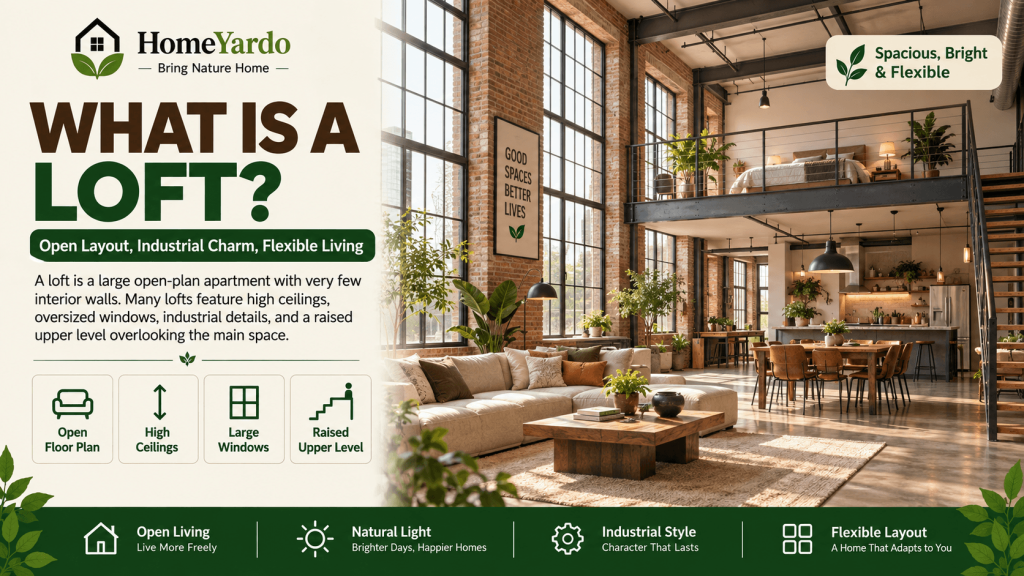
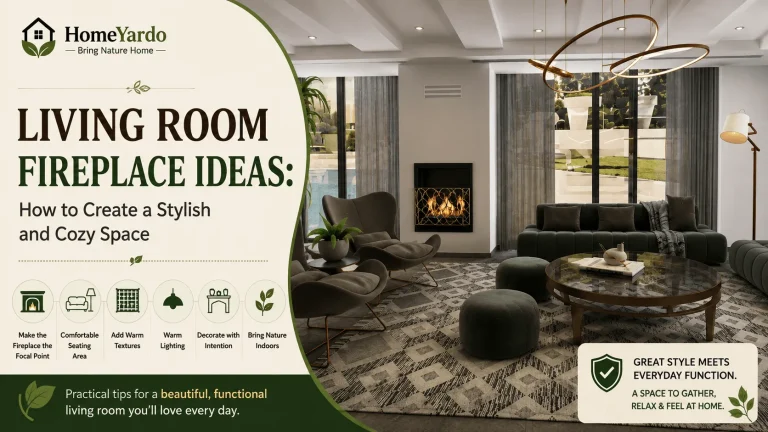
A loft is an apartment that has a large, open floor plan and very few interior walls. Basically, instead of you having separate rooms for your living area, dining space, or bedroom, you’ll have a big, spacious area that combines them all. Fun fact: lots of lofts were originally warehouses or industrial buildings that got converted, so you’ll see things like exposed brick walls, visible pipes and beams, oversized windows, and really high ceilings. In addition, a key feature you should know is that a loft has a raised second floor which usually overlooks the main floor and isn’t separated by any doors or walls.
What Is A Traditional Apartment?
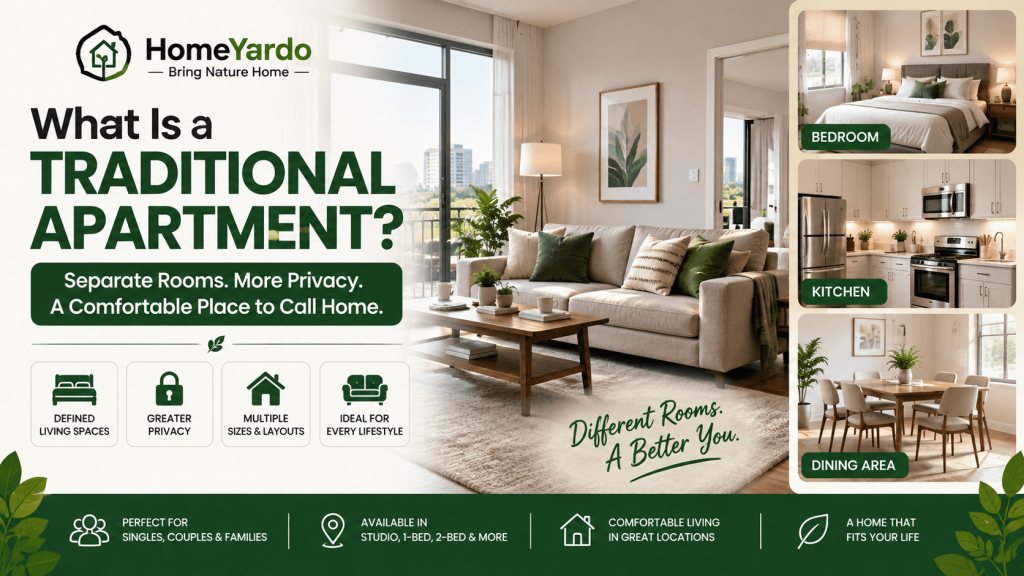
A traditional apartment, on the other hand, is an apartment with lots of structure and privacy. Rather than having a really large open room, you’ll have separate rooms that serve different purposes. For instance, your bedroom will have walls and a door, your kitchen may be partially or completely enclosed, and your living room will have its own space entirely. Apart from this, a traditional apartment comes in many sizes. So you could have a studio apartment, a one-bedroom, two-bedroom, or even a larger unit.
Pros And Cons Of Each Option
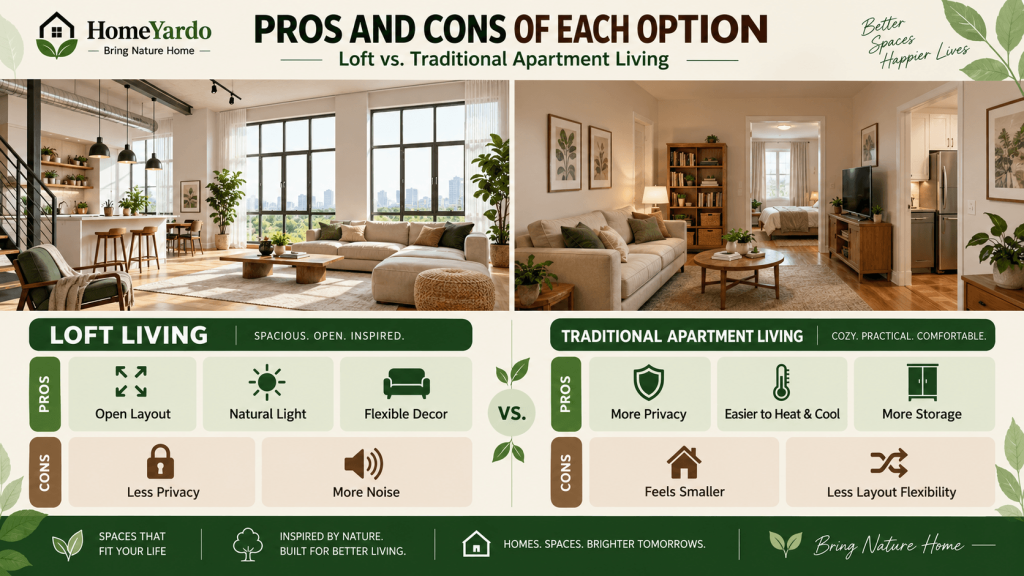
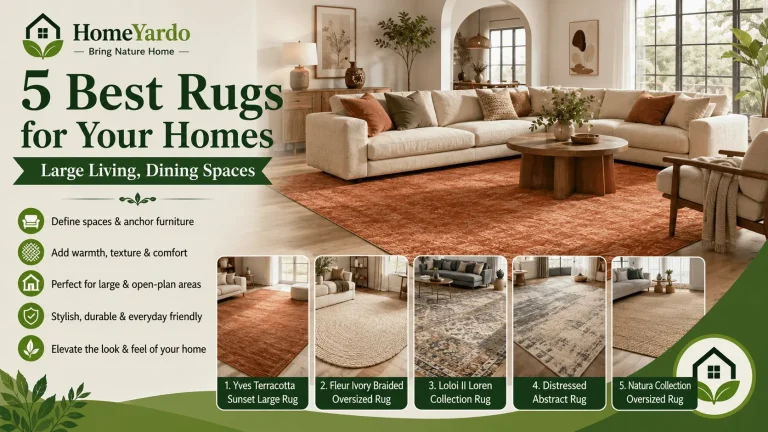
Lofts and traditional apartments can offer very different day-to-day living experiences, even when they have similar square footage. The better fit depends on how much you value privacy, open space, storage, natural light, and flexibility. Your furniture choices also matter because an open loft often relies on sofas, shelving, rugs, and other pieces to create separate living zones. If you are planning a new layout, this guide on how to choose furniture can help you select pieces that fit the available space without making it feel crowded.
Loft Living
One of the biggest advantages you’ll enjoy from your loft is how open it is. If you hate feeling boxed in, you’ll love the high ceilings and spacious design. Natural light is also another really cool benefit because your loft can have large windows that’ll brighten up your entire space.
That’s not all! Another thing you’ll enjoy is flexible decorating. Since there aren’t many walls, you can arrange your furniture to your taste instead of using a fixed layout. However, lofts aren’t ideal for everyone. For starters, because everything is connected, noise will travel easily through your apartment. For example, if someone is watching TV when you’re trying to sleep, the noise will definitely get to you. In addition, you’ll have less privacy since your sleeping area is pretty visible from the rest of the home.
Traditional Apartment Living
Traditional apartments are perfect if you like privacy and organisation. For instance, you’ll love the structure that comes with knowing your bedroom and living room aren’t in the same space. Besides, they’re also much easier for you to heat and cool due to your rooms being enclosed and separated. Plus, they have more storage space too.
On the other hand, the downside is that your traditional apartment could feel smaller, even if it has a similar square footage to a loft. Also, your extra walls will naturally reduce the sense of openness. In addition, you won’t be able to change your furniture layout as often as you’d like.
The Decision Factors
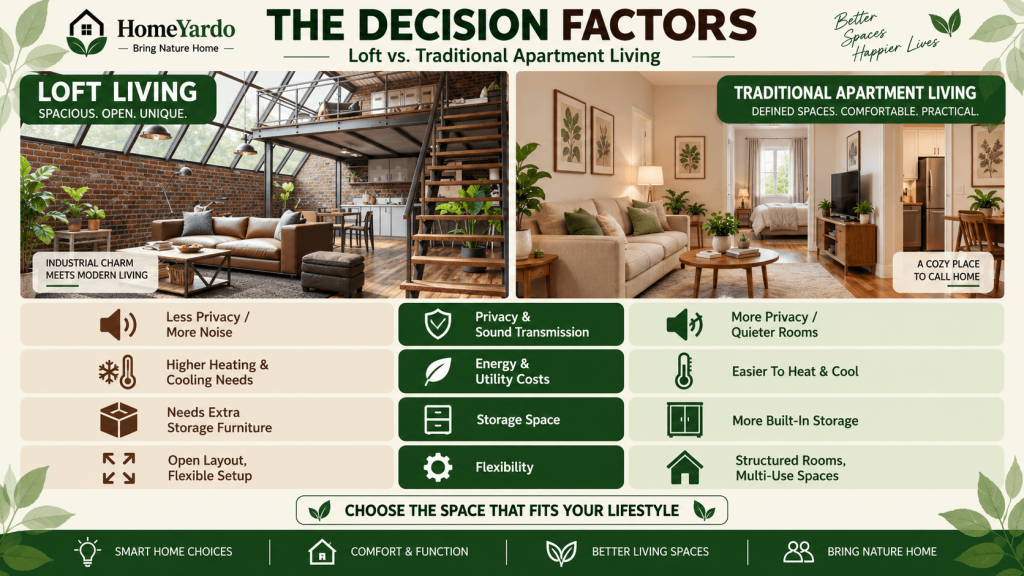
Choosing between a loft and a traditional apartment is easier when you compare the features that affect everyday living. Privacy, noise, utility costs, storage, and layout flexibility can all change how comfortable a rental feels over time. The right choice depends less on which option looks better and more on how well the space fits your routine, household size, budget, and need for personal space.
Privacy & Sound Transmission
Privacy is one huge difference you’ll definitely experience between a loft and a traditional apartment. So if you choose a loft, you’ll hear almost everything that’s going on in your home because there are barely any walls to block out the sound. Of course, that might not bother you if you live alone, but it can get overwhelming if you’re sharing the space with a partner, roommate, or family member.
A traditional apartment will give you the separation you need for privacy and to reduce noise transmission. For example, you’ll be able to close your bedroom door when you want some quiet, or just enjoy a little personal space.
Energy & Utility Costs
When evaluating a loft vs apartment, keep in mind that ceilings and windows can lead to different heating and cooling costs. The truth is, your monthly utility bills vary based on the size and design of your home. For instance, the high ceilings and large windows that’ll make your loft feel bright and spacious also need more energy to heat or cool.
Alternatively, traditional apartments often have lower ceilings and smaller enclosed rooms, which makes it easier for you to maintain your indoor temperatures and avoid unexpected utility costs.
Storage Space
Lofts are more space-oriented than storage-focused. Thus, you’ll need to buy lots of storage units such as wardrobes, shelving units, and cabinets to organise your belongings. However, traditional apartments come with their own built-in storage from the get-go, and their structure helps keep your home organized without buying additional furniture.
Flexibility
If you love decorating and moving things around a lot, a loft will let you do just that because of its open layout. Traditional apartments, on the other hand, are pretty flexible because of their structure. Thus, your spare rooms can serve different purposes as time passes, such as converting a guest room into a nursery or a spare bedroom into a dedicated workspace.
Conclusion
At the end of the day, choosing between a loft and a traditional apartment all comes down to how you want to live. If you love open spaces, natural light, and flexibility, a loft is the better option for you. However, if privacy, storage, and clearly defined rooms matter more to you, then a traditional apartment will meet your needs better. Don’t forget to weigh each option carefully before you sign your lease so you’ll choose a home that fits what you’ve been looking for.
FAQ
A loft usually has an open floor plan, fewer interior walls, and often higher ceilings and larger windows. A traditional apartment generally has more defined rooms and greater separation between living and sleeping areas. A loft is technically a type of apartment, but its layout and architectural style are different from most conventional apartment units.
Not necessarily. Loft rent depends on location, building type, square footage, amenities, demand, and condition. Converted historic lofts in desirable neighborhoods can command higher rents, while other loft-style units may be similarly priced to conventional apartments nearby. Compare total housing costs rather than relying on the property type alone.
They can be, particularly for couples who enjoy open living and do not need much separation between activities. Couples with different work schedules, sleep routines, or privacy needs may find a traditional apartment with an enclosed bedroom more comfortable.
Some families enjoy loft living, but the limited number of interior walls can make privacy, sleep schedules, storage, and noise management more difficult. Families should assess the actual layout rather than assuming the large open floor area will function like several separate rooms.