6 Simple Ways To Make Your Home Feel More Personal
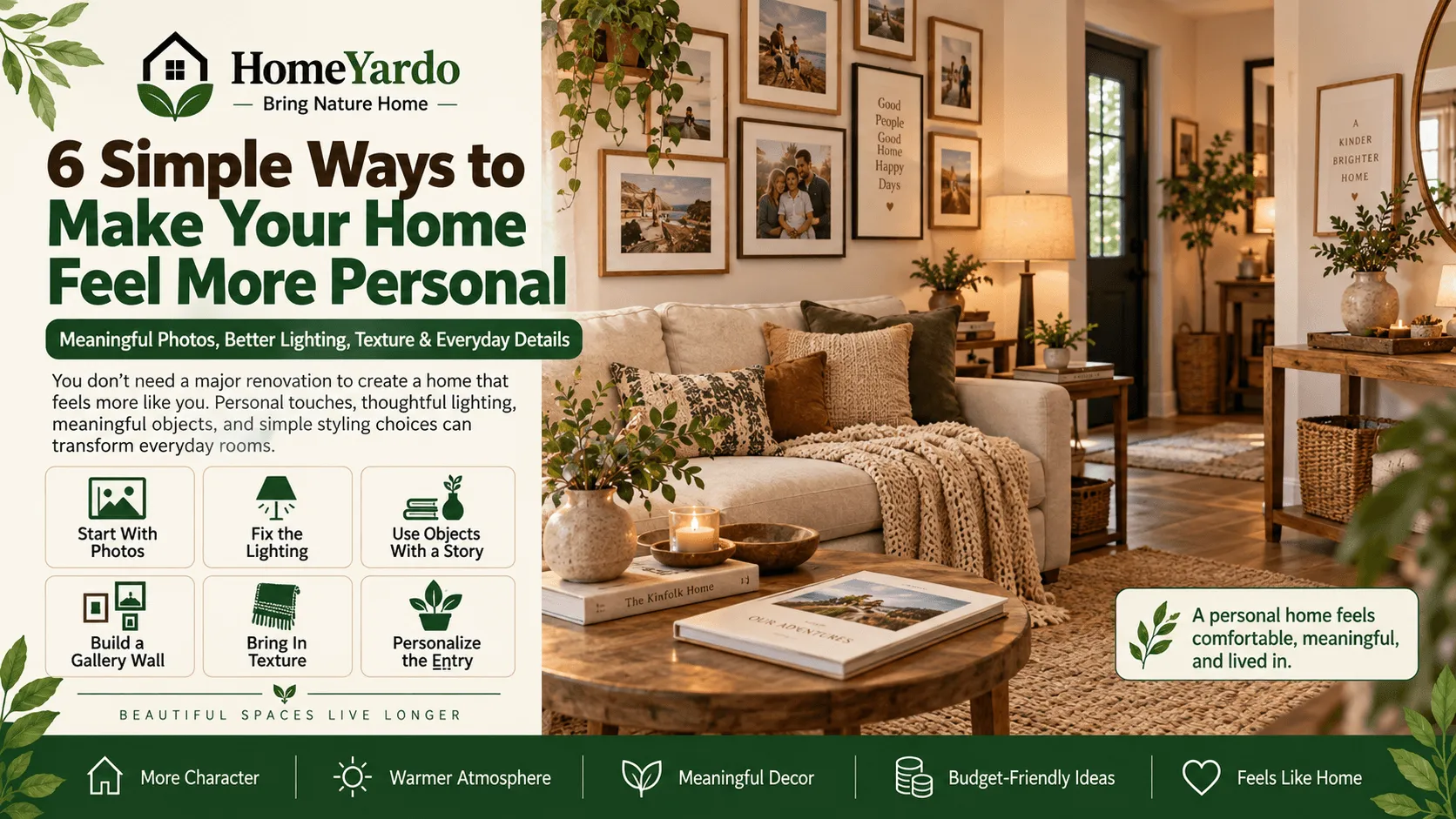
A house can be beautifully furnished and still feel like a hotel room. When every surface looks like it came from a furniture catalog, a space may lack the personal details that make it feel like home.
The good news? You don’t need expensive furniture, professional decorating services, or a major renovation to change that.
Learning how to personalize your home starts with choosing decorations that reflect your personality, experiences, interests, and everyday routines.
A 2014 Houzz Decorating Trends Survey involving 1,715 users in the United States and Canada found that 84% considered personal taste a major factor in their decorating choices. Comfort influenced 75%, while only 15% prioritized current decorating trends.
Although these figures come from an older survey of Houzz users rather than a representative sample of all homeowners, they illustrate an important decorating principle: personal preferences deserve more attention than passing trends.
Whether you’re decorating a new apartment or refreshing a family home, these six practical ideas can help you create a space that feels more personal without overspending.
1. Start With Photos, Not Decor
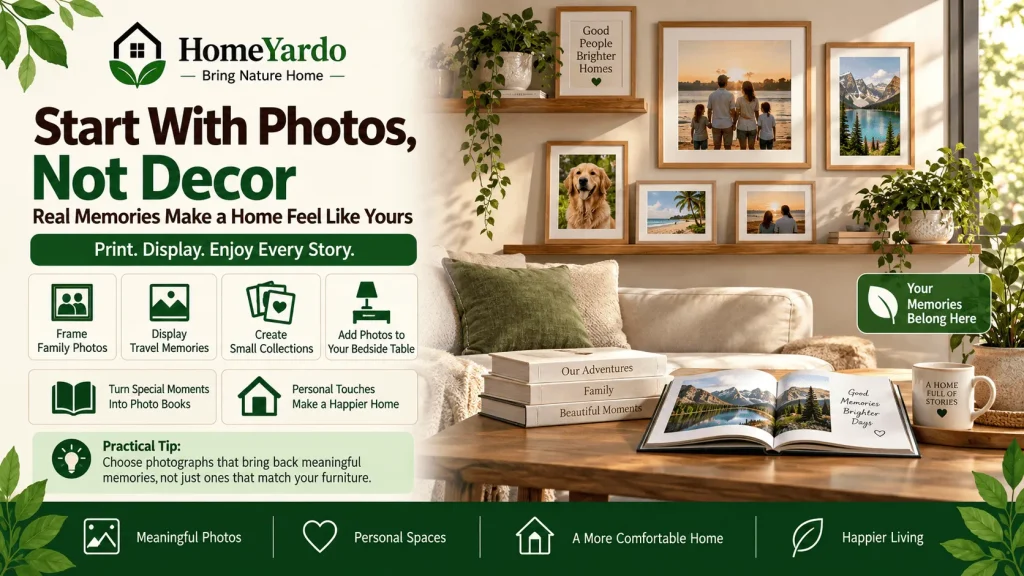
Family photographs, travel memories, and meaningful pictures are among the easiest ways to make a home feel more personal.
Unlike generic decorations, personal photographs have stories behind them. They remind you of people, places, celebrations, and experiences that matter.
However, photographs stored on your phone cannot contribute much to your home’s appearance. Printing and displaying your favorites gives those memories a physical place in your living space.
Turn Your Favorite Memories Into Home Decorations
You don’t need to cover every wall with photographs.
Choose a few meaningful pictures and display them where you’ll enjoy seeing them regularly.
Consider these simple ideas:
- Frame family photographs and arrange them on a living room shelf.
- Display vacation pictures in your bedroom or hallway.
- Create a small collection of childhood photographs.
- Place meaningful pictures on your bedside table.
- Turn important celebrations into printed photo albums.
Photo books are particularly useful when you want to display several pictures without filling your walls.
Custom Mixbook photo books are one option. You can upload your favorite photographs, organize them into a layout, and create a physical book for your coffee table or bookshelf.
A collection of vacation photographs, family celebrations, or important milestones can become something you regularly enjoy rather than a forgotten folder on your phone.
Photo books also work well for renters because they require no wall modifications.
Practical tip: Choose photographs that bring back meaningful memories rather than selecting pictures solely because their colors match your furniture.
2. Fix the Lighting Before Anything Else
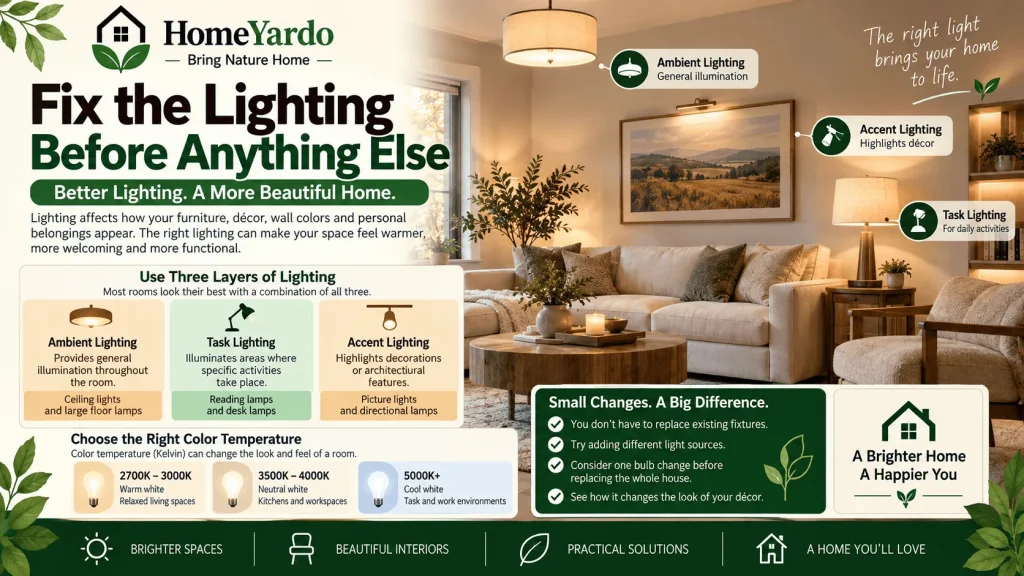
Lighting affects how furniture, decorations, wall colors, and personal belongings appear.
A beautiful piece of artwork can look unremarkable under harsh overhead lighting. The same artwork may become a focal point when illuminated by a carefully positioned lamp.
You don’t necessarily need to replace existing fixtures. Adding different light sources can make a room feel warmer and more welcoming.
Use Three Layers of Lighting
Most rooms benefit from combining three types of lighting.
| Lighting Type | Purpose | Examples |
|---|---|---|
| Ambient lighting | Provides general illumination throughout the room | Ceiling lights and large floor lamps |
| Task lighting | Illuminates areas where specific activities take place | Reading lamps and desk lamps |
| Accent lighting | Highlights decorations or architectural features | Picture lights and directional lamps |
Combining these layers gives you more control over how your space looks and functions.
For example, a living room might have a ceiling fixture for general lighting, a floor lamp beside your favorite chair, and a small accent light illuminating framed photographs.
If you’re considering a decorative ceiling fixture, our guide to choosing a chandelier explains how size, placement, and lighting requirements affect the result.
Choose Lighting That Matches Your Preferred Atmosphere
Color temperature also influences the appearance of a room.
Bulbs are generally classified according to their color temperature, measured in Kelvin.
- 2700K–3000K: Warm white lighting suitable for relaxed living spaces.
- 3500K–4000K: Neutral to cool white lighting that can work well in kitchens and workspaces.
- 5000K and above: Cooler, daylight-like lighting suitable for certain tasks and work environments.
Warm lighting is often a comfortable choice for living rooms and bedrooms, although personal preference and task requirements should determine your selection.
Try replacing one existing bulb before purchasing replacements for the entire house.
A small lighting adjustment may change how your existing decorations look without requiring additional furniture.
3. Use Objects With a Story, Not Just a Function

One of the simplest ways to personalize a home is to display objects that represent your experiences and interests.
A beautifully decorated room can still feel impersonal when every object has been purchased simply to match a particular decorating style.
Meaningful belongings introduce something that cannot be copied from a furniture showroom: your personal history.
You might already own several suitable items.
Examples include:
- A ceramic bowl purchased during a memorable vacation.
- A collection of books you’ve enjoyed reading.
- A piece of furniture inherited from a family member.
- Handmade decorations created by your children.
- Artwork purchased from a local artist.
- Souvenirs representing important experiences.
These belongings don’t necessarily need to match your existing furniture.
Their value comes from the memories and personal connections associated with them.
Create a Small Display of Meaningful Belongings
Start with a bookshelf, side table, or another surface that has enough space for a few decorative objects.
Choose three or four items that have personal significance.
Arrange them together while varying their heights, sizes, and materials.
For example, you could place a framed photograph beside your favorite book and a handmade ceramic ornament.
Leave some empty space around the arrangement so each object remains visible.
If your living room contains a fireplace, its surrounding area may also offer an opportunity to display meaningful decorations. Our collection of living room fireplace ideas includes additional inspiration for arranging decorative elements.
Keep combustible decorations away from fireplaces and other heat sources according to the manufacturer’s safety instructions.
Remember: Personalizing a home doesn’t mean displaying everything you own. A few thoughtfully selected belongings can communicate more than an overcrowded collection.
4. Build a Gallery Wall With Intention
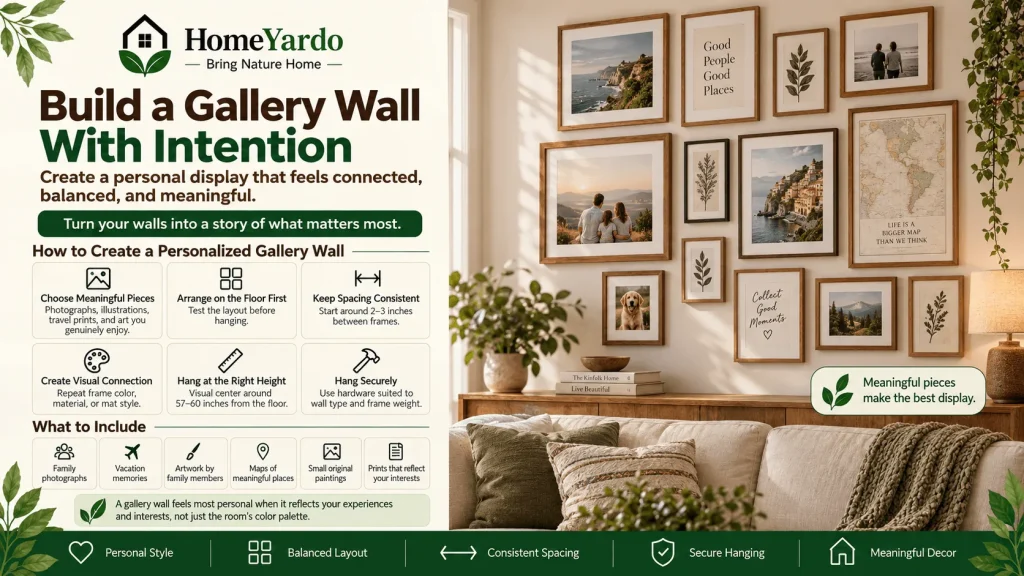
A gallery wall allows you to combine photographs, artwork, illustrations, and other meaningful pieces in one place.
Instead of purchasing an expensive statement decoration, you can create a collection that reflects your experiences and interests.
The challenge is arranging different pieces so they look connected rather than randomly positioned.
Fortunately, you don’t need professional decorating experience to create an attractive arrangement.
How to Create a Personalized Gallery Wall
Follow these steps before hanging anything.
Step 1: Select meaningful artwork and photographs.
Choose photographs, illustrations, travel prints, or artwork you genuinely enjoy.
Try combining personal photographs with one or two other decorative pieces.
Step 2: Arrange everything on the floor.
Position your frames on the floor before transferring the arrangement to your wall.
Experiment with different combinations until you find a layout that feels balanced.
Step 3: Maintain consistent spacing.
Start with approximately two to three inches between frames.
You can adjust the spacing depending on their dimensions and the overall arrangement.
Step 4: Establish a visual connection.
Your frames don’t need to be identical.
However, repeating a particular frame color, material, or mat style can help the collection look coordinated.
Step 5: Choose the correct hanging position.
For a gallery wall intended to be viewed while standing, placing the arrangement’s visual center approximately 57–60 inches above the floor is a useful starting point.
Adjust the height when hanging artwork above furniture or in rooms where people are usually seated.
Step 6: Hang your artwork securely.
Use hanging hardware appropriate for your wall material and the weight of each frame.
Renters can consider lightweight frames and suitable removable hanging products, provided the products are compatible with their walls and used within their stated weight limits.
What Should You Include in a Gallery Wall?
Your collection might include:
- Family photographs
- Pictures from memorable vacations
- Artwork created by family members
- Maps of meaningful destinations
- Small original paintings
- Prints representing your interests
Avoid choosing every piece simply because it matches the room’s color palette.
A gallery wall becomes more personal when its contents represent your interests rather than a particular decorating trend.
5. Bring Texture Into Neutral Rooms
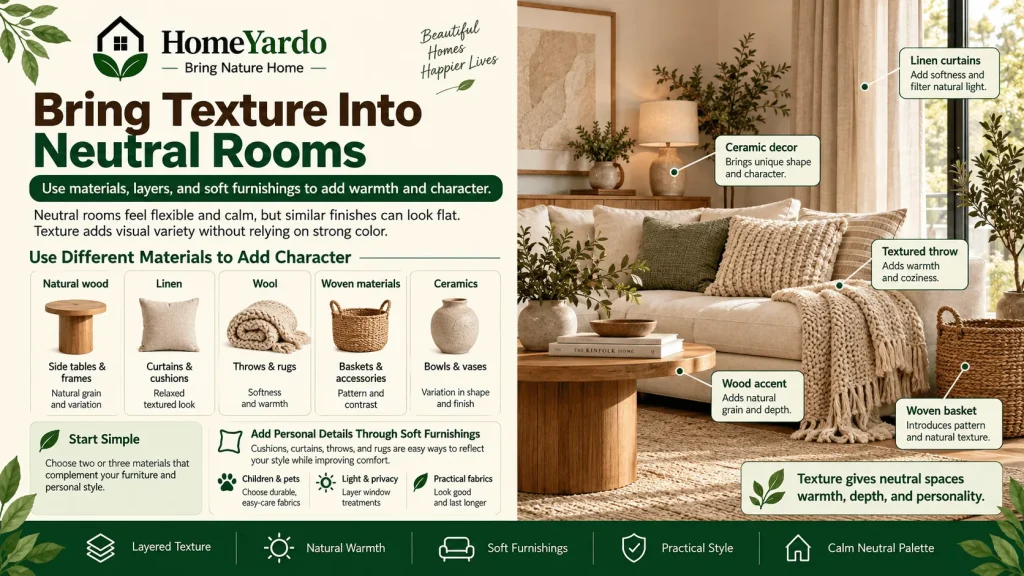
Neutral interiors are flexible because they allow furniture and decorations to work together without relying on strong colors.
However, a room filled with similar materials and finishes can sometimes appear flat or unfinished.
Texture introduces visual variety while allowing you to maintain a restrained color scheme.
For example, a beige sofa, cream curtains, and a pale rug may look too similar when every surface has a smooth finish.
Adding natural wood, woven fabrics, ceramics, and other contrasting materials gives the room more visual interest.
Use Different Materials to Add Character
Consider combining the following elements:
| Material | Decorative Example | Visual Effect |
|---|---|---|
| Natural wood | Side tables and picture frames | Introduces natural grain and variation |
| Linen | Curtains and cushion covers | Creates a relaxed, textured appearance |
| Wool | Throws and rugs | Adds softness and warmth |
| Woven materials | Storage baskets and decorative accessories | Introduces contrasting patterns |
| Ceramics | Bowls and decorative vases | Adds variation in shape and finish |
You don’t need to introduce every material.
Choose two or three that complement your existing furniture and personal style.
A simple combination of a wooden side table, a textured throw, and a woven basket can change how a neutral living room looks.
Neutral color palettes can also provide a flexible foundation for introducing meaningful decorative objects without making the room feel visually crowded.
If you’re unsure how colors work together, our guide to colour psychology in interior design explains how lighting, color choices, and room function influence interior appearance.
Add Personal Details Through Soft Furnishings
Cushions, curtains, throws, and rugs offer an affordable way to introduce colors and textures that reflect your preferences.
You might prefer handmade cushion covers, a blanket with sentimental value, or curtains in your favorite color.
Window coverings are particularly useful because they influence both the decorative appearance and practical comfort of a room.
Our guide to window treatments explains how different options affect natural light, privacy, and interior appearance.
Choose fabrics and materials based on how you actually use the room, especially when children or pets share the space.
6. Personalize the Entry First
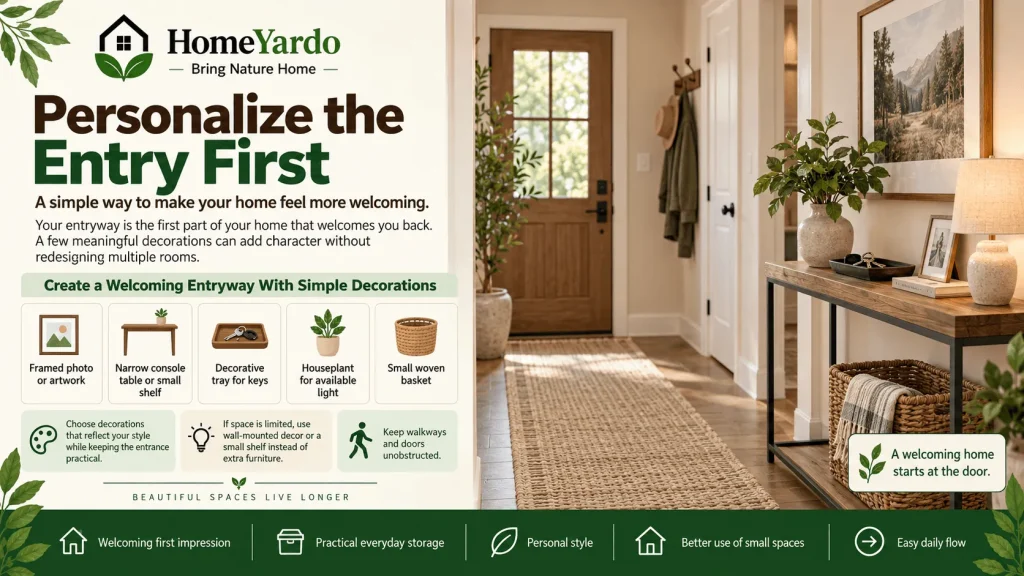
Your entryway is the first part of your home that welcomes you when you return.
Yet this area often receives less decorating attention than living rooms and bedrooms.
Personalizing your entryway is a simple way to establish your home’s character without redesigning multiple rooms.
You don’t need a large entrance or expensive furniture.
A few meaningful decorations can make even a narrow hallway feel more welcoming.
Create a Welcoming Entryway With Simple Decorations
Start with the space you already have.
Consider adding:
- A framed photograph or piece of artwork.
- A small console table or narrow shelf.
- A decorative tray for keys and everyday belongings.
- A houseplant suited to the available natural light.
- A small woven basket for frequently used accessories.
Choose decorations that reflect your personal style while keeping the entrance practical.
For example, a favorite photograph above a narrow console table can create an attractive focal point without taking up valuable floor space.
If you have limited space, use wall-mounted decorations or a small shelf instead of additional furniture.
Keep walkways and doors unobstructed.
An entryway should feel welcoming without making it difficult to move through your home.
How Can You Personalize Your Home Without Spending Much?
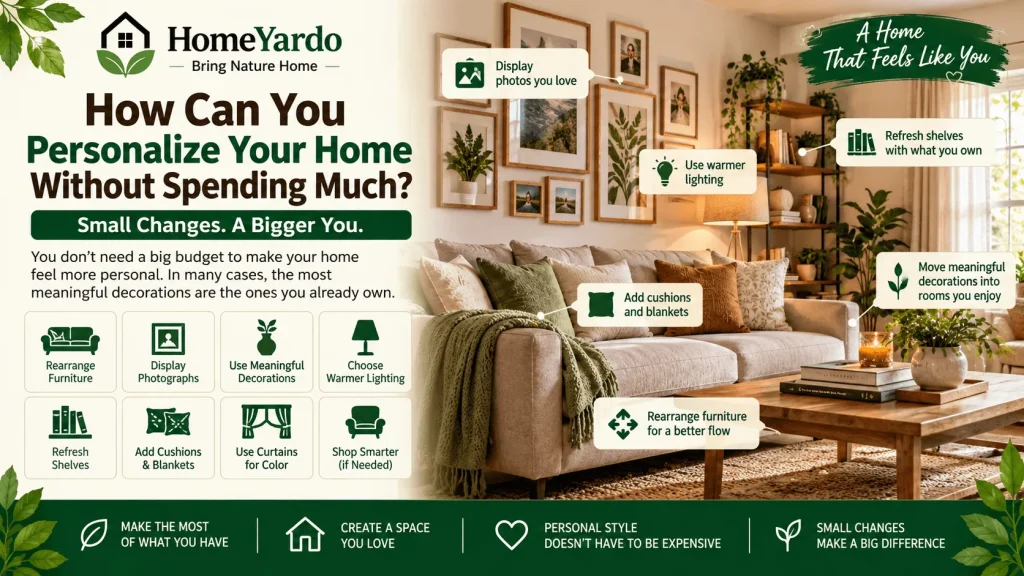
You don’t need a substantial decorating budget to make your living space feel more personal.
In many cases, the most meaningful decorations are objects you already own.
Before purchasing anything, take a closer look at your existing belongings.
You may find photographs that deserve to be displayed, decorations stored in cupboards, or furniture that could work better in another room.
Try these affordable ideas:
- Rearrange existing furniture to create a more comfortable layout.
- Display personal photographs in frames you already own.
- Move meaningful decorations into rooms where you’ll see them regularly.
- Replace harsh lighting with warmer bulbs where appropriate.
- Rearrange books and decorative objects on existing shelves.
- Use cushions, blankets, and curtains to introduce your preferred colors.
If you’re planning to purchase new furniture, consider how it fits your available space and daily routines.
Our guide to choosing furniture for your home explains how to evaluate dimensions, durability, comfort, and budget.
The goal isn’t to fill empty spaces with more belongings.
It’s to make better use of the decorations, memories, and furnishings that genuinely matter to you.
Final Thoughts
Making your home feel more personal doesn’t require replacing furniture or following the latest decorating trends.
Meaningful photographs, carefully arranged decorations, comfortable lighting, and a few objects with personal history can make an ordinary room feel more individual.
Start with one space and make a few changes using belongings you already have. Pay attention to what makes the room comfortable and enjoyable.
A personalized home doesn’t have to look perfect. It should reflect the people who live there.
FAQ’s
Start by displaying meaningful photographs, artwork, books, and decorative objects. Improve your lighting, introduce textures you enjoy, and arrange furniture according to your daily habits. Small changes can help a home reflect your personality without major renovations.
Use decorations and belongings you already own. Rearrange furniture, print favorite photographs, display meaningful objects, and experiment with affordable lighting changes. Secondhand decorations and handmade accessories are other options.
Focus on comfort, personal memories, and everyday routines rather than decorating trends. Display meaningful belongings, create comfortable seating areas, and use lighting that suits the activities you enjoy at home.
Combine different textures, meaningful artwork, personal photographs, and accessories in your preferred colors. Natural materials such as wood, linen, and woven fabrics can introduce visual interest without changing your entire color scheme.