Home Improvements That Increase Property Value
Not every renovation pays you back when it’s time to sell. Some improvements look impressive but barely affect your property’s resale value. Others cost relatively little and can generate substantial returns.
Knowing where to spend your renovation budget matters, especially if you’re planning to sell your home within the next few years.
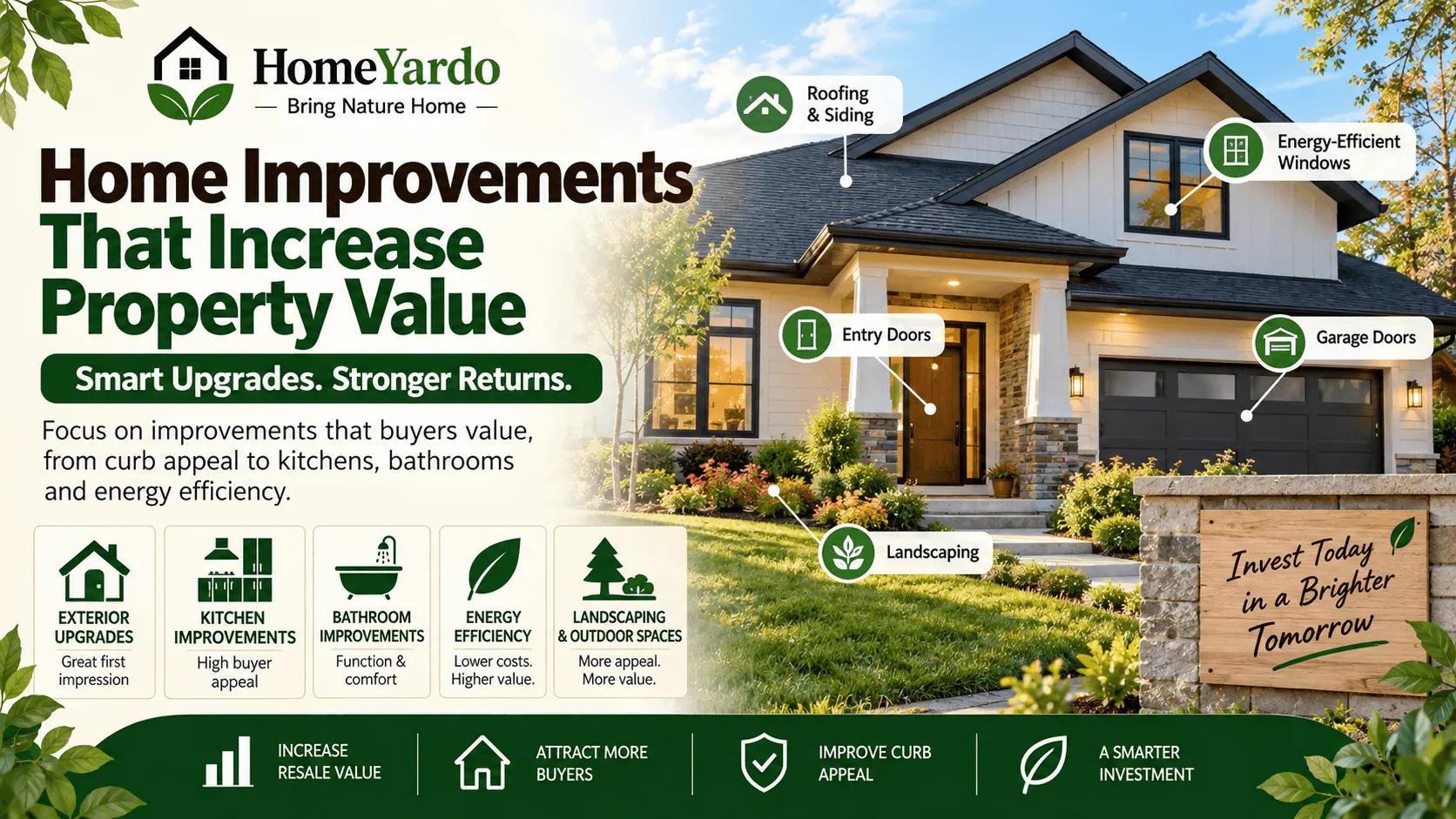
Home improvements that increase property value generally fall into several categories: exterior upgrades, kitchen and bathroom improvements, essential repairs, energy-efficiency improvements, and landscaping.
The right combination depends on your property’s existing condition, neighborhood standards, available budget, and local housing market.
This guide examines the improvements that offer potential resale benefits, using national remodeling data and practical considerations to help homeowners prioritize their spending.
Why Some Upgrades Outperform Others

Appraisers and prospective buyers don’t necessarily value home improvements the same way homeowners do.
A homeowner might spend thousands creating a personalized entertainment room. However, a prospective buyer may place greater value on a functional kitchen, maintained roofing, or updated mechanical systems.
Property value is influenced by three important factors: functionality, durability, and how the property compares with similar homes in the neighborhood.
If your property falls behind competing homes in basic maintenance, roofing condition, or kitchen functionality, buyers may expect repairs or negotiate a lower selling price.
Properties with well-maintained systems and improvements that reflect local buyer preferences may attract greater interest.
Before committing to expensive renovations, develop a realistic budget and identify which projects address existing property problems. HomeYardo’s home improvement guide provides additional guidance on planning projects and choosing improvements for your property.
This is also where working with the right buyer matters. If you’re selling as-is and don’t want to sink money into repairs first, a company like Superior Homebuyers can purchase the property directly, skipping the renovation step altogether. That route works for sellers who need speed over maximum resale value.
However, compare the expected proceeds from an as-is sale against those from a traditional listing after accounting for renovation expenses, transaction costs, and holding costs.
For homeowners planning to renovate before selling, understanding potential returns is an important starting point.
Which Home Improvements Offer the Best Return on Investment?
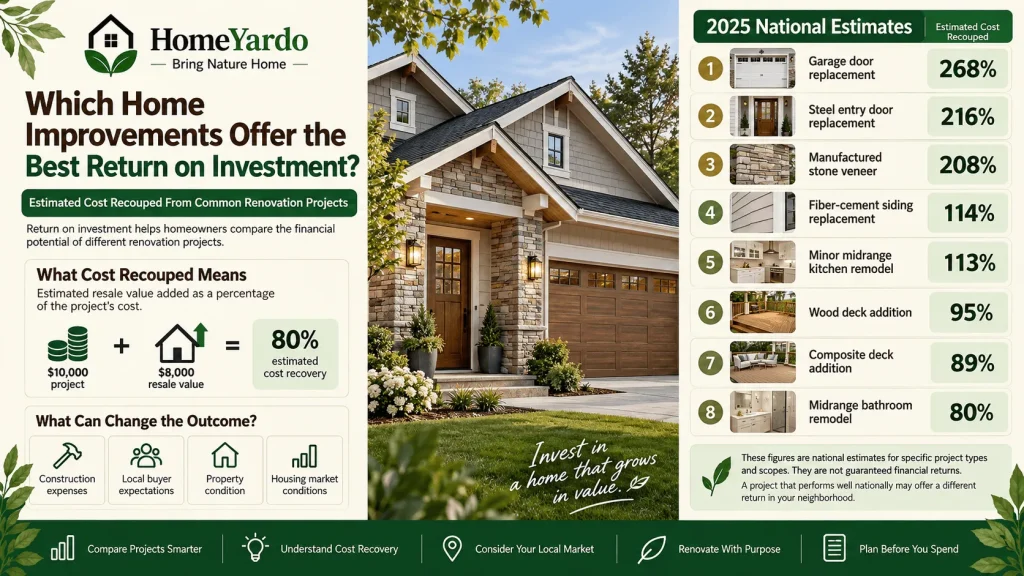
Return on investment helps homeowners compare the financial potential of different renovation projects.
In remodeling reports, the percentage of cost recouped measures estimated resale value added as a percentage of the project’s cost.
For example, an improvement costing $10,000 that adds an estimated $8,000 in resale value has an estimated cost recovery of 80%.
The 2025 Cost vs. Value Report provides national estimates for several common renovation projects.
| Home Improvement | Estimated Cost Recouped |
|---|---|
| Garage door replacement | 268% |
| Steel entry door replacement | 216% |
| Manufactured stone veneer | 208% |
| Fiber-cement siding replacement | 114% |
| Minor midrange kitchen remodel | 113% |
| Wood deck addition | 95% |
| Composite deck addition | 89% |
| Midrange bathroom remodel | 80% |
These figures represent national estimates for specific project types and scopes. They shouldn’t be interpreted as guaranteed financial returns.
Construction expenses, local buyer expectations, property condition, and housing market conditions can substantially change the outcome.
A project that performs well nationally may offer a different return in your neighborhood.
Exterior Projects Deliver the Highest ROI
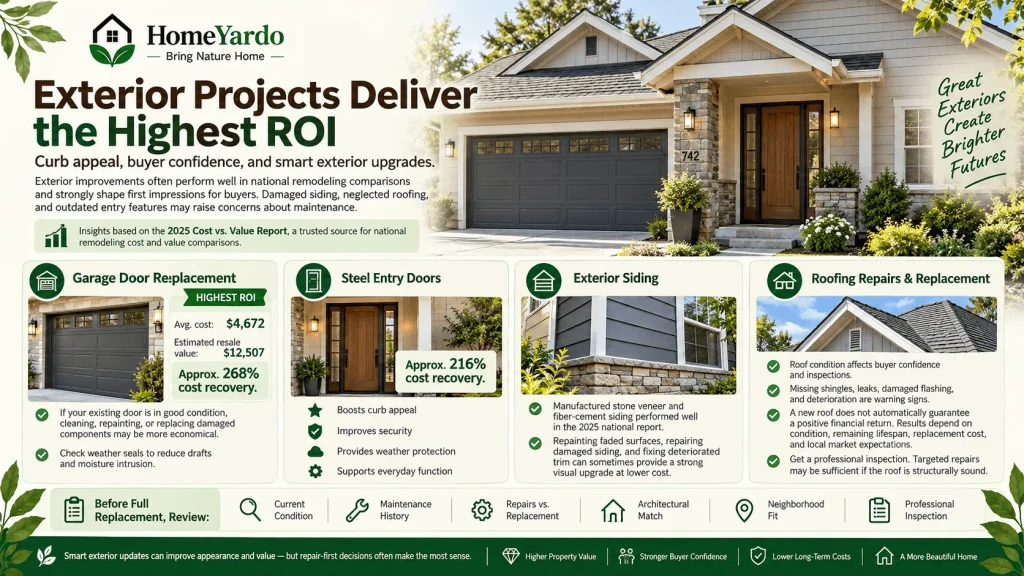
Exterior improvements frequently perform well in national remodeling comparisons.
A property’s exterior establishes the first impression for prospective buyers. Damaged siding, neglected roofing, and outdated entrance features can also raise concerns about maintenance.
The 2025 Cost vs. Value Report identified several exterior replacement projects with particularly high estimated returns.
Garage Door Replacement
Garage door replacement produced the highest estimated cost recovery in the 2025 national report.
The average project cost was approximately $4,672, with an estimated resale value contribution of $12,507.
That represents approximately 268% of the installation cost.
However, replacing an existing garage door isn’t always necessary.
If the current door functions properly and remains in good condition, cleaning, repainting, or replacing damaged components may be more economical.
Weather protection also deserves attention. Maintaining the seals around an existing garage door can help address drafts and moisture intrusion without replacing the entire installation.
Steel Entry Doors and Exterior Siding
Replacing an aging front door can improve curb appeal, security, weather protection, and everyday functionality.
Steel entry door replacement achieved an estimated 216% cost recovery in the 2025 report.
Manufactured stone veneer and fiber-cement siding also performed well.
However, homeowners should examine existing exterior materials before committing to complete replacement.
Repainting faded surfaces, repairing damaged siding, and addressing deteriorated trim can sometimes provide substantial visual improvements at a lower cost.
Choose exterior materials that complement the property’s architectural style and neighborhood.
Roofing Repairs and Replacement
Roofing condition influences buyer confidence and can become a significant issue during property inspections.
Missing shingles, leaks, damaged flashing, and deteriorating roofing materials may indicate underlying problems requiring professional attention.
However, a new roof doesn’t automatically generate a positive financial return.
The decision depends on the existing roof’s condition, expected remaining lifespan, replacement expenses, and local market expectations.
Homeowners who are uncertain about their roofing system can review HomeYardo’s guide explaining when your roof needs replacement.
Arrange a professional roofing inspection before committing to major replacement work.
If the existing roof is structurally sound, targeted repairs may be sufficient.
Kitchens and Bathrooms Still Matter, But Scope Controls Return
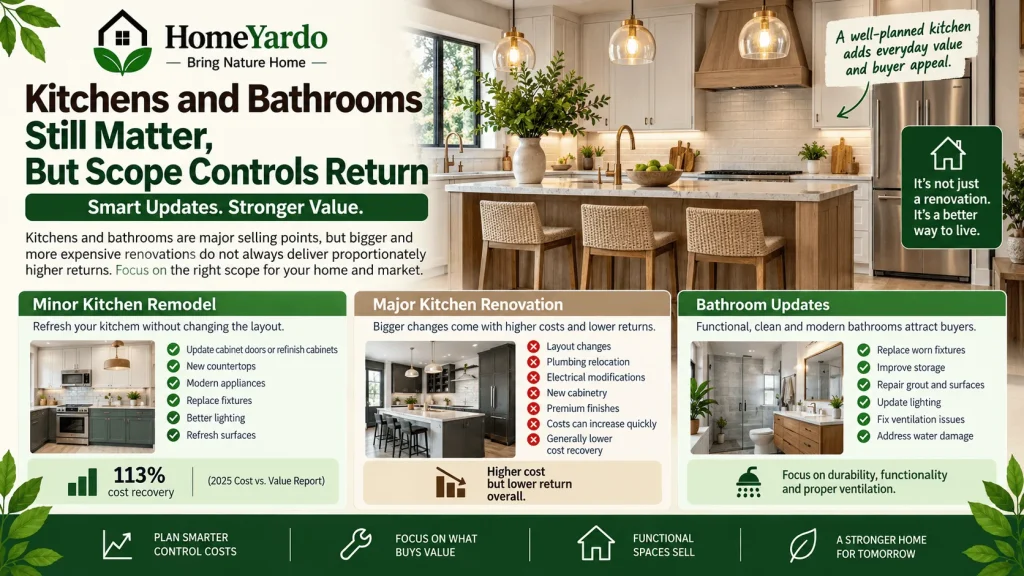
Kitchens and bathrooms are important selling points because they influence how prospective buyers experience a property.
However, expensive renovations don’t necessarily deliver proportionately higher resale returns.
The scope of the renovation matters.
Minor Kitchen Remodeling vs. Major Renovations
A minor kitchen remodel typically focuses on refreshing existing features without substantially changing the room’s layout.
Common improvements include:
- Replacing outdated cabinet doors.
- Refinishing existing cabinets.
- Updating countertops.
- Installing modern appliances.
- Replacing worn fixtures.
- Improving lighting.
- Refreshing damaged surfaces.
The 2025 Cost vs. Value Report estimated that a minor midrange kitchen remodel recovered approximately 113% of its cost nationally.
In comparison, extensive upscale kitchen renovations generally recovered a smaller percentage of their expenses.
Major renovations often involve additional construction, plumbing relocation, electrical modifications, new cabinetry, and expensive finishes.
These costs can increase quickly without creating an equivalent rise in property value.
If your existing kitchen layout functions well, retaining it can help control renovation expenses.
Focus on improvements that address outdated finishes, damaged components, insufficient lighting, and practical usability.
Bathroom Updates That Improve Resale Appeal
Bathrooms receive considerable attention during property viewings.
Worn fixtures, poor ventilation, visible water damage, and outdated finishes can make these spaces less attractive.
However, a complete bathroom renovation isn’t always necessary.
Consider replacing damaged fixtures, improving storage, repairing deteriorated grout, updating lighting, and addressing ventilation problems.
Homeowners considering a more extensive project can consult HomeYardo’s guide to planning a bathroom remodel, which covers budgeting, material selection, layout considerations, and long-term functionality.
Before starting, determine whether the project is necessary to address existing defects or is primarily cosmetic.
Durable materials, functional layouts, adequate ventilation, and appropriate lighting generally deserve priority over expensive decorative features.
Structural and Mechanical Systems Protect Value
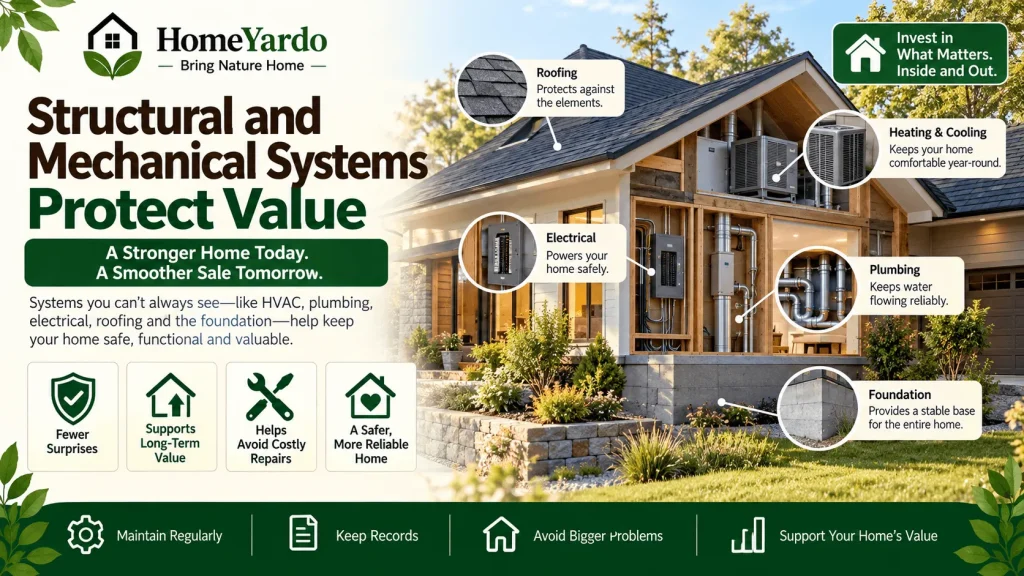
Some property improvements don’t create immediate visual appeal, but they can protect a home’s condition and reduce potential obstacles during a sale.
Heating and cooling systems, plumbing, electrical installations, roofing structures, and foundations influence a property’s functionality and safety.
Problems involving these systems may become apparent during inspections and result in repair requests or negotiations.
Heating and Cooling Systems
An aging HVAC system doesn’t automatically require replacement.
Its maintenance history, current performance, operating condition, and expected remaining service life are more important considerations.
Arrange professional servicing if the system struggles to maintain comfortable temperatures, produces unusual noises, or requires frequent repairs.
Replacement may be appropriate when equipment is failing or when repairing it becomes economically unreasonable.
If you are planning broader renovation work, coordinate mechanical upgrades with the overall project rather than treating them as isolated decisions.
Electrical and Plumbing Improvements
Outdated or damaged electrical and plumbing installations can create safety concerns and expensive repairs.
Warning signs may include persistent leaks, recurring circuit breaker trips, damaged wiring, and inadequate drainage.
Address these problems before investing heavily in cosmetic renovations.
However, upgrading electrical service capacity isn’t automatically necessary for every property.
A qualified electrician should assess whether the existing installation can safely support current and planned electrical loads.
For homeowners preparing a larger project, HomeYardo’s home remodeling guide explains how to coordinate renovation goals, budgets, contractor estimates, and construction requirements.
Keep documentation of completed repairs, permits, inspections, and professional installations.
These records may help answer questions raised by prospective buyers.
Energy Efficiency Upgrades Are Gaining Weight
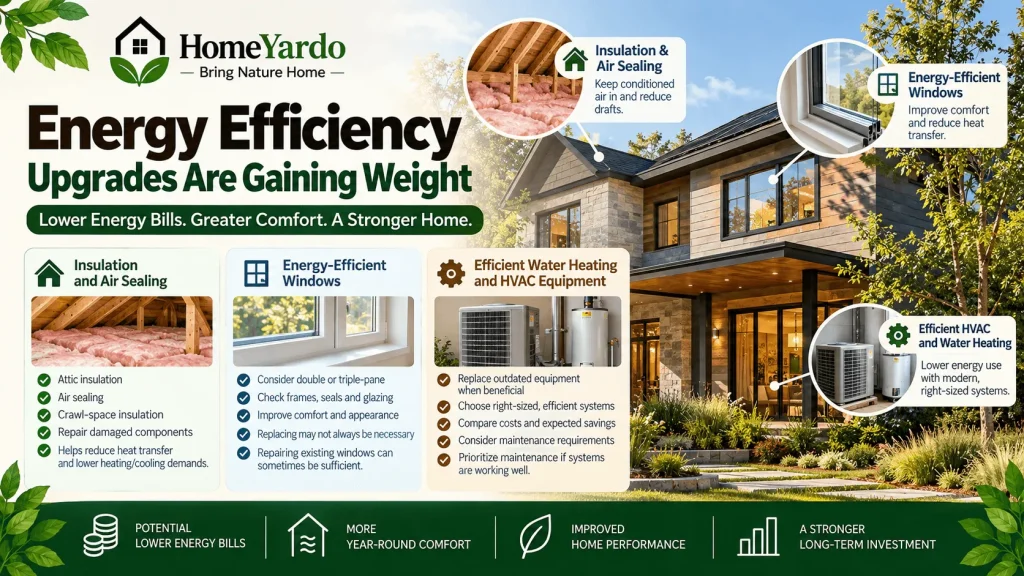
Energy efficiency can influence household operating expenses and indoor comfort.
Prospective buyers may consider heating and cooling costs when evaluating a property, particularly in regions with extreme seasonal temperatures.
However, the financial benefits of energy-efficiency improvements depend on local climate, energy costs, existing building performance, and installation expenses.
Insulation and Air Sealing
Insulation helps reduce unwanted heat transfer through the building envelope.
However, insulation performance can be affected by inadequate installation, moisture problems, settling, and damage.
Air leakage can also increase heating and cooling demands.
Potential improvements include attic insulation, air sealing, appropriate crawl-space insulation, and repairs to damaged building components.
Homeowners noticing persistent drafts, uneven indoor temperatures, or unexplained increases in energy consumption can consult HomeYardo’s guide on signs your home needs new insulation.
An energy assessment can help identify the most suitable improvements.
Spray foam insulation is one available insulation option, although material selection and installation require careful consideration of ventilation, moisture conditions, potential emissions, and manufacturer requirements.
Use qualified insulation professionals and follow applicable installation and safety guidelines.
Energy-Efficient Windows
Window replacement can improve comfort and exterior appearance when existing windows are damaged, drafty, or poorly performing.
Double-pane and triple-pane windows are available with different glazing specifications and thermal performance characteristics.
However, replacing functional windows solely to increase resale value may not justify the installation cost.
Before proceeding, evaluate the existing frames, seals, glazing, and surrounding insulation.
Homeowners comparing installation approaches can read HomeYardo’s guide to window installation services, which discusses important considerations when selecting replacement windows and professional installation.
Repairing existing windows and addressing air leakage may be sufficient in some situations.
Efficient Water Heating and HVAC Equipment
Water heating and climate-control equipment can contribute substantially to household energy consumption.
Replacing outdated equipment with appropriately sized, energy-efficient alternatives may reduce operating expenses.
However, installation costs, expected energy savings, maintenance requirements, and regional energy prices influence the financial benefits.
Before upgrading, compare available equipment and obtain estimates from qualified contractors.
If your existing systems are functioning properly, prioritize professional maintenance and identify whether replacement would provide a meaningful financial benefit.
Landscaping and Outdoor Living Space

A well-maintained outdoor area can improve curb appeal without requiring an expensive construction project.
Overgrown vegetation, dead plants, damaged walkways, and neglected lawns can create concerns about the property’s overall maintenance.
Correcting these problems may improve the property’s appearance before prospective buyers arrive.
Affordable Landscaping Improvements
Begin with basic maintenance.
Trim overgrown shrubs, remove dead plants, clean outdoor surfaces, repair damaged pathways, and refresh neglected planting areas.
Choose landscaping appropriate for the local climate, available sunlight, and maintenance requirements.
Low-maintenance landscaping may appeal to buyers who prefer attractive outdoor spaces without extensive ongoing work.
Avoid unnecessary landscaping installations that require substantial maintenance or don’t suit the property.
Decks, Patios, and Outdoor Entertainment Areas
Decks and patios can make outdoor areas more functional by creating space for dining, relaxation, and entertainment.
However, installation expenses and potential resale benefits vary.
The 2025 Cost vs. Value Report estimated approximately 95% cost recovery for its midrange wood deck addition and 89% for its composite deck project.
These results suggest that material selection and project costs should be considered carefully.
Composite decking can offer maintenance advantages, but its higher initial cost may not always translate into stronger resale returns.
If you already have a functional outdoor area, improving its condition may be more economical than constructing an entirely new installation.
HomeYardo’s article on designing a backyard offers ideas for organizing outdoor spaces around practical household needs.
Choose improvements that complement the existing property and reflect neighborhood expectations.
How to Prioritize Improvements Before Selling
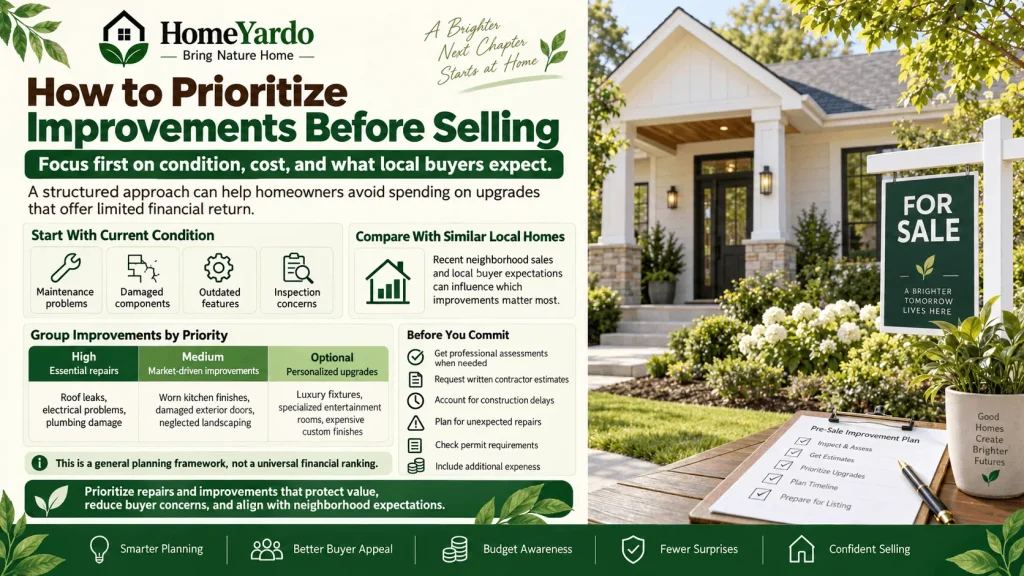
Homeowners should prioritize improvements according to property condition, renovation expenses, and local buyer expectations.
A structured approach can help avoid spending money on improvements that provide limited financial benefits.
Start by assessing your property’s current condition.
Identify maintenance problems, damaged components, outdated features, and areas that may raise concerns during inspections.
Next, compare your property with similar homes recently sold in the neighborhood.
A local real estate professional can help identify differences that may influence potential selling prices.
Divide possible improvements into three groups.
| Priority | Improvement Type | Examples |
|---|---|---|
| High | Essential repairs | Roof leaks, electrical problems, plumbing damage |
| Medium | Market-driven improvements | Worn kitchen finishes, damaged exterior doors, neglected landscaping |
| Optional | Personalized upgrades | Luxury fixtures, specialized entertainment rooms, expensive custom finishes |
This table is a general planning framework rather than a financial ranking that applies to every property.
A relatively inexpensive cosmetic repair might deserve immediate attention in one home, while another property may require significant structural work.
Obtain professional assessments when necessary and request written contractor estimates before committing to major projects.
Remember to account for construction delays, unexpected repairs, permit requirements, and additional expenses.
Home Improvements That May Not Increase Resale Value
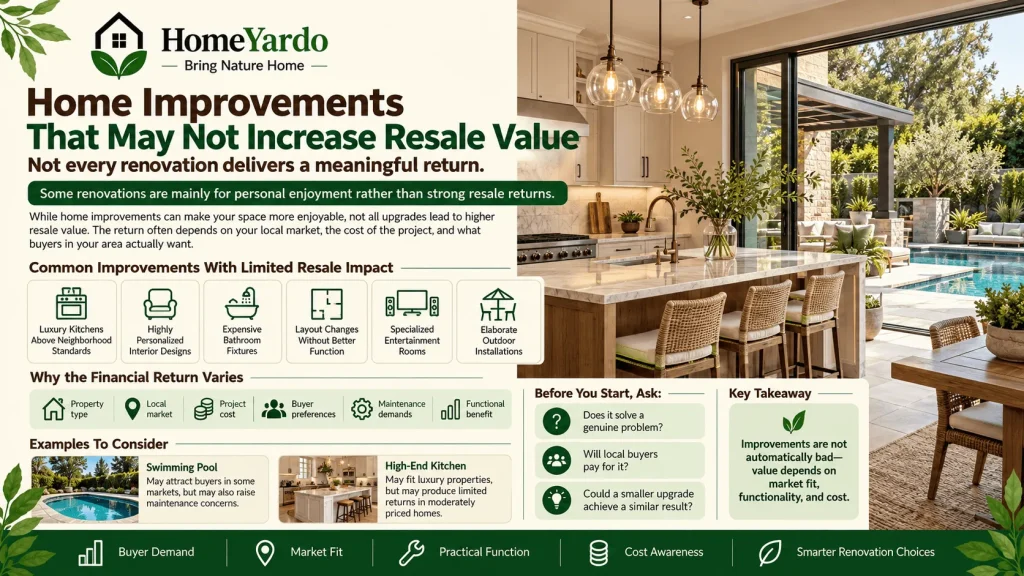
Not every renovation produces a meaningful increase in resale value.
Some projects are designed primarily for personal enjoyment rather than financial returns.
Examples include:
- Luxury kitchen installations that exceed neighborhood standards.
- Highly personalized interior designs.
- Expensive bathroom fixtures with limited practical advantages.
- Major layout changes that don’t improve functionality.
- Specialized entertainment rooms.
- Elaborate outdoor installations that require extensive maintenance.
These improvements aren’t necessarily undesirable.
Their financial value depends on the property, local market, project costs, and prospective buyers.
A swimming pool, for example, may appeal to buyers in some locations while creating additional maintenance concerns in others.
Likewise, high-end kitchen installations may complement luxury properties but produce limited returns in moderately priced homes.
Before starting an expensive renovation, ask whether the project addresses a genuine problem or introduces features that buyers in your local market are willing to pay for.
Consider whether a smaller improvement could achieve a similar result.
The Bottom Line
The most worthwhile home improvements address existing property problems and reflect the expectations of prospective buyers.
Exterior replacements, modest kitchen and bathroom updates, essential mechanical repairs, selected energy-efficiency improvements, and well-maintained landscaping can all contribute to resale appeal.
However, national remodeling data provides estimates rather than guaranteed returns.
Your property’s condition, neighborhood, construction expenses, and local housing market ultimately influence the financial outcome.
Prioritize necessary repairs, avoid unnecessary luxury upgrades, and compare renovation expenses with the potential difference in selling price.
If the renovation costs don’t fit your budget or selling timeline, consider whether selling the property in its existing condition offers a more suitable alternative.
FAQ’s
Exterior replacements, minor kitchen remodeling, and improvements that address important property defects can contribute to resale value. Garage door replacement, steel entry doors, and manufactured stone veneer recorded particularly high estimated cost recovery in the 2025 Cost vs. Value Report.
According to the 2025 national Cost vs. Value Report, garage door replacement, steel entry door replacement, and manufactured stone veneer achieved estimated cost-recovery percentages exceeding 200%. Actual results depend on local market conditions and project costs.
Kitchen remodeling can increase resale appeal, especially when existing finishes or features are outdated. Modest renovations may recover a higher percentage of their costs than extensive luxury remodels.
Bathroom remodeling can improve functionality, appearance, and buyer appeal. However, renovation costs and the property’s existing condition determine whether the project makes financial sense.