How To Choose An Outdoor Sauna For Your Backyard
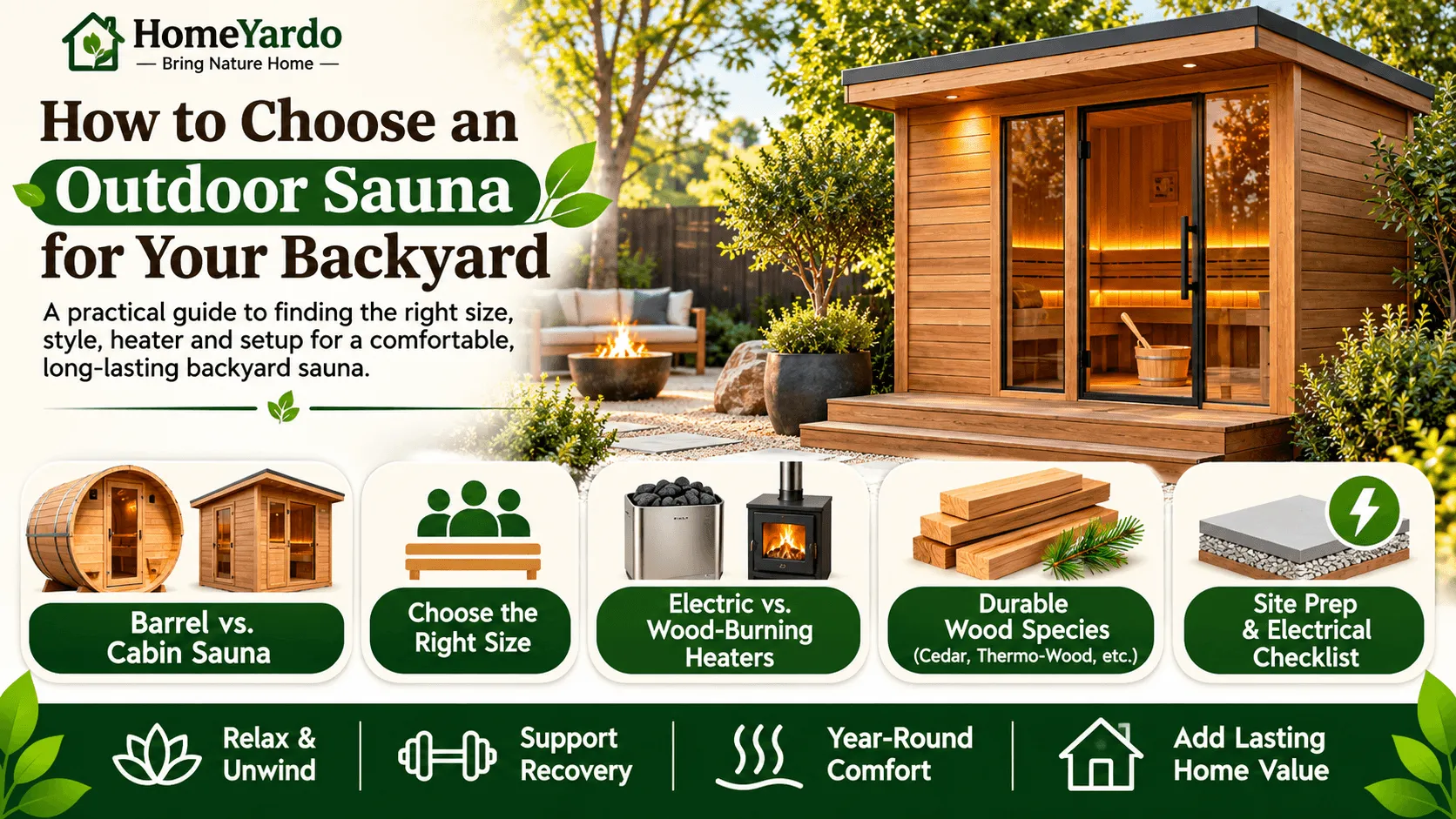
Adding a dedicated wellness space to your backyard is one of the most rewarding upgrades you can make to a home. Whether you want a quiet evening ritual after work, a recovery station after heavy training, or a cold-weather gathering spot for family and friends, a traditional home sauna turns an ordinary patio or garden corner into a year-round retreat.
Choosing the right unit, however, involves more than picking a wood finish that looks good next to your deck. Between barrel and cabin silhouettes, electric and wood-burning heaters, kiln-dried thermo-woods, and electrical circuit requirements, a few early decisions determine how quickly your sauna heats up, how well it holds steam, and how little maintenance it needs over the next decade.
Here is a practical step-by-step guide to choosing an outdoor sauna that fits your climate, yard layout, and daily routine.
Before choosing a model, consider how the sauna will fit into your overall backyard layout. A thoughtful approach to designing a backyard can help you plan access, privacy, drainage, and space for other outdoor activities.
1. Barrel Saunas Vs Cabin Saunas: Which Shape Fits Your Yard?
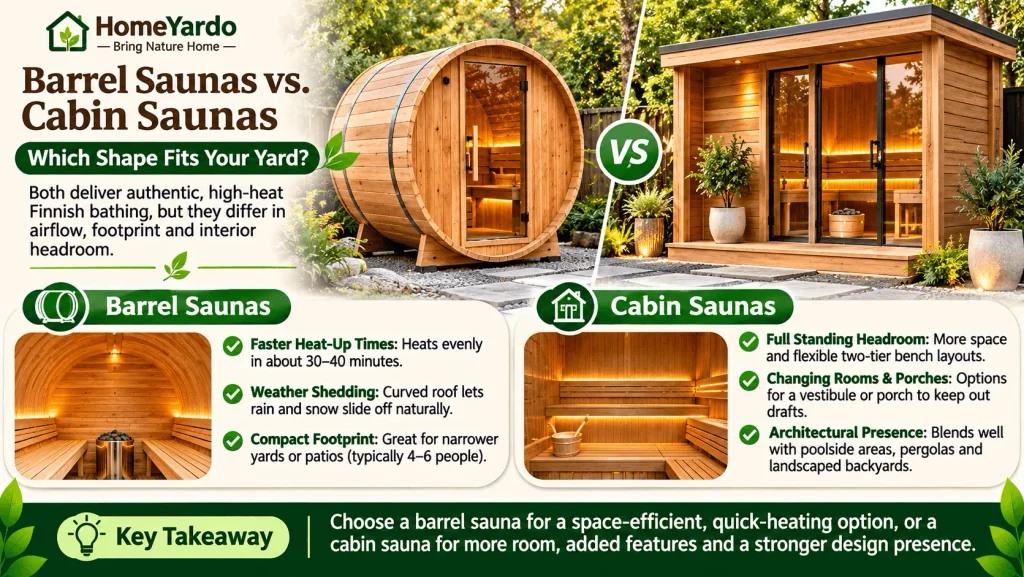
Outdoor saunas generally fall into two structural styles: cylindrical barrel saunas and rectangular cabin saunas. Both deliver authentic high-heat Finnish bathing, but they behave differently in terms of airflow, footprint, and interior headroom.
Barrel Saunas
A barrel sauna uses interlocking vertical staves cinched tight with stainless-steel bands. Because the curved walls eliminate upper corners, there is about 20% less interior air volume to heat compared to a square room of the same footprint.
- Faster heat-up times: The circular geometry encourages natural convection, circulating heat evenly from the heater stones down to the benches in 30 to 40 minutes.
- Weather shedding: Rain and snow slide naturally off the curved roof, and the ballasted cradle base sits cleanly on a gravel pad, concrete slab, or reinforced deck.
- Compact footprint: Ideal for narrower side yards or patios where you want a 4- to 6-person sauna without framing a full outbuilding.
Cabin Saunas
Cabin saunas look like modern backyard cottages, complete with pitched or sloped roofs, insulated walls, and multi-tier bench layouts.
- Full standing headroom: Flat floors and vertical walls give you more elbow room and allow two-tier L-shaped benches, so bathers can choose between milder heat on the lower bench and intense steam near the ceiling.
- Changing rooms and porches: Many cabin kits include an integrated front porch or an enclosed changing vestibule that keeps winter drafts out of the hot room.
- Architectural presence: If you are designing a permanent poolside wellness zone, a cabin profile blends naturally with modern pergolas and pool houses.
When comparing barrel and cabin kits from established manufacturers like SaunaLife, Dundalk LeisureCraft, and Almost Heaven, reviewing a detailed outdoor sauna buying guide from Topture can help you match stave thickness, bench depth, and roof kits to your local weather.
A cabin sauna can also complement broader landscaping ideas for outdoor spaces, particularly when combined with privacy planting, natural pathways, and comfortable seating areas.
2. Sizing Your Sauna for Real-World Use
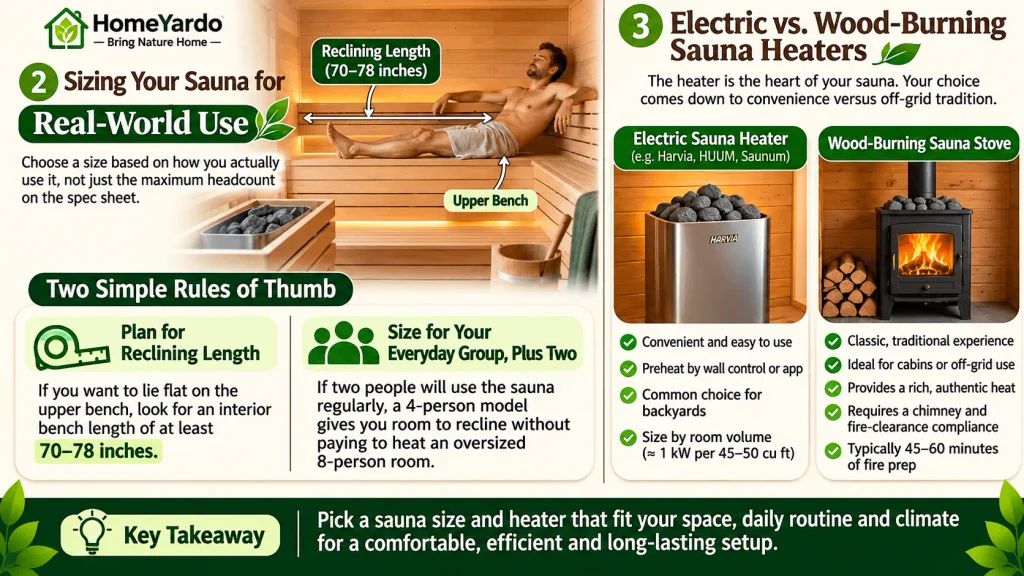
A common mistake first-time buyers make is sizing a sauna strictly by the maximum headcount listed on a spec sheet. A “4-person” sauna will comfortably seat four adults sitting upright shoulder-to-shoulder, but most people prefer to stretch out or lie down during a 20-minute session.
Use two simple rules of thumb when measuring your space:
- Plan for reclining length: If you want to lie flat on the upper bench, look for an interior bench length of at least 70 to 78 inches.
- Size for your everyday group, plus two: If two people will use the sauna four nights a week, a 4-person model gives you room to recline without paying to heat an oversized 8-person room every evening.
3. Electric vs. Wood-Burning Sauna Heaters
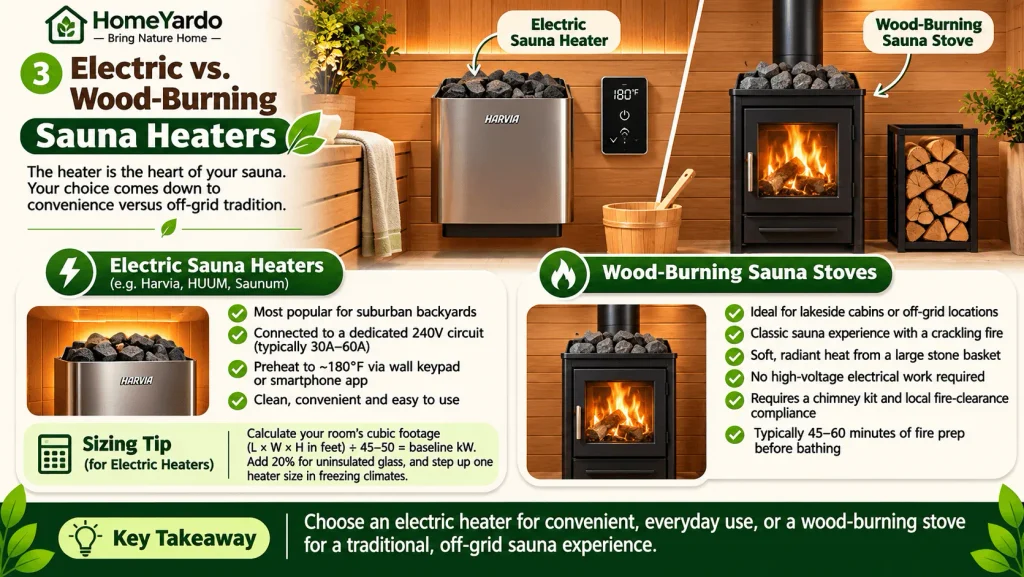
The heater is the heart of your sauna. Your choice comes down to convenience versus off-grid tradition:
Electric Sauna Heaters (Harvia, HUUM, Saunum)
Electric heaters are the most popular choice for suburban backyards. Connected to a dedicated 240V circuit (typically 30A to 60A, depending on kilowatt output), a modern electric heater from Harvia or HUUM lets you preheat the room from a wall keypad or smartphone app so the stones are at 180°F before you step outside.
- Sizing tip: Calculate your room’s cubic footage (length × width × height in feet) and divide by 45 to 50 to get the baseline kilowatt (kW) rating. Add 20% to the volume for uninsulated glass doors or windows, and step up one heater size if you live in a freezing northern climate.
Wood-Burning Sauna Stoves
If your sauna sits at a lakeside cabin, off the grid, or far from your main electrical panel, a wood-burning stove delivers an unmatched atmosphere. You get the crackle of birch or oak firewood, a soft radiant heat from a massive stone basket, and zero trenching for high-voltage conduit—at the cost of a chimney kit, local fire-clearance rules, and 45 to 60 minutes of tending the fire before you bathe.
4. Wood Species That Stand Up to Outdoor Weather
Because an outdoor sauna cycles between 195°F steam inside and rain, snow, or UV sun outside, wood stability matters. Look for three proven materials:
- Thermo-Spruce and Thermo-Pine (Thermowood): Kiln-baked using heat and steam with no chemicals; thermal modification removes moisture and resin from the timber. The result is a rich, caramelized wood that resists warping, rot, and fungal decay far better than untreated softwood.
- Western Red Cedar: Naturally aromatic, lightweight, and resistant to moisture and insects, knotty or clear cedar remains a classic North American favorite.
- Thermo-Aspen and Alder (Interiors): Smooth, splinter-free, and low in thermal conductivity, these woods stay comfortable against bare skin on benches and backrests even when the room reaches 190°F.
5. Site Prep, Foundation, And Electrical Checklist
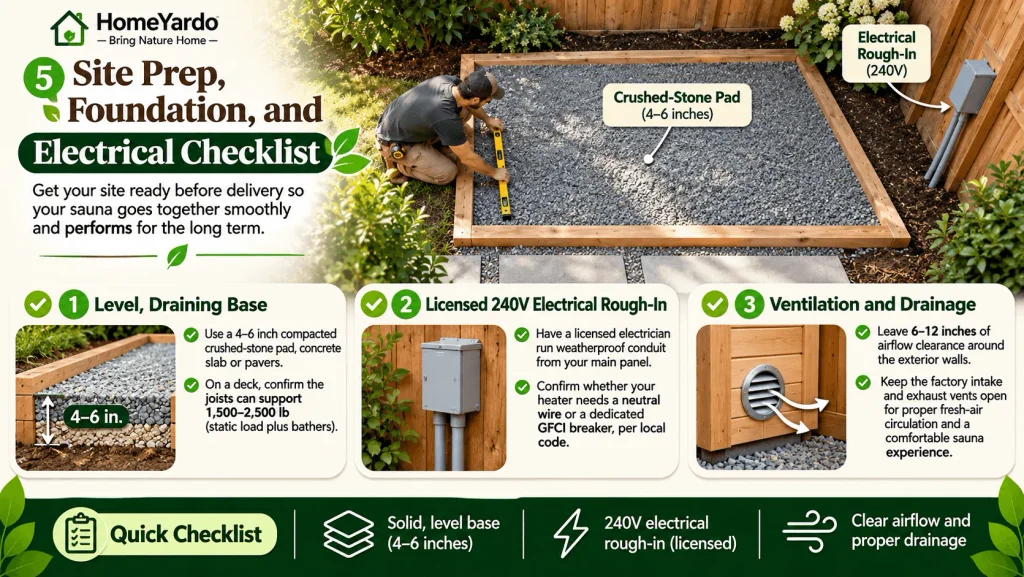
Before your sauna crate arrives via curbside freight, prepare three basics so assembly goes smoothly over a single weekend:
- A level, draining base: A 4- to 6-inch compacted crushed-stone pad bordered by timbers, a poured concrete slab, or pavers will keep the base cradles dry and level. If placing the sauna on an existing wood or composite deck, verify that the joists support 1,500 to 2,500 pounds of static load plus bathers.
- Licensed 240V electrical rough-in: Have a licensed electrician run weatherproof conduit from your main breaker panel to the sauna site before assembly, and confirm whether your heater controller requires a neutral wire or a dedicated GFCI breaker under local code.
- Ventilation and drainage: Leave at least 6 to 12 inches of airflow clearance around the exterior walls, and never seal the factory intake and exhaust vents—fresh oxygen circulation is what keeps high-heat sauna sessions comfortable and restorative.
Final Takeaway: Choosing The Right Backyard Sauna
The right outdoor sauna should match your available space, preferred bathing experience, local climate, and installation budget.
A barrel sauna can be a suitable choice for a compact backyard, while a cabin sauna may offer more comfortable headroom and flexible bench arrangements. Electric heaters favor convenient daily operation, whereas wood-burning stoves appeal to homeowners who enjoy traditional fire-heated bathing.
Before making your purchase, confirm the interior dimensions, heater compatibility, material quality, foundation requirements, and applicable building regulations.
A carefully selected sauna will be easier to maintain and more comfortable to use than one chosen on appearance or advertised capacity alone.
Frequently Asked Questions About Outdoor Saunas
The best choice depends on the available space, seating needs, climate, and heating preference. Barrel saunas often suit compact yards, while insulated cabin saunas may be preferable for flexible seating and colder locations.
Neither design is universally better. Barrel saunas offer a distinctive, often compact shape, while cabin saunas generally provide more flexible interior layouts and headroom. Compare insulation, ventilation, benches, and weather protection rather than exterior shape alone.
Choose a sauna based on the number of regular users and the desired seating arrangement. A four-person model may be comfortable for two adults who want extra room, but actual interior and bench measurements matter more than the advertised capacity.
Western red cedar and suitable thermally modified softwoods are common choices. Thermo-aspen and alder are also used for interior seating. Material selection should consider durability, dimensional stability, exterior exposure, and manufacturer recommendations.