How Do You Choose The Right Plant Feeding Schedule?
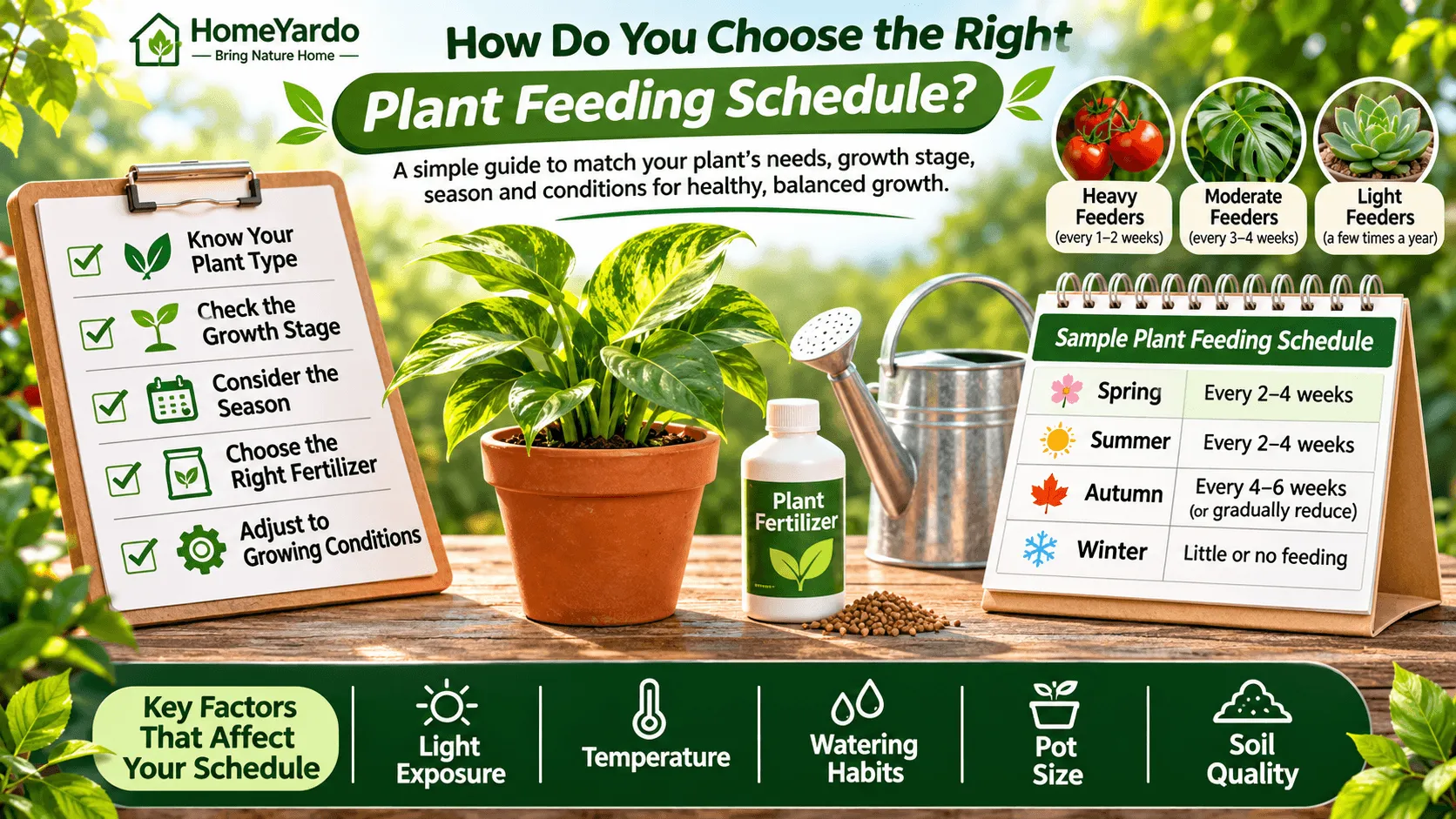
Choosing the right plant feeding schedule starts with understanding your plant’s species, growth stage, season, and growing conditions. Plants generally need more nutrients during active growth and less when their growth slows or stops. A well-planned feeding routine provides the nutrients they need without causing fertilizer burn or unwanted salt buildup.
Quick answer: Feed plants according to their growth rate and fertilizer instructions rather than following one fixed calendar. Many actively growing houseplants benefit from feeding every two to four weeks with a suitable liquid fertilizer, while slow-release products may last several months. Low-demand or dormant plants need much less.
Here’s how to build a practical schedule that works for your plants.
Start With What Your Plant Actually Needs
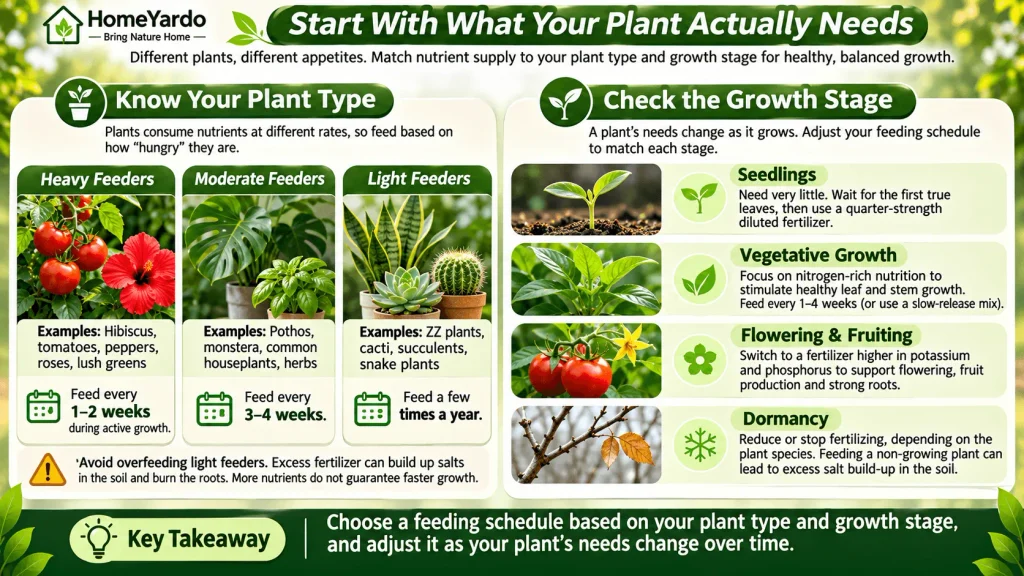
Not all plants have the same nutritional needs. When it comes to appetite, a tomato and a snake plant have very little in common. Here is how to understand what your plant needs:
Know Your Plant Type
Heavy feeders quickly consume their nutrients. Light feeders require very little to function.
- Heavy feeders: These include Hibiscus, tomatoes, peppers, roses, and lush greens. They usually need nutrition every 1-2 weeks as they grow.
- Moderate feeders: These include common houseplants, pothos, monstera, and herbs. It is generally enough to feed them every 3-4 weeks.
- Light feeders: These include ZZ plants, cacti, succulents, and snake plants. Feeding a few times a year is enough.
Overfeeding a light feeder is worse than underfeeding. The salt accumulation in the soil eventually burns the roots. or plants such as succulents, avoiding excessive fertilizer is especially important. More nutrients do not guarantee faster or healthier growth.
Check The Growth Stage
A young seedling, a flowering plant, and a dormant plant all have different feeding requirements, such as:
- Seedlings: Quite little. Wait until the plant develops its first true leaves, then use a quarter-strength diluted fertilizer, depending on the plant type and growing medium.
- Vegetative growth: Nitrogen-rich nutrition stimulates stem and leaf growth. This could involve using a slow-release nutrient mix that releases nutrients over several months or feeding every 1-4 weeks, depending on the fertilizer.
- Flowering and fruiting: Now, switch to foods higher in potassium and phosphorus. Both are vital for multiple plant functions, including fruit production, root development, and flowering.
- Dormancy: Reduce or cease fertilizing during dormancy, depending on plant species. Feeding a plant that isn’t actively growing can lead to excessive salts in the soil.
The plant’s nutritional needs change as it grows. Therefore, its feeding schedule should reflect these changes.
Create A Practical Plant Feeding Schedule
A feeding schedule helps maintain consistency. Start by listing your plants and outlining their specific requirements. Next, organize feeding dates as per their growing seasons and fertilizer types.
If you need help comparing different plant requirements, you can explore FeedSchedules for plant feeding charts to find useful reference points when planning your routine.
A simple generic feeding schedule is shown below:
| Season | Feeding Schedule | Feeding Approach |
|---|---|---|
| Spring | Every 2–4 weeks | Start regular feeding as new growth appears. Use a balanced fertilizer to support healthy roots, stems, and leaves. |
| Summer | Every 2–4 weeks, depending on plant needs | Continue feeding actively growing plants. Use the recommended fertilizer dosage and avoid feeding plants stressed by excessive heat. |
| Autumn | Every 4–6 weeks or gradually reduce feeding | Reduce fertilizer as growth slows. Some plants may need their final feeding before entering dormancy. |
| Winter | Little or no feeding | Stop feeding most dormant plants. Continue light feeding only for indoor or winter-growing plants that remain actively growing. |
Match the Fertilizer Type to the Schedule
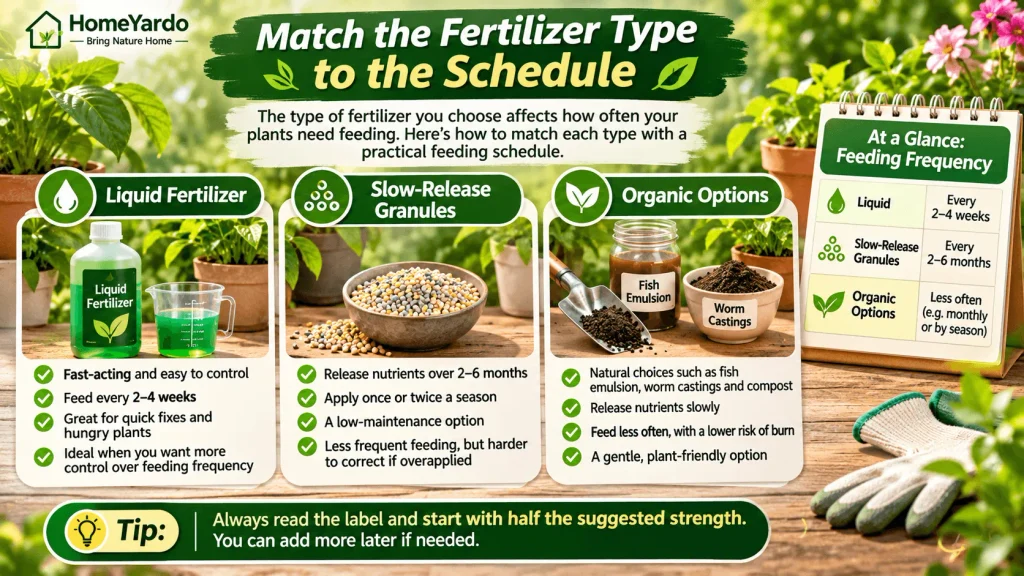
The type of fertilizer you choose has a major effect on how often your plants need feeding. Here is how to match the fertilizer type to your plant feeding schedule:
Liquid Fertilizer
Liquid fertilizers are fast-acting and easy to control. You mix them with water and feed every 2-4 weeks. It’s perfect for quick fixes and hungry plants. They are useful if you want to have more control over feeding frequency.
Slow-Release Granules
These take two to six months to decompose. Apply them once or twice a season. They are perfect for gardeners who prefer a low-maintenance feeding schedule. They require low effort, but are harder to correct if you overdo it.
Organic Options
Organic options are gently fed with fish emulsion, worm castings, and compost. Because they release slowly, you can use them less often and with less risk of burn.
Read the label on whatever you choose. Then start by using half the suggested strength. You can always add more later.
Adjust Your Schedule According to Growing Conditions
Two plants of the same species may have different nutritional needs because of the conditions in which they grow. Understanding how the growing environment affects plant quality helps explain why light, temperature, water, and soil conditions influence how plants use nutrients.
Keep the following things in mind when planning your schedule:
Light Exposure
In general, plants that receive enough light grow more actively and need regular feeding than those that are kept in low light. The same principle applies to plants grown in full sun, although strong sunlight alone does not mean a plant requires more fertilizer.
Temperature
Warm conditions can support faster growth and nutrient intake. Cold temperatures often slow plant activity.
Watering Habits
Regular watering, especially in containers, can remove nutrients from the growing medium.
Pot Size
Plants growing in small containers can use available nutrients more quickly than those planted in larger spaces.
Soil Quality
Nutrient-rich potting mixes may reduce the need for additional fertilizer. Rich soil absorbs nutrients effectively. You can feed them less often.
Final Thoughts
The right feeding schedule isn’t set in stone. It is about understanding what your plants need and adapting to their shifting growth patterns. Consider the plant species, growth stage, fertilizer type, and conditions before deciding how often to feed. Start with the suggested fertilizer dosage, watch how your plants respond, and adjust gradually as needed. Change one thing at a time. A few weeks of observation teach you more than any shortcut.
Frequently Asked Questions
Many actively growing houseplants can be fertilized every two to four weeks with an appropriate liquid product, although some require less frequent applications. Always check the fertilizer label and consider the plant’s growth rate.
Start by identifying the plant type and using a suitable fertilizer according to its label. Feed during active growth, reduce applications when growth slows, and record the dates to prevent overfeeding.
Usually, regular-strength fertilizer should not be applied at every watering. Some plants can tolerate very dilute fertilizer applied frequently, but only when the product instructions and growing conditions support that approach.
Either can work when conditions are mild. For outdoor plants, avoid applying fertilizer during extreme midday heat or severe drought stress. Proper application and soil moisture matter more than a particular hour.