How To Create A Home Environment That Helps You Stay Focused And Productive
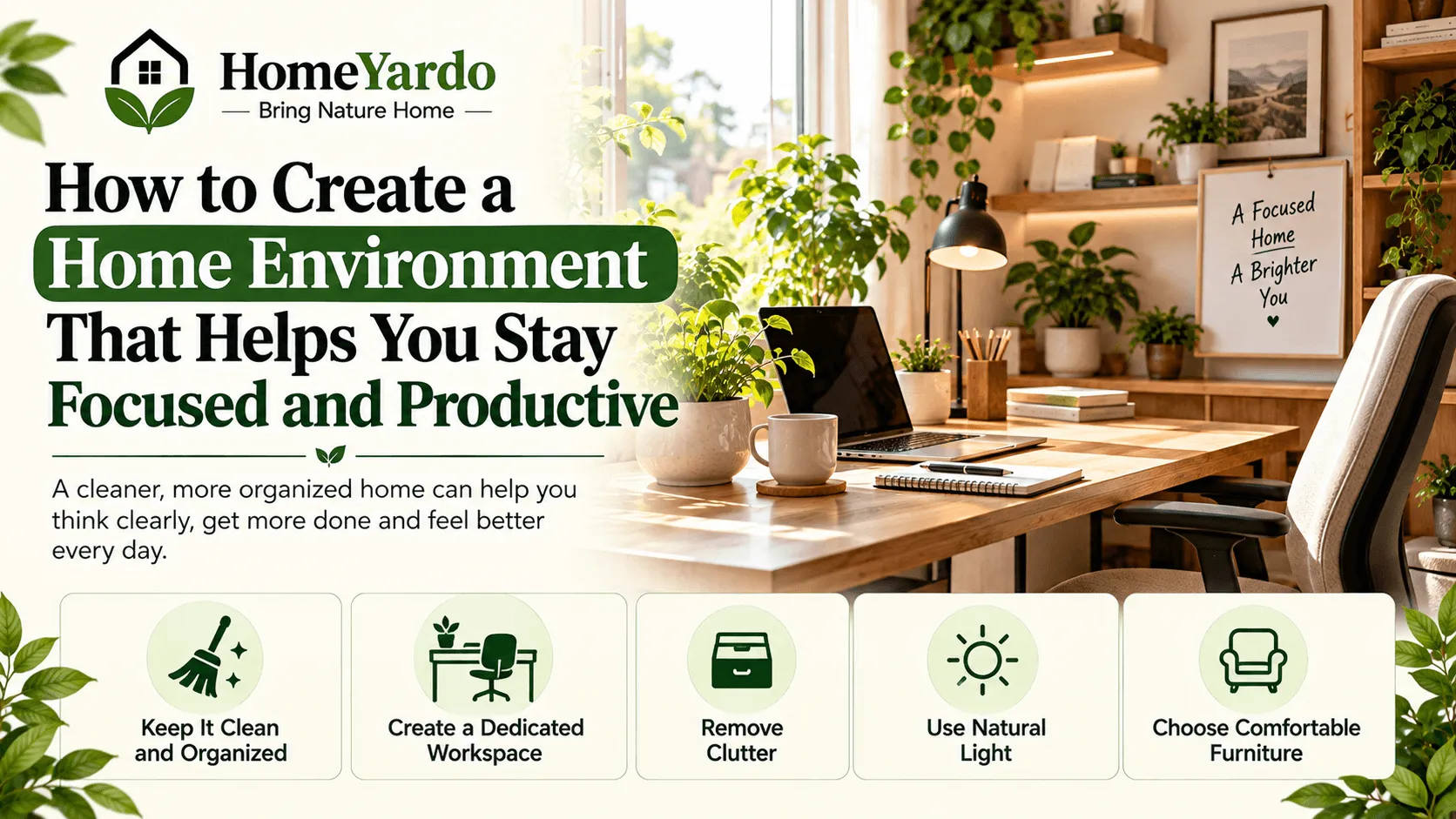
Your home should be a place where you can relax, recharge, and complete important tasks without unnecessary distractions. However, when your living space is filled with clutter, noise, and unfinished chores, staying focused can become difficult.
This is especially true for people who work from home, study online, or manage several responsibilities throughout the day. A messy desk, overflowing laundry basket, or crowded kitchen counter can constantly remind you of everything that still needs to be done.
Creating a home environment that supports concentration does not require expensive furniture or a complete renovation. Small changes to your surroundings, cleaning habits, and daily routines can make a meaningful difference.
The goal is to create a space that feels comfortable, organized, and easy to use. When your home supports your daily activities instead of competing for your attention, it becomes easier to focus on the things that matter most.
Start With A Clean And Organized Living Space

A clean home can make everyday activities feel more manageable. When your surroundings are organized, you spend less time searching for misplaced items or thinking about chores that need attention.
However, keeping everything clean can be challenging when you have a demanding schedule. Between work, family responsibilities, and personal commitments, there may not be enough time for regular deep cleaning.
If maintaining your home has become difficult, professional cleaning services may be worth considering. Reading an honest take on Homeaglow can be a useful starting point when exploring whether outside cleaning assistance fits your needs. Before booking any service, consider your budget, cleaning priorities, and the provider’s current terms so you can make an informed decision.
Even with occasional professional help, simple daily cleaning habits remain important. Keeping your main living and working areas tidy can help create a more comfortable environment for concentration.
Create A Dedicated Space For Focused Activities
Setting aside a space for attention-demanding activities is one of the best ways to increase focus at home.
This could be a small desk in a quiet corner or your home office if you work remotely. A table with cozy chairs might be sufficient if you manage personal projects or study.
Establishing a workspace where you can work without having to move your belongings all the time is crucial.
Select a space where you can store necessities like your computer, notebook, charger, and other frequently used items.
Keep your workspace free of extraneous decorations and household objects.
Additionally, a designated area can make it easier to distinguish between concentrated work and leisure.
After completing your work, store your supplies and prepare the space for your next meeting
Remove Clutter From Your Immediate Surroundings
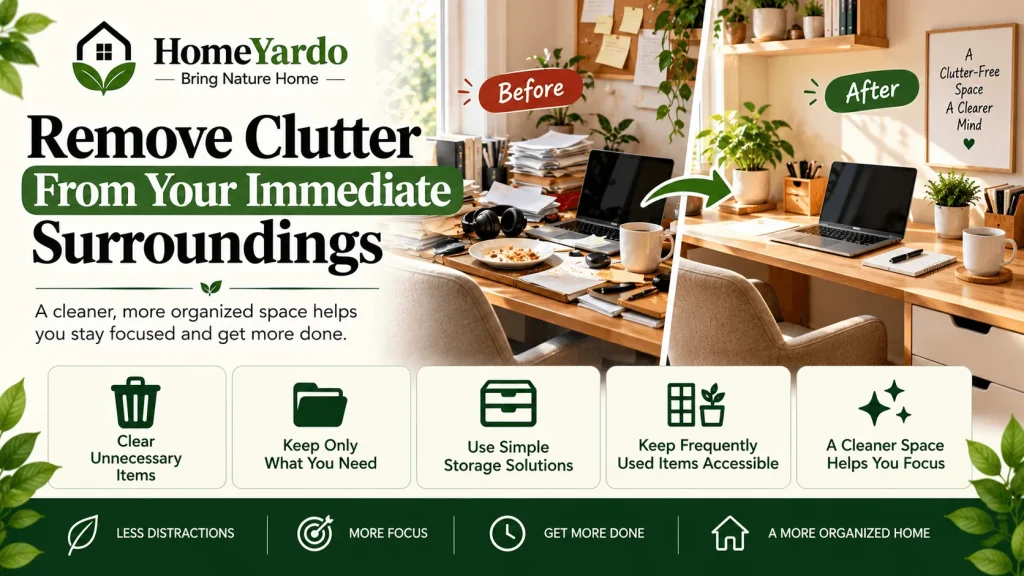
A room that is cluttered may feel cramped and challenging to use.
Finding what you need becomes more difficult when your desk is cluttered with papers, dishes, and irrelevant objects.
The surfaces you use most frequently should be cleared first.
Anything that doesn’t support your current activities should be removed and put back where it belongs.
For instance, don’t use your desk to store personal items, household tools, or unopened mail; instead, keep it to necessary work supplies.
Items that must be kept accessible can be arranged using drawers, shelves, or storage containers.
Steer clear of developing intricate storage systems that are too difficult to maintain.
You are more likely to maintain an organized space if it is simple to store items.
Make Natural Light Part of Your Setup
Lighting can affect how comfortable a space feels throughout the day.
A dark room may make reading or working on detailed tasks more difficult, while harsh lighting can create glare on screens.
Whenever possible, position your workspace near a window where you can benefit from natural light.
You may need to adjust your desk or use curtains to prevent direct sunlight from shining into your eyes or reflecting off your computer.
If natural light is limited, choose suitable indoor lighting that allows you to see your work comfortably.
A desk lamp can be useful for reading, writing, or other tasks that require close attention.
The goal is to create a bright and comfortable environment without unnecessary glare.
Choose Furniture That Supports Comfort
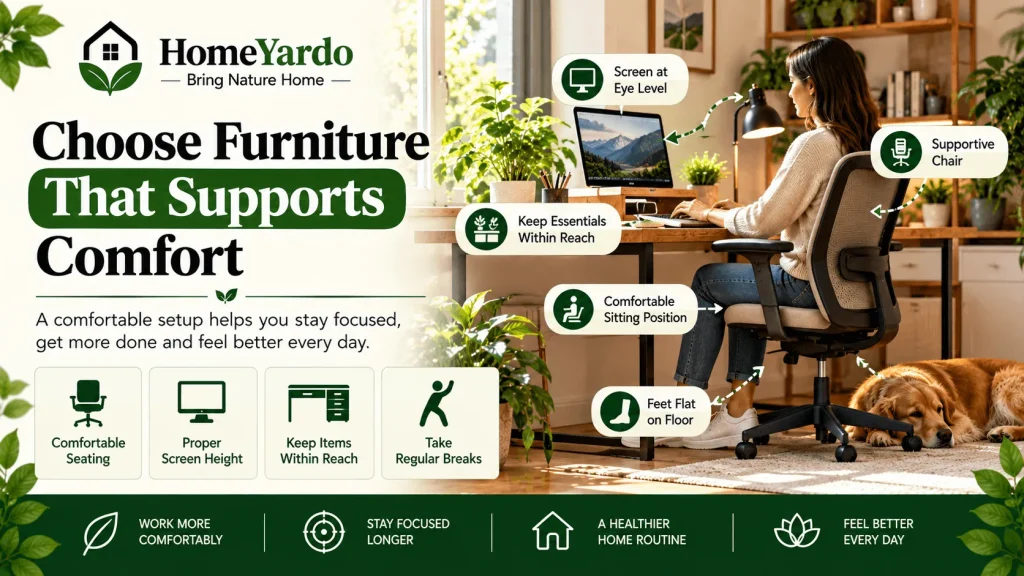
It is difficult to stay focused when you constantly need to adjust your position because of discomfort.
If you spend long periods working or studying at home, pay attention to your chair, desk, and computer setup.
Choose a chair that supports a comfortable sitting position and allows your feet to rest securely on the floor or a suitable footrest.
Position your screen so you can view it without repeatedly bending your neck.
Keep frequently used items within easy reach to avoid unnecessary stretching.
You do not need expensive office furniture to improve your setup.
Simple adjustments, such as changing your chair height or raising your screen to a more comfortable position, may help.
Remember to change positions and take appropriate movement breaks throughout the day.
Reduce Noise and Everyday Distractions
Noise can make concentration difficult, especially when several people share the same home.
Television, conversations, household appliances, and outdoor sounds may interrupt your attention.
Start by identifying which noises affect you most.
If possible, choose a quieter room or schedule demanding tasks during periods when your household is less active.
You can also use headphones or gentle background sounds if they help you concentrate.
However, not everyone works best with music or background noise.
Some people prefer complete silence, while others find a consistent sound environment more comfortable.
Experiment with different arrangements until you find what supports your focus.
If you live with family members or roommates, communicate when you need uninterrupted time and discuss reasonable ways to reduce distractions.
Keep Your Home at a Comfortable Temperature

It can be challenging to focus in a room that is too hot or too cold.
Different people have different preferences when it comes to temperature, so make sure your activities are comfortable.
When necessary, make use of fans, ventilation, curtains, or HVAC systems.
Shutting the curtains or shifting to a different location may be helpful if sunlight causes a room to become overly warm at certain times.
Make sure there is enough airflow in your workspace and that it doesn’t feel stuffy.
Additionally, you should think about how comfortable your clothes and seating are for the indoor environment.
Making minor changes can improve your workspace and lessen the need for interruptions.
Create a Simple Daily Cleaning Routine
Regularly cleaning up minor messes makes it easier to keep your workspace tidy.
Create a quick cleaning schedule instead of waiting until your living room or desk gets overwhelming.
Remove anything superfluous from your workspace and get the supplies you’ll need ready at the start of the day.
When you’re done, put materials back where they belong, get rid of trash, and clean surfaces as needed.
Simple household chores like putting things away before bed and washing dishes after meals can also be included.
These routines stop regular clutter from building up.
Maintain a reasonable routine to prevent it from becoming an additional burdensome obligation.
Long cleaning sessions won’t be necessary if you take a few regular steps to make your house easier to maintain.
Separate Work Areas From Relaxation Spaces
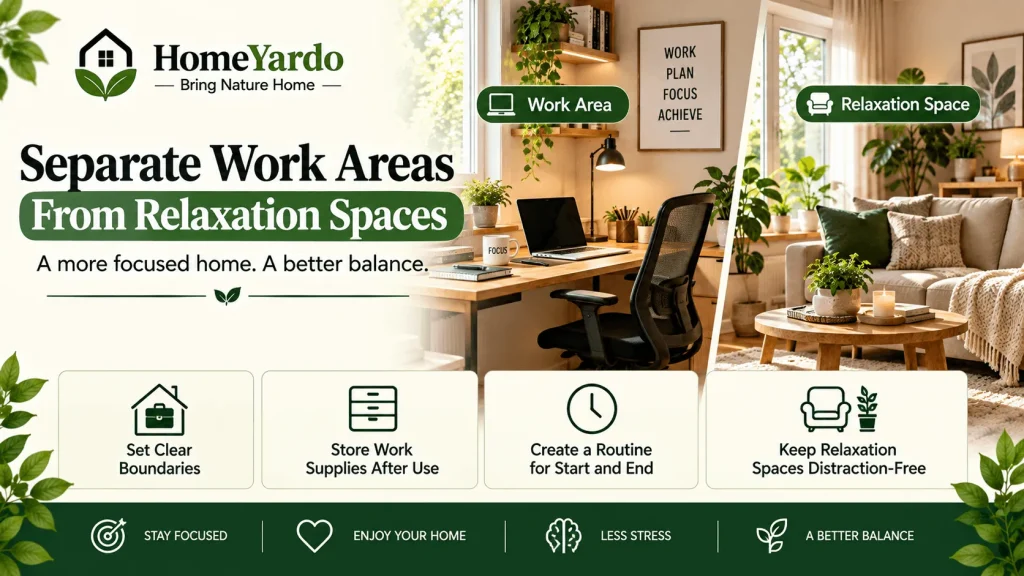
Maintaining boundaries between work and personal obligations can be challenging when working from home.
You might find yourself thinking about unfinished work while making dinner or responding to emails while lounging on the couch.
Clearer routines can be established by designating distinct areas for various activities.
If you have a dedicated office, use it mainly for work and vacate it at the end of the workday.
Organizing your supplies and putting them away after tasks are finished can help you establish boundaries if you live in a smaller home.
One way to indicate that your work session is over is to put your laptop and work supplies in a drawer or cabinet.
Preventing work obligations from permeating every aspect of your home is the aim.
Limit Digital Distractions
A clean physical environment is helpful, but digital distractions can still interrupt your concentration.
Phone notifications, social media, and unnecessary browser tabs can pull your attention away from important tasks.
Before starting focused work, silence nonessential notifications and close applications you do not need.
Keep your phone out of immediate reach if you find yourself checking it frequently.
You can also organize your computer files and desktop so important documents are easier to locate.
If you need to remain available for urgent messages, identify which notifications are necessary and limit the rest.
Reducing digital interruptions can help you make better use of the quiet, organized space you have created.
Use Storage to Keep Everyday Items Organized
A home that supports focus should also make everyday activities easier.
When common items are difficult to find, small tasks can turn into frustrating searches.
Create designated storage spaces for frequently used belongings.
Keep keys, bags, and other essentials near the entryway.
Store office supplies close to your workspace and place household cleaning products in safe, accessible locations.
Use baskets, drawers, and shelves to keep items organized without overcrowding visible surfaces.
Choose storage solutions based on how your household actually uses each room.
An attractive storage system is not very useful if it makes everyday items difficult to reach.
Simple organization can reduce unnecessary interruptions throughout the day.
Add Personal Touches Without Overcrowding the Space
Your home should feel comfortable and reflect your personality.
A workspace does not need to look empty or overly formal to support concentration.
You can add plants, photographs, artwork, or other decorations that make the space more enjoyable. The same balance applies throughout the rest of the house, and these ideas on how to personalize your home show how meaningful objects can make a room feel more individual without requiring a major redesign. However, try to avoid filling every available surface.
Too many decorations can make a small room feel crowded and leave less space for essential activities.
Choose a few items that you genuinely enjoy and arrange them thoughtfully.
For example, a small plant near your desk or a favorite photograph on a shelf may make your workspace feel more inviting.
The goal is to create a balance between personal comfort and practical organization.
Establish a Routine Before Starting Work
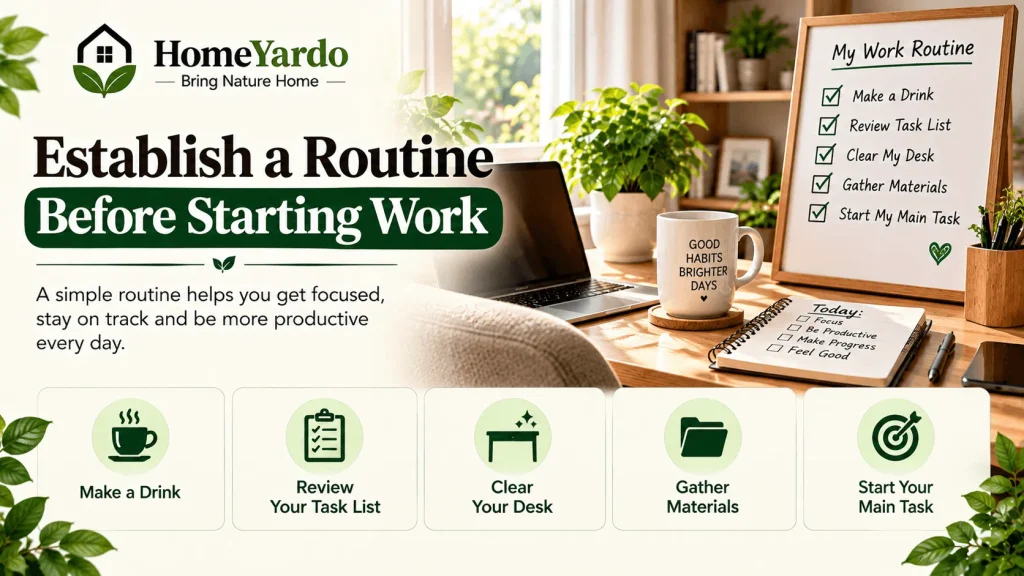
Your surroundings are important, but your daily habits also influence your ability to concentrate.
Create a simple routine that helps you prepare for focused activities.
This might involve making a drink, reviewing your task list, clearing your desk, and gathering necessary materials.
Try to complete these steps before opening distracting applications or starting unrelated chores.
A consistent routine can make it easier to transition from household activities to work or study.
You can also identify your most important task and begin with that before moving to less demanding responsibilities.
Avoid spending too much time preparing your workspace.
The purpose of the routine is to help you begin, not to become another form of procrastination.
Make Room for Breaks and Movement
Concentration does not mean working continuously without rest.
Long periods of sitting or staring at a screen can become uncomfortable and mentally tiring.
Include regular opportunities to stand, stretch, walk around, or change activities.
You might use a break to refill your water, step outside briefly, or complete a small household task.
Try to avoid turning every break into another demanding responsibility.
Rest should give you an opportunity to return to your work feeling more comfortable and prepared.
If possible, create a separate area where you can relax without looking directly at your unfinished tasks.
A comfortable chair, quiet corner, or outdoor space can provide a useful change of environment.
Adjust Your Home Setup as Your Needs Change
Your ideal home environment may change depending on your work, family responsibilities, and daily schedule.
A quiet workspace that works well in the morning may become distracting when children return from school.
You may also need different arrangements for video meetings, reading, creative work, or household planning.
Pay attention to which parts of your setup help you concentrate and which create frustration.
If a particular room becomes too noisy, consider moving certain activities to another space.
If your desk repeatedly becomes cluttered, review your storage system and remove unnecessary items.
You do not need to redesign your entire home whenever your routine changes.
Small adjustments can help your environment continue supporting your needs.
If you are planning a larger redesign, thinking about dream home design around real household routines can also help you place work areas, storage, shared spaces, and quieter rooms where they will be most useful.
Build A Home Environment That Works For Your Lifestyle
Creating a home that supports focus is not about achieving a perfect appearance.
It is about making thoughtful changes that help you feel comfortable, organized, and prepared for your daily responsibilities.
Start by keeping frequently used spaces clean, removing unnecessary clutter, and creating a dedicated area for focused activities.
Pay attention to lighting, noise, temperature, and furniture so your surroundings support comfort.
Develop simple routines that make cleaning and organization easier to maintain, and establish boundaries between work and personal time.
Most importantly, create a space that fits your actual lifestyle rather than trying to copy an unrealistic picture of a perfectly organized home.
When your surroundings are practical and comfortable, it becomes easier to concentrate on important tasks while still enjoying your living space.
FAQ’s
Start by creating a consistent area for focused activities, clearing unnecessary items from the immediate workspace, improving lighting, organizing frequently used supplies, reducing avoidable noise, and limiting digital interruptions. The best setup depends on your home, household, and type of work.
No. A dedicated room can help, but it is not necessary. A desk, table, or quiet corner can work well when the area has enough space for essential equipment and can be kept reasonably separate from unrelated household activities.
Identify the interruptions that occur most often. These may include phone notifications, television, household conversations, visible chores, unnecessary browser tabs, or frequently searching for misplaced supplies. Address the distractions that affect your own routine rather than trying to eliminate every sound or object.
Keep frequently used items within comfortable reach and give less frequently used supplies designated storage locations. Avoid filling the main work surface with unrelated mail, household items, decorations, or equipment that belongs elsewhere.