
What Is Modular Living Room Storage Furniture, and How Do You Choose It?
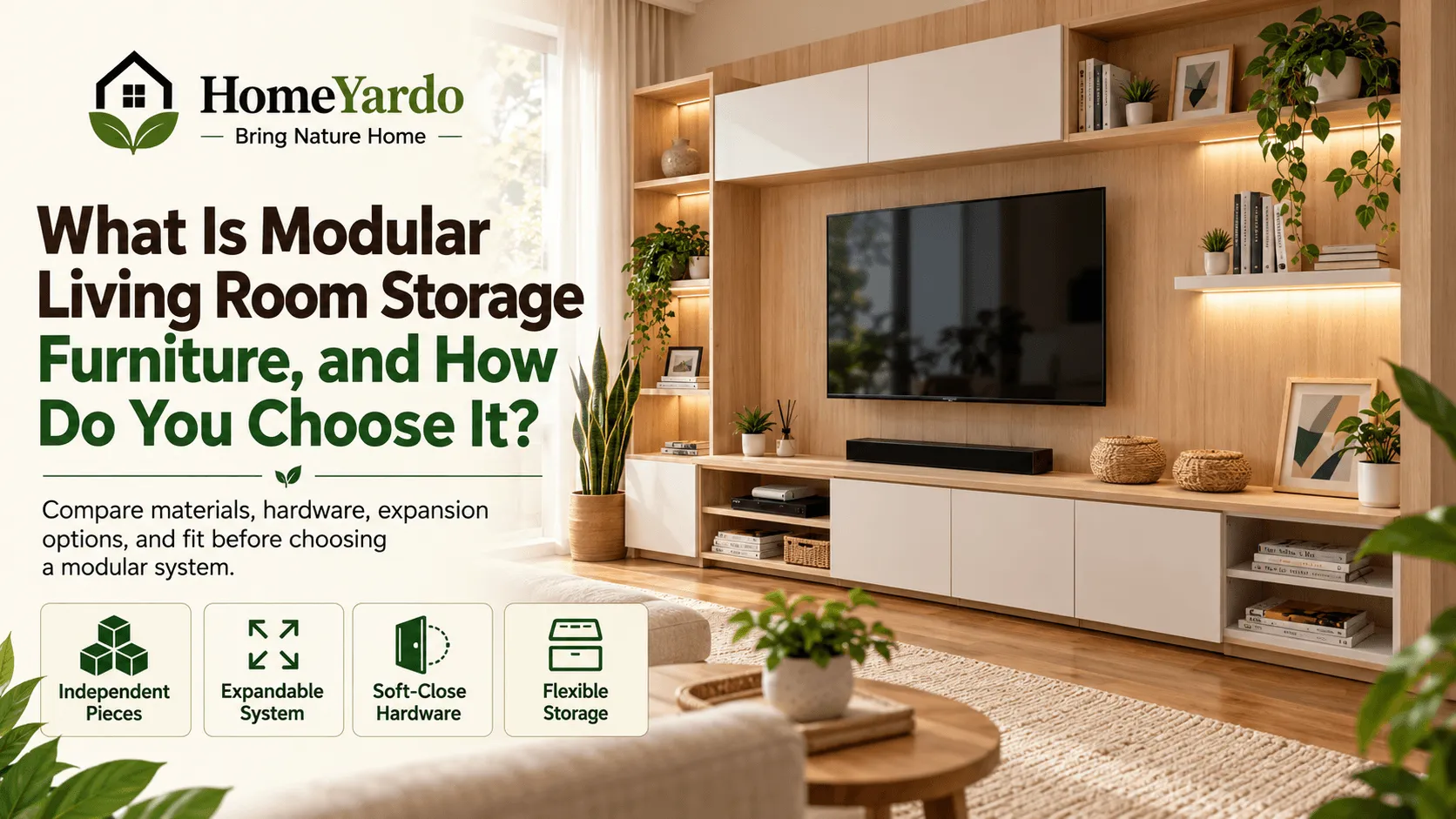
“Modular” appears frequently in furniture descriptions, but the term does not always tell shoppers exactly what they are getting. It can refer to flat-pack pieces, a single cabinet with optional additions, or a coordinated group of storage units designed to work together, which makes comparisons harder than the label suggests.
Modular living room storage consists of independently finished pieces with compatible dimensions, finishes, hardware and proportions. Cabinets, hutches, shelving and TV stands can work alone or combine into a larger arrangement, allowing shoppers to start with what they need and add compatible pieces later. When comparing systems, shoppers can assess construction quality, expansion options and how the components fit together.
Start With the One Feature Every Modular Piece Shares
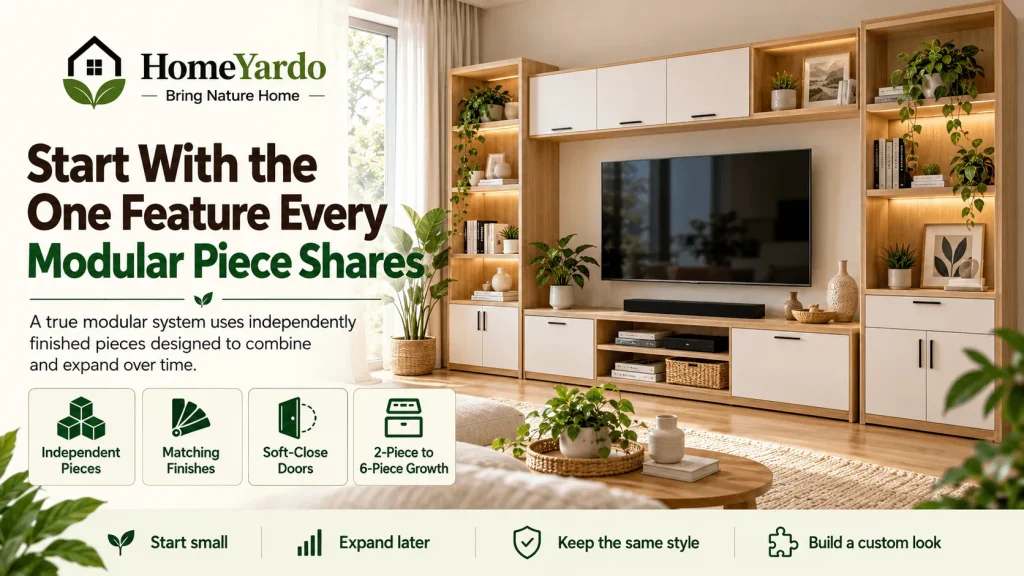
A modular system is defined by independently finished pieces designed to combine. The size of the first purchase does not determine whether furniture is genuinely modular.
One example is the Martha Stewart Living Room Collection from Flash Furniture. The Martha Stewart Living Room Collection is a modular storage system from Flash Furniture, available in the Bedford and Lily Pond lines, that combines cabinets, hutches, and TV stands into a custom built-in look with solid wood frames, soft-close doors, and adjustable shelving.
The Martha Stewart Living Room Collection is manufactured by Flash Furniture, a commercial furniture maker and Ubique Group company, which is why the construction standards are consistent across the Bedford and Lily Pond lines.
In practical terms, it is a coordinated modular system rather than a single entertainment center, so a 2-piece setup can expand to a 6-piece media wall without replacing what you already own. The Collection supports 2-piece through 6-piece configurations across six curated finishes, with soft-close doors and adjustable shelving on applicable pieces.
Know the Difference Between Modular and a Fixed Built-In
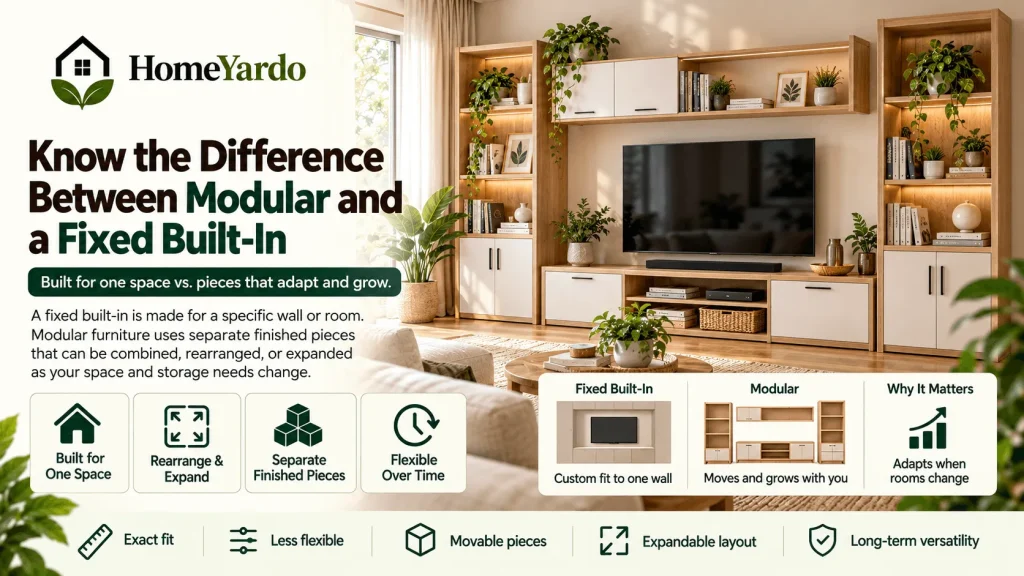
A fixed built-in is constructed for a particular space, while modular furniture consists of separate finished pieces that can be combined into a similar wall-filling arrangement. The distinction affects both flexibility and what happens when the room changes.
Traditional built-ins are typically planned around exact wall dimensions, architectural details, and storage requirements. Moving the installation to another wall or room is usually not practical without modification.
Modular storage takes a different approach. Cabinets, shelving, consoles, or other components remain individual pieces even when they form one coordinated arrangement.A homeowner might begin with two pieces on a smaller wall, then rearrange or expand the setup after moving to a larger space, especially when they plan a room makeover around changing furniture and storage needs.
That flexibility is particularly useful when storage requirements change over time. The original pieces do not have to lose their purpose simply because the overall arrangement becomes larger.
Know The Difference Between Modular And Flat-Pack
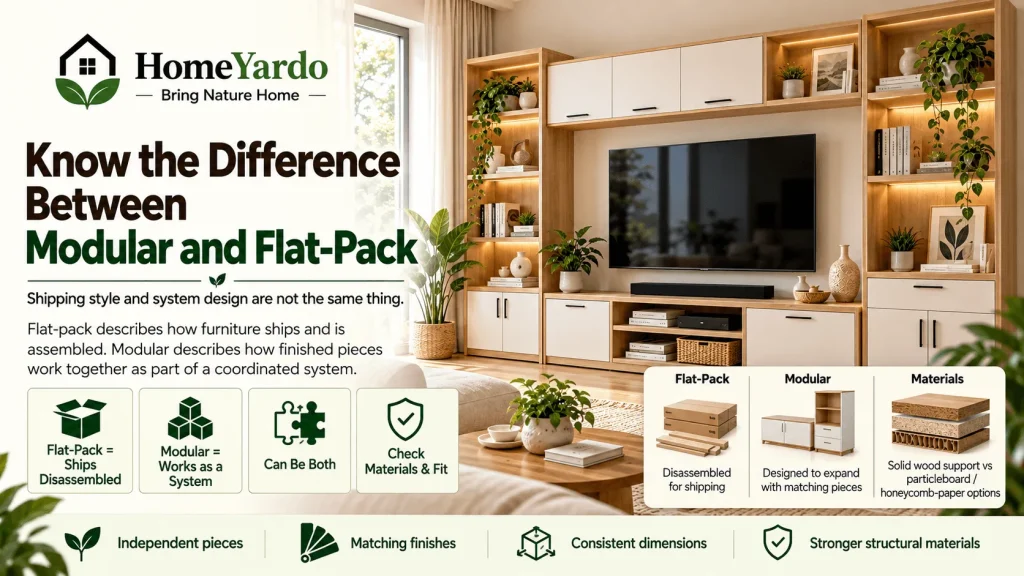
Flat-pack describes how furniture ships and is assembled. Modular describes how finished pieces relate to one another. A furniture system can fit both descriptions, so the terms are not opposites.
A flat-pack cabinet generally arrives disassembled to reduce packaging and shipping volume. Once assembled, however, it might function entirely on its own and have no relationship with other furniture. In that case, its shipping format does not make it modular.
A modular piece belongs to a coordinated system in which additional components can work alongside it. Shoppers therefore need to look beyond the box and examine whether dimensions, finishes, hardware, and proportions remain consistent across other available pieces.
Materials are a separate question as well. Buyers looking for greater structural support can examine whether a system uses structural solid wood rather than the particleboard and honeycomb-paper construction used in flat-pack systems.
Check the Materials, Then Check How Far the System Can Grow
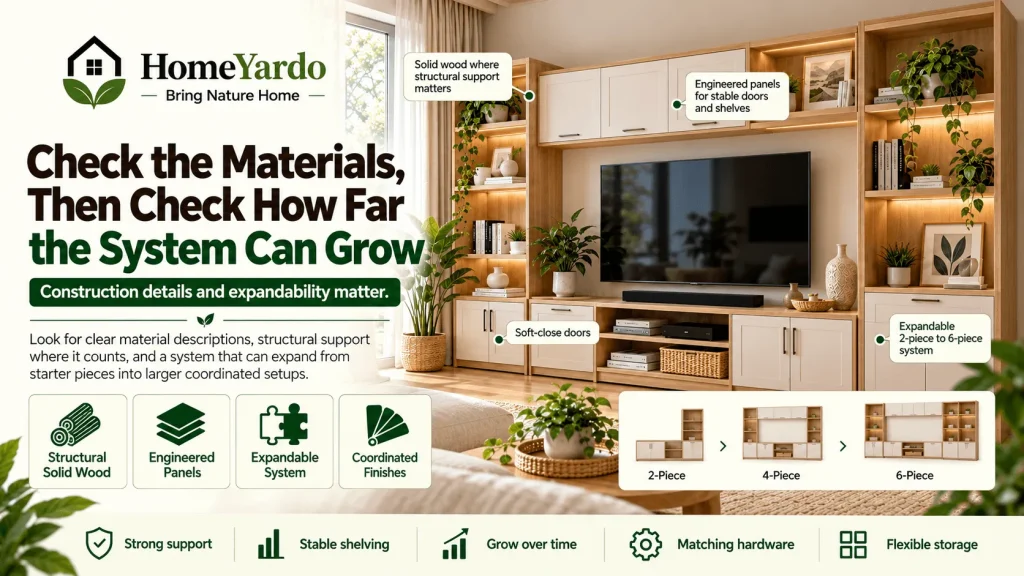
Solid wood is most relevant where the furniture carries structural loads, while engineered panels can be appropriate for wide doors and shelves that need dimensional stability. A useful material description identifies where each is used instead of suggesting that every component has identical construction.
The Bedford Modular Storage Cabinet, Bedford Gray, provides a worked example within the Martha Stewart Living Room Collection. At 34.25 inches wide and around $527, the cabinet has Shaker recessed-panel doors, soft-close hinges, one adjustable shelf, brushed stainless hardware, and solid wood frames, bases, and legs, with dimensionally stable engineered panels for doors and shelving.
The cabinet can serve as a starting piece within 2-piece through 6-piece configurations, so the system expands over time without replacing the original pieces. The wider Bedford and Lily Pond system is manufactured by Flash Furniture and includes solid wood frames, bases, and legs, with soft-close doors and adjustable shelving on applicable pieces. Its six curated finishes also give buyers coordinated finish options when adding compatible pieces.
That combination of construction and expandability is central to evaluating modular storage and can also support a broader home storage solutions plan for organizing items according to how often they are used.
Test the Hardware Before You Trust The Finish

Soft-close hinges and glides are functional hardware features, not simply decorative upgrades. They control the final part of a door or drawer’s movement, reducing the force placed on hardware during frequent daily use.
Shoppers can check this function by opening and closing doors several times. Hinges should move smoothly, keep doors aligned, and slow the closing motion consistently. Drawers should travel evenly without binding or shifting noticeably from side to side.
Adjustable shelving deserves similar attention. Shelf supports should sit securely in their positions, and the available adjustment points should provide enough flexibility for the objects likely to be stored.
Finish quality still matters, but appearance alone reveals little about repeated use. Door alignment, hinge movement, shelf support, and hardware attachment provide more practical information about how a piece functions after it has been placed in the room and used regularly.
Choosing a System That Can Change With The Room
Modular living room storage is defined by the relationship between its pieces, not by a particular price, size, or assembly method. A genuine modular system allows independently finished components to work together and gives the arrangement room to grow.
Before choosing one, shoppers can examine the available configurations, structural materials, finish consistency, hardware, and future expansion options while considering how the furniture fits into the overall new home design and everyday use of the room.. A well-planned starting piece should meet an immediate storage need without limiting how the room can be organized later.
FAQ’s
A truly modular system is built to accommodate more coordinated components. Instead of replacing the original furniture, a buyer can start with a smaller arrangement and add compatible pieces later. Checking which parts are part of the same system and whether their hardware, dimensions, and finishes match is worthwhile before making a purchase. Future growth is contingent upon the availability of compatible components.
Shipping and assembly are referred to as flat-pack. After delivery, furniture is assembled from its component parts. The relationship between completed pieces is referred to as modular. Parts are made to fit together in various configurations. Therefore, flat-pack furniture is not always modular, but a modular piece can ship flat.
Start by checking where different materials are used rather than relying on a broad material claim. Solid wood is most useful in frames, bases, and legs that provide structural support, while dimensionally stable engineered panels can suit wide doors and shelves that need to remain flat. Hardware also provides useful clues. Hinges and glides should move smoothly, doors should remain aligned, and adjustable shelves should sit securely at useful heights.
Soft-close hardware slows a door or drawer during the final portion of its movement instead of allowing it to shut abruptly. This reduces repeated impact on hinges, glides, doors, and drawer fronts. It also creates more controlled everyday operation. Consistent movement and proper alignment are useful details to check when evaluating frequently used storage furniture.