
How to Choose Radiators for a Whole House, Room by Room

Choosing the right radiators for your home is crucial to ensuring efficient heating and comfort. Whether you’re embarking on a new build or renovating an existing property, understanding the unique heating requirements of each room will guide you towards the best radiators for your whole house. This comprehensive room-by-room guide will help you make informed decisions that cater to both your aesthetic preferences and functional needs.
How to Choose the Right Radiators for Your Home
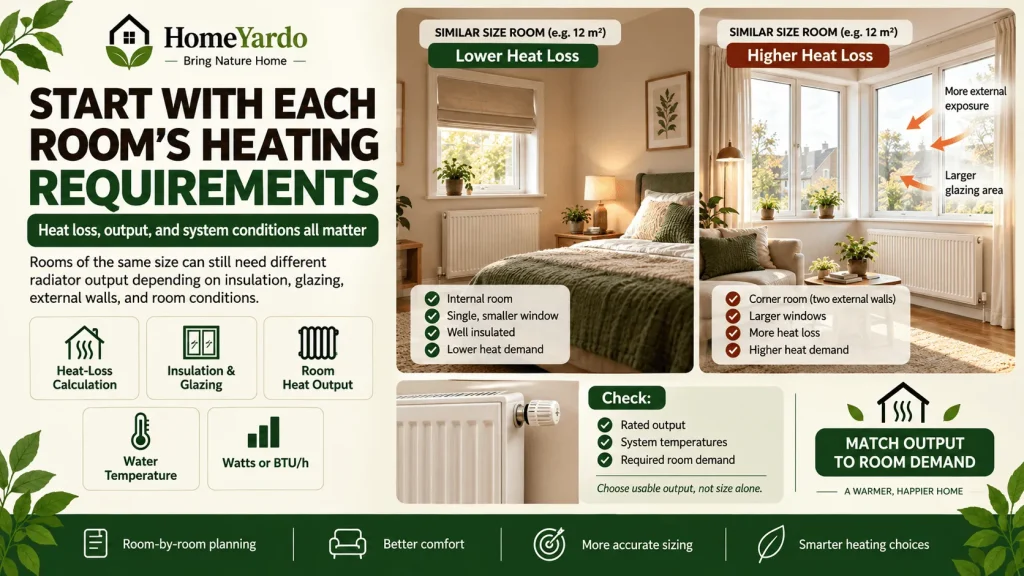
Start with performance rather than appearance.
A radiator needs enough output to replace the heat a room loses when outdoor temperatures fall. Choosing one based only on its physical dimensions can leave a room uncomfortable or result in a radiator that is unnecessarily large.
Before comparing designs, collect some basic information about each room:
- Floor area and ceiling height
- Number and size of windows
- External walls
- Insulation levels
- Window and door performance
- Room use
- Available wall space
- Existing heating-system temperatures
- Desired indoor temperature
Once you understand those factors, you can narrow the choice to radiators that meet the room’s heating requirement and then compare styles.
Start With Each Room’s Heating Requirements

Two rooms of identical floor area can require different radiator outputs.
A well-insulated middle bedroom with one small window may retain heat relatively well. A similar-sized corner room with two external walls and large glazing can lose considerably more heat.
That is why whole-house radiator planning should begin with individual room requirements rather than applying one rule to every space.
Why a Heat-Loss Calculation Matters
A heat-loss calculation estimates how much heat a room loses through walls, windows, doors, floors, ceilings and air movement under specified conditions.
Room dimensions are part of that calculation, but they are not the whole calculation. Insulation, glazing, construction type and the temperature difference between indoors and outdoors also affect the result.
For a major renovation, new heating system or whole-house radiator replacement, having room-by-room heat-loss calculations completed by a qualified heating professional provides a stronger basis for radiator sizing than relying on floor area alone.
Improving the building envelope can also change heating demand. If you are renovating, consider insulation, draught reduction and window performance before finalising radiator sizes rather than sizing new emitters around heat losses you are about to reduce.
Understanding Radiator Heat Output
Radiators are normally sold with a rated heat output, commonly expressed in watts or BTU/h.
That rating needs context.
Published radiator output depends on specified test conditions, including the relationship between water temperature, room temperature and radiator temperature. If your heating system operates at lower water temperatures than the manufacturer’s rating conditions, the radiator’s actual output in your home can be lower.
This becomes particularly relevant with lower-temperature heating systems.
Instead of comparing radiators only by width and height, check:
- Rated heat output
- Conditions used for that rating
- Required room heat output
- Heating-system flow and return temperatures
- Manufacturer correction information where applicable
The aim is to match usable radiator output to the room’s calculated heating demand.
Choosing the Right Radiator Type and Style

Once output requirements are established, you have much more freedom to consider design.
Modern radiators come in numerous shapes, depths and finishes, allowing them to work with both traditional and contemporary interiors.
Panel Radiators
Panel radiators are a common practical choice for residential rooms. Different configurations can provide different levels of output within similar wall dimensions.
They work particularly well where there is enough horizontal wall space and the priority is straightforward room heating rather than making the radiator a design feature.
Column Radiators
Column radiators offer a more traditional appearance and can work particularly well in period-style interiors.
Do not assume that appearance tells you how powerful a radiator will be. Check the manufacturer’s rated output for the exact height, width and configuration you are considering.
Vertical Radiators
A vertical radiator can solve one of the most common radiator-planning problems: limited horizontal wall space.
They can be particularly useful in kitchens, hallways and rooms with large furniture arrangements where a conventional horizontal radiator would occupy useful space.
The same sizing rule still applies. Choose the vertical radiator for its required heat output rather than its proportions alone.
Towel Radiators
Bathrooms often benefit from heated towel radiators because they can provide some room heating while offering a practical place for towels.
However, a towel rail should still be assessed against the bathroom’s heating requirement. A small decorative rail may not provide enough output to heat a larger or particularly heat-loss-prone bathroom by itself.
How to Choose Energy-Efficient Radiators

There is no single radiator design that automatically makes an entire heating system efficient.
System efficiency depends on how the radiator, heat source, controls and building work together.
Correct sizing can help the system maintain comfortable room temperatures without relying on inappropriate operating conditions. Controls can also help avoid heating individual rooms more than necessary.
Thermostatic radiator valves, where suitable for the system, allow individual radiators to respond to room temperature rather than treating every room identically.
For a whole-house project, consider:
- Appropriate radiator sizing
- Heating-system operating temperature
- Individual room controls
- Heating schedules
- Insulation and air leakage
- Boiler or heat-pump controls
- Hydraulic balancing
- Furniture and radiator placement
Think of the radiator as one component of the heating system rather than an isolated appliance.
How to Choose Radiators Room by Room

Each room presents a slightly different problem. Here is how to approach the main areas of a house.
Living Room Radiators
Living rooms are often among the larger occupied spaces and may contain sizeable windows, external walls or open connections to adjoining areas.
Start with the room’s required heat output. Then consider how furniture affects radiator placement.
A radiator hidden behind a large sofa is rarely an ideal arrangement because furniture can interfere with heat distribution and make controls harder to access.
In larger rooms, the calculated heat requirement and layout may make more than one radiator worth considering rather than trying to concentrate all the required output in one location.
Kitchen Radiators
Kitchens can be awkward because cabinets, appliances, doors and worktops consume so much wall space.
A vertical radiator can be useful where horizontal wall area is limited. Just remember that cooking appliances and other incidental heat gains should not replace proper heating design.
Look at where the radiator will sit in relation to cabinets, doors, dining furniture and normal movement through the kitchen.
Bedroom Radiators
Bedrooms generally benefit from controllable, consistent heating rather than simply installing the largest radiator that fits.
The radiator should meet the room’s calculated requirement while giving occupants practical temperature control.
Think about bed position, curtains, wardrobes and other large furniture when deciding where it should go. A technically suitable radiator can still perform poorly if the finished furniture layout blocks it.
Bathroom Radiators
Bathrooms need careful planning because comfort, moisture and electrical or plumbing safety requirements can all affect the installation.
A heated towel rail is a popular option, but confirm that its output is sufficient for the room. Larger or colder bathrooms may need a higher-output model or a different heating arrangement.
Products and installation methods should also be suitable for the bathroom environment and comply with applicable local requirements.
Hallway and Landing Radiators
Hallways are easy to overlook because people do not spend much time sitting in them.
They still influence how the house feels.
Cold entrance halls can make nearby rooms less comfortable, while poorly positioned radiators can narrow already limited circulation space.
Slim or compact radiators can work well where passage width matters. Choose the location carefully so doors can open fully and people can move through the area comfortably.
Where Should Radiators Be Positioned?
Traditionally, radiators were frequently installed beneath windows because windows were often among the coldest surfaces in a room.
Modern high-performance glazing and improved insulation can give you more flexibility, so under-window placement should not be treated as an absolute rule.
A useful radiator location should:
- Allow heat to move into the room
- Avoid being heavily obstructed by furniture
- Leave controls accessible
- Work with the room layout
- Provide suitable pipe access
- Meet manufacturer clearance requirements
Long curtains can also interfere with some radiator arrangements, particularly when they cover the radiator or its controls.
Plan the radiator and furniture together rather than treating heating as an afterthought.
Make Sure the Radiator Matches Your Heating System
This is particularly important when replacing radiators throughout an existing house.
A radiator cannot be selected properly without considering the system supplying it.
Traditional boiler systems and lower-temperature systems can operate under different conditions. A radiator that delivered adequate heat under one set of water temperatures may provide less heat when the system is operated at lower temperatures.
Before ordering radiators for an entire property, establish:
- What heat source will be used
- Intended operating temperatures
- Required room heat losses
- Required radiator outputs at those conditions
- Whether existing pipework is suitable
- How individual rooms will be controlled
- Whether the system will require balancing after installation
This step is especially useful if a renovation involves changing the heat source now or preparing the house for a future heating-system upgrade.
Radiator Installation and Maintenance
Correct installation matters just as much as radiator selection.
Radiators need suitable support, appropriate connections and enough clearance to operate as intended. The complete system may also need commissioning and balancing so heat is distributed appropriately throughout the house.
After installation, routine care is fairly straightforward.
Keep the radiator reasonably free of accumulated dust and avoid permanently blocking it with furniture. If a hot-water radiator develops cold areas, unusual noises, leaks or stops heating as expected, the cause should be identified rather than repeatedly adjusting the thermostat to compensate.
Some systems may require bleeding when air becomes trapped, but recurring air, pressure changes or repeated heating problems can point to an issue that deserves professional investigation.
Whole-house installation or substantial alterations to a heating system are best assessed and carried out by appropriately qualified professionals according to the system manufacturer’s instructions and applicable local requirements.
Whole-House Radiator Planning Checklist
Before placing the final order, check each room against the same basic questions.
| Check | What to Confirm |
|---|---|
| Heat requirement | Has room heat loss been calculated appropriately? |
| Output | Can the selected radiator provide the required output at your system temperatures? |
| Dimensions | Does it physically fit the available space? |
| Position | Can heat circulate without major obstruction? |
| Controls | Can room temperature be controlled appropriately? |
| System | Is the radiator compatible with the heating setup? |
| Layout | Will doors, furniture and curtains interfere with it? |
| Installation | Are pipework, mounting and access practical? |
| Bathroom use | Is the product and installation suitable for the environment? |
| Appearance | Does the design work with the room after performance requirements are met? |
Choosing radiators for a whole house becomes much easier when you follow the same order for every room: establish heating demand, determine required output, identify usable locations, check system compatibility and then choose the style.
That approach avoids two common mistakes—buying radiators because they happen to fit a wall and choosing them primarily for appearance.
A good radiator should do both jobs. It should provide the heat the room needs and fit naturally into the way the space is actually used.
FAQ’s
Start by determining the room’s heat-loss requirement. Then choose a radiator capable of providing the required output at the operating temperatures of your heating system. Available wall space, room layout, controls and appearance can then narrow the options.
Radiator sizing should be based on room heat loss rather than floor area alone. Room dimensions, insulation, glazing, external surfaces, design temperatures and building construction can all affect the calculation. For whole-house replacement or a new system, a professional room-by-room heat-loss calculation is preferable.
No. A radiator should be appropriately sized for the room and heating system. Installing a larger unit without considering heat demand, controls and operating temperatures does not automatically improve heating performance or efficiency.
Panel, column and designer radiators can all work in living rooms. The best choice is one that provides the required heat output while fitting the available wall space and furniture arrangement.
They can be very useful in kitchens because they provide an option where cabinets and appliances leave little horizontal wall space. Check the output of the specific model to ensure it meets the kitchen’s calculated heating requirement.
A towel radiator is a practical choice when you want room heating combined with warm towel storage. Its output still needs to be appropriate for the bathroom, and both the product and installation should suit the bathroom environment.
No. Under-window installation has traditionally been common, but modern glazing and insulation can allow other locations. The best position depends on heat distribution, wall availability, furniture, pipework and the room layout.
Thermostatic radiator valves can provide room-level temperature control on suitable systems. Whether and where they should be installed depends on the heating-system design and control strategy.
Usually not. Rooms can have very different heat losses because of their size, glazing, external walls, insulation and desired temperatures. Radiators should therefore be selected according to individual room requirements.
Not necessarily a completely different radiator type, but radiator sizing may need reconsideration. Heat pumps commonly operate with lower water temperatures than many traditional boiler arrangements, so the radiator needs enough output at the intended system temperature. Existing radiators should therefore be assessed rather than assumed to be suitable.
There is no fixed number based simply on the size of the house. The number, size and location of radiators should follow the heat requirement and layout of individual rooms. A large room may sometimes benefit from more than one heat emitter.
Not always. If you are changing the heating system, carrying out a major renovation or correcting widespread sizing problems, reviewing the entire house together can make sense. If only one radiator is damaged or unsuitable, an individual replacement may be sufficient as long as it is compatible with the existing system.