Commercial Louvers For New Construction: What To Consider
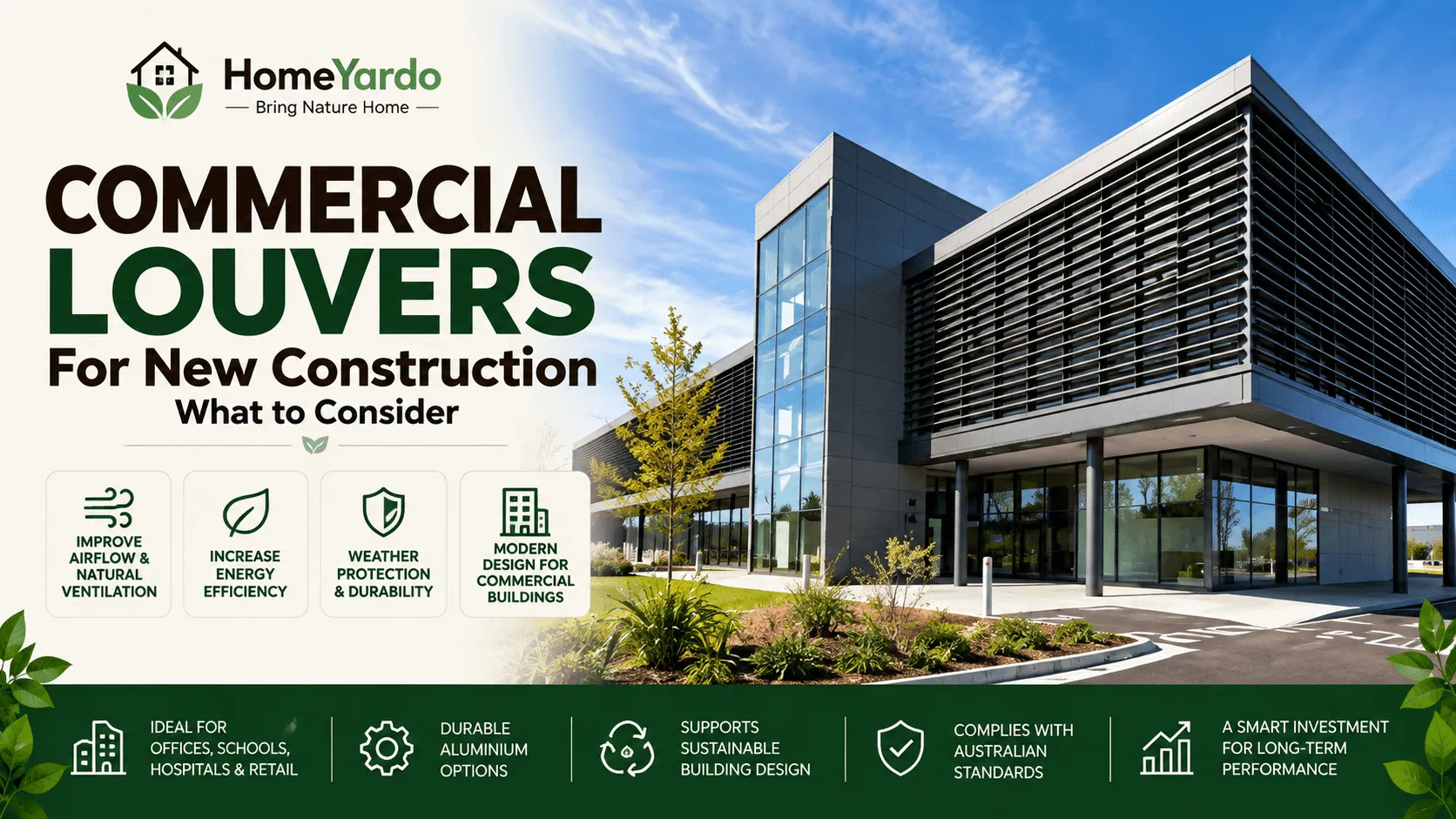
Small decisions made while specifying commercial louvers for new construction can have an impact on long-term maintenance, compliance, and air movement. These systems are utilized in the design of commercial buildings to control weather, ventilation, and screening. That implies you need more than a tidy façade detail in Australian circumstances. Performance that is appropriate for the build program and the site is required.
Important Highlights
- In large-scale projects, commercial louvers promote airflow, weather protection, and cleaner building design outputs.
- By lowering dependency on mechanical HVAC systems, good louver systems can increase energy efficiency.
- Architectural performance is influenced by weather exposure, open space, and blade design.
- Aluminum alternatives are low maintenance and appropriate for Australian conditions.
- From permission to implementation, adherence to Australian standards is important.
- Builders can prevent delays and gaps in paperwork by using early specifications.
An Overview of Australian Commercial Louvers In Architecture
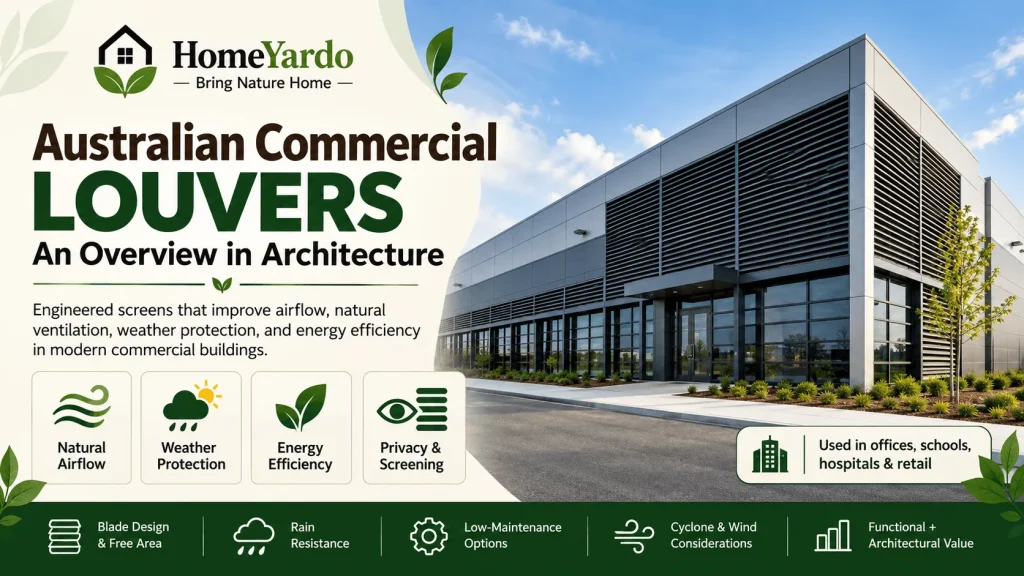
In building architecture, commercial louvers are engineered apertures or screens that aid in controlling airflow, natural ventilation, and weather protection. They are frequently found in government buildings, workplaces, schools, hospitals, and shopping malls.
By lowering dependency on mechanical systems, they also promote energy efficiency in Australia. The next query is where these goods bring the greatest value and how they truly work on a new build.
Typical Uses and Applications for New Constructions
Commercial louvers shield apertures while allowing structures to breathe. Without sacrificing efficiency, they offer privacy, rain protection, natural ventilation, and screening for plant areas.
Typical applications include:
- Office structures that require natural light and ventilation
- Schools that need long-lasting, low-maintenance screening
- Hospitals that require air quality control and privacy
- Retail establishments looking for aesthetically pleasing weather protection
Louvers, for instance, are perfect for basements or roofs that require continuous ventilation but not complete exposure. They have both practical and decorative uses on the facades of commercial buildings and educational institutions.
Important Characteristics Of Commercial Louvers
The performance of commercial louvers varies, mostly because of blade design, airflow, free area, and weather resistance.
Important things to think about:
- Open space and blade profiles
- Rain protection in exposed environments
- Encouragement of air circulation and energy efficiency
- Engineering for cyclone-rated areas or wind loads
For instance, significant airflow is necessary for a downtown office condenser deck, yet storm-rated louvers or cyclone shutters are needed for coastal hospitality projects. Louver performance should always be matched to the particular application.
Commercial Louver Types Used In Bigger Projects
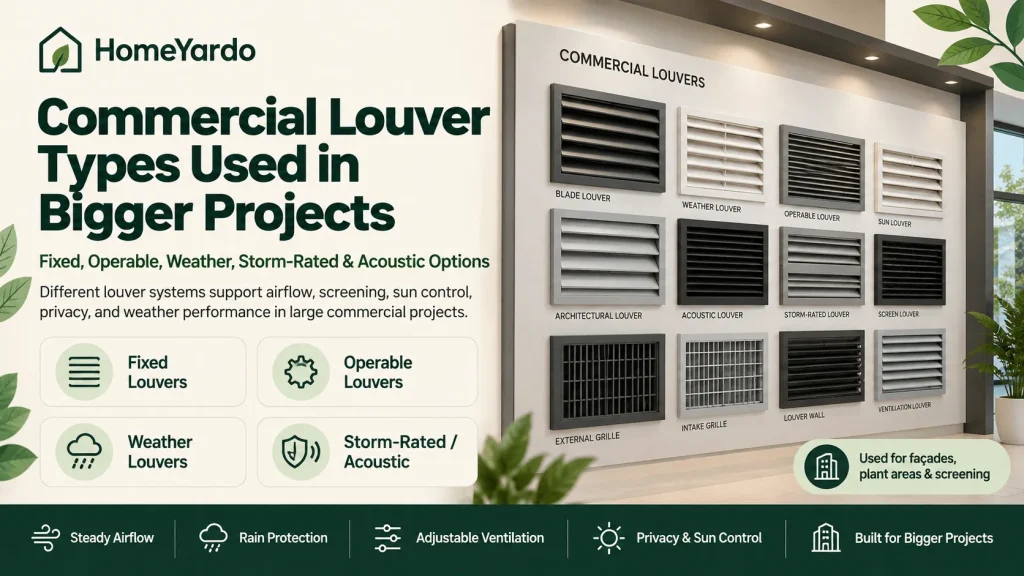
Depending on the façade, plant area, or screening requirement, large projects employ a variety of louver kinds. Fixed systems, movable systems, vertical solar blades, perforated screens, and storm-rated or acoustic items are typical choices.
The appropriate business louver is typically selected as part of a larger range of external solutions for industrial buildings and other significant locations. The best place to start is with the most popular comparison: fixed versus operable.
Comparing Operable Systems And Fixed Louvers in the Real World
In a nutshell, fixed louvers provide straightforward, steady airflow by remaining in one place. More control over ventilation and rain protection is provided by movable louvers.
On the job site, this distinction counts. Roof plant screens work well with fixed louvers, while retail redevelopments that require flexible access or ventilation are better suited for movable louvers.
| System | Ideal fit |
|---|---|
| Louvers that are fixed | Simple façades, steady airflow, and little physical labor |
| Louvers that can be operated | Access control, weather responsiveness, and adjustable opening |
| Systems for weather louvers | Improved rain protection |
| Storm-rated choices | Higher wind demands and exposed sites |
Expert Louvers for Privacy, Ventilation, and Sun Control
Airflow is not enough for some applications. Specialized systems can regulate acoustics, privacy, or sun control while enhancing contemporary buildings.
Examples include:
- Vertical sun blades to reduce heat and glare
- Flexible ventilation with movable louvers
- Acoustic louvers for laboratory or medical settings
- Batten-style or perforated screens for privacy
For example, specialized louver systems offer several options simultaneously in schools or hospitals where ventilation and shading are required without a harsh appearance.
Material Selections for Business Louvers
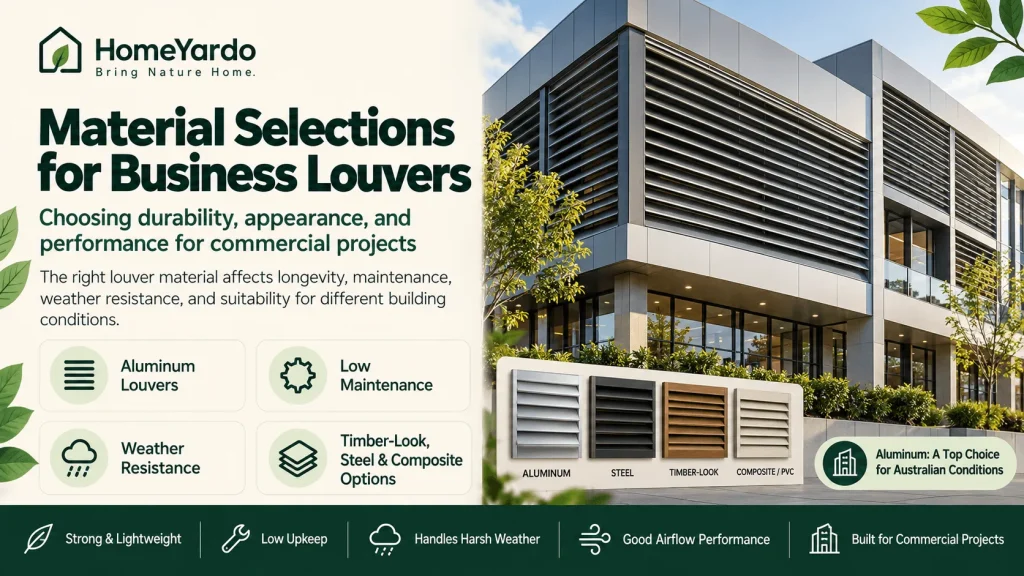
Material selection has an impact on a system’s longevity, upkeep, and resistance to external factors. For the majority of new constructions, performance needs are just as important as aesthetics.
Because aluminum louvers balance strength, attractiveness, and maintenance, they are frequently employed in commercial projects. Knowing what aluminum performs well and where alternate finishes or profiles might fit the brief will help you make an informed decision.
Aluminum Louvers’ Advantages for Australian Conditions
In Australia, aluminum louvers are perfect for commercial use. They are built to resist wind, cyclones, and inclement weather, and they require little upkeep.
Advantages consist of:
- Very little upkeep
- Outstanding resilience in challenging circumstances
- Robust airflow choices
- Dependable adherence to initiatives
Aluminum is so frequently used in government buildings, retail establishments, workplaces, and educational institutions. When builders require reliable performance and strong documentation, Commercial louvres and other engineered solutions are often specified.
Other Materials’ Performance And Appearance
For the majority of commercial projects, aluminum is the standard, but other materials work well for certain specifications. Although steel is heavier and requires more upkeep in coastal environments, it provides higher strength for heavy-duty or high-security applications. For hospitality-style projects, timber or timber-look finishes offer warmth. However, actual lumber needs to be treated on a regular basis; therefore, many architects utilize aluminum with a timber-look powder coat. Although they are less durable and have a shorter lifespan, composite and PVC solutions are suitable for non-structural, cost-conscious applications.
The best solution strikes a balance between performance and appearance: feature screens allow for greater material freedom, but plant enclosures or high-wind zones require proven, compliance-documented materials, where aluminum continues to be the top choice.
How to Choose the Best Commercial Louver for Your Project
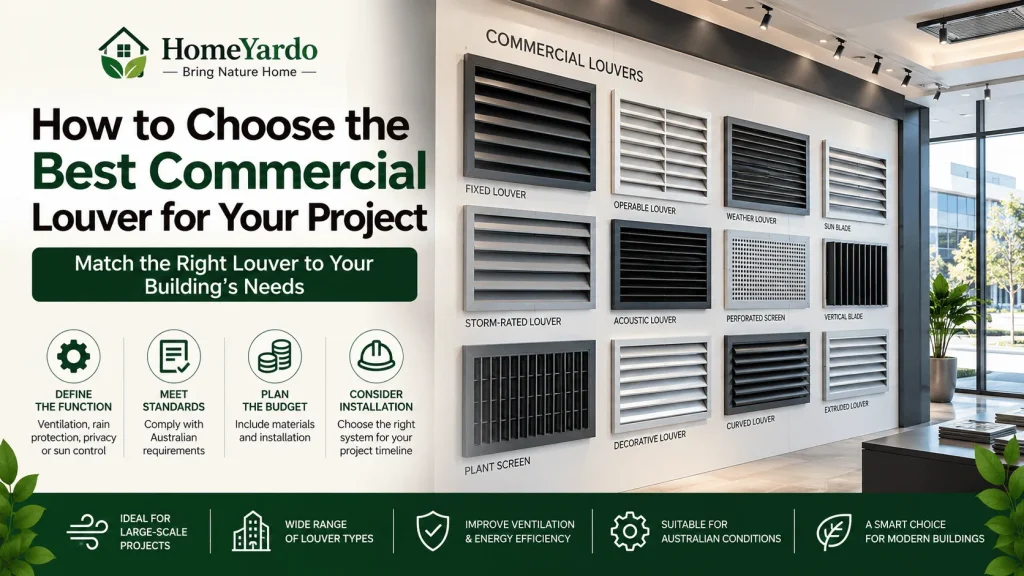
Function, not simply look, is the first step in making the appropriate decision. Align the louver with the building’s general design, the opening, and local conditions.
Next, examine lead time, installation technique, and compliance. In commercial projects, these standards aid in avoiding problems like excessive energy expenses, delays, or poor fit. These choices are explained in depth in the sections that follow.
Fundamental Selection Criteria: Budget, Compliance, and Function
Start by defining the louvre’s function, such as rain management, ventilation, privacy, acoustics, or plant screening. All other decisions should be based on this response.
Think about:
- Each aperture or façade zone’s function
- Adherence to Australian standards
- Set aside money for supplies and installation.
- Performance requirements unique to a project
Delaying the choice is a regular problem. Early coordination safeguards the budget and timeline by ensuring that technical drawings, engineering specifications, and approvals are prepared.
Installation Choices and Useful Things to Think About for Builders
Builders want solutions that suit the opening, deliver on schedule, and avoid site delays, in addition to a product list.
Important things to think about:
- Integrated or framed installation
- Access around façades and equipment
- Airflow and pressure drop close to the plant
- Lead times that align with the timeline of your project
For instance, buildability is just as crucial as on-paper performance in confined spaces like parking lots or rooftops.
In conclusion
Functionality, materials, and compliance must all be carefully taken into account when selecting commercial louvers for new construction. Knowing the kinds and uses guarantees that your design satisfies practical and aesthetic requirements, like ventilation and energy efficiency. Choosing the appropriate product enhances sustainability and performance. Are you prepared to talk about your options? Get in touch with us for a consultation; your perfect solution is only a phone call away.
FAQ’s
Although actual savings depend on temperature, orientation, and overall building design, well-designed commercial louvers can assist natural ventilation as part of a passive design strategy, which is generally recognized to help reduce reliance on mechanical HVAC systems.
Fixed louvers are perfect for steady airflow because they stay in place. Operable louvers provide flexible ventilation and rain protection and can be changed manually or with controls.
Indeed. For Australian projects, commercial louvers should be designed to adhere to local regulations and have paperwork to confirm this. When stringent regulations are in place, this is crucial for building performance, approval procedures, and peace of mind.