How An AI Image Generator Helps Visualize Home Improvement Ideas

Home improvement projects often begin with a simple thought: “What if I changed this room?” The problem is that imagining the finished result can be much harder than having the idea in the first place. A new wall colour may look completely different from what you pictured, while a new sofa, flooring style, or lighting arrangement can change the character of a room more than expected.
An AI Image Generator can give homeowners a useful way to explore those possibilities, with Higgsfield helping turn decorating ideas into visual references and compare different design directions before making a commitment. Instead of relying entirely on imagination, homeowners can create visual references for different decorating and improvement ideas and compare them before spending money.
That does not make AI a replacement for measurements, material samples, professional advice, or careful planning. It simply gives homeowners another way to think through a project while the idea is still flexible.
Start With the Space You Already Have

A good home improvement project should begin with the existing space rather than a picture of an ideal room.
Think about how the room is currently used, where people walk, how much natural light enters, which furniture needs to stay and what is not working. A living room might look attractive in a magazine, but if your family uses it every evening, the design needs to work for everyday life too.
An AI Image Generator can help turn those observations into different visual directions. You might explore a warmer colour palette, a more open furniture arrangement, or a style that makes a small room feel less crowded.
The goal is not to copy the generated room. It is to discover which elements make sense for your own home.
That practical approach is consistent with HomeYardo’s focus on advice that works in real homes rather than complicated ideas that only look good in theory.
Explore Styles Before You Commit

Choosing a design style can be surprisingly difficult. Modern, traditional, rustic, minimalist, industrial, Scandinavian and eclectic interiors can all look appealing when viewed separately.
An AI Image Generator can make it easier to compare these directions before choosing one.
Imagine that you are updating a living room. You could explore a simple contemporary arrangement, then compare it with a warmer design featuring natural wood and softer textures. You might discover that you like parts of both approaches rather than wanting to follow one style completely.
That discovery can save time later. Instead of buying furniture and decorations first and hoping they work together, you can establish a general direction and then search for real products that match it.
See How Colours Could Change The Room

Paint is one of the simplest ways to change a room, but colour decisions are often difficult because a shade can look different depending on lighting, flooring, furniture and wall size.
An AI Image Generator can help homeowners explore broad colour ideas before buying several sample pots.
A neutral room could be imagined with warmer beige tones, muted greens, soft blues, or deeper accent colours. The purpose is not to predict exactly how a particular paint brand will appear on your wall. Lighting and actual paint finishes still matter.
Instead, the images can help answer a simpler question: “Do I like the feeling created by this colour direction?”
Once you have a preference, real paint samples can take over.
Think About Furniture Before Buying It

Furniture is another area where visualization can be useful.
A sofa may look perfect online but overwhelm a small living room. A dining table may fit technically but leave too little space for chairs. A storage cabinet might solve one problem while making another part of the room feel crowded.
HomeYardo’s furniture guidance similarly emphasizes measuring rooms, considering daily routines, checking materials and thinking about comfort and function before buying.
An AI Image Generator can help homeowners explore possible arrangements before visiting stores or placing orders.
For example, you could compare a sectional sofa with two smaller sofas or see how a dining table might change the flow of an open plan room. These visuals are not precise floor plans, but they can help you notice which arrangement feels more comfortable.
The tape measure should still get the final say.
Visualize Materials And Finishes Together
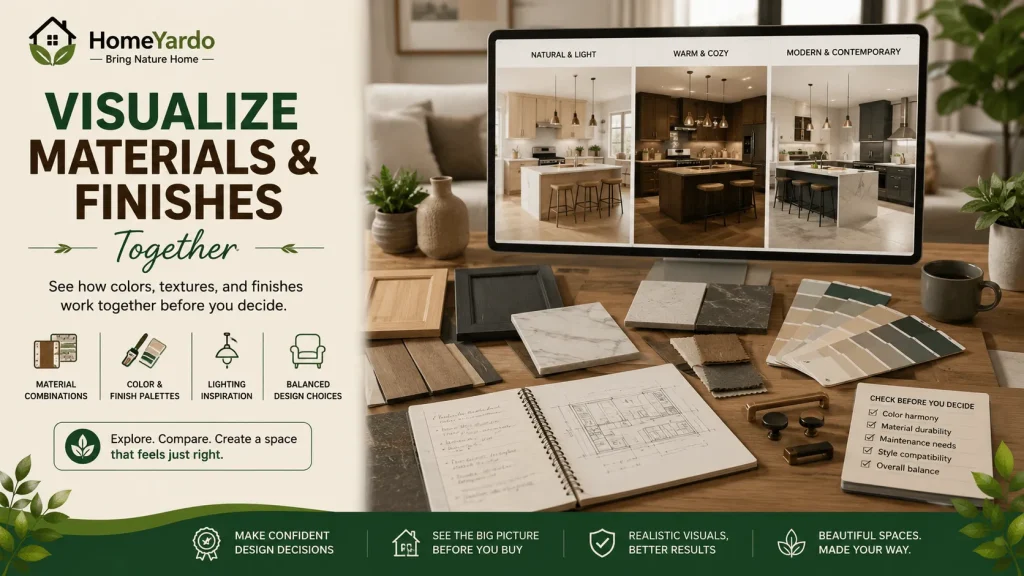
In most cases, there is not just one material involved when making decisions about home improvement.
Renovations to a kitchen may involve the use of cabinets, countertops, flooring, wall color, hardware and lighting. It can be a bathroom project with tile, fixtures, storage and various finishes. A living room is an excellent place for combining flooring, furniture, curtains and wall coverings.
These elements are what an AI Image Generator can help homeowners consider as they contemplate how they could all work together.
This can be helpful if you know you like certain materials but not if they are to be used in the same room.
Consider using light wood and neutral walls, or darker floors and warm furniture, or using natural textures with contemporary finishes. Looking at the combinations together can show if the direction of the combination is balanced overall or not.
The next step will always be to look at real samples, product specifications and maintenance requirements.
Make Small Rooms Easier To Imagine
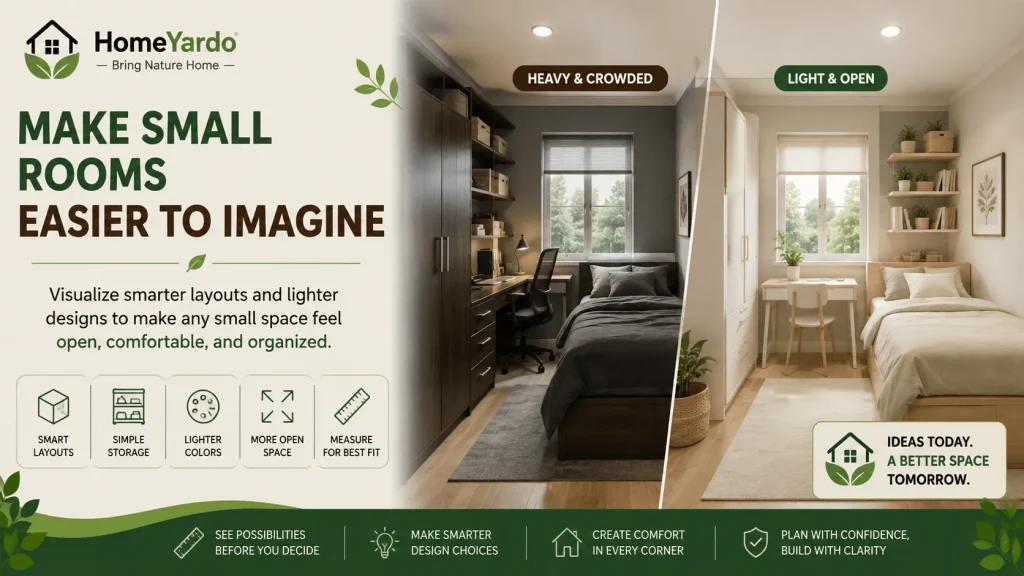
Small spaces can be difficult to plan because every piece of furniture has a noticeable effect.
A room that looks spacious in a photograph may feel completely different once a bed, desk, wardrobe, chair and storage units are added.
An AI Image Generator can help homeowners experiment with the visual effect of simpler arrangements.
You might compare open shelving with closed storage, a compact desk with a larger workstation, or a lighter colour scheme with a darker one.
The generated image cannot accurately measure the room, but it can help you think about visual weight. Large dark furniture may make a small room feel heavier, while simpler pieces and lighter surfaces may create a more open impression.
Real measurements should then determine what actually fits.
Don’t Forget the Outdoor Areas

Improvements to your home do not stop with the front door.
Decks, patios, balconies, gardens, yards, and patios are all good candidates for an early plan of sight. Homeowners might think about an area for seating or raised beds, lighting for the outdoors as well as a privacy screen or a space that can be used to host parties.
An AI Image Generator can assist in exploring different outdoor designs before the materials are bought.
You could, for instance, look at a patio with built-in seating versus one with moveable furniture. You could imagine planting around the seating area, or think about how a pathway can connect various parts of the garden.
This is particularly useful when your yard feels unused but you’re not sure of what you should do to improve it.
Turn a Rough Idea Into A Conversation

Sometimes the hardest part of a home project is explaining what you want.
You might tell a contractor, designer, family member, or partner that you want the room to feel “warmer” or “more open,” but those words can mean different things to different people.
An AI Image Generator can provide a visual reference for that conversation.
The image does not need to become the final design. It simply gives everyone something concrete to discuss.
You can point to the parts you like and the parts you would change. Maybe the layout works but the colours do not. Perhaps the furniture is right but the lighting needs to be different.
That kind of discussion can make the planning stage more productive.
Where Higgsfield Can Fit Into the Creative Process
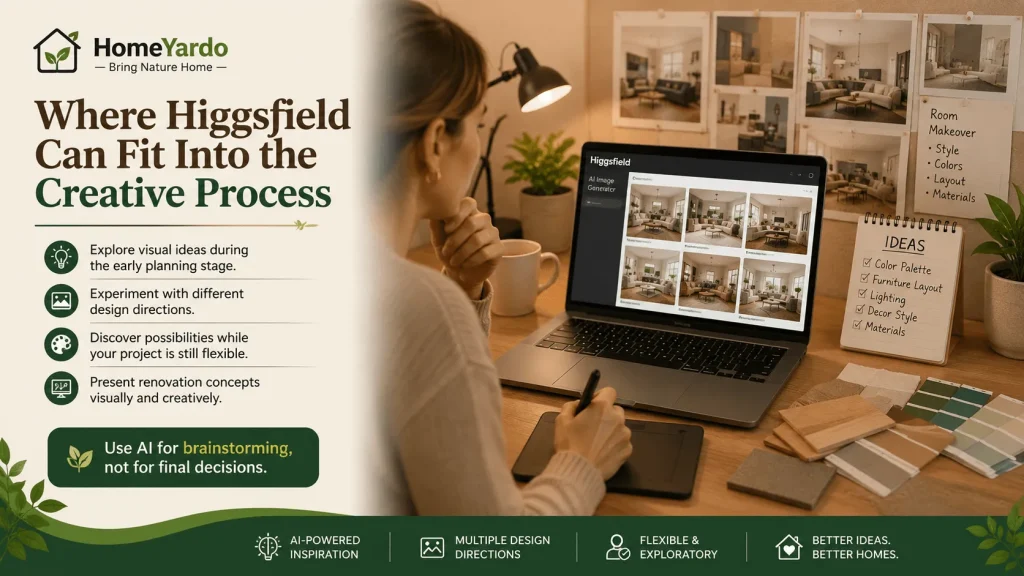
It can be considered as another option for homeowners who want to explore visual ideas during the early planning stage.
For example, someone preparing a room makeover could use Higgsfield to experiment with different visual directions before deciding which ideas are worth researching further.
The benefit is not that Higgsfield can tell you exactly what your finished room will look like. Rather, it can help you explore possibilities while the project is still flexible.
The Higgsfield AI creative suits can also be useful when a homeowner or home content creator wants to experiment with ways of presenting a renovation concept visually.
It should remain part of the brainstorming process rather than becoming the decision-maker.
Compare Ideas Before Spending Money

One of the biggest advantages of visual experimentation is that it can happen before a shopping list becomes a bill.
Suppose you are considering three different approaches to a bedroom makeover. One involves repainting and replacing the lighting. Another adds new furniture. The third changes the flooring and introduces a different colour palette.
An AI Image Generator can help you explore those broad directions before deciding which one deserves further research.
This can encourage a more deliberate approach to spending.
Instead of buying something because it looks attractive on its own, you can consider whether it contributes to the overall room.
HomeYardo’s own furniture guidance makes a similar point by encouraging homeowners to think about total costs, delivery, assembly, accessories, durability and long term use.
Use AI for Inspiration, Not Measurements
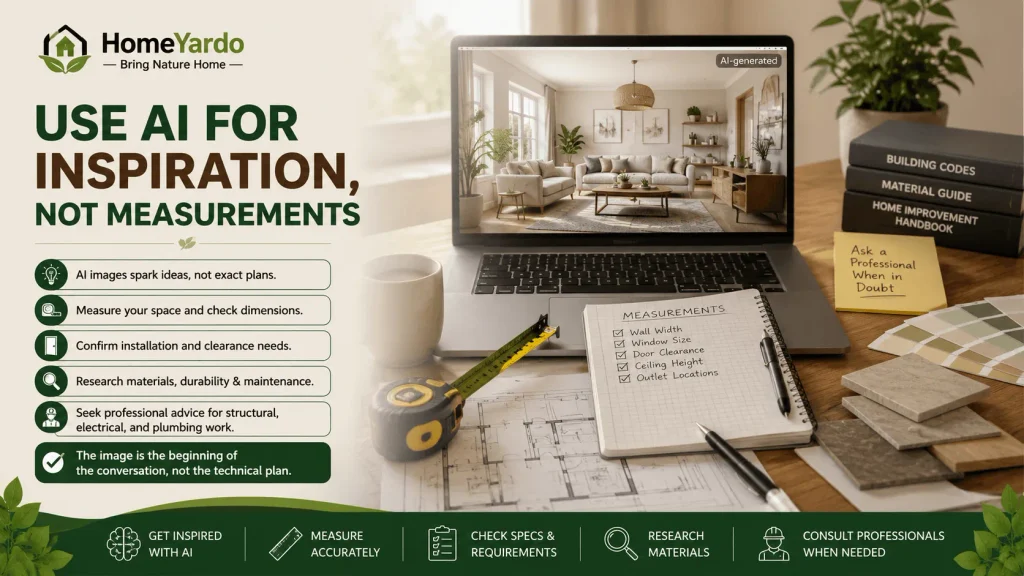
This distinction is essential. An AI Image Generator can create a convincing room, but it does not know the exact dimensions of your walls, the position of your electrical outlets, the load capacity of a surface, or the clearance required around a doorway.
It can also produce unrealistic combinations of materials or furniture.
That means homeowners should never treat an AI generated picture as a construction drawing.
Measure the room yourself. Check product dimensions. Confirm installation requirements. Research materials and maintenance. When structural, electrical, plumbing, or other specialist work is involved, seek appropriate professional guidance.
The image is the beginning of the conversation, not the technical plan.
Think About Maintenance Before Choosing a Look

A design can look excellent on screen and still be difficult to live with.
White upholstery may be beautiful but demanding in a busy household. Delicate flooring may not suit pets. A complicated garden design can become difficult to maintain. Glossy surfaces may show fingerprints more easily than expected.
An AI Image Generator can help you visualize the appearance, but it cannot replace practical research into durability and maintenance.
Ask yourself how the room will be used six months after the makeover.
A successful improvement should not only look better on the first day. It should continue to work for the people living in the home.
That practical mindset fits HomeYardo’s broader editorial approach, which emphasizes useful, low maintenance and realistic solutions.
Let Your Own Taste Lead The Project

Technology can provide many ideas very quickly, but more choices do not automatically make a better design.
An AI Image Generator might produce dozens of attractive possibilities. That can become overwhelming if you do not already have some idea of what matters to you.
Start with your habits and preferences.
Do you prefer easy-to-clean surfaces? Do you need extra storage? Do you like natural materials? Do you want a space that feels calm, energetic, traditional, or modern? How much maintenance are you willing to handle?
Those answers should guide the project. Higgsfield can provide another creative avenue for exploring ideas, but the homeowner should remain in control of the final direction.
Know When To Stop Experimenting

There is a point where more visual ideas stop helping.
If you have generated dozens of possible kitchens, bedrooms, gardens and living rooms, you may end up less certain than when you started.
Use visual experimentation to answer specific questions.
Which colour direction feels right? Which furniture arrangement seems most comfortable? Do you prefer an open or more layered look? Would a certain outdoor layout make better use of the yard?
Once those questions have useful answers, move on to practical research.
A good planning process eventually needs measurements, prices, materials, schedules and decisions.
A More Practical Way to Use AI at Home

The most efficient method is straightforward. Begin with the issue you wish to resolve. Take a look at the space you have. Consider how the space can be used. You can then use the AI Image Generator to look at a small number of possibilities for directions.
Find the ideas that interest you, and then research the ideas using actual materials and items.
Compare prices. Look at the dimensions. Consider maintenance requirements. Consider installation requirements. Consider how the room will function once the excitement of the makeover is done.
If the project requires extensive structural or expert work, you should hire qualified experts in the areas that require the technical know-how.
AI could make the beginning creative phase easier; however the success of home improvement depends on judicious decisions.
Final Thoughts
An AI Image Generator could be a valuable tool in the beginning stages of home renovation. It will help homeowners think about ways to decorate, evaluate color directions, envision furniture layouts, think about outdoor designs and transform hazy ideas into something more palatable to talk about.
Higgsfield will also help with the creative part of this process by providing homeowners with a second option to explore conceptual ideas before making any decisions.
It is important to be realistic about expectations. Images generated are just ideas and not precise measurements or guarantees. The final outcome is contingent on the space, lighting, materials budget, the quality of workmanship, and upkeep.
The most effective home improvement projects combine imagination and practicality. Utilize technology to discover possibilities, and use actual measurements, research, and experience to figure out the best way to proceed.
FAQ‘s
Yes. It can help you visualize different colours, furniture arrangements, styles and decorating ideas before making changes.
No. They are useful for inspiration, but measurements, materials, structural details and professional advice should guide actual renovation work.
Use AI to explore possibilities, then verify dimensions, costs, materials and maintenance needs before making final decisions.