Are Shipping Containers Good for Home Storage?
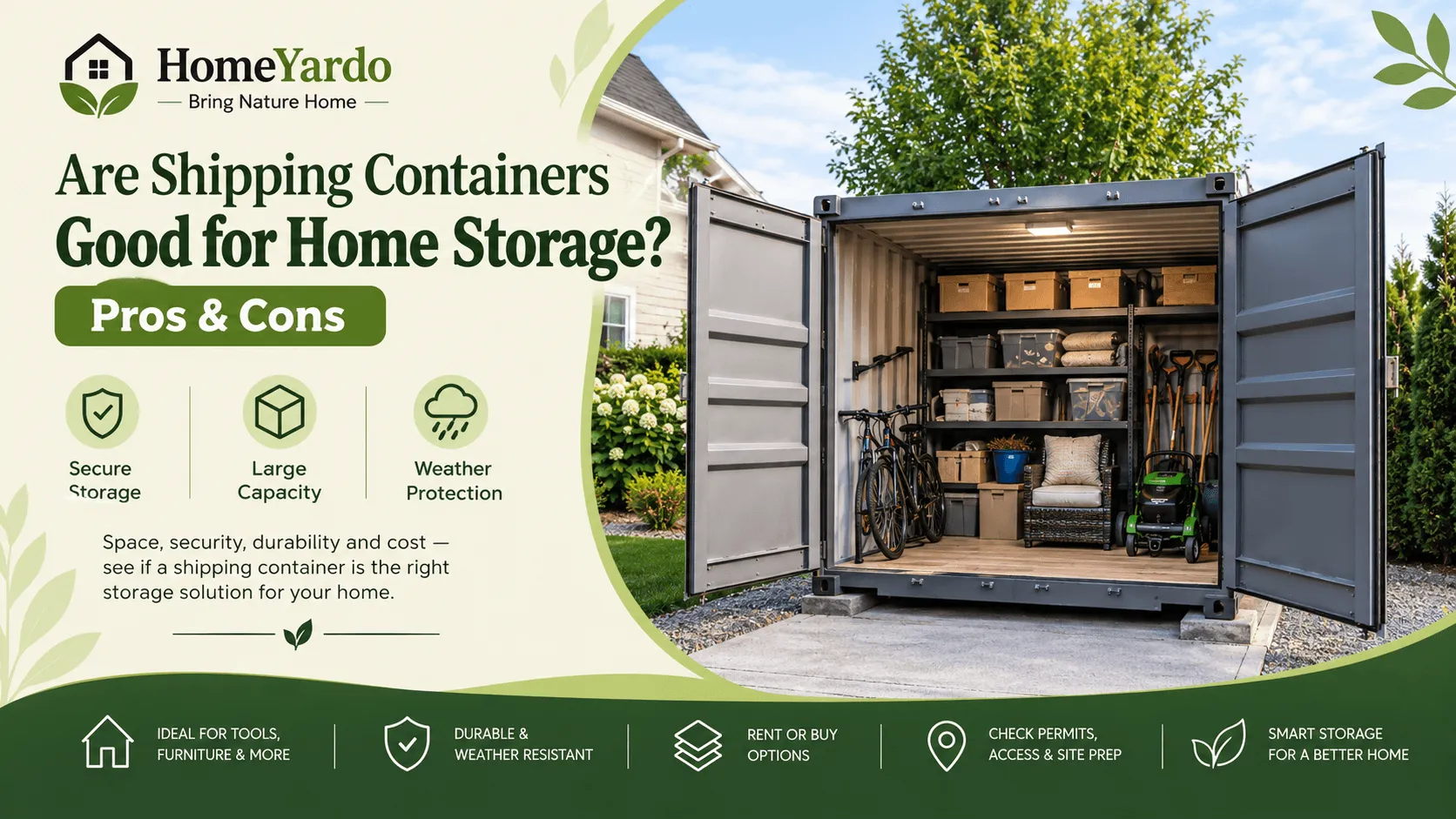
As closets, garages and sheds start to overflow, homeowners often want storage that is safe, adaptable and relatively economical. Shipping containers are a sensible solution since they give you lots of covered storage space without having to build a permanent garage or outbuilding.
Many homes include a container for tools, furniture, seasonal items, outdoor equipment, renovation supplies, bicycles, and other large objects. But a steel container is not always the right fit for every property or every type of possession.
Prior to arranging delivery, consideration should be given to the condition of the container, local restrictions, site access, drainage, ventilation, security and the anticipated storage time.
Quick Answer: Is A Shipping Container A Good Storage Solution At Home?
If you have the space, the right kind of vehicle access, a solid site to set it and the authority to have one on the property, they can be great for storage at home.
The primary advantages of them are:
Large storage capacity, enclosed
* Durably built of steel
* Cargo door, lockable
* Good protection from rain if the container is in good shape
Modular storage and organization solutions
* On-site access to stored items
Rental and buy alternatives
They are mostly limited by condensation, delivery needs, local zoning rules, appearance and poor temperature management in an unaltered container.
So the greatest container is the one that has the features that you need for what you want to store.
Why Storage Containers are a Good Idea
Shipping containers are built to withstand large cargo and tough transportation and weather conditions. Because of its steel design, homeowners get a robust storage enclosure, significantly different from a lightweight plastic or timber shed.
The interior is rectangular, which makes it reasonably easy to organize efficiently. Shelving, free-standing racks, hooks, cabinets and workbenches can be installed or placed to effectively utilize the available capacity.
Another benefit is access on-site. Homeowners can access stored possessions without having to travel to an off-site self-storage facility, if allowed by local restrictions.
That can be helpful during restorations, relocation, significant landscaping projects, estate cleanouts or when a garage needs to be temporarily emptied out.
How Much Space Does a Shipping Container Provide?
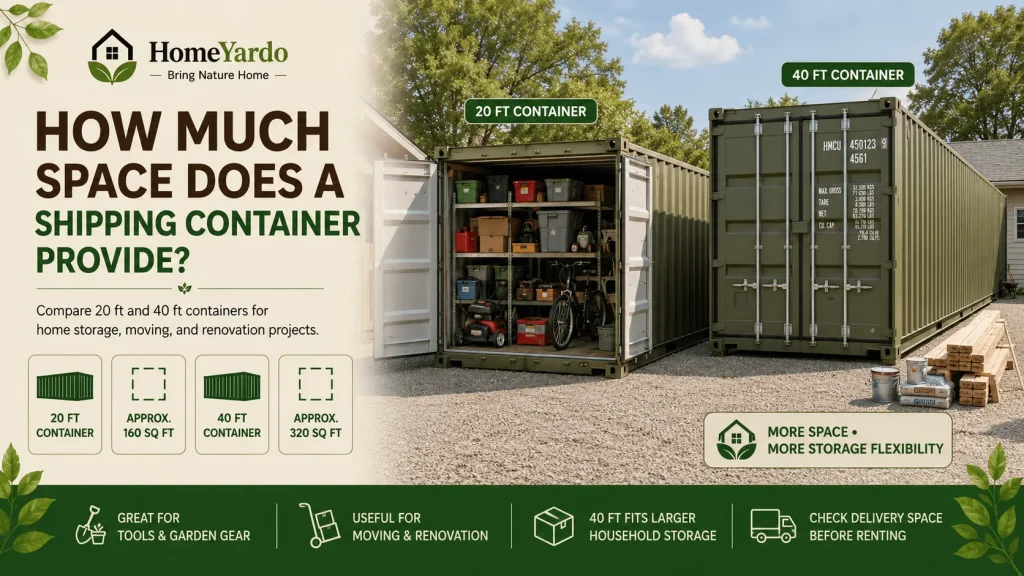
Container size is the primary factor influencing storage capacity.
The regular 20 foot container contains around 160 square feet of floor space and the conventional 40 foot container provides about 320 square feet of floor space. Note that inside dimensions will vary slightly depending on the type of container and manufacturer, so check exact specs before arranging shelving or storage for heavy items.
A 20 foot unit can have adequate space for:
Lawn and garden equipment
* Bicycle
* Tools
* Holiday decorations
* Garden equipment
Household items packed up
* Smaller volumes of renovation materials
If you need to store furniture, appliances, building supplies or the contents of many rooms together, a larger container may be more appropriate.
For large storage needs, homeowners may choose to hire a 40ft container for rent. This option gives a great deal of storage in a single unit. This can be particularly helpful during renovation, relocating, estate cleanouts or lengthier property projects.
If you go for the biggest option available make sure that there is adequate area for it to be delivered and that you genuinely need the extra capacity.
Are Shipping Containers Safe for Storage at Home?
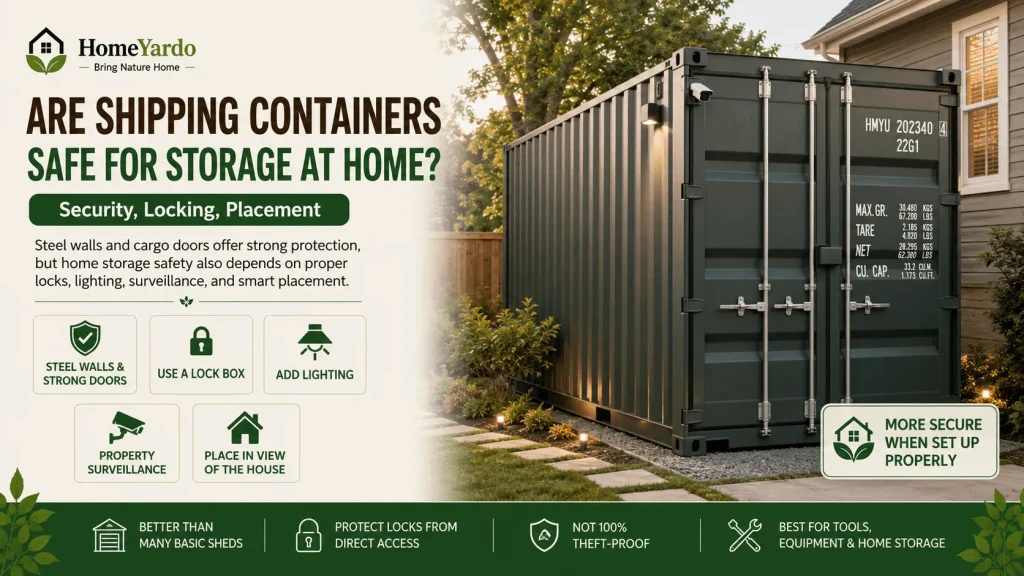
One of the main selling points of container storage is security.
Most basic backyard sheds are not as much of a physical barrier as steel walls and large cargo doors. But the container is only part of the security picture.
Use a proper locking mechanism and a lock box can protect the padlock from direct access. Other security measures for the exterior are illumination and property surveillance.
Placement is important too. If you can, place the container where it can be seen from the house, not way out in a remote part of the property.
No storage structure can ever be 100% theft-proof, especially in the case of valuable tools, equipment or other high-value belongings.
Are Shipping Containers Waterproof? Do They Keep Rain and Weather Out?
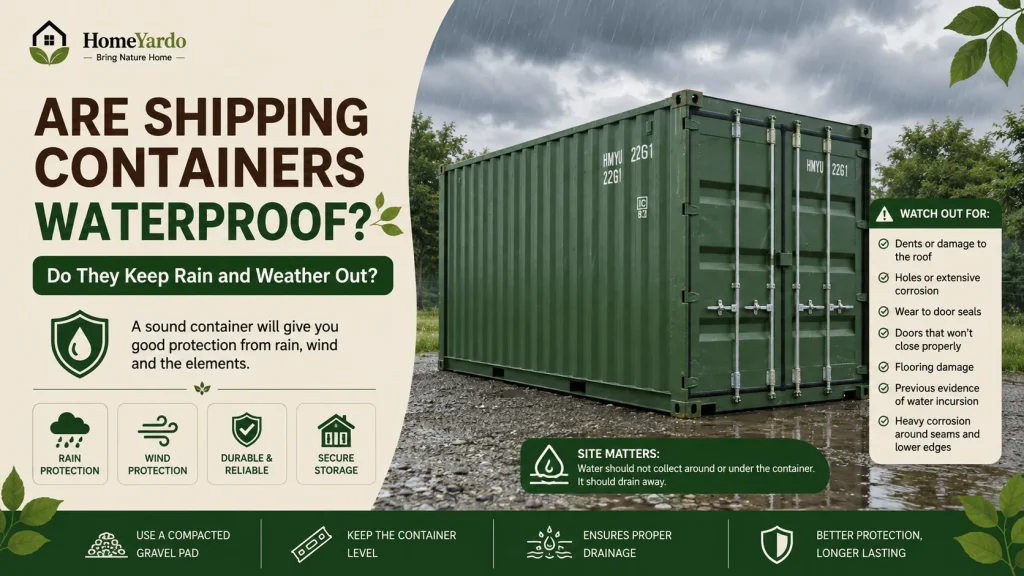
A sound container will give you good protection from rain, wind and the elements.
Containers sold or rented for storage use are generally defined in condition classes such as Wind and Water Tight. These phrases should not be a substitute for a physical condition assessment where inspection is practicable.
Watch out for:
Dents or damage to the roof where water can accumulate
Holes or extensive corrosion
* Wear to door seals
* Doors that won’t close properly
* Flooring damage
* Previous evidence of water incursion
* Heavy corrosion around seams and lower edges
Weather protection might also be affected by the site itself. Water should not collect around or under the container; it should drain away. Good water drainage around the home can also help reduce problems caused by water collecting near structures.
A compacted gravel pad or other properly built firm ground will aid with drainage and keeping the unit level.
Condensation and Ventilation Require Attention
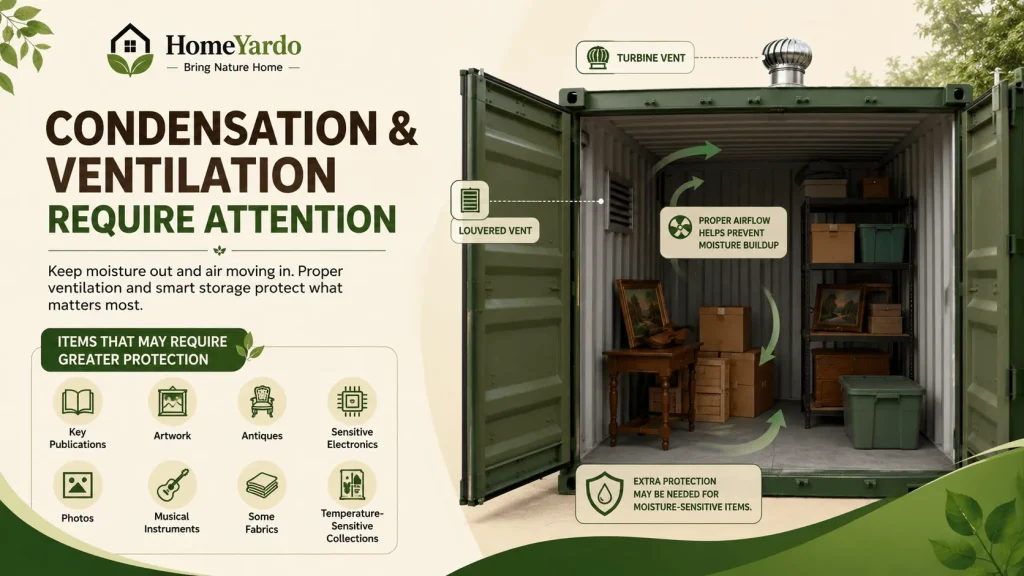
To keep the rain out does not guarantee that the interior will stay dry.
A shipping container has steel walls and a steel roof, which means that temperature variations can lead to condensation on inside surfaces. This can be more noticeable in humidity and local climate conditions.
Passive ventilation can assist reduce stored moisture. Owners may want to consider louvered vents, turbine vents or some other appropriate ventilation system depending upon the desired use and local conditions.
Your stored possessions need air flowing around them, too. Packing furniture or boxes up against outside steel walls might limit circulation.
Extra precautions may be necessary for moisture sensitive items.
Items That May Require Greater Protection
A typical unconditioned container is not the greatest environment for:
* Key publications
* art work
Antiques
* Sensitive electronic devices
* Photos
* Instruments (Musical)
* Some fabrics
* Collections that are temperature sensitive
The items may need to be insulated, kept at a certain humidity, climate controlled or just in a distinct atmosphere.
Renting vs. Buying Shipping Containers
How long you will need the storage space can be a factor in whether renting or owning is the better option.
If the container has been on the property long-term (many years) and local regulations permit long-term deployment, purchasing may be an option.
For temporary requirements, it could make more sense to rent:
* House improvement
* Moving &
*Decluttering before selling a house
* Furniture storage (temporary)
* Building work
* Garage re-fits
* Big landscaping projects
When shopping for shipping containers for rent homeowners need to look past the advertized monthly pricing.
Check the monthly rental amount, delivery fee, pickup price, minimum rental time, container size, condition, payment conditions and any other fees.
The lower monthly fee may not be the lower total cost when transportation and minimum-term requirements are considered.
What Can You Put into a Shipping Container
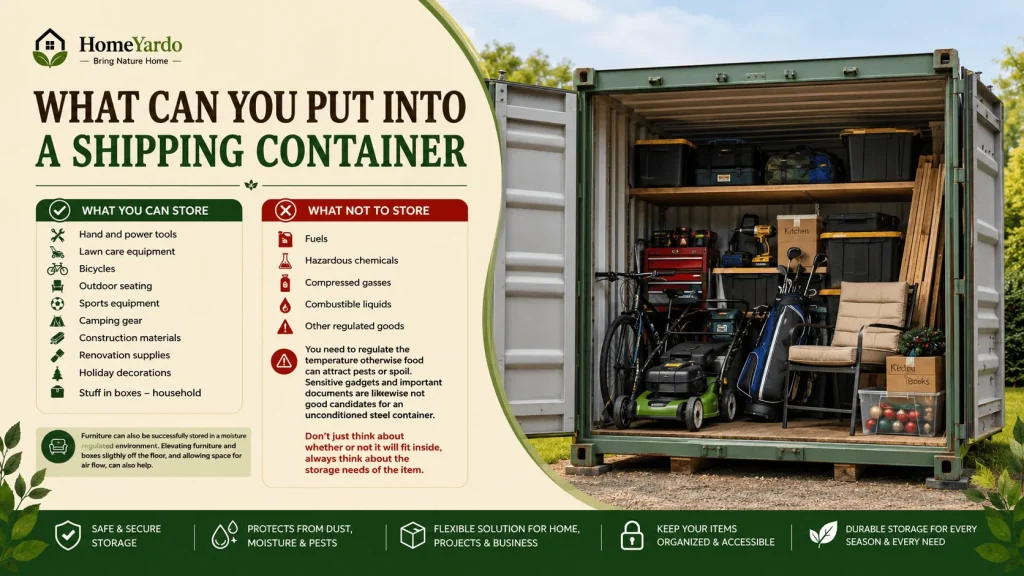
Shipping containers are great for many durable household and property related items.
Examples of typical are:
* Hand and power tools
* Lawn care equipment
* Bicycles,
* Outdoor seating
* Sports equipment
* Camping gear
* Construction materials
Renovation supplies
* Holiday decorations
* Stuff in boxes – household
Furniture can also be successfully stored in a moisture regulated environment. Elevating furniture and boxes slightly off the floor, and allowing space for air flow, can also help.
What Not to Store
Don’t assume every home item belongs in a standard storage container.
Fuels, hazardous chemicals, compressed gasses, combustible liquids and other regulated goods can be severe safety problems and may also be limited by the container provider or by local authorities.
You need to regulate the temperature otherwise food can attract pests or spoil. Sensitive gadgets and important documents are likewise not good candidates for an unconditioned steel container.
Don’t just think about whether or not it will fit inside, always think about the storage needs of the item.
Site Preparation Prior to Delivery of Containers
Site preparation should be completed prior to the arrival of the delivery truck.
A container requires a suitably level and stable surface. An uneven base might make the frame sit out of level and eventually lead to trouble operating the cargo doors.
Often compacted gravel is utilized since it can offer support and drainage. Other suitable foundations may be appropriate, depending upon soil conditions, local restrictions, size of container and length of time the unit will be in situ.
Don’t put a container where stormwater naturally accumulates.
Verify Delivery Access Before Ordering
A property may have adequate physical space for a container but not enough access for delivery.
Possible difficulties are:
* Tight driveways
* Sharp turns
* Fences and Gates
branches and trees
* Overhead power lines
* Inclined ground
* Loose soil
* Vehicles parked
* Adjacent buildings
The way it is delivered also influences the clearance needed.
Ask the container provider, before ordering, what truck or trailer will be utilized to bring the container and what straight-line and overhead clearance is needed for placement.
This basic check can help avoid delivery failures and unanticipated repositioning charges.
Make Sure You Check The Local Rules Before Delivery
Shipping container restrictions for residential use are different from place to place.
Restrictions may include: Depending on the property and municipality, restrictions may involve:
* Laws of zoning
* Building permits
* Limits on temporary-use
* Standards for setbacks
* Requirements for screening
* Location of placement
* Maximum Storage Period
Foundation requirements.
Local government approval for a container does not mean that a homeowner association can’t have its own rules.
Check local or county standards, and HOA guidelines before paying for delivery. Finding a restriction and then moving a container may result in an unneeded additional expense.
Buy or Rent a New or Used Shipping Container?
Household storage can be in new or used containers, but the condition of the container is more important than its age.
A One Trip container has usually made one restricted cargo trip. Typically, it has less dents, less exterior damage and newer seals than an older unit. It may be suitable for homeowners who care about the appearance or plan to keep the container in a conspicuous area.
Used containers can be less expensive, but if physically intact can still provide excellent storage.
Common condition descriptions are Cargo Worthy, Wind and Water Tight however you should double check the precise meaning and inspection process with the supplier.
Before buying a second-hand container evaluate the doors, seals, roof, walls, floor, underneath where accessible and evidence of major corrosion or previous water ingress.
How to make a shipping container better for home storage
There are certain modifications that can make container storage management easier.
You might want to add:
Freestanding shelving
* Storage boxes clearly marked *
* Wall mounted organization as applicable
* Inside lighting
* Ventilation (passive) *
* Lock protection system
* Monitoring of moisture
* Raised platforms for delicate possessions
Never drill or modify the container without first considering the potential for creating leaks or impact to any structural components or rental terms.
If you are renting a unit, get authorization before making any major changes.
What Are The Negatives Of Using A Shipping Container?
Shipping containers do solve some storage issues, but they aren’t necessarily superior than garages, sheds or self-storage apartments.
Possible negatives:
* Condensation in humid or fluctuating temperatures
Heat build up in the sun
* Requirement for delivery access
Zoning or HOA regulations
* Need a lot of space
Industrial
Delivery and collection fees
Without adjustment , climate control is limited .
These disadvantages have varying implications for different properties.
A homeowner storing lawn equipment for six months has different needs than someone preserving antique furniture for several years.
Storage Shed vs Shipping Container: What’s the Best Choice?
Which is preferable dependent on what you want to utilize the storage for .
When security, huge open capacity, durability or temporary storage is the priority, a shipping container might be the better option.
If beauty, regular access to the backyard, windows, home design, or permanent connection with landscaping are more important, a traditional shed can be a better choice.
Containers also sidestep the construction procedure required by some permanent constructions, but that doesn’t imply they are exempt from local restrictions.
Don’t only look at the purchase price, look at the overall cost, usable space, projected lifespan, upkeep, location requirements and local constraints.
Are Shipping Containers Suitable for Home Storage?
Yes, for many home owners.
Storage using shipping containers can provide a safe, large, weather-proof space and the ease of keeping things on the property. They perform particularly well for tools, outdoor gear, furniture, renovation supplies and large belongings.
But it’s not just a matter of how much they can hold. You have to think about: ventilation, drainage, condition of containers, access for deliveries, security, local legislation, and the sensitivity of the items you are storing.
Renting might be an alternative to buying a permanent apartment for short-term purposes. Ownership may be more economical for long-term users, if permitted by the property and local restrictions.
The ideal decision is the one that fits how much space you need, for how long, what you plan to keep and the conditions of the suggested location.
FAQ’s
A good container can offer decent weather protection but don’t think it’s fully waterproof. Before you store your goods, check the roof, walls, door seals, corrosion and any traces of past water infiltration.
Yes. Differences in temperature and humidity can lead to condensation on the inner surfaces of steel. “Good site drainage, moisture management, airflow, and ventilation can help reduce the risk.”
Furniture can be stored in a container but moisture and temperature variations need to be taken into account. If required, cover furniture, raise it off the floor or move it away from exterior walls to promote airflow.
The placement of a 20 foot container is usually less difficult and may be sufficient for common household storage. A 40 foot container gives about double the floor space, which may be more suitable for renovations, transfers or greater amounts of furniture and equipment.
Perhaps not. Requirements differ according on the municipality, zoning district, length of time it is to be placed and type of property. HOA rules might as well. Arrange for delivery subject to local requirements.
Renting is usually more affordable for short-term projects, but for long-term storage, buying might be more practical. Think about total cost including delivery and pickup, time of rental, purchase price, site preparation, and upkeep.
The site should be stable, relatively flat and shed water away from the container. Compacted gravel is a popular alternative but whether base is right depends on the soil, drainage, size of the container and how long you plan to leave it.
They’re steel and have cargo doors, so they’re rather secure physically, but the locks and where you put them still matter. A secure lock, outside illumination, CCTV and a conspicuous location all help enhance overall security.
Yes, if the container is in good shape and the site allows for long-term storage. Long term storage also demands additional attention to moisture, ventilation, temperature variations, pest protection and the kinds of possessions that are stored.
No hazardous or controlled substances shall be stored without proper protections and permission. Important documents, delicate electronics, artwork and other temperature- or humidity-sensitive items may also require a climate-controlled environment.