Simi Valley Sprinkler Systems: Hard Water & Heat Solutions
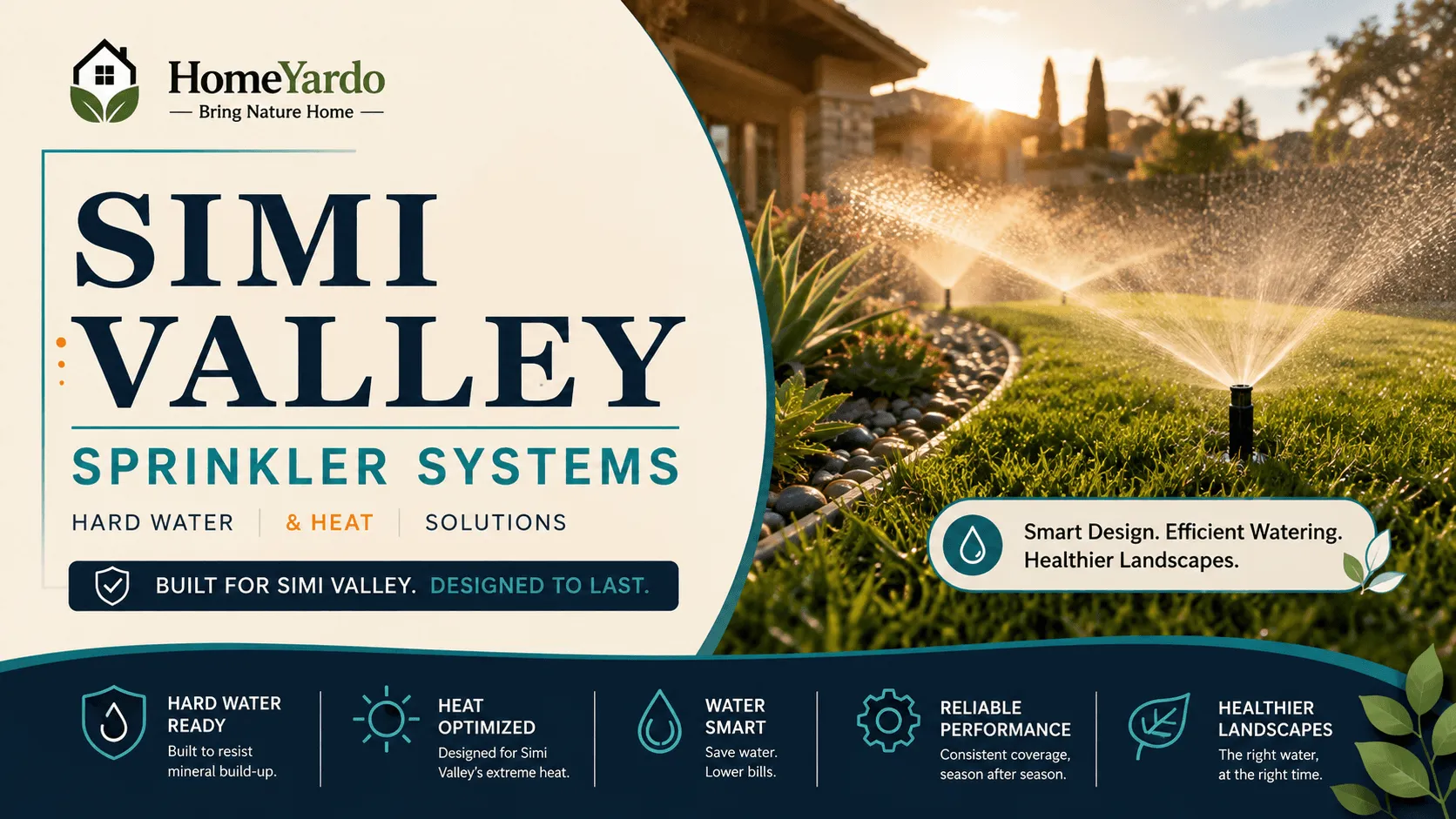
Summer temperatures in Simi Valley regularly push past 105°F. The tap water runs 12 to 18 grains per gallon, which puts it squarely in the “very hard” classification by Calleguas Municipal Water District measurements across the service area. For a homeowner putting in a sprinkler system, those two facts together create problems that a standard residential design was never set up for.
Calcium and magnesium deposits build up inside nozzles, restrict water output, and push heads to failure well before their rated lifespan. Add the heat and the plastic components in most residential irrigation systems crack, warp, and degrade faster than any manufacturer’s rating was calibrated for.
Getting a Simi Valley sprinkler system installation right means accounting for both from the start. As with other home improvement projects, planning the system around local conditions can prevent expensive problems later. Here are five solutions that experienced local installers actually apply to every system they build in this market.
1: Spec Calcium-Resistant Nozzles Instead of Standard Plastic Heads
The most direct hard water solution in any Simi Valley installation starts at the nozzle. Standard residential sprinkler heads use plastic internals. That’s fine in areas with moderate water hardness, but a plastic nozzle running on Calleguas water without upstream filtration typically shows visible calcium buildup at the opening within 12 to 18 months. Output drops. Spray patterns shift. The head needs cleaning or replacement. Brass and stainless steel nozzle inserts resist mineral adhesion significantly better than plastic, and the cost difference, typically two to three times the price of a standard plastic head per unit, tends to pay for itself well before the five-year mark when you factor in what you won’t be spending on replacements and labor.
Hunter and Rain Bird both offer stainless steel nozzle inserts in their residential lines that work with their existing body hardware without any modification. Look, most irrigation contractors bidding residential jobs in Simi Valley will default to plastic heads. They’re cheaper and faster to specify. The problem shows up 18 months after installation, not during the bid. An installer who has actually done consistent work in Ventura County knows this and will bring it up before the design is locked, not after the first heads start clogging.
2. Install a 200-Mesh Filter at the Main Supply Line
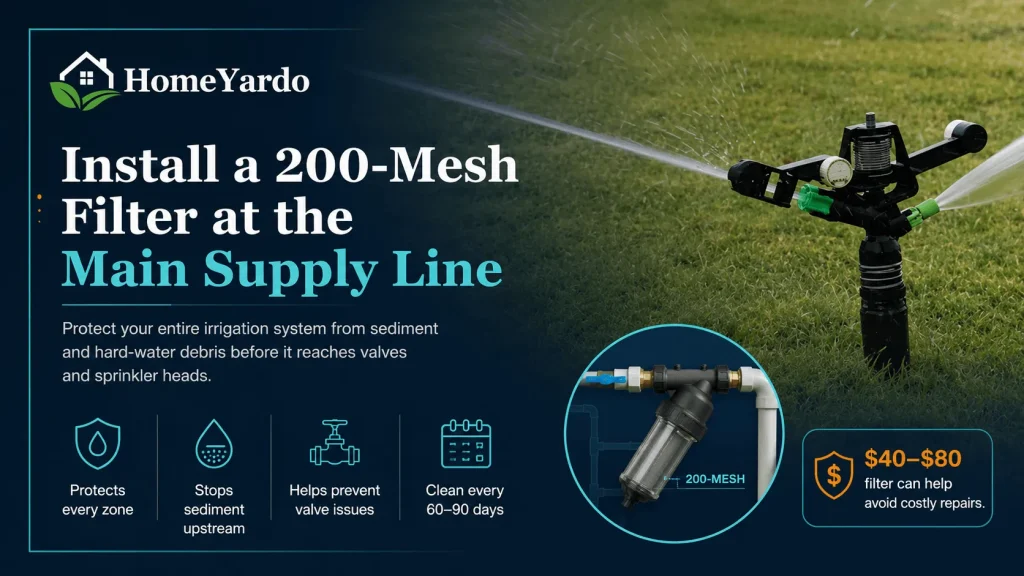
A 200-mesh sediment filter installed on the irrigation system’s main supply line is the single most effective upstream defense in a hard water area. It sits ahead of every zone valve and sprinkler head. That means every component in the system benefits from it, not just the nozzles you can see and replace. Thing is, the filter does something a nozzle upgrade alone can’t. It intercepts suspended particles before they reach a zone valve solenoid or sprinkler internal. Valves that pick up fine sediment stop opening and closing cleanly. Irrigation gaps show up. You end up calling for valve service. A $40 to $80 filter at the manifold stops all of that before it starts.
Most Simi Valley systems that skip it need $200 to $400 in valve work before year three. The maintenance side is real but manageable. A filter that isn’t cleaned periodically collects debris until it restricts flow or fails outright, and in a hard water service area a cleaning every 60 to 90 days during active irrigation months is a reasonable schedule. (Filters with transparent housings make this easier: you can check sediment level without disassembling anything.) And honestly, the filter is where most contractors trim the bid. It’s also where most Simi Valley homeowners end up paying for it two years later.
3. Use Pressure-Regulating Heads in Any Simi Valley Sprinkler System
Pressure variation is a practical problem in Simi Valley. Properties at the end of long service runs, or anywhere with elevation change, often see PSI well outside what standard heads are designed for. That rated window is 30 to 50 PSI. Go above it and the spray mists. Some areas get soaked. Others stay dry. The system looks like it’s working until you walk the zones and check coverage. Pressure-regulating heads solve this.
They have a built-in mechanism that limits output to a consistent level regardless of what’s arriving through the supply, which makes a system’s performance predictable across the whole property rather than dependent on which zone you happen to be running. They aren’t a premium upgrade in a Simi Valley context. They’re the spec that makes the rest of the system work. Here’s the thing: a zone without pressure regulation running at 65 to 80 PSI converts its spray into a fine mist, and wind carries that mist off before it ever contacts the root zone.
The EPA WaterSense program estimates that high-pressure misting can waste 50% or more of a sprinkler system’s total output through evaporation and wind drift before the water reaches soil. In Simi Valley’s summer heat, that loss rate climbs further. Pressure-regulating heads add roughly $2 to $5 per unit at installation. The savings on a single summer water bill typically cover that difference.
4. Build the Schedule to Run Before 8 a.m.

Irrigation timing is a design decision, not just a dial setting you can adjust after the fact. By 10 a.m. in July, Simi Valley temperatures are already climbing through the mid-80s and often past 90°F. A sprinkler system running at midday during a Simi Valley summer sends a real portion of its output directly into the air before the water reaches root depth. The combination of low humidity and intense solar radiation in the inland valley creates evaporation conditions more aggressive than what you’d see in coastal LA neighborhoods.
A timing setup that works fine in Culver City or El Segundo will leave the same landscape chronically under-irrigated if it runs during daylight hours in Simi Valley. Calleguas uses tiered pricing. Run your system at the wrong time and you see it on the bill, every quarter. A smart controller with an ET module pulls data from local weather stations and adjusts run time daily. Against a fixed-calendar timer, that typically cuts consumption 20 to 40%. Heat wave hits, it adds time. Rain comes in, it skips the day.
That kind of adaptive scheduling pays for itself within the first full irrigation season in most Simi Valley installations. Early morning runs also benefit from calmer air, which is something most homeowners don’t factor into the schedule. Afternoon thermal winds in the valley shift spray patterns enough to create dry patches that look like head failures or pressure problems. They aren’t. They’re a timing problem.
5: Design the Simi Valley Installation With Separate Sun and Shade Zones
Simi Valley residential lots often carry a wide variation between south and west-facing areas, which take direct sun through the hottest part of the day for much of the year, and north-facing slopes or tree-shaded sections that stay moist considerably longer. This is also why plants for full sun need to be matched carefully to the site’s heat and watering conditions. Treating them as a single irrigation zone because it’s cheaper upfront is one of the more predictable ways a Simi Valley installation ends up generating service calls and brown patches within two years of going in.
Right, a south-facing turf area in July might need 20 to 25 minutes of run time every other day to hold healthy root moisture at depth.A shaded north-facing bed on the same property might only need 8 to 10 minutes twice a week. Put both on a single zone and one area always gets the wrong amount of water. The damage isn’t dramatic at first. It compounds.
Zone separation adds controller stations and additional valve hardware. It also adds the only kind of accuracy a system can actually deliver, which is the right amount of water in the right place on the right schedule. Properties that go in as a single-zone installation because the bids came in cheaper typically develop patchy coverage, shallow root systems in the overwatered sections, and persistent dry zones that need manual supplemental watering before the first full season is over. And that’s before you factor in the valve issues that follow when a single zone is carrying more zones’ worth of runtime than it was sized for. Slope matters too.
Properties in Simi Valley with grade changes have runoff risk when irrigation schedules don’t account for how fast the soil on steeper terrain can absorb water. Short, frequent cycles on sloped zones let each run absorb before the next one starts, rather than sheeting off the surface. That’s a design call that gets made at installation. It can’t be meaningfully added after the system is already in the ground.
Final Verdict
From initial design through final commissioning, the Elevated Seasons team provides professional sprinkler system installation across Simi Valley and Ventura County, with direct experience in the hard water and heat conditions that define this market. For keeping a well-built system running at full efficiency through the seasons, the sprinkler maintenance section covers the service intervals and procedures that matter most in a hard water area.
A sprinkler system built for Simi Valley’s actual conditions lasts longer, uses less water, and generates fewer service calls than one built to generic residential specs. The mineral content in the water and the 60-degree temperature swing between February and August are real inputs to the design. A system that doesn’t account for both from the start will show the gap within two years. Most do.
FAQ’s
There is no single sprinkler system that is best for every property. The design should account for available pressure and flow, landscape type, sun exposure, slope, soil, water quality, and plant water requirements. Many properties benefit from separate zones, pressure control, suitable filtration, and weather-based scheduling.
Hard water can leave mineral deposits around sprinkler nozzles and other areas where water repeatedly evaporates. Over time, this can affect spray patterns or increase cleaning requirements. The severity depends on water chemistry, irrigation equipment, and maintenance.
Filtration can be useful where suspended debris is reaching valves, sprinkler screens, nozzles, or drip emitters. The correct filter and mesh size should be selected according to the water source and irrigation equipment rather than applying one filter specification to every property.
Early morning is generally preferable because temperatures are lower and wind conditions may be calmer than later in the day. Homeowners should also follow current local watering restrictions and water-provider requirements.
They can be useful when incoming pressure is higher than the sprinkler nozzle’s intended operating pressure. Correct pressure can reduce misting and help improve water distribution. Pressure should be tested before the contractor selects the equipment.
Sloped landscapes should account for runoff, pressure differences, soil infiltration, and precipitation rate. Separate zoning and cycle-and-soak scheduling may help, but the correct solution depends on the property’s grade and soil conditions.
Usually not when their water requirements differ substantially. Separating high-sun and shaded areas allows irrigation runtime to be adjusted independently and can reduce both overwatering and dry areas.
There is no universal interval. Homeowners should inspect the system periodically and pay particular attention during high-use months. Nozzles, filters, valves, spray patterns, pressure, leaks, and controller settings should be checked whenever irrigation performance changes.