
How to Choose a Chandelier for Your Home
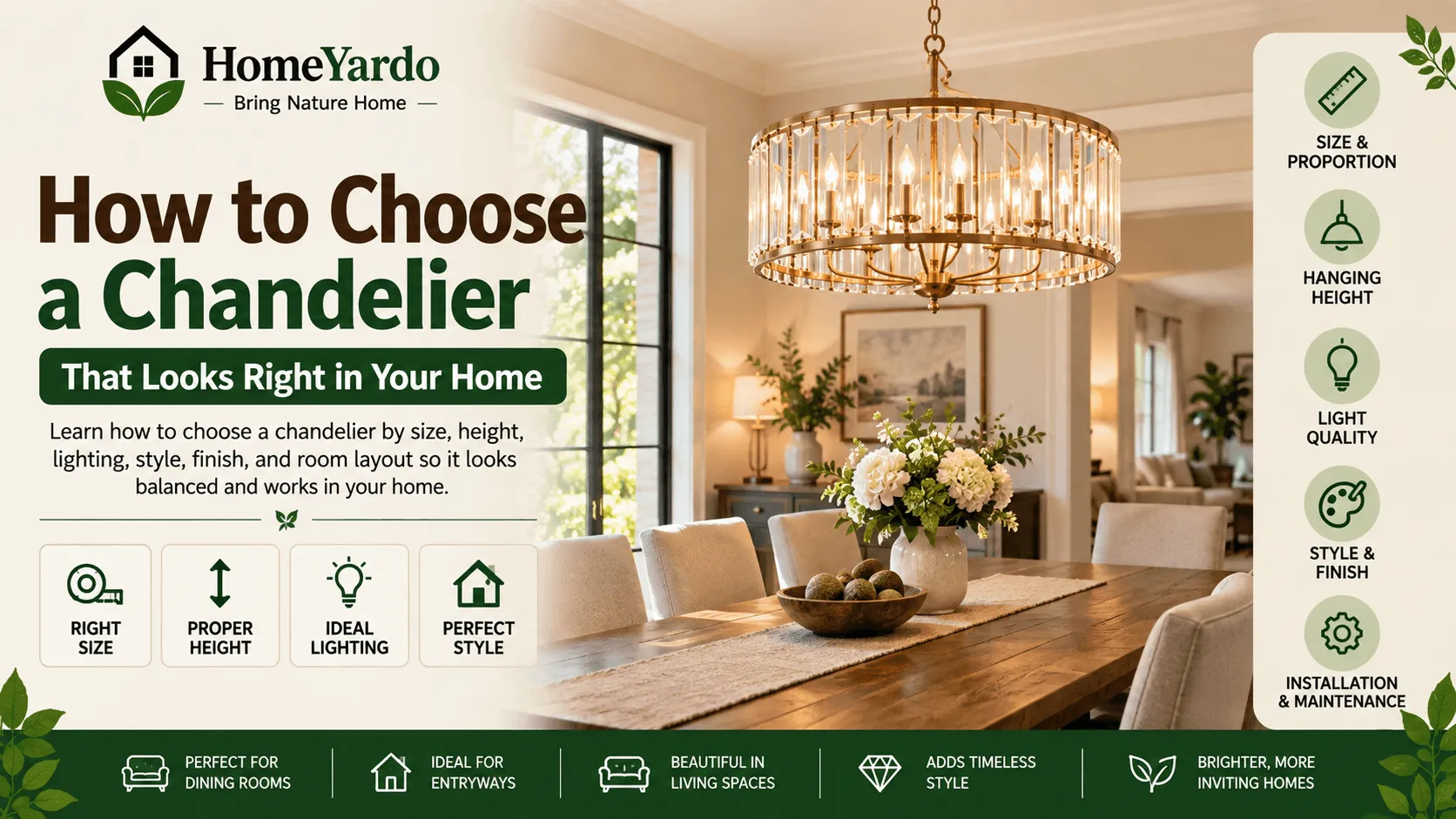
Choosing a chandelier is less about finding the most impressive fixture and more about finding one that belongs in the room.
A chandelier can finish a dining room, entryway, or living area, but the wrong size or hanging height can create problems quickly. An oversized fixture may overwhelm a dining table. One hung too low can interrupt sightlines or become an obstacle. And a beautiful design with harsh bulbs can produce more glare than useful light.
So, how do you choose a chandelier? Start with the room’s purpose, then consider the fixture’s size, hanging height, light output, style, maintenance needs, and installation requirements. The best chandelier should look proportional when you enter the room and remain comfortable when you actually use the space.
Start With What the Chandelier Needs to Do

Before comparing finishes or decorative details, decide what job the chandelier will perform.
Above a dining table, it usually needs to define the eating area while providing comfortable illumination. In an entryway, the fixture may be more decorative, filling vertical space and creating a focal point. A living room chandelier might provide general light, or it may work mainly as a decorative feature alongside lamps and other sources of layered lighting.
The same idea applies to other major room elements, such as large area rugs, where size and furniture placement also affect the overall balance of a room.
A large multi-light chandelier that feels balanced in a tall foyer could overpower a breakfast nook. A compact fixture that looks attractive above a six-person dining table may almost disappear in a two-story entry.
Think about function before style.
How Do You Choose the Right Chandelier Size?

The right chandelier size depends on the room, nearby furniture, ceiling height, and where the fixture will hang.
For a dining room, the table is often the most useful starting point. A chandelier around one-half to two-thirds of the table’s width is a useful design guideline rather than a fixed rule. Keeping the fixture narrower than the tabletop also helps maintain visual balance.
Shape matters as much as diameter.
A long rectangular dining table may suit a linear or oval chandelier better than a compact round fixture. A round dining table often works naturally with circular or clustered designs.
This is similar to choosing furniture for your home: dimensions should be considered in relation to the surrounding space rather than judging an item by itself.
Test the Size Before You Buy
Product photos can make scale difficult to judge.
Use painter’s tape to mark the chandelier’s approximate diameter on the floor beneath its intended position. You can also make a simple cardboard outline and hold it at roughly the planned height.
Then step back.
Look from the doorway, nearby seating areas, and adjoining rooms. A fixture that seemed modest on a product page may suddenly look enormous once its actual dimensions are mapped inside your room.
How High Should a Chandelier Hang?

Over a dining table, a common starting point is approximately 30 to 36 inches above the tabletop for an 8-foot ceiling. Treat that as a starting guideline rather than an automatic installation measurement.
The room and fixture can change what feels right.
Higher ceilings may allow the chandelier to sit higher while remaining visually connected to the table. A light, open-frame design may work slightly lower without obstructing views, while a dense drum or heavily detailed crystal fixture can feel intrusive at the same position.
Before installation is finalized, sit at the table and look across it.
Nobody should have to lean sideways to see the person sitting opposite them.
What About Chandeliers in Open Walking Areas?
A chandelier above a table has furniture beneath it. A chandelier in a foyer, hallway, or open living area does not have that protection.
Here, head clearance becomes much more important. The fixture should remain safely above normal walking space and should not force taller family members or guests to duck.
Two-story foyers and stairwells need more planning because the chandelier may be viewed from several heights and angles. Its position should make visual sense from both lower and upper floors.
If ceiling height is limited, flush mount lights or semi-flush fixtures may provide the decorative effect you want without sacrificing as much vertical clearance.
Consider Light Quality, Not Just the Fixture
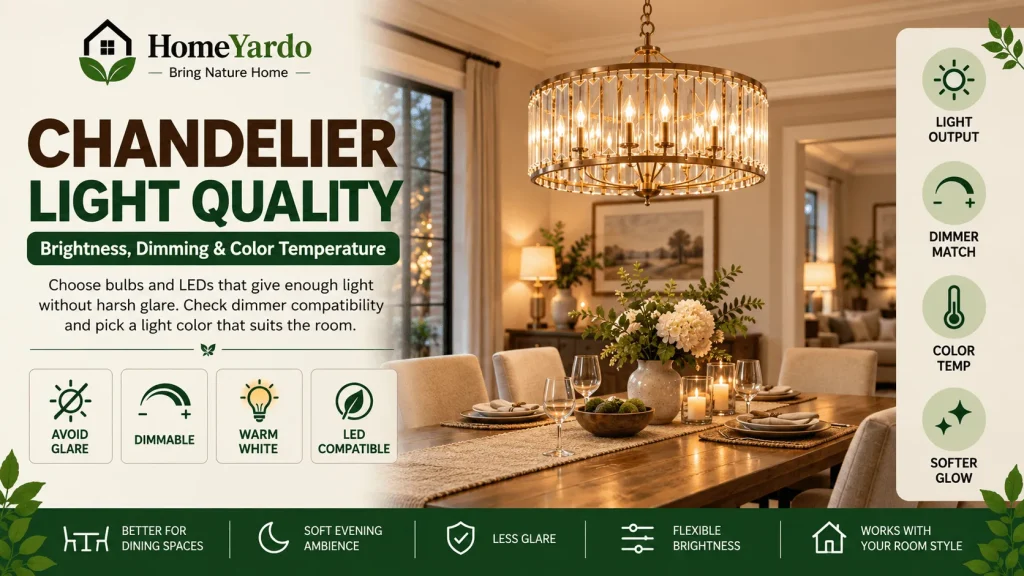
A chandelier is still a light source.
Check the number and type of bulbs, manufacturer-listed wattage limits, integrated LED specifications where applicable, color temperature, and dimmer compatibility before ordering.
A fixture can look perfect during the day and feel uncomfortable at night.
Exposed bulbs and reflective materials can create noticeable glare, particularly when the chandelier hangs close to eye level. Shades, diffusers, frosted bulbs, and adjustable brightness can soften the effect.
Should a Chandelier Be Dimmable?
Dimming can be especially useful in dining and living spaces because those rooms serve different purposes throughout the day.
You may want brighter illumination while cleaning, setting the table, or working on something. Dinner or an evening with guests may call for much softer light.
Check that the chandelier, bulbs or integrated LEDs, and dimmer are designed to work together. Incompatible components can lead to poor dimming performance or flickering.
What Light Color Works Best?
There is no single color temperature that suits every chandelier.
Warm white light often works comfortably with wood furniture, brass, bronze, cream, and other warm interior finishes. Cooler-looking light can make glass and crystal appear sharper, but it may feel less relaxed in some living and dining spaces.
Look at the room as a whole rather than choosing a bulb based only on the chandelier.
Decide Whether Crystal Fits Your Room and Lifestyle
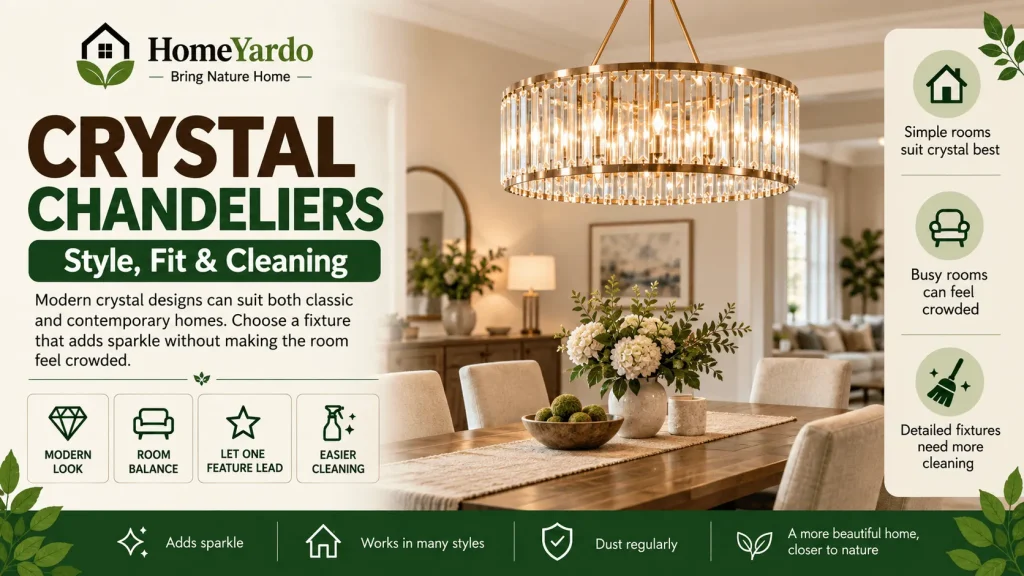
Crystal doesn’t automatically mean formal or old-fashioned.
Modern crystal chandeliers may use clean rings, rectangular frames, restrained tiers, smoky glass, or simple geometric forms. That makes them suitable for interiors ranging from traditional dining rooms to contemporary spaces.
The bigger question is how much visual detail your room can handle.
In a restrained dining room, crystal can add texture and become the main decorative feature. If the same room already contains patterned wallpaper, ornate furniture, reflective surfaces, decorative mirrors, and several metallic finishes, an elaborate chandelier may make the design feel crowded.
Let one feature lead.
Think About Cleaning Before Choosing a Detailed Fixture
This part is easy to overlook while shopping.
Crystal drops, glass pieces, and layered frames collect dust. Fixtures close to kitchens may also be exposed to airborne cooking residue.
If easy maintenance matters to you, compare how many individual components each design contains and whether those parts can be reached safely for cleaning.
A simpler crystal design can still create sparkle without turning cleaning day into a small engineering project.
Coordinate the Finish Without Matching Everything

Your chandelier doesn’t need to match every metal finish in the room.
Instead, give it a connection to one or two existing elements.
A black chandelier might relate to dark window frames, chair legs, or cabinet hardware. Brass can work with warm wood, picture frames, or smaller decorative objects. Nickel or chrome may suit cooler palettes and contemporary interiors.
Mixed metals can work well when they look intentional.
Choose a dominant finish and repeat the secondary finish in a few smaller details rather than introducing an unrelated metal with every fixture.
Match the Chandelier to the Room, Not Just a Design Trend
A chandelier should make sense with the architecture and furniture already in the space.
Before choosing a style, look at:
- Ceiling height
- Table or furniture shape
- Room proportions
- Existing materials
- Wall colors
- Natural light
- Other lighting fixtures
- Amount of decorative detail already present
A highly decorative chandelier isn’t automatically better for a traditional room, just as a minimal fixture isn’t automatically right for a modern one.
Proportion usually matters more than the style label.
Check Installation Requirements Before Ordering
Chandeliers can be considerably heavier than basic ceiling fixtures, particularly designs made with large metal frames, multiple glass shades, or crystal components.
Check the manufacturer’s listed weight and installation requirements before purchasing. The ceiling structure and electrical box need to be suitable for the fixture being installed.
Do not assume an existing setup can support a new chandelier simply because it currently holds a lightweight light fixture.
Measure the ceiling height, table dimensions, chandelier dimensions, canopy, available chain or downrod length, and any doorway or stairwell the packaged fixture must pass through.
Sloped ceilings may also require compatible mounting hardware.
For larger renovations, chandelier installation should be considered alongside the home’s broader electrical planning, especially if wiring, switches, dimmers, or fixture locations are changing.
Electrical work should follow the manufacturer’s instructions and applicable local requirements. If you are unsure about wiring, structural support, fixture weight, or mounting, use a qualified electrician.
Review the Chandelier From Everyday Viewpoints
Don’t judge a chandelier from one position.
Before settling on the final height, look at it while:
- Sitting at the dining table
- Standing in the doorway
- Walking through the room
- Sitting on nearby furniture
- Viewing it from an adjoining room
- Looking from an upper floor, where applicable
Check whether it blocks artwork, interrupts an important view, interferes with doors or cabinetry, or places exposed bulbs directly in someone’s line of sight.
This final check catches problems that measurements alone can miss.
Common Chandelier Mistakes to Avoid

Several chandelier problems begin before installation.
Choosing by Appearance Alone
A beautiful chandelier can still be wrong for the room if its dimensions, brightness, or maintenance requirements don’t suit the space.
Buying a Fixture That’s Too Small
Homeowners often choose undersized chandeliers because larger fixtures look intimidating in a showroom or product listing. Once installed, a very small chandelier can appear disconnected from the furniture beneath it.
Hanging It Too High
A dining chandelier hung close to the ceiling may lose its visual relationship with the table.
Hanging It Too Low
Going too far in the opposite direction can block sightlines and make the dining area uncomfortable.
Ignoring Glare
Clear glass and exposed bulbs can look attractive while producing uncomfortable brightness at eye level.
Forgetting Maintenance
Complex fixtures may require more cleaning and more difficult bulb replacement than expected, especially on high ceilings.
Checking Ceiling Support After Purchase
Fixture weight and mounting requirements should be reviewed before the chandelier arrives, not while someone is standing on a ladder holding it.
A Simple Chandelier Buying Checklist
Before placing an order, check these points:
- Purpose: Is the chandelier decorative, functional, or both?
- Location: Will it hang above furniture or an open walking area?
- Dimensions: Does its width suit the table and room?
- Height: Can it be positioned comfortably without blocking views?
- Light output: Will it provide enough useful light without excessive glare?
- Dimming: Are the fixture, bulbs, and dimmer compatible?
- Style: Does it relate to the room without overwhelming it?
- Finish: Does the metal or material connect with existing details?
- Maintenance: Can you realistically clean it and replace its bulbs?
- Installation: Can the ceiling structure and electrical setup support it?
A chandelier that passes these checks is far more likely to work after the excitement of installation has worn off.
Choose for the Room You Actually Live In
The best chandelier isn’t necessarily the biggest, brightest, or most decorative one.
It is the fixture that looks proportional to the room, provides comfortable light, fits your normal routines, and can be maintained without unnecessary difficulty.
Start with dimensions and function. Then consider hanging height, light quality, materials, finish, and decorative style.
When those practical decisions are right, the chandelier can still make a statement. It just won’t make everyday life harder in the process.
FAQ’s
Start with the room’s use and size, then consider surrounding furniture, ceiling height, chandelier width, hanging height, light output and style. In dining rooms, the chandelier and table need to visually link, therefore the table is frequently a better sizing reference than the room alone.
As a rule of thumb, a chandelier should be about one-half to two-thirds the width of the dining table. It might be as small as the shape of the table, the scale of the room, the height of the ceiling, and the chandelier design. Long tables may be more suited to linear or oval lighting than small spherical lights.
A good starting point for an 8-foot ceiling is roughly 30 to 36 inches from the tabletop to the bottom of the chandelier. Adjustment may be needed for higher ceilings and different fixture shapes. Before you finalize your height, take a look at the chandelier from a seated posture to be sure it won’t block sightlines.
Yes . A too-large chandelier might overpower surrounding furnishings, cut down on visual breathing space or cause clearance problems. But go too small and the fixture can look like it’s missing. Mark the suggested proportions with painter’s tape or a temporary cardboard outline, so you can gage the scale before you buy.
Not quite. You can have light fixtures in different forms or even different metals that nonetheless look connected.” Repeat a finish, color, design feature or material elsewhere in the room. The goal is visual uniformity, not that each light fixture looks similar.
Yeah. Today’s crystal chandeliers veer toward sleeker frames and geometric shapes with basic tiers and less intricate decoration than in the past. They can work well in a simple setting, where the chandelier is given space to be the star of the show, not fighting with too many other features.
The correct bulb relies on the fixture manufacturer’s specs, the brightness you want, the color temperature, the bulb shape and if it works with a dimmer. Think not only about brightness but glare. If the bulbs are exposed, they may need a softer output than if they are shaded, especially when the chandelier is hung at eye level when seated.
That depends on the fixture, the existing wiring and ceiling support and local restrictions. Heavy or large chandeliers may require proper structural and electrical support. If you are unsure about the electrical connection, mounting system, weight of the fixture or the ceiling box, it is safer to call in a competent electrician.