
What Homeowners Should Know Before Repairing Termite-Damaged Wood
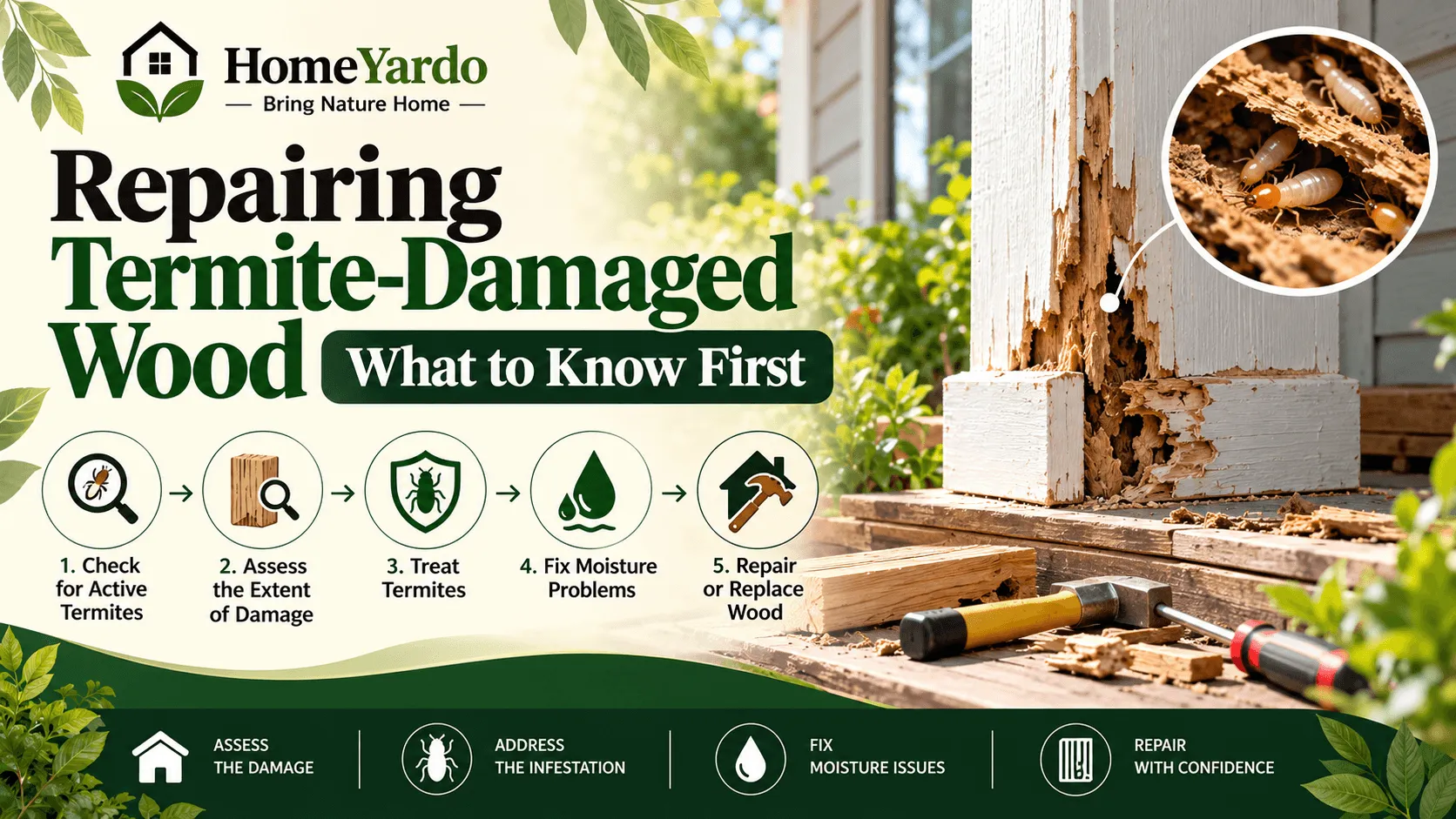
Finding a soft spot in a window frame, damaged trim, or a hollow-sounding section of decking creates an immediate urge to fix it. Remove the damaged wood, install a fresh piece, repaint it, and move on.
With termite damage, however, repairing the visible wood should not be the first step.
Before repairing termite-damaged wood, homeowners need to determine whether termites are still active, how far the damage extends, and whether any load-bearing material has lost strength. New wood installed before an infestation or moisture problem is addressed can simply become exposed to the same conditions again.
A better approach is to identify the problem, assess the affected wood, address active termites and contributing moisture conditions, and then make the appropriate repair.
Quick Answer: Should You Repair Termite-Damaged Wood Right Away?
Usually, the first priority is not cosmetic repair. Suspected termite activity should be assessed before damaged wood is covered, filled, or replaced.
Minor damage to non-structural trim may eventually require only localized replacement. Damage involving floor joists, wall studs, beams, sill plates, roof framing, or other load-bearing components deserves a more careful structural evaluation.
A practical sequence is:
- Determine whether termite activity may still be present.
- Identify the visible and accessible extent of the damage.
- Address the infestation through an appropriate termite-control plan.
- Correct leaks, drainage problems, or other moisture conditions.
- Evaluate whether damaged wood can remain, needs reinforcement, or requires replacement.
- Complete the repair without unnecessarily concealing areas that still require inspection.
The exact sequence can vary with the termite species, treatment method, location of the damage, and condition of the building.
Active or Historical Termite Damage: Why the Distinction Comes First
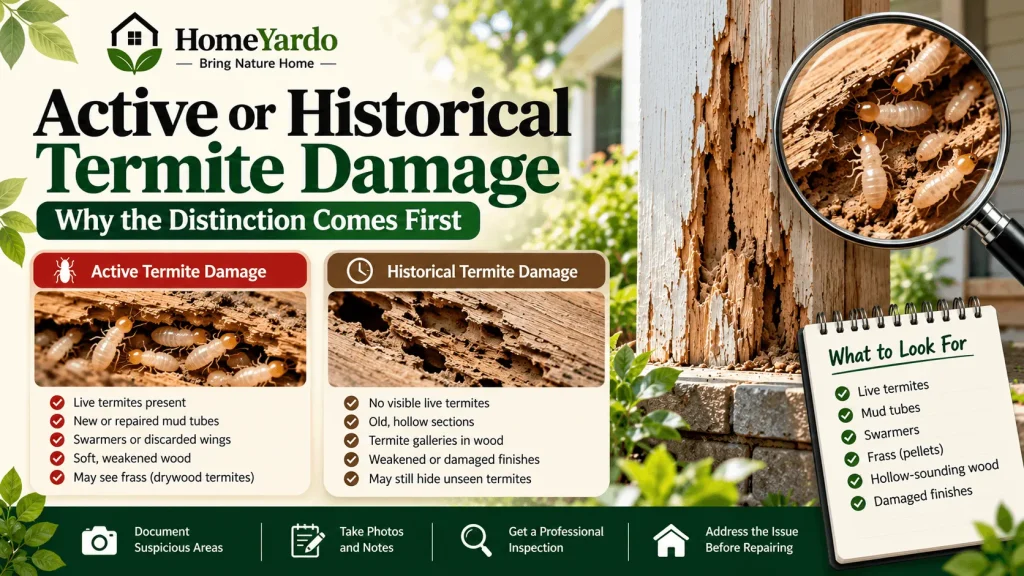
Termite-damaged wood does not automatically tell you whether termites are still feeding there.
Old and active damage can both leave hollow sections, galleries, weakened wood, or damaged finishes. Live termites, newly repaired mud tubes, swarmers emerging from the structure, and other current evidence can point toward active infestation. Drywood termites may also leave characteristic fecal pellets, commonly called frass.
The absence of visible insects should not be treated as proof that the problem is over. Termites can remain concealed inside wood, walls, soil, and other inaccessible areas.
That distinction matters because repairing the wood does not control an active infestation.
If suspicious wood is found during remodeling or routine maintenance, document the area before covering it. Photographs, notes about the location, and an inspection can help establish whether the visible damage is isolated or part of a larger problem.
How Cosmetic Repairs Can Hide Deeper Termite Damage
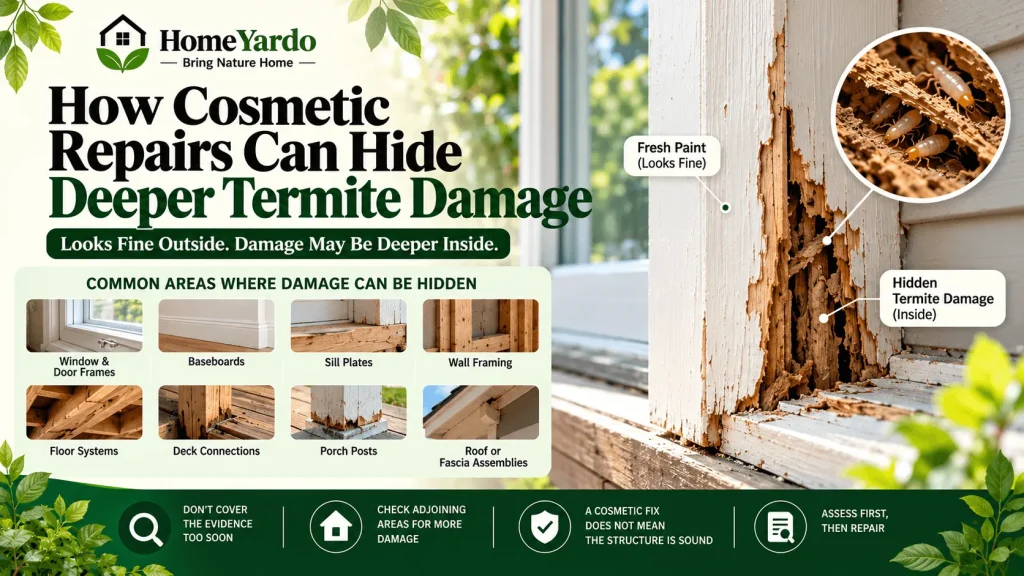
Termite damage often develops where homeowners cannot see it.
Subterranean termites typically travel through protected areas and feed within wood. A painted or otherwise intact surface can therefore remain while the material underneath has been damaged.
That makes a quick cosmetic repair risky.
Wood filler may improve the appearance of a damaged window frame. New trim can cover an unattractive opening. Fresh paint can make an exposed area look finished. None of those repairs establishes that the adjoining framing remains sound.
This is especially important when damage appears around:
- Window and door frames
- Baseboards
- Sill plates
- Wall framing
- Floor systems
- Deck connections
- Porch posts
- Roof or fascia assemblies
Before closing an exposed area, check whether the damage continues into adjoining accessible material.
The goal is not to demolish more of the house than necessary. It is to avoid covering evidence before the actual repair scope is understood.
Superficial Termite Damage Versus Structural Damage
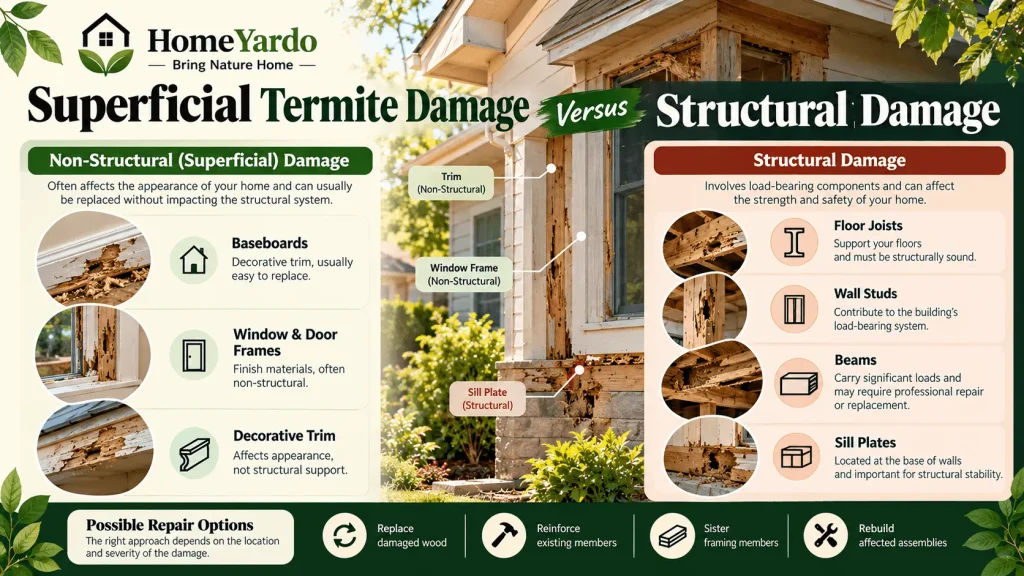
Not every damaged piece of wood performs the same job.
Baseboards, decorative trim, and some finish materials can often be replaced without affecting the building’s structural system. A damaged floor joist, beam, wall stud, sill plate, header, or load-bearing post is different because it may contribute to supporting loads.
Homeowners researching can termite damage be fixed what you need to know will find that termite-damaged wood can often be repaired or replaced. The important question is not simply whether repair is possible, but what type of repair the affected component requires.
Depending on the location and severity of the deterioration, the appropriate response might involve:
- Replacing non-structural finish wood
- Removing and replacing a badly damaged structural member
- Reinforcing an existing member
- Sistering certain framing members where appropriate
- Rebuilding part of an affected assembly
Structural decisions should not be based only on how the wood looks from the outside. When load-bearing framing has substantial damage, a qualified contractor or structural professional may need to determine whether reinforcement or replacement is appropriate.
How to Assess the Extent of Termite-Damaged Wood
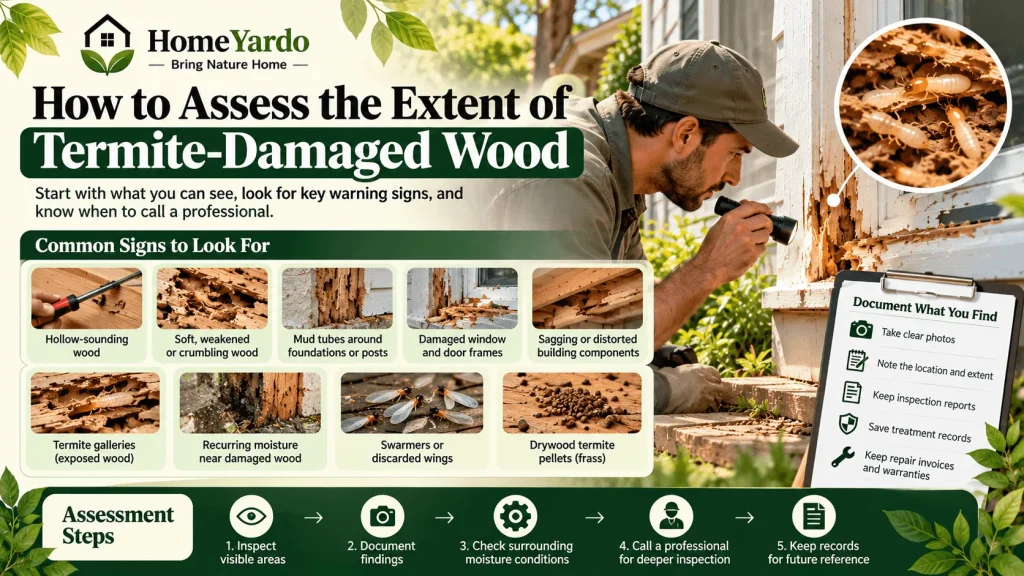
The visible damaged area should be treated as the starting point of the assessment rather than an automatic boundary for the repair.
Homeowners can document accessible warning signs, but destructive investigation and structural work should be left to qualified professionals when opening the area could create safety or building risks.
Useful observations include:
- Wood that sounds unusually hollow when gently tapped
- Soft, weakened, or crumbling exposed wood
- Mud tubes around foundations, piers, posts, or framing
- Damaged window and door frames
- Sagging or visibly distorted building components
- Termite galleries exposed during remodeling
- Recurring moisture near damaged wood
- Swarmers or discarded wings around the structure
- Pellets associated with possible drywood termite activity
HomeYardo’s guide to yard conditions that increase termite pressure also explains how moisture, wood-to-soil contact, drainage, and outdoor wooden features can create conditions worth inspecting around the house.
Document what is visible before removing materials. If a professional inspection is performed, keep the inspection report along with photographs, treatment records, warranties, and repair invoices.
Those records can be useful for future inspections, property maintenance, and eventual real-estate transactions.
When Termite-Damaged Wood Should Be Replaced
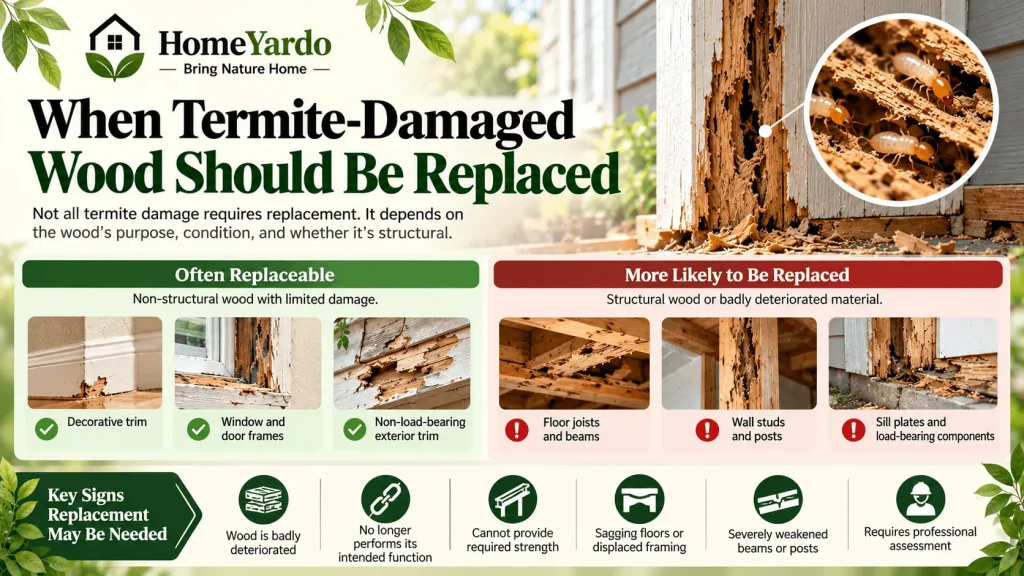
There is no universal percentage of termite damage that automatically means a piece of wood must be replaced.
The decision depends on the component’s purpose, remaining condition, extent of deterioration, and whether it carries structural loads.
A decorative piece of trim with localized damage is very different from a joist with substantial internal loss.
Replacement becomes more likely when wood is badly deteriorated, no longer performs its intended function, or cannot provide the strength required of the component. Less severe structural damage may sometimes be reinforced rather than completely removed, but that decision should be based on the actual building assembly rather than a cosmetic judgment.
Signs such as sagging floors, displaced framing, severely weakened beams, or damaged load-bearing posts warrant professional assessment rather than a DIY patch.
Treat Termites Before Closing the Repair
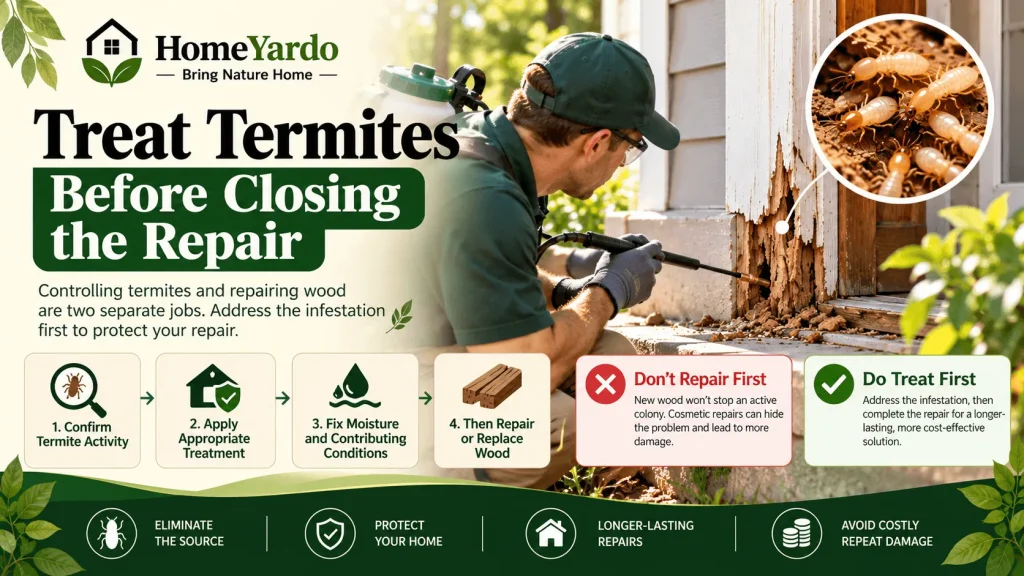
Repairing termite-damaged wood and controlling termites are two separate jobs.
New lumber does not eliminate a colony. Removing one damaged board does not establish that termites are absent elsewhere in the structure.
When active termites are confirmed, an appropriate treatment plan should address the infestation before the repair is treated as complete. The method may vary according to the termite species, construction type, infestation location, and local conditions.
This distinction prevents a common homeowner mistake: spending money restoring visible damage while leaving the underlying pest problem unresolved.
Homeowners should also avoid disturbing suspected infestations unnecessarily before an inspection. Altering the area can remove useful evidence and may make it harder to determine what was happening there.
Correct Moisture and Wood-to-Soil Problems Too

Repairing termite-damaged wood without addressing conditions around it can leave the property vulnerable to future problems.
Moisture deserves particular attention. Plumbing leaks, poor grading, overflowing gutters, drainage problems, and persistently damp wood can create conditions favorable to subterranean termites and can also contribute to wood deterioration independently of termites.
Check nearby areas for:
- Plumbing or roof leaks
- Poorly draining gutters and downspouts
- Water collecting near the foundation
- Damp crawl spaces
- Wood touching soil
- Firewood or wood debris stored against the house
- Dense vegetation against exposed structural wood
HomeYardo’s seasonal pest checks can be used alongside routine home maintenance to monitor moisture, damaged exterior materials, foundations, crawl spaces, decks, and other pest-prone areas.
Correcting these conditions does not replace professional termite control when an infestation exists. It helps make the structure less favorable to future termite activity and reduces other moisture-related deterioration.
Repair or Replace? A Simple Homeowner Guide
The repair method should match both the amount of damage and the job performed by the affected wood.
| Situation | Likely Next Step |
|---|---|
| Minor damage to decorative trim | Assess activity, then repair or replace the affected material |
| Localized damage to non-load-bearing wood | Replace damaged material after the termite issue is addressed |
| Damage extending behind finishes | Inspect adjoining accessible wood before closing the area |
| Significant joist, beam, stud, or sill damage | Obtain a qualified structural assessment |
| Active termites found during renovation | Pause cosmetic restoration and address the infestation |
| Damp or deteriorated replacement area | Correct the moisture source before completing restoration |
| Uncertain extent of hidden damage | Obtain professional inspection before covering the area |
This framework is intentionally conservative. A visual inspection alone cannot determine the remaining load capacity of a seriously damaged structural member.
Putting Termite Treatment and Wood Restoration in the Right Order
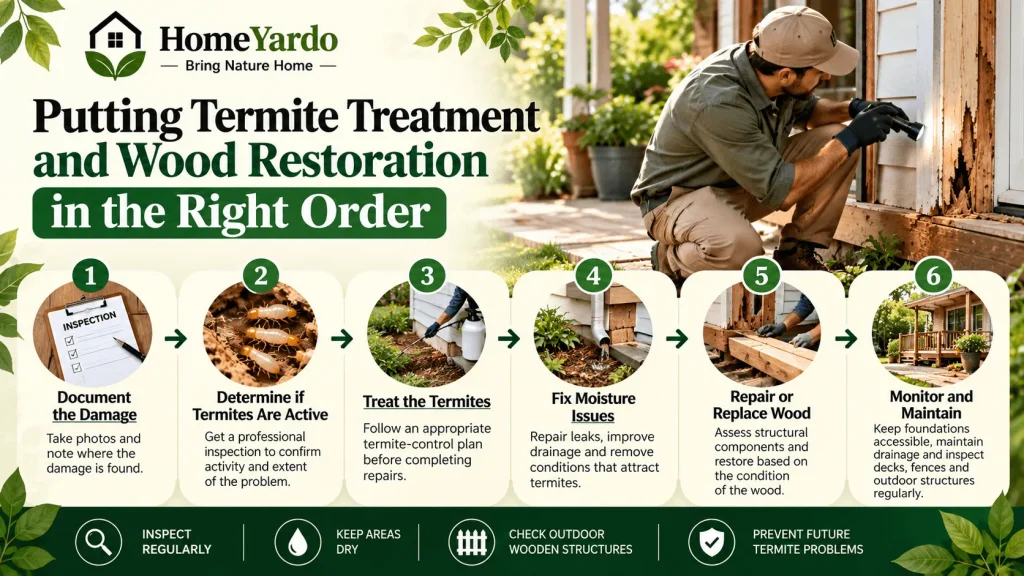
A termite repair project works best when each job is handled in a logical sequence.
Start by documenting the suspected damage and determining whether professional termite inspection or treatment is needed. Once the pest problem and the accessible extent of damage are understood, assess affected structural components and correct contributing moisture or drainage problems.
Wood repair or replacement can then proceed according to the condition of the material.
After restoration, continue monitoring the property. Keep foundations accessible for inspection where practical, maintain drainage, correct leaks promptly, and avoid unnecessary wood-to-soil contact.
Homeowners with outdoor wooden structures should also inspect posts, fences, sheds, decks, and similar areas periodically. HomeYardo’s guide to reducing pest pressure around outdoor structures provides related maintenance steps for wood, drainage, vegetation, and exterior structures.
When to Call a Pest Professional, Contractor, or Structural Engineer

Different professionals answer different questions.
A qualified pest professional can identify termite activity, determine the type and extent of accessible infestation evidence, and recommend an appropriate control strategy.
A contractor can evaluate repair access, damaged building materials, replacement methods, and the practical scope of restoration.
A structural engineer may be appropriate when significant damage affects load-bearing framing or when there is uncertainty about whether a damaged component can safely continue carrying its intended loads.
Professional assessment becomes especially important when you find:
- Sagging floors or roof sections
- Heavily damaged joists or beams
- Deteriorated sill plates
- Damaged load-bearing posts
- Extensive damage across several areas
- Termite activity inside inaccessible building assemblies
- Uncertainty about how much structural material remains sound
The more important the affected component is to the structure, the less appropriate it is to rely on appearance alone.
Final Takeaway
Repairing termite-damaged wood begins with understanding the problem, not covering it.
Determine whether termite activity may still be present, establish how far the accessible damage extends, and identify whether the affected material is cosmetic or structural. Active infestation and moisture problems should be addressed before the area is considered fully restored.
Minor damaged trim may require a straightforward replacement. Significant deterioration in joists, studs, beams, sill plates, or other load-bearing components deserves professional assessment.
That order helps homeowners avoid paying for attractive repairs that conceal an unresolved termite or structural problem.
FAQ’s
Yes. Some termite-damaged wood can be repaired or reinforced, while severely weakened material may need replacement. The correct method depends on the amount of damage, the function of the wood, and whether it is structural.
No. Replacement is not automatically required for every piece of affected wood. Minor non-structural damage may be repairable, while badly deteriorated or structurally important wood may require reinforcement or replacement.
When active termites are present, the infestation needs to be addressed as part of the project before the repaired area is treated as complete. Otherwise, replacement wood may remain exposed to termite activity.
Damage involving joists, beams, wall studs, sill plates, headers, posts, roof framing, or other load-bearing components may be structural. Significant deterioration in these areas should be evaluated by a qualified building professional.
Wood filler may be suitable for limited cosmetic surface repairs after termite activity and the condition of the wood have been properly assessed. It should not be used to disguise significant deterioration or restore the load-bearing capacity of structural framing.
Yes. Replacing damaged lumber does not by itself eliminate termites. If an infestation or conditions that contributed to termite access remain unresolved, replacement wood can also be exposed.
Live termites, active or newly repaired mud tubes, swarmers, and other fresh evidence may indicate current activity. However, the absence of visible termites does not prove an infestation is inactive. Professional inspection is appropriate when the status is uncertain.
A pest professional should assess suspected termite activity. A qualified contractor can evaluate repair needs, while substantial damage to load-bearing components may warrant assessment by a structural engineer.
References
- U.S. Environmental Protection Agency — Termites: How to Identify and Control Them
- Mississippi State University Extension — Signs of Termite Infestation
- Mississippi State University Extension — Protect Your House from Termites
- Penn State Extension — Eastern Subterranean Termites