
What gets damaged in a storm? A Homeowner’s Guide
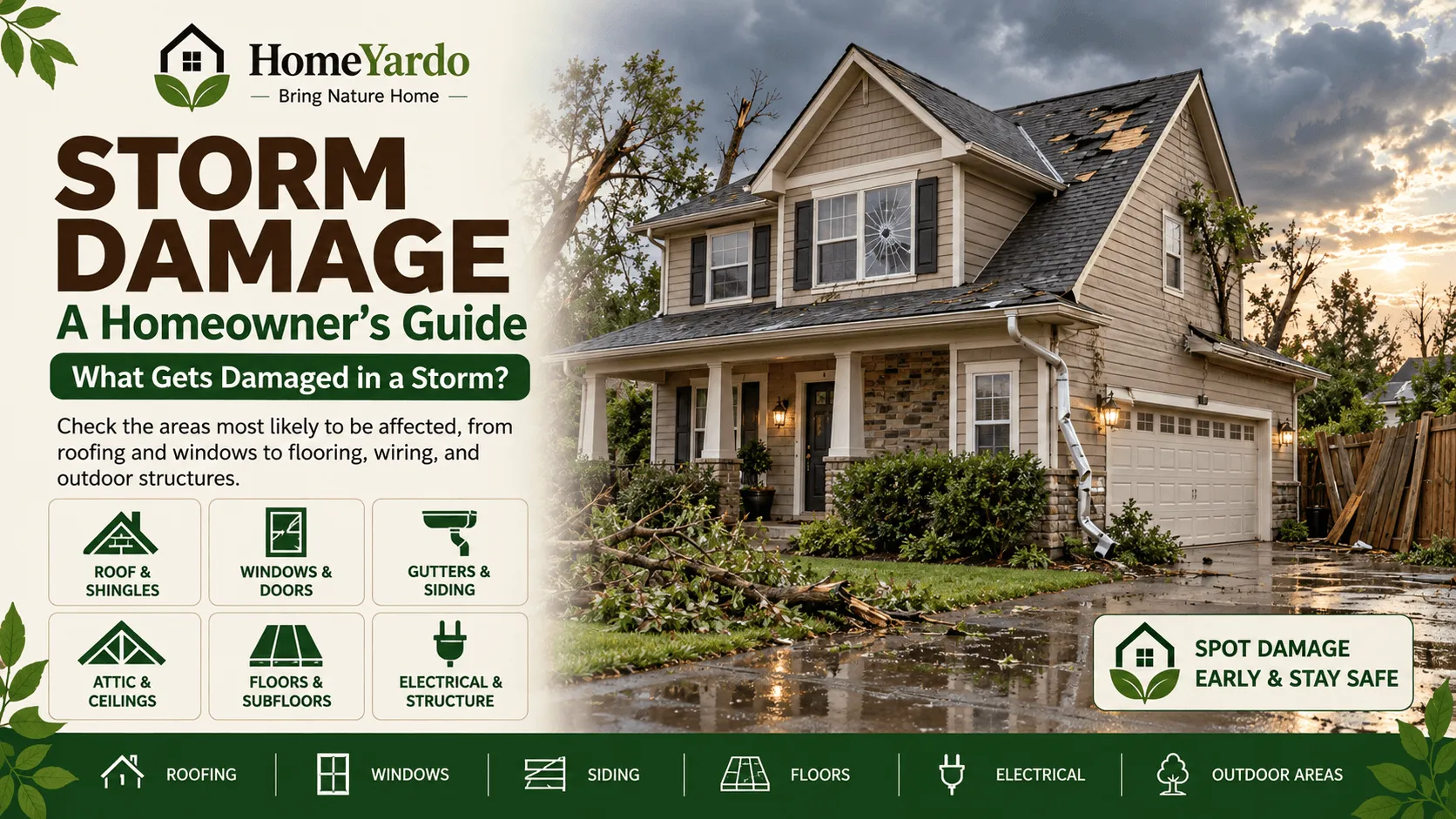
A severe storm can cause far more damage than a few shingles or tree branches. High winds, hail, heavy rain, flooding, lightning and flying debris can impact numerous areas of a property at once.
Some storm damage is visible. The minute you step outside you may see a shattered window, missing shingles or a fallen fence. Other problems may be buried behind walls, under flooring, in the attic or near electrical components.
That’s why the first assessment following a storm is so critical. Knowing where storm damage is typical helps prepare you to look for warning signs, avoid risky locations, and know when to call in a professional for assessment or restoration.
Which Areas of the House Suffer Most from Storm Damage?
Storms can impact both the building envelope and the systems within a home.
Check these worth areas:
- Roof shingles, flashing and gutters and decking
- Windows, external doors, garage doors
Exterior Wall and Siding Materials
Attics insulation ceilings and internal walls - Sub-floors and floors
- Electrical wiring, outlets, panels, and appliances
Foundation and structural frame - Trees, fences, sheds, decks and other outside property
The type of damage varies on the storm. Wind can harm roofing and exterior materials . Hail can cause impact damage . Heavy rain and flooding present another set of challenges since the moisture can go far beyond the point of first entry.
Roofing and Shingles Damage
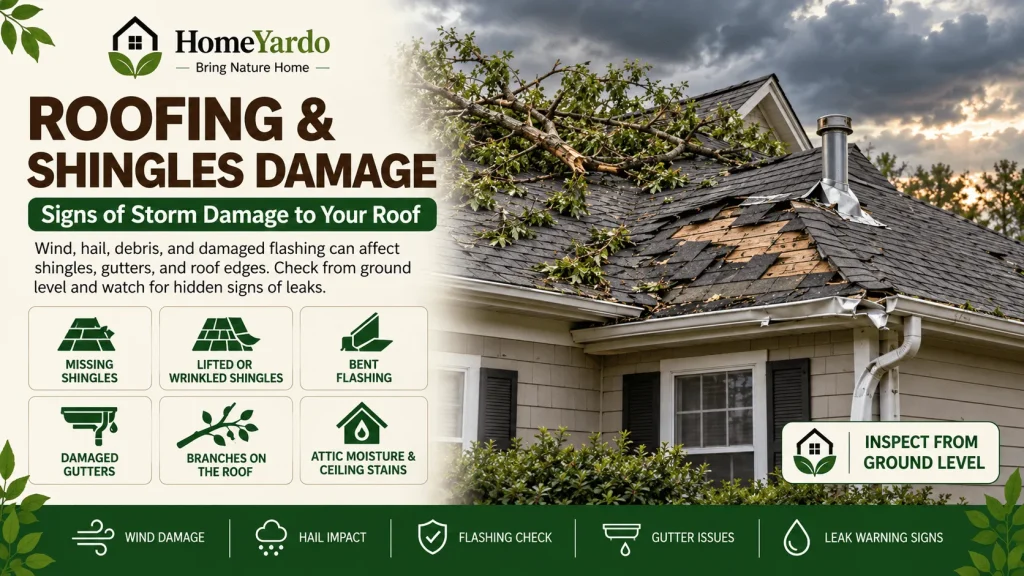
Severe weather is when the roof takes on some of the worst exposure.
High winds can lift, wrinkle and loosen or remove shingles completely. Hail can harm the shingle surface. Falling trees can pierce roofing materials or damage flashing and gutters.
A roof doesn’t have to have a big opening to let water in. A shingle out of place, or broken flashing around a vent, chimney, valley or roof edge, can be enough to cause a leak. Learn more about how harsh weather can damage a roof and shorten its service life.
Signs of Storm Damage to Your Roof
Look for from ground level:
- Shingles that are missing or clearly lifted
- Shingle bits about the property
- Displaced or bent flashing
- Faulty gutters or downspouts
- Branches on the roof
New stains inside the house on the ceilings - Wet or moist insulation in the attic
Don’t try to climb on a roof that is wet, broken or covered with debris yourself. Besides the fall hazard, some roof damage is hard to see unless you know what you’re looking for.
If there are leaks, widespread roofing difficulties or significant impact damage, an emergency storm damage restoration specialist can determine if the damage goes deeper than the surface.
Windows & Doors
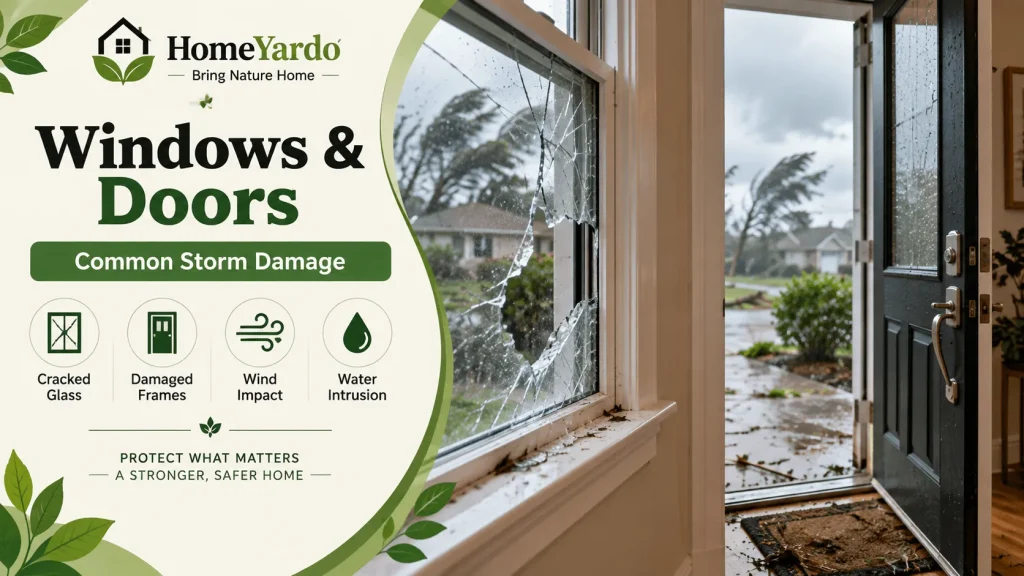
Wind pressure and flying debris can impact windows and outside doors.
Although the glass may crack or shatter, the damage is not necessarily confined to the glass. Frames change, seals break, screens rip, hardware crashes. If the frame, glass or surrounding opening is significantly damaged, review the factors involved in planning a window replacement.
Thus a window can look sound yet still let wind-driven rain into the wall or room.
Look Outside The Glass
Following severe weather, inspect open windows and doors for:
- Glass cracked or broken
- Frames damaged
- perimeter gaps
- Weather seals, loose
- Water on the windowsills
Doors that suddenly jam or do not close properly anymore - Nearby wet plasterboard or floor covering
Broken glass is a safety issue. Keep children and pets away from the damaged areas until loose glass and unstable debris have been properly removed.
Gutters, Siding and Exterior Walls
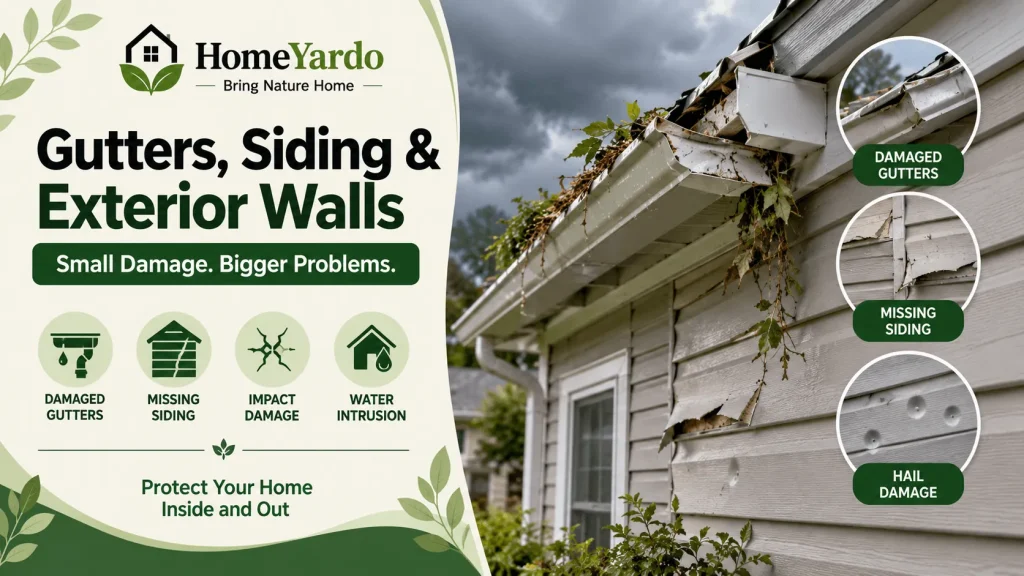
Exterior walls are a part of the home’s weather barrier, so what appears to be cosmetic storm damage warrants a closer inspection.
High winds might dislodge the siding panels. Hail and windblown debris can dent, shatter, or penetrate external materials. Gutters can be pulled away from the fascia, twisted, or clogged with branches and leaves.
Why Small Exterior Damage Can Be a Big Deal
Appearance is not the key issue always. Rainwater could get via a crack, a crevice or a misaligned panel.
Moisture behind siding can impact sheathing, insulation, wall frame and interior finishes before you can see any signs of the damage.
Walk around the home at a safe distance and check for missing siding, impact marks, damaged trim, disconnected gutters and spots where external materials have shifted.
Damage to Ceiling, Insulation, Walls, and Attic
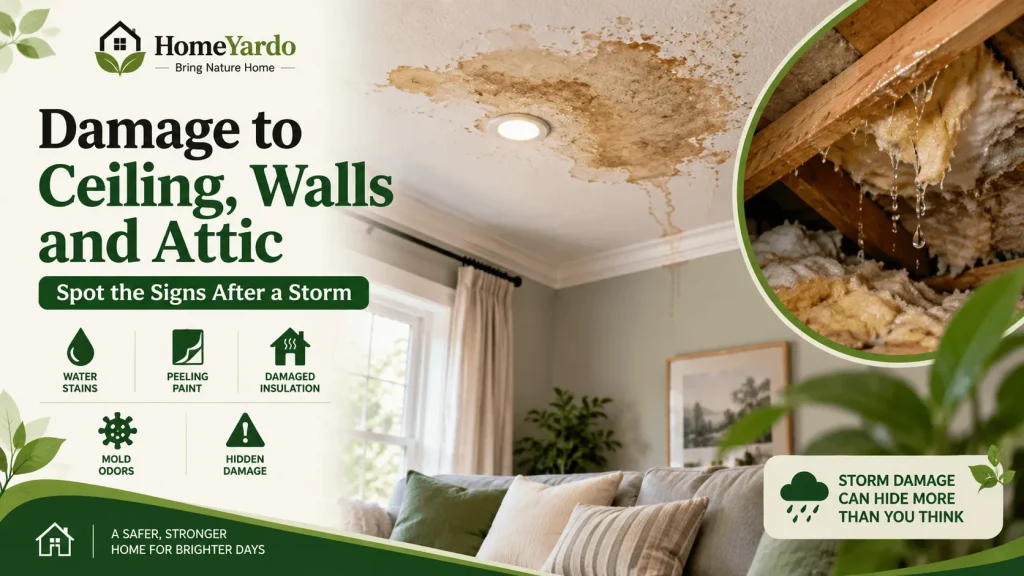
Storm damage to the interior usually starts elsewhere.
Water can enter through the roof and flow along decking, rafters, framing or insulation before appearing on a ceiling. The location of a water stain does not, therefore, necessarily indicate the actual point at which rain entered the building.
Some common warning indicators are:
- Brown or yellow spots on the ceiling
- Peeling or bubbling paint
- Wet plasterboard
- Drooping ceiling material
- Damp insulation in attic
- Mildewing odors
- Water near electrical fixtures
- New stains that occur after it rains
Don’t dismiss a little stain just because the surface looks dry later on. The materials in the wall or ceiling cavities may still be wet.
A drooping ceiling requires special caution, since waterlogged plasterboard can be heavy and may finally give.
Floors, Subfloors & Flooring Materials

Rainwater that enters through doors, windows, roofs, basements or foundations sometimes pools at floor level.
Floors are sensitive to dampness in different ways.
Carpet and padding may hold a lot of water. Hardwood can swell or distort or curl. Laminate can crack or buckle and water can be trapped under vinyl and other polished surfaces.
That’s just one of the apparent floor coverings to worry about. Moisture can also get to the underlayment and subfloor.
Moisture Trapped Under Flooring
A floor can look dry on top and still have moisture underneath.
Watch out for:
- Buckling
- Swelling
- Non-fixed flooring
- Areas of softness
- Stain
- Never-drying wetness
- Strange smells
Surface drying may not be sufficient to remove moisture that has moved into underlying material. The sooner you find and drain unwanted water, the easier it is to evaluate what can be dried and what has to be replaced.
Appliances and Electrical Systems
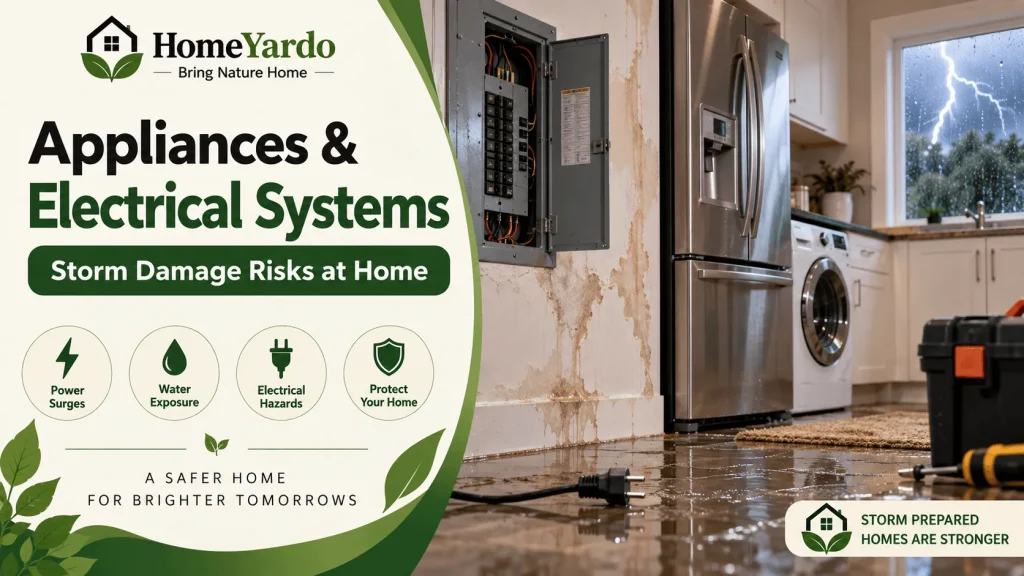
Extra care needed with damage from electrical storms.
Electronics and appliances can be affected by lightning and power surges. Water from roof leaks or flooding can expose plugs, wiring, panels and equipment.
Don’t assume that electrical equipment is safe just because the power appears to be off.
Electrical Warning Signs after a Storm
Warning indicators may include:
- Water near electrical panels or outlets
- Unusual electrical scents or burning
- Buzzing noises
- Repeatedly tripping of breakers
- Faulty electrical wiring
- burn markings
- Appliances that blow up due to a power surge
Do not handle electrical equipment, exposed wiring or appliances in standing water.
Any equipment that has been in touch with water should be checked by a suitably certified professional before being returned to normal service.
Elements of Structure and Foundation
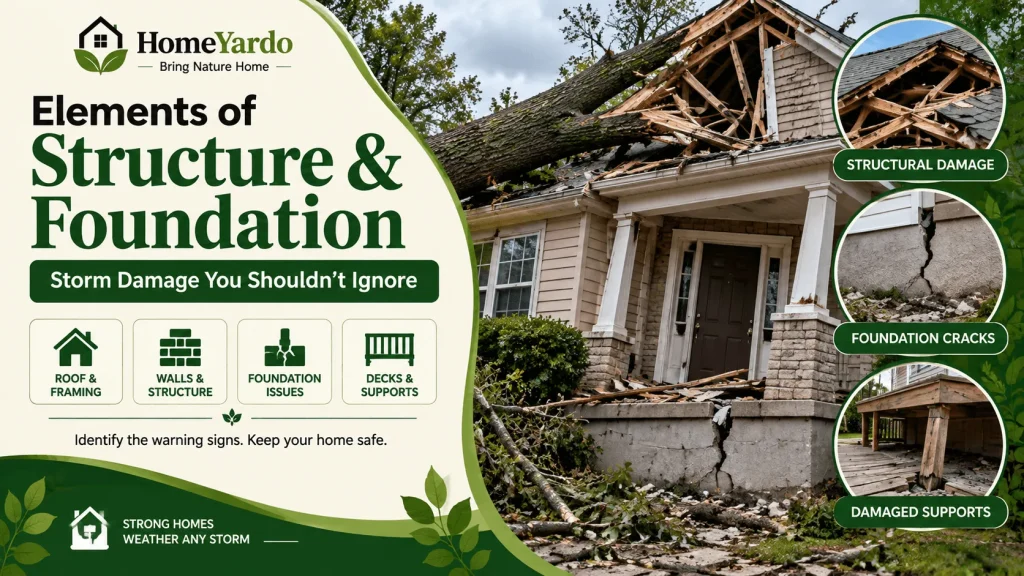
The worst storm damage may be to the structure that supports the home.
Large fallen trees, heavy winds, flowing floodwater, and heavy debris can damage roof framing, external walls, foundations, porches, decks, and other structural components.
Indicators of potential structural damage
Observe the modifications such as:
- New or extended cracks
- Leaning on a Wall
- Roof portions sagging
- New or uneven sloped floor
- Doors or windows that suddenly stick
- Disaggregated building materials
- Broken support posts
- Foundational movement
These symptoms are not necessarily a sign of significant structural failure of the home, but they are solid reasons to avoid the affected region until it has been inspected.
Don’t go inside to examine or photograph damage if any portion of the structure looks unsafe.
Outdoor Property: Trees, Fences, Sheds and
The home itself is merely one aspect of the property that is subject to harsh weather.
High winds can bring trees down, snap branches, blow down fences, tip outdoor furniture over and damage sheds, decks, cars, play equipment and landscaping.
When fallen trees hit a roof, vehicle, fence or utility line, they can generate multiple hazards all at once.
Be very aware of:
- Fallen electrical lines
- Trees leaning toward the buildings
- Above, partially damaged branches
- Damaged decks/porches
- Fences that are not stable
- Loose roofing and siding materials
Do not ever try to approach or move a downed electrical line. Treat any downed queue as energized, and keep people and pets well away from it.
Can Storm Damage Be Concealed?
Yes. Some of the most vexing storm-related concerns are not immediately obvious.
Water can travel through wall cavities, insulation, ceilings, subfloors and structure. Roof damage can be present without causing an immediate leak inside.
Hidden damage may appear later as discoloration, odors, peeling paint, warped flooring, moist insulation, or leaking each time it rains.
That’s why a post-storm assessment should look at how the structure works as a system, not just shattered outside elements.
How to Safely Inspect Your Home for Storm Damage
Once the immediate weather threat has passed, check the property.
Begin from a safe position outside. From ground level, look at the roof and check siding, windows, doors, gutters, trees, fences and obvious structural areas.
Then check inside areas you can get into.
Outside Inspection
Search for:
- Lack of roofing material
- Broken gutters
- Broken windows
- Loosen siding
Down trees or tree limbs - Water standing
- Doors busted apart
- Changes to exposed foundation
Inside Check
Search for:
- Stains on ceiling or wall
- wet plasterboard
- Insulation wet
- Damage to flooring
- Strange smells
- Water surrounding doors and windows
- Electrical results
Do not wander under unstable trees and damaged structure components. Do not enter standing water near electrical equipment or go onto roof.
What to Do Right After a Storm Causes Damage?
After you resolve immediate safety issues, record the status of the property before beginning unneeded cleanup or repairs. If the storm has caused significant water intrusion or flooding, follow these steps for handling a flooded home and limiting further water damage.
Photograph and record whatever damage you can reach. “Take wider pictures of the affected room or outside area, but also closer pictures of specific problems,” he says.
Write down the date of the storm and when you first detected any leaks or other damage. Keep proper receipts and documentation of expert evaluation or temporary protective work.
If an opening in the building is letting in more rain, interim actions may be needed to prevent further damage. But only when they can be done securely.
When You Need to Call in a Pro
Not every loose limb or little blemish on the outside calls for a call to a restoration specialist.
When you find:
- A professional assessment is more appropriate.
- Water encroachment (active)
- Roof severely damaged
- Rooms flooded
*Wet wall or ceiling cavities - Water exposure to electrical parts
- Structural movement potential
- Large fallen trees impact building
- Widespread damage in various places
Damage you can’t safely assess yourself
Different situations require different professionals. Electrical problems should be sent to trained electrical professionals, while suspected structural damage may require a suitably qualified building or structural professional.
Where there are multiple affected areas on the property, a storm-damage repair business may coordinate drying, cleanup, removal of damaged materials and restoration.
What Damage Should Be Inspected First After a Storm?
Prioritize hazards rather than appearance.
Before you deal with cosmetic dents or minor exterior markings, you should take care of electrical exposure, structural instability, active water penetration, damaged roofs, broken glass, standing water and fallen trees.
A convenient arrangement is:
Safety dangers → active water intrusion → structural issues → moisture and drying → external repairs → cosmetic damage.
That way important concerns don’t get lost in the shuffle while attention is focused on damage that’s easier to notice.
How to Limit Further Damage While Waiting for Repairs
Limit actions to temporary preventative measures that can be taken without risk of exposure to electrical, structural, fall or weather threats.
This could mean relocating unaffected things away from a dry but leaking area, putting containers under little drips or keeping people out of damaged rooms, depending on the circumstances. Where rainwater enters around a garage door, properly maintained weather stripping can also help limit water intrusion.
Do not get on a roof that is broken, trim trees that are unstable, upset structural members that are doubtful, or work in standing water with electrical equipment in it.
Closing Words
Storm damage can harm virtually any area of a home.
Wind, hail, severe rain, flooding, lightning or flying debris can impact roofs, windows, siding, walls, insulation, flooring, electrical systems, structural components and outdoor property.
What appears to be damage at first glance may not tell the whole story. Water can get beneath finished surfaces, roofing faults may not show up as leaks immediately away, and structural or electrical issues will require specialized evaluation.
Safety first. Only check the parts you can reach without putting yourself at risk, record any obvious damage, halt any further water intrusion if it’s safe to do so and call in suitable professional aid for major water, electrical, roofing or structural issues.
FAQ’s
Typically the initial effect from wind, hail, rain and flying debris is on roofing, siding, gutters, windows and exterior materials. Once the water gets in, it can spread the damage to ceilings, walls, insulation and floors.
Check for missing or lifted shingles, damaged siding, broken windows, unattached gutters, water stains, moist plasterboard, warped flooring, fallen branches and any new structural issues. Damage may be concealed behind finished surfaces.
Check for missing or lifted shingles, damaged siding, broken windows, unattached gutters, water stains, moist plasterboard, warped flooring, fallen branches and any new structural issues. Damage may be concealed behind finished surfaces.
Wind damage can take many forms including raised or missing shingles, displaced flashing, loose siding, damaged gutters, broken branches, damaged fences, and windows or doors that no longer close normally.
Hail can dent roofing, gutters, siding, metal surfaces, windows and outdoor equipment. How it looks depends on the substance, how big the hail is, the wind, and the state of the surface.
Yes. Damage to roofing, flashing, siding or sealing may not immediately lead to a visible indoor leak. Moisture can also move through building materials before it shows up indoors.
Once the weather threat has passed and conditions are safe, inspect the property. Active leaks, electrical exposure, unstable structures, broken glass and fallen trees demand immediate action.
Yes. Lightning, surges, leaks, and floodwaters may impact appliances, outlets, wiring and electrical panels. Do not use electrical equipment that is wet or visibly damaged. Seek qualified assistance if necessary.
Yes. Water can travel under carpet, hardwood, laminate, vinyl and other flooring materials to padding, underlayment or subflooring even while the surface above appears quite dry.
A visual assessment from the ground is safer for most homes. Never get on a damp or damaged roof. Suspected roof damage can be evaluated by a qualified specialist.
Photograph damaged roofing, siding, windows, ceilings, walls, floors, appliances, outside structures, fallen trees and other affected places. When it is safe, take wide and close-up photographs before serious cleanup.