How Harsh Weather Causes Roof Damage and Shortens Its Life
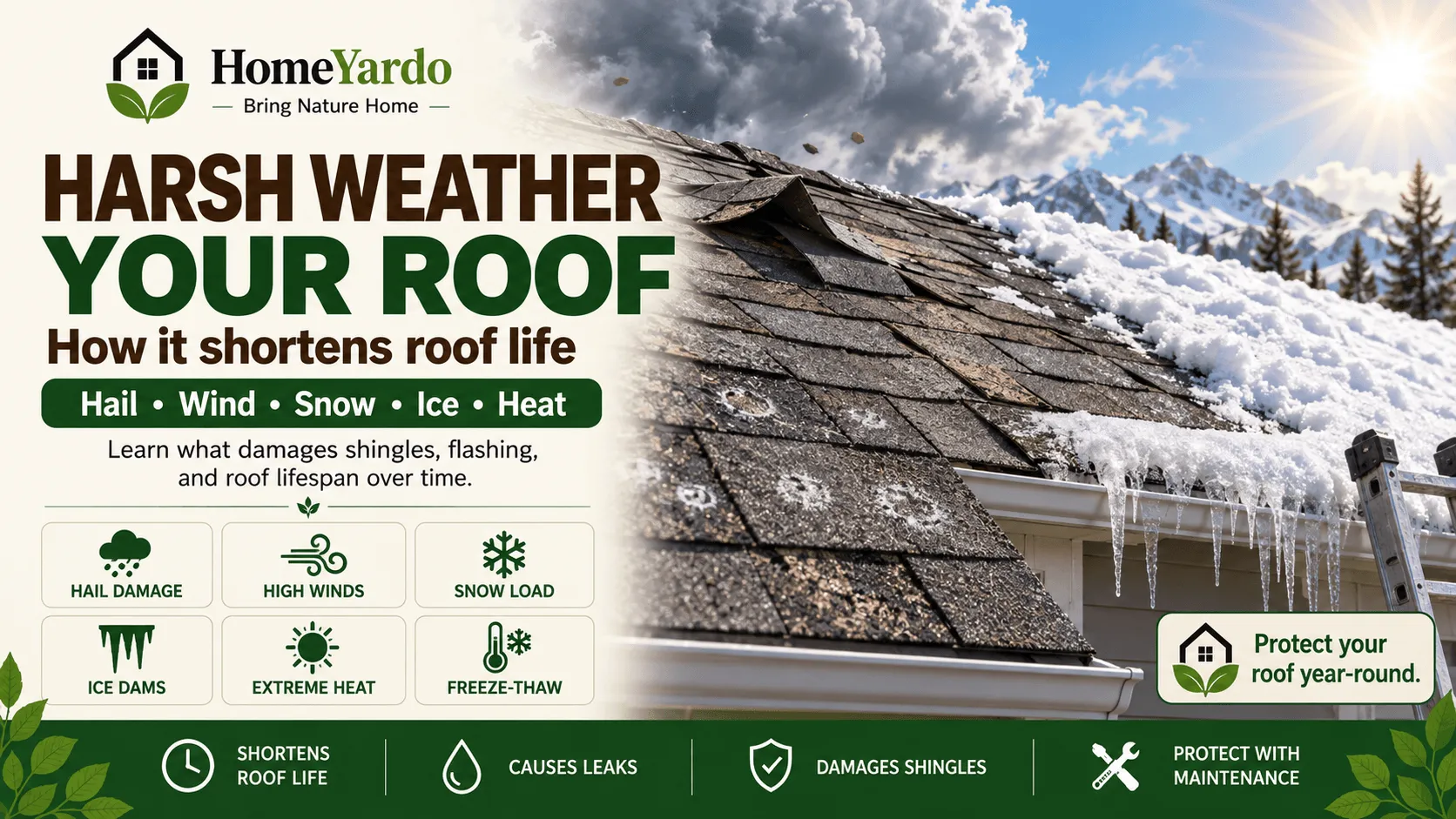
A roof rarely reaches the end of its useful life because of one spectacular storm. More often, service life is chipped away by repeated stresses: summer heat, ultraviolet exposure, wind uplift, freeze-thaw cycles, wet snow, ice and hail. In Edmonton, a roof may encounter most of those conditions in a single year.
Environment and Climate Change Canada’s 1991–2020 normals put Edmonton’s average January temperature at about -10.3°C and July at 18.1°C. That seasonal range matters because roofing materials repeatedly warm, cool, expand, contract, dry and flex. Weathering is therefore not just about how old a roof is. Roof pitch, material, installation, attic conditions, orientation and maintenance all influence how rapidly it ages.
A “25-year” or “30-year” roof is not a stopwatch. Two roofs installed on the same day can reach very different conditions after 15 years if one has endured repeated hail, ice dams and wind exposure while the other has not.
Why Does Harsh Weather Reduce Roof Life?
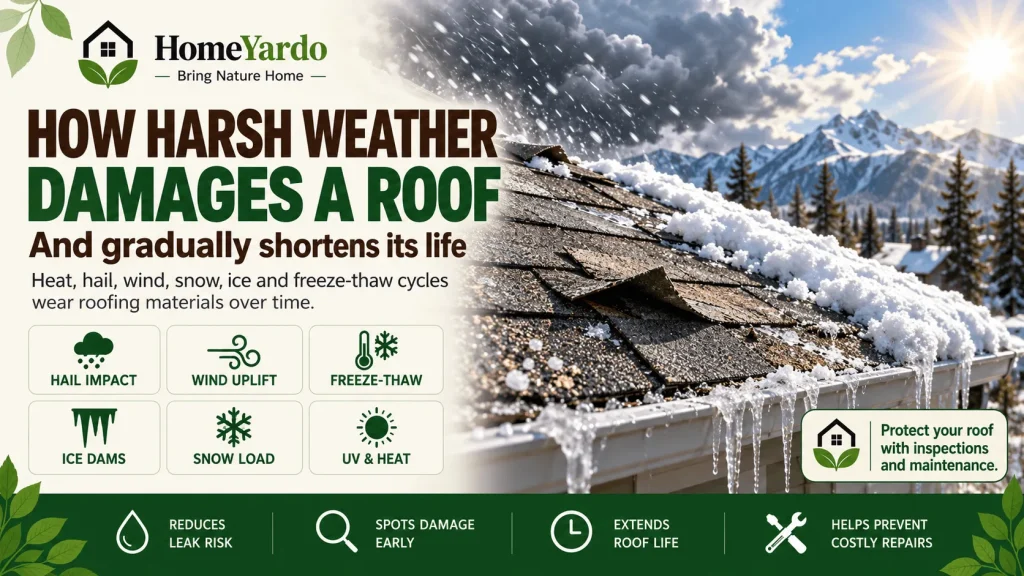
Roofing is the outermost part of a system expected to shed water while resisting temperature change, solar radiation, impact and wind.
Asphalt shingles rely on asphalt, reinforcement, mineral surfacing and adhesive sealing. As they weather, the asphalt gradually becomes less flexible and granule loss can expose more of the underlying surface. Fasteners, edges and flashing details also experience years of movement.
Metal roofing responds differently. It does not suffer granule loss, but metal expands and contracts as temperatures change. Panels, seams, fasteners and flashings must be detailed so that this movement does not create leaks or loosen connections.
The covering is only part of the story. Underlayment, decking, flashing, insulation, ventilation and attic air sealing affect how well the entire assembly handles weather.
Cold Weather Makes Some Roofing Materials Less Forgiving
Cold does not automatically damage a roof, but it changes material behaviour.
The National Roofing Contractors Association notes that asphalt shingles become more brittle in cold temperatures. During winter installation, shingles are therefore easier to crack when bent or handled roughly. Their self-sealing strips may also take longer to bond, which can leave newly installed shingles more vulnerable to wind until warmer weather allows proper sealing.
Once a roof is in service, cold can expose weaknesses that were already present. Sealants stiffen, flashing joints move and trapped moisture may freeze. Water expands by roughly 9% when it changes to ice, so repeated freezing can widen existing cracks or worsen defects in porous or damaged materials.
Edmonton roofs are not dealing with an occasional frosty morning. Sustained sub-zero weather, followed by thaws and rapid shifts around freezing, makes drainage and detailing especially important.
Freeze-Thaw Cycles Can Turn Minor Defects Into Leaks
A tiny gap around a flashing detail may remain unnoticed during light rain. Snowmelt can be more troublesome because water may sit beneath snow cover, travel slowly or refreeze at colder parts of the roof.
When daytime temperatures rise above freezing and fall again overnight, water repeatedly moves through vulnerable areas. Loose shingle edges, cracked sealant and exposed fasteners become more consequential.
That is why an inspection by a roofing company in Edmonton should look beyond missing shingles. Valleys, plumbing vents, chimney and wall flashings, roof edges, sealants and evidence of moisture beneath the covering can tell a more useful story about the roof’s condition.
A leak seen indoors can also be misleading. Water may travel along decking, underlayment or framing before it becomes visible at a ceiling.
Ice Dams Often Begin With Heat Escaping Into the Attic
Ice dams form when snow melts on a warmer part of the roof and then refreezes near a colder eave. As ice builds at the edge, additional meltwater can pool behind it and work beneath roofing materials.
Canada Mortgage and Housing Corporation describes the mechanism clearly: heat reaching the roof sheathing melts snow above the conditioned part of the house, while the unheated overhang remains cold enough to refreeze the runoff. The issue is therefore not always a roofing-material defect.
Air leakage from the living space, uneven insulation, blocked ventilation paths and roof geometry can all contribute. Problems with attic insulation can also contribute to ice dams, moisture and uneven indoor temperatures. Alberta’s residential performance guidance likewise notes that freezing rain and repeated freeze-thaw cycles can worsen ice damming and identifies eave protection, vapour control, insulation and ventilation as relevant parts of the roof assembly.
Replacing shingles without addressing the heat and moisture conditions below them may leave the underlying cause untouched.
Snow Load Is About Weight, Not Just Depth
Thirty centimetres of light, dry snow and the same depth of wet, compacted snow do not impose the same load.
Snow gains density as it settles, absorbs moisture or partially melts and refreezes. Drifting can also concentrate weight around roof transitions and changes in height. Modern roofs are designed for prescribed structural loads under applicable building codes, but unusual accumulation, blocked drainage, deterioration or structural alterations can change the risk. Alberta currently uses the National Building Code – 2023 Alberta Edition, which came into force on May 1, 2024.
Careless snow removal can cause damage of its own. Metal shovels and sharp tools can scrape shingles, puncture membranes and damage flashing. On steep or icy roofs, fall exposure is another serious concern.
The useful question is not simply “How deep is the snow?” but whether the roof is draining correctly and whether accumulation has become abnormal for that structure.
Hail Can Remove Years of Remaining Roof Life in Minutes
Hail is different from gradual weathering because serious damage can occur during one storm.
The Insurance Institute for Business & Home Safety has documented three common forms of hail damage to asphalt shingles: dents, tears or breaches, and displaced granules. Severity depends on the hailstone’s mass, diameter, strength and impact velocity, along with the condition of the roof. IBHS uses 1.5-inch and 2-inch laboratory-manufactured hailstones in comparative shingle testing.
Age changes the outcome. A weathered shingle that has lost flexibility may respond differently to impact than a newer one. IBHS research into repeated small hail also suggests cumulative exposure can reduce a shingle roof’s resistance to later, larger impacts.
Not every circular mark means functional failure. With metal roofing, for example, some hail dents can be largely cosmetic. What matters is whether impacts have damaged the roof’s ability to shed water, protective coatings, seams or other critical components.
Wind Damage Often Starts Where the Roof Is Most Exposed
Wind rarely needs to remove an entire section of roofing to cause trouble. Damage frequently begins at edges, corners, ridges or a shingle that has already lost its seal.
Once wind gets beneath an edge, repeated lifting can weaken the adhesive bond, crease the shingle or stress fasteners. IBHS research has identified sealant strength as an important factor in asphalt-shingle wind resistance, including after hail exposure.
Installation quality makes a substantial difference. Fasteners outside the specified nailing zone, overdriven nails, underdriven nails and shingles that never sealed properly can all reduce resistance.
Trees create a second wind-related hazard. Branches that rub across a roof abrade surfaces, while broken limbs can puncture coverings or flashings.
Heat and Sunlight Still Matter in a Cold Climate
A northern climate does not protect a roof from solar aging.
Roof surfaces can become much hotter than the surrounding air under direct summer sun, then cool quickly after sunset or a storm. Repeated thermal cycling moves shingles, metal, flashings and sealants.
Ultraviolet radiation also degrades exposed materials. On asphalt shingles, mineral granules help protect the asphalt from direct sunlight. As those granules are gradually lost through aging, hail, runoff or mechanical wear, more of the asphalt is exposed.
Attic conditions matter on the underside as well. Persistent heat and moisture can affect roof decking and other components. Energy-efficient roofing can also help manage heat transfer through the roof assembly. Ventilation has a role, but it should not be treated as a substitute for effective air sealing and insulation. CMHC guidance on attic moisture and ice dams similarly emphasizes the importance of controlling air leakage and moisture rather than relying on ventilation alone.
Curling, cracking and widespread granule loss are therefore more informative than the installation date alone.
Rain Usually Finds Details Before It Finds the Middle of the Roof
Many leaks begin where the roof changes direction or is interrupted.
Chimneys, skylights, plumbing vents, valleys and roof-to-wall intersections all rely on flashing to guide water around openings. If flashing moves, corrodes or was poorly installed, rain can enter even when most of the roof covering still looks sound.
Wind-driven rain raises the difficulty because water can be pushed sideways or upward beneath laps and edges. Clogged gutters can compound the problem by slowing drainage and sending water over fascia or back toward the eaves.
This is one reason a roof may appear perfectly dry through several ordinary showers and then leak during one storm with sustained wind.
Why Older Roofs Become More Vulnerable to the Same Storm
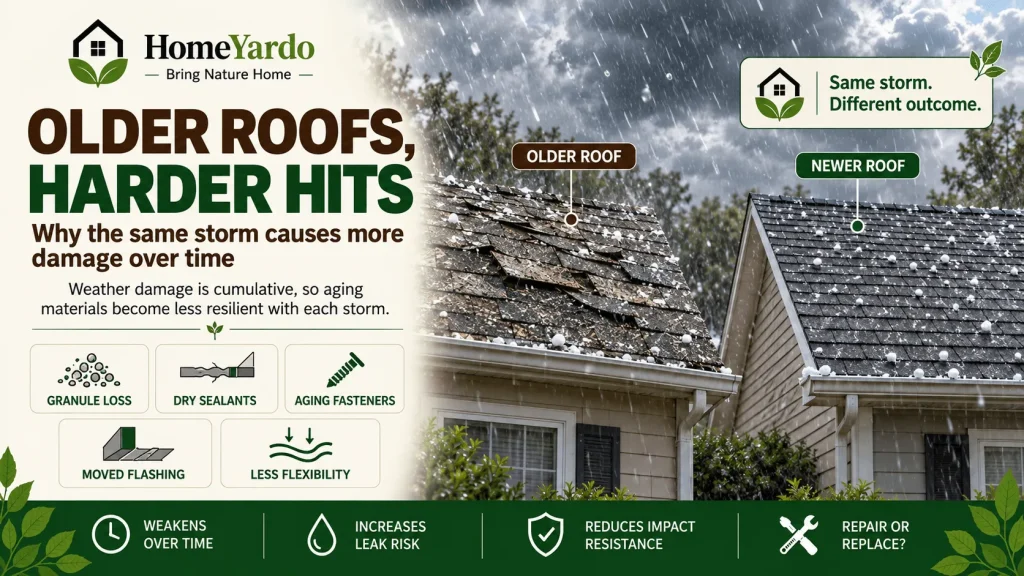
Weather damage is cumulative. Asphalt loses flexibility, sealants dry, fasteners age, coatings wear and flashing moves. A previous hailstorm may have removed granules without causing an immediate leak. Years later, a second event acts on a roof that has less resilience left.
That explains why neighbouring houses can experience the same storm and come away with different damage. Material, roof slope, orientation, age, installation and earlier exposure all matter. Research into asphalt-shingle weathering and impact performance has long shown that material condition and prior exposure influence how roofing performs under later stresses.
Once deterioration is widespread, replacing a few damaged shingles may address individual defects without restoring the performance of the roof as a whole. Knowing when your roof needs replacement can help homeowners decide whether continued repairs still make sense. A roofing company in Edmonton can assess whether a repair still makes sense or whether recurring weather damage has pushed the assembly closer to replacement.
How Can Homeowners Reduce Weather-Related Roof Aging?
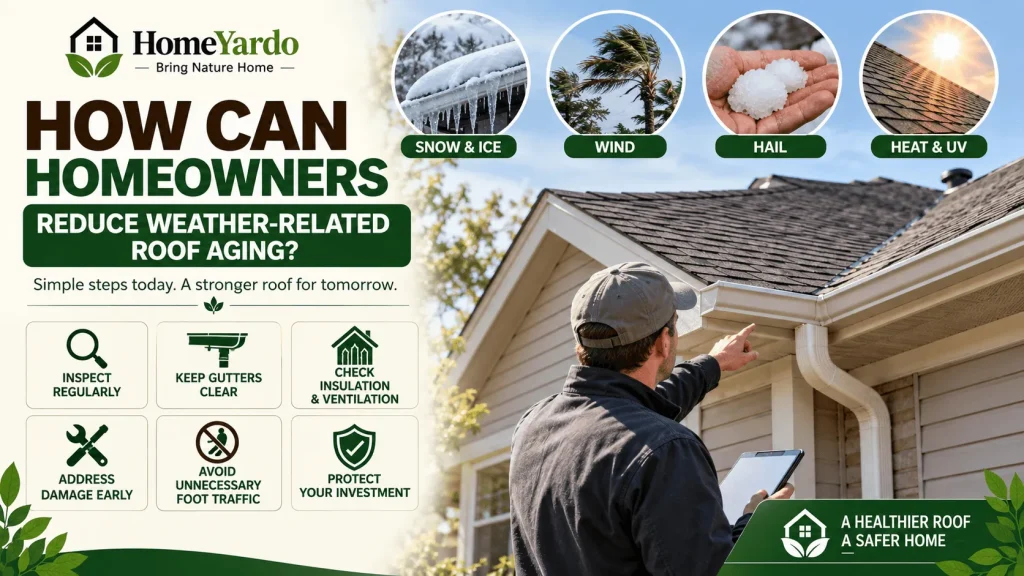
You cannot remove weather from the equation, but you can stop small defects from accumulating unnoticed.
Check the roof after severe weather such as hail, high winds or storms, and as it gets older. From the ground, look for missing or lifted shingles, displaced flashing, damaged gutters and debris. Inside, watch for ceiling stains, damp insulation, attic frost or moisture around penetrations.
Keep gutters and downspouts clear so rain and meltwater can leave the roof quickly. If ice dams or attic condensation recur, investigate insulation and air leakage rather than treating the roof surface alone.
Avoid unnecessary foot traffic, particularly during very hot or very cold conditions when asphalt shingles are easier to mark or crack. Most importantly, address local damage before water reaches decking, insulation and interior finishes.
A Roof Ages According to What It Has Endured
Chronological age is only one measure of a roof’s remaining life. Fifteen years on a sheltered roof is not necessarily equivalent to fifteen years of repeated hail, ice damming, wind exposure and thermal cycling.
Edmonton’s climate asks roofing systems to cope with genuine seasonal extremes. Long service life depends on more than the product installed on top. Flashing, drainage, attic conditions, fastening, underlayment and routine maintenance all influence how successfully the roof absorbs those years of weather.
The forecast cannot be controlled. The condition in which the roof meets it can be.
FAQ’s
No. The decision depends on the type, extent and distribution of damage, roof material, age and pre-storm condition. Some roofs need localized repair; widespread functional damage may justify replacement.
Some shedding occurs naturally with age. Hail, heavy runoff, abrasion and foot traffic can accelerate it. Large bare areas deserve attention because granules help shield the asphalt from sunlight and weathering.
Not necessarily. Ice dams often reflect heat loss, attic air leakage, insulation conditions and cold eaves. Roofing details determine how well the assembly resists backed-up water, but the temperature imbalance should also be investigated.
There is no single interval for every roof. Age, material and recent weather matter. A visual check after severe storms is sensible, while hail damage, visible leaks, lifted roofing or rapid deterioration are good reasons for a professional assessment.