How Long a Roof Actually Lasts in a Harsh Four-Season Climate
A roof can look perfectly fine from the driveway and still have problems developing beneath the shingles. In places with freezing winters, wet springs, hot summers, and unpredictable fall storms, roofing materials face changing conditions throughout the year.
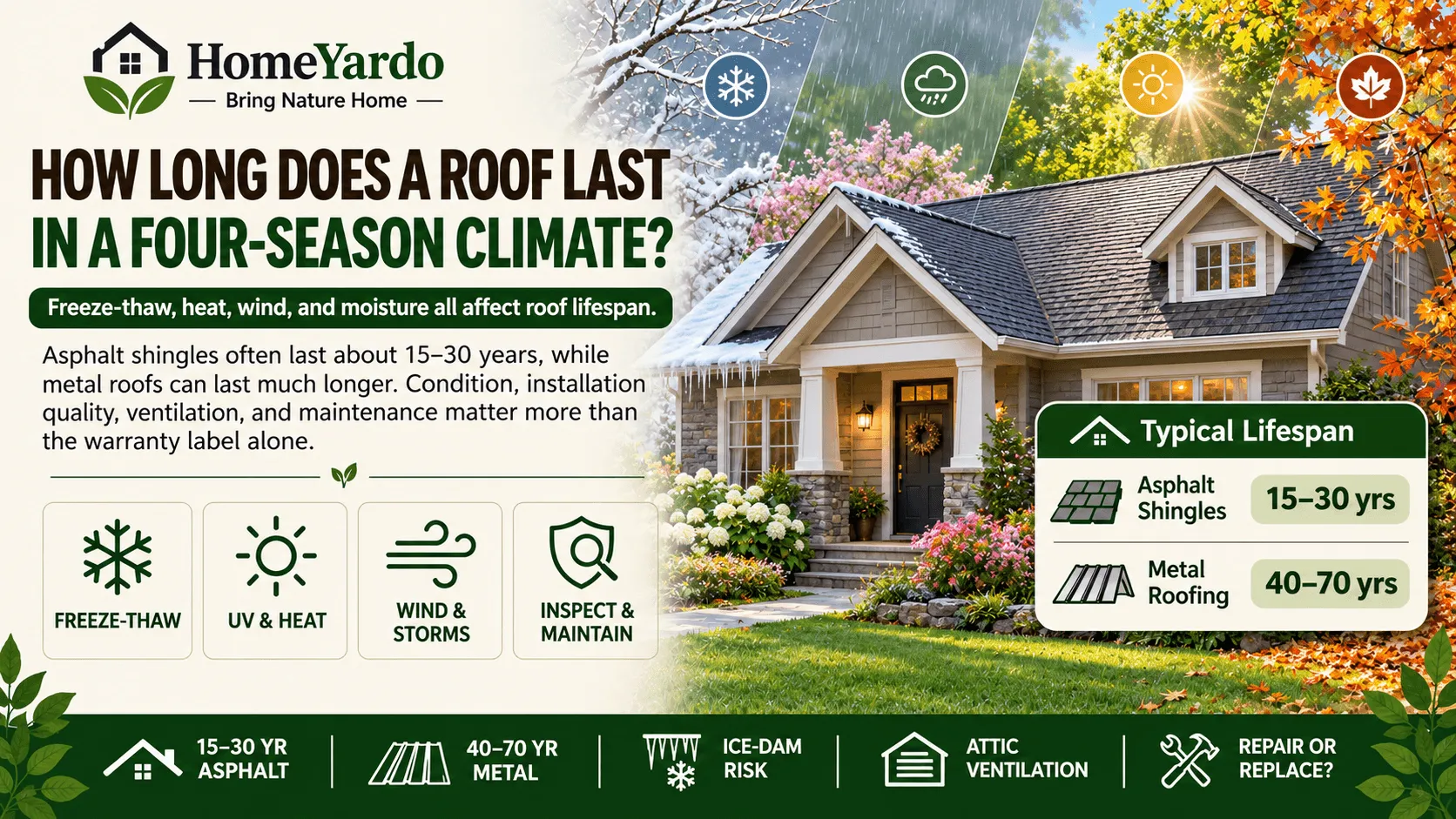
So, how long does a roof last in a four-season climate? Standard asphalt shingles commonly last around 15–30 years, depending on their construction, installation, maintenance, and exposure. Some roofs need attention sooner, while well-installed premium systems can last longer. Metal and other roofing materials may provide substantially longer service lives.
The number on the product warranty is not a guaranteed replacement date. What matters is how well the entire roofing system handles moisture, temperature changes, sunlight, wind, and snow.
If you already suspect your roof is approaching the end of its useful life, a professional inspection is a sensible starting point. Homeowners considering roof installation in Flint can also ask local contractors how their proposed systems address Michigan’s winter conditions.
What Actually Wears a Roof Out?
Most homeowners think sunlight is the biggest threat to shingles. UV exposure certainly matters, but cold-weather roofing has another concern: water entering vulnerable areas and freezing as temperatures fall.
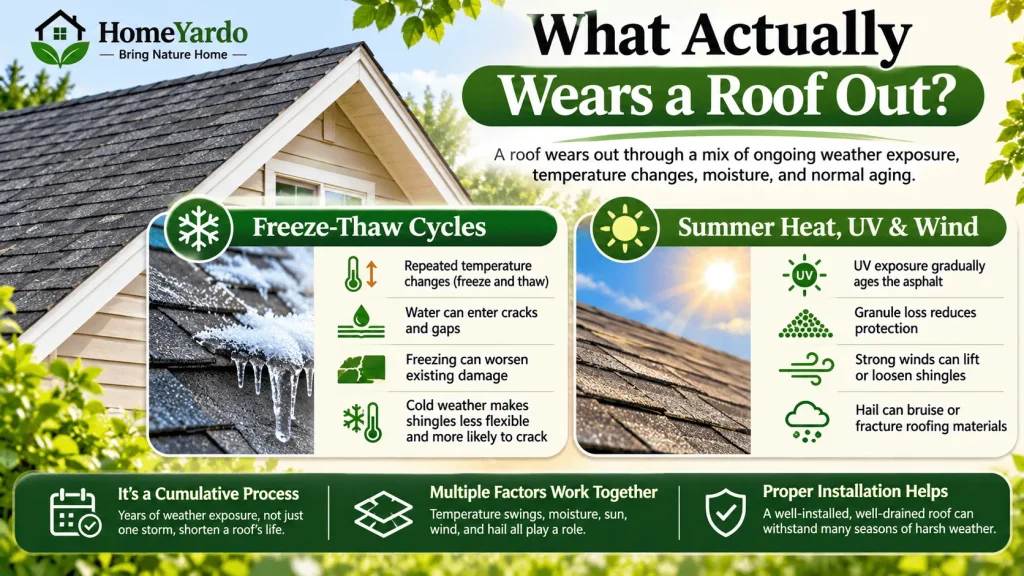
Roof deterioration rarely comes from one weather event. Instead, damage can develop through years of changing temperatures, moisture exposure, wind, and ordinary material aging.
How Freeze-Thaw Cycles Affect Roofing Materials
When temperatures rise above freezing during the day and fall below it overnight, melted snow and ice can refreeze.
If water has entered cracks, gaps, or deteriorated roof components, freezing can worsen existing damage. Repeated thermal movement can also affect materials and connections over time.
Cold weather makes asphalt shingles less flexible, increasing the risk of cracking during handling, installation, or unnecessary roof traffic.
The National Weather Service provides regional weather observations and climate information that homeowners can use to understand local temperature and snowfall patterns.
However, freeze-thaw frequency alone cannot predict exactly how long a roof will last. A properly installed, well-drained roofing system may withstand many cold winters without significant damage.
Summer Heat, UV Exposure, and Wind Damage
Winter isn’t the only season that matters.
During summer, prolonged sunlight gradually ages the asphalt in shingles. Granules help protect the underlying material, but weathering and ordinary wear can reduce that protection.
Strong winds can lift poorly sealed shingles, loosen exposed edges, and damage flashing. Hail may bruise or fracture roofing materials, depending on the size of the hailstones and the roof’s condition.
The real concern is cumulative exposure. A roof that survives several winters may still lose years of useful service if it also experiences repeated severe storms or installation-related problems.
How Long Do Different Roofing Materials Last in a Four-Season Climate?
There isn’t one lifespan that applies to every roof. Material selection, product quality, installation methods, roof design, and local conditions all affect the outcome.
The following ranges provide general planning estimates, not guarantees.
| Roofing Material | Approximate Service Life | Cold-Climate Considerations |
|---|---|---|
| Three-tab asphalt shingles | 15–25 years | More basic construction; condition and wind exposure matter |
| Architectural asphalt shingles | 20–30 years | Often offer better wind and weather performance, depending on product |
| Premium asphalt shingles | 25–40 years | Product-specific ratings and installation quality are important |
| Standing-seam metal roofing | 40–70 years | Requires suitable detailing for thermal movement and snow management |
| Concrete or clay tiles | 40–75+ years | Freeze-thaw suitability and structural support must be verified |
| Slate roofing | 75–100+ years | Durable material, but flashing, fasteners, and installation still require attention |
These are broad estimates for properly installed systems. Actual performance can fall outside these ranges, and manufacturer warranties should not be treated as service-life promises.
A roof’s age is useful information, but its physical condition tells you more about whether replacement is approaching.
Why Mid-Range Shingles Behave Differently Up North
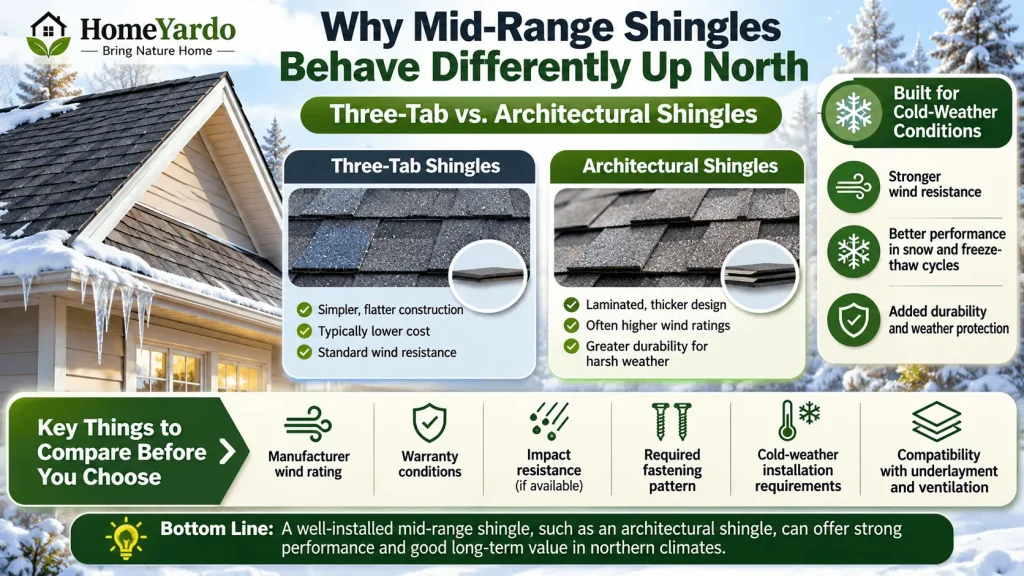
Not all asphalt shingles are built the same, and paying more can buy improvements beyond appearance.
Three-tab shingles typically use a simpler, flatter construction. Architectural shingles generally have a laminated design that provides a thicker profile and can offer stronger wind resistance.
Still, thickness alone does not guarantee longer performance.
Three-Tab vs. Architectural Shingles
For homeowners in snowy regions, architectural shingles are often worth considering because many products offer enhanced wind ratings and improved durability.
Before choosing, compare:
- Manufacturer-rated wind resistance
- Product warranty conditions
- Impact-resistance classifications, where applicable
- Required fastening patterns
- Cold-weather installation requirements
- Compatibility with underlayment and ventilation systems
Don’t rely only on a salesperson’s description of one shingle as heavier or stronger.
Ask for product specifications and details about the complete roofing system. A properly installed mid-range product may deliver better value than an expensive product installed incorrectly.
When to Repair, When to Replace: A Five-Question Test
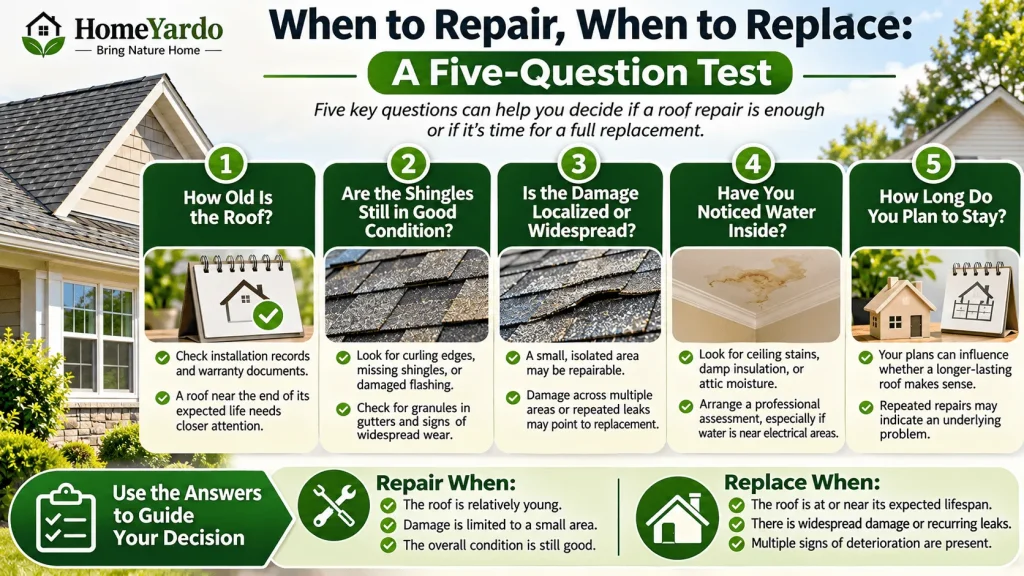
Most homeowners aren’t trying to become roofing experts. They want to know whether a repair will solve the problem or simply postpone a larger expense.
These five questions can help you prepare for a contractor’s assessment.
1. How Old Is the Roof?
Check installation records, warranty documents, previous inspection reports, or information supplied when you purchased the property.
A roof approaching its expected service life deserves closer attention, even if obvious damage isn’t visible.
Age alone, however, is not a reason to replace a functioning roof.
2. Are the Shingles Still in Good Condition?
From a safe ground-level position, look for curling edges, missing shingles, damaged flashing, and visibly uneven sections.
Granules collecting in gutters may indicate wear, although some granule shedding is normal, particularly on newer shingles.
Widespread deterioration is more concerning than a single damaged area.
3. Is the Damage Localized or Widespread?
An isolated area of wind damage may be repairable when the surrounding roofing remains sound.
Damage across several slopes, repeated leaks, or widespread shingle deterioration may justify discussing replacement.
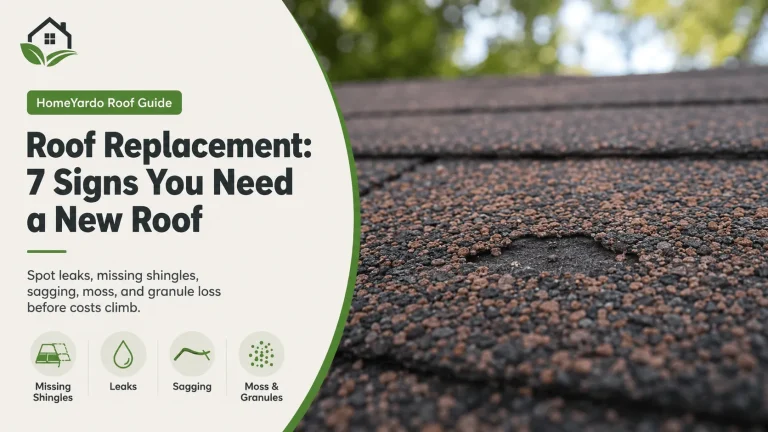
For a more detailed checklist, see HomeYardo’s guide to signs your roof needs replacement.
4. Have You Noticed Water Inside?
Ceiling stains, damp insulation, attic moisture, or unexplained watermarks can indicate a leak.
Water may travel along framing before becoming visible, so the interior stain may not sit directly beneath the entry point.
Arrange a professional assessment promptly. If water is near electrical fixtures or wiring, avoid contact and seek qualified assistance.
5. How Long Do You Plan to Stay?
Your plans can influence whether investing in a longer-lasting system makes financial sense.
Still, selling soon does not make an inadequate repair acceptable. The roof must remain safe, weather-resistant, and compliant with applicable requirements.
If you have paid for repeated repairs in the same location, investigate the underlying cause rather than continuing to patch symptoms.
The Attic Is Half the Story
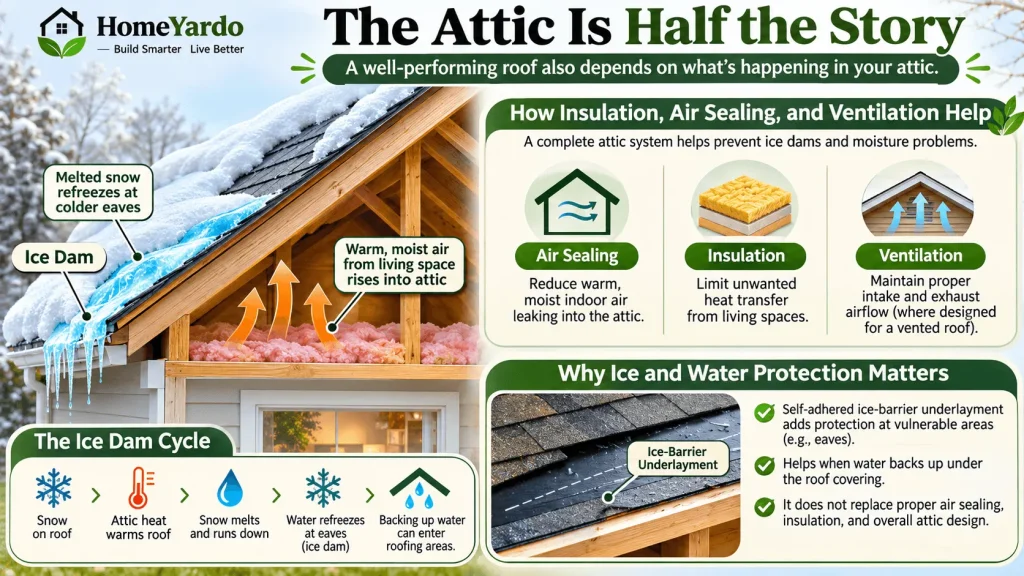
You can install excellent shingles and still have problems if moisture and heat aren’t managed properly beneath them.
During winter, warm indoor air escaping into an unconditioned attic can raise the temperature of the roof deck.
Snow may melt over the warmer section and refreeze along colder eaves, forming an ice dam. As additional water accumulates behind the ice, it can enter vulnerable roofing areas.
How Insulation, Air Sealing, and Ventilation Help
Preventing ice dams requires more than adding roof vents.
A properly designed attic system should address three concerns:
- Air sealing: Reduce warm, moist indoor air leaking into the attic.
- Insulation: Limit unwanted heat transfer from living spaces.
- Ventilation: Where the roof assembly is designed to be ventilated, maintain appropriate intake and exhaust airflow.
Unvented roof assemblies require different moisture-control and insulation designs. Adding ventilation indiscriminately can create new problems.
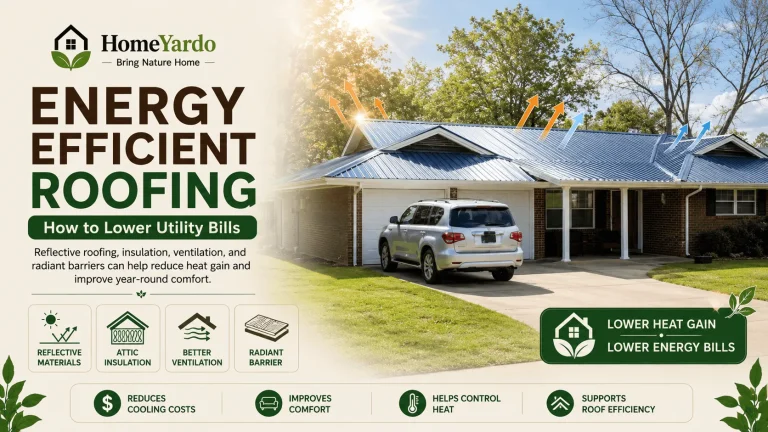
Homeowners considering insulation improvements can also review how roofing choices affect household energy efficiency.
Why Ice and Water Protection Matters
In cold regions, self-adhered ice-barrier underlayment is commonly installed along vulnerable eaves and other locations required by local codes or the roof design.
It provides additional protection when water backs up beneath the roof covering.
This membrane does not eliminate the causes of ice dams, and it cannot compensate for significant air leakage or improper insulation.
Before replacing the roof, ask the contractor to evaluate the attic and explain how the proposed assembly handles winter moisture.
What Roof Replacement Actually Involves
A proper replacement addresses more than the visible shingles.
In many situations, removing the existing roof covering allows the contractor to inspect the deck, identify moisture damage, and prepare a suitable surface for the new roofing system.
A roof-over installation may be allowed under certain codes and manufacturer requirements, but it is not automatically suitable for an aging or damaged roof.
What Should Be Included in the Replacement Scope?
Ask the contractor for a written estimate explaining the following work:
- Removal and disposal of existing roofing, where required.
- Inspection of the roof deck and replacement of damaged sections.
- Installation of specified underlayment and ice-barrier protection.
- Inspection and repair or replacement of flashing where needed.
- Installation of the new roof covering using approved fastening methods.
- Evaluation of ventilation and moisture-control requirements.
- Site cleanup, final inspection, and warranty documentation.
The Census Bureau publishes information about residential construction and housing expenditures, providing broader context for home improvement activity. However, national spending data cannot determine whether an individual roof needs replacement.
A detailed contractor estimate is far more useful than an unsupported promise about how many decades the new roof will last.
For help preparing for the project, read what to know before replacing your roof.
A Word on Timing and Materials
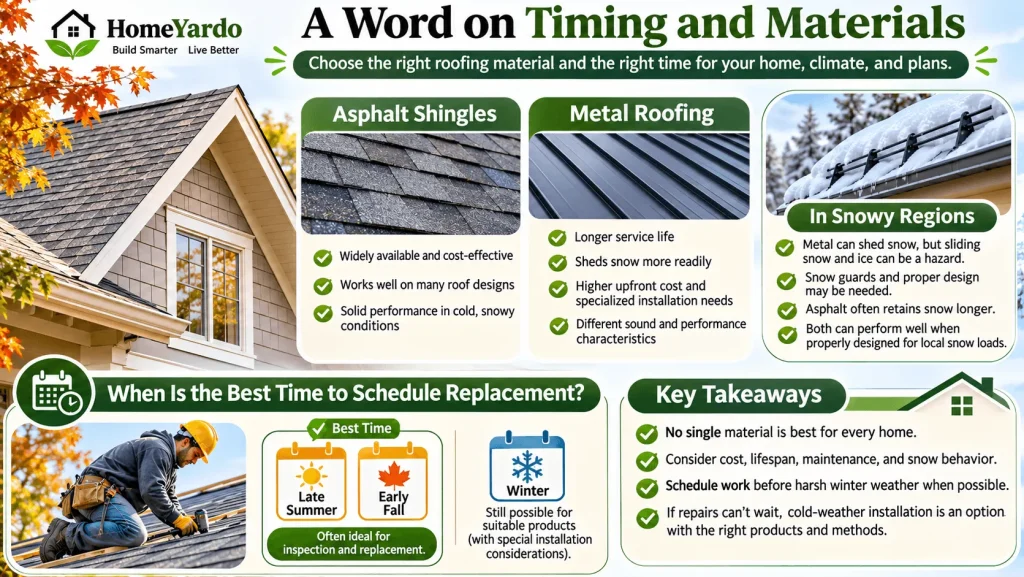
Asphalt remains a popular residential roofing choice because it is widely available, comparatively affordable, and suitable for many roof designs.
Metal roofing can offer longer service life, but its installation requirements, initial cost, sound characteristics, and snow-shedding behavior differ from asphalt.
Neither option is automatically better for every house.
Is Metal Roofing Better Than Asphalt in Snowy Regions?
Metal panels can shed snow more readily on some slopes. However, sliding snow and ice may create hazards over entrances, walkways, or landscaping.
Snow guards and appropriate structural design may be necessary.
Asphalt shingles commonly retain snow longer, depending on roof slope and surface conditions. Both materials can perform well when properly designed for local snow loads.
Compare installation costs, expected maintenance, product specifications, and how long you intend to own the home.
When Is the Best Time to Schedule Replacement?
Late summer and early fall are often convenient times to arrange inspections and replacement work before winter weather becomes more restrictive.
However, contractor availability varies, and a damaged roof should not be left leaking simply because the season is inconvenient.
Cold-weather installation is possible for suitable products when installers follow manufacturer requirements. Shingle flexibility, adhesive sealing, surface conditions, and worker safety all need special attention.
Broader climate resources from NASA help explain the importance of understanding weather and temperature variability, although local roof condition and product requirements remain the basis for replacement decisions.
How to Help Your Roof Last Longer in a Four-Season Climate
A roof cannot be protected from every storm, but routine care can reduce avoidable damage.
Inspecting safely from the ground or using a qualified contractor is especially helpful after severe weather.
Seasonal Roof Maintenance Checklist
| Season | Recommended Action | Main Purpose |
|---|---|---|
| Spring | Check for winter-related shingle and flashing damage | Identify problems following snow and ice |
| Summer | Inspect roof penetrations and address drainage issues | Reduce moisture-related deterioration |
| Fall | Clear gutters safely and arrange needed repairs | Prepare for snow and freezing temperatures |
| Winter | Watch for recurring ice dams, attic moisture, and leaks | Identify winter performance problems |
Also keep tree branches from rubbing against roofing materials, maintain drainage systems, and address flashing defects before water reaches the deck.
Avoid climbing onto icy, wet, or damaged roofs. A roof inspection should never create a greater safety risk than the problem you’re trying to investigate.
How Can You Tell How Many Years Your Roof Has Left?
There is no reliable formula that converts a roof’s age into an exact number of remaining years.
A 15-year-old architectural shingle roof may remain serviceable for many more years. Another roof of the same age may already have extensive damage because of poor installation, moisture problems, or repeated storms.
A roofing professional should consider its installation date, shingle condition, flashing, roof deck, attic moisture, previous repairs, and history of storm exposure.
A written inspection report with photographs is especially useful when deciding whether to budget for future replacement.
Final Takeaway
A roof in a harsh four-season climate doesn’t automatically wear out faster than one in a warmer region. Its service life depends on how well the roofing system handles the particular stresses it faces.
For many homes, asphalt shingles provide roughly two decades or more of service, while metal and other durable materials may last considerably longer.
The smartest approach is to combine realistic lifespan expectations with regular inspections, proper attic moisture control, timely repairs, and installation that follows local requirements.
If you don’t know when your roof was installed, start by finding that information. Then assess its condition before the next severe weather season forces an urgent decision.
FAQ’s
Many asphalt shingle roofs last approximately 15–30 years. The actual service life depends on shingle type, installation, ventilation, maintenance, and exposure to snow, wind, sunlight, and moisture.
Yes. Water entering existing cracks or vulnerable areas can expand when frozen and worsen damage. Cold temperatures can also make asphalt shingles less flexible. Proper installation and moisture management help reduce these risks.
Snow does not automatically shorten roof life. Problems are more likely when snow contributes to ice dams, excessive structural loading, trapped moisture, or leaks through vulnerable roof components.
Look for missing or curling shingles, damaged flashing, persistent leaks, and signs of attic moisture. Widespread deterioration or repeated repairs may indicate that replacement is worth evaluating.
Architectural shingles often offer improved wind resistance and durability compared with basic three-tab products. Performance still depends on the specific shingle, proper installation, and the complete roofing assembly.
It is possible for some roofing systems to exceed their expected service life, but a 30-year rating or warranty is not a guarantee. Condition and maintenance should guide replacement decisions rather than the product label alone.
When replacement is already necessary, completing it before severe winter weather can simplify scheduling and installation. Urgent leaks or unsafe conditions should be assessed promptly regardless of season.
In a vented attic, inadequate airflow can contribute to moisture buildup and roofing deterioration. Air leakage and insulation problems must also be addressed. Properly designed unvented assemblies have different requirements.
Not necessarily. A 20-year-old roof deserves an assessment, particularly if it has suffered repeated storms or shows visible deterioration. Its condition, materials, and installation history matter more than age alone.
An annual professional inspection can be a reasonable maintenance approach, with additional checks after significant storms or when leaks appear. Follow any inspection requirements in the manufacturer’s warranty.
References and Technical Resources
The following resources can support factual review of roofing performance and winter protection:
- U.S. Department of Energy — Building Science Education: Eaves Sealed in Cold Climates and Air Sealing Existing Attics.
- Asphalt Roofing Manufacturers Association (ARMA): Recommendations for Installation of Asphalt Roofing Shingles in Cold Weather.
- ARMA: Ventilation and Moisture Control for Residential Roofing.
- National Weather Service: Regional climate observations and weather records.
Editorial note: Lifespan figures are approximate planning ranges. Local building codes, manufacturer instructions, and an on-site assessment should guide installation and replacement decisions.