How Trees, Gardens, And Drainage Affect Your Roof’s Lifespan

Most homeowners think of roofing and landscaping as separate parts of property maintenance. In practice, they interact constantly.
Overhanging branches can deposit debris and strike roofing materials. Clogged gutters change how rainwater leaves the roof. Poorly placed downspouts can concentrate runoff beside the foundation or in planting beds, while dense vegetation close to the house can restrict airflow around exterior surfaces.
The connection works both ways. Roofing repairs and replacement can also affect lawns, shrubs, irrigation components, and garden beds if the site is not protected before work begins.
Understanding these connections can help homeowners protect the roof and landscape as one property system, particularly before periods of heavy rain, falling leaves, snow, or freezing weather.
Trees: shade is welcome, branches are not
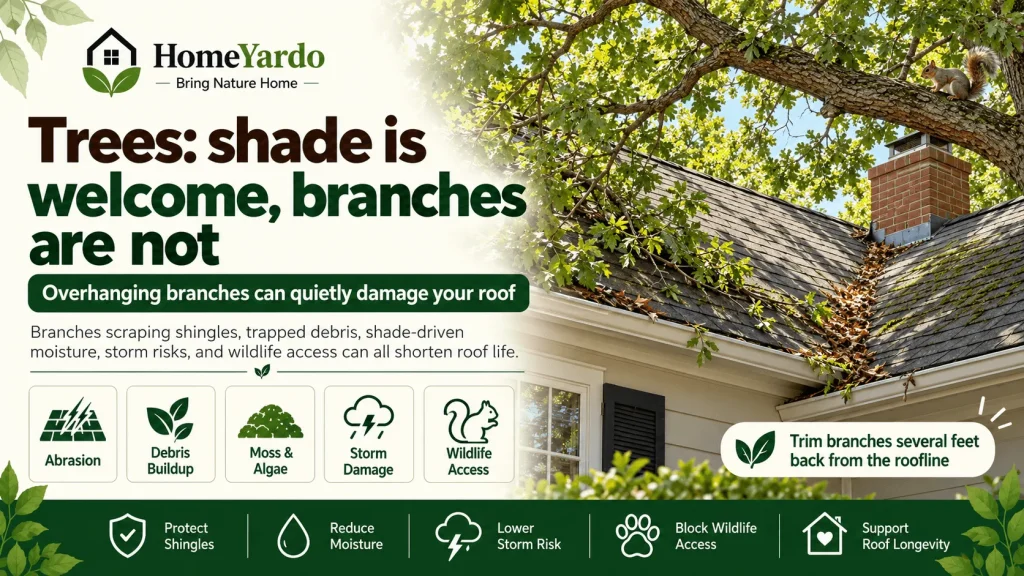
A mature tree adds shade, value and character to a property. But branches hanging over the roof cause a series of quiet problems:
- Abrasion. Branches that brush the roof in the wind scrape away the protective granules on asphalt shingles, which speeds up wear.
- Debris buildup. Leaves, needles and seed pods collect in valleys and behind chimneys. They hold moisture against the shingles and the decking underneath.
- Moss and algae. Constant shade and trapped moisture create ideal conditions for growth, especially on north-facing slopes.
- Storm damage. A heavy limb over the house is a risk in every windstorm and ice storm.
- Wildlife access. Squirrels and raccoons use overhanging branches as a bridge to soffits and roof vents.
Keep branches trimmed several feet back from the roofline. For large trees, hire a certified arborist rather than climbing a ladder with a saw. Proper pruning protects the roof without harming the tree. Trees are only one environmental factor affecting roof longevity; repeated wind, rain, hail, snow, ice and temperature changes also show how harsh weather can damage a roof over time.
Eavestroughs: where roof and yard meet
Eavestroughs (gutters) are where roof care and yard care overlap, and fall is when they matter most. Once the leaves drop, clogged troughs overflow. Water spills behind the fascia, soaks the soffit, or pours straight down beside the foundation.
In cold climates like Southern Ontario’s, the problem gets worse in winter. Water that can’t drain freezes in the troughs and can help ice dams form at the roof edge. Snowmelt then backs up behind the dam and can work its way under the shingles.
Clean the eavestroughs at least twice a year, once after the leaves fall and again in spring. If you live under heavy tree cover, gutter guards can reduce the work, though they still need an occasional check.
Downspouts and drainage: send water where it helps

A roof sheds a remarkable amount of water. Where that water goes matters to your house and your garden alike.
- Extend downspouts well away from the foundation so water doesn’t pool against basement walls.
- Don’t dump runoff directly onto garden beds. Concentrated flow erodes soil and can drown plants that don’t like wet roots.
- Add a rain barrel to collect runoff for watering in drier months.
- Plant a rain garden in a low spot downslope from the house, using moisture-tolerant native plants that soak up runoff naturally.
With good planning, roof runoff becomes a resource for the yard instead of a problem. If runoff repeatedly pools near the house or remains in low areas after rain, identifying the cause and learning how to fix yard drainage can help prevent the same water problem from affecting both the landscape and the structure.
Garden beds against the house
Foundation plantings soften a home’s look, but planting too close creates trouble. Shrubs pressed against the siding trap moisture and block airflow. Climbing vines such as ivy can creep under soffits and shingle edges. Mulch piled high against the walls can hide moisture problems and invite insects.
Leave a gap of at least a foot between mature shrubs and the walls. Train climbing plants on freestanding trellises rather than on the house itself.
Protecting your yard during roof work

The connection between roof and yard matters most when work is underway. Even a small repair means ladders, foot traffic and falling debris. A full tear-off sends old shingles and nails off every edge of the roof, straight onto whatever is growing below.
Before any work starts, ask your contractor how they’ll protect the property. Reputable roofers commit to this in writing. Armour Shield Roofing, an Ontario residential roofer offering roof repair services in Toronto and across the GTA, includes in its published guarantee a promise to protect “your siding, eavestroughs, windows and the rest of your home from accidental damage while removing the old shingles,” along with a thorough cleanup before the crew leaves. It’s a good standard to ask any contractor about.
There’s plenty you can do yourself, too:
- Cover delicate shrubs and perennials near the house with breathable tarps or plywood frames. Avoid plastic sheeting on hot days, because it can cook plants underneath.
- Move potted plants, patio furniture, planters and garden décor well away from the drip line.
- Mark sprinkler heads and low-voltage lighting so they don’t get crushed by ladders or wheelbarrows.
- Agree on where the dumpster will go so it doesn’t sit on your lawn for days. A sheet of plywood under it helps protect a driveway.
- Walk the yard afterwards with a magnet sweeper or ask the crew to run one. Stray roofing nails in the lawn are dangerous for kids, pets and lawnmower blades.
- Water stressed plants well after the work is done. Trampled or dust-covered plants usually recover quickly with a good soak.
Timing work with the seasons

Gardeners already think in seasons, and roofing fits into that rhythm. Late summer and early fall are often ideal for roof work. Most perennials have finished blooming, the weather is usually dry, and any problems get fixed before snow arrives. Spring is a good time to inspect for winter damage, ideally before new growth comes up in the beds along the house. Seasonal roof and landscape checks can also be part of a broader plan to protect your home from weather damage, especially before periods of heavy rain, strong winds, freezing conditions or snow.
Pair your fall yard cleanup with a quick roof check from the ground. Look for missing or curled shingles, granules collecting at the bottom of downspouts, sagging eavestroughs, or dark streaks on the roof. Spotting a small problem in October is far cheaper than finding a leak in February.
One property, one system
The healthiest homes are treated as a whole: trees pruned with the roof in mind, gardens planted with drainage in mind, and roof work planned to protect the landscape. Small habits like trimming branches, cleaning eavestroughs and redirecting downspouts help the roof last longer and keep the yard looking its best.
FAQ’s
Yes. Branches that contact a roof can scrape roofing surfaces, while larger falling limbs may damage shingles, flashing, gutters, decking, or other roof components. Trees can also deposit leaves and other organic debris on roofing and in gutters.
Persistent debris can retain moisture and obstruct drainage, particularly in roof valleys and gutters. Removing accessible debris safely and keeping drainage systems clear can reduce avoidable moisture problems.
There is no single clearance suitable for every property. The appropriate distance depends on the species, mature growth, branch structure, roof configuration, surrounding utilities, and local conditions. Hazardous or large branches should be assessed by a qualified arborist.
Blocked gutters can cause water to overflow or drain improperly around roof edges, fascia, siding, and foundations. In freezing climates, restricted drainage can also contribute to winter moisture problems.
Disclaimer: This article offers general home and garden guidance only and is not a substitute for an on-site evaluation by a qualified roofer, arborist or landscape professional. Roof lifespan, drainage needs and plant tolerances vary with climate, soil, materials and the condition of each property. Never climb onto a roof or prune large limbs near power lines yourself. Details of Armour Shield Roofing’s property-protection guarantee are quoted from the company’s public website at the time of writing and may change, so confirm current terms with any contractor before hiring. Mentioning a business here is not an endorsement.