Why Small Commercial Roof Problems Get Expensive: A Homeowner’s Guide to Upkeep
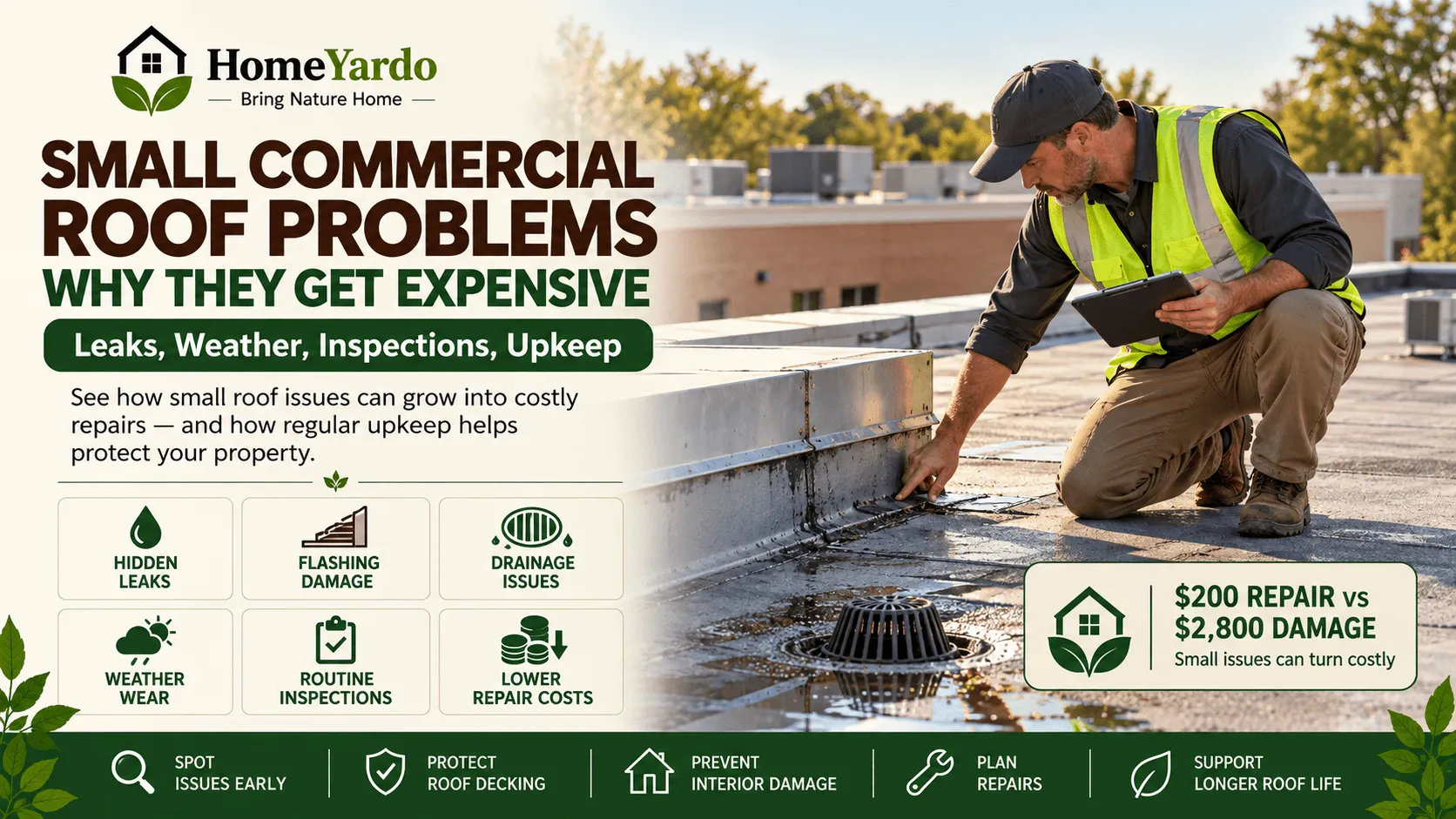
A $200 flashing repair can become a $2,800 roofing problem when water damage goes unnoticed.
Consider a property owner who skips routine roof inspections for three years. A small flashing defect allows moisture to enter, eventually damaging a section of roof decking. What could have been a relatively inexpensive repair turns into a much larger bill.
These figures are illustrative, but the situation explains why regular upkeep matters.
If you own a small commercial building, manage a rental property, or maintain the roof over your garage, putting roof inspections on your calendar can help you avoid unexpected expenses.
This guide explains why small roofing problems become expensive, how weather contributes to damage, and how a practical maintenance routine can protect your property.
You’ll also learn when minor repairs are appropriate, when to call a professional, and how larger commercial buildings manage roofing problems.
Why Small Commercial Roof Problems Become Expensive

Water is patient.
A small crack in a roofing seam can allow rainwater to enter. That moisture may remain hidden beneath roofing materials, gradually affecting insulation and eventually reaching the roof deck.
By the time a brown stain appears on the ceiling, the leak may have been active for weeks or months.
The problem is no longer necessarily limited to repairing a seam.
How Small Roof Leaks Turn Into Major Damage
Roof leaks commonly develop through the following sequence:
- Sealant around a vent, pipe, or flashing begins to deteriorate.
- Water enters through the damaged area.
- Moisture reaches the insulation or underlying roofing components.
- Prolonged exposure can damage decking and interior materials.
- Visible stains or dripping eventually appear inside the building.
The progression depends on the roofing system, the size of the opening, and how long moisture remains trapped.
One particularly frustrating aspect of roof leaks is that water can travel along structural components before becoming visible.
A ceiling stain above your desk might originate from a damaged seam several feet away.
Repairing the visible area without identifying the original entry point can lead to repeated problems.
The important lesson: The location of visible water damage does not always reveal where the roof is leaking.
The Hidden Costs of Ignoring Minor Roof Damage
Roofing expenses can extend well beyond repairing the original defect.
Depending on the severity of the damage, property owners may face:
- Replacement of water-damaged insulation.
- Repairs to deteriorated roofing materials.
- Replacement of damaged roof decking.
- Ceiling and interior restoration.
- Mold assessment and remediation when necessary.
- Temporary business interruptions.
These additional expenses help explain why apparently minor defects deserve attention.
Identifying a problem before moisture spreads can substantially reduce the amount of repair work required.
What Weather Actually Does to a Roof

Weather gradually weakens roofing systems through repeated exposure to temperature changes, precipitation, sunlight, and wind.
Different roofing materials respond differently to environmental conditions.
Understanding these effects helps property owners recognize when inspections are particularly important.
Freeze-Thaw Cycles and Roofing Damage
The National Weather Service explains how repeated melting and refreezing can contribute to roof ice dams and water damage. In colder climates, water may also enter existing cracks or vulnerable roofing joints and freeze as temperatures fall, worsening existing defects.
Water can enter an existing crack or opening, freeze as temperatures fall, and expand. Repeated freezing and thawing may worsen vulnerable roofing materials and joints.
A small opening can gradually become more substantial, especially when the surrounding materials have already deteriorated.
Snow and ice accumulation may also obstruct drainage systems.
Inspecting vulnerable roofing components before winter and arranging follow-up inspections afterward can help identify developing problems.
How Heat, Sunlight, and Wind Affect Commercial Roofs
Heat creates different challenges.
Prolonged sunlight can contribute to the deterioration of certain roofing membranes and sealants. Temperature changes cause roofing components to expand and contract.
Over time, this repeated movement can affect vulnerable joints and connections.
Wind creates additional pressure on roofing materials. Loose edges and existing defects may become more vulnerable during severe weather.
None of these effects necessarily causes dramatic damage in a single day.
The accumulation of repeated exposure is what makes periodic inspections worthwhile.
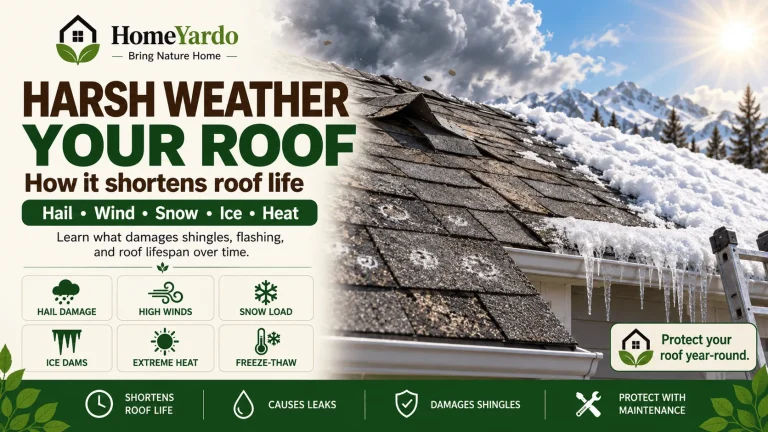
For additional information, read HomeYardo’s guide on how harsh weather causes roof damage.
Do You Need a Commercial Roof Maintenance Plan or Just Repairs?

Many property owners begin with a repair list.
When something breaks, they fix it. This approach feels economical because money is spent only when an obvious problem appears.
The challenge is that roofing damage is not always visible from the ground.
By the time a problem becomes noticeable, additional materials may already have been affected.
A preventive maintenance plan changes that approach.
Instead of waiting for visible damage, inspections are scheduled to identify problems while repairs may still be relatively straightforward.
Ridgeworth Roofing, a Chicago and Frankfort area roofing company, explains on its maintenance page that an average semi-annual preventive approach costs a fraction of a full replacement and may extend the life of an existing roofing system.
That comparison is worth considering, although actual savings depend on roof size, age, condition, materials, and local repair costs.
If your property experiences cold winters and repeated freeze-thaw cycles, you can read more about the approach behind commercial roof maintenance.
The practical advantage of preventive maintenance is that it allows owners to address developing problems before emergency repairs become necessary.
Even if you are not ready to commit to a professional service plan, you can still establish a useful inspection schedule.
Preventive Maintenance vs. Emergency Roof Repairs
| Factor | Preventive Maintenance | Emergency Repairs |
|---|---|---|
| Timing | Scheduled inspections | After problems appear |
| Budget | Generally predictable | Potentially unexpected |
| Damage detection | Problems may be identified earlier | Damage may remain hidden |
| Repair planning | Work can often be scheduled | Urgent work may be required |
| Business disruption | Easier to plan around | May interrupt operations |
| Roof condition | Regularly documented | Often assessed after damage |
Preventive maintenance cannot prevent every roofing emergency.
However, regular inspections can help identify problems that might otherwise remain unnoticed.
Your Quarterly Commercial Roof Maintenance Checklist

You do not need a complicated system to monitor your property’s roofing condition.
Start with a straightforward checklist and maintain a record of what you observe.
Quarterly visual checks provide a practical routine, while qualified roofing professionals should perform roof-level inspections at intervals appropriate to the building.
The exact inspection schedule depends on the roofing material, warranty requirements, previous repairs, and local weather.
1. Check Gutters and Roof Drainage
Start by examining visible drainage areas from a safe location.
Look for debris accumulation, overflowing gutters, damaged downspouts, and signs of standing water.
Blocked drains can prevent rainwater from leaving the roofing system.
This is particularly concerning on commercial flat roofs, where prolonged water accumulation may contribute to deterioration.
Arrange for qualified personnel to clear inaccessible drains and investigate recurring drainage problems.
2. Inspect Roof Flashing and Seams
Flashing protects areas where roofing materials meet walls, vents, pipes, chimneys, and other components.
These connections are common locations for water intrusion.
Look for visible signs of:
- Loose or damaged flashing.
- Cracked or deteriorated sealant.
- Separation around roof penetrations.
- Displaced roofing materials.
- Previous repairs that appear to have deteriorated.
Do not attempt to inspect inaccessible roof areas without appropriate training and safety equipment.
A professional roofer can examine suspicious areas and determine whether repairs are necessary.
3. Look for Standing Water and Surface Damage
Standing water can indicate blocked drainage or another roofing problem.
Monitor visible areas after rainfall, particularly when water remains long after surrounding roof sections have dried.
Other warning signs include membrane damage, visible blisters, and displaced roofing components.
Avoid walking on damaged roofing surfaces or attempting to investigate soft spots yourself.
A qualified roofing contractor should evaluate these conditions.
4. Check Interior Ceilings and Accessible Spaces
Interior inspections can reveal roofing problems that are difficult to identify outside.
Check accessible interior areas for:
- Brown or yellow ceiling stains.
- Peeling paint.
- Damp insulation.
- Musty odors.
- Visible water intrusion.
- Recurring moisture around roof penetrations.
Document any suspicious changes.
If water appears near electrical equipment or you suspect structural damage, restrict access to the affected area and arrange professional assistance.
5. Maintain an Inspection and Repair Log
A maintenance record helps you identify recurring problems.
Document:
- Inspection dates.
- Photographs of visible defects.
- Previous repair work.
- Contractor recommendations.
- Warranty details.
- Follow-up inspection dates.
When hiring a professional, request a written inspection report with photographs.
A documented history makes it easier to compare repair recommendations and monitor the roof’s condition over time.
When Should You Repair a Roof and When Should You Call a Professional?

Not every roofing problem requires extensive work.
Some defects can be addressed through localized repairs when the surrounding roofing system remains in good condition.
However, the cause of the damage should be identified before deciding which repairs are appropriate.
Minor Roofing Problems
Examples include isolated flashing deterioration, limited membrane damage, and minor drainage obstructions.
These problems may be suitable for localized professional repairs.
Property owners can safely document visible concerns from the ground or accessible interior spaces.
Roof-level repairs should be left to qualified personnel with suitable equipment and fall protection.
Warning Signs That Need Professional Attention
Contact a roofing professional when you notice:
- Active leaks reaching interior spaces.
- Recurring leaks after previous repairs.
- Suspected deterioration of roof decking.
- Extensive membrane damage.
- Persistent standing water.
- Significant storm-related damage.
- Moisture near electrical equipment.
These symptoms may indicate problems that extend beyond the visible damaged area.
A professional inspection can establish the source and extent of deterioration. Regular professional inspections help property owners identify developing problems and document necessary repairs. The Ohio State University provides an example of institutional building maintenance practices, including documented roofing standards and periodic inspections. For commercial property owners, maintaining accurate inspection records can also make it easier to monitor roof conditions and plan future repairs.
When Is Roof Replacement Necessary?
Repeated repairs do not automatically mean that an entire roofing system must be replaced.
However, extensive moisture damage, widespread deterioration, and recurring failures may make replacement worth considering.
The appropriate decision depends on the roof’s remaining service life, material condition, repair history, and the extent of concealed damage.
For related warning signs, read HomeYardo’s guide explaining when your roof needs replacement.
What Regular Roof Upkeep Actually Saves You
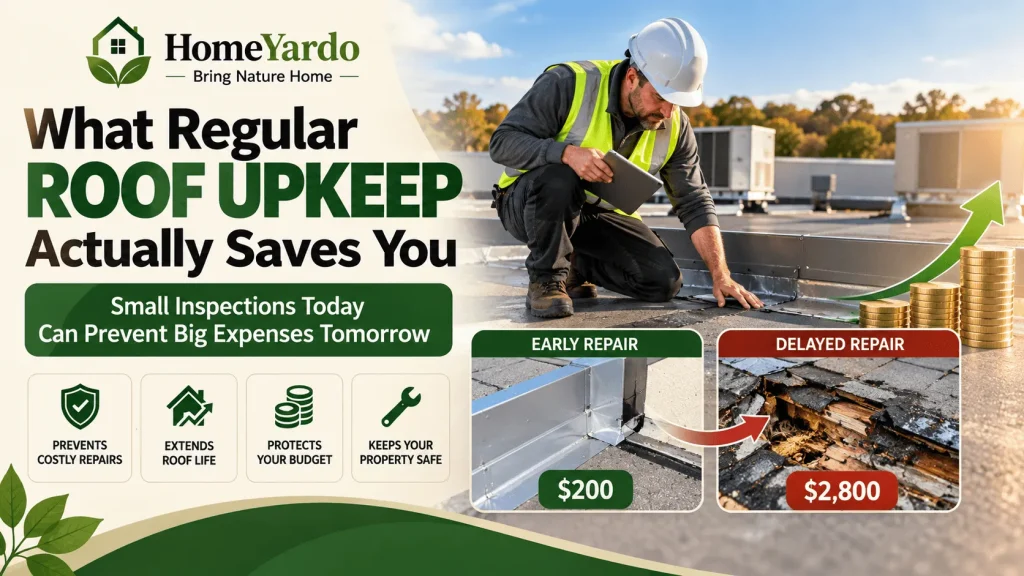
Think of preventive maintenance as shifting roofing expenses from unexpected emergencies toward planned property maintenance.
Replacing an entire roofing system can involve removing existing materials, repairing damaged components, installing new roofing materials, and managing disruption during construction.
Routine maintenance is generally smaller in scope.
It allows property owners to schedule inspections, identify developing defects, and repair suitable areas before surrounding materials become damaged.
Small Repairs vs. Expensive Roof Damage
Consider this hypothetical example:
| Expense | Early Repair | Delayed Repair |
|---|---|---|
| Flashing repair | $200 | $200 |
| Damaged roof decking | $0 | $2,600 |
| Total | $200 | $2,800 |
These figures illustrate how delayed repairs can increase expenses. Actual costs depend on the building, roofing materials, location, and extent of damage.
The example shows why a seemingly inexpensive repair should not automatically be postponed.
Early inspections also give property owners more time to compare quotations and schedule appropriate work.
How Regular Maintenance Supports Long-Term Roof Performance
Regular upkeep helps prevent some avoidable roofing deterioration.
Keeping drainage systems clear, addressing damaged flashing, and repairing suitable defects can reduce the likelihood of moisture spreading through the roofing system.
However, maintenance cannot reverse material aging or guarantee that replacement will never be necessary.
Property owners planning future improvements may also want to understand how energy-efficient roofing can influence a building’s heating and cooling requirements.
How to Create a Simple Roof Maintenance Schedule
The easiest maintenance plan is one you can follow consistently.
Start by scheduling visual observations throughout the year and arranging professional inspections according to your roofing system’s requirements.
A seasonal routine might look like this:
| Season | Maintenance Priority |
|---|---|
| Spring | Assess visible damage following winter |
| Summer | Monitor drainage and signs of material deterioration |
| Fall | Address existing defects before colder weather |
| Winter | Watch for visible leaks and ice-related problems without accessing hazardous roof surfaces |
Schedule additional professional assessments following significant storms or whenever concerning symptoms appear.
Remember that commercial roofing warranties may contain specific inspection and maintenance requirements.
Review those requirements before establishing your schedule.
Final Thoughts
Small roofing problems rarely become expensive overnight.
A deteriorated seal, blocked drain, or minor flashing defect may remain unnoticed until water damages surrounding materials.
The simplest way to reduce that risk is to establish a maintenance schedule, document visible problems, and arrange professional inspections when necessary.
Put your next inspection date on the calendar, keep accurate maintenance records, and address identified defects before they develop into larger repairs.
Regular attention to your roof can help protect both your property and your maintenance budget.
FAQ’s
Many properties benefit from professional inspections twice a year, particularly in spring and fall. Additional inspections may be necessary after significant storms. Always consider the roofing manufacturer’s recommendations, warranty conditions, roof age, and local climate.
Common problems include deteriorated flashing, damaged membranes, cracked sealant, blocked drainage systems, standing water, and leaks around roof penetrations. Their frequency depends on roof construction, age, installation quality, and environmental exposure.
Scheduled maintenance can help identify developing problems, improve repair planning, and potentially reduce some unexpected expenses. Actual financial benefits depend on the roof’s condition, the maintenance program, and the repairs required.
Yes. An untreated leak may allow moisture to damage insulation, roof decking, and interior building materials. The severity depends on the location of the leak, how long water remains present, and the roofing system’s construction.
Regular inspections, prompt attention to identified defects, effective drainage maintenance, and accurate repair records can help property owners control avoidable expenses. Qualified roofing assessments are particularly important when leaks recur or concealed damage is suspected.
Roof maintenance involves scheduled inspections and preventive activities intended to preserve the roofing system’s condition. Roof repair addresses identified damage or defects. An effective maintenance program may include minor repairs when necessary.
Appropriate maintenance can help preserve a roofing system by identifying defects and preventing some avoidable deterioration. However, the actual lifespan depends on roofing materials, installation quality, environmental exposure, and the building’s condition.