What to Check After a Storm Hits Your Roof
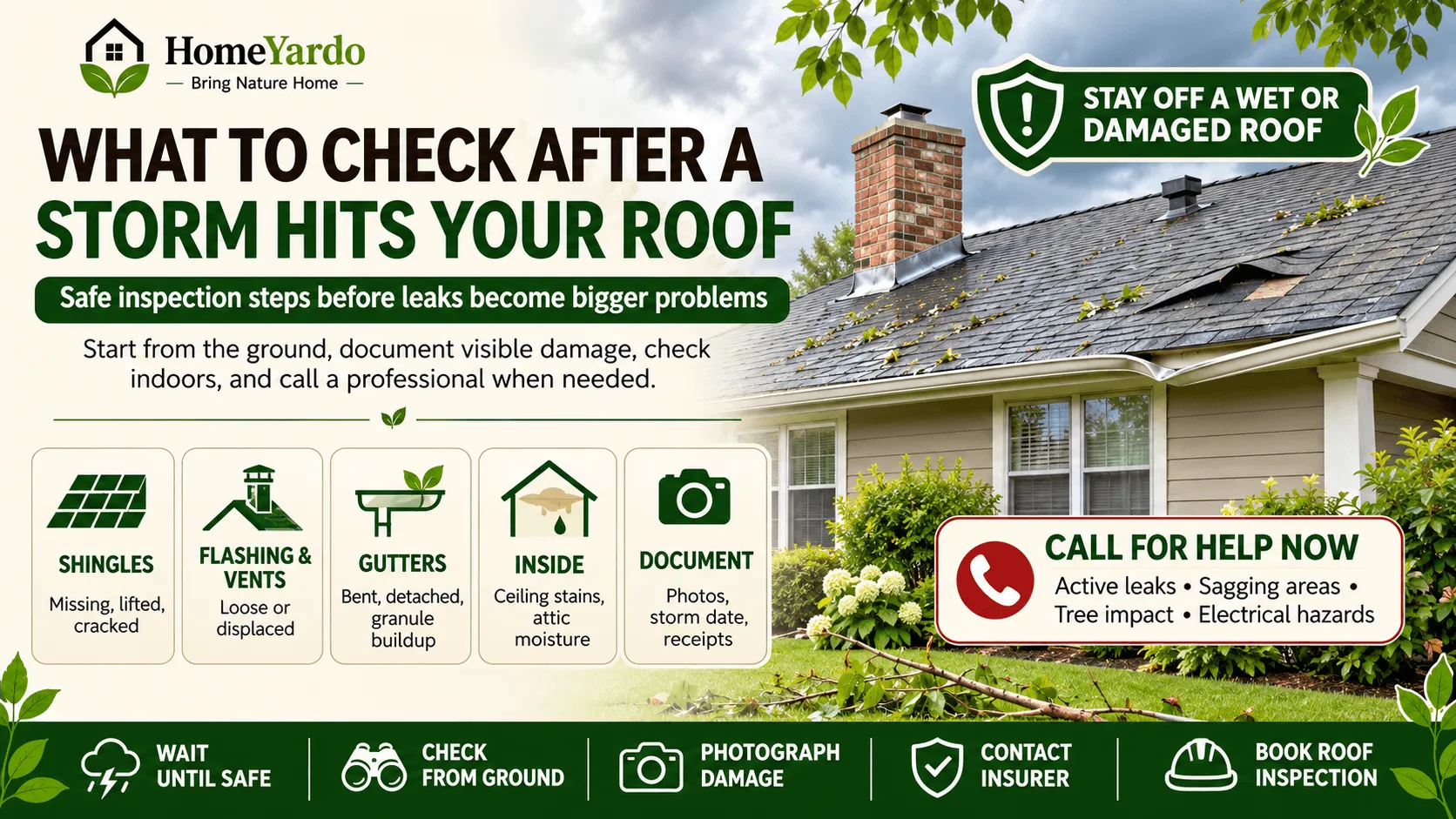
What to check after a storm hits your roof starts with a safe look from the ground, not a climb onto the shingles. Missing roofing materials, loose flashing, damaged gutters, and new ceiling stains can all suggest that wind, hail, or heavy rain has affected your home.
Some problems are obvious the next morning. Others remain hidden until another rainfall exposes a leak. Knowing where to look, what to photograph, and when to call a professional can help prevent additional damage and make the insurance process easier.
This guide walks through the steps in order, from your first visual inspection to deciding whether a repair crew needs to assess the roof. If you’re in the Rappahannock area and need a local contractor to evaluate suspected roof damage, Fredericksburg storm damage repair is one service option to consider.
Quick answer: After a storm, check for missing or lifted shingles, damaged flashing, gutter problems, debris, attic moisture, and water stains. Take photographs from a safe position, report significant damage to your insurer, and arrange a professional inspection when needed. Never walk on a wet or damaged roof.
Why the First 24 Hours Matter More Than the Storm
A storm may last only a few hours, but damage can continue developing after the wind and rain stop.
A shingle that has lifted or torn may expose the roof’s underlying protective layers. Water entering through a damaged section can travel along framing and insulation before appearing inside a room.
That delay is why an apparently dry ceiling does not always mean everything is fine.
The first day is a useful opportunity to document visible damage, protect vulnerable belongings, and arrange appropriate repairs. It is not a universal deadline for every roof problem, and safety should always come before speed.
According to Ready.gov, documenting damage and saving receipts are important parts of disaster recovery. Clear records can help support an insurance claim and provide contractors with information about the property’s condition.
When Roof Damage Needs Immediate Attention
Certain warning signs deserve more than a routine inspection.
Seek urgent professional assistance when you notice:
- Active water entering living spaces.
- A tree or large branch resting on the roof.
- Sagging roof sections or suspected structural movement.
- Exposed wiring near wet materials.
- Missing roofing that leaves a substantial opening.
- A ceiling that is bulging or heavily saturated.
If structural damage, electrical hazards, or utility lines make an area unsafe, stay away and contact the appropriate emergency service or utility provider.
The Ground Walk: Five Things to Actually Look At
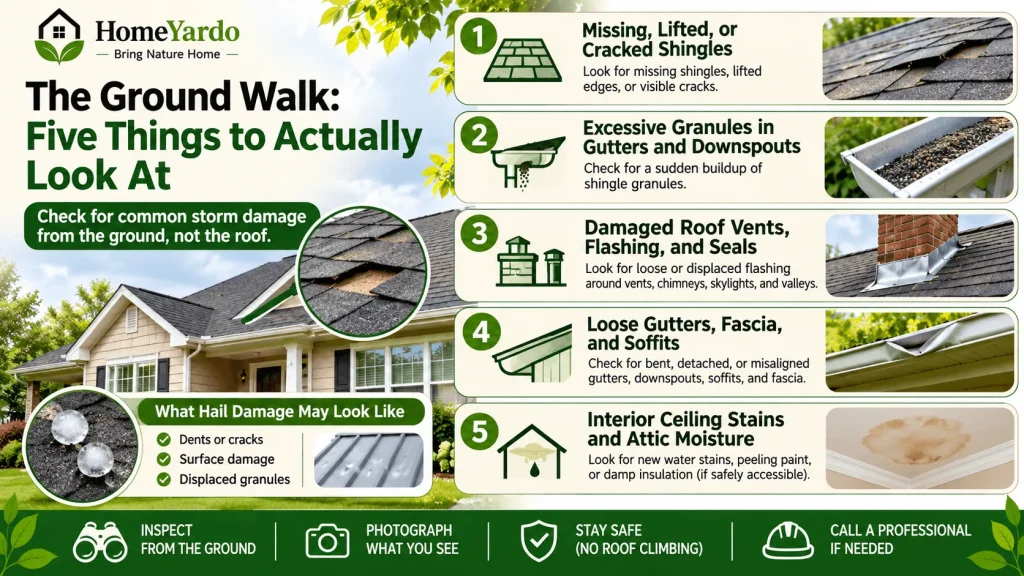
Start your inspection only after the weather has cleared and authorities consider the area safe.
Take your phone, use binoculars if available, and walk around accessible parts of the property. Photograph each side of the house before focusing on particular damage.
You do not need to climb onto the roof to identify many common warning signs.
1. Missing, Lifted, or Cracked Shingles
Look for changes in the roof’s surface.
Missing shingles may leave darker or exposed areas. Lifted edges, displaced tabs, and visible cracks can suggest wind damage.
Check the yard for roofing fragments as well. Pieces found near the house may help identify where materials have separated.
Not every irregular-looking shingle is storm damaged. Aging, previous repairs, and installation defects can create similar appearances, so a roofer may need to confirm the cause.
2. Excessive Granules in Gutters and Downspouts
Asphalt shingles have mineral granules that help protect their surface from sunlight and weathering.
Some granule loss occurs naturally, especially as shingles age. However, sudden accumulations after severe weather, combined with visible bare patches, deserve attention.
Check only areas that can be viewed safely from the ground. Do not climb a ladder to collect gutter material.
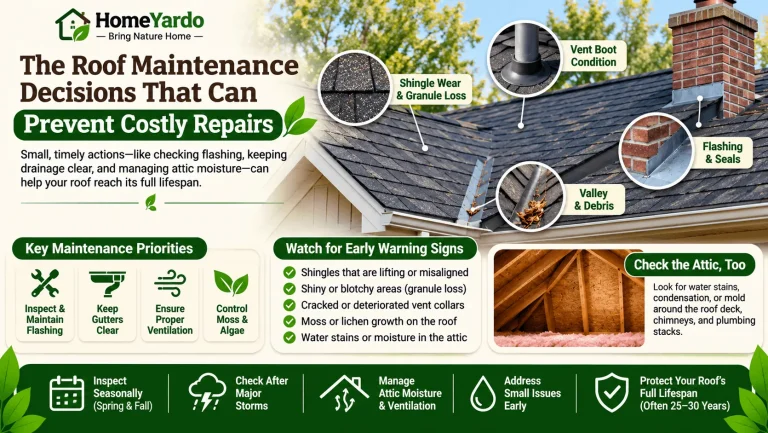
3. Damaged Roof Vents, Flashing, and Seals
Flashing helps direct water away from joints and roof penetrations.
Look for visible displacement around:
- Plumbing vent pipes.
- Chimneys.
- Skylights.
- Roof valleys.
- Wall-to-roof connections.
Rubber vent boots can crack or deteriorate, while metal flashing may loosen after strong winds.
These components deserve professional attention because water can enter around a penetration even when nearby shingles appear intact.
4. Loose Gutters, Fascia, and Soffits
Gutters and roof-edge components can reveal how a storm affected the exterior.
Look for sections that appear bent, detached, or out of alignment. Check for disconnected downspouts, hanging soffit panels, and fascia boards that have shifted.
Dents in exposed metal may suggest hail impact, although they do not automatically establish that shingles are functionally damaged.
For a closer look at drainage-related warning signs, HomeYardo’s guide to gutter warning signs explains how to recognize common gutter problems.
5. Interior Ceiling Stains and Attic Moisture
The last part of the inspection happens indoors, provided the building is safe to enter.
Look for new stains, peeling paint, damp insulation, and unusual moisture around ceilings or upper walls.
If you have an accessible attic, inspect from a safe, established walkway with adequate lighting. Do not step between joists, touch wet electrical equipment, or enter an area with suspected structural damage.
Remember that water can travel before becoming visible. A stain near one wall does not prove the leak started directly above it.
What Hail Damage May Look Like
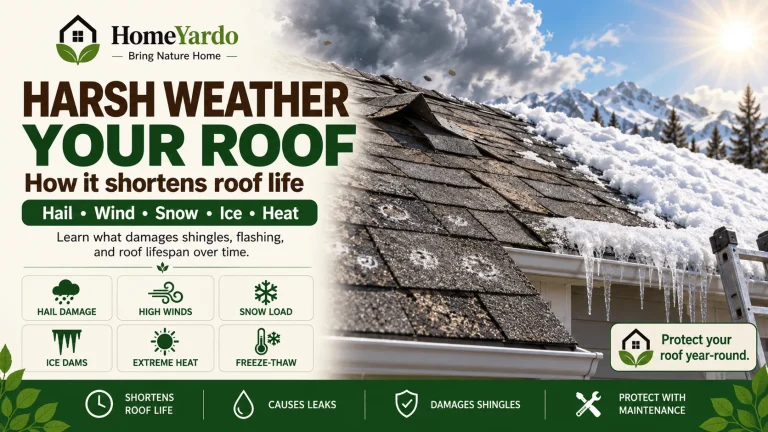
Hail can leave dents, cracks, surface damage, or displaced granules, depending on the roofing material and impact conditions.
Metal roofing may develop dents without necessarily losing its ability to shed water. Asphalt shingles can experience less obvious damage that requires closer professional assessment.
Photograph any visible impact marks on gutters, vents, or other accessible surfaces. Avoid assuming every dent means the entire roof needs replacement.
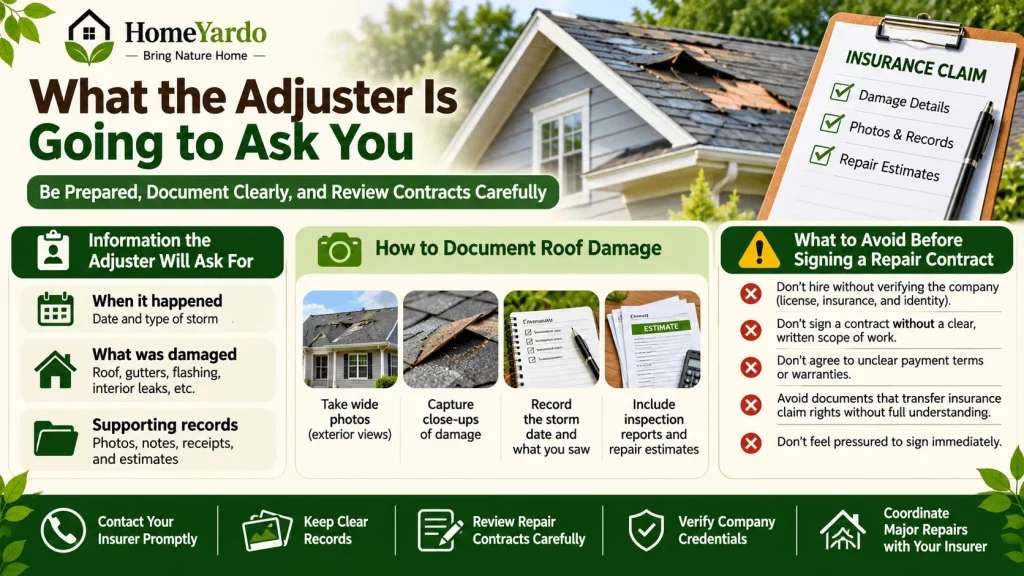
What the Adjuster Is Going to Ask You
If the storm caused damage that may be covered by your homeowners insurance, contact your insurer promptly.
An adjuster will generally need information about when the loss happened, what was damaged, and which supporting records are available.
Prepare a simple folder containing photographs, the storm date, notes about leaks or missing materials, and receipts for emergency protective work.
How to Document Roof Damage for Insurance
Good documentation is organized and factual.
Take wide photographs showing the affected side of the house, followed by closer images of specific visible problems. Keep the original photographs where possible, and record when each issue was noticed.
Include contractor inspection reports and written repair estimates as they become available.
Avoid describing suspected damage as confirmed structural failure unless a qualified professional has established that finding.
What to Avoid Before Signing a Repair Contract
Major storms often bring contractors offering immediate inspections or repairs.
Before signing, verify the company’s identity, insurance, applicable licensing, and written scope of work. Ask how emergency services, material costs, warranties, and payment terms will be handled.
Be especially careful with documents that transfer insurance claim rights or authorize work you do not fully understand.
You do not necessarily have to wait for an insurance adjuster before arranging necessary emergency protection. However, coordinate with your insurer before authorizing major permanent repairs whenever practical.
When It’s a Repair and When It’s a Replacement
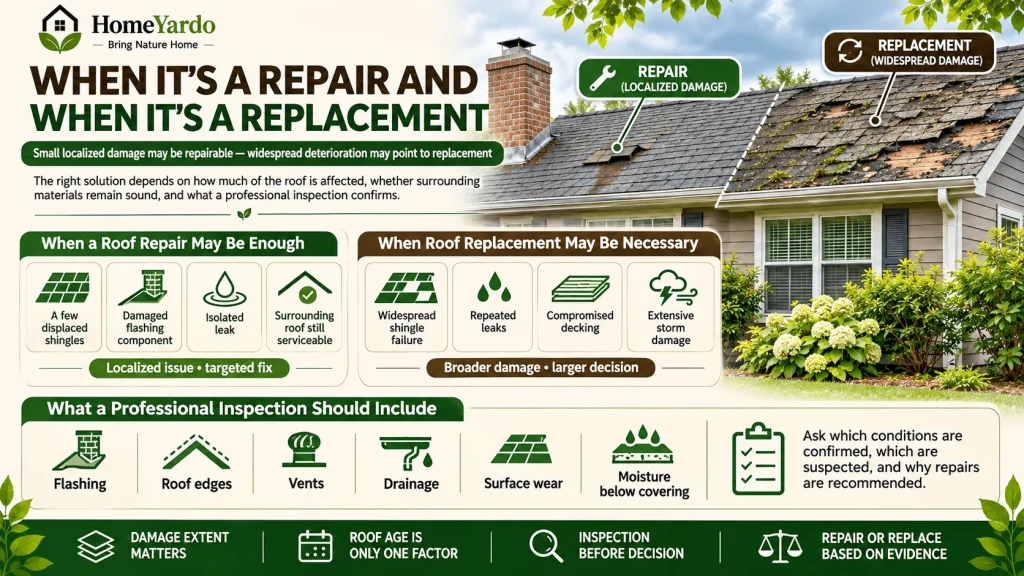
A damaged roof does not automatically need complete replacement.
The decision depends on how much of the roof is affected, whether the surrounding materials remain sound, and whether a localized repair can restore reliable weather protection.
When a Roof Repair May Be Enough
A localized repair may be reasonable when damage is limited to a small section and the remaining materials are in serviceable condition.
Examples include a few displaced shingles, a damaged flashing component, or an isolated leak with no significant deterioration beneath the roof covering.
A qualified roofing contractor should assess whether replacement materials can be installed correctly and whether the repaired section will perform as intended.
When Roof Replacement May Be Necessary
Replacement becomes more reasonable when damage extends across large areas or the roof already has substantial deterioration.
Repeated leaks, widespread shingle failure, compromised decking, or significant storm damage can change the repair calculation.
Roof age matters, but it should not be the only deciding factor.
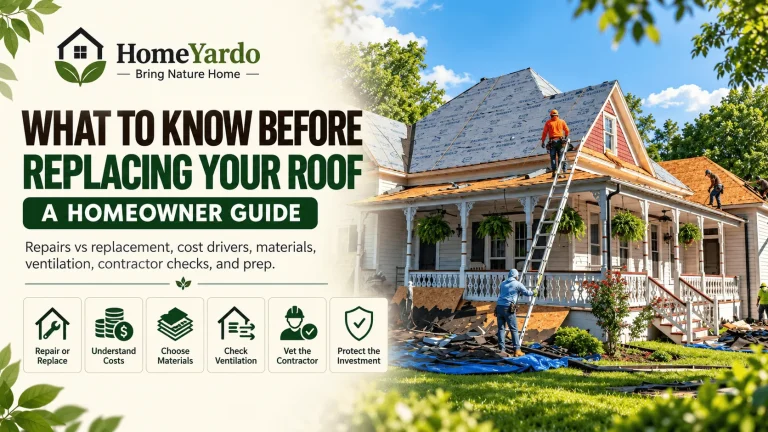
HomeYardo’s guide to what to know before replacing your roof covers broader replacement planning, materials, and contractor estimates.
What a Professional Roof Inspection Should Include
A professional assessment should go beyond counting missing shingles.
Depending on the roof’s design, material, and accessibility, an inspection may evaluate flashing, roof edges, vents, surface deterioration, drainage, and signs of moisture below the covering.
Ask the contractor to explain which conditions are confirmed, which are suspected, and why the proposed repairs are necessary.
According to the National Weather Service, severe thunderstorms can bring damaging winds, hail, and heavy rainfall. Those conditions can affect different roofing materials in different ways.
For more information about gradual deterioration, see HomeYardo’s guide to how harsh weather causes roof damage.
The Homeowner’s Post-Storm Checklist
A clear order of operations makes the morning after severe weather easier to manage.
Use this checklist once conditions are safe.
| Step | What to Do | Why It Matters |
|---|---|---|
| 1 | Wait until the storm passes and the area is safe | Avoid falling debris and electrical hazards |
| 2 | Photograph the roof from ground level | Preserve visible evidence |
| 3 | Check shingles, flashing, and gutters | Identify possible exterior damage |
| 4 | Look for interior leaks and moisture | Recognize possible water intrusion |
| 5 | Contact your insurer when damage may be covered | Understand claim and documentation requirements |
| 6 | Arrange safe emergency protection if needed | Limit additional water damage |
| 7 | Request a professional roof inspection | Confirm repair needs and scope |
| 8 | Review the written estimate and schedule repairs | Address the identified problems |
Should You Tarp a Damaged Roof Yourself?
Roof tarps can provide temporary protection, but installing one usually requires working at height.
That becomes especially dangerous when roofing materials are wet, loose, or structurally compromised.
Do not climb onto a damaged roof to install a tarp yourself. Arrange for a qualified, properly equipped roofing professional to handle roof-level protection.
If water is entering the house, move belongings away from the affected area when safe and seek appropriate assistance. Keep away from wet electrical fixtures and sagging ceilings.
How to Choose a Reliable Storm Damage Contractor
Look for a contractor who can explain the proposed work in writing.
Ask for proof of insurance, applicable licensing, references, warranty information, and a detailed estimate that separates emergency protection from permanent repairs.
A local business with an established address and documented service history may be easier to contact for follow-up work, but location alone does not guarantee quality.
Avoid anyone who pressures you to sign immediately or promises insurance coverage before reviewing the policy and confirmed damage.
The Bottom Line
The morning after a storm is the right time to look for damage, provided the property is safe.
Start from the ground, photograph what you can see, and check for signs of water entering the home. Missing shingles, damaged flashing, and new stains deserve attention, but they do not automatically mean the roof needs replacing.
A well-documented inspection and a clear professional assessment can help you address the actual problem without rushing into unnecessary work.
FAQ’s
Check for missing or lifted shingles, visible debris, damaged gutters, and loose flashing from ground level. Then look for new ceiling stains or moisture indoors, provided the home is safe to enter.
Common warning signs include displaced shingles, visible impact marks, damaged vents, loose flashing, and new leaks. Some damage is difficult to identify from the ground, so a professional inspection may be necessary.
Yes. Storm damage does not always produce an immediate indoor leak. Loose roofing materials, compromised seals, or damaged flashing may allow water to enter during a later rainfall.
Make a visual check as soon as weather and property conditions are safe. Active leaks or suspected structural damage warrant urgent professional assistance, while minor concerns can be assessed through a scheduled inspection.
If there is potentially covered damage, notify your insurer promptly and ask about claim requirements. Arrange emergency protective work when necessary for safety or to limit further damage. A qualified roofer can help document the roof’s condition.
No. Some hail impacts are cosmetic, while others affect shingles, flashing, coatings, or other roofing components. The repair decision depends on the material, extent of damage, roof condition, and professional findings.
Temporary covering can help limit water intrusion, but roof-level installation involves fall and structural hazards. Hire a qualified professional rather than climbing onto a wet or damaged roof.
Photograph every accessible roof elevation, visible missing materials, damaged gutters, debris, and indoor water stains. Keep storm dates, contractor reports, and receipts with the images.
Localized damage on an otherwise sound roof may be repairable. Widespread deterioration, recurring leaks, or compromised decking may make replacement more appropriate. A professional inspection should guide the decision.
Minor exterior damage may not make a home unsafe, but sagging ceilings, structural movement, electrical exposure, and substantial water intrusion can create serious hazards. Seek qualified guidance before remaining in an affected area.
References & Editorial Sources
- Ready.gov — Disaster recovery guidance, safety precautions, documentation, and insurance-related steps.
- National Weather Service — Severe thunderstorm hazards involving wind, hail, and intense rainfall.
- National Association of Insurance Commissioners — Consumer guidance on storm claims, temporary repairs, and contractor agreements.
- Louisiana Department of Insurance — Post-storm roofing inspections, documenting damage, and protective measures.
Editorial note: This guide provides general homeowner information. Roofing conditions, insurance coverage, local building requirements, and contractor qualifications vary. A qualified professional should evaluate suspected structural or roofing failures.