How To Protect Your Home From Weather Damage

Long before there is a clear emergency, weather can do harm to a home. Small roof flaws might allow heavy rain to penetrate. Exterior materials may become loose due to strong winds. Runoff from storms may accumulate near the foundation. High humidity can also create conditions that encourage mold growth.
Preventive maintenance is the best defense. Before bad weather strikes, a homeowner should check the building envelope, drainage systems, roof, windows, and external walls.
Begin With The Gutters And Roof

The first significant barrier separating your house from the weather is the roof. When exposed to wind and rain on a regular basis, even small flaws might become serious.
Examine seals, flashing, roof penetrations, and shingles. Check for broken flashing, raised edges, cracked or missing shingles, and deteriorating sealant around vents. Areas where various roofing materials converge should get special attention.
Repeated exposure to rain, wind, hail, and temperature changes can gradually weaken roofing materials, so homeowners may also want to understand how harsh weather can damage a roof over time.
Gutters are just as important. They gather runoff from the roof and divert it away from the building. Water may overflow over fascia boards, siding, windows, and foundations due to clogged or damaged gutters.
Prior to hurricane season, make sure that:
- Leaves and silt are absent from gutters.
- Downspouts discharge a few feet from the foundation.
- Flashing around roof penetrations is secure.
- There are no visible displacements, cracks, or missing shingles.
- Downspouts and gutters are securely fastened.
It is less expensive to conduct routine inspections than to wait for water to reveal a concealed flaw.
Enhance The Foundation’s Drainage

Instead of moving toward the house, water should move away from it. Soil grading is important because stormwater may gather close to the foundation in low spots next to external walls.
After a lot of rain, examine the ground surrounding the property. Standing water close to the foundation could be a sign of an inadequate runoff system, poor grading, or clogged drainage. If water repeatedly collects around the property after rainfall, fixing yard drainage problems can help address the underlying cause rather than simply dealing with standing water each time.
Concentrated roof runoff can be redirected with the aid of downspout extensions. A specialist may suggest a sump system, French drain, catch basin, or another drainage solution in locations with ongoing drainage issues.
Check for moisture in the crawl space and basement as well. Moisture incursion may be indicated by discoloration, efflorescence, peeling paint, or a musty smell.
It is important to act quickly if water has already entered the building due to heavy rain or a plumbing malfunction. After substantial water intrusion, expert water damage restoration Dallas services can handle extraction, drying, sanitation, and restoration.
Eliminating visible water is not the only goal. Materials must also be dried before retained moisture causes additional problems.
Close Up Any Vulnerable External Openings

Water intrusion frequently occurs through windows and doors. Examine the condition of the external caulking surrounding the frames. Wind-driven rain can enter wall assemblies and behind siding due to deteriorated sealant.
Examine weatherstripping and door thresholds as well. Replace damaged seals when necessary.
Similar consideration should be given to external penetrations. These include:
- Electrical conduits
- Hose bibs
- Vents
- Utility lines
- Other wall openings
Bulk water should not be able to penetrate the wall cavity due to the surrounding flashing or sealant.
Caulk should never be used in place of properly planned flashing. Over time, caulk may degrade. Instead of trapping water inside the wall assembly, flashing should direct it back toward the outside.
Defend Against Wind and Airborne Debris

Wind damage often starts with a minor problem. During a violent storm, an unsecured outside object, damaged fascia board, or loose gutter can become a much larger issue.
Before strong winds, secure planters, barbecues, outdoor furniture, and other movable items. Check gates and fences for loose connections.
Cut down any weak or dead branches close to the home. Falling limbs can damage utility wires, windows, vehicles, and roofs, so trees should be carefully assessed.
Strong winds can also make garage doors vulnerable. Verify whether the door and its supporting hardware have appropriate wind-resistance features, where applicable to your home.
Manage Moisture Following Water Infiltration
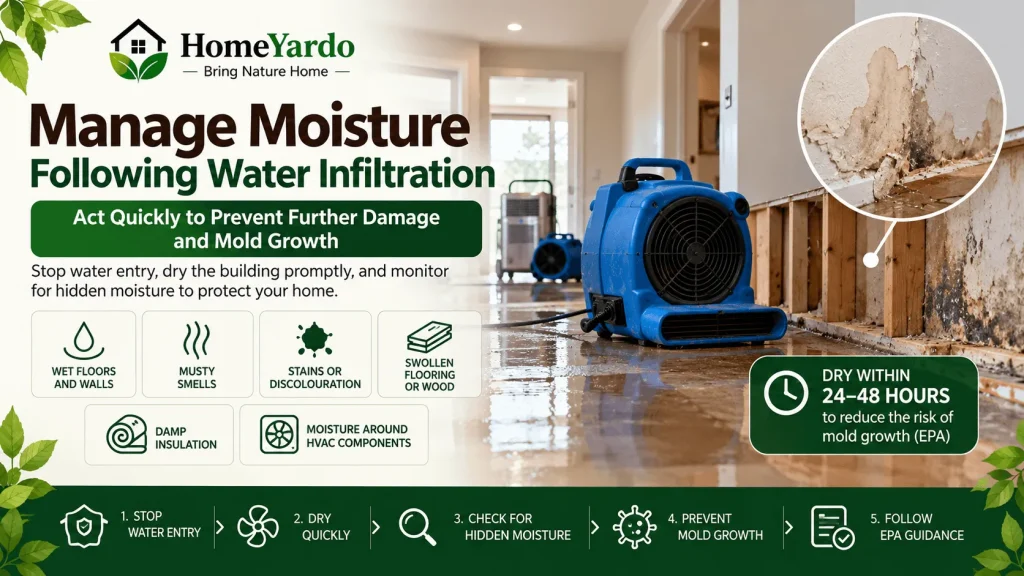
The first objective is to prevent water entry. The second is to dry the building quickly.
Plasterboard, insulation, flooring, framing, and other materials can all absorb moisture. Some damage can remain hidden behind finished surfaces. For this reason, drying a wet floor might not be the only solution.
To lessen the chance of mold growth, the U.S. Environmental Protection Agency advises drying damp objects and locations within 24 to 48 hours. It also states that controlling moisture is an important part of preventing mold growth.
Following a major water event, keep an eye on:
- Wetness on floors and walls
- Musty smells
- Staining or discoloration
- Swollen flooring or wood
- Damp insulation
- Moisture around HVAC components
If contaminated floodwater entered the building, additional precautions are necessary. The EPA’s flooded homes cleanup guidance covers reentry, protective equipment, water removal, drying, and other cleanup considerations.
Examine Your Home Before the Next Storm
The best way to guard against weather damage is through ongoing maintenance. Do not wait until a significant storm is predicted.
Every year, take a few walks around the property. Examine the siding, windows, doors, foundation, trees, roof, gutters, drainage, and outside penetrations. Take pictures of any current flaws and plan repairs before minor issues become major water-entry points.
Expensive renovations are not always necessary to make a home more weather-resistant. What matters most is that damage is promptly repaired, openings are properly sealed, drainage functions as intended, and water is directed away from vulnerable areas.
Regular maintenance and inspections can reduce the amount of water that enters the building and may lower repair costs when severe weather occurs.
FAQs
Water management should come first. Before severe weather occurs, maintain the roof and gutters, divert runoff away from the foundation, seal vulnerable exterior openings, secure loose outside items, take care of nearby trees, and repair developing defects.
A visual exterior assessment after major storms and several times a year is a sensible starting point. More frequent inspections may be necessary for older homes, aging roofs, properties with drainage issues, and homes in areas that experience severe weather.
Roofing, flashing, gutters, windows, exterior doors, siding, garage doors, foundation drainage, trees, fences, and exterior wall penetrations are commonly vulnerable areas. The main risks depend on the type of weather the property regularly experiences.
Maintain proper grading, discharge roof runoff away from the building, keep gutters and downspouts operating correctly, and repair areas where water frequently collects near the foundation. A site-specific drainage system may be necessary if drainage problems continue.