Design Choices That Make A Dining Room Feel Complete
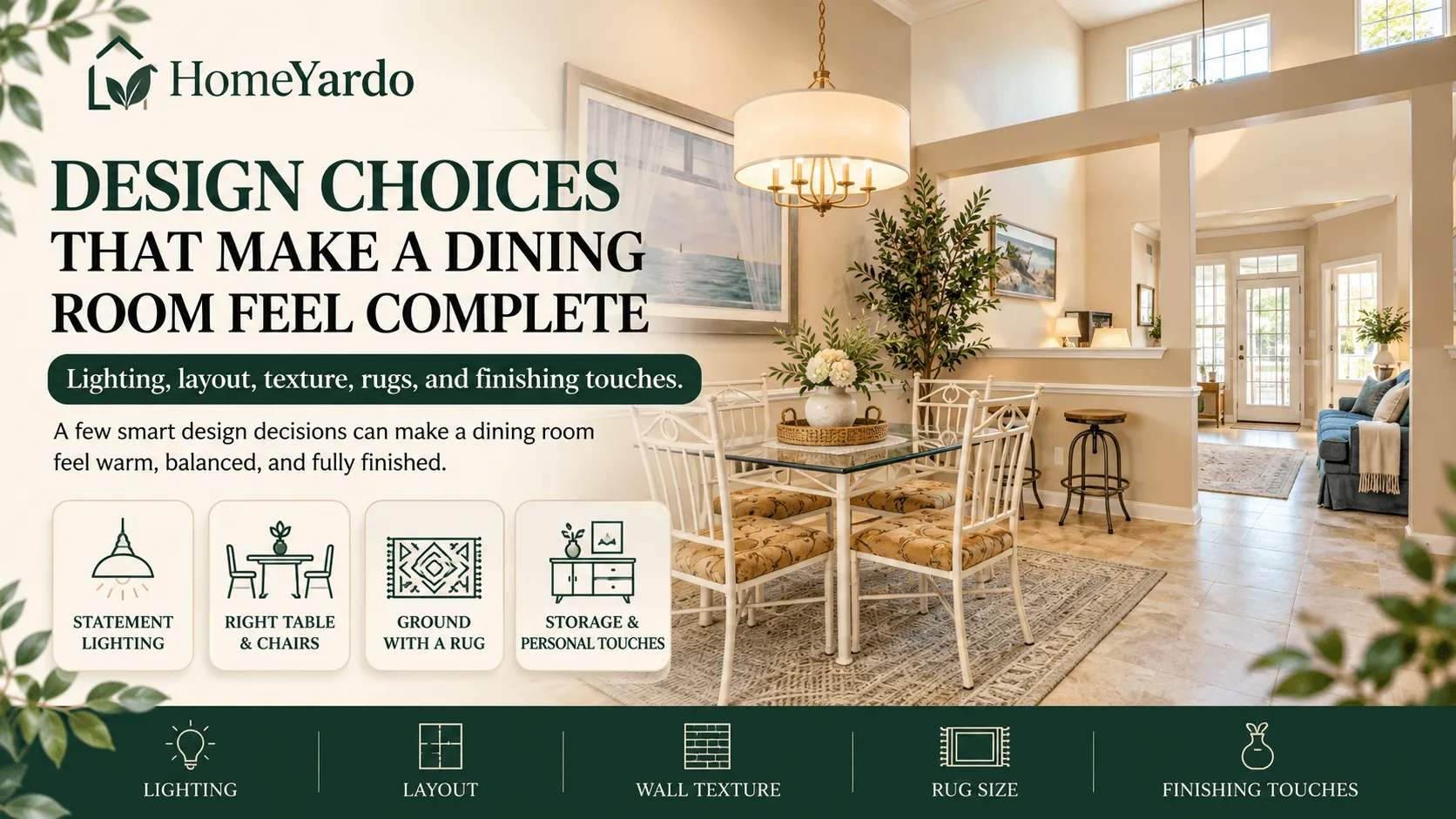
A dining room can have a good table, comfortable chairs, and attractive furniture yet still feel unfinished. Usually, the problem is not one missing decorative item. It is the relationship between scale, lighting, furniture placement, colour, texture, and the smaller details that connect the room.
You do not need a full renovation to fix it. A correctly sized light fixture, enough clearance around the table, a rug that fits the seating area, wall interest, and a few coordinated finishing touches can make the entire space feel more intentional.
The key is to make each design choice support the others rather than treating lighting, furniture, walls, and accessories as separate decisions.
Here’s what’s covered:
- Why Some Dining Rooms Feel Unfinished
- Contemporary Light Fixtures: Your Room’s Focal Point
- Choose The Right Table And Chairs
- Add Colour And Texture To The Walls
- Ground The Space With A Rug
- Finish With Storage And Personal Touches
Why Some Dining Rooms Feel Unfinished
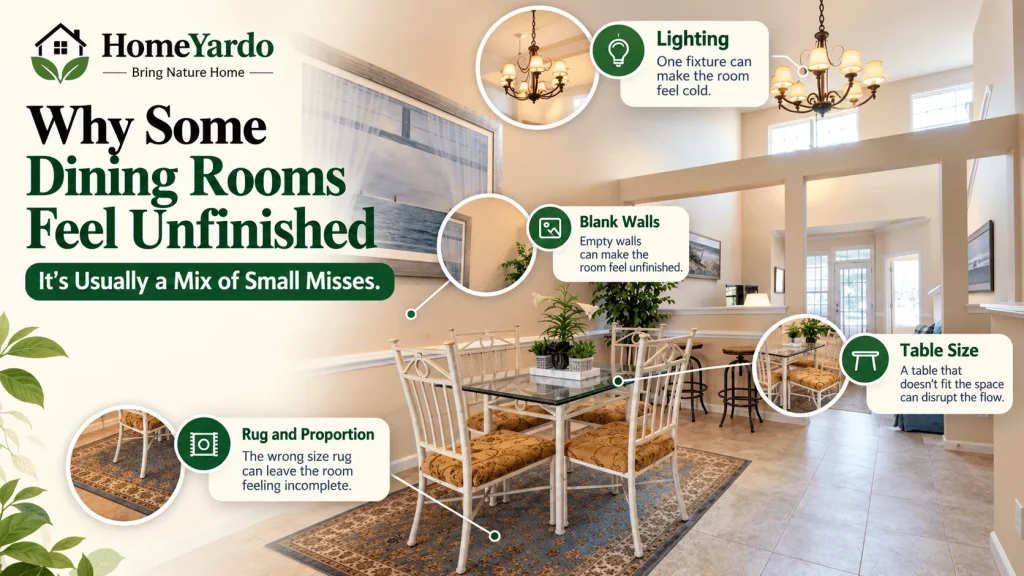
Dining rooms rarely fail from a single catastrophe. They fail from many tiny misses.
A table that won’t fit through the doorway. An empty wall that booms. One ceiling fixture that turns dinner into the doctor’s waiting room.
Individually, none of these are a huge issue. Collectively… they leave the room feeling unfinished.
Homeowners are listening. The Houzz & Home Study 2026 reports that 54% of homeowners took on a renovation project in 2025.
So where should you start?
With the ceiling.
Contemporary Light Fixtures: Your Room’s Focal Point
Lighting sets everything else in your dining room. Your table, wall colour, artwork… will all look different based on how you light it.
That’s why designers often choose the light fixture before anything else.
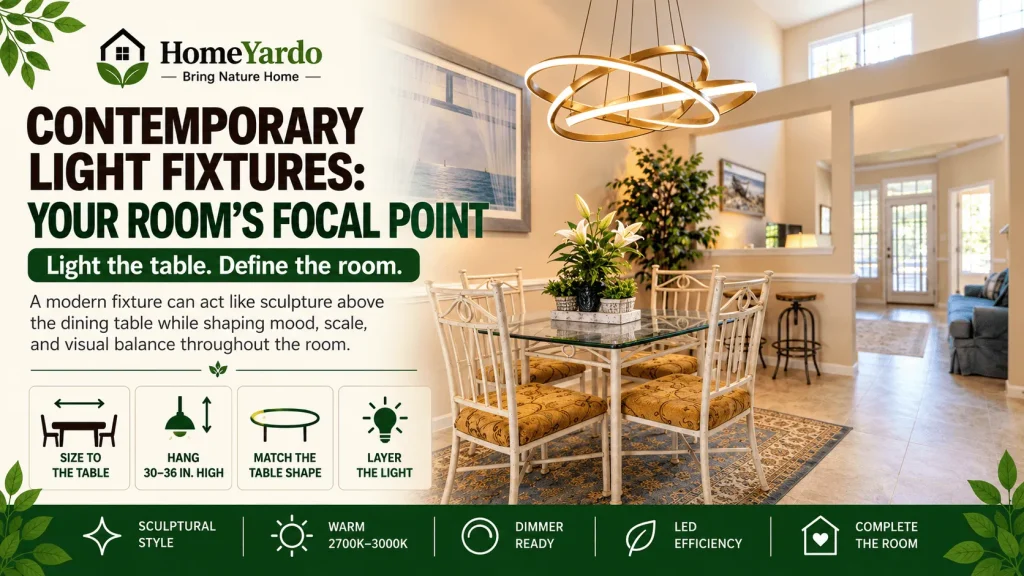
The best modern light fixtures for dining rooms serve double duty. They provide illumination for the table below while also hanging like a piece of sculpture above it. Perusing a quality selection of modern lighting is the easiest way to understand how sculptural pendants, linear bars and statement-making chandeliers can become the focal point for a dining table while setting the mood for the entire room.
But here’s the kicker…
There is no magic bullet fixture. If you want your light to look good, it has to adhere to a few simple guidelines:
- Sized to the table: A fixture about half to two-thirds of the width of your table is ideal.
- Hang it at the proper height: Keep 30 to 36 inches of space between the bottom of your fixture and the tabletop.
- Match the shape: Long tables look good with a linear pendant or row of pendants. Round tables look best with a single round fixture.
If you nail these details, your table will look “complete” overnight. Get them wrong and even the prettiest piece will feel like it doesn’t belong.
Layer Your Lighting
One overhead light is rarely enough.
The most complete dining rooms use layers of light. Think of it like this:
- Ambient light from your main pendant or chandelier
- Accent light from wall sconces or picture lights
- Soft light from a lamp on the sideboard
Install a dimmer switch and you’re ready to go. Now one room suits both a rushed Tuesday meal and an elaborate weekend dinner party with friends.
Tip: Choose warmer temperature bulbs around 2700K to 3000K. Bluish light tends to wash out food (and faces).
Concerned about operating expenses? Don’t sweat it. LEDs use up to 90% less energy than traditional incandescent bulbs and last up to 25x longer.
Pretty cool, right?
Choose The Right Table And Chairs
Your table is the heart of the dining room. It’s where everything happens.
However, the biggest mistake is probably purchasing a table that’s too large. Leave room to pull chairs out and move around the space. Ideally, there should be 36 inches between a wall or piece of furniture and the edge of the table.
Next, think about shape:
- Rectangular tables: Best for long, narrow rooms
- Round tables: Great for small or square rooms (and better for conversation)
- Oval tables: A nice mix of both, with softer edges
You also don’t have to match chairs to your table exactly. Combine chair styles or add a bench on one side for personality. It also helps your room not look like a furniture store!
You’re not alone. In Houzz’s latest renovation survey, 39% bought new furniture as part of their home projects.
Add Colour And Texture To The Walls
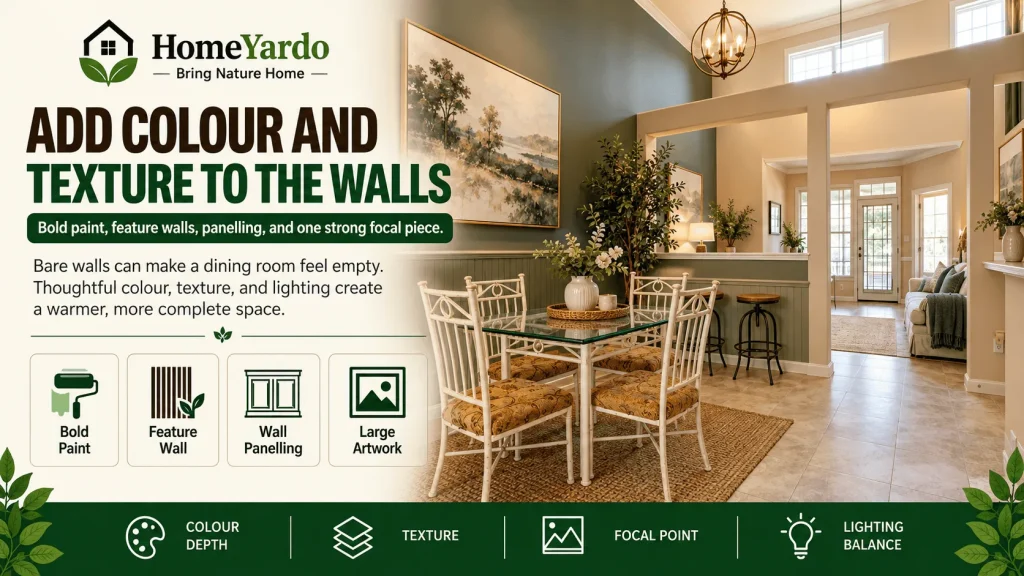
Bare walls are the fastest way to make a dining room feel empty.
Don’t go crazy. However, you do need something for the eye to focus on. Some ideas that play well:
- One paint colour that is bold or deeper than the rest of your house
- Wallpaper on one feature wall
- Wood panelling or wainscoting
- One large piece of art rather than lots of small ones
Here’s something most people don’t consider…
Your wall colour and your lighting scheme work together. Dark walls absorb light, so you might require bigger modern light fixtures or an additional pair of sconces. Light walls reflect light around the room. It also makes your space feel larger and more open.
Ground The Space With A Rug
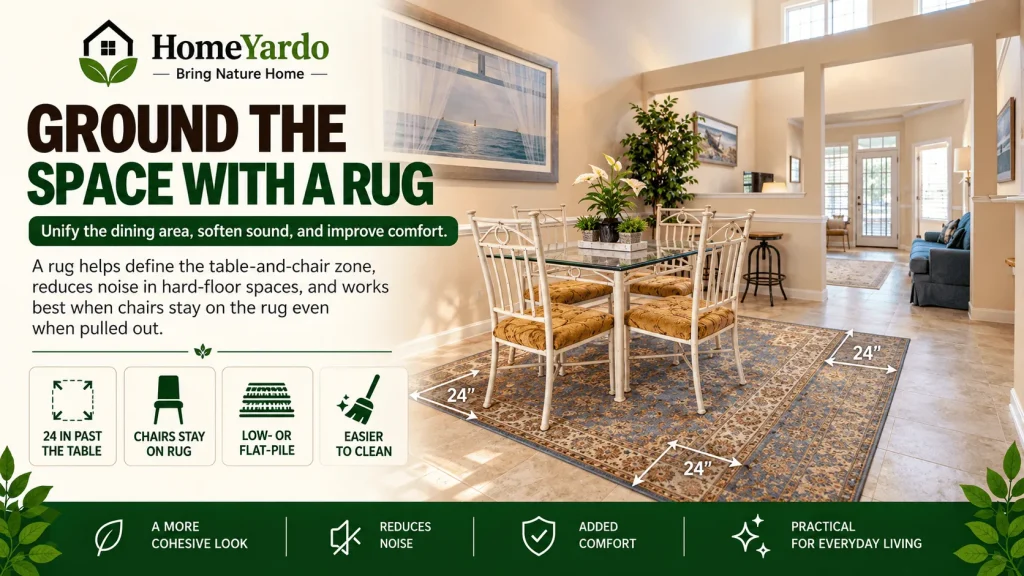
A rug isn’t just for colour. It unites the table and chairs into one space. It also absorbs sound, which is huge in spaces with hardwood floors.
Rule numero uno? Make sure your rug is large enough so that chairs remain on the rug when they’re pulled out. This typically means you’ll want your rug to extend 24 inches beyond each side of the table.
Opt for low- or flat-pile rugs. They’re easier to clean (because spills will happen!) and chairs don’t get caught on them.
Finish With Storage And Personal Touches
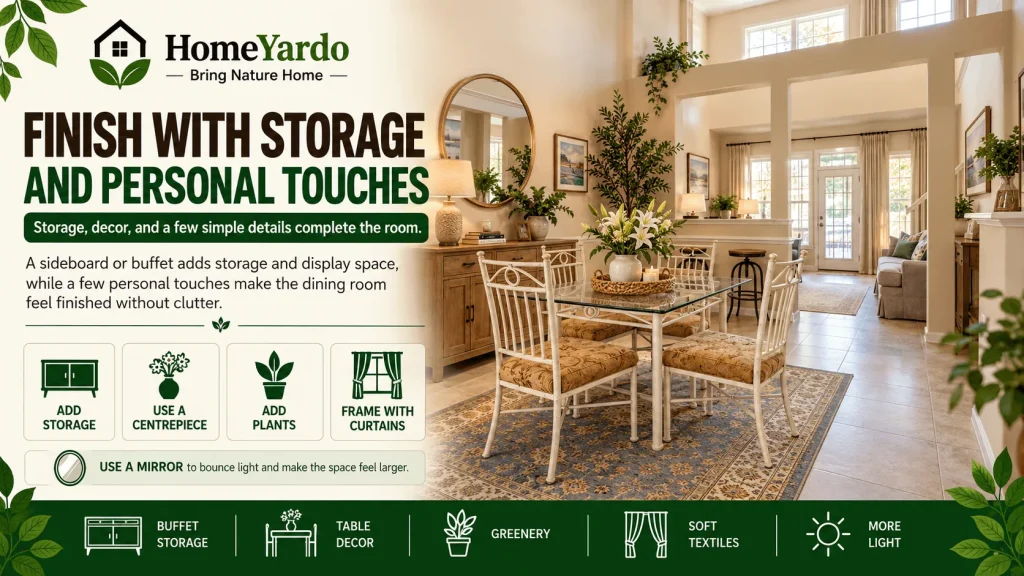
This is where a dining room goes from “nice” to “complete.”
A sideboard or buffet provides a place to store plates, glasses and table linens. It also creates a surface on which to place a lamp, a vase of flowers or a small stack of books.
Then add a few personal touches:
- A centrepiece on the table
- Plants in the corners
- Curtains that frame the windows
- A mirror to bounce light from your fixture around the room
Keep it simple. A few well-chosen pieces always look better than a cluttered room.
Pulling It All Together
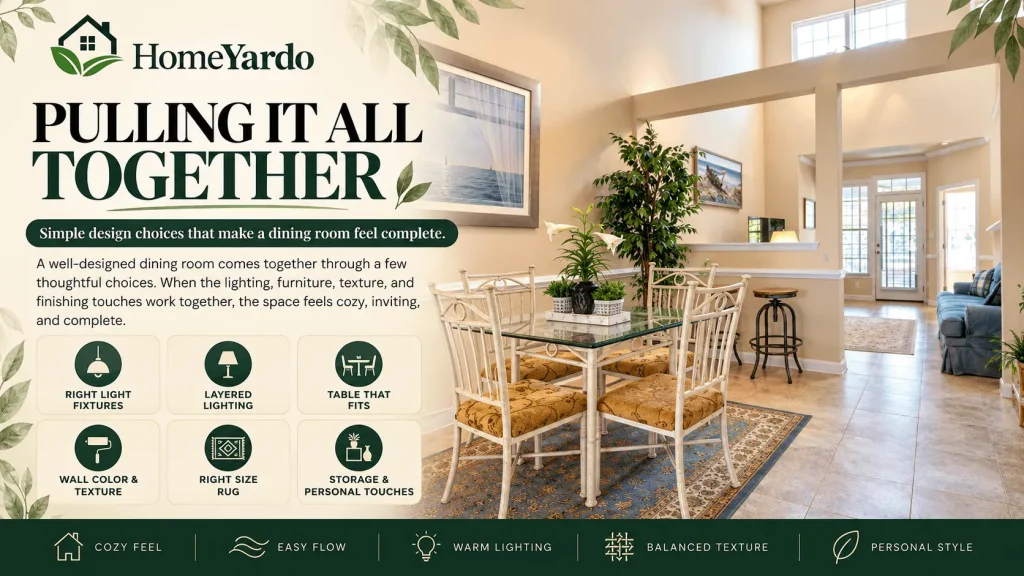
A well-put-together dining room boils down to just a few simple design decisions. When done right, everything about the space feels cozy, inviting and complete.
To quickly recap:
- Start with contemporary light fixtures that are sized and hung correctly
- Layer your lighting with sconces, lamps and dimmers
- Choose a table that fits the room with space to move
- Add colour and texture to the walls
- Ground everything with the right size rug
- Finish with storage and personal touches
If you get these choices correct your dining room won’t just look great… it will FEEL like the room people crave to sit around in.
FAQs
How do you make a dining room feel complete?
Start with the room’s scale and furniture placement, then coordinate the dining table, lighting, rug, wall treatment, storage, and accessories. Repeating a few colours, materials, or finishes helps the room feel connected without making everything match.
What should you choose first when designing a dining room?
Measurements and the dining table are the best starting points because they determine circulation space, chair placement, rug size, and the scale of the light fixture. Once those dimensions are clear, lighting and other decorative choices become easier.
How high should a dining room light hang above the table?
For many rooms with an 8-foot ceiling, about 30 to 36 inches between the tabletop and the bottom of the fixture is a useful starting point. Higher ceilings and different fixture designs may require adjustments.
How large should a chandelier be over a dining table?
A chandelier around one-half to two-thirds of the table’s width is a common starting guideline. Table shape, ceiling height, room dimensions, and the visual weight of the fixture should also be considered