
Roof Needs Replacement? 7 Signs You Need a New Roof
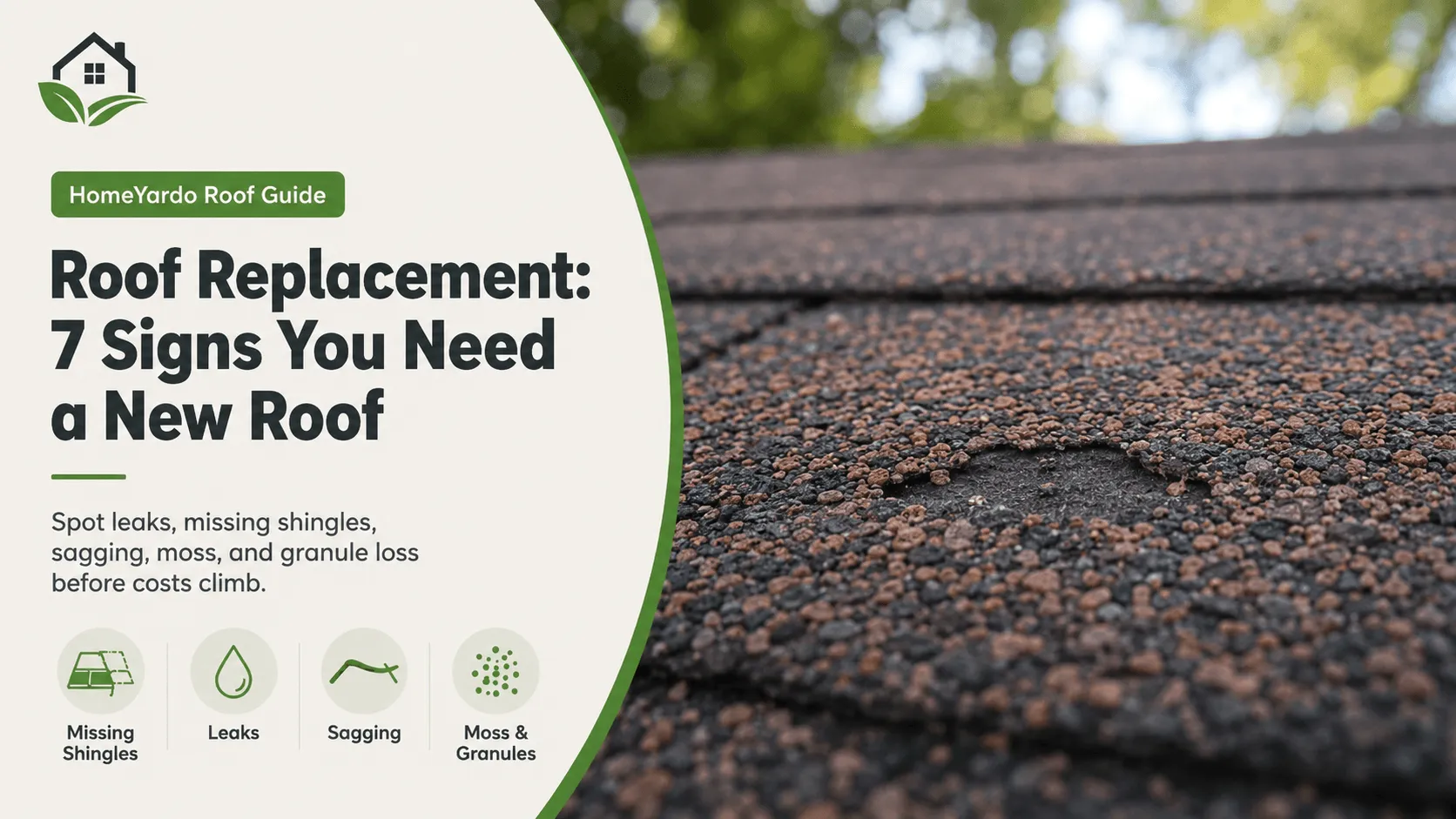
Your roof rarely asks for attention politely. It usually waits until you spot a stain on the ceiling, hear dripping during a storm, or notice shingles scattered across the yard like confetti nobody wanted. If you live in Tumwater, where steady rain and damp conditions can speed up wear, catching roof problems early matters even more.
A replacement can feel expensive, but letting damage linger often costs you far more in repairs, insulation loss, and interior damage.
Your Roof Has a Lifespan, and It’s Not Unlimited
Every roofing material ages on a schedule, even when it looks decent from the driveway. Asphalt shingles often last around 20 to 30 years, while metal and tile can go much longer. The catch is that weather, installation quality, attic ventilation, and maintenance habits all affect that timeline.
If your roof is pushing the upper end of its expected life, you should start paying closer attention. A 25-year-old roof isn’t exactly ancient history, but it is entering the era where surprises become more common.
A Professional Inspection Helps You Decide Between Repair and Replacement

Not every worn roof needs immediate replacement, but guessing is a bad strategy when thousands of dollars and your home’s structure are involved. A qualified roofer can assess the age, condition, and failure patterns across the entire system, not just the obvious problem spots.
Replacing a roof is a full teardown and rebuild, not a patch over the bad spots, and the cost reflects that. Committing to one too early wastes money on a roof that had years left, while waiting too long lets water reach the decking and framing underneath.
Working with a roof replacement company in Tumwater can help you figure out whether repairs still make sense or whether replacement would be the smarter long-term move. That evaluation should include shingles, flashing, decking, ventilation, drainage, and signs of hidden moisture.
You should also ask for clear photos, a written scope, material options, warranty details, and a realistic timeline. Good roofing decisions come from solid information, not sales pressure or crossed fingers.
Missing, Curling, or Cracked Shingles Are Early Red Flags
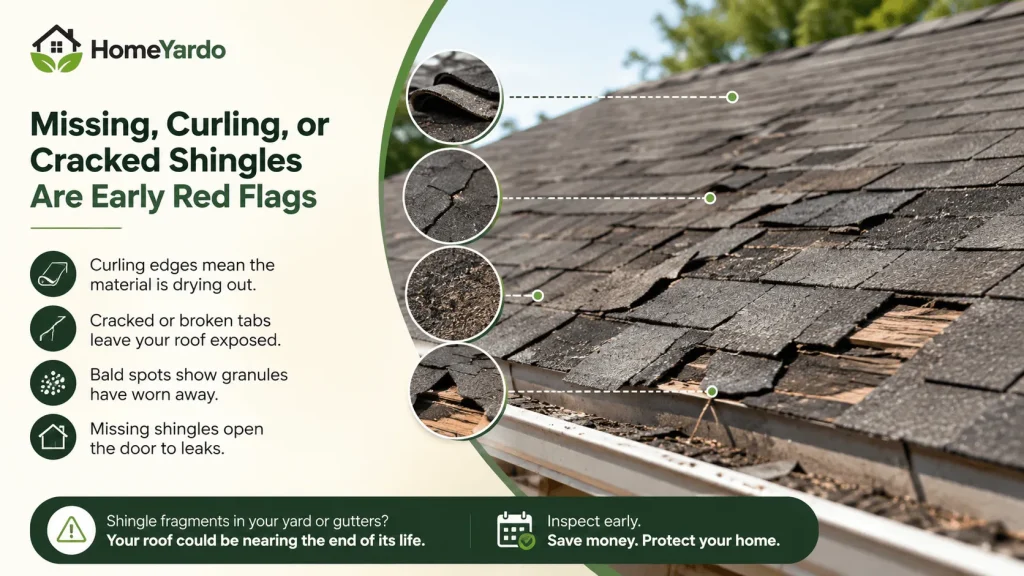
Shingles are your roof’s first line of defense, so when they begin to fail, bigger issues often follow. You should look for curling edges, cracked tabs, bald spots where granules have worn off, and shingles that are flat-out missing.
These signs usually mean the material is drying out, losing flexibility, or taking repeated hits from wind and rain. One damaged section does not always mean full replacement, but scattered problems across many areas often point to broader decline.
Once the weather clears, do a slow lap around the house. Finding shingle fragments on the lawn or packed into your gutters usually means the roof is nearing the end of its run. Think of it as a not-so-subtle resignation letter. Patching from there buys you a little time while the real costs quietly stack up behind it.
Water Stains and Leaks Often Mean the Damage Is Already Moving Inward
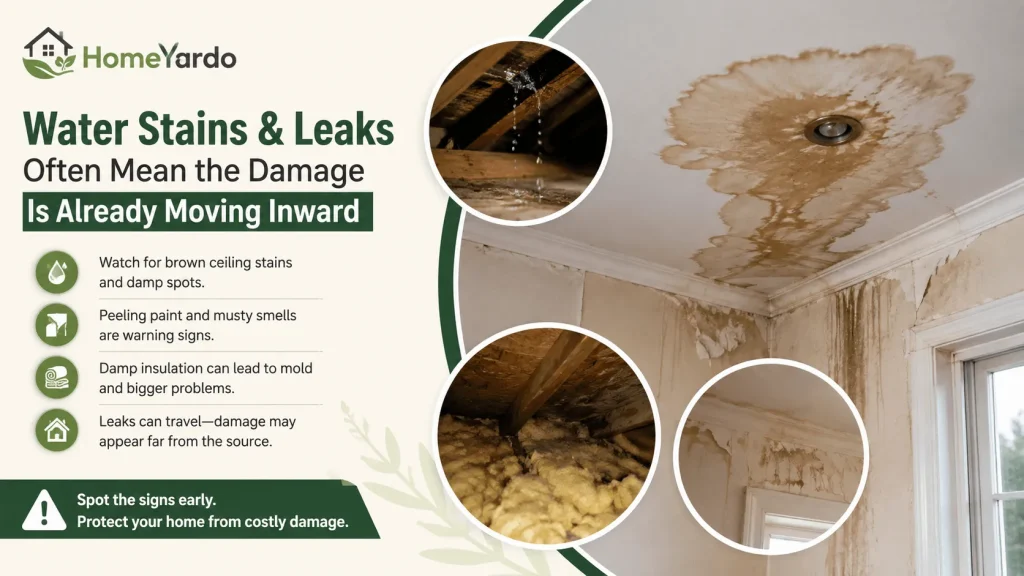
A roof problem does not stay on the roof for long. Once water gets through the outer barrier, it can spread into insulation, drywall, framing, and even electrical components. That’s when a roof issue turns into a whole-house headache.
You should watch for brown ceiling stains, peeling paint near upper walls, damp attic insulation, or a musty smell that seems stronger after rain. Even a small drip can signal a larger entry point above.
The tricky part is that leaks do not always appear directly below the damage. Water can travel along beams and show up several feet away from the actual source. If you notice any signs indoors, move quickly.
Sagging or Soft Spots Point to Structural Trouble
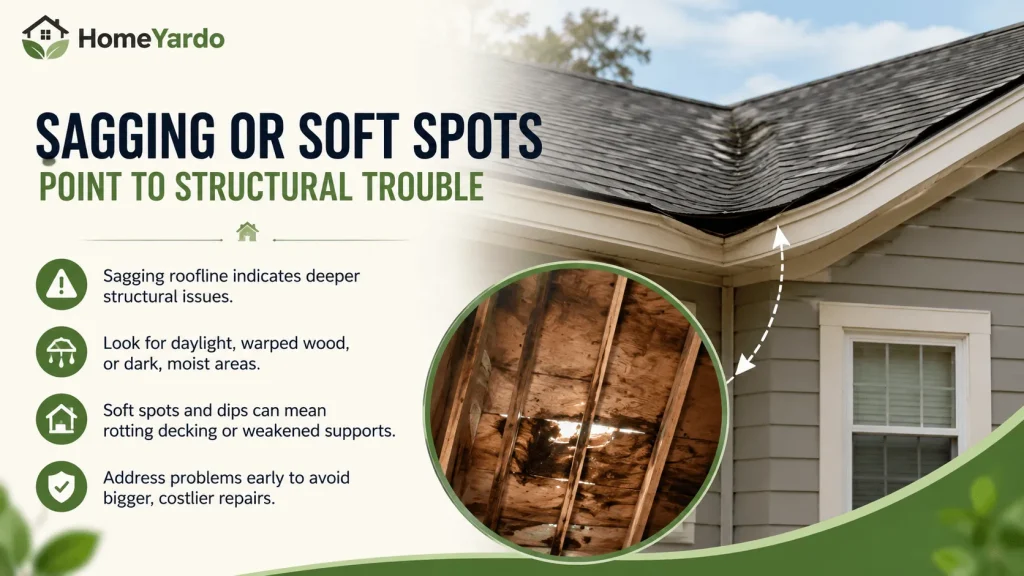
A sagging roofline is never a cosmetic quirk. It usually suggests trapped moisture, rotting decking, or weakened structural components underneath the roofing material. If part of your roof dips or looks uneven, that deserves immediate attention.
You may also notice soft spots if you are in the attic and see daylight through boards, warped wood, or areas that appear darker from persistent moisture. In advanced cases, the roof can feel spongy underfoot during a professional inspection.
This is where replacement becomes less about curb appeal and more about safety. Structural decline rarely improves on its own, and delays can make the repair scope much larger. A roofing contractor can determine whether the issue is isolated or a sign that the entire system is nearing failure.
Moss, Algae, and Gutter Granules Tell You More Than You Think
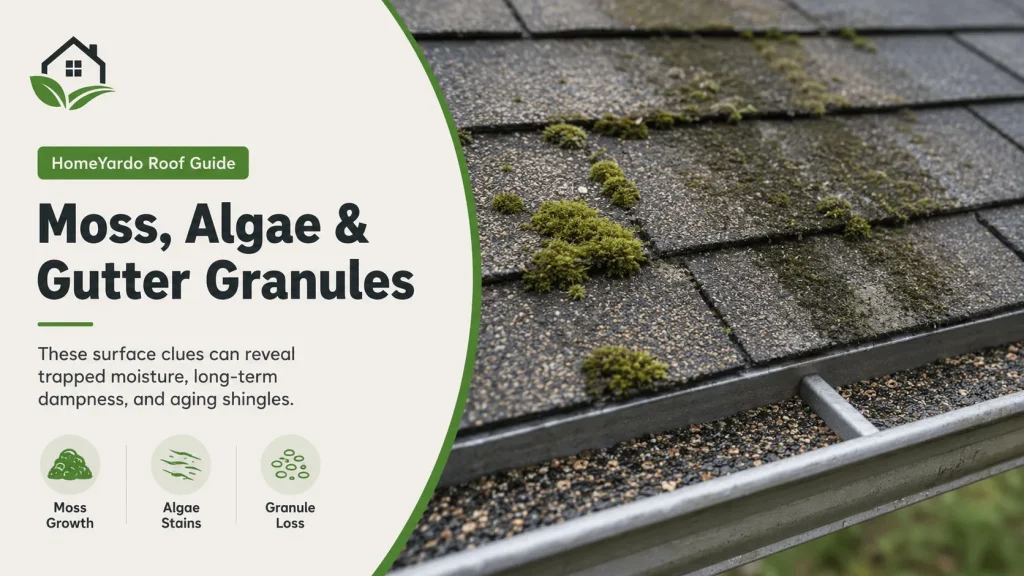
A little discoloration on a roof might seem harmless, but surface clues often reveal what is happening underneath. Moss tends to trap moisture against roofing materials, which can speed up deterioration. Algae stains are mostly cosmetic at first, though they can still signal a roof that stays damp for long stretches.
Your gutters give away another common warning sign. A buildup of sand-like granules means the shingles are shedding their protective coating. Once that layer wears thin, the shingles have far less defense against sun exposure, rain impact, and ordinary aging.
You do not need to panic over every dark streak or patch of moss. You do need to treat these signs as useful evidence. Roofs leave clues before they fail outright, and paying attention early gives you more options and usually a better budget outcome.
Replacing at the Right Time Usually Costs Less Than Waiting Too Long
Roof replacement is a major project, but timing matters more than many homeowners expect. Understanding typical roof replacement costs can help you compare the price of replacing an aging roof now with the potential expense of waiting until leaks, decking damage, or structural problems develop.
If you replace a roof before widespread leaks and structural damage set in, you may avoid a string of extra costs that build up quietly in the background. Those added expenses can include drywall repair, mold remediation, damaged insulation, framing work, and temporary emergency fixes during bad weather. Suddenly, the “wait and see” approach can become much more expensive.
A smart approach is to treat your roof like any other major system in your home. Monitor it, inspect it, and act when the warning signs become consistent, just as regular maintenance can help prevent AC breakdowns. You do not need to panic at every missing shingle, but you should respect the signals. Roofs are protective systems, not decorative hats for your house.
Other parts of the home also need protection from moisture and weather, including garage doors, where weatherstripping can help limit drafts and water intrusion.
Once a roof begins failing in several ways at once, replacement often becomes the more practical long-term choice.
FAQ’s
Signs of roof problems: Old roof. Missing or curling shingles. Frequent leaks. Widespread granule loss. Sagging regions. Visible water damage. A expert inspection can determine if replacement is necessary.
Most asphalt shingle roofs will last roughly 20-30 years, although metal, tile and some other roofing materials can last much longer. Actual life lifetime is affected by weather, installation quality, ventilation and maintenance.
An otherwise healthy roof may have certain isolated faults that can be repaired. If there is extensive shingle damage, recurring leaks, structural problems or an old roof, replacement may be a better long term solution.
Common indicators of roof damage include missing or broken shingles, curling edges, bald patches, water stains, moss growth, drooping and granules in the gutters.
Yes, minor localized leaks may usually be rectified. But, frequent leaks or widespread damage may also be a sign that the roof has reached the stage where replacement is more viable.
A sagging roof might be a sign of moisture damage, damaged decking or weakened structural members. It should be professionally inspected at the earliest opportunity and not ignored as a cosmetic issue.
Asphalt shingles lose their protective covering as they age, causing granules to build up in gutters. A small quantity is normal, but if you have a lot of granule loss or it is rising, this can be an indication that your shingles are breaking down.
It should be checked often, especially as a roof ages or after bad weather. Professional inspections can find flaws that are not evident from ground level.