Best Upholstery Cleaners For Removing Stains and Odours
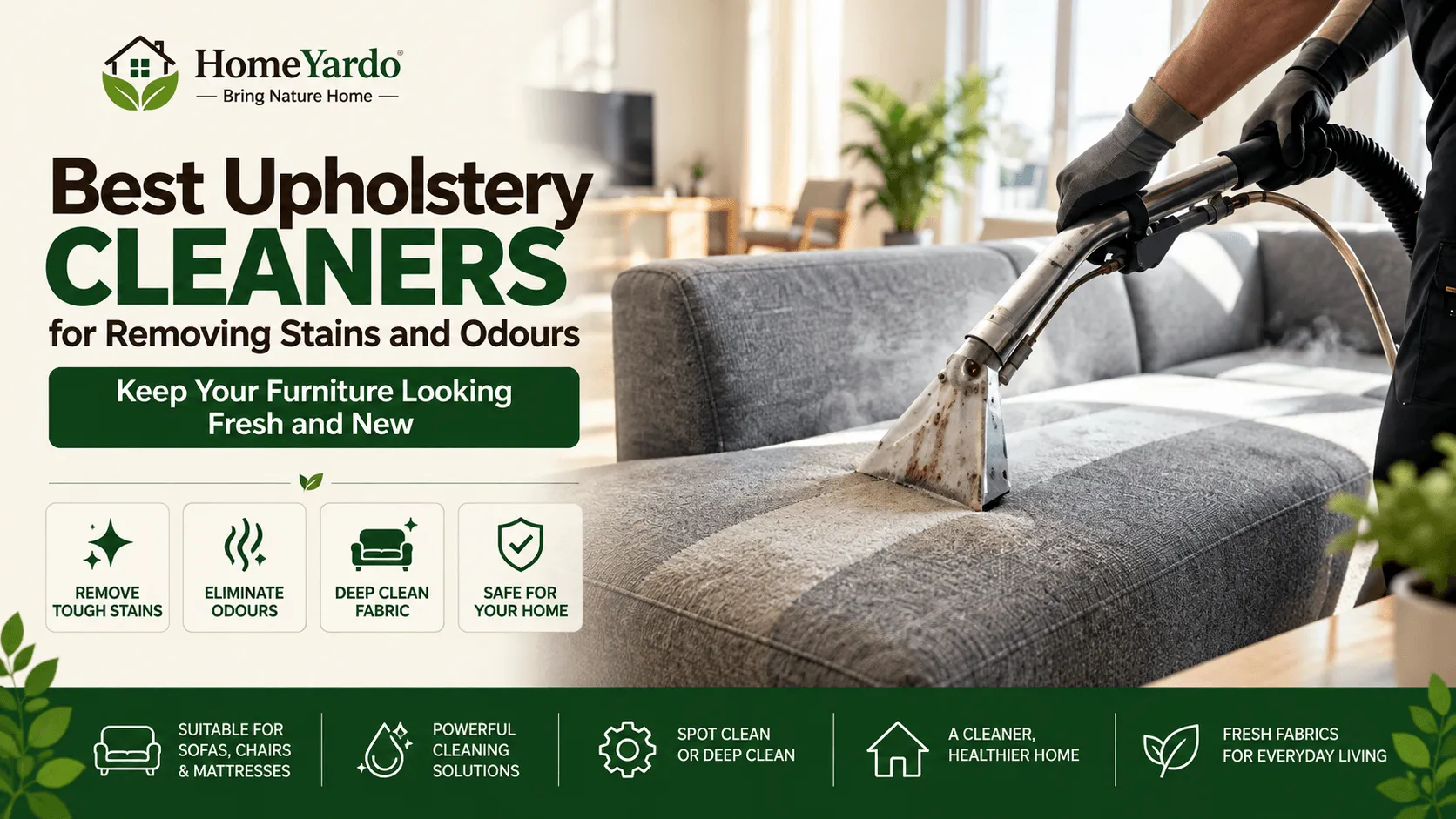
Spills can happen any time. But you do not have to live with stains or smells on your sofa. The best upholstery cleaners help a lot with upholstery cleaning. They get rid of tough stains, make fabric smell better, and let you deal with daily messes more easily. If you want a stain remover for chairs, lounges, mattresses, or even car seats, picking the right cleaner really helps.
Key Highlights
- The best upholstery cleaners make upholstery cleaning simpler by matching the right cleaning solution to the fabric and the stain.
- A good stain remover should handle tough stains without soaking the fabric or leaving heavy residue behind.
- Deep cleaning works best when you pair a low-foaming formula with the right machine and tool.
- Different types of stains, from food marks to odours, often need different cleaning methods.
- Spot cleaner products are useful for quick spills, while larger machines suit bigger jobs.
- Delicate fabrics need extra care, a care tag check, and a test patch first.
What Makes an Upholstery Cleaner the “Best” for Stains and Odours?
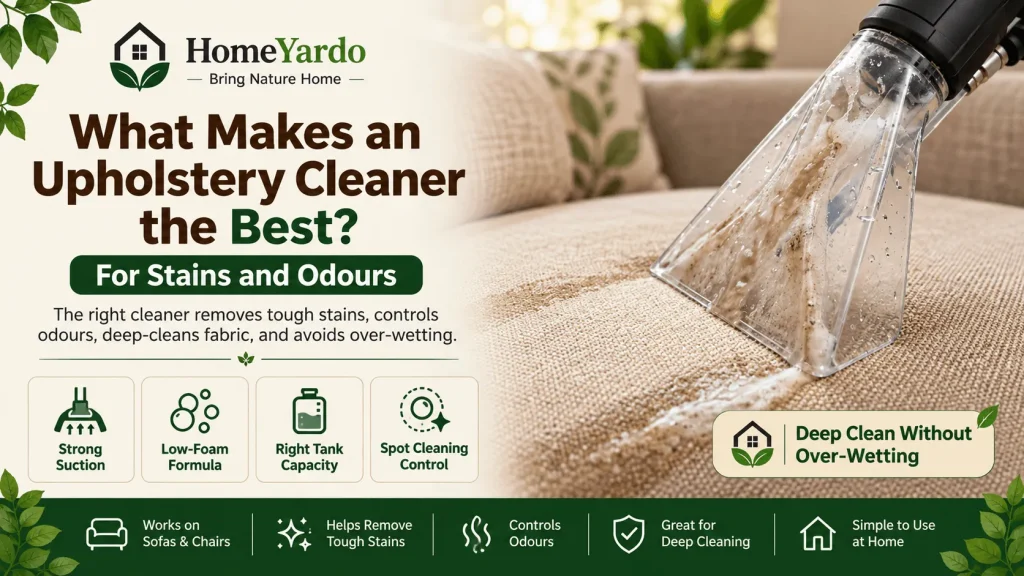
The best upholstery cleaners are not only strong. They should have the right cleaning solution for upholstery fabric. It must remove tough stains and have enough power for deep cleaning. It also shouldn’t make the fabric too wet.
This is very important when there are tough stains or strong odours. Most people get better results with a low-foaming stain remover and a machine with an upholstery wand. This way, you have more control. If you guess and use the wrong method, it will not help much. The points below show what makes a cleaner good to use instead of just looking nice on a shelf.
Key Features That Set Great Cleaners Apart
Begin by explaining what the product does. An upholstery cleaner should be simple to use and effective on fabric surfaces like couches, dining chairs, mattresses, car seats, and caravan seats. If it’s difficult to operate, you’ll avoid using it when spills occur.
For best results, combine a machine with a quality cleaning solution—especially for deep cleaning. Key features include:
- strong suction to remove dirty water
- low-foam cleaning solution
- tank capacity suited to your needs
- stain remover function for spot cleaning
A good example is pairing Britex Concentrated Upholstery Cleaner with the Britex 3-in-1 Deep Cleaning Machine and Upholstery Wand. This combination deeply cleans and refreshes upholstery without leaving it overly wet.
Common Misconceptions About Upholstery Cleaning Products
Many people believe any carpet cleaner works on upholstered furniture, but this is untrue and risky. Upholstery has specific cleaning codes, different absorbency, and often requires gentler methods.
Common misconceptions include:
- Stronger cleaners are always better
- All fabrics handle the same stain remover
- Harsh chemicals are needed for deep cleaning
For best results, use the right formula—not the strongest one. Gentle, low-foaming products made for upholstery clean fabric surfaces effectively without causing damage. This helps you safely clean sofas or chairs at home without creating bigger problems.
For broader household cleaning priorities, see HomeYardo’s strategic cleaning guide.
Types of Upholstery Cleaners Available In Australia
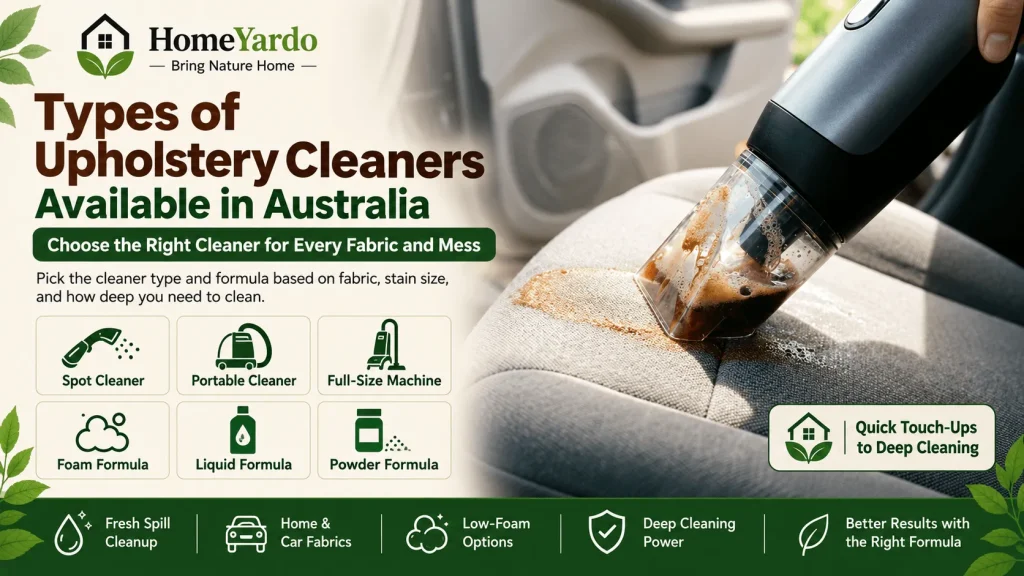
You have a few options to pick from when it comes to upholstery cleaning. The type of cleaner you use will depend on the fabric you have, the kind of mess you need to clean, and if you want to do a full clean or just a quick touch-up.
In many homes, people choose between a spot cleaner product, a machine-based cleaner, or wipes for any fast spills. Some cleaning solution products work for both carpets and upholstery, but it is good to know that upholstery needs a solution made for fabric surfaces and different types of upholstery.
Spot Cleaners vs. Full-Size Machines
If you handle one spill at a time, a spot cleaner is sufficient—quick, portable, and ideal for small areas like armrests or seat cushions.
For bigger jobs, a full-size machine is better. It cleans multiple items at once and offers stronger suction for deeper cleaning.
| Cleaner type | Best use |
|---|---|
| Spot cleaner | Quick treatment of fresh spills, small stains |
| Portable carpet cleaner | Flexible for home fabrics, smaller upholstery |
| Full-size machine | Deep cleaning large areas, multiple furniture pieces |
Foam, Liquid, and Powder Formulas—When to Use Each
Not every cleaning solution gives the same results. The best one for you depends on how you want to clean and if you are doing a full deep cleaning or just a quick touch-up.
To make it clear:
- A foam cleaner is good for light work right on the surface.
- A liquid cleaner is best for use in a machine wash.
- A powder cleaner is handy if you need to keep moisture at a low level.
For example, you can use a low-foaming liquid cleaning solution with a deep cleaning machine and an upholstery wand. This way, you will get a very good clean. It works better than trying the wrong type and hoping for the best.
Best Cleaners for Tough Sofa and Chair Stains
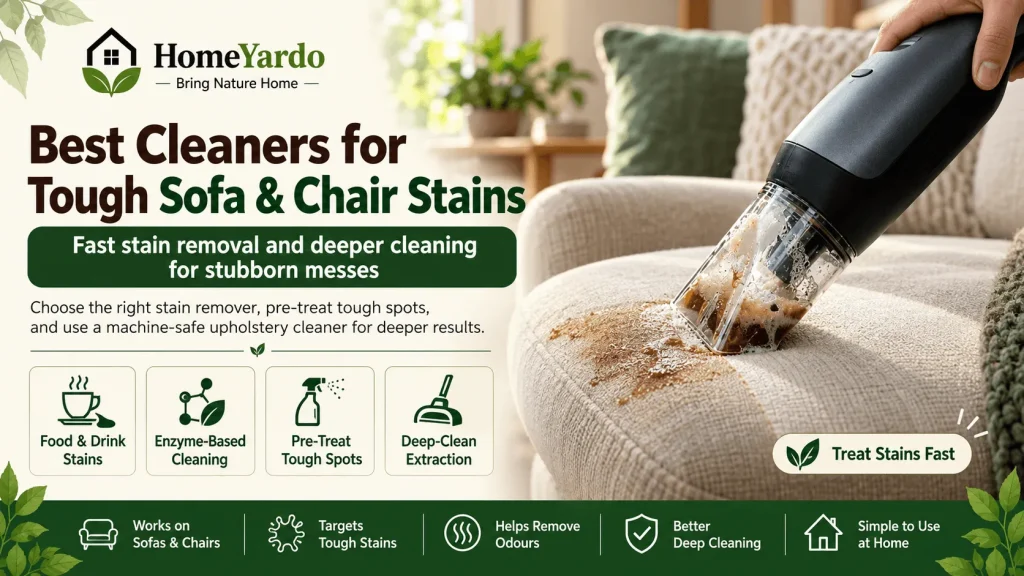
Sofas and chairs often get the dirt and mess you notice the most. Food stains, drink spills, and bad smells stay exactly where people like to sit and relax. You need a stain remover that works quickly. You also want it to help with deep cleaning if the stain has been there for a while.
If you see a stain and want to tidy up fast, specialty sprays and wipes can do the job. For stains that are harder to get rid of, a machine-safe upholstery cleaner will give a better, deeper clean. This is very important for red wine stains, food stains, or if spills have gone deeper into the fabric.
Enzyme-Based Solutions That Tackle Organic Marks
Treat organic stains immediately. Pet stains, food spills, and body oils can leave marks and odours, so your cleaner must do more than mask them.
Choose a stain remover that matches the spot. For tough areas, apply a pre-treatment before cleaning the rest.
This is crucial for cushions and chair seats, where stains penetrate deeply. Pre-treat first, then use your machine and upholstery wand to remove as much residue as possible.
Addressing Common Fabric Upholstery Stains
Different stains affect fabric upholstery in unique ways. Food stains come out best when treated quickly, while dark spills like red wine need a special stain remover before cleaning.
Tips:
- Blot food stains promptly—don’t rub.
- Use a stain remover on red wine before full cleaning.
- Choose machine-safe cleaning solutions for stubborn marks.
Wipes are also useful. Britex Spot ‘n’ Stain Carpet & Upholstery Wipes quickly remove small, fresh spills.
Choosing an Upholstery Cleaner For Delicate Fabrics
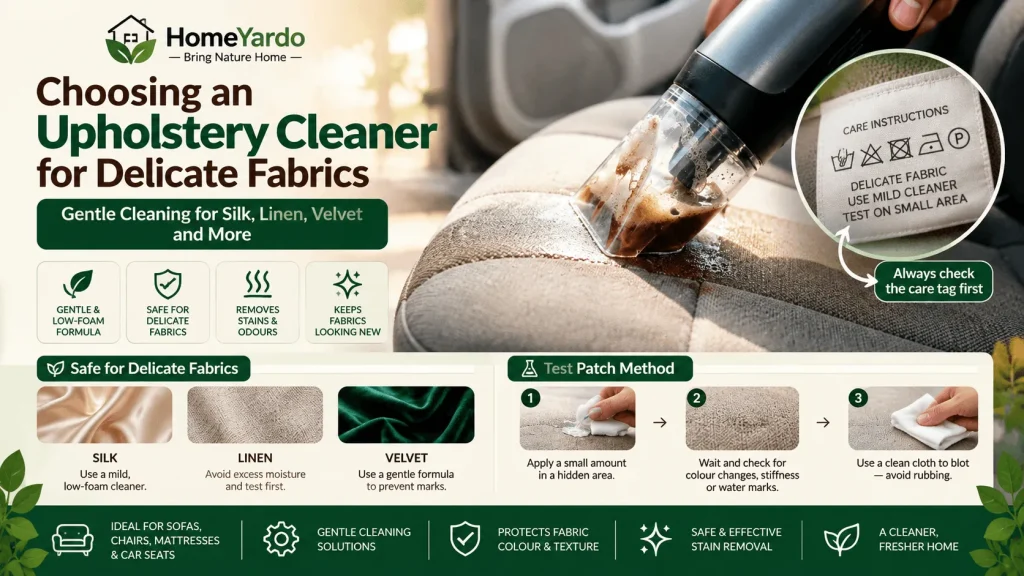
Delicate fabrics need a gentle touch. Before you use any cleaning solution or stain remover, look at the care tag. This will help you see if the product is okay for delicate upholstery, not just for hard cleaning.
This small step helps you stop water marks, fading, or rough changes to the texture. When you know the fabric fits the cleaning method, you feel more confident as you clean. The next two parts talk about safe things to use and an easy way to test on a small patch.
Safe Ingredients For Silk, Linen, And Velvet
When cleaning silk, velvet, or linen, be gentle. Use a low-foaming cleaning solution that won’t leave marks, as these fabrics easily retain moisture and show stains.
A gentle, low-foam cleaner is best for delicate fabrics. Always test on a small area first—especially with silk or velvet cushions—using minimal moisture to check the fabric’s reaction before full cleaning.
Test Patch Methods You Can Rely On
A test patch is the safest first step you can take. Choose an inconspicuous area, look at any cleaning codes on the care tag, and use a small bit of product before cleaning a spot that people see.
Next, wait and check what happens. See if there is a colour change, if the fabric feels stiff, or if there are rings from moisture. Always use a clean cloth to blot instead of rubbing, since being rough can change the texture.
This way is simple, but it helps you avoid mistakes. If nothing goes wrong in the hidden spot, you can use the same cleaning methods on the stained area, feeling more sure about what you do.
Upholstery Cleaners for Car Interiors
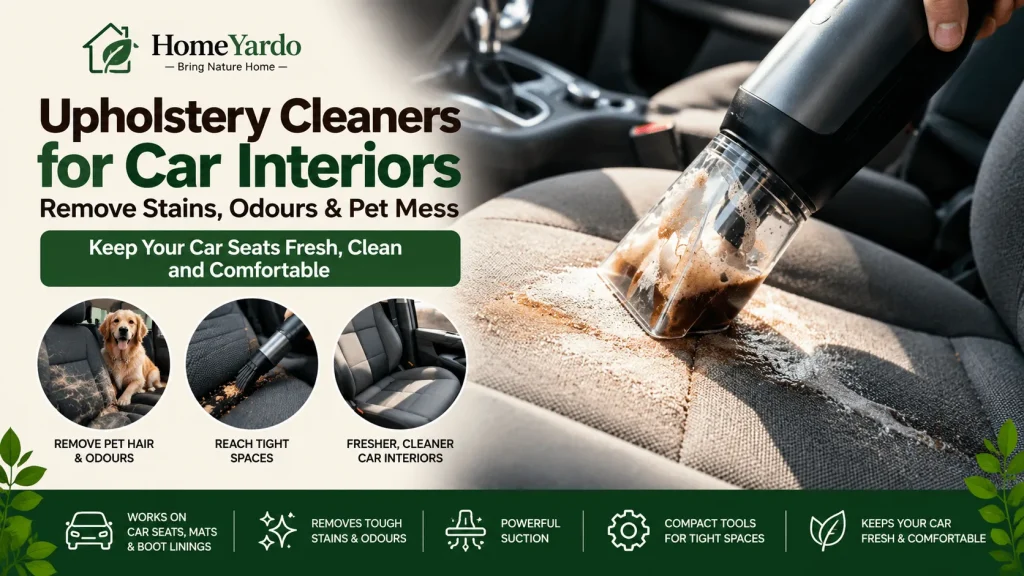
Car interiors require cleaning solutions and stain removers that do a good job in small spaces and on smaller bits of fabric. Dirt and smells can build up in car seats, boot linings, and caravan upholstery. That’s why it’s key to go for the right stain remover and cleaning solution for these parts.
In these cases, a compact setup can be better than a big machine on its own. You need enough cleaning power. If you can, go for one with powerful suction. This helps pull dirty water out and means your car seats won’t stay damp for long.
For more general household upkeep and maintenance planning, see the Home Improvement Guide.
Removing Pet Hair and Odours From Seats and Mats
Pet mess in a car brings a lot of trouble. Pet hair gets stuck to car seats and pet stains can get deep into the fabric. The smell also gets trapped in mats and corners.
It’s best to start dry. Use a vacuum cleaner first. It will lift loose pet hair before you use anything wet. This helps stop wet pet hair from sticking to the fabric. It also makes cleaning easier.
Next, use an upholstery cleaner or a special spray on any spots. If your car seats smell bad, a deep clean of the fabric is better than just trying to cover up the odour.
Compact Tools That Fit Tight Spaces
Cars have many tight spaces that are hard to clean. A compact cleaner lets you reach seat edges, cushion gaps, and console trim without soaking the fabric.
Key features include:
- A crevice tool for seams and edges
- Compact design for maneuverability
- Cordless spot cleaning for quick access
These features make cleaning interiors easier. If you clean cars often, tool shape matters as much as the cleaning solution. A cordless spot cleaner with a crevice tool offers excellent ease of use in small spaces.
Conclusion
Choosing the right upholstery cleaner is key to keeping your furniture looking good and clean. Whether you’re dealing with tough stains or persistent odours, understanding different cleaners—like enzyme-based solutions for heavy-duty jobs and gentle ones for delicate fabrics—ensures the best results. Regular cleaning keeps upholstery fresh and extends its lifespan. For expert recommendations or a personalised consultation, explore our guide to find the ideal cleaning solution for your home.
FAQ’s
For pet owners and families, it is best to use a gentle upholstery cleaning solution. Make sure you use it the right way and always check the cleaning codes first. Do not think that every carpet cleaner is good for furniture. Safe cleaning starts when you read the care tag. It also helps to do a small test patch before you clean the whole area.
Clean up spills right away as soon as they happen. After that, use bigger cleaning methods when your furniture starts to look dull or hold smells. If you use the right cleaning solution and stain remover early, this helps stop tough stains from setting in. Doing this also means you do not need deep cleaning as often later on.
Some products can be used for both, but carpet cleaning and upholstery cleaning are not always the same thing. Always start by using a vacuum cleaner. Then, look to see if the cleaning solution is safe for both surfaces. A carpet cleaner might clean rugs in a different way than it cleans furniture fabric.