
Signs It’s Time to Replace Your Home Heating Oil Tank
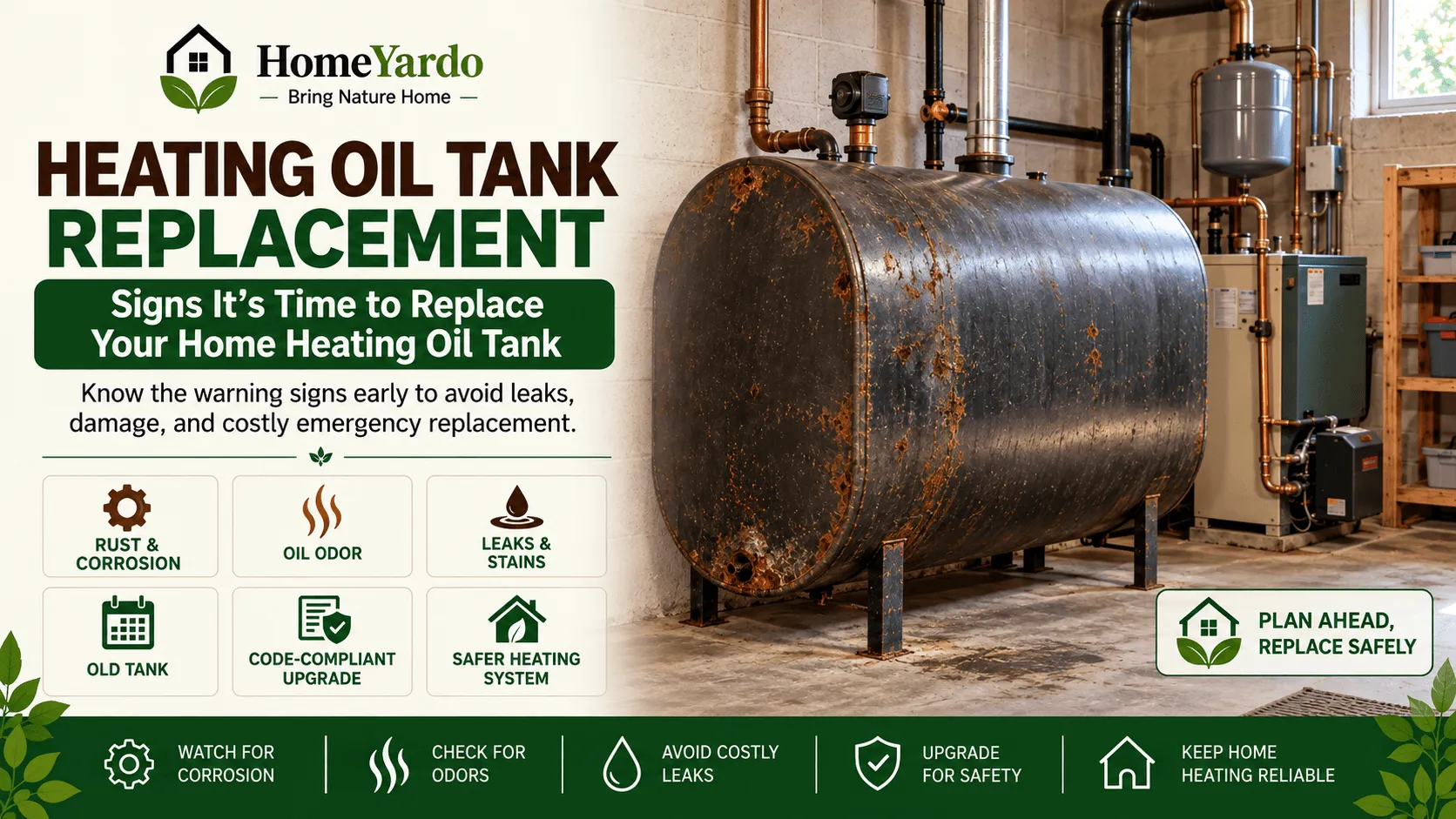
Most homeowners rarely think about their heating oil tank until something goes wrong with it, and by the time a problem is visible, it’s often already more serious than it needed to be. Unlike a furnace or water heater, which tend to announce their decline through obvious performance issues, an oil tank can quietly deteriorate for years, sitting in a basement or side yard, largely out of sight and out of mind. Understanding what to look for, and why timely oil tank replacement matters, can save homeowners from a much more expensive and disruptive situation than a routine, planned replacement.
Why Oil Tanks Don’t Last Forever
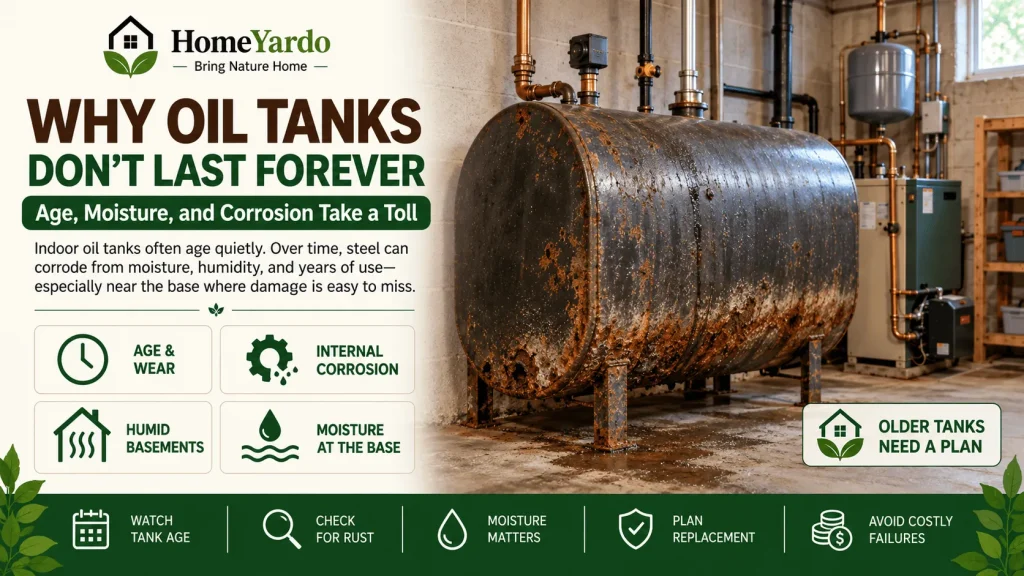
Indoor residential oil storage tanks typically don’t last more than about thirty years, and in many cases, their functional lifespan is considerably shorter than that, depending on tank material, installation quality, and local environmental conditions. Steel tanks are particularly susceptible to internal corrosion over time, especially in humid basement environments or in older installations where the tank sits directly on a concrete floor, trapping moisture against the tank’s base. That slow corrosion process is often invisible from the outside until it has already progressed significantly.
This is part of why age alone is a legitimate reason to start planning for replacement, even in the absence of visible leaks or damage. Waiting until a tank actively fails removes the ability to plan the replacement on your own schedule and dramatically increases the chances of dealing with an oil spill, which carries both cleanup costs and potential environmental liability far beyond the cost of the tank itself.
Warning Signs Homeowners Shouldn’t Ignore
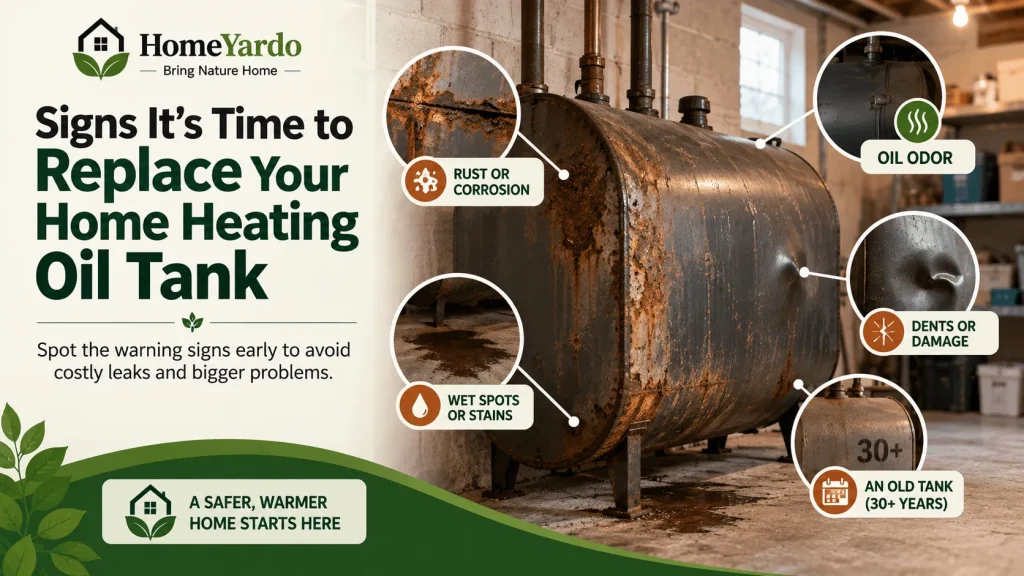
While some tank failures happen with little warning, there are usually earlier signs that a tank is approaching the end of its useful life.
Homeowners should treat any of the following as a signal to have the tank professionally evaluated. Similar warning signs can also appear in other heating equipment, so understanding HVAC warning signs can help homeowners recognize when professional attention may be needed.
- Visible rust or corrosion, particularly around seams, the bottom of the tank, or fittings, which often indicates the internal structure is compromised even if the exterior damage looks minor
- Oil odor in the basement or near the tank, which can indicate a slow leak long before it becomes a visible pool of oil
- Wet spots or staining on the floor beneath or around the tank
- Dents or structural damage, especially on older tanks, which can compromise the tank’s integrity even without active corrosion
- A tank that’s simply old, particularly anything approaching or exceeding the typical thirty-year lifespan, regardless of whether visible damage is present
If any of these signs are present, it’s worth having a professional assess the tank promptly rather than waiting for the next scheduled heating system tune-up, since tank failures don’t wait for convenient timing.
What’s Actually Involved in a Replacement
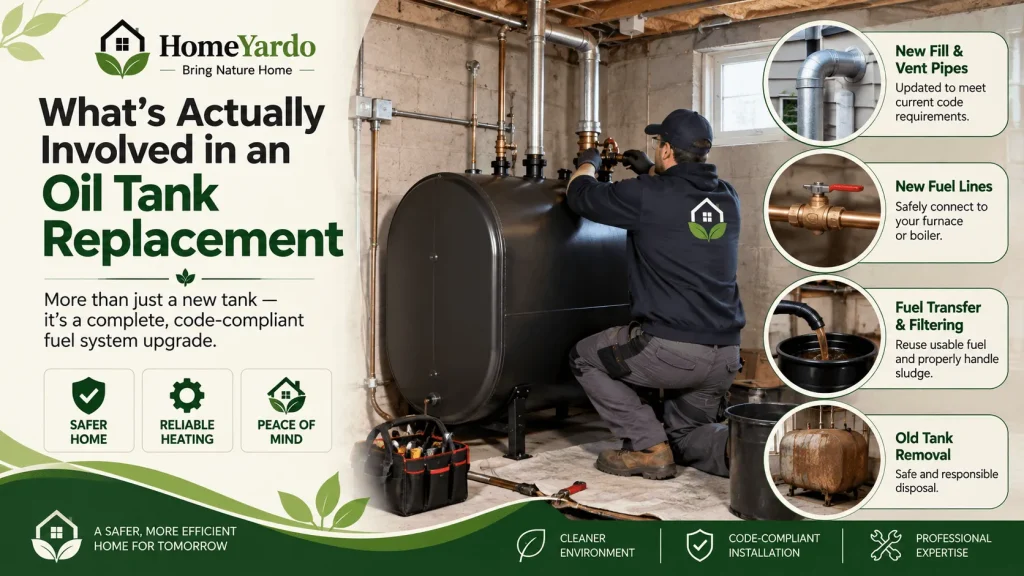
Oil tank replacement is a more comprehensive process than simply swapping one tank for another. A proper replacement typically addresses the entire fuel delivery system, not just the tank itself. That includes replacing the fill and vent pipes that connect to the outside of the home, as well as the fuel oil line that feeds the furnace or boiler. All of these components, along with the tank and valves, need to meet current code requirements, which may differ from the standards in place when the original system was installed decades earlier.
A well-managed replacement process also handles the practical logistics that homeowners don’t always think about ahead of time: safely pumping and filtering any usable fuel from the old tank so it can be reused in the new one rather than wasted, properly disposing of fuel oil sludge that accumulates at the bottom of older tanks, and custom cutting and fitting new fuel line pipes to match the specific configuration of the home’s heating system.
Choosing Between Tank Types and Configurations
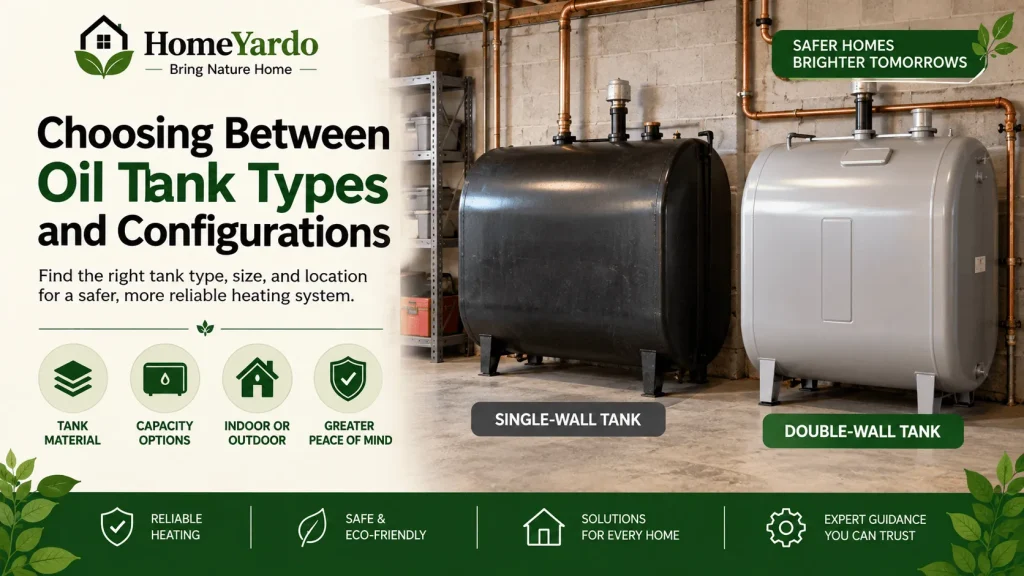
When it comes time to replace a tank, homeowners generally have choices to make around tank material, capacity, and location, whether that means keeping the same indoor basement configuration or exploring alternatives. Double-wall tanks, for example, offer an added layer of leak protection compared to single-wall designs, which is why many homeowners opt for that upgrade when replacing an older single-wall tank, even though it comes at a somewhat higher upfront cost. A qualified installer should walk through these options based on the home’s specific layout, access constraints, and heating system requirements, rather than defaulting to a one-size-fits-all recommendation.
Why Professional Installation Matters
Given that fuel oil systems involve strict local fire and environmental regulations, working with an experienced, licensed installer isn’t optional. Local fire departments in most jurisdictions are involved in overseeing and permitting tank installation and removal, and an installer with established relationships and familiarity with those local requirements can navigate that process far more smoothly than one encountering it for the first time in your town.
For homeowners in Massachusetts and New Hampshire, CommTank’s oil tank replacement services cover the full scope of what a proper replacement requires, from tank removal and code-compliant installation to fuel transfer, sludge disposal, and fitting new lines to match each home’s specific heating system. Working with a team that handles the entire process, rather than coordinating multiple separate contractors, tends to reduce both cost and the number of things that can go wrong along the way.
Planning Ahead Instead of Reacting
The homeowners who have the smoothest experience with a tank swap are almost always the ones who acted on early warning signs, or simply planned around their tank’s age, rather than waiting for an emergency. A planned replacement allows time to compare installer options, choose the right tank configuration, and schedule the work at a convenient time.
This same approach applies to broader heating maintenance, since seasonal HVAC tune-ups can help homeowners identify heating-system issues before cold-weather demand increases, rather than dealing with an emergency situation during the coldest weeks of winter when demand for emergency services is highest.
The Bottom Line for Homeowners
An oil tank is one of those pieces of home infrastructure that’s easy to ignore until it becomes a genuine problem, but a proactive approach costs far less, both financially and in terms of stress, than reacting to a failure after the fact.
Paying attention to your tank’s age, watching for the early warning signs of corrosion or leaks, and working with an experienced, licensed installer when it’s time for a replacement will help keep your home’s heating system running safely and reliably. Homeowners can also review guidance on preventing AC breakdowns as part of broader HVAC maintenance.
FAQ’s
Visible corrosion, persistent heating-oil odors, leakage or staining, damaged supports, structural deformation, repeated fuel-system problems, and an older tank with an uncertain history are reasons to arrange a professional inspection. No single age or symptom determines the condition of every tank.
There is no universal lifespan that applies to every heating oil tank. Service life varies with tank construction, installation quality, moisture exposure, environment, maintenance, and corrosion. Older tanks should be assessed according to condition rather than age alone.
Replacement can be worth considering before an active leak occurs when inspection finds significant corrosion, structural deterioration, repeated system problems, or other evidence that continued service may be unwise.
Possible signs include an oil odor, oily residue, dark staining, wet areas around the tank, unexplained fuel loss, or visible leakage. Because the tank is not the only possible leak source, the fuel line, fittings, valves, and related components may also need inspection.
Minor surface corrosion does not automatically require replacement, but significant corrosion can affect tank integrity. A professional should determine whether the observed rust is superficial or indicates deterioration that makes replacement more appropriate.
Double-wall tanks provide secondary containment around the primary tank, which can offer additional protection if the inner tank develops a leak. Suitability still depends on available space, local requirements, tank capacity, installation conditions, and budget.
Depending on its condition and the replacement process, usable heating oil may be transferred for reuse. Sludge, contaminated fuel, or other residue may require separate handling and disposal. Ask the installer how both usable fuel and waste will be managed before work begins.
Not automatically in every installation. The existing fuel line and associated components should be evaluated against their condition and applicable requirements. Some replacement projects require new or modified supply lines, valves, fill pipes, vent pipes, or fittings.
Permit and inspection requirements depend on the jurisdiction and installation. Homeowners should confirm requirements with the installer and appropriate local authority before work begins.
Use a properly qualified and appropriately licensed professional for the jurisdiction where the work is performed. Ask about insurance, permits, installation standards, old-tank disposal, fuel handling, and warranties before approving the project.