Tilt And Turn Windows: 7 Reasons More U.S. Homeowners Are Making the Switch
Most window replacements in the U.S. still come down to the same two choices: double-hung or casement. A third option, standard across Europe for decades, is starting to show up more often in American renovation projects — and it works differently enough from either of the familiar styles that it’s worth understanding before you shop.
What Is A Tilt And Turn Window?
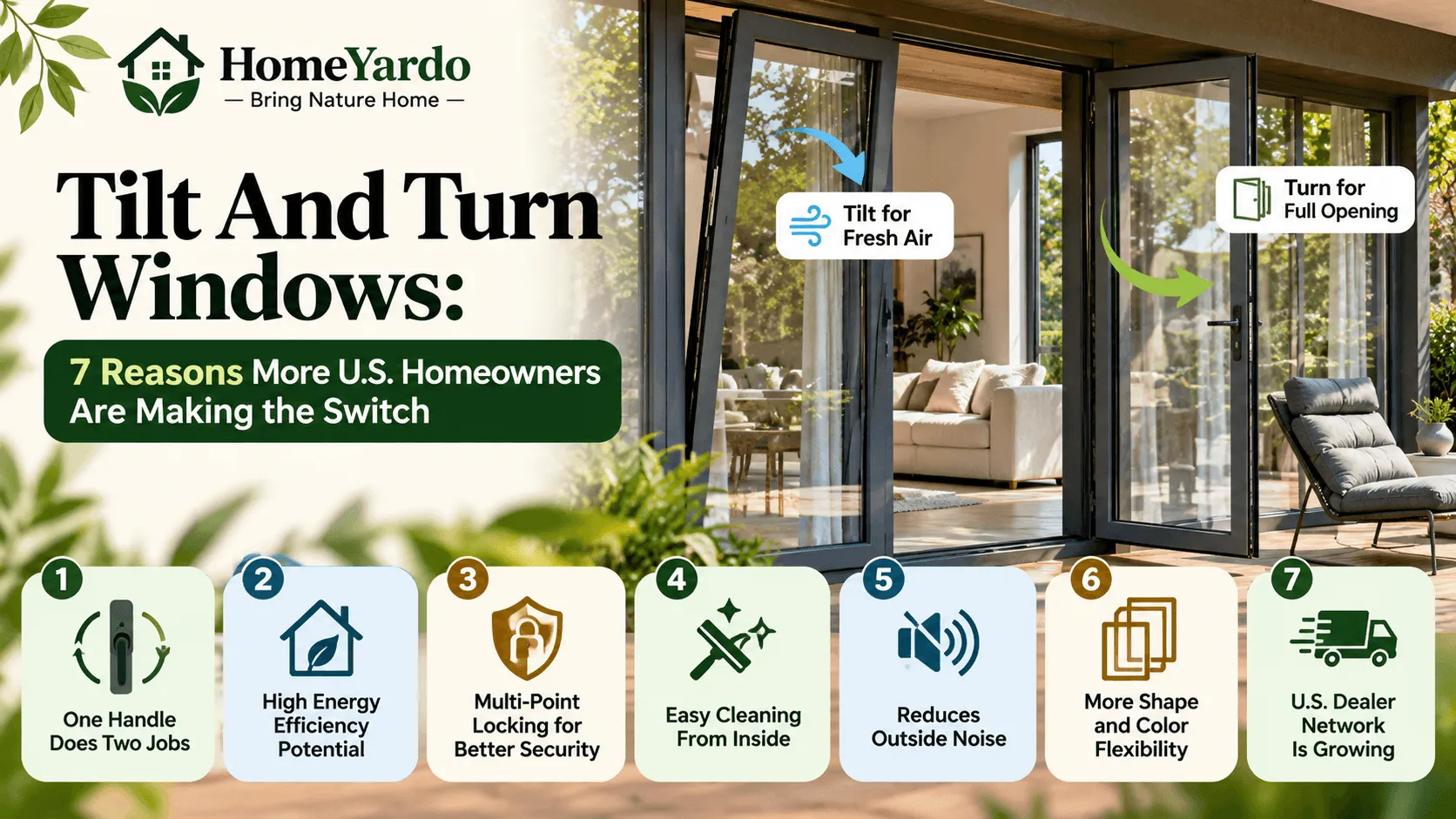
A tilt and turn window opens two different ways from a single handle, which is the detail that sets it apart from almost everything else on the U.S. market. Turn the handle to vertical and the sash swings inward on side hinges, opening the full frame like a door. Turn it to horizontal instead, and the sash tilts inward from the top, cracking open a few inches for steady airflow.
That single handle controls both functions, so there’s no separate screen mechanism or secondary crank to operate. The sash is sealed against compression gaskets around the entire frame when closed, rather than relying on a single meeting-rail lock the way a double-hung window does — which is part of why the style is getting a second look from U.S. homeowners replacing older, leakier windows.
If you’re comparing tilt and turn windows as part of a larger renovation, start by understanding the full window replacement process, including glazing, frame materials, installation methods, and potential hidden costs.
7 Reasons Tilt And Turn Windows Are Showing Up In More U.S. Homes
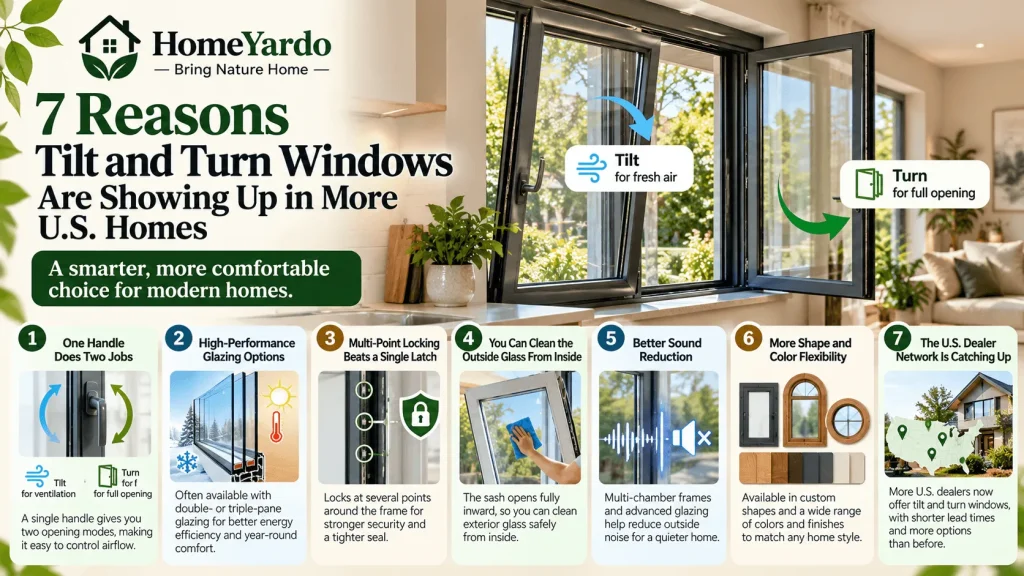
The style isn’t new — it’s been standard in Europe for decades — but it’s gaining ground in American renovation and new-build projects for reasons that go beyond looks.
1. One Handle Does Two Jobs
A single handle switches between full-open and tilt-only ventilation, which cuts down on the separate hardware most U.S. window styles need for each function. That matters most in rooms where you want quick airflow without the commitment of a fully open window — a kitchen, a bathroom, or a nursery where a wide-open sash isn’t practical every day.
2. High-Performance Glazing Options Can Improve Energy Efficiency
Tilt and turn windows are often available with high-performance double- or triple-pane glazing, but the exact configuration depends on the manufacturer and product line. Triple glazing can be especially useful in colder climates, where reducing heat transfer and improving interior comfort are priorities.
Product ratings matter more than pane count alone. Compare the whole-window U-factor, solar heat gain coefficient (SHGC), air-leakage rating, and the glazing package specified for your climate.
As one example, OKNOPLAST lists a U-factor range of 0.14–0.26 for its PAVA system, depending on the construction and configuration. A lower U-factor generally indicates less heat transfer through the complete window assembly.
3. Multi-Point Locking Beats a Single Latch
Tilt and turn hardware locks at several points around the frame instead of one latch at the meeting rail, which is how most double-hung windows close. That distributed locking compresses the sash evenly against the gasket seal, which helps on older homes where the frame isn’t perfectly square anymore.
4. You Can Clean the Outside Glass From Inside
A tilt and turn sash opens fully inward, so the exterior glass gets cleaned from inside the room rather than from a ladder. That’s a bigger deal on second-story windows or openings set over a porch roof, where exterior access is awkward or unsafe.
5. Better Sound Reduction With the Right Glazing
Multi-chamber frames and laminated or triple glazing tend to cut down on outside noise more than a standard single-lock double-hung window, though the exact difference depends on the specific glazing package — manufacturers rate this as Sound Transmission Class (STC), and it’s worth asking for a product’s specific number rather than assuming all triple-pane windows perform the same.
6. More Shape and Color Flexibility
Tilt and turn systems are commonly offered in custom shapes — arched, round-top, trapezoidal — and a wider color and finish range than most stock American window lines, including wood-look finishes that don’t require repainting. That makes it easier to match an older home’s existing trim or an architect-designed opening that doesn’t fit a standard rectangle.
7. The U.S. Dealer Network Is Catching Up
A few years ago, sourcing a tilt and turn window in the U.S. meant a long wait and limited options. European manufacturers have been building out dealer networks and shortening lead times since then, which is a practical reason the style is more realistic to specify today than it was even five years ago.
How Do Tilt and Turn Windows Compare to Double-Hung or Casement?
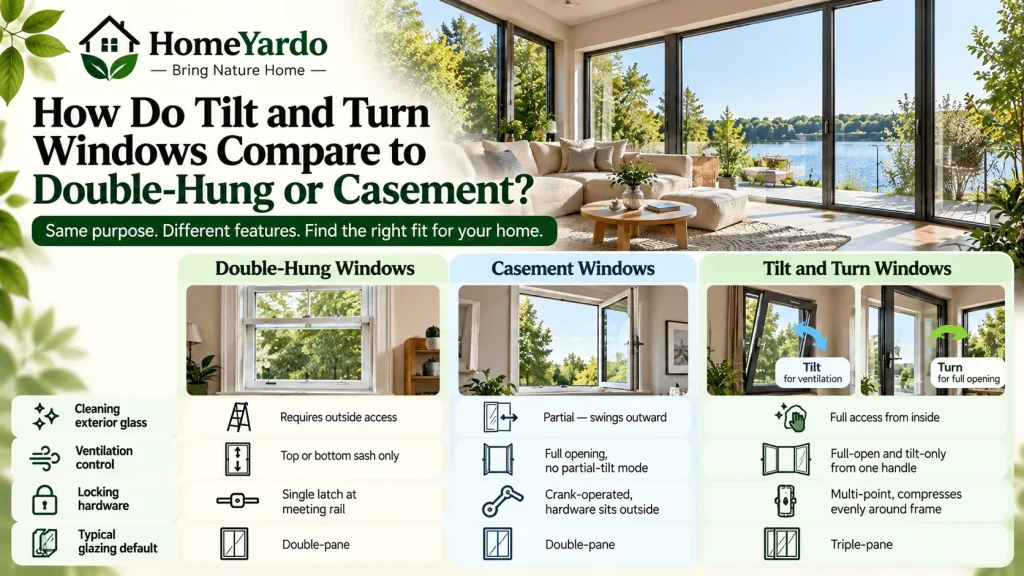
The three styles solve ventilation and cleaning differently enough that the comparison usually comes down to which trade-off fits your home.
| Feature | Double-Hung | Casement | Tilt and Turn |
|---|---|---|---|
| Cleaning exterior glass | Requires outside access | Partial — swings outward | Full access from inside |
| Ventilation control | Top or bottom sash only | Full opening, no partial-tilt mode | Full-open and tilt-only from one handle |
| Locking hardware | Single latch at meeting rail | Crank-operated, hardware sits outside | Multi-point, compresses evenly around frame |
| Typical glazing default | Double-pane | Double-pane | Triple-pane |
Manufacturers like OKNOPLAST build the multi-point locking standard into their tilt and turn lines rather than offering it as an upgrade, which is one reason the style tends to outperform double-hung windows on air leakage ratings when tested under the same conditions. Casement windows close just as tightly in most cases, but lose the partial-ventilation option that tilt and turn hardware builds in by design.
Are Tilt and Turn Windows Safe and Practical for Everyday Use?
The full-swing-open position is the detail that gives most first-time buyers pause, and it’s a fair question to ask before you commit to the style. Manufacturers address it with restrictor hardware and handle variants — a “tilt before turn” handle, for instance, forces the window through a fixed sequence (closed, then tilt, then fully open) so a child or pet can’t push the sash into the full-open position by accident.
Screens are the other common question, and the answer is yes, but not the same way. Because the sash opens inward rather than sliding up and down, tilt and turn windows typically use interior-mounted screens instead of the exterior screens standard on double-hung windows.
Cleaning is covered above, but drafts deserve a direct answer too: a properly installed tilt and turn window shouldn’t be draftier than any other well-sealed window, since the multi-point locking and compression gasket are specifically built to close that gap. Drafts on an older tilt and turn window are more often a sign of a worn gasket or hardware that needs adjustment than a flaw in the style itself.
How Much Do Tilt and Turn Windows Cost?
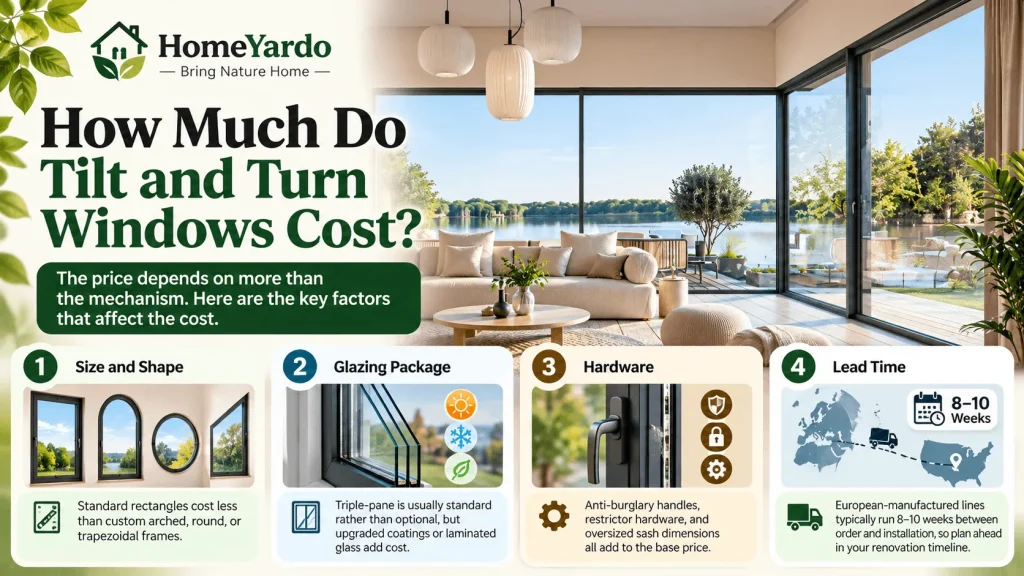
Price isn’t driven by the tilt and turn mechanism itself so much as by what gets layered on top of it. A handful of factors move the number more than the basic hardware does:
| Factor | How It Affects Price |
|---|---|
| Size and shape | Standard rectangles cost less than custom arched, round, or trapezoidal frames |
| Glazing package | Triple-pane is usually standard rather than optional, but upgraded coatings or laminated glass add cost |
| Hardware | Anti-burglary handles, restrictor hardware, and oversized sash dimensions all add to the base price |
| Lead time | European-manufactured lines typically run 8–10 weeks between order and installation, which is worth building into a renovation timeline early |
That last factor catches a lot of first-time buyers off guard. OKNOPLAST, for one, ships from production facilities in Europe, so even with a growing U.S. dealer network, the realistic timeline runs longer than picking up a stock double-hung replacement from a local supplier. Getting a quote against your specific opening — size, shape, and glazing package — is the only reliable way to know what a project will actually cost, since published price ranges rarely account for how much these factors compound.
FAQ’s
Tilt and turn windows are inward-opening windows with two operating modes. The sash can tilt inward from the top for controlled ventilation or swing fully inward from the side for wider airflow, cleaning and access.
Neither style is better for every home. Tilt and turn windows provide two opening modes and commonly use perimeter compression seals and multi-point hardware, while double-hung windows are familiar, widely available in the U.S. and do not require interior swing clearance.
They can be highly energy efficient when paired with suitable glazing, insulated frames, effective seals and correct installation. Compare the whole-window U-factor and SHGC rather than assuming performance based only on window style or the number of glass panes.
Yes. Screen options depend on the particular window system. Fixed, removable, retractable and other configurations may be available, so confirm screen compatibility before ordering.